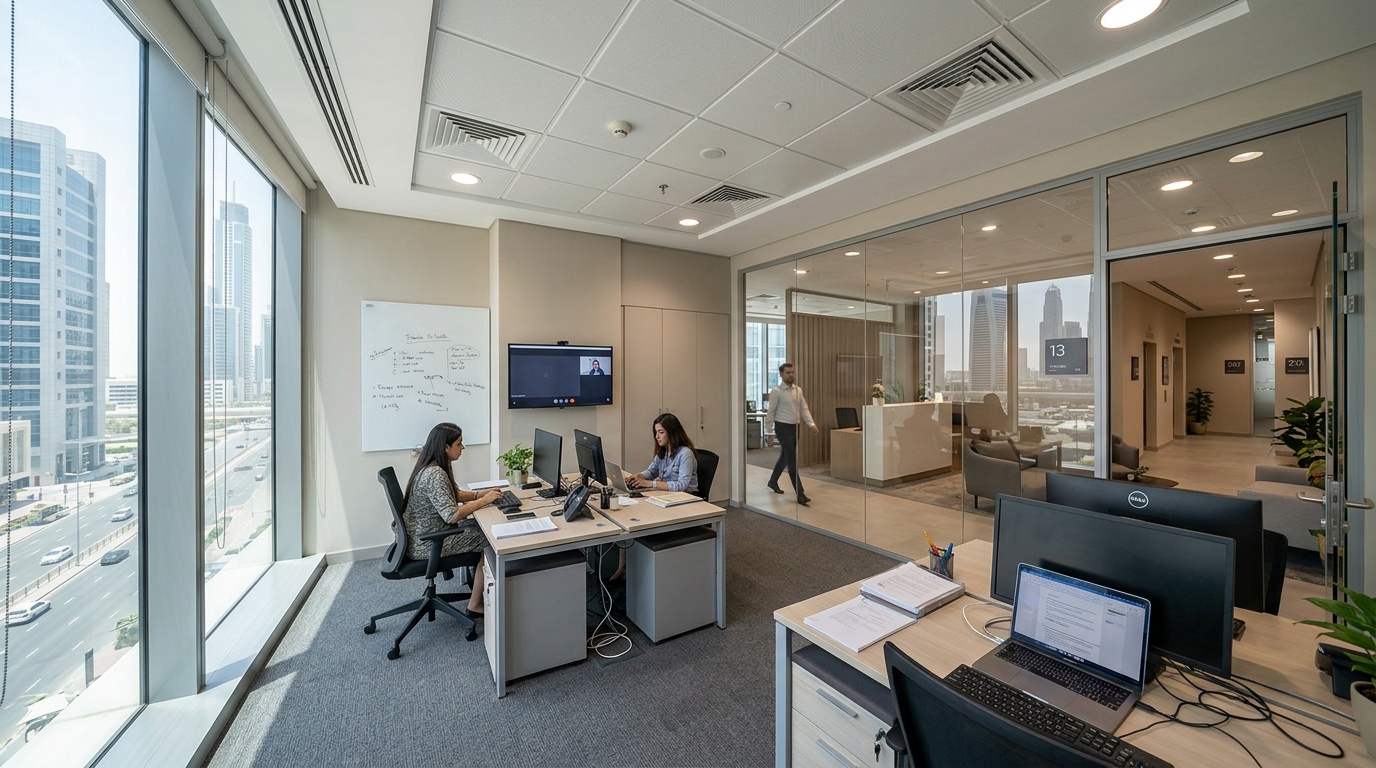
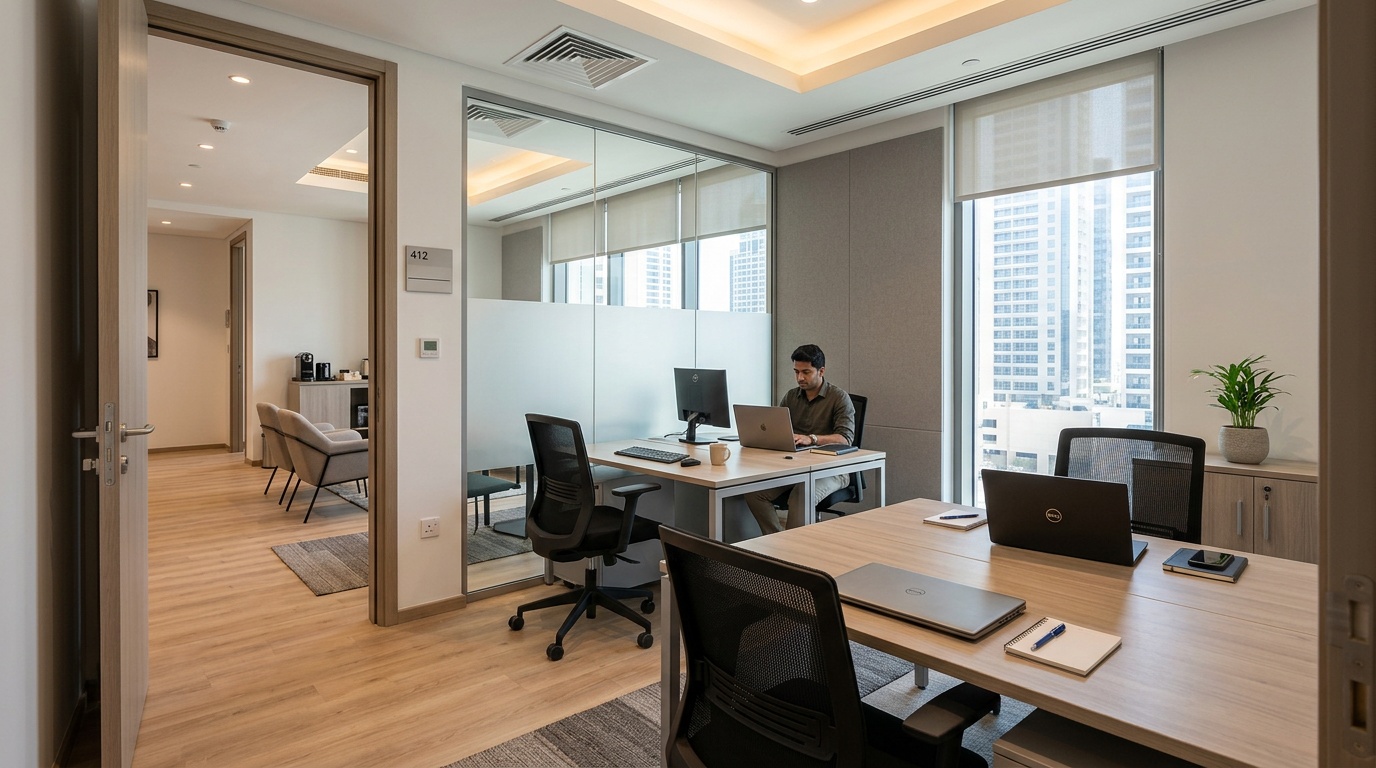
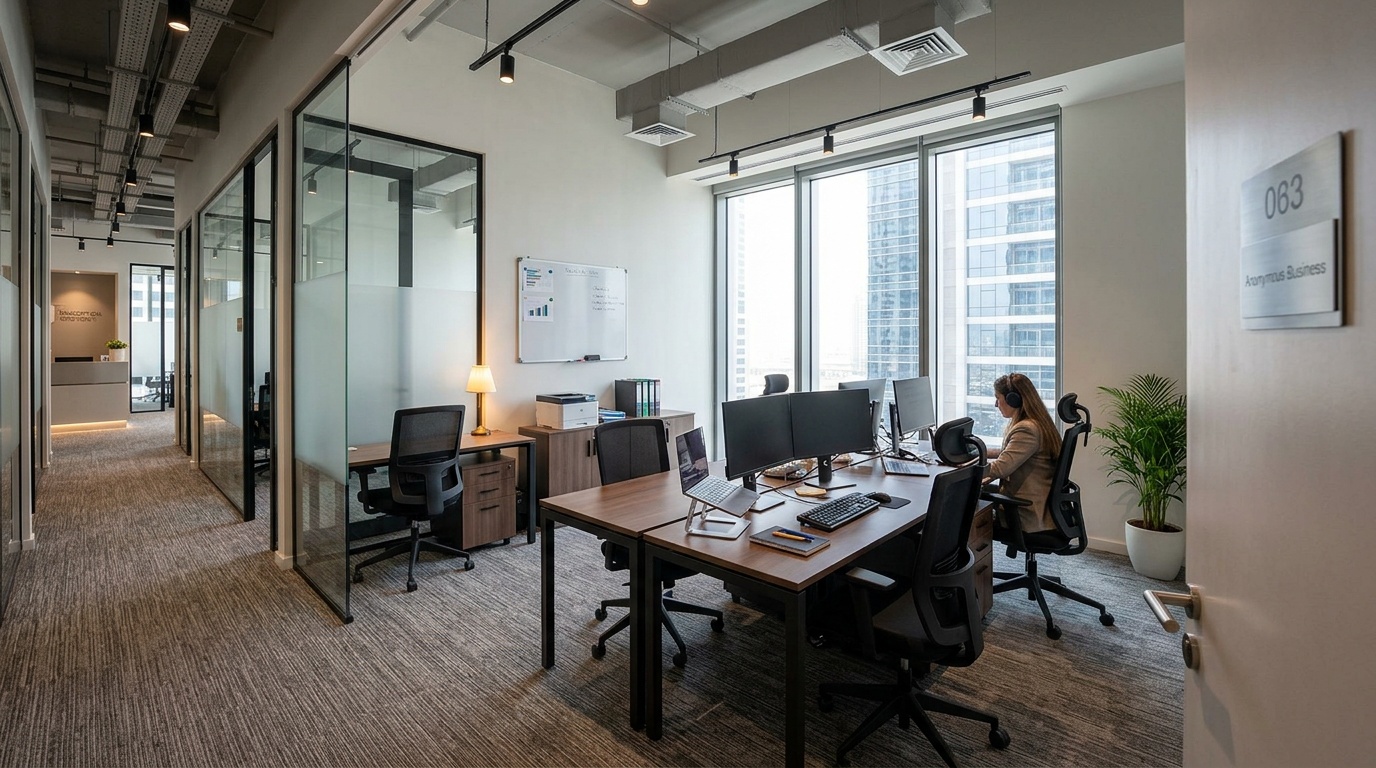
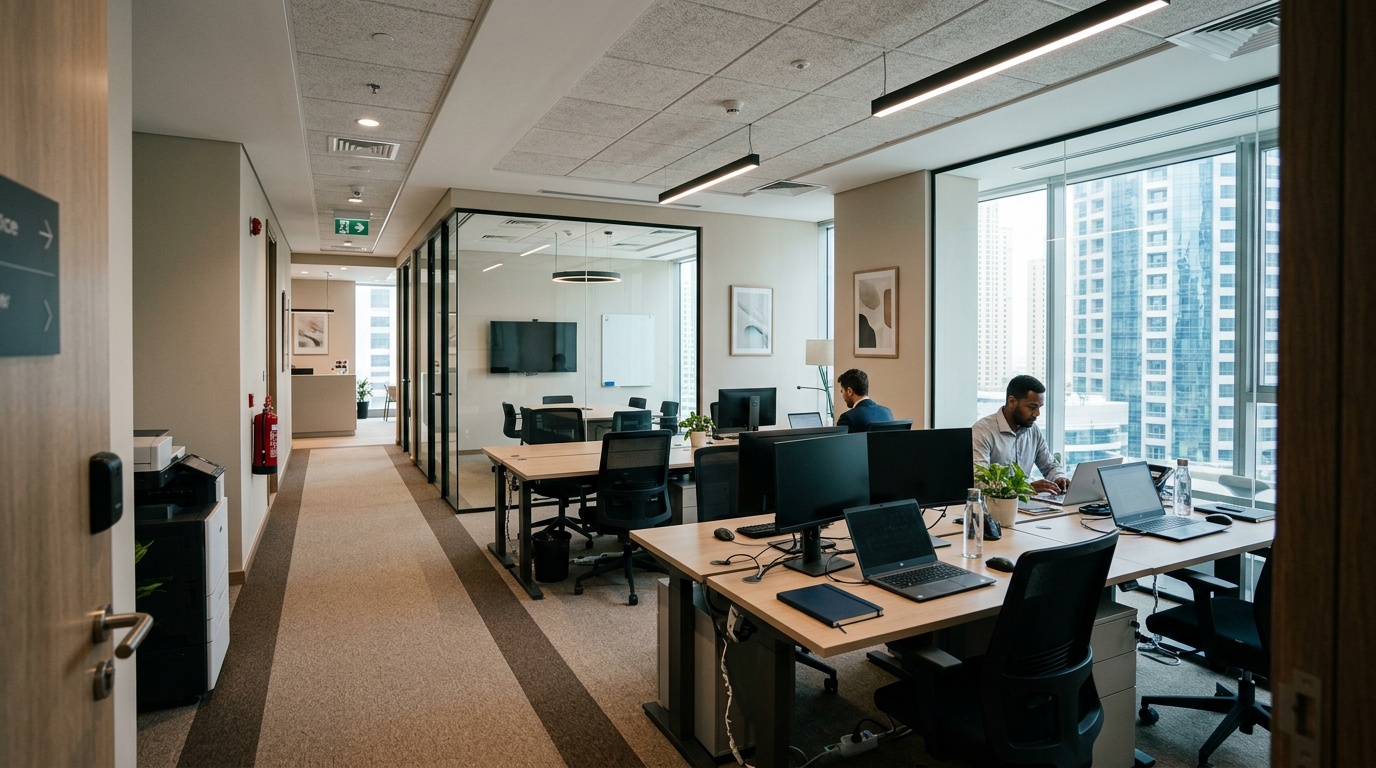
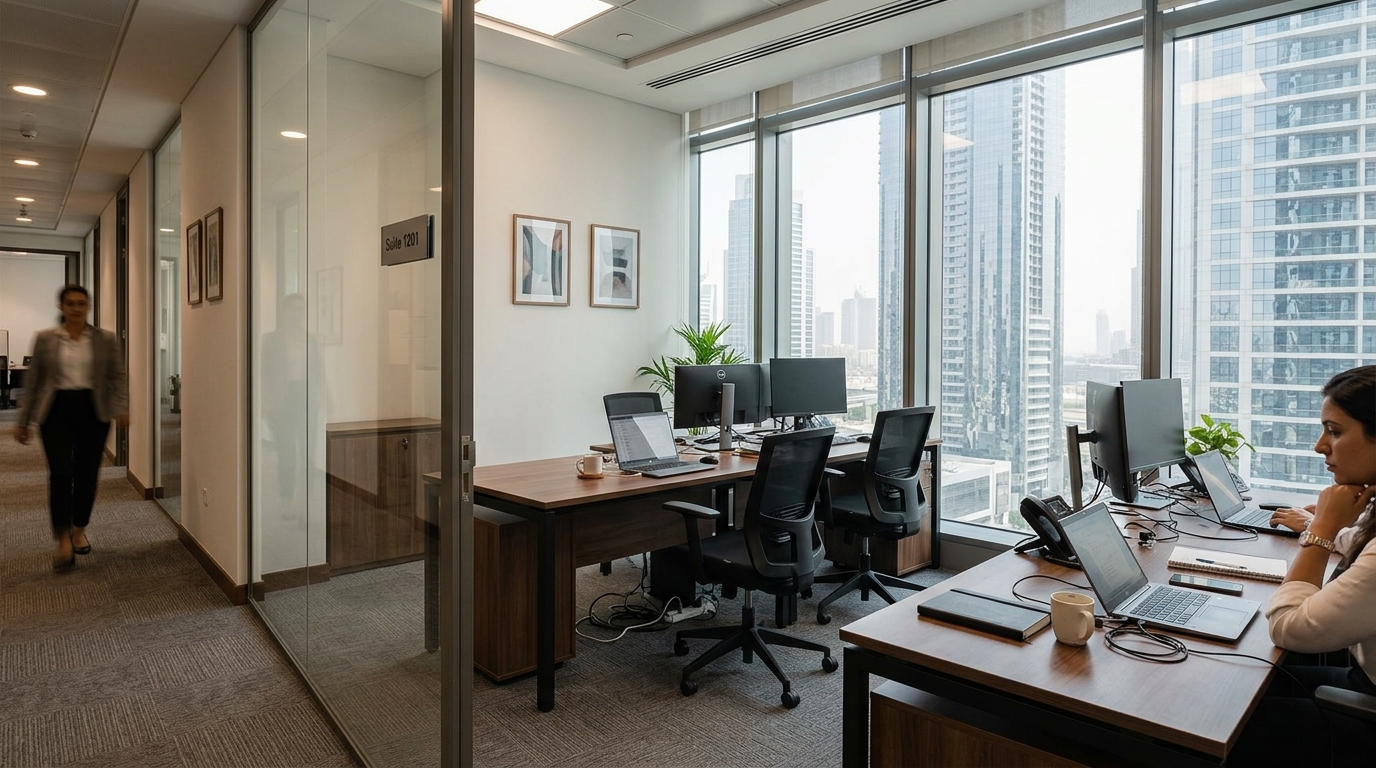
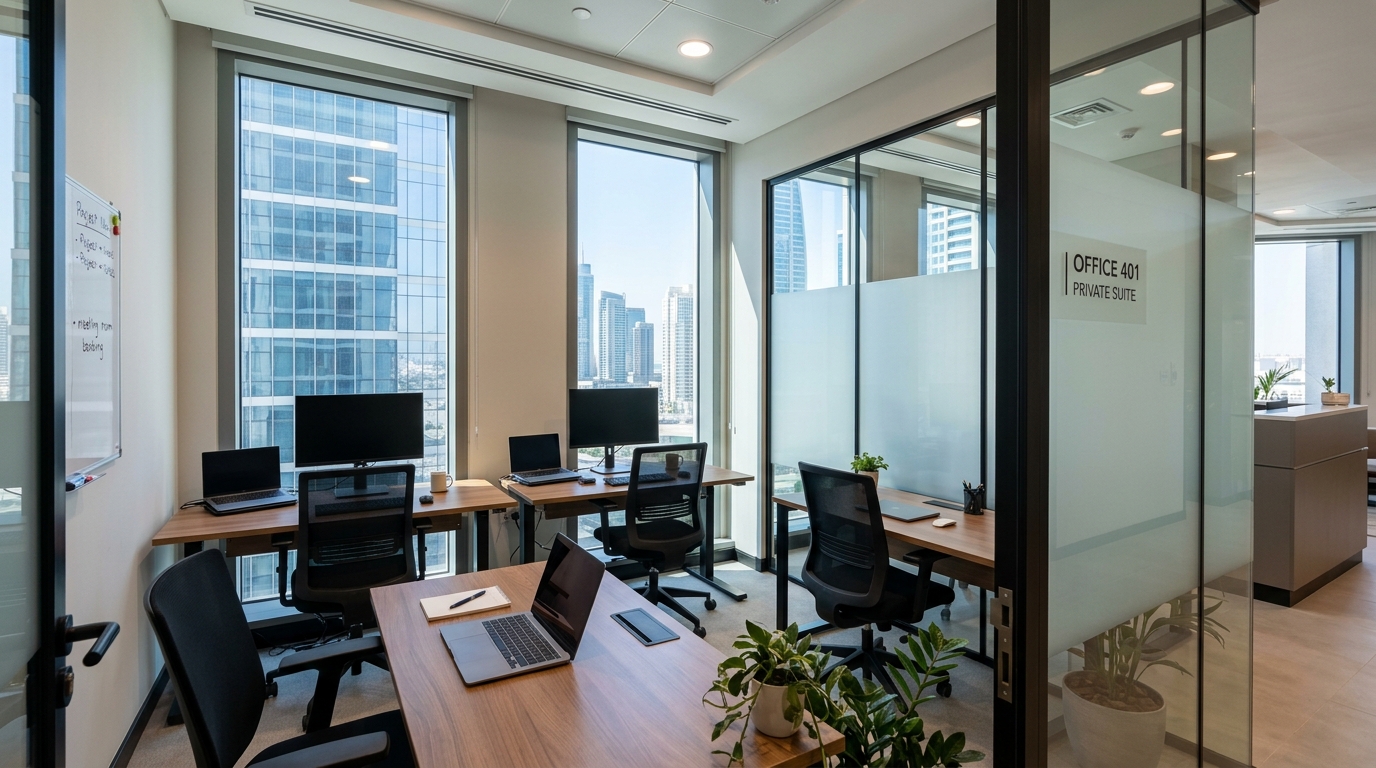
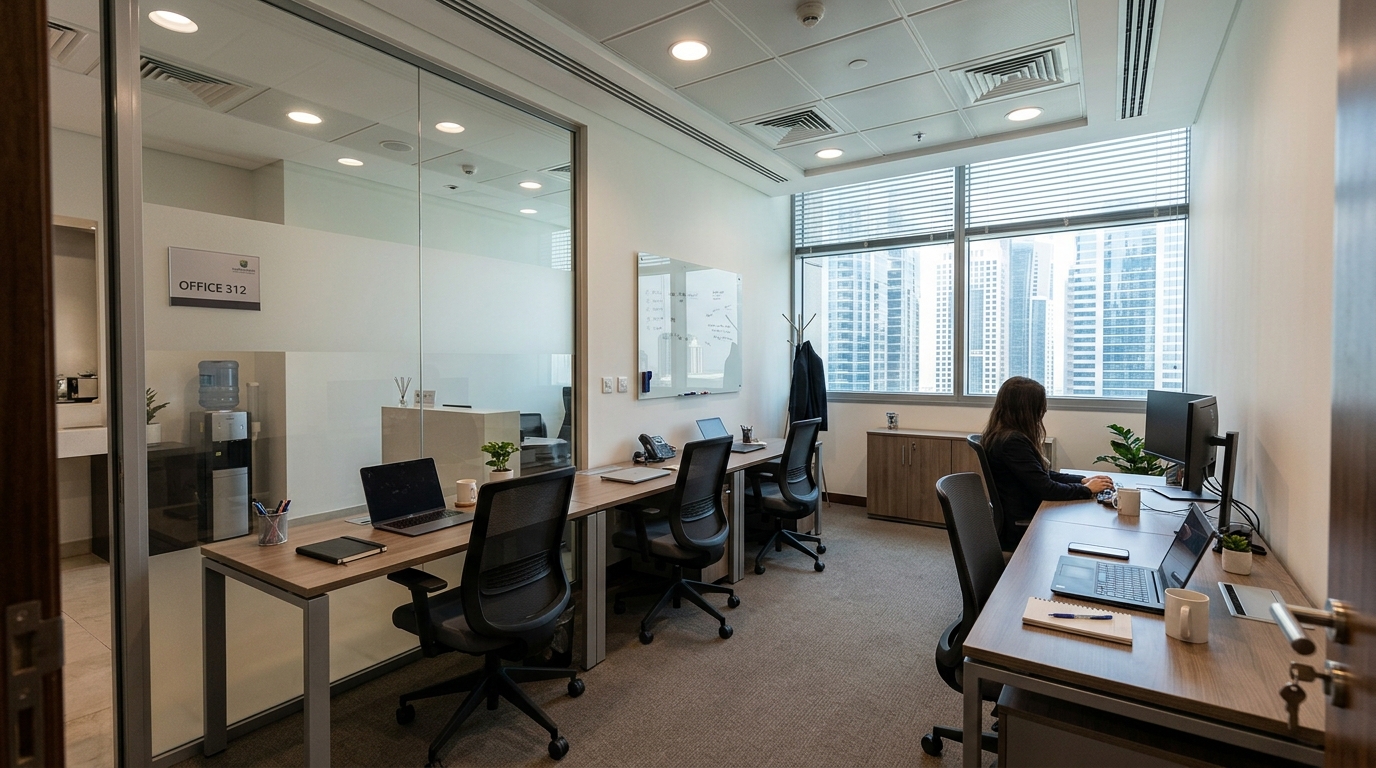
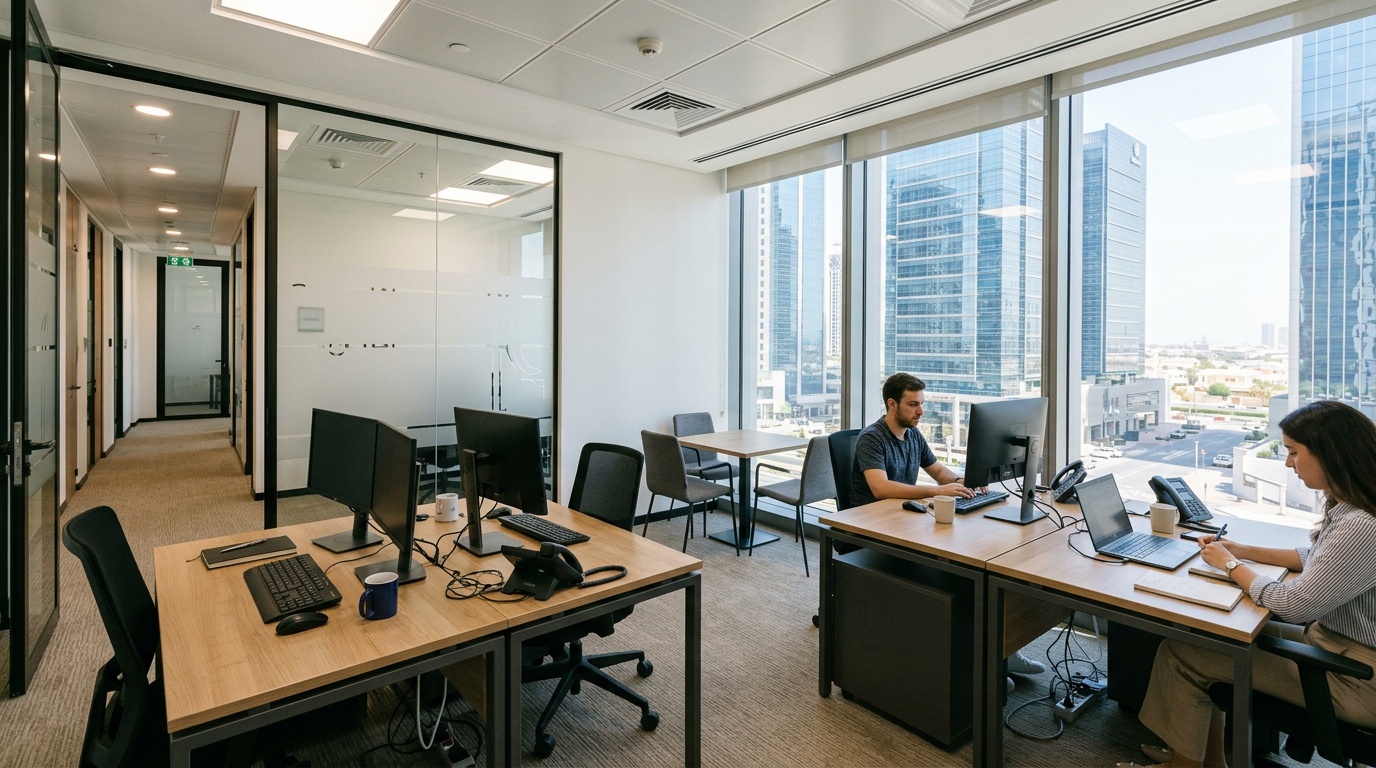
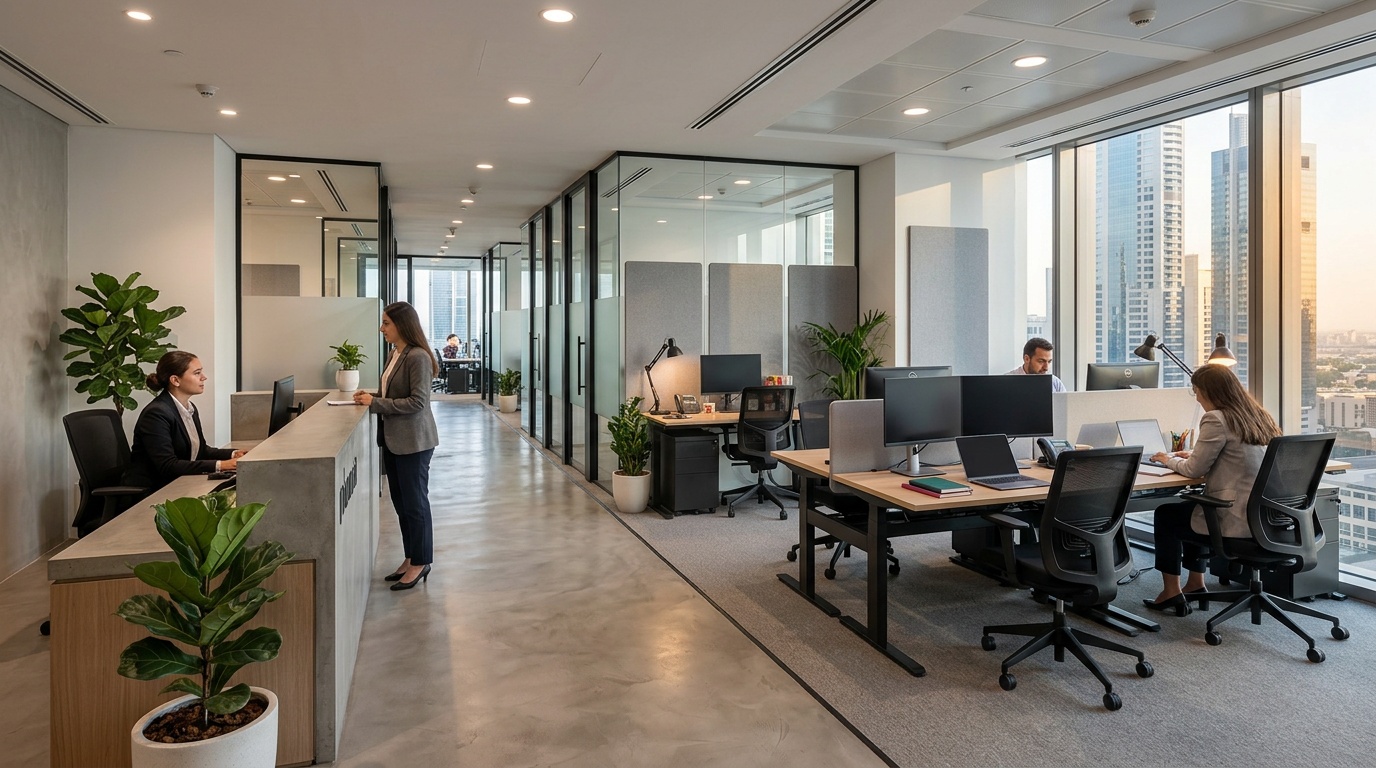
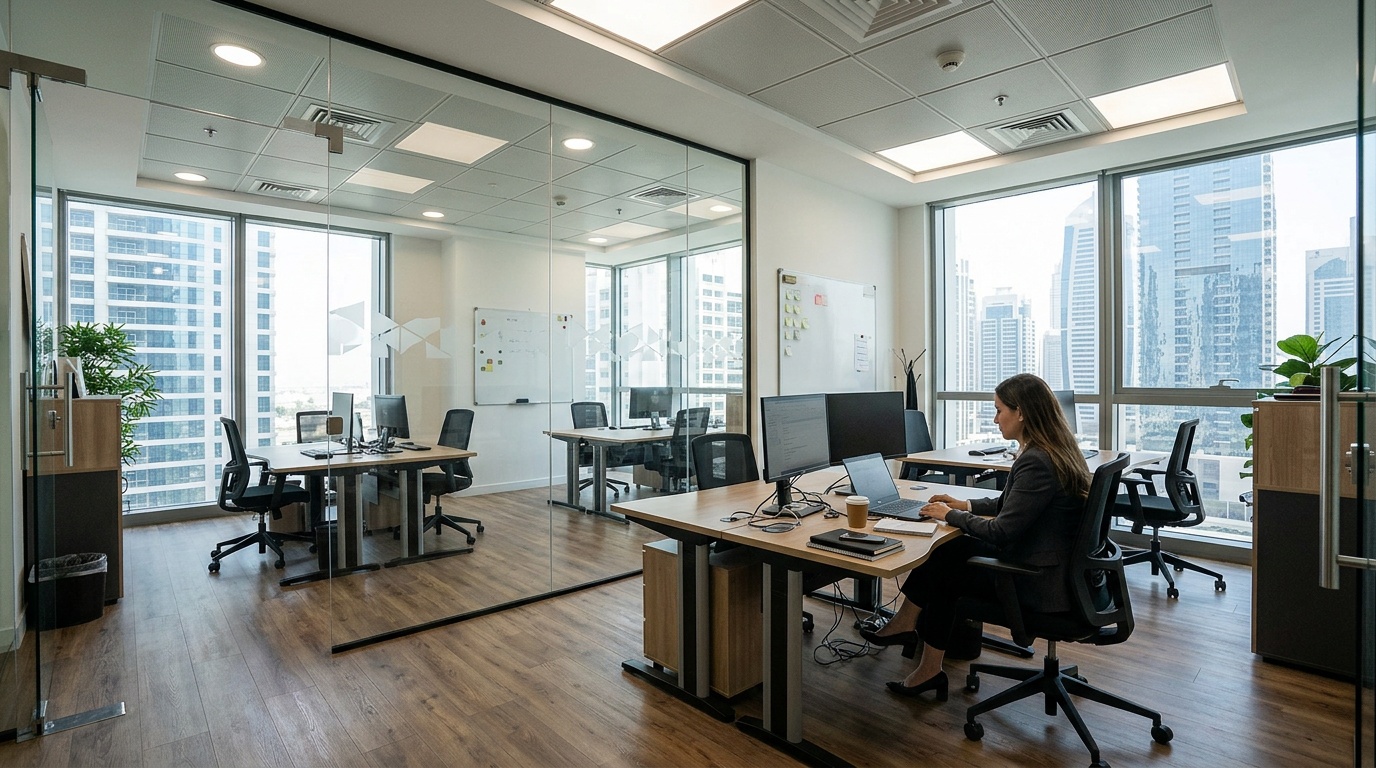
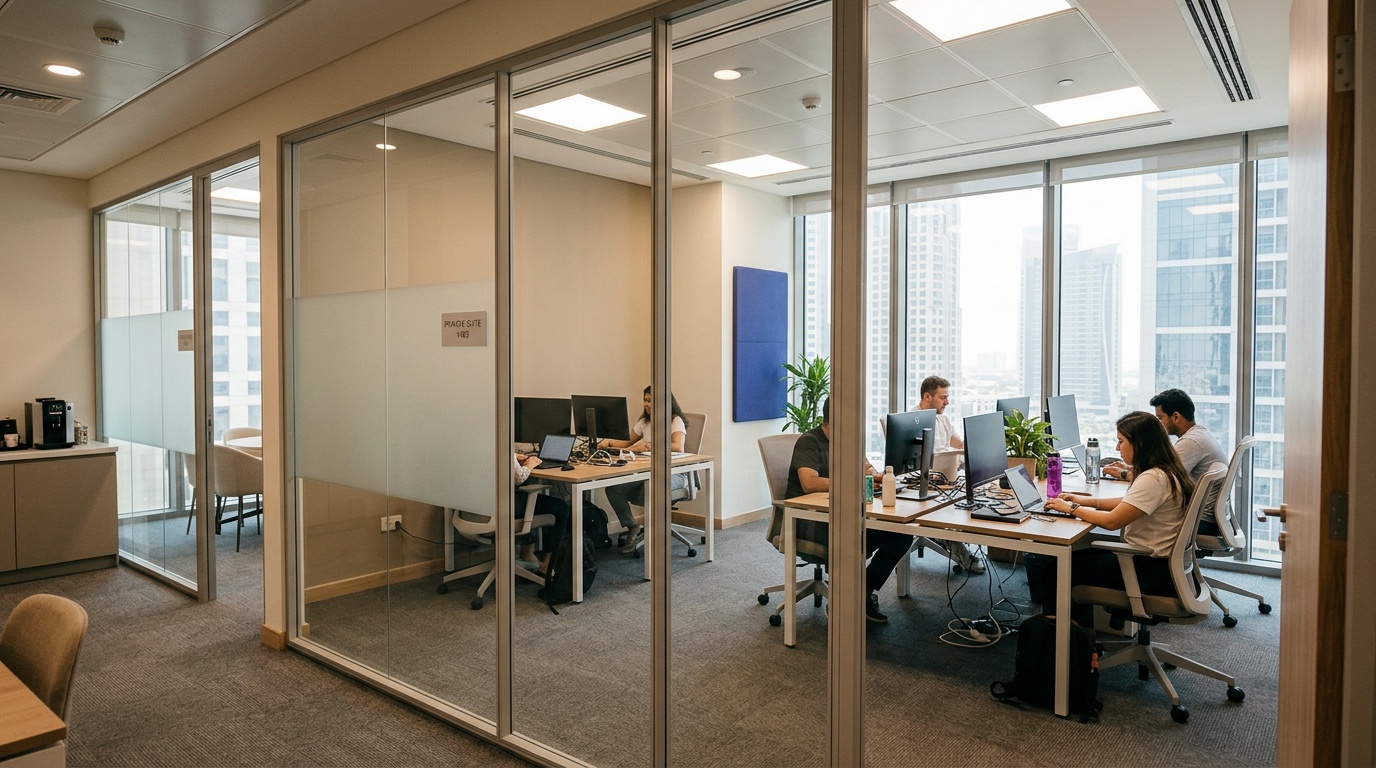
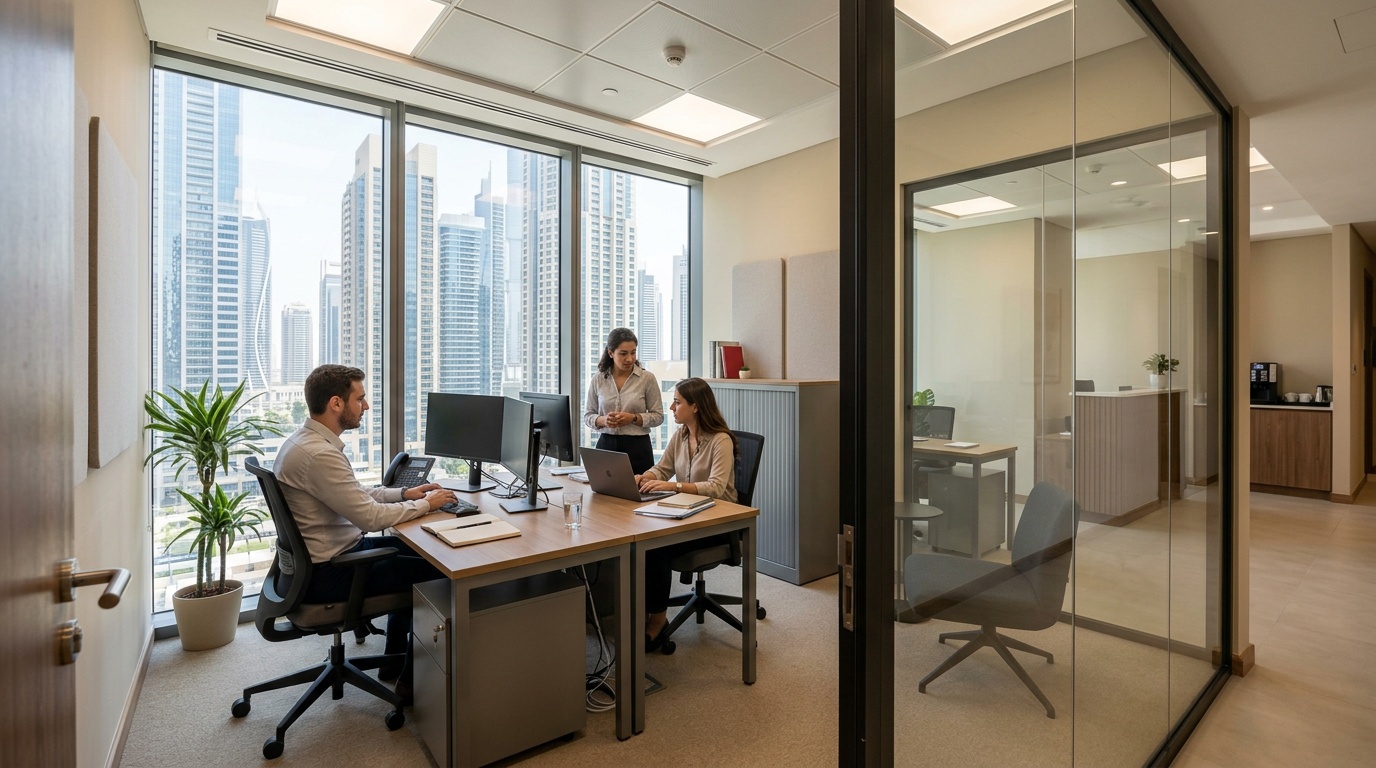
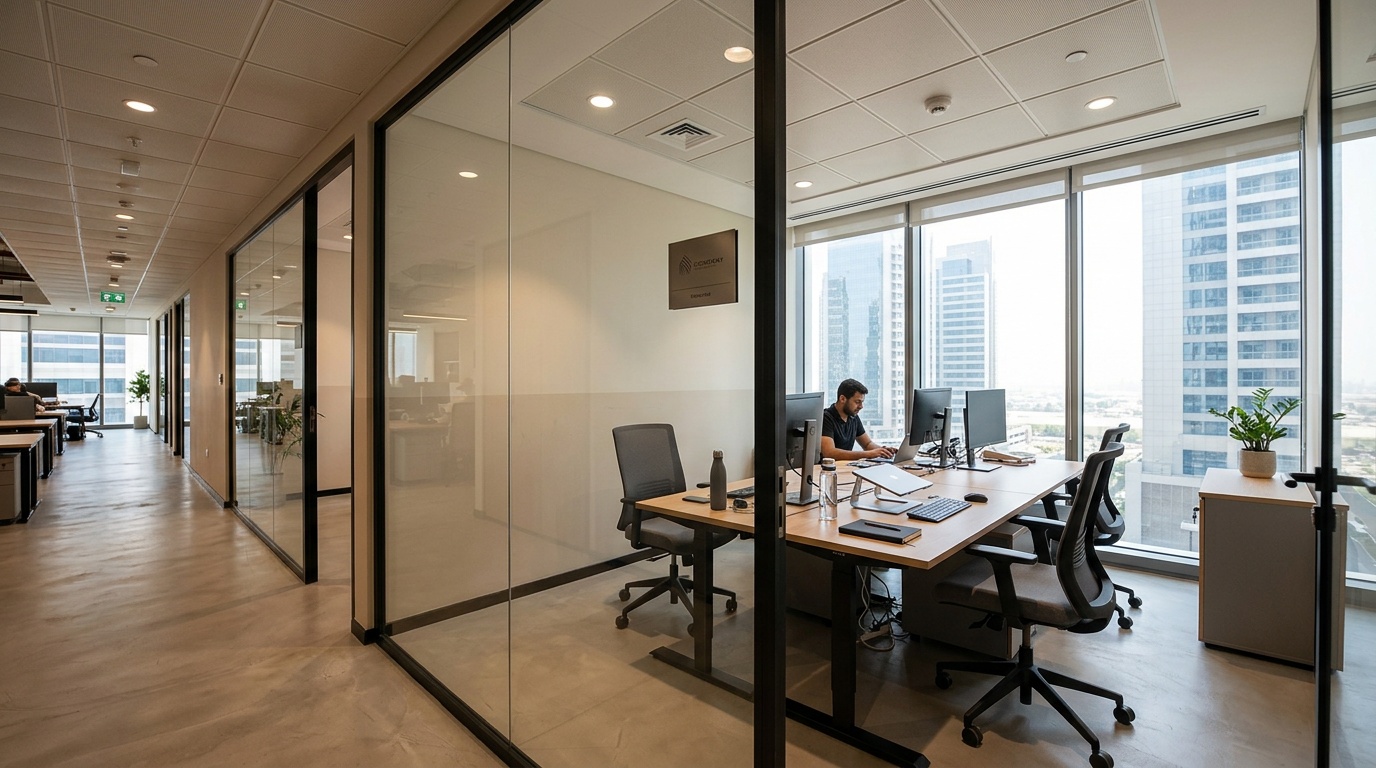
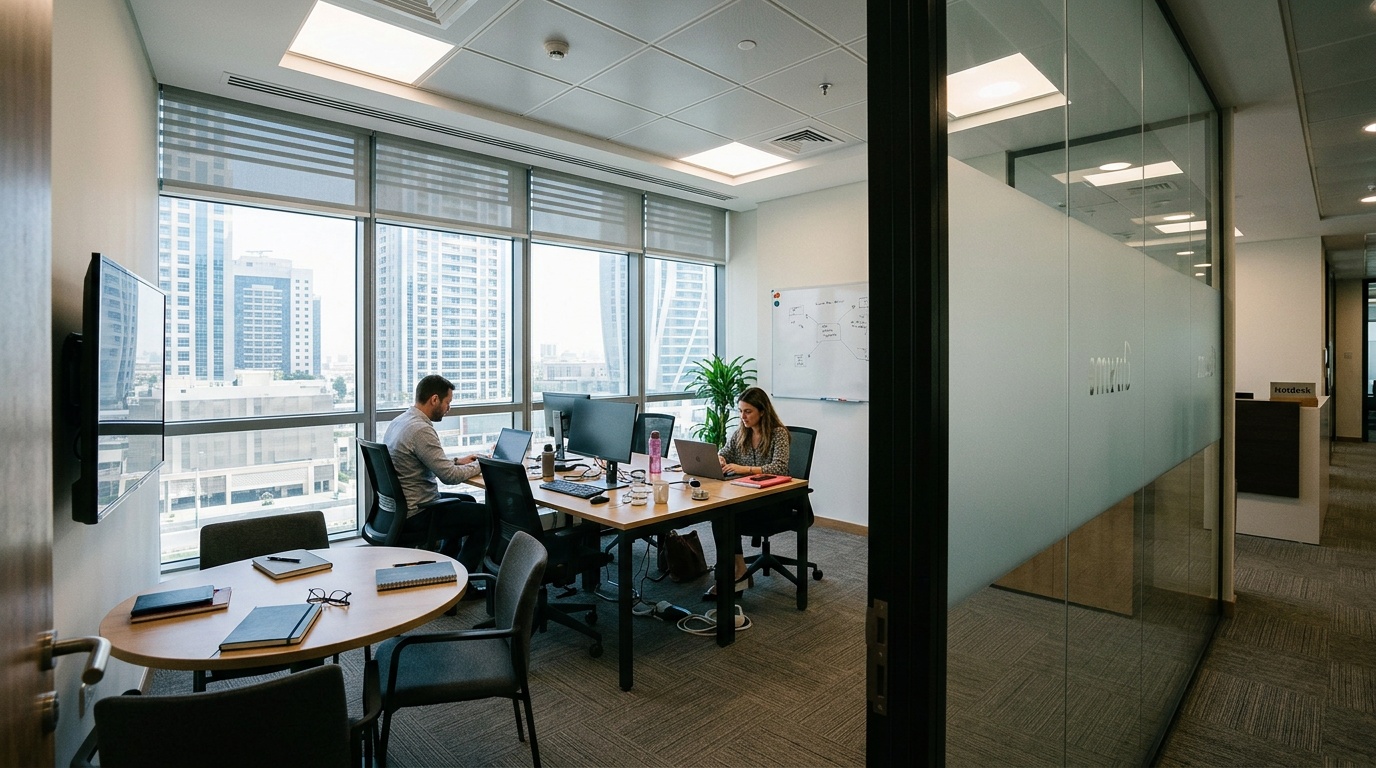
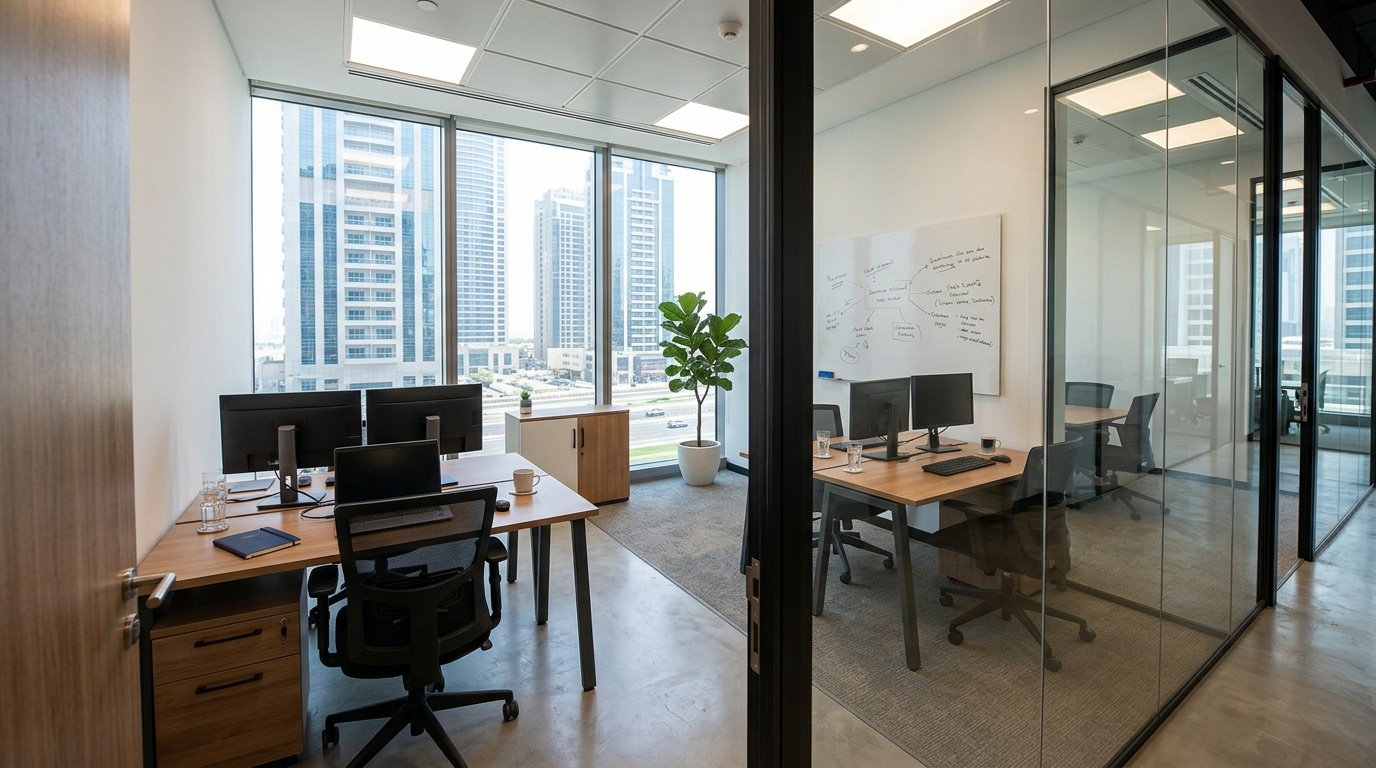
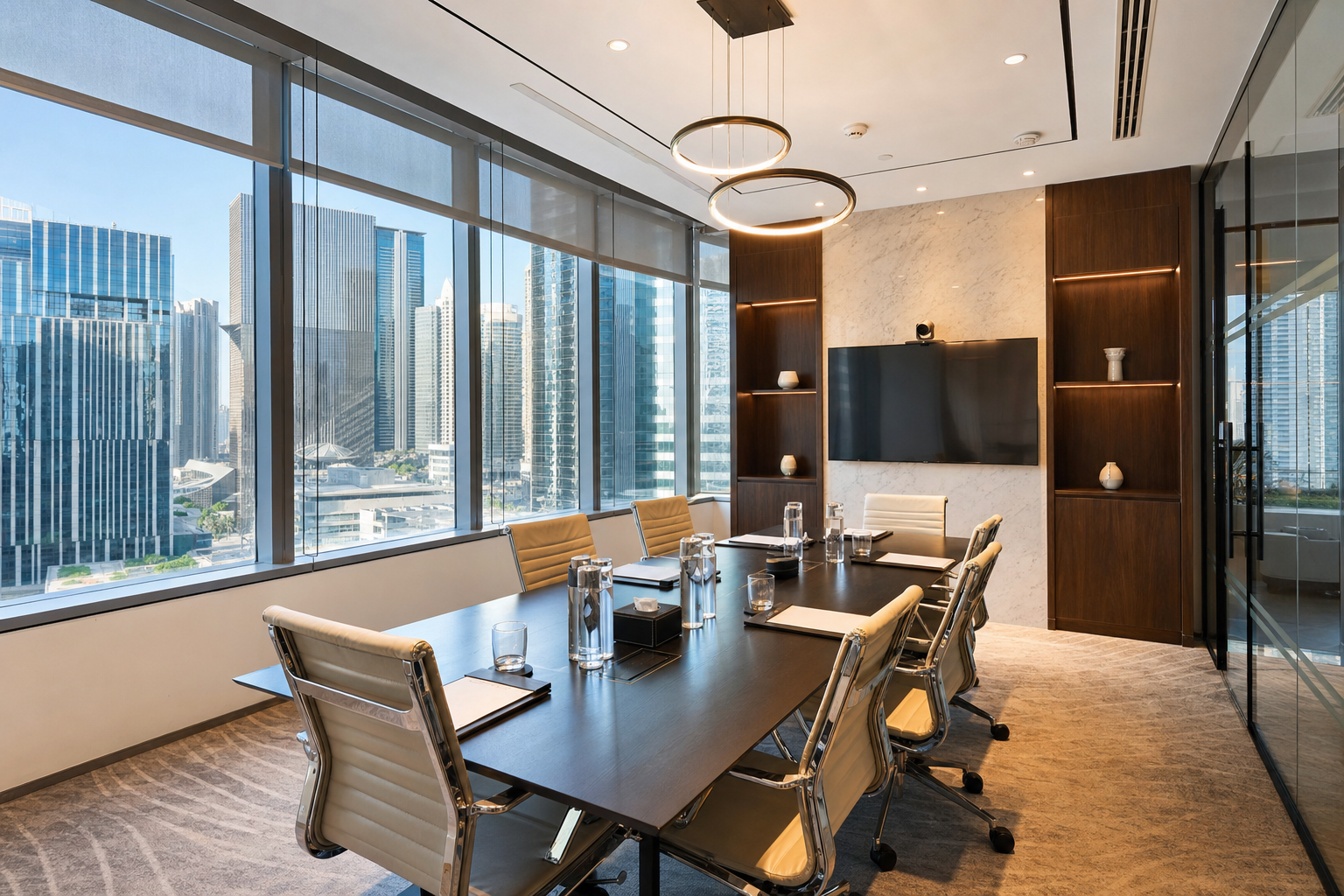
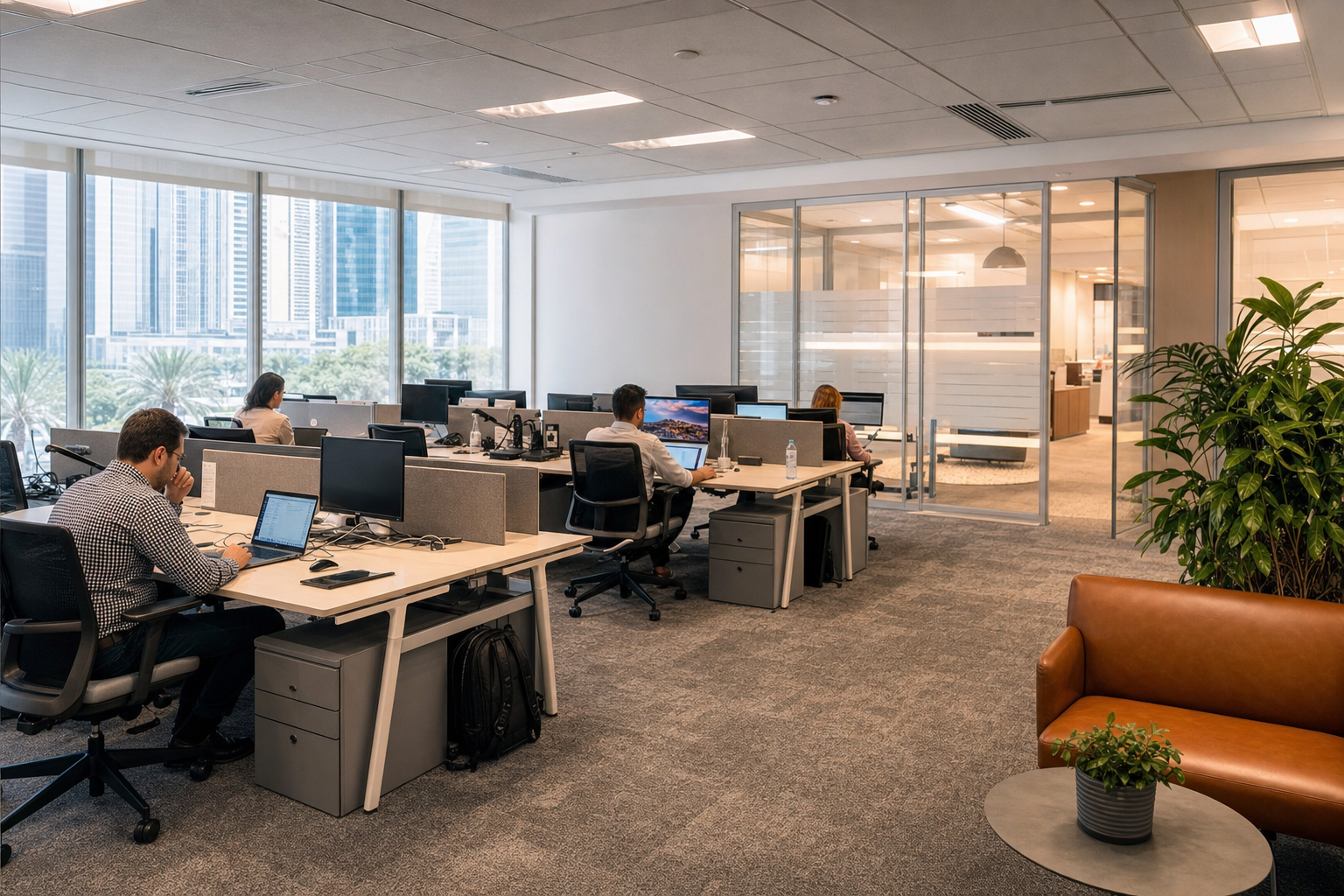
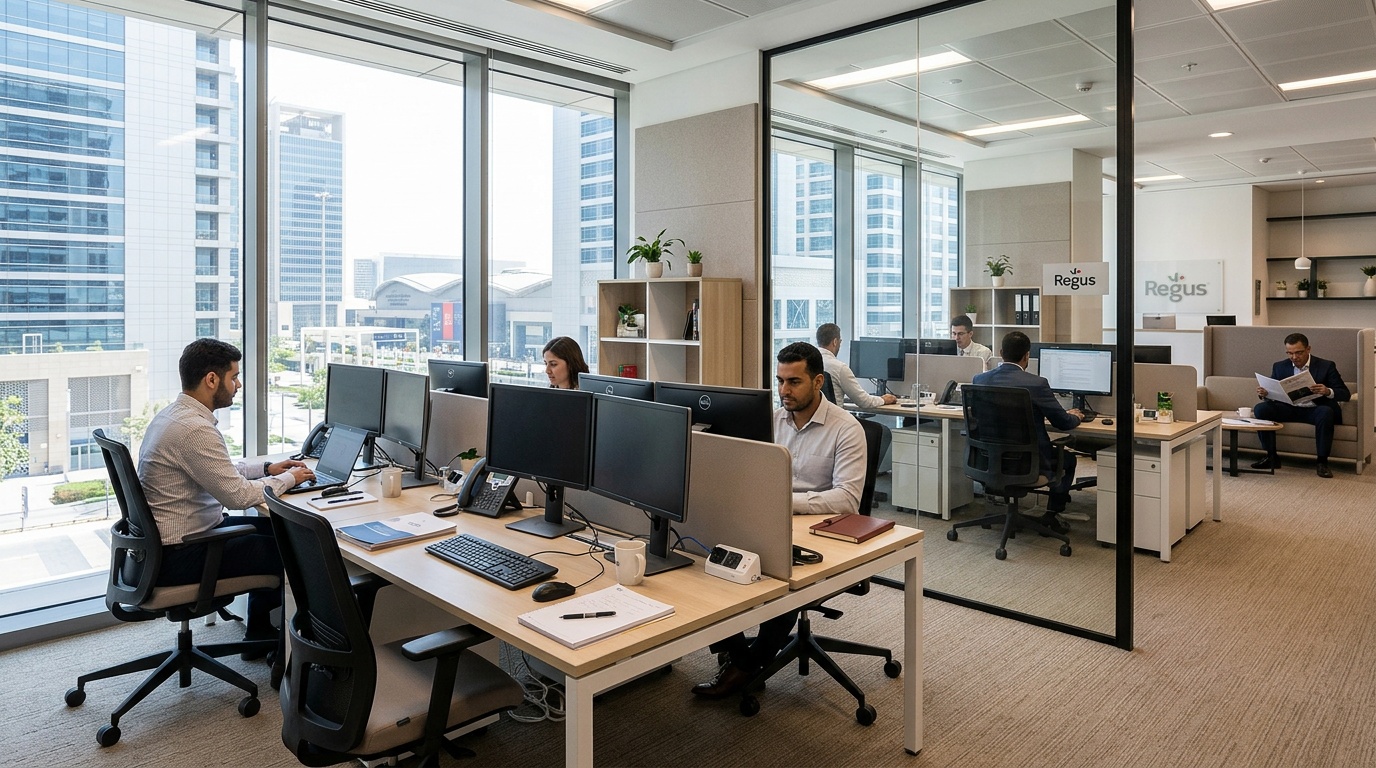
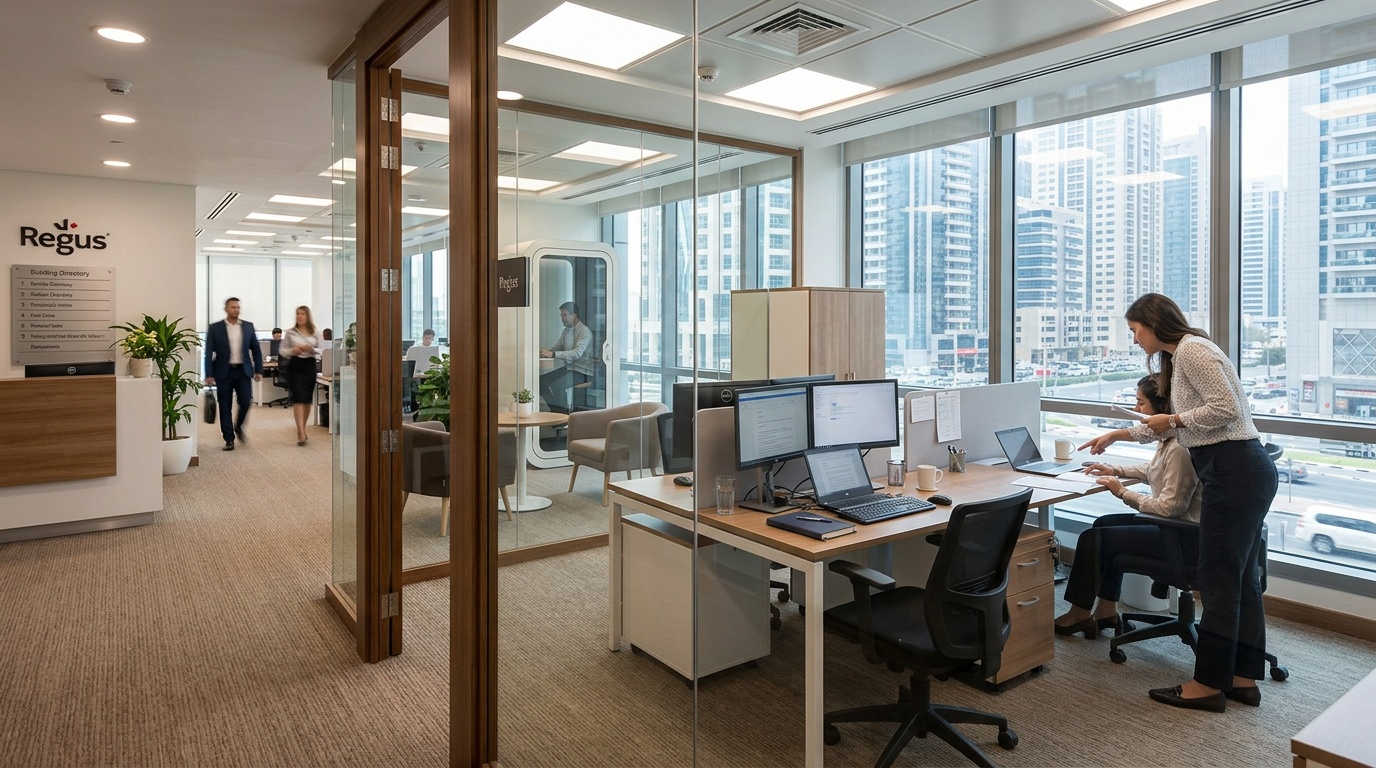
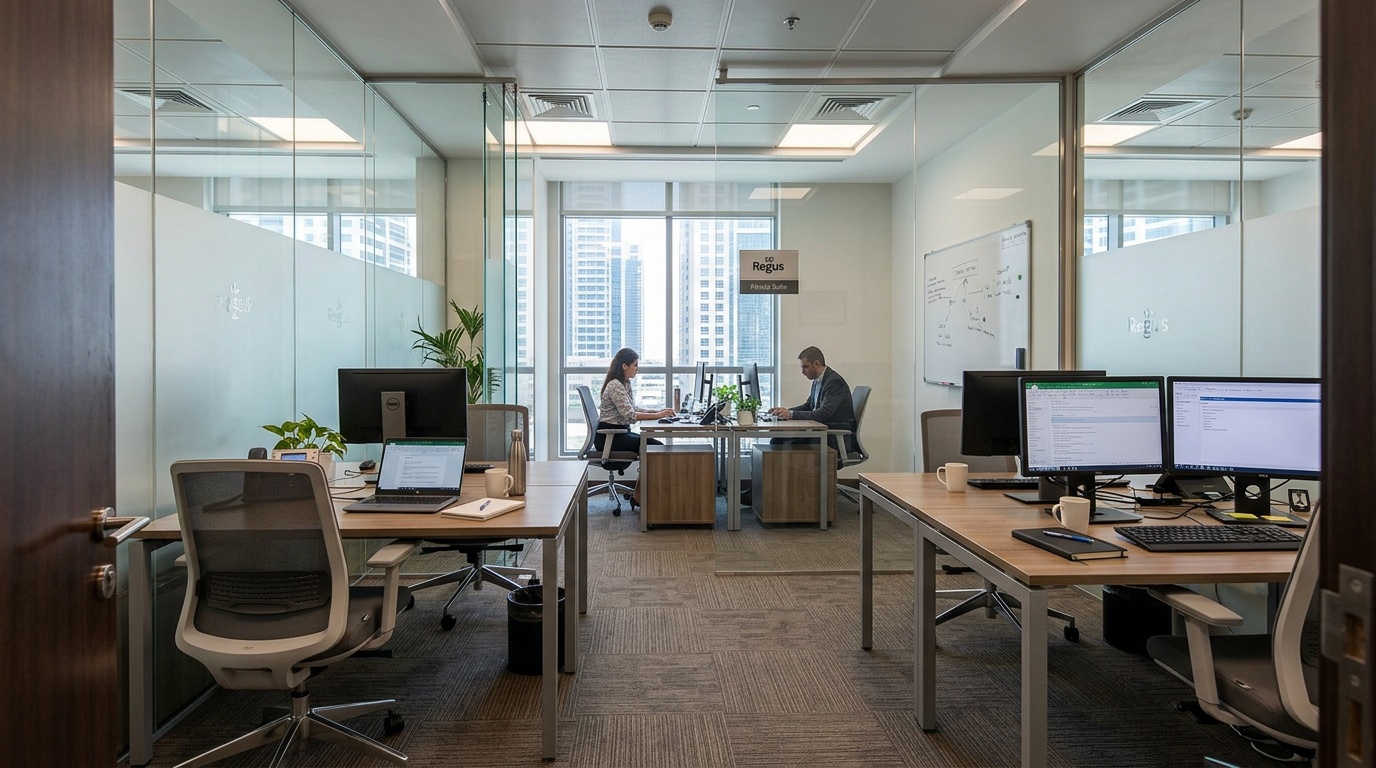
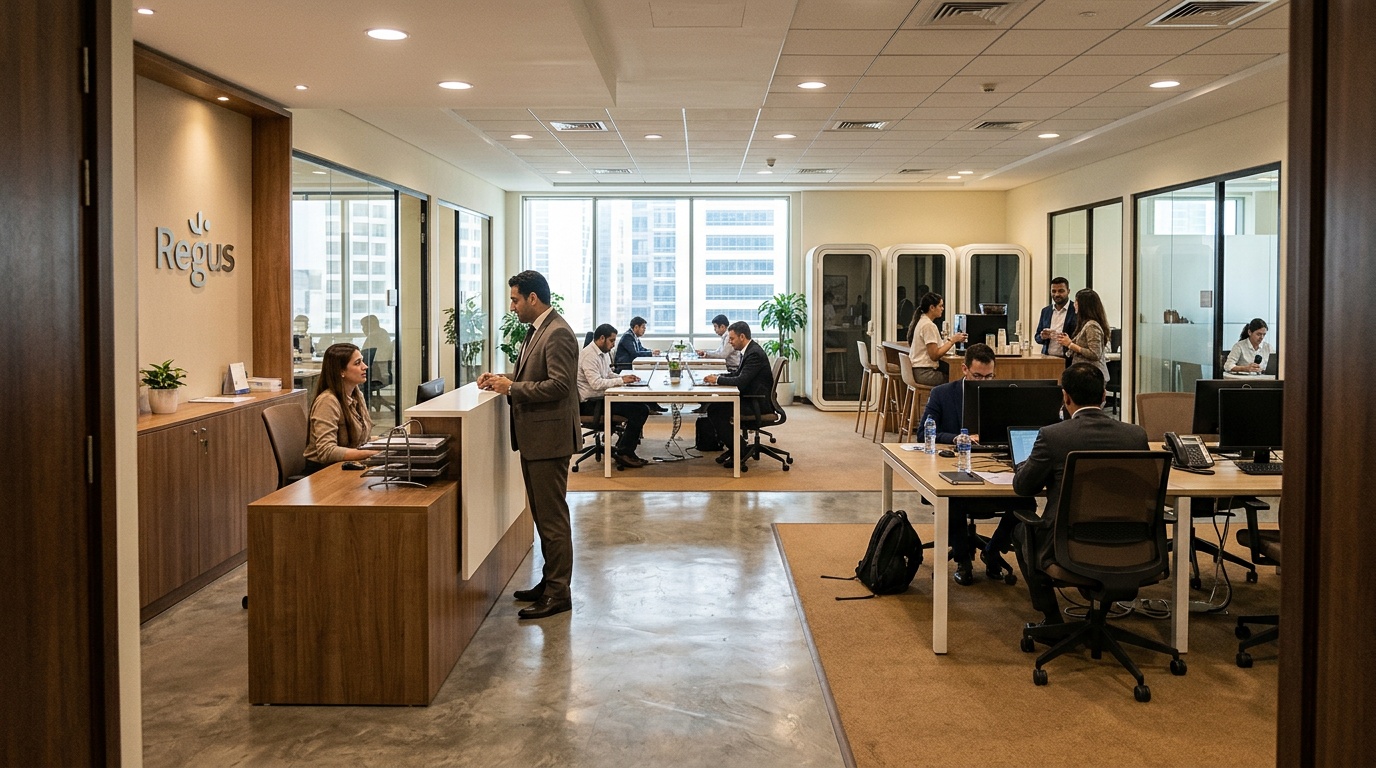
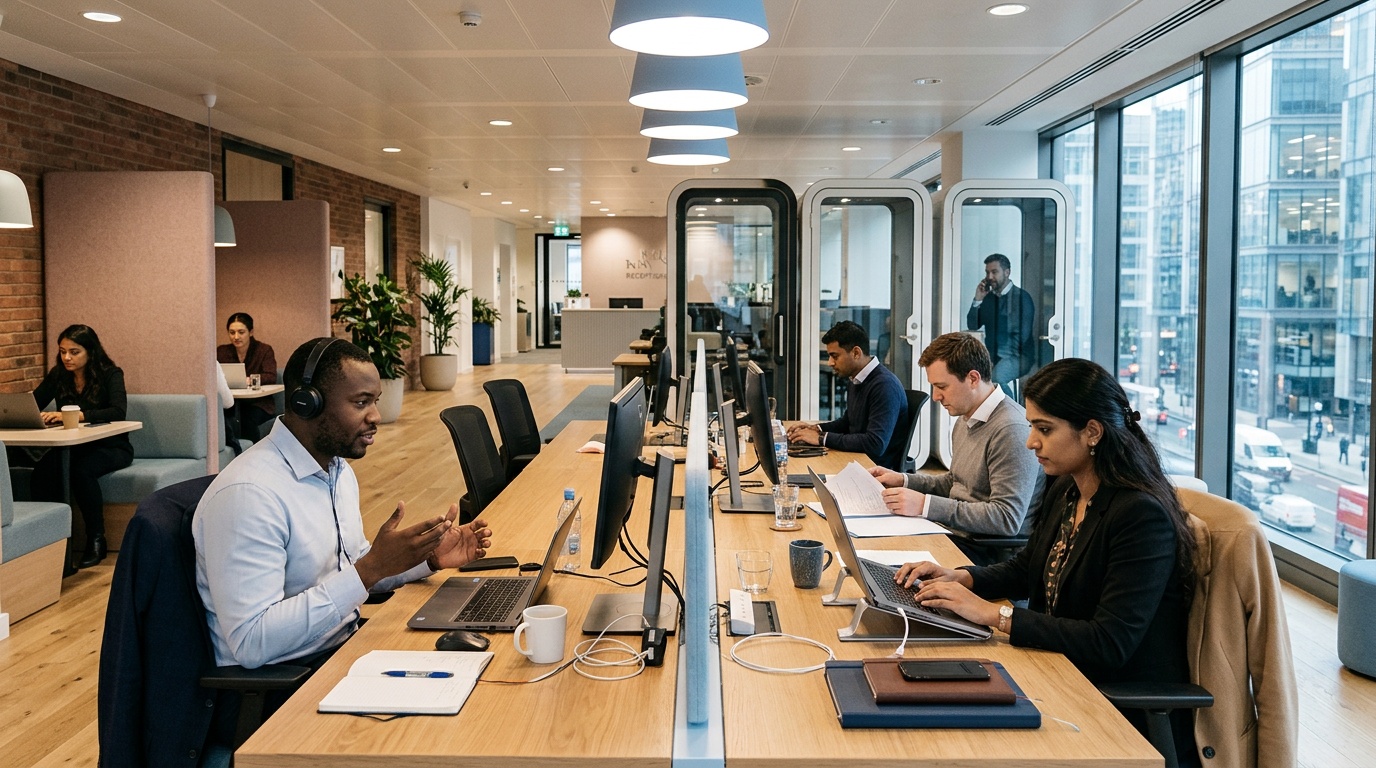
Comparing monthly vs. daily pass options for Hong Kong business centers, which is more cost-effective?
Daily access suits occasional visits. A monthly plan may cost less once your expected attendance reaches its break-even point, but the lower headline price only helps when the plan fits your routine. Access hours, facilities, booking rules, and location can change the calculation.
Key Takeaways
A monthly plan may cost less once your expected attendance reaches its break-even point, but the lower headline price only helps when the plan fits your routine.
Access hours, facilities, booking rules, and location can change the calculation.
Choose daily access for occasional, seasonal, or unpredictable attendance.
Prices and inclusions vary by provider. Review Hong Kong business center listings before booking. Check each listing for availability, access hours, desk type, meeting facilities, and included services.
How do monthly and daily workspace costs compare?
The more cost-effective option depends on how often you attend. Multiply the daily rate by your expected visits, then compare that total with the monthly fee. A monthly plan becomes cheaper when your attendance passes its break-even point and the plan includes what you need.
Use this formula: monthly fee ÷ daily rate = break-even visits. For example, a monthly fee of HK$2,000 compared with a HK$200 daily pass reaches its basic threshold at 10 visits. Compare that result with the access terms listed for Hong Kong coworking and business centre listings.
The calculation is only a starting point. A monthly plan may still cost more if it limits access, excludes meeting rooms, or places you far from clients and home.
What are the benefits of each access option?
Daily access keeps your commitment low. It suits a consultant meeting a client, a freelancer with an uneven schedule, or a remote employee visiting Hong Kong briefly. You pay for the days you use rather than reserving a desk for the full month.
Monthly access gives frequent users a steadier base, subject to the selected plan’s terms. It can also reduce the work of arranging a workspace before each visit. Compare a Hong Kong day-pass workspace with monthly alternatives using your expected visits and the facilities you actually need.
If your routine is still forming, Hong Kong coworking spaces give you a chance to test a location before taking on a longer commitment. Pay attention to the commute, desk setup, noise level, and access hours. A workspace that works on paper may not suit the rhythm of your week.
How should you choose a Hong Kong workspace plan?
Choose daily access for occasional, seasonal, or unpredictable attendance. Choose a monthly plan when regular use puts you above its break-even point and its facilities fit your work. The right comparison is the cost of a routine you can maintain, not only the price of one visit.
Estimate attendance. Count the days you realistically expect to work from the center.
Calculate the threshold. Divide the monthly fee by the daily rate.
Check the inclusions. Confirm the desk type, Wi-Fi, phone booths, meeting rooms, storage, and access hours.
Price the routine. Include commute time, booking restrictions, and additional charges.
Review booking terms and compare districts, commute times, and facilities before committing. A cheaper pass is not a saving if the location makes every visit difficult. If your schedule changes from month to month, the flexibility of daily booking may be worth more than a lower average rate.
Mohamed Khaled is the Founder and CEO of Hotdesk, the on-demand workspace platform providing access to coworking spaces and flexible offices across more than 120 countries.
He spent nearly a decade at PwC before moving into financial leadership at SWVL, where he led the company’s $1.5 billion Nasdaq listing, the first Unicorn from thr Middle East to go public in the United States.
A Forbes 30 Under 30 honoree, Mohamed built Hotdesk from a side project into a global platform, leading a team of more than 50 and expanding into international markets, including the acquisition of Spain-based coworking marketplace YADO.
Also being Co-founder and President of DESK Token, the world’s first asset backed property investment and utility hybrid token, Mohammed is focused on building infrastructure that unlocks underutilized assets – from meeting rooms to private offices and full on buildings – while creating space for the future of work.
Mohamed Khaled is the Founder and CEO of Hotdesk, the on-demand workspace platform providing access to coworking spaces and flexible offices across more than 120 countries.
He spent nearly a decade at PwC before moving into financial leadership at SWVL, where he led the company’s $1.5 billion Nasdaq listing, the first Unicorn from thr Middle East to go public in the United States.
A Forbes 30 Under 30 honoree, Mohamed built Hotdesk from a side project into a global platform, leading a team of more than 50 and expanding into international markets, including the acquisition of Spain-based coworking marketplace YADO.
Also being Co-founder and President of DESK Token, the world’s first asset backed property investment and utility hybrid token, Mohammed is focused on building infrastructure that unlocks underutilized assets – from meeting rooms to private offices and full on buildings – while creating space for the future of work.
Mohamed Khaled is the Founder and CEO of Hotdesk, the on-demand workspace platform providing access to coworking spaces and flexible offices across more than 120 countries.
He spent nearly a decade at PwC before moving into financial leadership at SWVL, where he led the company’s $1.5 billion Nasdaq listing, the first Unicorn from thr Middle East to go public in the United States.
A Forbes 30 Under 30 honoree, Mohamed built Hotdesk from a side project into a global platform, leading a team of more than 50 and expanding into international markets, including the acquisition of Spain-based coworking marketplace YADO.
Also being Co-founder and President of DESK Token, the world’s first asset backed property investment and utility hybrid token, Mohammed is focused on building infrastructure that unlocks underutilized assets – from meeting rooms to private offices and full on buildings – while creating space for the future of work.
Mohamed Khaled is the Founder and CEO of Hotdesk, the on-demand workspace platform providing access to coworking spaces and flexible offices across more than 120 countries.
He spent nearly a decade at PwC before moving into financial leadership at SWVL, where he led the company’s $1.5 billion Nasdaq listing, the first Unicorn from thr Middle East to go public in the United States.
A Forbes 30 Under 30 honoree, Mohamed built Hotdesk from a side project into a global platform, leading a team of more than 50 and expanding into international markets, including the acquisition of Spain-based coworking marketplace YADO.
Also being Co-founder and President of DESK Token, the world’s first asset backed property investment and utility hybrid token, Mohammed is focused on building infrastructure that unlocks underutilized assets – from meeting rooms to private offices and full on buildings – while creating space for the future of work.
Mohamed Khaled is the Founder and CEO of Hotdesk, the on-demand workspace platform providing access to coworking spaces and flexible offices across more than 120 countries.
He spent nearly a decade at PwC before moving into financial leadership at SWVL, where he led the company’s $1.5 billion Nasdaq listing, the first Unicorn from thr Middle East to go public in the United States.
A Forbes 30 Under 30 honoree, Mohamed built Hotdesk from a side project into a global platform, leading a team of more than 50 and expanding into international markets, including the acquisition of Spain-based coworking marketplace YADO.
Also being Co-founder and President of DESK Token, the world’s first asset backed property investment and utility hybrid token, Mohammed is focused on building infrastructure that unlocks underutilized assets – from meeting rooms to private offices and full on buildings – while creating space for the future of work.
Industry reviews on the best coworking spaces for productivity in Dubai
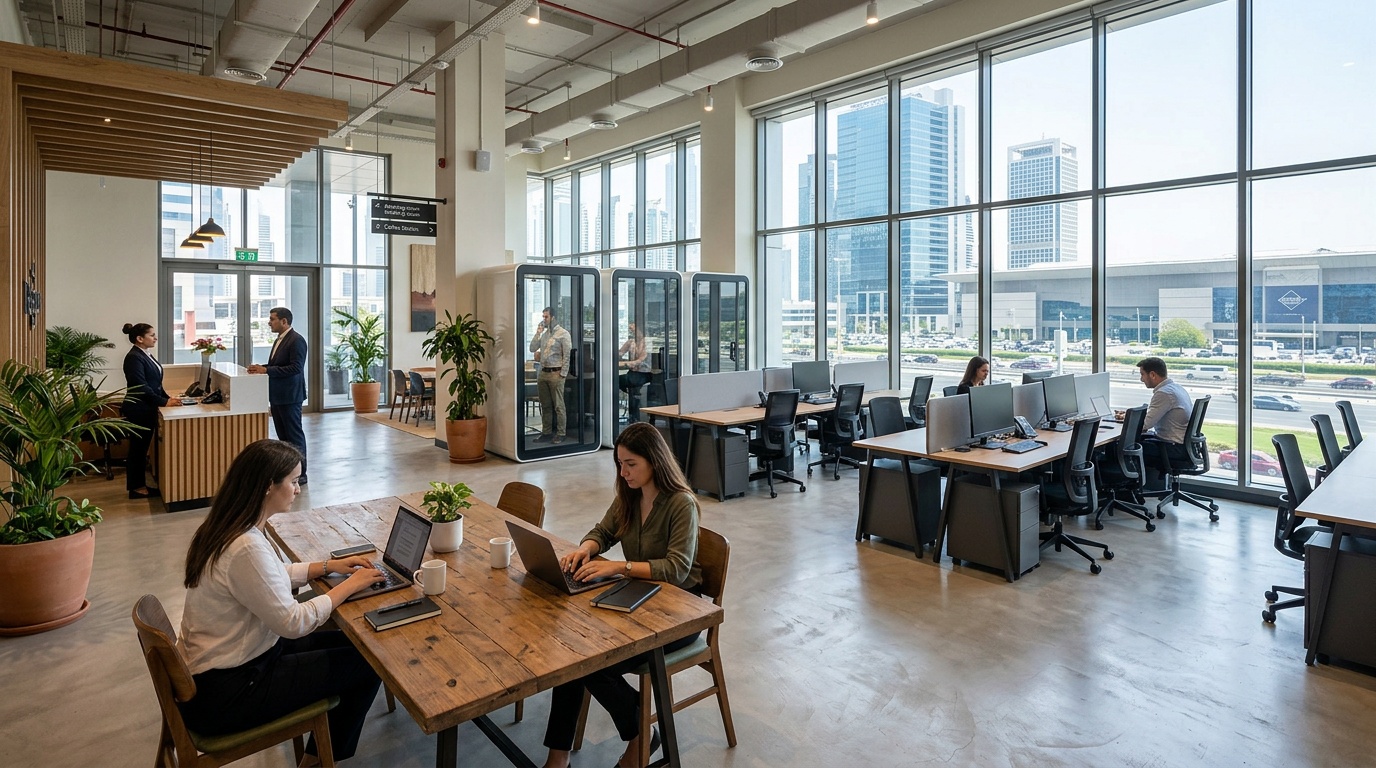
The best coworking space in Dubai is the one that supports the work on your calendar. Stable internet, accessible power, manageable noise, clear booking rules, and practical transport links matter more than a polished reception area. A useful review tests those conditions during a normal workday, not just during a first visit.
Key Takeaways
The best coworking space in Dubai is the one that supports the work on your calendar.
Stable internet, accessible power, manageable noise, clear booking rules, and practical transport links matter more than a polished reception area.
A useful review tests those conditions during a normal workday, not just during a first visit.
At Hotdesk, we judge workspace fit by what remains dependable after the first visit. A polished lobby cannot compensate for a dropped video call, an occupied phone booth, or unclear booking terms. Infrastructure travels with the user, so the daily routine shouldn’t need to be rebuilt at every desk.
What do coworking space reviews in Dubai measure?
Useful reviews measure the conditions that affect repeat work: Wi-Fi, power access, desk and chair quality, lighting, air conditioning, cleanliness, quiet areas, phone booths, meeting rooms, reception support, and transport links. The most useful comments say when the member visited, what they used, and whether the setup held up through the workday.
Also check details that can interrupt a schedule: parking, elevator access, building security, nearby food, opening hours, guest rules, and reservation limits. A workspace such as Servcorp Boulevard Plaza should be assessed against your working requirements, not its address alone.
Key insight: Repeated comments about internet access, privacy, temperature control, reservations, and availability provide stronger evidence than one comment about décor.
Why compare Dubai coworking spaces through reviews?
Reviews reveal operating details that photographs cannot show. Recent comments from freelancers, remote employees, founders, and teams can indicate whether noise rises at busy times, rooms are available when needed, reception hours match your schedule, and billing terms are clear.
Location changes the value of a desk. A central address may cut travel between client meetings, while a quieter district may suit longer focus blocks. Compare traffic, metro access, parking, and proximity to the people you meet. Options such as Ascendris Business Bay can be assessed against those access requirements.
How to choose a Dubai coworking space for productivity
Start with the tasks on your calendar, then test each location against them. Focused writing needs controlled noise; client calls need privacy; team sessions need dependable room access. This task-first method produces a more useful shortlist than choosing by appearance. What must work every time you sit down?
Check noise control and privacy before booking
Look for separated work zones, quiet areas, phone booths, private offices, and enclosed conference rooms. A space built around informal collaboration may not suit a day filled with calls. When assessing The Executive Centre Dubai, check whether its quiet zones and private offices match your schedule.
Verify connectivity, power, and desk quality
Confirm network performance, power outlets, desk depth, chair quality, lighting, temperature, lockers, printing, and accessibility. Ask what happens if a meeting room or connection becomes unavailable. Reliability shows during an interruption, not during a tour.
Calculate the full cost of access
Request a written breakdown covering day passes, dedicated desks, meeting-room credits, phone booths, printing, mail handling, guest access, deposits, taxes, and after-hours entry. The advertised rate is only one part of the decision.
Evaluate location, parking, and daily access
Consider proximity to clients, metro stations, highways, hotels, restaurants, and airports. If possible, visit at your usual arrival time and observe the space under normal conditions. A workspace should fit the day you actually have. Options such as Nook Office DMCC can be assessed for transport access.
Which coworking space in Dubai may suit deep focus and productivity?
Look for quiet zones, acoustic separation, phone booths, ergonomic seating, stable Wi-Fi, natural light, and enough power outlets.
How can I compare coworking spaces in Dubai using user reviews?
Read recent comments alongside the rating count and member type. Give extra weight to repeated observations about noise, internet reliability, private rooms, parking, billing, and staff response.
At Hotdesk, Mohammad focuses on engineering systems for workspace bookings.
He writes about scaling SaaS platforms, backend architecture, mobile engineering, and real-world technical decisions behind building and operating global products.
Mohammad El Shaari is the CTO of Hotdesk, where he leads the engineering team building and scaling a SaaS platform for on-demand workspace bookings. A Computer Science graduate from The British University in Egypt, with experience in enterprise software, AI, cloud infrastructure, and cybersecurity.
Before Hotdesk, he served as CTO of Vee Tech, where he led technical delivery and helped build an innovation lab at Capital International Schools.
At Hotdesk, Mohammad focuses on building scalable systems that handle real-time availability, global user distribution, and high-throughput transactions. He specializes in scalable system design, cloud-native infrastructure, and building high-performance SaaS platforms that support global user bases.
He writes about scaling SaaS platforms, backend architecture, mobile engineering, and real-world technical decisions behind building and operating global products.
Mohammad El Shaari is the CTO of Hotdesk, where he leads the engineering team building and scaling a global SaaS platform for on-demand workspace bookings across 80+ countries. A Computer Science graduate from The British University in Egypt, he brings over a decade of hands-on experience in enterprise software, AI, cloud infrastructure, and cybersecurity.
Before Hotdesk, he served as CTO of Vee Tech, where he led technical delivery for 12+ enterprise clients generating $30M+ in annual revenue, and helped build Egypt’s first innovation lab at Capital International Schools.
At Hotdesk, Mohammad focuses on building scalable systems that handle real-time availability, global user distribution, and high-throughput transactions. He specializes in scalable system design, cloud-native infrastructure, and building high-performance SaaS platforms that support global user bases.
He writes about scaling SaaS platforms, backend architecture, mobile engineering, and real-world technical decisions behind building and operating global products.
Mohammad El Shaari is the CTO of Hotdesk, where he leads the engineering team building and scaling a global SaaS platform for on-demand workspace bookings across 80+ countries. A Computer Science graduate from The British University in Egypt, he brings over a decade of hands-on experience in enterprise software, AI, cloud infrastructure, and cybersecurity.
Before Hotdesk, he served as CTO of Vee Tech, where he led technical delivery for 12+ enterprise clients generating $30M+ in annual revenue, and helped build Egypt’s first innovation lab at Capital International Schools.
At Hotdesk, Mohammad focuses on building scalable systems that handle real-time availability, global user distribution, and high-throughput transactions. He specializes in scalable system design, cloud-native infrastructure, and building high-performance SaaS platforms that support global user bases.
He writes about scaling SaaS platforms, backend architecture, mobile engineering, and real-world technical decisions behind building and operating global products.
Mohammad El Shaari is the CTO of Hotdesk, where he leads the engineering team building and scaling a global SaaS platform for on-demand workspace bookings across 80+ countries. A Computer Science graduate from The British University in Egypt, he brings over a decade of hands-on experience in enterprise software, AI, cloud infrastructure, and cybersecurity.
Before Hotdesk, he served as CTO of Vee Tech, where he led technical delivery for 12+ enterprise clients generating $30M+ in annual revenue, and helped build Egypt’s first innovation lab at Capital International Schools.
At Hotdesk, Mohammad focuses on building scalable systems that handle real-time availability, global user distribution, and high-throughput transactions. He specializes in scalable system design, cloud-native infrastructure, and building high-performance SaaS platforms that support global user bases.
He writes about scaling SaaS platforms, backend architecture, mobile engineering, and real-world technical decisions behind building and operating global products.
Mohammad El Shaari is the CTO of Hotdesk, where he leads the engineering team building and scaling a global SaaS platform for on-demand workspace bookings across 80+ countries. A Computer Science graduate from The British University in Egypt, he brings over a decade of hands-on experience in enterprise software, AI, cloud infrastructure, and cybersecurity.
Before Hotdesk, he served as CTO of Vee Tech, where he led technical delivery for 12+ enterprise clients generating $30M+ in annual revenue, and helped build Egypt’s first innovation lab at Capital International Schools.
At Hotdesk, Mohammad focuses on building scalable systems that handle real-time availability, global user distribution, and high-throughput transactions. He specializes in scalable system design, cloud-native infrastructure, and building high-performance SaaS platforms that support global user bases.
He writes about scaling SaaS platforms, backend architecture, mobile engineering, and real-world technical decisions behind building and operating global products.
Mohammad El Shaari is the CTO of Hotdesk, where he leads the engineering team building and scaling a global SaaS platform for on-demand workspace bookings across 80+ countries. A Computer Science graduate from The British University in Egypt, he brings over a decade of hands-on experience in enterprise software, AI, cloud infrastructure, and cybersecurity.
Before Hotdesk, he served as CTO of Vee Tech, where he led technical delivery for 12+ enterprise clients generating $30M+ in annual revenue, and helped build Egypt’s first innovation lab at Capital International Schools.
At Hotdesk, Mohammad focuses on building scalable systems that handle real-time availability, global user distribution, and high-throughput transactions. He specializes in scalable system design, cloud-native infrastructure, and building high-performance SaaS platforms that support global user bases.
He writes about scaling SaaS platforms, backend architecture, mobile engineering, and real-world technical decisions behind building and operating global products.
Mohammad El Shaari is the CTO of Hotdesk, where he leads the engineering team building and scaling a global SaaS platform for on-demand workspace bookings across 80+ countries. A Computer Science graduate from The British University in Egypt, he brings over a decade of hands-on experience in enterprise software, AI, cloud infrastructure, and cybersecurity.
Before Hotdesk, he served as CTO of Vee Tech, where he led technical delivery for 12+ enterprise clients generating $30M+ in annual revenue, and helped build Egypt’s first innovation lab at Capital International Schools.
At Hotdesk, Mohammad focuses on building scalable systems that handle real-time availability, global user distribution, and high-throughput transactions. He specializes in scalable system design, cloud-native infrastructure, and building high-performance SaaS platforms that support global user bases.
He writes about scaling SaaS platforms, backend architecture, mobile engineering, and real-world technical decisions behind building and operating global products.
Mohammad El Shaari is the CTO of Hotdesk, where he leads the engineering team building and scaling a global SaaS platform for on-demand workspace bookings across 80+ countries. A Computer Science graduate from The British University in Egypt, he brings over a decade of hands-on experience in enterprise software, AI, cloud infrastructure, and cybersecurity.
Before Hotdesk, he served as CTO of Vee Tech, where he led technical delivery for 12+ enterprise clients generating $30M+ in annual revenue, and helped build Egypt’s first innovation lab at Capital International Schools.
At Hotdesk, Mohammad focuses on building scalable systems that handle real-time availability, global user distribution, and high-throughput transactions. He specializes in scalable system design, cloud-native infrastructure, and building high-performance SaaS platforms that support global user bases.
He writes about scaling SaaS platforms, backend architecture, mobile engineering, and real-world technical decisions behind building and operating global products.
Mohammad El Shaari is the CTO of Hotdesk, where he leads the engineering team building and scaling a global SaaS platform for on-demand workspace bookings across 80+ countries. A Computer Science graduate from The British University in Egypt, he brings over a decade of hands-on experience in enterprise software, AI, cloud infrastructure, and cybersecurity.
Before Hotdesk, he served as CTO of Vee Tech, where he led technical delivery for 12+ enterprise clients generating $30M+ in annual revenue, and helped build Egypt’s first innovation lab at Capital International Schools.
At Hotdesk, Mohammad focuses on building scalable systems that handle real-time availability, global user distribution, and high-throughput transactions. He specializes in scalable system design, cloud-native infrastructure, and building high-performance SaaS platforms that support global user bases.
He writes about scaling SaaS platforms, backend architecture, mobile engineering, and real-world technical decisions behind building and operating global products.
Mohammad El Shaari is the CTO of Hotdesk, where he leads the engineering team building and scaling a global SaaS platform for on-demand workspace bookings across 80+ countries. A Computer Science graduate from The British University in Egypt, he brings over a decade of hands-on experience in enterprise software, AI, cloud infrastructure, and cybersecurity.
Before Hotdesk, he served as CTO of Vee Tech, where he led technical delivery for 12+ enterprise clients generating $30M+ in annual revenue, and helped build Egypt’s first innovation lab at Capital International Schools.
At Hotdesk, Mohammad focuses on building scalable systems that handle real-time availability, global user distribution, and high-throughput transactions. He specializes in scalable system design, cloud-native infrastructure, and building high-performance SaaS platforms that support global user bases.
He writes about scaling SaaS platforms, backend architecture, mobile engineering, and real-world technical decisions behind building and operating global products.
Mohammad El Shaari is the CTO of Hotdesk, where he leads the engineering team building and scaling a global SaaS platform for on-demand workspace bookings across 80+ countries. A Computer Science graduate from The British University in Egypt, he brings over a decade of hands-on experience in enterprise software, AI, cloud infrastructure, and cybersecurity.
Before Hotdesk, he served as CTO of Vee Tech, where he led technical delivery for 12+ enterprise clients generating $30M+ in annual revenue, and helped build Egypt’s first innovation lab at Capital International Schools.
At Hotdesk, Mohammad focuses on building scalable systems that handle real-time availability, global user distribution, and high-throughput transactions. He specializes in scalable system design, cloud-native infrastructure, and building high-performance SaaS platforms that support global user bases.
He writes about scaling SaaS platforms, backend architecture, mobile engineering, and real-world technical decisions behind building and operating global products.
Mohammad El Shaari is the CTO of Hotdesk, where he leads the engineering team building and scaling a global SaaS platform for on-demand workspace bookings across 80+ countries. A Computer Science graduate from The British University in Egypt, he brings over a decade of hands-on experience in enterprise software, AI, cloud infrastructure, and cybersecurity.
Before Hotdesk, he served as CTO of Vee Tech, where he led technical delivery for 12+ enterprise clients generating $30M+ in annual revenue, and helped build Egypt’s first innovation lab at Capital International Schools.
At Hotdesk, Mohammad focuses on building scalable systems that handle real-time availability, global user distribution, and high-throughput transactions. He specializes in scalable system design, cloud-native infrastructure, and building high-performance SaaS platforms that support global user bases.
He writes about scaling SaaS platforms, backend architecture, mobile engineering, and real-world technical decisions behind building and operating global products.
Mohammad El Shaari is the CTO of Hotdesk, where he leads the engineering team building and scaling a global SaaS platform for on-demand workspace bookings across 80+ countries. A Computer Science graduate from The British University in Egypt, he brings over a decade of hands-on experience in enterprise software, AI, cloud infrastructure, and cybersecurity.
Before Hotdesk, he served as CTO of Vee Tech, where he led technical delivery for 12+ enterprise clients generating $30M+ in annual revenue, and helped build Egypt’s first innovation lab at Capital International Schools.
At Hotdesk, Mohammad focuses on building scalable systems that handle real-time availability, global user distribution, and high-throughput transactions. He specializes in scalable system design, cloud-native infrastructure, and building high-performance SaaS platforms that support global user bases.
He writes about scaling SaaS platforms, backend architecture, mobile engineering, and real-world technical decisions behind building and operating global products.
Mohammad El Shaari is the CTO of Hotdesk, where he leads the engineering team building and scaling a global SaaS platform for on-demand workspace bookings across 80+ countries. A Computer Science graduate from The British University in Egypt, he brings over a decade of hands-on experience in enterprise software, AI, cloud infrastructure, and cybersecurity.
Before Hotdesk, he served as CTO of Vee Tech, where he led technical delivery for 12+ enterprise clients generating $30M+ in annual revenue, and helped build Egypt’s first innovation lab at Capital International Schools.
At Hotdesk, Mohammad focuses on building scalable systems that handle real-time availability, global user distribution, and high-throughput transactions. He specializes in scalable system design, cloud-native infrastructure, and building high-performance SaaS platforms that support global user bases.
He writes about scaling SaaS platforms, backend architecture, mobile engineering, and real-world technical decisions behind building and operating global products.
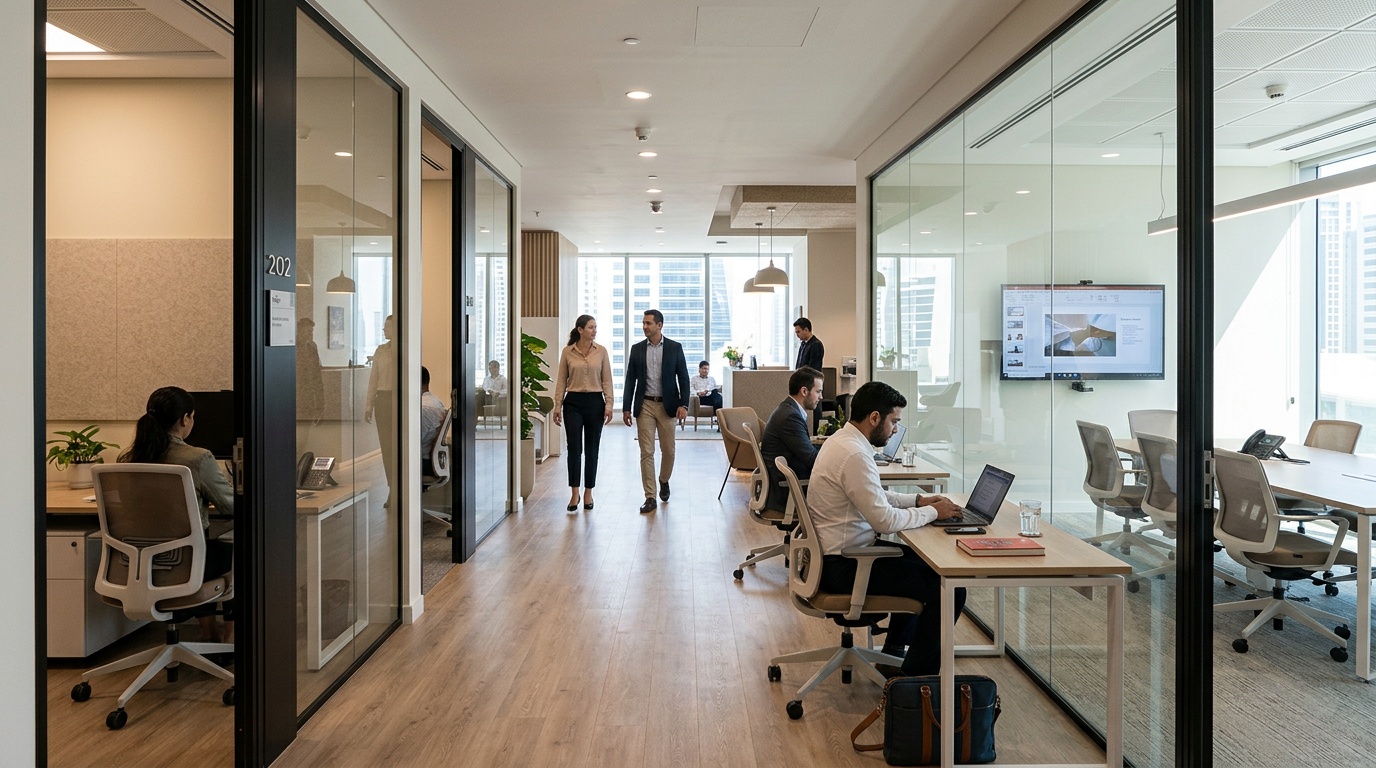
Need an office to let in Dubai without a long lease? Start with the way your team works. Record seat requirements, onsite days, meeting needs, total occupancy cost, internet access, and setup time. The right workspace should support current operations without forcing a full reset as your team changes.
Key Takeaways
Need an office to let in Dubai without a long lease?
Record seat requirements, onsite days, meeting needs, total occupancy cost, internet access, and setup time.
The right workspace should support current operations without forcing a full reset as your team changes.
Dubai has private offices, serviced suites, coworking desks, meeting rooms, and short-term workspaces. Teams comparing central locations can review Servcorp Almas Tower as one available option, subject to current listing availability.
What is an office to let in Dubai?
An office to let in Dubai is a workspace offered through a lease, licence, or flexible booking. A serviced office may include furniture, utilities, reception, Wi-Fi, cleaning, and shared meeting rooms, depending on the listing and agreement. A conventional lease usually gives the tenant more control over the premises and fit-out.
The suitable model depends on the length of your stay, the control you need, and the likelihood of headcount changes. Teams comparing office space rent Dubai options can review flexible locations such as Myoffice Downtown alongside longer-term offices, subject to current terms.
What are the benefits of an office to let in Dubai?
Flexible workspace can reduce setup work and the cost of unused capacity. A startup might begin with a private office and add desks as hiring progresses. A consultant could book a meeting room for client visits, while a distributed team reserves desks only for shared onsite days.
For teams reviewing managed offices, Quantum Executive Business Center is another Dubai listing to compare by location, services, and contract terms, subject to current availability.
How should you choose an office to let in Dubai?
Choose a workspace by documenting operating requirements before comparing listings. Define seats, onsite days, privacy, client visits, storage, transport, and expected headcount changes. Then compare the total cost and contract conditions that will shape daily use.
Choose the commitment model. A traditional lease can provide more control but may involve fit-out spending and longer notice periods. A flexible booking or serviced office suits teams that need a shorter commitment.
Compare the complete cost. Check whether furniture, utilities, reception, cleaning, maintenance, internet, and meeting-room use are included in the recurring charge.
Measure the location. Review commute times, public transport, parking, visitor access, nearby services, and building security.
Test the operating systems. Ask about internet performance, cleaning schedules, mail handling, printing, phone booths, access hours, and meeting-room availability.
Review the agreement. Check cancellation, renewal, deposit-return, guest, damage, and price-change clauses.
A useful comparison should answer one question: will this space support the team’s work without creating avoidable reconfiguration later? That is the difference between selecting a desk and selecting an operating base.
Mohammad El Shaari is the CTO of Hotdesk, where he leads the engineering team building and scaling a global SaaS platform for on-demand workspace bookings across 80+ countries. A Computer Science graduate from The British University in Egypt, he brings over a decade of hands-on experience in enterprise software, AI, cloud infrastructure, and cybersecurity.
Before Hotdesk, he served as CTO of Vee Tech, where he led technical delivery for 12+ enterprise clients generating $30M+ in annual revenue, and helped build Egypt’s first innovation lab at Capital International Schools.
At Hotdesk, Mohammad focuses on building scalable systems that handle real-time availability, global user distribution, and high-throughput transactions. He specializes in scalable system design, cloud-native infrastructure, and building high-performance SaaS platforms that support global user bases.
He writes about scaling SaaS platforms, backend architecture, mobile engineering, and real-world technical decisions behind building and operating global products.
Mohammad El Shaari is the CTO of Hotdesk, where he leads the engineering team building and scaling a global SaaS platform for on-demand workspace bookings across 80+ countries. A Computer Science graduate from The British University in Egypt, he brings over a decade of hands-on experience in enterprise software, AI, cloud infrastructure, and cybersecurity.
Before Hotdesk, he served as CTO of Vee Tech, where he led technical delivery for 12+ enterprise clients generating $30M+ in annual revenue, and helped build Egypt’s first innovation lab at Capital International Schools.
At Hotdesk, Mohammad focuses on building scalable systems that handle real-time availability, global user distribution, and high-throughput transactions. He specializes in scalable system design, cloud-native infrastructure, and building high-performance SaaS platforms that support global user bases.
He writes about scaling SaaS platforms, backend architecture, mobile engineering, and real-world technical decisions behind building and operating global products.
Mohammad El Shaari is the CTO of Hotdesk, where he leads the engineering team building and scaling a global SaaS platform for on-demand workspace bookings across 80+ countries. A Computer Science graduate from The British University in Egypt, he brings over a decade of hands-on experience in enterprise software, AI, cloud infrastructure, and cybersecurity.
Before Hotdesk, he served as CTO of Vee Tech, where he led technical delivery for 12+ enterprise clients generating $30M+ in annual revenue, and helped build Egypt’s first innovation lab at Capital International Schools.
At Hotdesk, Mohammad focuses on building scalable systems that handle real-time availability, global user distribution, and high-throughput transactions. He specializes in scalable system design, cloud-native infrastructure, and building high-performance SaaS platforms that support global user bases.
He writes about scaling SaaS platforms, backend architecture, mobile engineering, and real-world technical decisions behind building and operating global products.
Mohammad El Shaari is the CTO of Hotdesk, where he leads the engineering team building and scaling a global SaaS platform for on-demand workspace bookings across 80+ countries. A Computer Science graduate from The British University in Egypt, he brings over a decade of hands-on experience in enterprise software, AI, cloud infrastructure, and cybersecurity.
Before Hotdesk, he served as CTO of Vee Tech, where he led technical delivery for 12+ enterprise clients generating $30M+ in annual revenue, and helped build Egypt’s first innovation lab at Capital International Schools.
At Hotdesk, Mohammad focuses on building scalable systems that handle real-time availability, global user distribution, and high-throughput transactions. He specializes in scalable system design, cloud-native infrastructure, and building high-performance SaaS platforms that support global user bases.
He writes about scaling SaaS platforms, backend architecture, mobile engineering, and real-world technical decisions behind building and operating global products.
Mohammad El Shaari is the CTO of Hotdesk, where he leads the engineering team building and scaling a global SaaS platform for on-demand workspace bookings across 80+ countries. A Computer Science graduate from The British University in Egypt, he brings over a decade of hands-on experience in enterprise software, AI, cloud infrastructure, and cybersecurity.
Before Hotdesk, he served as CTO of Vee Tech, where he led technical delivery for 12+ enterprise clients generating $30M+ in annual revenue, and helped build Egypt’s first innovation lab at Capital International Schools.
At Hotdesk, Mohammad focuses on building scalable systems that handle real-time availability, global user distribution, and high-throughput transactions. He specializes in scalable system design, cloud-native infrastructure, and building high-performance SaaS platforms that support global user bases.
He writes about scaling SaaS platforms, backend architecture, mobile engineering, and real-world technical decisions behind building and operating global products.
Mohammad El Shaari is the CTO of Hotdesk, where he leads the engineering team building and scaling a global SaaS platform for on-demand workspace bookings across 80+ countries. A Computer Science graduate from The British University in Egypt, he brings over a decade of hands-on experience in enterprise software, AI, cloud infrastructure, and cybersecurity.
Before Hotdesk, he served as CTO of Vee Tech, where he led technical delivery for 12+ enterprise clients generating $30M+ in annual revenue, and helped build Egypt’s first innovation lab at Capital International Schools.
At Hotdesk, Mohammad focuses on building scalable systems that handle real-time availability, global user distribution, and high-throughput transactions. He specializes in scalable system design, cloud-native infrastructure, and building high-performance SaaS platforms that support global user bases.
He writes about scaling SaaS platforms, backend architecture, mobile engineering, and real-world technical decisions behind building and operating global products.
Mohammad El Shaari is the CTO of Hotdesk, where he leads the engineering team building and scaling a global SaaS platform for on-demand workspace bookings across 80+ countries. A Computer Science graduate from The British University in Egypt, he brings over a decade of hands-on experience in enterprise software, AI, cloud infrastructure, and cybersecurity.
Before Hotdesk, he served as CTO of Vee Tech, where he led technical delivery for 12+ enterprise clients generating $30M+ in annual revenue, and helped build Egypt’s first innovation lab at Capital International Schools.
At Hotdesk, Mohammad focuses on building scalable systems that handle real-time availability, global user distribution, and high-throughput transactions. He specializes in scalable system design, cloud-native infrastructure, and building high-performance SaaS platforms that support global user bases.
He writes about scaling SaaS platforms, backend architecture, mobile engineering, and real-world technical decisions behind building and operating global products.
A client is arriving in an hour. Your home office feels too familiar, the café is too loud, and a permanent office demands more commitment than you need. A meeting room rental in Dubai gives you a furnished, private setting for an hour, a day, or a recurring booking. Check availability, amenities, access, and provider terms before you reserve.
Key Takeaways
Your home office feels too familiar, the café is too loud, and a permanent office demands more commitment than you need.
A meeting room rental in Dubai gives you a furnished, private setting for an hour, a day, or a recurring booking.
Check availability, amenities, access, and provider terms before you reserve.
A meeting room rental is the temporary use of a furnished room for a business meeting, interview, workshop, presentation, or private call. Coworking spaces, business centres, hotels, and flexible office providers such as Connecting Minds Business Center may offer rooms by the hour, half day, full day, or recurring schedule.
The format suits people who need a professional setting without taking on a long lease. You can choose a room for one appointment, compare several locations, and book according to the work in front of you. For a premium business setting, compare Servcorp Emirates Towers meeting facilities alongside location, technology, and booking terms.
Why use a meeting room in Dubai?
A private meeting room gives you a controlled setting for focused conversations, presentations, and confidential work. It can be a practical choice for visiting sales teams, freelancers meeting clients, remote employees, and companies working between leases. The value is not the room alone; it is having a suitable place ready when the work requires one.
Privacy can matter for investor discussions, interviews, legal consultations, and customer workshops. A room with a door, reliable internet, and the right table layout removes distractions that are difficult to control in a café or open workspace.
Location shapes the practical experience. Check proximity to Dubai Metro, major roads, airports, hotels, and the people you expect to meet. The Executive Centre Dubai may be an option to compare, subject to current listing availability.
How to choose a meeting room in Dubai
The right meeting room depends on the brief, not the photograph. Begin with your attendee count, duration, privacy needs, seating format, location, and equipment. A room for a two-person call has different requirements from one used for a workshop.
Define the purpose. An interview, board presentation, training session, and private call may need different layouts.
Set the capacity. Allow room for laptops, documents, refreshments, and comfortable movement.
Check access. Confirm the address, opening hours, visitor registration, parking, and transport connections.
Verify technology. Ask about Wi-Fi, power outlets, display connections, video conferencing, microphones, speakers, adapters, and technical support.
Review the total price. Check taxes, service fees, minimum booking periods, deposits, refreshments, printing, overtime, setup time, cancellation, and rescheduling conditions.
Compare listings by neighbourhood, date, capacity, technology, and booking terms. Ascendris Business Bay workspace is another option to review against your brief. The best choice is usually the one that fits the meeting, not the one with the longest amenity list.
Frequently Asked Questions
How much does it cost to rent a meeting room in Dubai?
The price depends on the neighbourhood, room capacity, booking duration, furniture, privacy level, and included technology.
Can I book a meeting room for just a few hours?
Many flexible workspaces may offer hourly or half-day bookings. Confirm the available booking periods with the provider.
What amenities are typically included?
Common inclusions may include furnished seating, a conference table, Wi-Fi, power outlets, air conditioning, whiteboards, and reception access. Confirm all amenities with the listing.
Mohamed Khaled is the Founder and CEO of Hotdesk, the on-demand workspace platform providing access to coworking spaces and flexible offices across more than 120 countries.
He spent nearly a decade at PwC before moving into financial leadership at SWVL, where he led the company’s $1.5 billion Nasdaq listing, the first Unicorn from thr Middle East to go public in the United States.
A Forbes 30 Under 30 honoree, Mohamed built Hotdesk from a side project into a global platform, leading a team of more than 50 and expanding into international markets, including the acquisition of Spain-based coworking marketplace YADO.
Also being Co-founder and President of DESK Token, the world’s first asset backed property investment and utility hybrid token, Mohammed is focused on building infrastructure that unlocks underutilized assets – from meeting rooms to private offices and full on buildings – while creating space for the future of work.
Mohamed Khaled is the Founder and CEO of Hotdesk, the on-demand workspace platform providing access to coworking spaces and flexible offices across more than 120 countries.
He spent nearly a decade at PwC before moving into financial leadership at SWVL, where he led the company’s $1.5 billion Nasdaq listing, the first Unicorn from thr Middle East to go public in the United States.
A Forbes 30 Under 30 honoree, Mohamed built Hotdesk from a side project into a global platform, leading a team of more than 50 and expanding into international markets, including the acquisition of Spain-based coworking marketplace YADO.
Also being Co-founder and President of DESK Token, the world’s first asset backed property investment and utility hybrid token, Mohammed is focused on building infrastructure that unlocks underutilized assets – from meeting rooms to private offices and full on buildings – while creating space for the future of work.
Mohamed Khaled is the Founder and CEO of Hotdesk, the on-demand workspace platform providing access to coworking spaces and flexible offices across more than 120 countries.
He spent nearly a decade at PwC before moving into financial leadership at SWVL, where he led the company’s $1.5 billion Nasdaq listing, the first Unicorn from thr Middle East to go public in the United States.
A Forbes 30 Under 30 honoree, Mohamed built Hotdesk from a side project into a global platform, leading a team of more than 50 and expanding into international markets, including the acquisition of Spain-based coworking marketplace YADO.
Also being Co-founder and President of DESK Token, the world’s first asset backed property investment and utility hybrid token, Mohammed is focused on building infrastructure that unlocks underutilized assets – from meeting rooms to private offices and full on buildings – while creating space for the future of work.
Mohamed Khaled is the Founder and CEO of Hotdesk, the on-demand workspace platform providing access to coworking spaces and flexible offices across more than 120 countries.
He spent nearly a decade at PwC before moving into financial leadership at SWVL, where he led the company’s $1.5 billion Nasdaq listing, the first Unicorn from thr Middle East to go public in the United States.
A Forbes 30 Under 30 honoree, Mohamed built Hotdesk from a side project into a global platform, leading a team of more than 50 and expanding into international markets, including the acquisition of Spain-based coworking marketplace YADO.
Also being Co-founder and President of DESK Token, the world’s first asset backed property investment and utility hybrid token, Mohammed is focused on building infrastructure that unlocks underutilized assets – from meeting rooms to private offices and full on buildings – while creating space for the future of work.
Mohamed Khaled is the Founder and CEO of Hotdesk, the on-demand workspace platform providing access to coworking spaces and flexible offices across more than 120 countries.
He spent nearly a decade at PwC before moving into financial leadership at SWVL, where he led the company’s $1.5 billion Nasdaq listing, the first Unicorn from thr Middle East to go public in the United States.
A Forbes 30 Under 30 honoree, Mohamed built Hotdesk from a side project into a global platform, leading a team of more than 50 and expanding into international markets, including the acquisition of Spain-based coworking marketplace YADO.
Also being Co-founder and President of DESK Token, the world’s first asset backed property investment and utility hybrid token, Mohammed is focused on building infrastructure that unlocks underutilized assets – from meeting rooms to private offices and full on buildings – while creating space for the future of work.
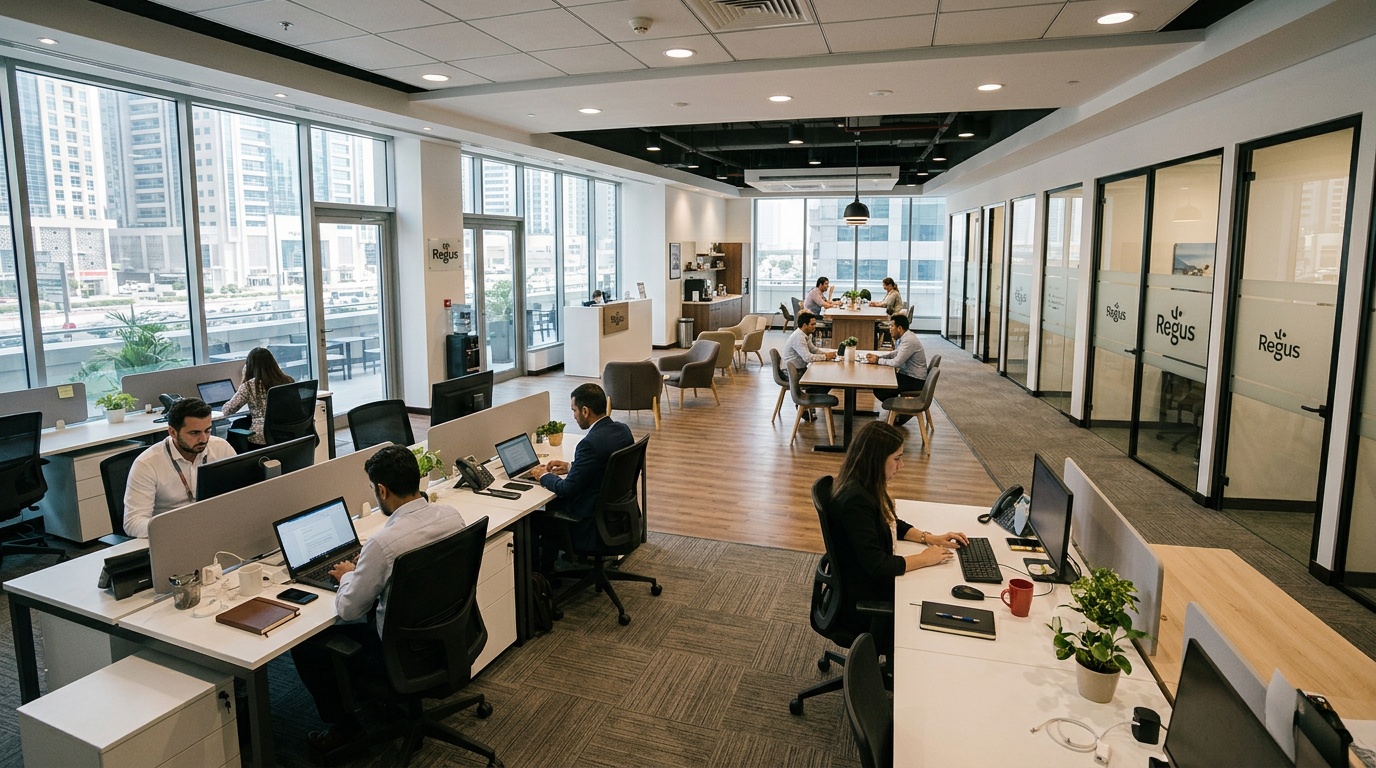
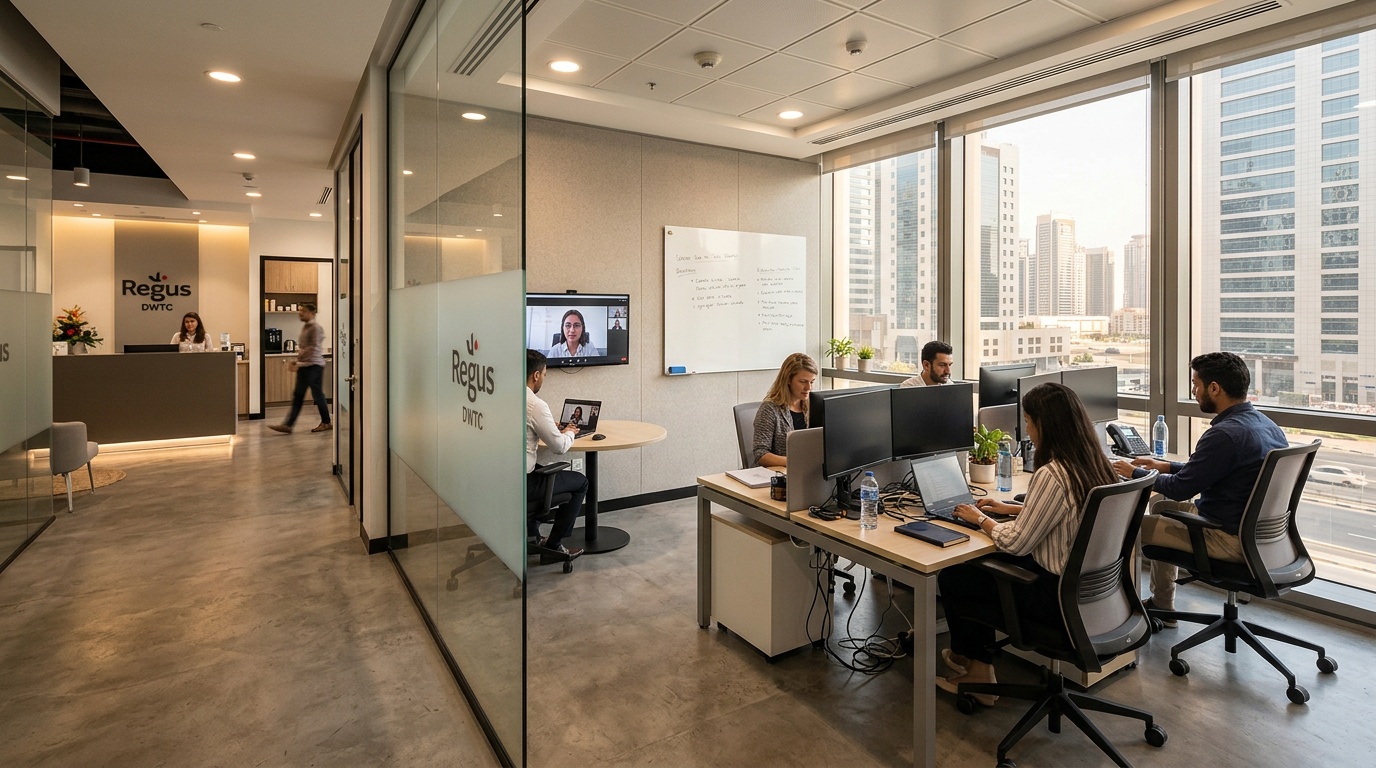
Searching for regus dubai dwtc district free zone usually means you need a professional place to work near Dubai World Trade Centre. The right choice depends on whether you need a desk between events, a private room for a client meeting, or a longer-term base for your team.
Key Takeaways
The phrase combines a Regus workspace search with Dubai World Trade Centre and free zone requirements.
The right choice depends on whether you need a desk between events, a private room for a client meeting, or a longer-term base for your team.
It does not, by itself, provide company incorporation, a trade licence, visas, banking support, or government documentation.
What does “regus dubai dwtc district free zone” mean?
The phrase combines a Regus workspace search with Dubai World Trade Centre and free zone requirements. A workspace booking gives you a place to work or meet. It does not, by itself, provide company incorporation, a trade licence, visas, banking support, or government documentation.
Hotdesk offers an alternative way to compare and book workspaces in Dubai, including short-term desks, offices, and meeting rooms. Review the exact building, entrance, access hours, and included services before payment. You can also compare Dubai free zone workspace options if your plans take you beyond the DWTC area.
Why book a workspace near DWTC?
DWTC brings together exhibitions, conferences, client meetings, and regular office work. A nearby workspace can reduce the gap between those activities, especially if you are in Dubai for only part of a day or need a quiet room between appointments.
A small team might need a private Dubai private office for a confidential discussion. Someone attending an event may need only a hot desk, reliable internet, and a place to take calls. Check whether the selected listing includes printing, refreshments, reception support, phone booths, guest entry, and meeting technology.
If your schedule centres on an exhibition or conference, compare an event-focused workspace near DWTC. The address matters more than the label. Confirm the route, entrance, and walking time before you commit.
How to choose a workspace near DWTC
Choose the format that matches the work in front of you. A hot desk suits a short individual visit, a dedicated desk suits repeated use, and a private office works better for confidential calls or focused team work. Meeting rooms are the practical choice when the purpose is a scheduled client or team session.
Before booking, check seating capacity, power access, video-call suitability, acoustic privacy, display connections, accessibility, and visitor registration. Then review the date, start and end time, early-arrival policy, extension options, cancellation window, and complete price.
A booking is not the same as a free zone licence. If you need incorporation, visas, banking, or government documents, confirm those requirements with the relevant authority or business setup provider.
Workspace formats can include hot desks, dedicated desks, private offices, and meeting rooms. Availability, capacity, technology, and access hours vary.
How much does a workspace cost?
The total depends on the date, duration, room size, access hours, and included services.
Can I book without a membership?
Short-term access may be available depending on the workspace category and current inventory. Check the minimum duration and cancellation window before payment.
Mohamed Khaled is the Founder and CEO of Hotdesk, the on-demand workspace platform providing access to coworking spaces and flexible offices across more than 120 countries.
He spent nearly a decade at PwC before moving into financial leadership at SWVL, where he led the company’s $1.5 billion Nasdaq listing, the first Unicorn from thr Middle East to go public in the United States.
A Forbes 30 Under 30 honoree, Mohamed built Hotdesk from a side project into a global platform, leading a team of more than 50 and expanding into international markets, including the acquisition of Spain-based coworking marketplace YADO.
Also being Co-founder and President of DESK Token, the world’s first asset backed property investment and utility hybrid token, Mohammed is focused on building infrastructure that unlocks underutilized assets – from meeting rooms to private offices and full on buildings – while creating space for the future of work.
Mohamed Khaled is the Founder and CEO of Hotdesk, the on-demand workspace platform providing access to coworking spaces and flexible offices across more than 120 countries.
He spent nearly a decade at PwC before moving into financial leadership at SWVL, where he led the company’s $1.5 billion Nasdaq listing, the first Unicorn from thr Middle East to go public in the United States.
A Forbes 30 Under 30 honoree, Mohamed built Hotdesk from a side project into a global platform, leading a team of more than 50 and expanding into international markets, including the acquisition of Spain-based coworking marketplace YADO.
Also being Co-founder and President of DESK Token, the world’s first asset backed property investment and utility hybrid token, Mohammed is focused on building infrastructure that unlocks underutilized assets – from meeting rooms to private offices and full on buildings – while creating space for the future of work.
Mohamed Khaled is the Founder and CEO of Hotdesk, the on-demand workspace platform providing access to coworking spaces and flexible offices across more than 120 countries.
He spent nearly a decade at PwC before moving into financial leadership at SWVL, where he led the company’s $1.5 billion Nasdaq listing, the first Unicorn from thr Middle East to go public in the United States.
A Forbes 30 Under 30 honoree, Mohamed built Hotdesk from a side project into a global platform, leading a team of more than 50 and expanding into international markets, including the acquisition of Spain-based coworking marketplace YADO.
Also being Co-founder and President of DESK Token, the world’s first asset backed property investment and utility hybrid token, Mohammed is focused on building infrastructure that unlocks underutilized assets – from meeting rooms to private offices and full on buildings – while creating space for the future of work.
Mohamed Khaled is the Founder and CEO of Hotdesk, the on-demand workspace platform providing access to coworking spaces and flexible offices across more than 120 countries.
He spent nearly a decade at PwC before moving into financial leadership at SWVL, where he led the company’s $1.5 billion Nasdaq listing, the first Unicorn from thr Middle East to go public in the United States.
A Forbes 30 Under 30 honoree, Mohamed built Hotdesk from a side project into a global platform, leading a team of more than 50 and expanding into international markets, including the acquisition of Spain-based coworking marketplace YADO.
Also being Co-founder and President of DESK Token, the world’s first asset backed property investment and utility hybrid token, Mohammed is focused on building infrastructure that unlocks underutilized assets – from meeting rooms to private offices and full on buildings – while creating space for the future of work.
Mohamed Khaled is the Founder and CEO of Hotdesk, the on-demand workspace platform providing access to coworking spaces and flexible offices across more than 120 countries.
He spent nearly a decade at PwC before moving into financial leadership at SWVL, where he led the company’s $1.5 billion Nasdaq listing, the first Unicorn from thr Middle East to go public in the United States.
A Forbes 30 Under 30 honoree, Mohamed built Hotdesk from a side project into a global platform, leading a team of more than 50 and expanding into international markets, including the acquisition of Spain-based coworking marketplace YADO.
Also being Co-founder and President of DESK Token, the world’s first asset backed property investment and utility hybrid token, Mohammed is focused on building infrastructure that unlocks underutilized assets – from meeting rooms to private offices and full on buildings – while creating space for the future of work.
Choosing an office is an operational decision, not only a real-estate decision. Compare the total cost, connectivity, access rules, privacy, contract terms, and room capacity before you commit. A lower monthly rate can exclude services your team relies on every day.
Key Takeaways
Choosing an office is an operational decision, not only a real-estate decision.
Compare the total cost, connectivity, access rules, privacy, contract terms, and room capacity before you commit.
A lower monthly rate can exclude services your team relies on every day.
Offices are workspaces designed for individual work, team collaboration, client meetings, or private conversations. Available formats include private offices, serviced suites, coworking areas, meeting rooms, shared desks, and conventional leased premises. A suitable Dubai office space should match your privacy, location, capacity, and contract requirements.
A serviced workspace typically bundles some combination of furniture, reception, internet, utilities, meeting rooms, cleaning, and managed access. These inclusions reduce setup work, but they vary by listing. For teams seeking a professional setting, The Executive Centre Dubai is one option to assess against the same criteria.
Start with the work rather than the room. A freelancer may need a desk for a day, while a distributed team may need private rooms, secure entry, video conferencing, and flexible booking.
What are the benefits of offices?
An office can give a team a ready-to-use base with desks, meeting rooms, internet, reception, access control, and space for confidential conversations. That reduces the work required to source furniture, arrange utilities, and coordinate several workplace vendors.
Flexible terms can fit project teams, market entry, satellite offices, and temporary relocation. Before comparing spaces near you, request the complete price in writing. Confirm whether it includes furniture, internet, electricity, cleaning, reception, mail handling, meeting-room credits, deposits, and taxes.
How do you choose an office?
Choose an office by converting your team’s work into measurable requirements. Set the headcount, private-room needs, visitor frequency, meeting capacity, storage, equipment, access hours, and expected growth before comparing design or location. This prevents a good-looking space from creating daily constraints.
Calculate the full occupancy cost. Request a written schedule covering base rent, service charges, utilities, internet, cleaning, reception, maintenance, parking, access cards, deposits, taxes, fit-out work, and meeting-room fees.
Inspect the working conditions. Record usable area, seat count, private rooms, meeting capacity, noise levels, furniture condition, connectivity, parking, and building access.
Compare operational trade-offs. A cheaper space may require more setup, maintenance coordination, or vendor management.
Check flexibility. Confirm booking rules, notice periods, renewal terms, expansion options, and what happens if your team needs fewer seats.
Ask which option leaves fewer operational tasks for the people doing the work. If you are comparing an office in Dubai with another location, assess commute patterns, client access, and working hours alongside the advertised price. In Barcelona, Crec Eixample Gran Via is another option to compare for location and contract flexibility.
Review building access alongside ventilation, lighting, furniture, and other workplace-health factors. A workspace should support the team’s routine without requiring constant reconfiguration.
References
https://www.osha.gov/etools/computer-workstations
https://www.hse.gov.uk/workplace-health/
Frequently Asked Questions
How do I find an office for rent in Dubai?
Define your location, team size, privacy level, access hours, meeting capacity, and lease duration. Then compare usable area, included services, and total monthly cost.
What should I check before signing?
Verify the authorized contracting party, permitted business activity, usable floor area, renewal terms, notice period, deposit conditions, maintenance responsibility, and building regulations.
Mohammad El Shaari is the CTO of Hotdesk, where he leads the engineering team building and scaling a global SaaS platform for on-demand workspace bookings across 80+ countries. A Computer Science graduate from The British University in Egypt, he brings over a decade of hands-on experience in enterprise software, AI, cloud infrastructure, and cybersecurity.
Before Hotdesk, he served as CTO of Vee Tech, where he led technical delivery for 12+ enterprise clients generating $30M+ in annual revenue, and helped build Egypt’s first innovation lab at Capital International Schools.
At Hotdesk, Mohammad focuses on building scalable systems that handle real-time availability, global user distribution, and high-throughput transactions. He specializes in scalable system design, cloud-native infrastructure, and building high-performance SaaS platforms that support global user bases.
He writes about scaling SaaS platforms, backend architecture, mobile engineering, and real-world technical decisions behind building and operating global products.
Mohammad El Shaari is the CTO of Hotdesk, where he leads the engineering team building and scaling a global SaaS platform for on-demand workspace bookings across 80+ countries. A Computer Science graduate from The British University in Egypt, he brings over a decade of hands-on experience in enterprise software, AI, cloud infrastructure, and cybersecurity.
Before Hotdesk, he served as CTO of Vee Tech, where he led technical delivery for 12+ enterprise clients generating $30M+ in annual revenue, and helped build Egypt’s first innovation lab at Capital International Schools.
At Hotdesk, Mohammad focuses on building scalable systems that handle real-time availability, global user distribution, and high-throughput transactions. He specializes in scalable system design, cloud-native infrastructure, and building high-performance SaaS platforms that support global user bases.
He writes about scaling SaaS platforms, backend architecture, mobile engineering, and real-world technical decisions behind building and operating global products.
Mohammad El Shaari is the CTO of Hotdesk, where he leads the engineering team building and scaling a global SaaS platform for on-demand workspace bookings across 80+ countries. A Computer Science graduate from The British University in Egypt, he brings over a decade of hands-on experience in enterprise software, AI, cloud infrastructure, and cybersecurity.
Before Hotdesk, he served as CTO of Vee Tech, where he led technical delivery for 12+ enterprise clients generating $30M+ in annual revenue, and helped build Egypt’s first innovation lab at Capital International Schools.
At Hotdesk, Mohammad focuses on building scalable systems that handle real-time availability, global user distribution, and high-throughput transactions. He specializes in scalable system design, cloud-native infrastructure, and building high-performance SaaS platforms that support global user bases.
He writes about scaling SaaS platforms, backend architecture, mobile engineering, and real-world technical decisions behind building and operating global products.
Mohammad El Shaari is the CTO of Hotdesk, where he leads the engineering team building and scaling a global SaaS platform for on-demand workspace bookings across 80+ countries. A Computer Science graduate from The British University in Egypt, he brings over a decade of hands-on experience in enterprise software, AI, cloud infrastructure, and cybersecurity.
Before Hotdesk, he served as CTO of Vee Tech, where he led technical delivery for 12+ enterprise clients generating $30M+ in annual revenue, and helped build Egypt’s first innovation lab at Capital International Schools.
At Hotdesk, Mohammad focuses on building scalable systems that handle real-time availability, global user distribution, and high-throughput transactions. He specializes in scalable system design, cloud-native infrastructure, and building high-performance SaaS platforms that support global user bases.
He writes about scaling SaaS platforms, backend architecture, mobile engineering, and real-world technical decisions behind building and operating global products.
Mohammad El Shaari is the CTO of Hotdesk, where he leads the engineering team building and scaling a global SaaS platform for on-demand workspace bookings across 80+ countries. A Computer Science graduate from The British University in Egypt, he brings over a decade of hands-on experience in enterprise software, AI, cloud infrastructure, and cybersecurity.
Before Hotdesk, he served as CTO of Vee Tech, where he led technical delivery for 12+ enterprise clients generating $30M+ in annual revenue, and helped build Egypt’s first innovation lab at Capital International Schools.
At Hotdesk, Mohammad focuses on building scalable systems that handle real-time availability, global user distribution, and high-throughput transactions. He specializes in scalable system design, cloud-native infrastructure, and building high-performance SaaS platforms that support global user bases.
He writes about scaling SaaS platforms, backend architecture, mobile engineering, and real-world technical decisions behind building and operating global products.
What do Dubai business setup consultants recommend for flexible office space?
Every distributed system asks you to manage new failure modes. When establishing a business in a dynamic market like Dubai, understanding the physical infrastructure requirements is paramount. It’s not just about finding a desk; it’s about ensuring your operational setup is compliant, cost-effective, and scalable. This is where the guidance of experienced business setup consultants becomes invaluable, particularly for securing appropriate office space. What do Dubai business setup consultants recommend for flexible office space? They prioritize compliance, cost management, and strategic agility over traditional, rigid real estate commitments.
Key Takeaways
Consultants recommend flexible space because it eliminates the need to rework your operational setup when regulations shift.
Compliance with Dubai’s business laws becomes easier to maintain with short-term, adaptable lease terms.
Cost management improves when you avoid long-term commitments that lock in overhead and limit your ability to adjust.
Strategic agility means your office can scale without the friction of renegotiating traditional real estate contracts.
The foundational advice from these experts centers on meeting regulatory necessities while optimizing financial outlay. They understand that for many businesses, especially startups and expanding enterprises, flexibility is not a luxury but a prerequisite for survival and growth. This perspective shapes their recommendations, steering clients toward solutions that provide necessary infrastructure without entangling them in long-term liabilities.
What Dubai Business Setup Consultants Actually Recommend
When a business seeks advice on establishing operations in Dubai, consultants provide a clear roadmap, starting with the absolute essentials. Their recommendations are grounded in operational realities and regulatory frameworks. For any company looking to set up, the primary focus from a consultant’s viewpoint is ensuring the business has a legally recognized presence that satisfies government requirements.
This often begins with understanding the nuances of Ejari registration, which is the official registration of a tenancy contract with the Real Estate Regulatory Agency (RERA). A valid Ejari is mandatory for trade license renewal and other government services. Consultants ensure that whatever office solution is chosen, it can provide the necessary documentation for this registration. Similarly, trade license compliance is non-negotiable; the address associated with the trade license must be a verifiable physical location, not just a P.O. Box.
The Non-Negotiables: Ejari and Trade License Compliance
The bedrock of any Dubai business setup involves adhering to specific governmental mandates regarding physical office space. For companies operating under the Department of Economic Development (DED) in mainland Dubai, securing a physical office is a prerequisite, and this space must be registered via Ejari. This registration is a critical step that consultants meticulously guide clients through, ensuring it aligns with trade license requirements. Without this, essential services and license renewals can be significantly delayed.
Consultants emphasize that the address listed on your trade license must correspond to a legitimate physical workspace. This is not merely a formality; it is a verification mechanism for authorities. Flexible office solutions, such as serviced offices or co-working spaces that offer dedicated desks or private offices, can fulfill this requirement. For example, a business might opt for a dedicated office within a managed facility, which provides the necessary tenancy contract for Ejari registration and a verifiable address for their trade license. This ensures operational legitimacy from day one.
Key Insight
Ejari registration and a valid trade license address are fundamental for business operations in Dubai. Consultants prioritize solutions that provide verifiable physical space for these compliance needs.
Why Cost-Control Drives the Shift to Flexible Office Space
Beyond compliance, a primary driver for consultants recommending flexible office space is cost-effectiveness, especially for early-stage businesses or those entering a new market. Traditional office leases in Dubai often come with substantial upfront costs: long-term commitments, large security deposits, and the expense of furnishing and maintaining the space. These financial burdens can strain a company’s capital, particularly when market entry is still being tested.
Flexible office solutions, on the other hand, allow businesses to pay for the space they use, when they use it. This pay-as-you-go model minimizes initial capital expenditure. Instead of a large security deposit for a multi-year lease, clients typically pay a monthly fee or even a daily rate. This agility allows businesses to allocate funds more strategically towards core operations, marketing, and product development, rather than being locked into fixed real estate overheads. For example, a startup might begin with a few hot desks or a small private office, scaling up their space as their team and revenue grow, as facilitated by providers like Am Office Space.
Financial Agility
Flexible office arrangements offer a predictable, operational expense model, contrasting sharply with the significant capital expenditure and long-term liabilities of traditional leases. This approach is highly favored by consultants for managing startup budgets and ensuring financial flexibility.
Compliance First: Ensure any chosen space provides documentation for Ejari registration and a valid trade license address.
Operational Efficiency: Select spaces that support your current team size and workflow without requiring immediate long-term commitments.
Cost Management: Prioritize solutions with transparent pricing and minimal upfront investment to preserve working capital.
Scalability: Look for providers that allow you to easily adjust your space requirements as your business evolves.
Mainland vs. Free Zone Physical Space Requirements
Navigating Dubai’s business environment requires understanding the distinct legal and operational frameworks governing mainland and free zone jurisdictions. These differences significantly impact the type of physical office space a business needs and is permitted to occupy. Consultants meticulously analyze a client’s business activity and strategic goals to determine the optimal jurisdiction, which in turn dictates workspace requirements.
For businesses aiming for broad market access within the UAE, the mainland jurisdiction, overseen by the Department of Economic Development (DED), offers the most direct path. But, this jurisdiction imposes specific rules concerning physical office presence. Mainland companies generally cannot operate solely on virtual offices or flexi-desks for their primary business address; a dedicated physical office space is typically mandatory for trade license issuance and renewal. This requirement ensures a tangible operational base within the emirate.
DED Mainland Rules: The Mandatory Physical Office
Establishing a business on the Dubai mainland under the DED typically necessitates a physical office space that meets specific regulatory criteria. This isn’t just about having a mailing address; it’s about establishing a legitimate operational hub. The DED requires a verifiable physical office location for the issuance and renewal of trade licenses. This space must be registered through Ejari, providing official tenancy documentation to the authorities.
The size and type of office required can vary based on the business activity and the number of visas sponsored. While some DED-approved business centers offer dedicated desks or small private offices that satisfy these mandates, consultants often advise clients that a more substantial physical presence might be needed for certain activities. This requirement ensures that businesses have a concrete base for their operations, employee management, and client meetings within Dubai, contributing to the local economy and regulatory oversight.
Free Zone Allowances: Flexi-Desks and Hot Desks
In contrast to the mainland, Dubai’s free zones offer greater flexibility regarding office space requirements, catering particularly to international businesses or those focused on specific sectors. Many free zones allow companies to operate with much less physical infrastructure. This often includes the option to use flexi-desks or hot desks within shared co-working environments as their official business address.
These arrangements are typically sufficient for obtaining a free zone trade license and visa allocations. Consultants often recommend free zones for startups or companies that prioritize lean operations and global connectivity, as they bypass the stringent physical office mandates of the mainland. Providers offering managed workspaces, like Am Office Space, are well-equipped to support businesses in free zones by providing compliant office solutions that align with these flexible requirements. This allows businesses to establish a presence without the significant overhead of traditional office leases.
Feature
DED Mainland Office Requirements
Free Zone Office Requirements
Primary Requirement
Mandatory physical office for trade license. Requires Ejari registration.
Flexible; often allows flexi-desks, hot desks, or shared offices.
Ejari Registration
Typically required for the physical office location.
May not be required for basic flexi-desk/hot desk arrangements, depending on the free zone.
Address for Trade License
Must be a verifiable physical office address.
Can be a registered address within the free zone, often a flexi-desk or managed office.
Cost Structure
Generally higher upfront costs for leases, security deposits, and setup.
Lower entry costs; pay-as-you-go models common for shared spaces.
Scalability
Less flexible; requires lease renegotiation or relocation for significant changes.
Highly scalable; easy to adjust desk space or office size as needed.
Market Access
Direct access to the UAE market.
Often restricted to international trade or specific sectors; requires local partner for full UAE market access.
The Financial Mechanics of On-Demand Space vs. Traditional Leases
When assessing business setup options in Dubai, the financial implications of workspace choices are as critical as regulatory compliance. Consultants often guide clients through a detailed cost-benefit analysis, contrasting the substantial upfront capital expenditure and long-term liabilities of traditional real estate with the operational expenditure model of on-demand or flexible office solutions. This financial engineering is key to ensuring a business’s runway is extended and resources are allocated efficiently, particularly in the early stages of operation.
The core difference lies in how capital is deployed. Traditional leases demand significant upfront investment, including large security deposits, advance rental payments, and potential fit-out costs, effectively locking capital into physical assets. Flexible spaces, conversely, adopt a pay-as-you-go or subscription model, transforming fixed capital expenditure into predictable operational expenses. This approach aligns better with the agility required for businesses testing new markets or experiencing rapid growth cycles.
Calculating Overhead: Security Deposits and Utility Connections
Traditional office leases in Dubai typically require a substantial security deposit, often equivalent to three to six months’ rent, alongside advance payments for the initial rental period. Beyond rent, establishing utilities like electricity and water through DEWA (Dubai Electricity and Water Authority) necessitates its own deposit and connection fees, adding to the initial financial outlay. These fixed costs represent a significant barrier to entry and can tie up working capital that could otherwise be invested in core business activities, product development, or marketing efforts.
Flexible workspace solutions largely eliminate these upfront financial burdens. Instead of large security deposits, providers usually require a much smaller reservation fee or a monthly subscription. Utility costs are typically bundled into the overall service fee, meaning there are no separate DEWA deposits or complex connection processes to manage. This streamlined financial structure allows businesses to maintain greater liquidity and financial flexibility from day one, a critical factor for startups and scale-ups.
Pay-as-you-go Models for Early-Stage Operations
For businesses in their nascent stages, particularly those focused on rapid iteration or market validation, the pay-as-you-go model offered by flexible office providers is exceptionally advantageous. This model allows companies to scale their workspace needs precisely with their operational requirements. For example, a startup might begin by booking a few hot desks for its core team daily and reserving a meeting room for client interactions as needed. This avoids the commitment to a fixed-size office that might be underutilized or quickly outgrown.
This approach directly addresses the question: What do Dubai business setup consultants recommend for flexible office space? They recommend solutions that offer financial predictability and scalability. Providers like Am Office Space exemplify this, offering access to workspace on a daily, weekly, or monthly basis. This flexibility means businesses only pay for the space and amenities they actively use, turning a potentially large, fixed overhead into a variable operational cost that can be adjusted with business performance.
Pros
Minimized Upfront Costs: Significantly lower initial capital outlay compared to traditional leases.
Predictable Expenses: Fixed monthly or daily rates simplify budgeting and financial forecasting.
Scalability: Ability to adjust workspace size and type based on current team needs and project demands.
Reduced Administrative Burden: Utilities, maintenance, and office management are typically handled by the provider.
Liquidity Preservation: Working capital remains available for core business operations and growth initiatives.
Cons
Potential for Higher Per-Unit Cost: Daily or short-term rates might be more expensive than long-term lease commitments if space is consistently occupied.
Limited Customization: Less control over office design and branding compared to a dedicated traditional leasehold.
Occupancy Fluctuations: Availability of specific desk types or private offices can vary based on demand.
Dependency on Provider Policies: Business operations are subject to the terms and conditions set by the flexible workspace provider.
Choosing the Right Workspace Configuration for Your Team
Selecting the appropriate physical workspace is a critical decision point for any business establishing itself in Dubai. Consultants guiding new ventures emphasize that the choice of office configuration should align precisely with the company’s current operational phase and projected growth trajectory. This means moving beyond generic office space needs and tailoring the solution to specific team sizes, workflows, and immediate business objectives. The goal is to secure infrastructure that supports current throughput without imposing long-term liabilities or hindering future expansion.
For many businesses, particularly startups or those entering the market for the first time, the initial phase is about validation and lean operations. This is where the flexibility of on-demand spaces shines. Instead of committing to a large, fixed office, companies can opt for configurations that match their immediate headcount and project requirements. This strategic approach minimizes financial risk and allows capital to be deployed towards core business activities, ensuring resources are focused on growth rather than static overheads.
Pre-License and Initial Registration Phase
During the pre-license and initial registration phase in Dubai, businesses often operate with a lean core team. The primary need is a legitimate, compliant address for trade license applications and a functional space for essential administrative tasks and client meetings. Consultants frequently recommend flexible solutions that satisfy these requirements without demanding significant capital investment. This could involve securing a dedicated desk within a co-working facility or a small private office for a limited term.
For example, a company might need a space to conduct initial meetings with legal advisors and government entities. A private office, booked on a monthly basis, offers the necessary privacy and professional setting. Alternatively, if the team is very small and primarily works remotely, a flexi-desk arrangement can provide a registered address and occasional access to workspace when needed. This stage is about establishing a compliant presence and creating a foundation for operations, making agility and cost control paramount. The primary question remains: What do Dubai business setup consultants recommend for flexible office space? For this phase, the recommendation is typically a solution that offers verifiable physical space for compliance, with minimal commitment.
Steps for Initial Workspace Configuration
Assess Immediate Needs: Determine the exact number of staff requiring physical workspace and the frequency of use.
Verify Compliance Requirements: Confirm the specific address and Ejari documentation needed for your trade license application.
Explore Flexible Options: Investigate co-working spaces offering private offices, dedicated desks, or hot desks on short-term contracts.
Budget Allocation: Prioritize operational expenditure (OpEx) over capital expenditure (CapEx) for workspace solutions.
Secure a Registered Address: Ensure the chosen space provides a valid address for all official business registration purposes.
This pragmatic approach ensures that the business establishes a valid operational base without overcommitting resources that are better used for market entry and initial customer acquisition. It’s about building infrastructure that travels with the user’s immediate needs.
Operating and Scaling Distributed Teams
As a business moves from initial registration to active operation and begins to scale, its workspace requirements evolve. Distributed teams, common in today’s globalized economy, require a physical anchor that supports collaboration, client engagement, and employee well-being, regardless of where individual team members are located. The challenge for consultants and businesses alike is to design a physical footprint that facilitates this growth without the friction associated with traditional real estate.
For established operations or teams that have grown beyond their initial setup, the need for more dedicated space or a greater number of workstations increases. But, this does not necessarily mean a move to a long-term, fixed lease. Flexible workspace providers offer solutions that allow businesses to scale their physical footprint incrementally. This could involve upgrading from a few hot desks to a larger private office, or booking additional meeting rooms on demand for project-specific needs. The infrastructure should adapt to the operational throughput of the business.
For example, a company experiencing rapid growth might need to accommodate a surge in new hires. Instead of undertaking a lengthy office search and fit-out process, they can secure additional desks or offices within their existing flexible workspace provider, often within days. This agility is paramount for maintaining momentum and operational continuity. Am Office Space, for example, provides a range of options that allow businesses to adjust their space requirements dynamically, supporting teams as they grow, thereby answering the core question of What do Dubai business setup consultants recommend for flexible office space? They recommend solutions that scale with your team’s evolving needs.
This approach ensures that the physical workspace remains an enabler of business strategy, not a constraint. It supports the creation of distributed teams by providing accessible, professional environments that can be scaled up or down as operational demands shift. This level of adaptability is key for companies aiming for sustained growth in a competitive market.
Engineering Your Physical Footprint for Scale
From an infrastructure perspective, a company’s physical office space is not merely an expense; it’s an operational asset that must be engineered for reliability and scalability. The CTO’s perspective emphasizes systems that are resilient and adaptable, minimizing points of failure and the need for disruptive re-configuration. When applied to workspace strategy, this means prioritizing solutions that offer continuity, allowing businesses to operate and expand without being anchored to rigid, outdated real estate models.
The core principle is that infrastructure should travel with the user and the business’s evolving needs. This contrasts with traditional office leases, which often require significant relocation or re-negotiation when a company outgrows its space or requires a different configuration. Modern businesses need workspace solutions that are as dynamic as their operational tempo, providing access to professional environments that support productivity and collaboration wherever the team is operating from.
Infrastructure That Travels With the User
The concept of “infrastructure that travels” means that the necessary tools and environments for productive work are not tied to a single, fixed location. For a distributed workforce, this translates to having access to professional workspaces, meeting rooms, and reliable connectivity across various locations. This is where flexible office solutions excel. Instead of building a physical presence that requires constant maintenance and upgrades, businesses can tap into a network of pre-established, professional environments.
This model allows individuals and teams to choose a workspace that suits their immediate needs, whether it’s a quiet zone for focused work or a collaborative hub for team projects. The system is designed for user mobility and choice, ensuring that productivity is not dependent on being in a specific building. This principle is fundamental to how businesses should approach their physical footprint in an era where workforces are increasingly distributed and mobile, enabling continuity across different operational contexts.
Avoiding Physical Re-Configuration During Expansion
One of the most significant operational burdens for growing companies is the disruption caused by physical re-configuration or relocation. Moving offices, fitting out new spaces, and managing the logistics of transporting equipment all consume valuable time and resources, often leading to a dip in productivity. From a CTO’s viewpoint, this represents a failure in engineering for scale. Reliable systems are those that can absorb growth without requiring such drastic interventions.
Flexible office solutions inherently mitigate this challenge. When a business needs to expand its team or adjust its workspace requirements, it can often do so by simply booking additional desks or offices within the same provider network. This avoids the significant overhead of lease renegotiations, office moves, or extensive renovations. The infrastructure is designed to scale on demand, ensuring that a company’s physical workspace can adapt fluidly as it grows. This is the essence of engineering for scale: building systems that support continuous operation and expansion, minimizing the friction associated with growth and change. This approach ensures that the physical workspace remains an asset that facilitates, rather than hinders, business progress.
Engineering your physical footprint for scale means adopting workspace solutions that offer reliability and adaptability. Prioritize infrastructure that travels with your team’s needs, minimizing the disruption and cost associated with physical re-configuration and relocation as your business expands.
Frequently Asked Questions
How much does it cost to set up an office in Dubai?
Setting up an office in Dubai ranges from roughly 300 to 3,000 USD per month, depending on whether you choose a flexible workspace or a traditional lease. Traditional offices demand large security deposits and multi-year commitments, while flexible solutions operate on a monthly pay-as-you-go model that preserves working capital and allows predictable operational budgeting.
What is a Flexi desk in Dubai?
A Flexi desk in Dubai is a shared workspace within a coworking or serviced office facility that provides a desk on a flexible, pay-as-you-go basis. Dubai business setup consultants recommend Flexi desks for startups and market-entry companies because they deliver a verifiable physical address for Ejari registration and trade license compliance without locking you into a rigid long-term lease.
What businesses are in high demand in Dubai?
Businesses in technology, professional consulting, e-commerce, and digital services are in high demand across Dubai’s growing market. The regulatory infrastructure supports companies entering these sectors with flexible office options that scale alongside team growth, which is why consultants prioritize workspace solutions that adapt to headcount changes rather than forcing premature long-term real estate commitments.
Why do Dubai business setup consultants recommend flexible office space over traditional leases?
Dubai business setup consultants recommend flexible office space because it eliminates large upfront capital expenditure while satisfying all Ejari and trade license compliance requirements. Instead of tying up funds in security deposits and furnishing costs, businesses pay a predictable monthly fee and can redirect capital toward core operations, product development, and revenue-generating activities.
What is Ejari registration and why is it required for a Dubai business?
Ejari registration is the mandatory registration of a tenancy contract with Dubai’s Real Estate Regulatory Agency, required for trade license renewal and access to essential government services. Without a valid Ejari linked to a verifiable physical workspace, companies face operational disruptions and delayed renewals, making this registration a foundational step that consultants address before any other setup decision.
Can a coworking space serve as my legal trade license address in Dubai?
Yes, a coworking space can serve as your legal trade license address in Dubai as long as the provider issues a tenancy contract that supports Ejari registration. Managed facilities offering dedicated desks or private offices meet this requirement, giving businesses a compliant, verifiable address without the overhead and inflexibility of a conventional commercial lease.
How do mainland and free zone office space requirements differ in Dubai?
Mainland companies registered under the Department of Economic Development must secure a physical office with Ejari registration, while free zone jurisdictions set their own office requirements based on business activity and license type. Consultants evaluate a company’s operational model and growth plans to determine which jurisdiction provides the right compliance framework alongside the flexibility to scale physical space as needed.
Mohammad El Shaari is the CTO of Hotdesk, where he leads the engineering team building and scaling a global SaaS platform for on-demand workspace bookings across 80+ countries. A Computer Science graduate from The British University in Egypt, he brings over a decade of hands-on experience in enterprise software, AI, cloud infrastructure, and cybersecurity.
Before Hotdesk, he served as CTO of Vee Tech, where he led technical delivery for 12+ enterprise clients generating $30M+ in annual revenue, and helped build Egypt’s first innovation lab at Capital International Schools.
At Hotdesk, Mohammad focuses on building scalable systems that handle real-time availability, global user distribution, and high-throughput transactions. He specializes in scalable system design, cloud-native infrastructure, and building high-performance SaaS platforms that support global user bases.
He writes about scaling SaaS platforms, backend architecture, mobile engineering, and real-world technical decisions behind building and operating global products.
Tracking progress and performance metrics has always been essential for driving business success. Yet, as hybrid work models become widespread, traditional approaches to measuring employee output and team goals no longer fit the new reality. Adjusting KPIs and OKRs for hybrid work means reshaping these frameworks to reflect a distributed workforce’s unique challenges and opportunities. This shift is about more than just updating numbers; it’s about maintaining clarity, trust, and alignment across physical and virtual spaces.
Key Takeaways
Traditional performance metrics often fail to capture the full value of a distributed workforce.
Successful hybrid teams require updated frameworks that prioritize trust and clear alignment.
Reshaping goals for remote and in-person employees ensures continuity across different work environments.
With employees splitting time between home, office, and coworking locations, managers face questions about visibility, engagement, and collaboration that old systems were never designed to answer. Adjusting KPIs and OKRs for hybrid work not only improves measurement accuracy but also fosters an environment where people feel recognized and empowered despite distance. At Hotdesk, we have observed how this adjustment supports continuity and consistent productivity across thousands of workspaces worldwide.
What is adjusting kpis and okrs for hybrid work?
Adjusting KPIs (Key Performance Indicators) and OKRs (Objectives and Key Results) for hybrid work involves revising how organizations define, track, and evaluate performance metrics to suit a workforce that operates both remotely and on-site. Traditional KPIs often emphasize hours logged or physical presence, while OKRs focus on ambitious goals and measurable outcomes. But, hybrid environments demand a recalibration of these tools to capture productivity without relying on outdated proxies like time spent at a desk.
For example, instead of measuring attendance or time-based inputs, companies now prioritize outcome-driven KPIs such as project completion rates, task quality, and cross-team collaboration effectiveness. OKRs in hybrid settings may emphasize objectives like improving virtual communication or increasing utilization of flexible workspaces. This transition acknowledges that hybrid work introduces variables like asynchronous schedules, diverse work locations, and varied communication channels, all of which influence how progress and success must be assessed.
At Hotdesk, we see operators shift their KPIs from simple occupancy rates toward metrics like booking frequency and repeat workspace use, recognizing that continuity of presence in a trusted environment boosts performance. The Work Lounge Coworking Space in Cairo exemplifies this approach by enabling hybrid workers to maintain a consistent, productive setting regardless of where they log in. Adjusting KPIs and OKRs for hybrid work is not merely about measurement; it is about creating frameworks that reflect real work habits, support trust, and encourage meaningful results.
Benefits of adjusting kpis and okrs for hybrid work
When organizations update their KPIs and OKRs to reflect hybrid work realities, they unlock several advantages that improve performance management and employee experience. One immediate benefit is increased trust. Managers who shift focus from monitoring activity to measuring outcomes foster greater confidence in their teams. Research from Gallup shows that employees who feel trusted are twice as likely to be engaged. This engagement translates into higher productivity and lower turnover.
Another benefit is improved alignment across dispersed teams. Hybrid work often leads to communication gaps and unclear expectations. By revising OKRs to include goals around collaboration and knowledge sharing, companies create shared objectives that encourage connection without micromanagement. This keeps everyone moving in the same direction, regardless of location. Companies with fully aligned OKRs and KPIs have been found to outperform their peers by double, according to Asana’s research.
Adjusting metrics also helps address visibility challenges inherent in hybrid setups. Traditional KPIs like hours worked or physical presence fail to capture real contributions when people work asynchronously or remotely. Shifting toward indicators of output, customer impact, or project milestones provides a clearer picture of performance. This shift reduces overreliance on activity tracking, which can feel invasive and counterproductive, and emphasizes results that matter.
Finally, adapting KPIs and OKRs supports employee well-being and retention. Hybrid work can increase isolation, with studies showing remote workers are 40% more likely to feel disconnected. Incorporating metrics related to workspace utilization, social interaction, and professional development encourages behaviors that sustain engagement and reduce burnout. At Hotdesk, hybrid workers using locations like the Work Lounge Coworking Space benefit from environments designed to balance flexibility with social presence, helping them maintain a sense of belonging and continuity.
How to Choose adjusting kpis and okrs for hybrid work
Choosing the right approach to adjusting KPIs and OKRs for hybrid work requires a clear understanding of your organization’s goals, employee workflows, and the unique challenges hybrid environments introduce. This process begins with identifying performance metrics that reflect actual impact rather than just activity. Traditional KPIs like hours logged or desk occupancy fail to capture the nuances of hybrid work, where employees divide their time between home, office, and coworking spaces. Instead, focus on outcome-oriented indicators such as project milestones, quality of deliverables, and collaboration effectiveness.
Start by reviewing existing KPIs and OKRs to determine which ones remain relevant and which need adjustment. Ask whether the current metrics fairly evaluate contributions made asynchronously or outside the office. For example, if your KPIs prioritize physical presence, consider shifting to measuring task completion rates or customer satisfaction scores. OKRs should emphasize objectives that encourage communication across dispersed teams and support flexibility, such as increasing the use of shared platforms or improving virtual meeting effectiveness. This alignment ensures goals motivate behaviors suitable for hybrid workflows.
Another critical factor is trust. With hybrid work, managers often struggle with visibility, leading to over-monitoring or reliance on proxy measures like hours logged. Instead, choose KPIs and OKRs that foster autonomy and accountability. Metrics centered on outcomes enable employees to manage their schedules while maintaining clear expectations. Gallup’s research highlights that employees feeling trusted are twice as engaged, which in turn improves productivity. This trust-based approach reduces friction and supports a culture of ownership rather than surveillance.
It is also essential to incorporate wellbeing and engagement metrics. Hybrid work can increase feelings of isolation, negatively affecting motivation and output. Including KPIs that measure workspace utilization, participation in team interactions, or access to professional development opportunities helps address these risks. For example, at Hotdesk, we’ve seen workspace operators pivot from simple occupancy rates to booking frequency and repeat usage, recognizing that consistent presence in reliable environments like the Work Lounge Coworking Space supports both productivity and connection. Such metrics capture not only quantity of work but also the quality of experience supporting sustained performance.
Choosing KPIs and OKRs that capture collaboration and knowledge sharing is another essential consideration. Hybrid teams often face communication gaps and missed opportunities to exchange ideas informally. Metrics that track the frequency of cross-team projects, virtual brainstorming sessions, or shared document contributions provide insight into how well your teams maintain cohesion despite physical separation. This focus aligns objectives with behaviors that keep teams connected and agile, rather than isolated.
Finally, ensure your chosen KPIs and OKRs are adaptable and regularly reviewed. The hybrid model continues to evolve, and metrics that work today may become obsolete as work patterns shift. Establish a cadence for reassessing performance indicators to reflect changes in technology, team structure, or business priorities. This ongoing adjustment prevents rigid frameworks from hindering growth and allows data to inform decisions dynamically. At Hotdesk, workspace data from over 2,500 locations offers real-time insights into how usage patterns change, guiding operators in refining their performance metrics to better suit hybrid realities.
Key Insight
Effective KPIs and OKRs for hybrid work prioritize outcomes over activity, cultivate trust and autonomy, include wellbeing considerations, and promote collaboration. Regular review ensures continued relevance as hybrid work models mature.
Pros and Cons of Adjusting KPIs and OKRs for Hybrid Work
Pros
Improved accuracy in measuring productivity across locations
Increased employee trust and engagement by focusing on results
Better alignment of team goals with hybrid workflows
Requires ongoing review and adaptation to remain effective
Initial effort needed to redefine and communicate new metrics
Potential resistance from managers used to traditional monitoring
Risk of focusing too much on quantitative data without context
In practice, selecting the right KPIs and OKRs for hybrid work means aligning your metrics with the realities of distributed teams while preserving clarity and motivation. The goal is not just to track performance but to support continuous productivity without resetting culture or relationships. Hybrid workspaces like the Work Lounge Coworking Space provide physical environments that reflect this philosophy, combining flexibility with consistency to help hybrid workers maintain momentum. Adjusting KPIs and OKRs for hybrid work is a strategic step toward sustaining performance across evolving work modes.
Frequently Asked Questions
Adjusting KPIs and OKRs for hybrid work raises many practical questions as organizations navigate the balance between remote and on-site productivity. One common inquiry is how to adjust existing KPIs for remote and hybrid workers. The key lies in shifting from time-based or activity-focused metrics toward outcome-oriented indicators. This means replacing traditional measures like hours logged or physical attendance with metrics such as task completion rates, customer satisfaction, and quality of deliverables. Such adjustment ensures that performance evaluation reflects actual contributions regardless of location or schedule.
Another frequent question involves identifying the most important OKRs for hybrid teams. Successful OKRs often emphasize communication, collaboration, and flexibility. Objectives might include improving virtual meeting effectiveness, increasing cross-team project involvement, or boosting usage of flexible workspaces. These goals promote alignment across dispersed teams while encouraging behaviors that support hybrid workflows. For example, at Hotdesk’s Work Lounge Coworking Space, utilization data informs OKRs focused on consistent workspace engagement, which helps maintain a sense of continuity.
Many managers wonder if OKRs and KPIs can be used together effectively in hybrid environments. The answer is yes. KPIs provide quantitative benchmarks to monitor ongoing performance, while OKRs set aspirational targets that drive progress and innovation. When aligned, they create a complementary system that balances accountability with motivation. For example, a KPI measuring repeat workspace bookings can pair with an OKR aiming to increase team collaboration frequency. This integrated approach reduces the risk of focusing too narrowly on either activity or goals.
Measuring productivity without micromanaging is a challenge amplified by hybrid work. The solution lies in trusting employees and emphasizing results rather than process. Setting clear expectations through adjusted KPIs and OKRs enables autonomy and reduces the need for constant supervision. Gallup’s research shows employees who feel trusted are twice as likely to be engaged, which correlates with higher productivity. Tools to track outcome metrics coupled with flexible workspace options like the Work Lounge Coworking Space provide structure without intrusion, fostering accountability naturally.
Examples of hybrid work KPIs often include collaboration frequency, workspace utilization, and employee well-being measures. Collaboration might be tracked by cross-department project involvement or virtual meeting participation. Utilization metrics focus on how often employees use flexible workspaces, which correlates with engagement and social interaction. Well-being indicators could involve survey scores on work-life balance or access to professional development resources. These KPIs address the multifaceted nature of hybrid work, moving beyond basic activity counts to capture factors that influence sustainable performance.
Finally, adapting KPIs and OKRs for hybrid work requires ongoing review and flexibility. Hybrid models evolve as technologies and employee preferences change. Regularly reassessing performance metrics ensures they remain relevant and aligned with organizational goals. At Hotdesk, data from over 2,500 workspace locations, including the Work Lounge Coworking Space, offers real-time insights that help operators fine-tune KPIs and OKRs to reflect shifting usage patterns. This dynamic approach prevents stagnation and supports continuous productivity improvements across hybrid teams.
Mohamed Khaled is the Founder and CEO of Hotdesk, the on-demand workspace platform providing access to coworking spaces and flexible offices across more than 120 countries.
He spent nearly a decade at PwC before moving into financial leadership at SWVL, where he led the company’s $1.5 billion Nasdaq listing, the first Unicorn from thr Middle East to go public in the United States.
A Forbes 30 Under 30 honoree, Mohamed built Hotdesk from a side project into a global platform, leading a team of more than 50 and expanding into international markets, including the acquisition of Spain-based coworking marketplace YADO.
Also being Co-founder and President of DESK Token, the world’s first asset backed property investment and utility hybrid token, Mohammed is focused on building infrastructure that unlocks underutilized assets – from meeting rooms to private offices and full on buildings – while creating space for the future of work.
What coworking space should I choose if I need a professional address in Dubai Marina?
Every distributed system asks you to manage new failure modes. When establishing a business presence, particularly in a regulated international hub like Dubai, the address is not merely a marker on a map; it’s a critical component of your operational infrastructure. It dictates your ability to register legally, receive essential communications, and maintain compliance. The question isn’t just about finding a location, but about ensuring that location’s address functions reliably within the Dubai regulatory framework.
Key Takeaways
Ever consider how a physical location functions as a core piece of your business infrastructure rather than just a mailing point.
Selecting a Dubai Marina workspace requires verifying that the address supports legal registration and compliance standards.
Your chosen location must reliably handle essential communications to prevent operational failures in a regulated market.
Ensuring the address integrates smoothly with the Dubai regulatory framework is more important than the view or amenities.
Professional credibility depends on selecting a space that guarantees consistent delivery of official documents and notices.
For businesses seeking a professional address in Dubai Marina, the path can seem complex. Understanding the nuances between different licensing authorities and the types of workspace solutions available is paramount to avoiding costly delays and ensuring your setup works at 10x. This requires an engineering discipline applied to business setup, focusing on what stays working rather than just what looks new.
System Requirements: Establishing a Professional Address in Dubai Marina
Key Takeaway
Securing a valid business address in Dubai Marina hinges on understanding the specific requirements of the issuing authorities, whether it’s the Department of Economic Development (DED) for mainland companies or the Dubai Multi Commodities Centre (DMCC) for free zone entities. The physical location and its licensing status are paramount; simply having a mailbox isn’t sufficient for official registration.
What Authorities Actually Require: DED Versus Free Zone (DMCC) Rules
When you are asking, “What coworking space should I choose if I need a professional address in Dubai Marina?”, it’s essential to first grasp the regulatory environment. For mainland companies operating under the Department of Economic Development (DED), a registered physical address is a fundamental requirement for obtaining and renewing a trade license. This address must be verifiable and often requires a tenancy contract (Ejari) for certain business activities. Free zones, such as the DMCC, have their own specific regulations.
The DMCC, for example, mandates a physical office space for its trade license holders, though this can often be satisfied through a licensed coworking space that provides a dedicated or registered address. The key is that the provider must be officially recognized and licensed to offer such services. This ensures continuity and prevents the system failure of an invalid address invalidating your business registration. Relying on a provider that understands these distinctions is engineered for scale and compliance.
Virtual Office, Hot Desk, or Private Office: Which Provides a Valid Address?
The type of workspace solution you select directly impacts the validity of your business address. A true virtual office package, specifically designed for registration purposes, typically includes a recognized business address, mail handling, and often a dedicated phone number. This is often the most cost-effective option for businesses that do not require a physical presence for daily operations but need a legitimate address for legal and administrative functions.
While hot desks and private offices offer physical workspace access, their addresses can also be used for business registration, provided the coworking space itself is licensed and compliant with authority requirements. For example, a business might use a hot desk membership at a DMCC-licensed facility to secure its required physical address. Understanding the specific service package is critical; not all coworking memberships automatically grant a registered business address suitable for official filings. Systems over announcements ensure you get the functionality you pay for.
The Address Checklist: How to Vet a Space for Registration and Mail
Establishing a reliable business address requires more than just signing a contract; it demands a systematic evaluation of the provider’s operational capabilities. When considering where to secure your professional address, think like an engineer: what are the critical systems in place to ensure continuity and prevent failure? This checklist focuses on the infrastructure that supports your business registration and ongoing mail management, ensuring your chosen space doesn’t become a bottleneck.
Vetting Your Coworking Space for Address Services
Licensing Verification: Confirm the coworking space holds the necessary licenses to offer business addresses for registration purposes, especially if targeting a free zone like DMCC.
Mail Handling Protocol: Understand their process for receiving, logging, and forwarding mail. Are there defined service level agreements for scanning or forwarding?
Notification System: How are you alerted to new mail or important correspondence? Is it automated, manual, or through a dedicated portal?
Address Usage Policy: Clarify exactly how the address can be used. For registration, marketing, official correspondence, etc.
Contractual Clarity: Review terms related to address renewal, service interruptions, and any limitations on usage.
Physical Inspection (if possible): Assess the professionalism and security of the mail handling area.
Mail Handling Infrastructure: Forwarding, Scanning, and Notifications
The infrastructure for mail handling is where many coworking spaces differentiate themselves, and it’s a prime area to apply precise execution principles. A reliable system ensures that your correspondence, whether it’s a government notice or a client invoice, reaches you promptly. This involves more than just a mailbox; it requires a defined process for receiving, logging, and communicating the arrival of mail.
Look for providers that offer clear options such as mail forwarding to your preferred location, digital scanning of important documents, and timely notifications via email or an app. Many spaces in Dubai Marina, with over 60% of freelancers reportedly using coworking spaces for their business address, offer these services, often as an add-on ranging from AED 500-1,000 per month. Ensure their notification system is strong; what works at 10x is a system that prevents missed deadlines or lost opportunities.
Testing the System: Why Trial Periods Prevent Registration Delays
Before committing to a long-term contract, testing the system is a prudent step, especially concerning business registration. While not all providers offer formal trial periods for address services, understanding the onboarding process and initial service delivery can act as a de facto test. For example, inquiring about the typical turnaround time for setting up a virtual office address or the process for initial mail receipt can reveal potential operational friction.
A space that is engineered for scale will have a streamlined onboarding process. If a provider seems hesitant to explain their mail handling procedures or the exact steps for using their address for DED or DMCC applications, it’s a red flag. This is where the absence of re-work is a sign of a reliable service. Delaying registration due to an inadequate address service can lead to significant business disruption, making this vetting step critical for continuity.
Top Coworking Spaces in Dubai Marina for Professional Addresses
When you are asking, “What coworking space should I choose if I need a professional address in Dubai Marina?”, the sheer number of options can be overwhelming. Dubai Marina hosts over 20 coworking spaces, each offering varying levels of service and amenities for business registration. Selecting the right one requires a clear understanding of your budget, operational needs, and the specific address services they provide. Our internal data and client patterns show that spaces offering dedicated address services, beyond a simple mailbox, are essential for compliance and professional image. This section breaks down some of the leading providers, focusing on how their address packages align with regulatory requirements and business growth.
The core function of a professional address is to serve as your official registered location for government bodies, banks, and clients. This isn’t a peripheral service; it’s integral to your business’s legal standing. Providers that understand the nuances of DED and DMCC requirements, and have built systems to support these needs consistently, are the ones that truly deliver continuity. We’re focusing here on spaces that have demonstrated this engineering discipline in their address offerings, ensuring your business setup works at 10x.
Budget-Friendly Versus Premium Address Packages
The cost of a professional address in Dubai Marina can vary significantly. Generally, budget-friendly options might start around AED 800 per month for a basic virtual office package, often including a business address and mail handling. These are engineered for startups and freelancers who need a legitimate presence without the overhead of a physical office. They typically offer mail forwarding or scanning services, but may have limitations on the volume of mail or specific usage terms for registration.
Premium packages, often ranging from AED 1,500 to AED 2,500 or more per month, usually include a more comprehensive suite of services. This can encompass dedicated phone answering services, more extensive mail handling with faster turnaround times, and priority support for business setup processes. For businesses requiring a strong local presence or those anticipating high volumes of official correspondence, these premium offerings provide greater peace of mind and operational efficiency. Some providers, like myOffice, even bundle PRO services for company formation starting at AED 5,000, adding significant value beyond just the address itself.
Location and Accessibility in Dubai Marina
While the address itself is paramount for registration, the physical location and accessibility of the coworking space can also be a factor, particularly if you plan to visit occasionally for meetings or to collect mail. Dubai Marina offers several well-situated options. Spaces located within prominent business hubs or easily accessible via public transport and major road networks simplify logistics for both your team and any visitors.
Consider spaces like Regus Marina Gate, which boasts a 4.5-star rating on Google with over 100 reviews, indicating a strong reputation for service and facilities. Its prime location ensures it’s a recognizable business address. Other providers, such as those listed on coworkingfinder.ae or coworkingers.com, are strategically positioned throughout the Marina, offering various degrees of accessibility. When evaluating these, think about how easily your mail can be forwarded or accessed, and whether the address itself carries the professional weight you need for your specific industry and target clients.
Comparing Address Service Features in Dubai Marina Coworking Spaces
Starts at 5,000 (one-time/setup) + monthly address fee
Company formation assistance, license processing, registered address
When comparing options, remember that the service charge for mail handling and registration support can add AED 500-1,000 per month on top of the base address fee, as indicated by industry averages. While many spaces offer some form of mail management, 90% of coworking spaces in Dubai Marina providing address services are equipped for basic needs. For a professional address that reliably supports your business registration, it’s about finding a provider whose systems are engineered for scale and compliance. This careful selection prevents future system failures and ensures your business operates smoothly from day one. For example, a space like Coworking Naubostik, while located in Barcelona, exemplifies the type of integrated service approach we look for, and understanding these core principles is key, regardless of location.
Avoiding System Failures: Red Flags in Coworking Address Contracts
When selecting a coworking space for your professional address, the contract is more than just an agreement; it’s an operational blueprint. Applying engineering discipline means scrutinizing this document for potential failure points that could disrupt your business continuity. What works at 10x is a contract that provides clarity and flexibility, not one riddled with hidden charges or rigid terms that impede your growth. Identifying these red flags upfront prevents the costly re-work that arises from unexpected issues with registration, mail handling, or scaling.
The absence of re-work is the hallmark of a well-engineered system. For your business address in Dubai Marina, this translates to a contract that is transparent about all costs and adaptable to your evolving needs. It’s about ensuring the infrastructure you rely on travels with you, not anchors you. We must look beyond the stated monthly fee and understand the full lifecycle cost and operational support provided by the agreement. This precise execution in contract review protects your investment and operational integrity.
Identifying Hidden Fees in Mail Forwarding and Registration
One of the most common areas for hidden costs in coworking address services involves mail handling and registration support. While a base price for a virtual office might seem attractive, contracts can include separate charges for every piece of mail scanned, forwarded, or even just received. For example, some providers might charge AED 50-100 per mail item forwarded, which can quickly escalate if you receive frequent correspondence. Always clarify the exact fee structure for mail processing; what works at 10x is a predictable cost.
Similarly, fees associated with using the address for business registration or license renewal can be a source of unexpected expenses. Some contracts might bundle basic registration support, while others charge a premium for any assistance, even if it’s just providing the necessary documentation from their end. Over 60% of freelancers in Dubai use coworking spaces for their business address, according to industry estimates, and many have encountered these hidden charges. Ensure your agreement specifies what is included in the address service versus what incurs an additional fee, preventing system failures due to budget overruns.
Contract Flexibility: What Happens When You Need to Scale
Your business is designed to grow, and your workspace contract should support that trajectory, not hinder it. Rigid contract terms are a significant red flag, especially concerning flexibility. If a contract locks you into a 12-month term with no opt-out clauses or exorbitant penalties for early termination, it poses a risk. What if your business needs to expand into a larger physical office space, or conversely, needs to downsize or relocate? Systems over announcements mean anticipating these needs.
Look for providers who offer scalable solutions. This might include month-to-month options for address services, easy upgrades to private offices or hot desk memberships, or clear procedures for modifying your service agreement. Spaces that are engineered for scale understand that business needs change. A contract that allows for adjustment without significant disruption or penalty is a strong indicator of a provider focused on client continuity. For example, a provider that offers clear pathways to additional services or office spaces aligns with the principle of infrastructure that travels with the user.
Pros
Clear, itemized pricing for all mail handling and registration services.
Contract terms that allow for business growth or downsizing without penalty.
Defined service level agreements for mail processing and communication.
Provider demonstrates understanding of DED and DMCC address requirements.
Transparent policies on address usage for official business documentation.
Cons
Vague or unlisted fees for mail forwarding, scanning, or postage.
Long-term, inflexible contracts with high termination penalties.
Lack of clarity on how mail is logged, stored, or forwarded.
Restrictions on using the address for critical business registrations.
No provision for scaling services up or down as business needs change.
When you are asking, “What coworking space should I choose if I need a professional address in Dubai Marina?”, remember that the contract is your operational safeguard. A provider that is transparent and flexible is engineered for your success, ensuring that your address service supports, rather than complicates, your business journey.
Frequently Asked Questions About Marina Business Addresses
Navigating the requirements for a professional business address in Dubai Marina can raise specific questions, particularly concerning its use for official documentation and contract commitments. Understanding these nuances ensures your chosen coworking space provides a valid and functional address that meets regulatory standards. Applying precise execution means getting direct answers to these common queries to avoid system failures.
What works at 10x is a clear understanding of these practicalities. Whether you need an address for a specific government document or are weighing contract lengths, having this information upfront prevents confusion and ensures your business setup is compliant. These answers are grounded in the operational realities of establishing a business presence in Dubai, drawing on patterns observed across many enterprises.
Can I use a coworking space for an Ejari or DEWA bill?
Generally, a coworking space address is suitable for official business registration and correspondence, but typically not for personal utility bills like DEWA (Dubai Electricity and Water Authority) or for an Ejari (tenancy contract) for residential purposes. Ejari registration is usually tied to a commercial property lease agreement that directly involves the tenant. While some coworking spaces might offer a registered address for business licensing, this service is distinct from providing a residential utility bill or a formal lease agreement required for personal services.
Do I need to sign a long-term contract to get a professional address?
Not necessarily. Many coworking spaces in Dubai Marina offer flexible contract terms for their professional address services, ranging from month-to-month agreements to 3-month or 6-month packages. While longer-term contracts, such as 12 months, often come with discounted rates, they are not always mandatory. Shorter terms provide greater flexibility for startups or businesses testing the market. Always clarify the contract duration options available, as this is a key factor in avoiding rigid agreements that could lead to system failures if your needs change unexpectedly.
More FAQs
Is a coworking space address accepted by the DMCC for trade licenses?
Yes, a coworking space address can be accepted by the DMCC for trade license purposes, provided the coworking space itself is licensed by the relevant authorities to offer such services and its address is verifiable and compliant with DMCC regulations. Many spaces are specifically set up to meet these requirements.
What is the typical cost range for a professional address service in Dubai Marina?
The average cost for a professional address service in Dubai Marina typically ranges from AED 800 to AED 2,500 per month, depending on the provider and the included services, such as mail handling, scanning, and phone answering. Some providers, like myOffice, offer company formation packages starting at AED 5,000 which include address services.
Can I use a virtual office address for opening a corporate bank account?
Many banks accept a registered virtual office address from a reputable coworking provider for opening corporate bank accounts, especially if the provider is well-established and compliant with regulatory requirements. But, bank policies can vary, so it’s advisable to confirm with your chosen bank beforehand.
Frequently Asked Questions
What is a virtual business address in Dubai?
A virtual business address is a legitimate registered location provided by a licensed coworking space that allows companies to complete legal registration and receive official correspondence without occupying physical office space. The package typically includes mail handling, document scanning, and sometimes a dedicated phone number. The provider must be recognized by the relevant authority, such as DED or DMCC, to keep your trade license valid.
How much does a professional address cost at a coworking space in Dubai?
A professional address package at a coworking space in Dubai typically ranges from AED 500 to several thousand dirhams annually, depending on the services included. Virtual office packages designed for business registration start at the lower end, while hot desk and private office memberships cost significantly more. Mail handling services are often available as add-ons ranging from AED 500 to 1,000.
Are there coworking spaces in Dubai Marina that provide a valid business address?
Yes, Dubai Marina has numerous licensed coworking spaces that provide recognized business addresses suitable for registration with both DED and free zone authorities. The provider must hold the necessary licenses to offer address services for trade license purposes. Not all memberships automatically include a registered address, so confirm the specific package details before committing to a contract.
What are the disadvantages of using a coworking space for a business address?
The primary risk is selecting a provider with weak mail handling infrastructure or insufficient licensing, which can invalidate your business registration and trigger compliance failures. Some coworking spaces impose limitations on how the address can be used for official correspondence. Service interruptions at the provider level can also delay access to government notices and client communications, creating operational bottlenecks.
Does DMCC require a physical office for trade license registration?
DMCC requires trade license holders to maintain a physical office space, though this requirement can be satisfied through a licensed coworking space that provides a dedicated or registered address. The provider must be officially recognized by DMCC to offer these services. This ensures the address functions reliably within the regulatory framework and prevents system failures during license renewal cycles.
Can I use a hot desk membership as my registered business address in Dubai Marina?
A hot desk membership can serve as your registered business address if the coworking space is properly licensed and the package explicitly includes address registration rights. The critical factor is confirming that the provider meets the requirements of your issuing authority, whether DED or a free zone. Always verify the contractual terms related to address usage before relying on a hot desk for official registration.
What should I check before choosing a coworking space for a Dubai Marina address?
Verify the provider’s licensing status, mail handling protocols, notification systems, and contractual terms before committing to a coworking space for your business address. Confirm the space holds the necessary licenses from your target authority, such as DED or DMCC. Review their mail forwarding and scanning processes to ensure they can handle government correspondence without delays that could disrupt your operations.
Mohammad El Shaari is the CTO of Hotdesk, where he leads the engineering team building and scaling a global SaaS platform for on-demand workspace bookings across 80+ countries. A Computer Science graduate from The British University in Egypt, he brings over a decade of hands-on experience in enterprise software, AI, cloud infrastructure, and cybersecurity.
Before Hotdesk, he served as CTO of Vee Tech, where he led technical delivery for 12+ enterprise clients generating $30M+ in annual revenue, and helped build Egypt’s first innovation lab at Capital International Schools.
At Hotdesk, Mohammad focuses on building scalable systems that handle real-time availability, global user distribution, and high-throughput transactions. He specializes in scalable system design, cloud-native infrastructure, and building high-performance SaaS platforms that support global user bases.
He writes about scaling SaaS platforms, backend architecture, mobile engineering, and real-world technical decisions behind building and operating global products.
addressing the global skills gap through remote hiring
The modern workforce is characterized by unprecedented mobility and a constant evolution of required skills. Yet, traditional hiring models often remain tethered to geographic proximity, creating a disconnect that limits potential for both employers and talent. This disconnect isn’t just a logistical hurdle; it represents a significant bottleneck in innovation and growth. We’re seeing a clear need for new approaches that acknowledge this reality, enabling companies to build stronger, more capable teams by looking beyond their immediate vicinity. This exploration into addressing the global skills gap through remote hiring begins with understanding the fundamental mismatch at play.
Key Takeaways
Traditional hiring models restrict potential by prioritizing geographic proximity over actual skill requirements.
Companies must look beyond their immediate vicinity to build stronger and more capable teams.
Adopting new approaches to talent acquisition is necessary to overcome bottlenecks in innovation and growth.
At Hotdesk, we’ve observed this friction firsthand. The belief that movement should not cost you a sense of belonging, or impede continuity, drives our mission. When talent is abundant but geographically dispersed, the challenge becomes how to connect effectively. It’s about building bridges, not walls, and recognizing that the right infrastructure can make continuity possible, wherever you are. This guide delves into how companies can strategically overcome these challenges.
Understanding the Global Skills Gap as a Geographic Mismatch
The term “skills gap” is often discussed as a deficit in knowledge or training. But, a more accurate view, especially in today’s interconnected world, is that it’s frequently a geographic mismatch. Companies struggle to find the specific expertise they need not because the talent doesn’t exist, but because it resides in locations far from their operational centers. This structural issue means that even when a company knows exactly what skills it requires, its search is artificially constrained by the limitations of local talent pools.
Key factors driving the modern skills gap
Several forces are accelerating the recognition of skills gaps. Rapid technological advancement, particularly in areas like artificial intelligence and automation, means that skill requirements are in constant flux. What was a specialized skill yesterday might be standard today, and obsolete tomorrow. This pace of change outstrips many traditional training programs. Research from McKinsey indicates that 87% of businesses either know they have skill gaps or anticipate them, highlighting the widespread awareness of this challenge. Also, only about 40% of employees feel their company provides adequate upskilling opportunities, suggesting a gap in how organizations are preparing their current workforce for future needs.
This dynamic environment necessitates agility. Companies must be able to identify emerging skill needs and acquire them rapidly. The traditional model of waiting for internal training to catch up or relying solely on local recruitment is becoming increasingly untenable. The sheer volume of people worldwide in roles perfectly suited for remote work. Estimated by Lightcast to be 153 million, yet only 18% currently remote. Underscores the untapped potential available when geographic barriers are removed.
The limitations of local talent markets
Relying exclusively on local talent markets presents inherent limitations. Even in major metropolitan areas, the concentration of specific, niche skills can be sparse. For highly specialized roles, the available candidate pool might be exceptionally small, leading to extended hiring timelines, increased competition for talent, and ultimately, higher compensation demands. This scarcity can stifle innovation and slow project delivery.
Moreover, local markets may not reflect the diversity of thought and experience that a global talent pool can offer. A brain drain effect can also occur, where highly skilled individuals leave certain regions in search of better opportunities, further depleting local expertise. The financial sector, for example, faces significant potential revenue loss. Korn Ferry estimates $1.3 trillion by 2030. Due to skill gaps. By looking beyond immediate geographic boundaries, companies can access a far richer and more diverse selection of qualified candidates, mitigating the risks associated with restricted local hiring.
How Remote Hiring Expands Access to Specialized Talent
The most direct benefit of embracing remote hiring is the dramatic expansion of the talent pool. When companies are no longer constrained by the geographic proximity of potential employees, they gain access to a global reservoir of skills. This is particularly impactful for specialized or niche roles where finding qualified candidates locally can be a significant challenge. The ability to source talent from anywhere in the world means companies can find the precise expertise needed, rather than settling for the closest available match, thereby improving the quality of their workforce and the caliber of their output.
Comparing local and global hiring outcomes
When comparing hiring outcomes, the differences between a local-only approach and a global remote hiring strategy are stark. Local hiring often leads to a narrower selection of candidates, potentially increasing time-to-hire and the risk of a suboptimal fit. Companies might find themselves competing fiercely for a limited number of individuals, driving up salary expectations without necessarily finding the best match for the role’s specific requirements. This can also lead to a less diverse team, missing out on varied perspectives that foster innovation.
In contrast, global remote hiring opens up a vast pool of candidates. This allows companies to identify individuals with highly specific skill sets, potentially at more competitive compensation rates depending on the region. For example, a tech startup in Silicon Valley might find exceptional software engineers in Eastern Europe or Asia, who possess the required technical proficiency and a different approach to problem-solving. This broad access not only helps in finding the right skills but also contributes to building more diverse and globally-minded teams. For businesses looking at addressing the global skills gap through remote hiring, this expanded reach is foundational.
Using data to match skills across borders
Effective global remote hiring relies on data-driven strategies to bridge the gap between skills needed and talent available. Companies can use analytics platforms and recruitment software to identify regions with concentrations of specific skills, analyze market compensation rates, and assess candidate qualifications against job requirements. This data allows for precise targeting, moving beyond broad searches to pinpoint ideal candidates worldwide. For example, if a company requires expertise in a specific AI framework, data can reveal which countries or even cities have a high density of developers proficient in that technology.
Also, data can help illuminate not just current skills but also potential for growth and upskilling. By analyzing trends in the job market and employee development, companies can identify individuals or regions where emerging skills are rapidly developing. This proactive approach allows businesses to not only fill immediate needs but also build a pipeline for future expertise. For companies that value continuity and anticipate future skill demands, understanding these data points is key. It is in places like the Rag Global Business Hub in Dubai, a strategic location, that businesses can establish a physical anchor for their globally distributed teams, facilitating better collaboration and management.
Comparing Local vs. Global Remote Hiring Outcomes
Feature
Local Hiring
Global Remote Hiring
Talent Pool Size
Limited by geographic proximity
Vast, global access to diverse skills
Access to Specialized Skills
Often scarce, leading to long searches
High availability for niche and advanced expertise
Time-to-Hire
Can be lengthy due to limited candidates
Potentially faster with targeted global search
Cost of Talent
Can be high in competitive local markets
Potentially more competitive, regional variations
Team Diversity
Reflects local demographics
Offers broader cultural and experiential diversity
Innovation Potential
Limited by homogenous perspectives
Enhanced by varied viewpoints and problem-solving approaches
The Physical Infrastructure Behind Successful Remote Teams
While the digital infrastructure for remote work. Like cloud services and communication platforms. Is widely discussed, the physical infrastructure often receives less attention. Yet, for remote hiring to truly succeed in addressing the global skills gap through remote hiring, reliable physical spaces are paramount. Companies can’t simply expect employees scattered across different cities or countries to perform optimally from whatever space they find themselves in. Providing a consistent, professional environment is key to productivity, employee well-being, and maintaining a sense of continuity.
The reality for many remote workers is a patchwork of temporary solutions. Home offices can be prone to distractions, lack professional amenities, or be insufficient for focused deep work. This is where on-demand workspaces become more than just a convenience; they are a fundamental component of a successful remote work strategy. They offer a dedicated place for focused tasks, client calls, and collaborative sessions, mitigating the inherent limitations of a purely home-based setup. These spaces provide the necessary professional backdrop that supports a company’s brand and operational standards, regardless of an employee’s physical location.
Addressing Home Office Limitations and Connectivity Issues
Home environments, while offering comfort, frequently present significant challenges to consistent productivity. Distractions from family, pets, or household chores can disrupt focus, while inadequate ergonomic setups can lead to physical discomfort and long-term health issues. Also, home internet connectivity can be unreliable, prone to outages, or simply too slow for bandwidth-intensive tasks like video conferencing or large file transfers. These limitations not only impact individual output but can also degrade the quality of team collaboration and client interactions.
Beyond connectivity, the psychological separation between work and personal life can blur when the office is also the home. This lack of distinct physical space can lead to burnout and reduce an employee’s ability to mentally switch off. Providing access to professional workspaces offers a tangible solution, creating a clear boundary that helps employees compartmentalize their work life, improve focus, and maintain high performance standards. It ensures that the physical environment supports, rather than hinders, the work being done.
How On-Demand Workspaces Enable Continuity
On-demand workspaces are instrumental in fostering continuity for remote employees, a core principle for modern work. Unlike traditional offices that require long-term leases and fixed commitments, flexible workspace solutions allow companies and their employees to access professional environments as needed. This adaptability is particularly beneficial for individuals who travel frequently for projects or personal reasons, ensuring they always have a reliable place to work. It means that movement between locations does not necessitate a reset of their work environment or a loss of access to professional resources.
For companies, offering a network of on-demand workspaces means providing their distributed workforce with a consistent experience. This includes access to high-speed internet, meeting rooms, printing facilities, and a professional atmosphere conducive to focused work. For example, a business traveler needing to join an important client call can quickly find and book a private office or meeting room through a platform. This ensures that work continues uninterrupted, maintaining client confidence and team cohesion. A prime example of such a facility is the Rag Global Business Hub, which provides a professional anchor point for global teams needing consistent access to quality workspace infrastructure.
Strategies for Integrating and Upskilling Global Workers
Successfully addressing the global skills gap through remote hiring involves more than just finding talent; it requires integrating and nurturing that talent effectively. As teams become more distributed, deliberate strategies for onboarding, cross-cultural understanding, and continuous development are essential. These elements ensure that remote employees feel connected, supported, and equipped to grow within the organization, fostering a cohesive and productive global workforce.
The dynamic nature of technology and business demands means that skills must constantly evolve. Companies that prioritize upskilling and reskilling their global workforce are better positioned to adapt to market changes and maintain a competitive edge. By investing in the continuous development of their remote employees, organizations can not only fill immediate skill needs but also build a resilient, adaptable team capable of tackling future challenges. This proactive approach to talent development is a hallmark of forward-thinking companies.
Cross-cultural onboarding in distributed teams
Onboarding new employees in a remote, global context presents unique challenges, particularly concerning cultural nuances. What might be standard practice or communication style in one country can be perceived differently elsewhere. Effective cross-cultural onboarding requires sensitivity and a structured approach. This includes clearly communicating company values, workflows, and expectations, while also acknowledging and respecting diverse cultural backgrounds. Training materials should be accessible and translated where necessary, and new hires should be paired with mentors or buddies who can help them navigate not only company processes but also the implicit cultural norms of the team.
Building a sense of belonging without physical proximity means actively fostering connections. This can involve virtual social events, dedicated communication channels for informal interaction, and encouraging team members to share aspects of their local culture. For example, a company might organize a virtual “culture exchange” session where employees from different regions present on local customs or holidays. This not only helps new hires feel more integrated but also educates the entire team, promoting empathy and understanding. When employees feel recognized and valued for their unique perspectives, they are more likely to contribute fully and remain engaged with the organization.
Building continuous learning into remote work
Skills gaps are not static; they evolve with technological advancements and market shifts. So, continuous learning must be an integral part of the remote work experience. Companies should implement programs that offer ongoing training, development opportunities, and access to resources for skill enhancement. This can include online courses, workshops, virtual conferences, and mentorship programs tailored for a distributed workforce. Research indicates that blended remote training over several weeks, combined with mentor feedback, is an effective method for skill development, as seen in practices by companies like Remotely Talents.
Additionally, fostering a culture where learning is encouraged and rewarded is paramount. This means providing employees with dedicated time for learning, recognizing their efforts in acquiring new skills, and creating pathways for them to apply their newly acquired knowledge. For companies operating globally, this also means understanding that learning needs may vary by region and role. A company might offer access to a platform like the Rag Global Business Hub, which can serve as a physical location for team meetups or training sessions, reinforcing learning and team connection. Empowering remote workers with continuous learning opportunities directly combats skill obsolescence and strengthens the overall capability of the workforce.
Key Considerations for Global Remote Team Integration and Upskilling
Pros
Access to a wider pool of specialized skills globally.
Increased employee engagement and retention through continuous development.
Enhanced team diversity, bringing varied perspectives and problem-solving approaches.
Development of cross-cultural competence within the organization.
Improved adaptability to market changes through ongoing skill acquisition.
Creation of a flexible and resilient workforce structure.
Cons
Potential for communication challenges across different time zones and cultures.
Higher initial investment in technology and training infrastructure.
Risk of employees feeling disconnected without deliberate integration efforts.
Complexity in managing different legal and compliance requirements across regions.
Ensuring equitable access to development opportunities for all remote employees.
Maintaining a consistent company culture across diverse geographic locations.
Starting Your Global Hiring Journey: A Foundational Checklist
Addressing the global skills gap through remote hiring requires deliberate groundwork to ensure smooth execution and sustainable growth. Companies venturing into global recruitment face unique challenges that demand a clear framework prioritizing compliance, payroll management, and employee support. This foundational checklist offers practical steps for organizations ready to expand their workforce beyond borders while maintaining operational clarity and employee engagement.
Navigating Compliance and Global Payroll
Compliance is among the foremost considerations when hiring internationally. Each country has distinct labor laws, tax regulations, and employment standards. Ignoring these complexities can lead to costly penalties or legal disputes. To mitigate risks, companies often partner with Employer of Record (EOR) services or global payroll providers that specialize in local compliance. These services handle contracts, tax withholdings, benefits, and statutory requirements on behalf of the employer.
Implementing an EOR solution simplifies onboarding by centralizing administrative responsibilities, allowing HR teams to focus on talent integration and performance. It also reduces time-to-hire, as the compliance aspect is managed by experts familiar with jurisdiction-specific nuances. For example, when a company hires a developer based in the UAE, an EOR ensures that visa sponsorship, social security contributions, and employment contracts adhere to local laws, streamlining what would otherwise be a complex process.
Payroll management must accommodate multiple currencies, payment cycles, and tax filings. Automated global payroll platforms enable accurate, timely compensation while maintaining transparency for both employer and employee. Leveraging such platforms aligns financial operations with compliance, reducing errors and administrative overhead. This is essential when scaling remote teams across diverse regions, where manual payroll management can quickly become untenable.
Equipping Remote Workers for Success
Beyond legal and financial logistics, companies must equip remote employees with the right tools and environments to thrive. A common obstacle in remote hiring is the lack of consistent workspace infrastructure, which can hinder productivity and disconnect employees from organizational culture. Addressing this early sets the stage for continuity and engagement.
Providing access to flexible workspaces like the Rag Global Business Hub offers a reliable, professional setting for remote workers. These spaces are designed to meet the needs of global teams, including high-speed internet, meeting rooms, and quiet areas that support focused work. Employees can book desks or offices on-demand, ensuring they have a consistent environment whether working locally or while traveling.
Equipping teams with standardized communication and collaboration tools is equally important. Cloud-based platforms for project management, video conferencing, and file sharing ensure smooth interaction regardless of location or time zone. Establishing clear guidelines on availability, workflows, and expectations fosters alignment and reduces friction in distributed work.
Investing in remote onboarding programs tailored to the global context further supports employee success. Comprehensive orientation covering company culture, role clarity, and technical training helps new hires integrate swiftly and confidently. Pairing newcomers with mentors or buddies offers ongoing support and accelerates social connection, which is often challenging in remote settings.
To maintain continuity, companies should consider hybrid workspace models combining remote flexibility with physical touchpoints. Facilities like the Rag Global Business Hub serve as hubs where distributed teams can meet periodically, engage in training sessions, or collaborate in person. This balance mitigates the isolation sometimes experienced by remote workers and reinforces a sense of belonging without forcing relocation.
Why do companies struggle to find qualified candidates in their local area?
Companies struggle locally because the skills gap is frequently a geographic mismatch rather than a knowledge deficit. Even in major metropolitan areas, specific niche expertise can be sparse, forcing extended hiring timelines and increased competition. The talent exists globally, but opportunity has historically been concentrated in specific regions.
How many workers globally could do their jobs remotely?
Approximately 153 million people worldwide are in roles perfectly suited for remote work, according to Lightcast data. Yet only 18% of these positions currently operate remotely. This gap reveals the massive untapped potential available to companies willing to look beyond geographic boundaries when building their teams.
What percentage of businesses report having skill gaps?
McKinsey research indicates that 87% of businesses either know they have skill gaps or anticipate them in the near future. This widespread awareness reflects how rapid technological advancement, particularly in artificial intelligence and automation, has outpaced traditional training programs. Companies must identify emerging skill needs and acquire them rapidly to remain competitive.
How much revenue could skill gaps cost the financial sector by 2030?
The financial sector faces potential revenue loss of $1.3 trillion by 2030 due to skill gaps, according to Korn Ferry estimates. This staggering figure underscores why companies cannot afford to rely solely on local recruitment or wait for internal training to catch up with evolving requirements. The cost of inaction far exceeds the investment needed to access global talent.
Why is relying exclusively on local talent risky for specialized roles?
Relying on local markets creates artificial constraints because the available candidate pool for niche skills can be exceptionally small, even in major cities. This scarcity leads to extended hiring timelines, fierce competition for limited individuals, and inflated compensation demands without guaranteeing the best fit for the role. Companies may settle for the closest available match rather than the ideal candidate.
How does hiring remotely improve workforce diversity?
Remote hiring naturally improves workforce diversity by opening access to candidates from different regions, backgrounds, and perspectives that local markets cannot offer. When companies source talent globally, they build teams with varied experiences and viewpoints that foster innovation and creative problem-solving. Local markets often reflect a narrow demographic and cognitive range.
Do remote workers feel less connected to their companies?
Remote workers do not have to feel less connected when companies build the right infrastructure to support continuity and belonging. At Hotdesk, we believe movement should never cost you a sense of belonging, and the proper systems make this possible wherever your team operates. The key is intentional design of how distributed teams collaborate and stay integrated.
Mohamed Khaled is the Founder and CEO of Hotdesk, the on-demand workspace platform providing access to coworking spaces and flexible offices across more than 120 countries.
He spent nearly a decade at PwC before moving into financial leadership at SWVL, where he led the company’s $1.5 billion Nasdaq listing, the first Unicorn from thr Middle East to go public in the United States.
A Forbes 30 Under 30 honoree, Mohamed built Hotdesk from a side project into a global platform, leading a team of more than 50 and expanding into international markets, including the acquisition of Spain-based coworking marketplace YADO.
Also being Co-founder and President of DESK Token, the world’s first asset backed property investment and utility hybrid token, Mohammed is focused on building infrastructure that unlocks underutilized assets – from meeting rooms to private offices and full on buildings – while creating space for the future of work.