Category: Blog

  • Maadi Coworking: Private Office vs. Hot Desk

    Maadi Coworking: Private Office vs. Hot Desk

    Comparing coworking spaces in Maadi: private offices vs. hot desks.

    Every distributed system requires you to manage new failure modes. When selecting a workspace, whether for a solo venture or a growing team, the fundamental question isn’t just about location, but about the underlying infrastructure that supports your daily work. In Maadi, like many dynamic urban centers, the choices for professional workspaces have expanded significantly. Understanding the core differences between a hot desk and a private office is more than a semantic exercise; it’s about choosing the system that travels with you, adapting to your workflow without demanding constant reconfiguration.

    Key Takeaways

    • A hot desk operates like a shared resource pool where you pay for access but not exclusivity, so your daily experience depends on availability and timing.
    • A private office gives you a fixed allocation of space and privacy, reducing the cognitive load of re-establishing your work environment each day.
    • Treat your workspace selection like a system design decision: match the reliability and isolation level to the sensitivity of your tasks, not just your budget.
    • In Maadi, the tradeoff between hot desk and private office mirrors the choice between elastic scaling and dedicated capacity, each with its own failure modes.

    This comparison focuses on the practicalities of daily operations, moving beyond marketing claims to what truly works at 10x the demand. We’ll break down what each workspace type offers, the associated costs specific to Maadi, and help you engineer the right decision for your professional needs. It’s about systems over announcements, ensuring your workspace infrastructure supports your productivity, not hinders it.

    Hot Desk vs. Private Office in Maadi: What’s the Real Difference?

    When considering coworking spaces in Maadi, the primary distinction often lies in the level of dedicated space and privacy you require. These options are engineered to serve different operational needs, impacting everything from focus levels to the perception of your business. Understanding these differences is key to selecting an environment that aligns with your work style and professional goals, ensuring continuity rather than frequent resets.

    How Hot Desking Works in Maadi Coworking Spaces

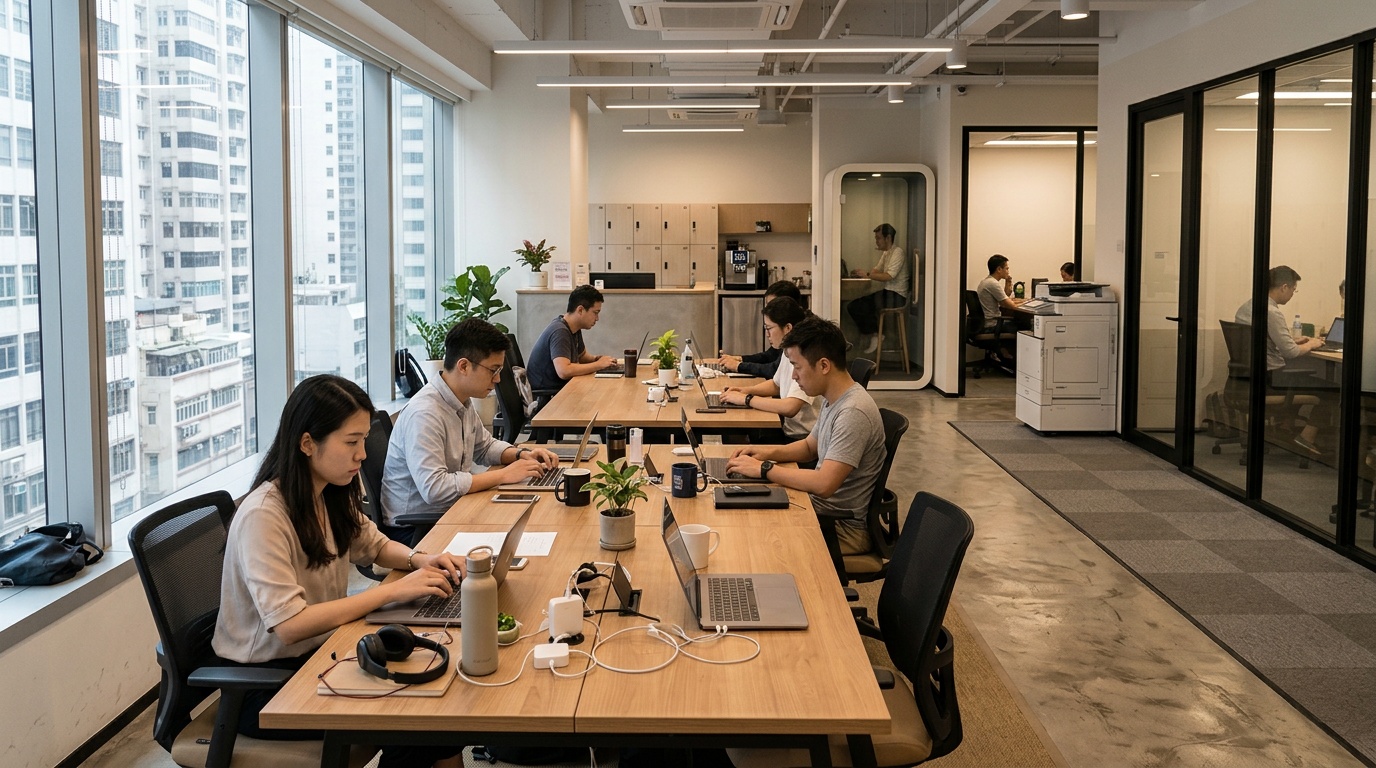
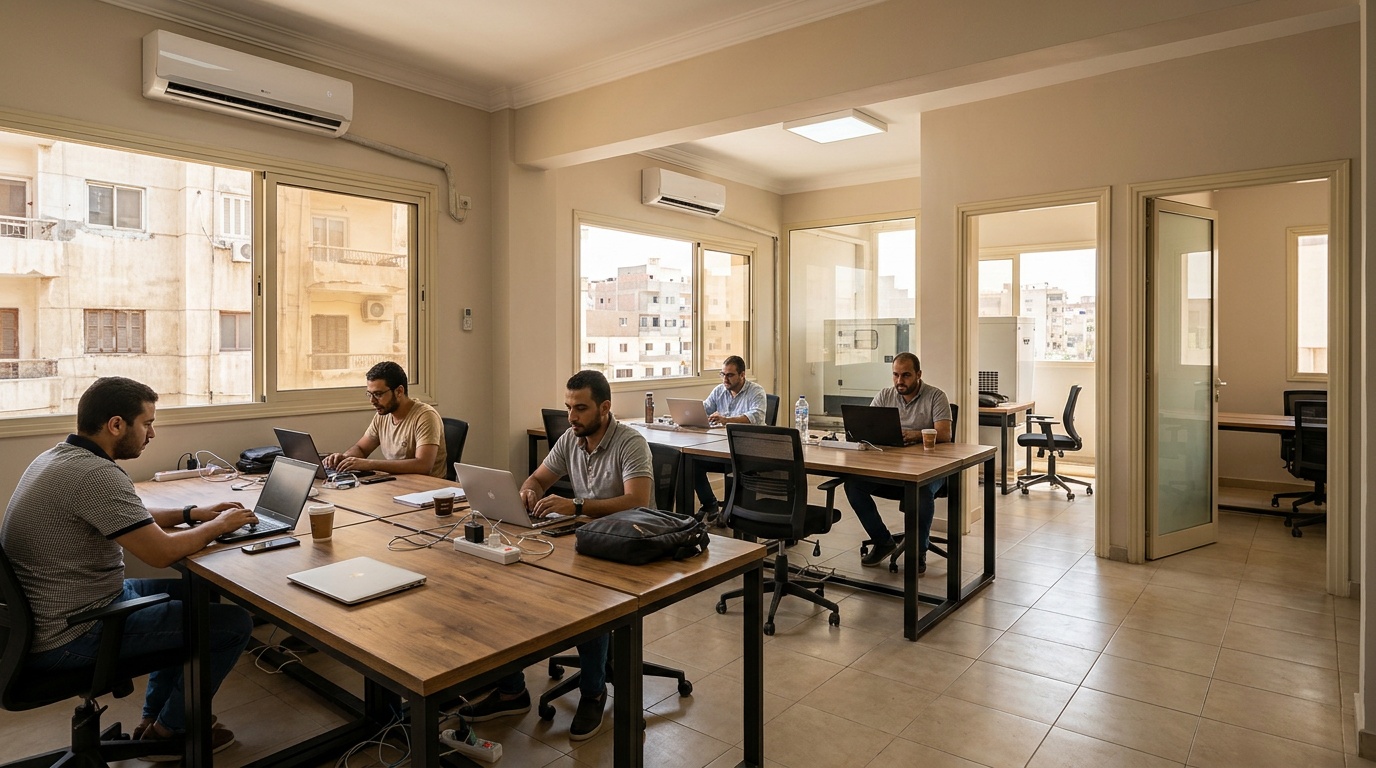
    Hot desking is a flexible, open-seating arrangement where members do not have a permanently assigned desk. Instead, you arrive at the coworking space and choose any available workstation. This model is built on the principle of shared resources, optimizing space utilization for the provider and offering maximum flexibility for the user. It’s designed for professionals who value mobility and the ability to connect with a wider community within the coworking environment.

    In Maadi, hot desking offers a cost-effective entry point into professional coworking. It’s ideal for freelancers, remote workers, or consultants who split their time between locations or don’t require a dedicated spot for administrative tasks. The absence of a fixed desk means less personal overhead and more opportunity to engage with different individuals and teams each day, fostering a dynamic atmosphere.

    What a Private Office Actually Includes

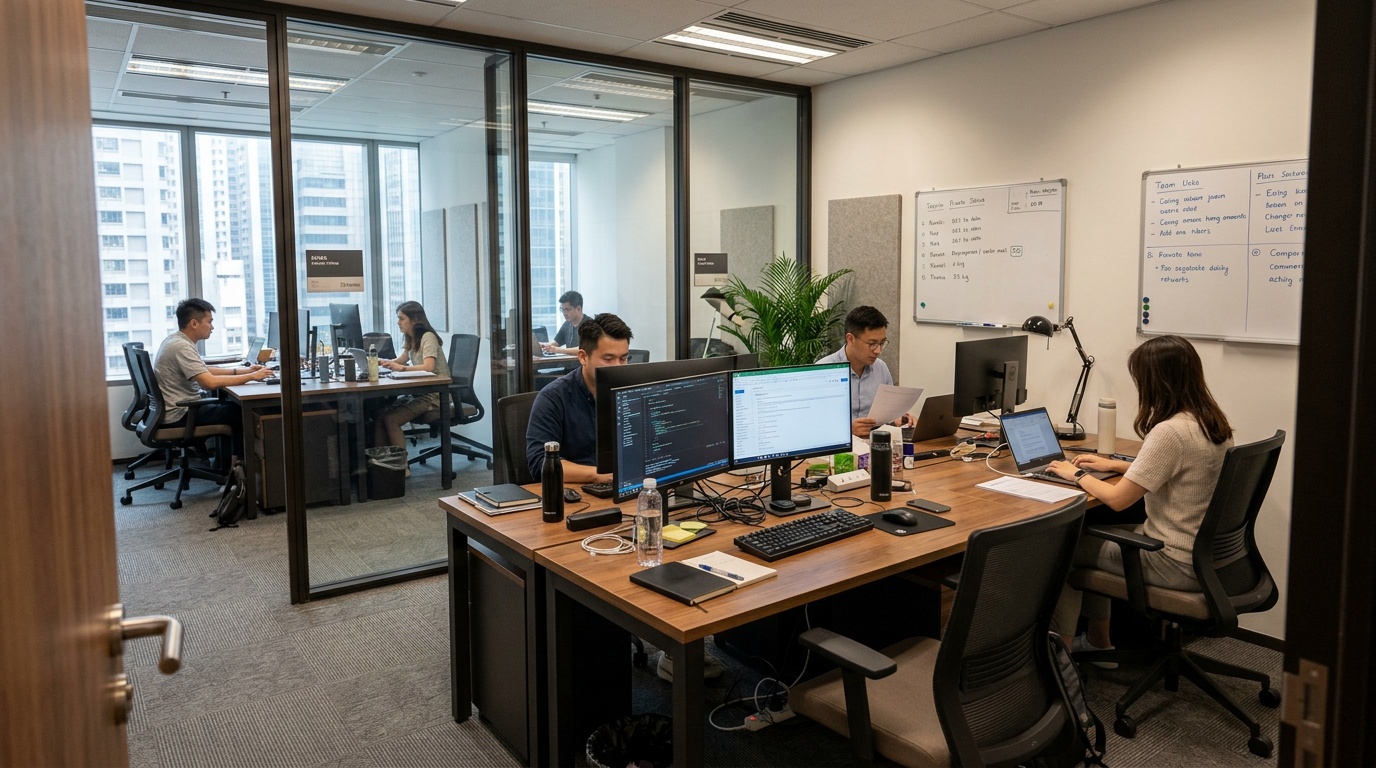
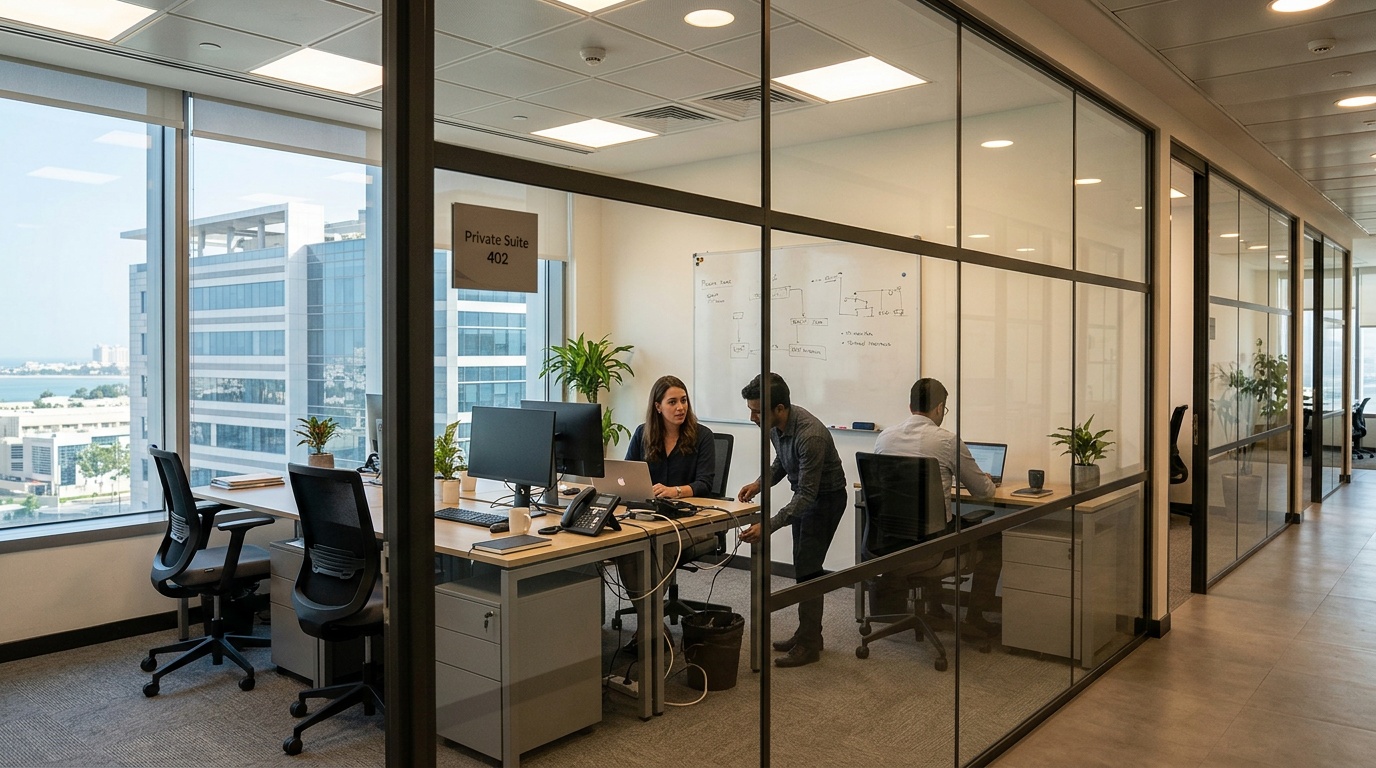
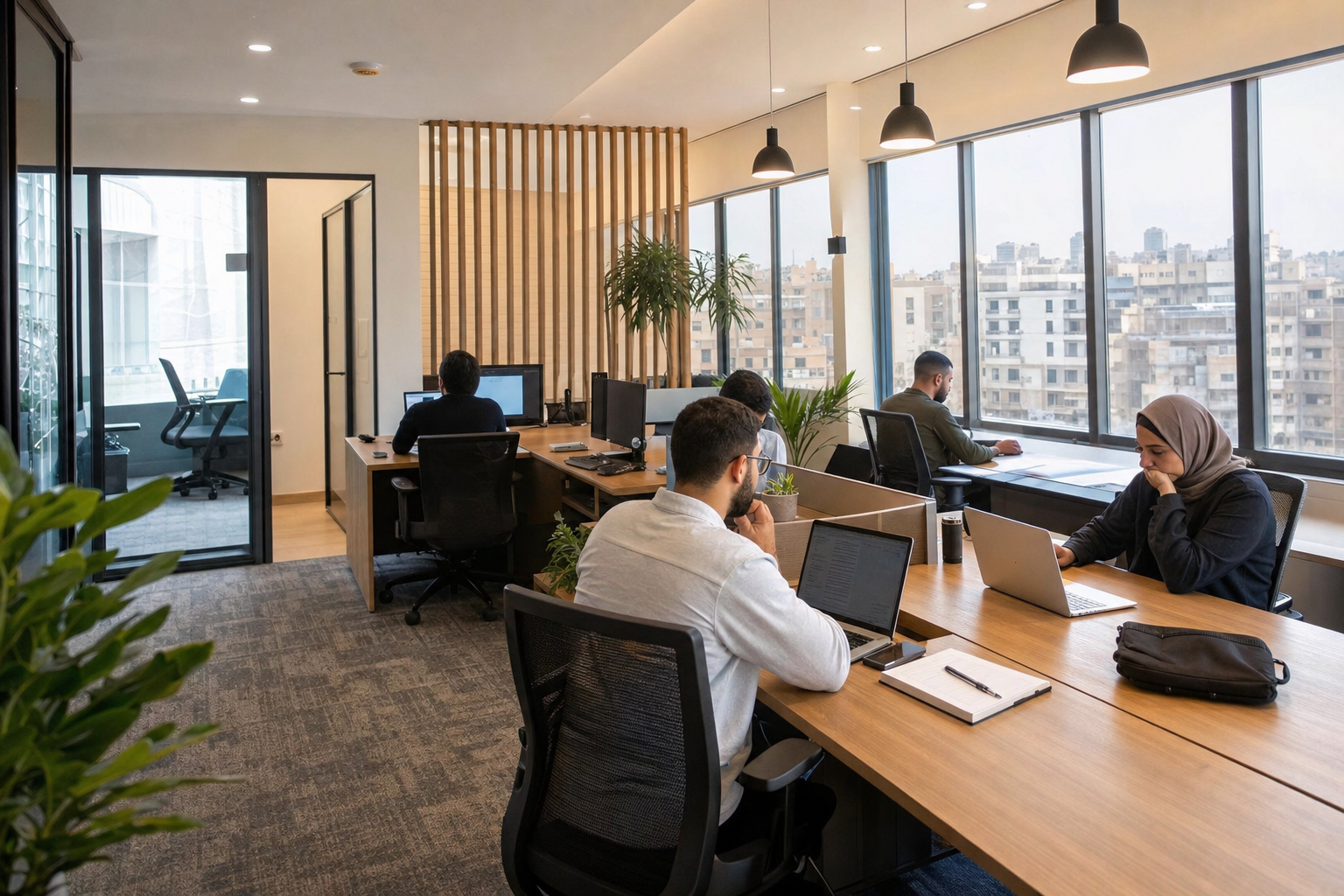
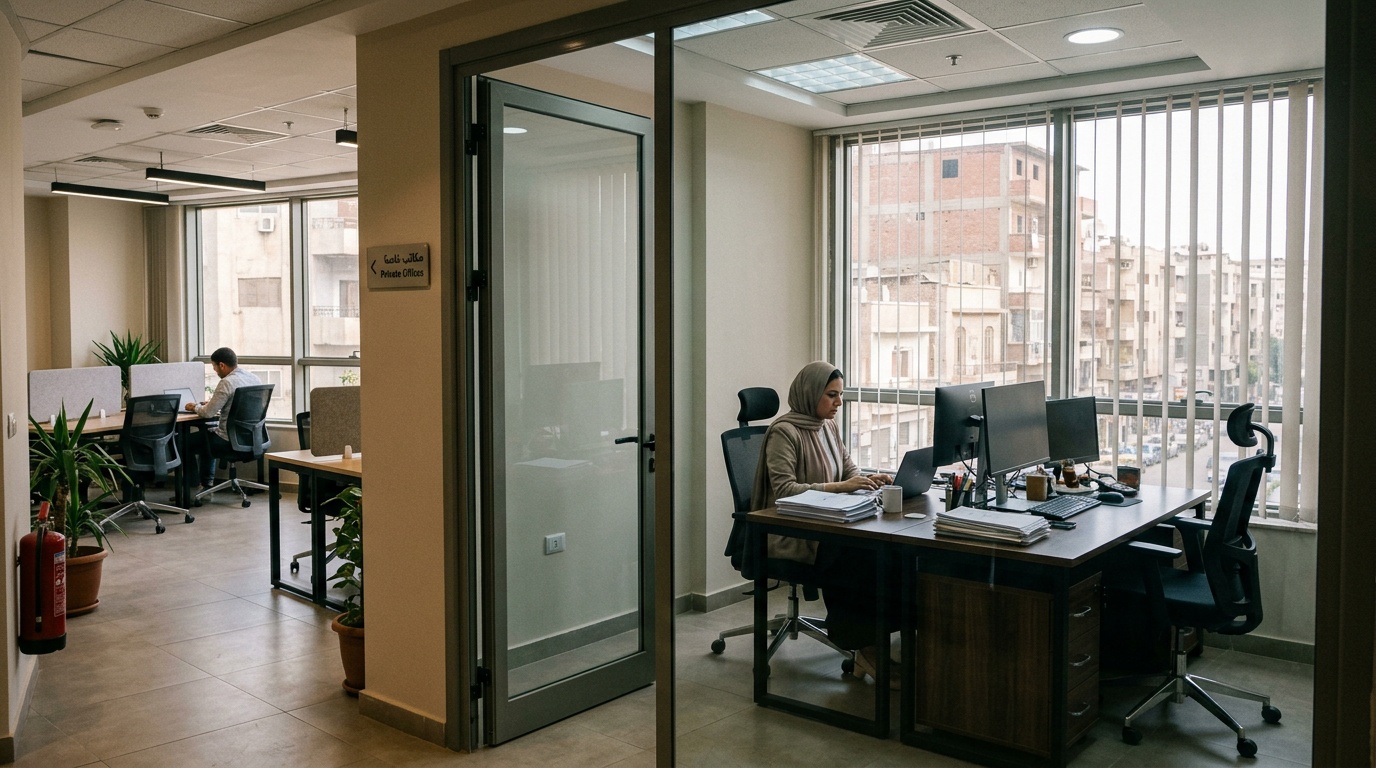
    A private office, by contrast, provides a dedicated, enclosed space for an individual or a team. This is an infrastructure designed for continuity and privacy, offering a consistent environment that is solely yours. It typically includes a lockable door, a furnished workspace, and often comes with amenities like dedicated storage and a fixed internet connection. This option provides a professional headquarters for your business.

    Choosing a private office in Maadi means investing in a secure, consistent work setting. It’s the preferred solution for companies requiring confidentiality, a stable base for client meetings, or teams needing a collaborative zone free from external distractions. This setup ensures that your work environment remains undisturbed, allowing for deeper focus and the development of proprietary systems.

    The Third Option: Dedicated Desks Explained

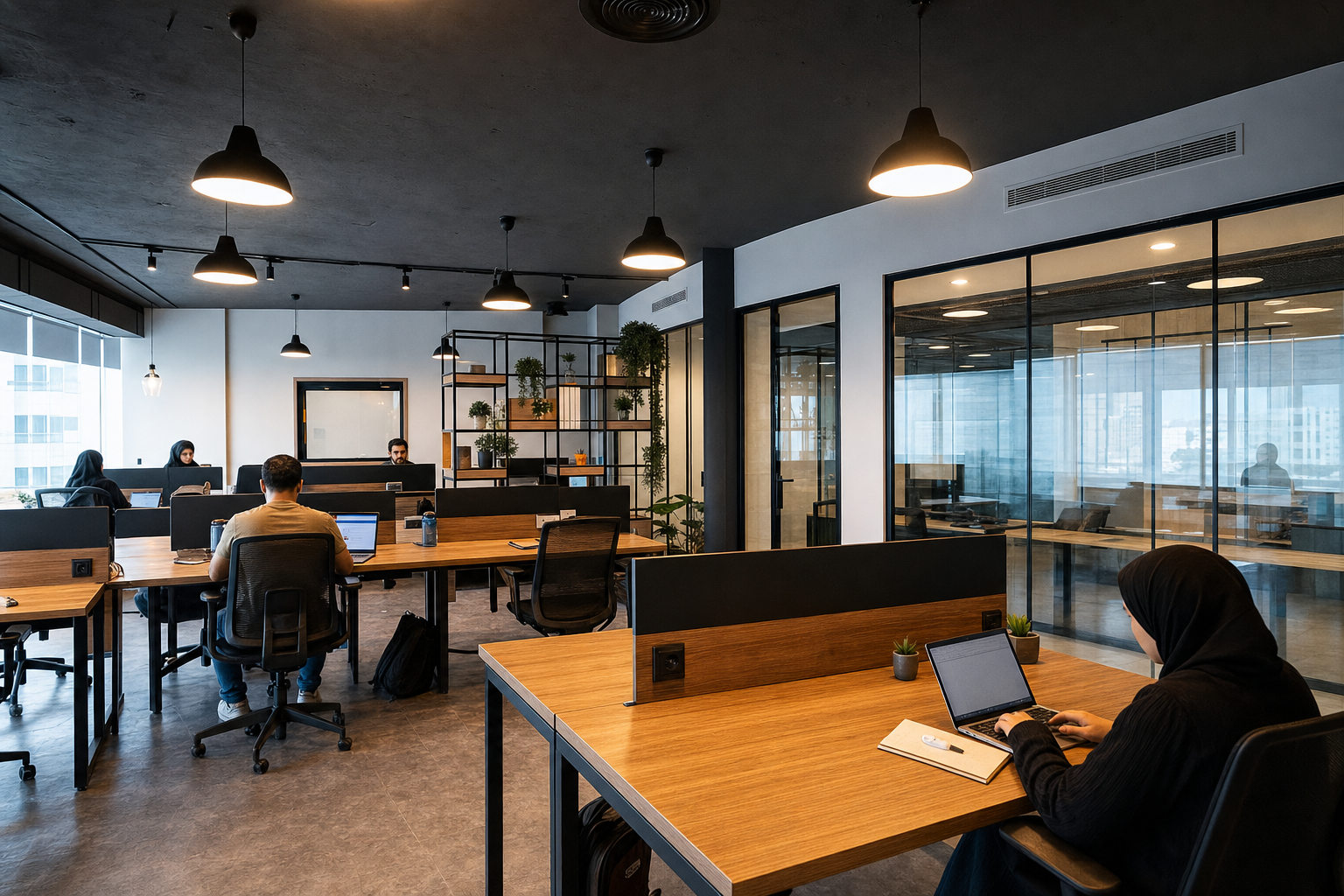
    Beyond hot desks and fully enclosed private offices lies the dedicated desk. This option offers a middle ground, providing a personal workstation within a shared coworking area that is permanently assigned to you. You get your own desk, chair, and often lockable storage, allowing you to leave your equipment and personal items overnight without concern.

    A dedicated desk in a Maadi coworking space is engineered for those who need a consistent, personal workspace but don’t require the full enclosure of a private office. It offers a balance between the community feel of shared spaces and the personal continuity of a private setup. This makes it an excellent choice for individuals or small teams who want their own space to personalize and rely on daily, ensuring their tools and setup are always ready.

    Key Insight: Many workspace seekers overlook the dedicated desk option. This model provides the continuity of a personal workspace without the cost of a fully private office, making it an efficient choice for consistent productivity in Maadi.

    Maadi Pricing Breakdown: What You’ll Pay for Hot Desks, Dedicated Desks, and Private Offices

    Maadi Pricing Breakdown: What You’ll Pay for Hot Desks, Dedicated Desks, and Private Offices

    Understanding the financial commitment is important when comparing coworking spaces in Maadi: private offices vs. hot desks. Pricing structures vary significantly based on the level of service, amenities, and the specific location within Maadi. We aim to provide clear, actionable cost information, moving beyond vague estimates to figures that reflect the local market conditions.

    Average Hot Desk Price in Maadi (Daily and Monthly)

    Hot desks in Maadi coworking spaces typically offer the most accessible entry price point. Daily passes provide flexibility for short-term needs or trial periods. For consistent users, monthly hot desk memberships are more economical. These rates are engineered for frequent users who prioritize flexibility over a fixed location.

    This pricing model is designed to support individuals and startups who need professional workspace without long-term leasing commitments. It’s a system that offers immediate access to a productive environment, allowing users to scale their workspace usage up or down based on project demands. These figures provide a baseline for comparing different coworking providers in the Maadi area.

    Private Office Rental Costs in Maadi

    Securing a private office in Maadi represents a more substantial investment, reflecting the dedicated infrastructure and privacy provided. Monthly rental costs for small private offices, suitable for individuals or small teams, can be higher than shared options and extend upwards, depending on size, amenities, and the provider’s prestige. Larger offices for teams will naturally command higher rates.

    These costs are underpinned by the provision of a secure, exclusive space, often including furniture, utilities, and dedicated internet. The value proposition here is continuity and a professional image, making it an essential investment for businesses that require a stable, private base of operations. This pricing reflects the system of providing a self-contained business unit within a larger managed facility.

    Hidden Costs: Meeting Room Access, Printing, and Parking

    Beyond the base membership fees for hot desks or private offices, several ancillary costs can impact your overall expenditure. Access to meeting rooms is frequently metered; while some plans might include a few hours per month, additional bookings are usually charged hourly or daily. Printing services also incur charges, typically per page, with higher rates for color prints.

    Parking, if available, can be another significant cost, especially in densely populated areas like Maadi. Some providers offer dedicated parking spots for private office tenants, while hot desk users might rely on public parking or pay-per-use facilities. It’s essential to inquire about these potential additional expenses to accurately budget, as they can add considerably to your monthly workspace expenses. These are system-level details that require careful examination before committing.

    Maadi Coworking Workspace Cost Estimates (Monthly)
    Workspace Type Estimated Monthly Cost (EGP) Notes
    Hot Desk (Flexible) Variable Access to shared workstations; community-focused.
    Dedicated Desk Variable Personal assigned desk in a shared area; secure storage.
    Private Office (1-2 people) Variable Enclosed, lockable office space; private infrastructure.
    Meeting Room Rental Variable (per hour) Varies by size and amenities; often additional to membership.
    Printing Variable (per page) Standard vs. color prints; usage-based charges.
    Parking Variable (Monthly/Daily) Dependent on location and provider; inquire for specifics.

    Who Should Choose What? A Decision Framework for Maadi Workers

    Selecting the right workspace in Maadi is fundamentally about aligning your daily operational needs with the available infrastructure. It’s a decision that impacts productivity, cost management, and your professional image. For professionals navigating the options between hot desks and private offices, a clear decision framework helps to move from contemplation to concrete action. This involves evaluating your work style, budget constraints, and how the local Maadi environment complements your professional life. Let’s engineer a path toward the workspace system that truly supports your goals.

    For Solo Freelancers: Hot Desk vs. Dedicated Desk

    For the solo freelancer in Maadi, the choice often boils down to balancing cost-efficiency with the need for personal continuity. A hot desk offers unparalleled flexibility and the lowest entry cost, allowing you to work from various locations within a coworking space each day. This model is engineered for those who require minimal personal setup and thrive on dynamic surroundings, potentially encountering new collaborators or clients. It’s an infrastructure that travels with your daily itinerary.

    On the other hand, a dedicated desk provides a consistent, personal workspace within a shared environment. This is ideal for freelancers who find themselves spending significant hours at their desk and prefer to leave their equipment, monitors, and personal items set up. While it represents a step up in cost from a hot desk, it offers the advantage of immediate access to your familiar setup, avoiding the daily reconfiguration that hot desking requires. This option ensures your workspace remains ready, supporting sustained focus for tasks that demand deep concentration.

    When comparing these two, consider your project pipeline and work habits. If your work involves frequent client meetings off-site or you enjoy varied environments, a hot desk might suffice. However, if your core work involves extended periods of focused output, writing, coding, or design, a dedicated desk offers a more stable and efficient system for daily operations. It’s about choosing the infrastructure that minimizes friction and maximizes your output.

    Key Insight: For solo freelancers in Maadi, a dedicated desk offers a superior balance of cost and continuity compared to a hot desk, especially for those who prioritize a consistent, ready-to-go workspace for focused work.

    For Remote Teams and Client-Facing Roles: When a Private Office Wins

    When operating as a remote team or in a client-facing role, the requirements for your workspace shift towards professionalism, privacy, and dedicated infrastructure. A private office in a Maadi coworking space provides an enclosed, secure environment that acts as a professional headquarters. This is critical for maintaining client confidentiality, conducting sensitive discussions, and projecting a stable, established business image. The continuity of having a fixed, private space ensures that your team’s operational base is always secure and ready.

    For teams, a private office fosters a sense of cohesion and shared purpose. It offers a dedicated area for collaboration, team meetings, and focused project work without the distractions inherent in open-plan coworking areas. This environment is engineered to support team synergy, allowing for spontaneous brainstorming sessions and the development of proprietary strategies. The ability to leave team resources and materials set up daily further supports operational efficiency.

    In Maadi, securing a private office is an investment in reliability and professional presence. It’s the preferred choice for businesses that handle sensitive data, require a consistent space for client presentations, or simply value an uninterrupted workflow. This option provides the highest level of operational infrastructure, ensuring that your team can perform at its best, shielded from external variables and focused on core objectives. It’s what works at 10x the demand for team productivity.

    Maadi Lifestyle Factors: Metro Access, Quiet Streets, and Cafes

    Maadi’s unique character offers specific lifestyle advantages that can influence your choice of workspace. Many coworking spaces are strategically located near Maadi’s metro stations, providing excellent connectivity for daily commutes and reducing reliance on personal vehicles. This metro access is an important piece of infrastructure for many professionals, ensuring reliable transit and saving time and money. The availability of such transport options makes certain coworking locations more practical and appealing.

    Beyond transit, Maadi is known for its quieter, tree-lined streets compared to more bustling districts of Cairo. This offers a more serene backdrop for focused work, especially for those opting for hot desks or dedicated desks in shared areas. The presence of numerous cafes and local eateries also contributes to a balanced work-life rhythm. These amenities provide convenient spots for breaks, informal meetings, or simply stepping away to refresh, supporting sustained productivity throughout the day.

    When comparing coworking spaces, consider how these local lifestyle factors integrate with your work needs. A private office might be ideal for deep focus, but its location relative to transport or desirable cafes can impact daily satisfaction. Conversely, a hot desk in a well-connected area with nearby amenities might offer a better overall daily experience for a mobile professional. The ideal workspace system in Maadi often harmonizes professional requirements with the advantages of its distinct urban environment.

    Workspace Decision Checklist for Maadi Professionals

    • Work Style: Do you need constant privacy or thrive in varied environments?
    • Team Size: Are you a solo operator, a small team, or a larger group?
    • Client Interaction: How often do you meet clients, and what impression do you need to make?
    • Budget: What is your monthly allocation for workspace, including potential add-ons?
    • Commute: How important is proximity to public transport like the Maadi metro?
    • Amenities: Do you require dedicated parking, meeting rooms, or specific office equipment?
    • Noise Levels: How sensitive are you to background noise during focused work periods?
    • Personalization: Do you need to leave equipment and personal items at your desk daily?

    Comparing Maadi’s Top Coworking Spaces: Regus, OfficeHub, and More

    When assessing coworking spaces in Maadi, understanding the offerings of established providers is essential for making an informed decision. These operators represent different approaches to flexible workspace solutions, catering to varying professional needs. By examining their specific amenities and availability, professionals can better align their workspace choice with their operational goals, ensuring reliability and convenience.

    Regus Maadi: Private Offices and Hot Desk Availability

    Regus, a globally recognized name in flexible workspaces, offers a range of solutions in Maadi. Their portfolio typically includes private offices designed for teams of various sizes, providing a secure and professional environment. For individuals or smaller groups needing flexibility, Regus also commonly features hot desk options, allowing access to communal work areas. Their infrastructure is engineered for business continuity, offering amenities like high-speed internet, meeting rooms, and administrative support.

    The availability of both private offices and hot desks at Regus Maadi means professionals can select the workspace that best suits their current operational requirements. Whether you need a dedicated headquarters or a flexible spot to work from, Regus aims to provide a stable system. This approach ensures that businesses of all types can find a suitable professional environment, maintaining focus on their core activities.

    OfficeHub Maadi: Community vs. Privacy Tradeoff

    OfficeHub Maadi positions itself as a platform connecting users with a diverse array of coworking options, often highlighting the community aspect alongside privacy. While OfficeHub itself may act as a marketplace or aggregator, the spaces it lists in Maadi typically present a spectrum of choices. Users might find options emphasizing collaborative environments, which are ideal for freelancers and startups seeking networking opportunities. This model promotes connection without complexity, fostering a shared professional atmosphere.

    The key differentiator here is often the balance between spontaneous interaction and the need for focused, private work. Some spaces listed through OfficeHub might lean more towards open-plan designs that encourage community engagement, while others offer private offices for those prioritizing uninterrupted productivity. Understanding this tradeoff is fundamental when comparing coworking spaces in Maadi: private offices vs. hot desks, as it directly impacts the daily work experience and potential for collaboration.

    Other Local Spaces Worth Considering

    Beyond major international brands and listing platforms, Maadi hosts numerous local coworking spaces, each with its unique value proposition. These smaller, independent venues often offer a more personalized experience and can be more attuned to the specific needs of the local professional community. They might provide specialized amenities or more flexible membership tiers that cater to niche requirements, offering a distinct alternative.

    When comparing coworking spaces in Maadi: private offices vs. hot desks, these local spots are worth investigating for their potential to offer competitive pricing or a more intimate community feel. They represent systems that are often deeply integrated into the local Maadi ethos. Exploring these options ensures a comprehensive understanding of the available workspace infrastructure, moving beyond the most visible providers to uncover hidden gems that might perfectly fit your work style and budget.

    Comparison of Maadi Coworking Space Providers (Illustrative)
    Provider Primary Offering Hot Desk Availability Private Office Availability Key Differentiator
    Regus Maadi Serviced Offices, Coworking Yes Yes (various sizes) Global network, established infrastructure, business services.
    OfficeHub Maadi (Platform) Marketplace for various spaces Varies by listed space Varies by listed space Wide selection, community focus in many listings.
    Local Maadi Spaces Mixed (e.g., dedicated desks, small offices) Often available Often available (smaller scale) Local focus, potentially more personalized service, unique community.

    References

    Frequently Asked Questions About Coworking in Maadi

    Frequently Asked Questions About Coworking in Maadi

    Navigating the options for professional workspaces in Maadi can bring up specific questions. Understanding these common queries helps clarify the practical differences between workspace types and their suitability for various professional needs. This section addresses key concerns, providing direct answers that support decision-making when comparing coworking spaces in Maadi: private offices vs. hot desks.

    Can I Rent a Private Office by the Day in Maadi?

    While the primary model for private offices in Maadi coworking spaces is typically monthly rental, some providers may offer day passes or short-term rentals for private offices. This is less common than daily hot desk access but can be available, especially for larger, underutilized offices or during off-peak times. It is always advisable to inquire directly with the specific coworking space about their policies on daily private office rentals. This flexibility can be engineered for specific project needs.

    If a daily private office rental is not available, consider booking a small meeting room for the day. This provides a private, enclosed space for focused work or client meetings, offering a similar level of privacy and security for a temporary period. The cost structure for daily office rentals or meeting room bookings will vary significantly among providers.

    How Much Does a Hot Desk Cost Per Month in Maadi?

    The monthly cost for a hot desk in Maadi coworking spaces generally offers access to shared workstations within a professional environment, often including basic amenities like Wi-Fi and access to common areas. This pricing system is designed to offer an economical solution for individuals who require a regular workspace but do not need a dedicated or private office.

    This monthly membership provides significant value by offering a productive work setting without the overheads associated with traditional office leases. It supports continuity for professionals who frequently work outside their homes or require a professional address and reliable internet. The exact cost can depend on the specific amenities offered by the coworking space and its location within Maadi.

    Which Is Better for a Solo Freelancer: Hot Desk or Private Office?

    For a solo freelancer in Maadi, the choice between a hot desk and a private office depends heavily on work habits and budget. A hot desk is often the more cost-effective and flexible option, ideal for freelancers who value varied work environments and minimal personal overhead. It supports a mobile work style and offers opportunities for networking within the coworking community.

    A private office, while more expensive, provides essential continuity, privacy, and a dedicated professional base. This is better suited for freelancers who handle sensitive work, require a stable environment for long hours of focused tasks, or use their workspace as a primary client-facing location. The decision hinges on whether daily flexibility or consistent, private infrastructure is prioritized for their specific professional system.

    Do Maadi Coworking Spaces Offer Dedicated Desks?

    Yes, many coworking spaces in Maadi offer dedicated desks as an option alongside hot desks and private offices. A dedicated desk provides a personal, assigned workstation within a shared coworking area. This means you have your own specific desk where you can leave your equipment and personal items, ensuring your setup is ready whenever you arrive. It offers a balance between the community aspect of shared spaces and the personal continuity of having your own space.

    Dedicated desks are engineered for professionals who require a consistent workspace but may not need the full enclosure of a private office. This option provides a reliable, personalized infrastructure at a price point typically between a hot desk and a private office. It’s an excellent choice for those who value having their own space ready to go each day, supporting focused work without the daily setup and pack-up required with hot desking.

    Frequently Asked Questions

    While monthly rentals are standard, some Maadi coworking spaces may offer daily private office rentals or day passes for enclosed spaces. It’s best to inquire directly with providers about their specific policies and availability for short-term private office use.

    Monthly hot desk memberships in Maadi typically provide access to shared workstations in a professional coworking environment. Specific pricing varies by provider.

    For cost-effectiveness and flexibility, a hot desk is often preferred. A private office offers better continuity and privacy, suitable for freelancers handling sensitive work or requiring a dedicated professional base.

    Yes, many coworking spaces in Maadi provide dedicated desks, offering a personal, assigned workspace within a shared area for consistent use.

    Frequently Asked Questions

    What's the main difference between a hot desk and a private office in Maadi coworking spaces?

    The primary distinction between a hot desk and a private office in Maadi coworking spaces is the level of dedicated space and privacy provided. A hot desk offers flexible, open seating where you choose any available workstation, while a private office provides a secure, enclosed area exclusively for you or your team. This difference impacts focus, continuity, and your business’s professional perception.

    Who typically benefits most from using a hot desk in Maadi?

    Hot desking in Maadi is ideal for professionals who value mobility and community connection. Freelancers, remote workers, and consultants often choose hot desks for their cost-effectiveness and flexibility. This model supports those who split time between locations or don’t require a fixed spot for daily administrative tasks, offering an accessible entry to a professional environment.

    What does a private office in a Maadi coworking space usually include?

    A private office in Maadi typically includes a dedicated, lockable, enclosed workspace for an individual or team. This setup ensures continuity and privacy, often coming furnished with a desk, chair, and sometimes dedicated storage. It provides a consistent, secure environment suitable for confidential work or client meetings without external distractions.

    Is there an option between a hot desk and a fully private office in Maadi?

    Yes, a dedicated desk offers a middle ground in Maadi coworking spaces. You get a permanently assigned personal workstation within a shared area, complete with your own desk and lockable storage. This provides the continuity of a personal space without the full enclosure and cost of a private office, balancing community access with personal setup.

    How do costs compare for hot desks versus private offices in Maadi?

    Hot desks in Maadi generally represent the most accessible entry price point, with daily and monthly options available for maximum flexibility. Securing a private office in Maadi involves a more substantial investment, reflecting the dedicated infrastructure and privacy it offers. Dedicated desks provide a balance, costing more than hot desks but less than private offices.

    Why might someone choose a private office over other coworking options in Maadi?

    Professionals select a private office in Maadi when confidentiality, a stable base for client meetings, or a distraction-free zone for a team is paramount. This option ensures a secure, consistent work setting, preventing the need for constant reconfiguration. It’s an infrastructure choice for businesses prioritizing uninterrupted workflow and a professional headquarters.

    About the Author

    MS

    Mohammad El Shaari

    CTO at Hotdesk

    Mohammad El Shaari is the CTO of Hotdesk, where he leads the engineering team building and scaling a global SaaS platform for on-demand workspace bookings across 80+ countries. A Computer Science graduate from The British University in Egypt, he brings over a decade of hands-on experience in enterprise software, AI, cloud infrastructure, and cybersecurity.

    Before Hotdesk, he served as CTO of Vee Tech, where he led technical delivery for 12+ enterprise clients generating $30M+ in annual revenue, and helped build Egypt’s first innovation lab at Capital International Schools.

    At Hotdesk, Mohammad focuses on building scalable systems that handle real-time availability, global user distribution, and high-throughput transactions. He specializes in scalable system design, cloud-native infrastructure, and building high-performance SaaS platforms that support global user bases.

    He writes about scaling SaaS platforms, backend architecture, mobile engineering, and real-world technical decisions behind building and operating global products.
    Last reviewed: June 26, 2026 by the Hotdesk Team
  • NEST Dubai Coworking Space vs Competitors: Full Comparison

    NEST Dubai Coworking Space vs Competitors: Full Comparison

    nest dubai coworking space

    The rhythm of modern professional life often means navigating new environments. Whether you’re a digital nomad seeking a productive haven, a startup founder expanding your reach, or a remote team member on a project outside your usual base, the need for a consistent, welcoming workspace remains paramount. Too often, finding that space involves a frustrating cycle of searching, assessing, and reorienting. At Hotdesk, we believe movement shouldn’t disrupt your flow or disconnect you from a sense of belonging. It should be seamless. This is precisely the challenge we address when looking at options like the nest dubai coworking space, a unique offering that merges hospitality with dedicated work infrastructure.

    Key Takeaways

    • NEST Dubai bridges the gap between hospitality and workspace, offering a model designed for professionals who value consistency across locations.
    • Hotdesk was built on the idea that changing cities should not force you to sacrifice productive routines or a sense of community.
    • The traditional search for temporary workspace wastes time and energy, which is why hybrid options like NEST prioritize both comfort and function.
    • For digital nomads and remote teams, the real cost of moving is often the disconnection from a reliable work environment, a problem NEST directly addresses.

    Understanding what makes a workspace truly work for you involves looking beyond just a desk and Wi-Fi. It’s about the atmosphere, the location, the accessibility, and the value it provides. This comparison delves into NEST Dubai, exploring its specific offerings and how it stands apart, setting the stage for informed decisions in a city with a dynamic array of options.

    Where You Find NEST Dubai and What to Expect

    Location and First Impressions at Barsha Heights

    NEST Dubai is strategically situated in Barsha Heights (Tecom), a district known for its blend of residential and commercial spaces, making it accessible for many professionals across the city. This area is a hub for innovation and business, with a significant concentration of coworking facilities, as approximately 75% of Dubai’s coworking spaces are found in areas like Barsha Heights, DIFC, or Dubai Marina, according to industry observations. Upon arrival, the immediate impression is one of modern design and thoughtful curation. The space itself spans 3,000 square feet, offering a professional yet comfortable environment designed to foster productivity and collaboration. Initial feedback, such as the 4.7/5 rating on CoworkIntel, reflects a generally positive reception regarding its atmosphere and functionality, suggesting it meets the practical needs of its users from the outset. For those exploring options in this vibrant area, consider the Servcorp Boulevard Plaza for a premium business address.

    Hotel-Integrated Coworking: How TRYP by Wyndham Shapes the Space

    A defining characteristic of NEST Dubai is its integration within the TRYP by Wyndham Dubai hotel. This isn’t just a shared office on the ground floor of a hotel; it’s a deliberate fusion that aims to offer a richer amenity set than a standalone coworking space might provide. Being part of the world’s largest TRYP hotel means NEST members and guests can often access hotel facilities, such as dining areas or potentially other services, which can elevate the overall daily experience. This model provides a unique proposition: the structured environment of a coworking space combined with the hospitality and convenience of a hotel. It’s designed for professionals who appreciate a polished setting and the potential for added perks and services that go beyond typical workspace offerings, creating a seamless continuity for those who travel or desire an elevated work experience. Other notable coworking spaces in Dubai that offer a blend of professional services and convenience include The Executive Centre Dubai.

    What Makes NEST Different from a Standalone Coworking Space

    The primary differentiator for NEST Dubai lies in its hybrid model. Unlike conventional coworking spaces that focus solely on providing office infrastructure, NEST uses its hotel affiliation to offer a more holistic solution. This means members can experience benefits often associated with hospitality, such as attentive service and access to amenities typically found in a hotel, alongside essential workspace features like high-speed internet and meeting rooms. This integration fosters a sense of belonging and ease, as users are not just renting a desk but are welcomed into a more comprehensive environment. While other spaces might offer networking events or basic refreshments, NEST’s model aims to provide a more integrated lifestyle component, supporting professionals who value convenience and a well-rounded experience. This approach can also offer flexibility, akin to how one might consider options like Coworking Naubostik for its specific local charm, but on a broader, hospitality-infused scale within Dubai.

    Pricing at NEST Dubai: Transparent Rates for Day Passes, Hot Desks, and Private Offices

    Pricing at NEST Dubai: Transparent Rates for Day Passes, Hot Desks, and Private Offices

    Day Pass Pricing and What It Includes

    For professionals needing a workspace on an ad-hoc basis, NEST Dubai offers day passes that provide immediate access to their facilities. This is an important offering for those who may not require a full-time membership but need a professional environment for a day’s work, client meetings, or focused tasks. The day pass typically grants access to the general coworking area, high-speed Wi-Fi, and often complimentary coffee and tea, ensuring a productive experience without long-term commitment. Pricing for day passes is designed to be competitive and transparent, allowing individuals to budget effectively for their immediate workspace needs. This flexibility is key for freelancers, remote workers, or business travelers who value the ability to secure a productive spot on demand, reflecting a modern approach to workspace access that prioritizes user convenience and clarity.

    Monthly Hot Desk and Dedicated Desk Rates

    NEST Dubai provides monthly membership options for those seeking a more regular presence. The hot desk membership is ideal for individuals who value flexibility and are comfortable working in various available spots within the coworking area each day. This option is generally the most economical for ongoing use, offering consistent access to the workspace, high-speed internet, and community amenities. For professionals who prefer a consistent spot to call their own, dedicated desk plans are also available. These plans secure a specific desk within the shared workspace, often allowing for personal storage and a familiar setup, which can significantly improve productivity and a sense of ownership. Rates for these monthly plans are structured to offer value for regular users, ensuring that consistent access to a professional environment is attainable for a broad range of professionals.

    Private Office Plans for Teams

    Recognizing the diverse needs of businesses, NEST Dubai also offers private office solutions. These offices are suitable for small to medium-sized teams, startups, or companies that require a dedicated, secure space for their operations. Private offices at NEST provide an exclusive environment, complete with all the standard coworking amenities, plus the added benefits of privacy, soundproofing, and a dedicated space for team collaboration. The pricing for these offices typically varies based on size and capacity, offering a scalable solution for growing organizations. This offering ensures that NEST Dubai can cater not only to individual professionals but also to companies needing a professional base with the flexibility to expand or contract as needed, providing a stable and professional setting for their day-to-day activities.

    Annual Membership Options and Discounts

    For clients looking for the utmost in commitment and cost savings, NEST Dubai often features annual membership packages. These long-term commitments are designed to provide significant value through discounted rates compared to monthly plans. Opting for an annual membership secures a professional workspace solution for an entire year, offering financial predictability and eliminating the recurring decision-making process associated with shorter terms. This type of membership is particularly attractive to established businesses, long-term remote workers, or individuals who are confident in their need for a consistent workspace. The structure of these plans underscores NEST’s commitment to providing flexible, value-driven options that support continuity for its members, much like how one might consider long-term arrangements for a global solution such as Coworking Naubostik for specific regional needs.

    Amenities That Matter: WiFi, Pool, Gym, Parking, and More

    Core Workspace Amenities: WiFi, Coffee, Meeting Rooms

    At the heart of any productive workspace are the foundational amenities that enable daily operations. NEST Dubai ensures professionals have reliable, high-speed Wi-Fi connectivity, which is non-negotiable for seamless remote work, video conferencing, and data access. Complementing this is the provision of complimentary coffee and tea, a simple yet significant perk that keeps energy levels up and fosters a welcoming atmosphere. For meetings, whether internal team syncs or client discussions, NEST offers access to well-equipped meeting rooms. These spaces are designed to be functional and professional, providing a private setting away from the main coworking floor, equipped with necessary tools for presentations and collaborative sessions. These core offerings are what most professionals expect, forming the baseline for a functional work environment.

    Hotel Perks: Pool, Gym, Dining Discounts. When They Add Value

    The integration with TRYP by Wyndham Dubai introduces a unique layer of amenities that extend beyond typical coworking offerings. Access to hotel facilities like a swimming pool or fitness center can be a significant draw for individuals seeking to balance work with well-being. These perks allow professionals to decompress, exercise, or simply enjoy a change of pace without leaving the premises, contributing to a healthier and more engaging work-life integration. Furthermore, potential dining discounts within the hotel can offer convenient and cost-effective meal options throughout the day. The value of these hotel-specific amenities lies in their ability to improve the overall daily experience, transforming a workday into something more holistic and less like a chore, particularly when compared to standard coworking options. For a different kind of premium experience, consider Quantum Executive Business Center.

    Parking and Transport Access (Metro Proximity)

    Accessibility is a key consideration for any workspace, and NEST Dubai addresses this through its location and available transport links. For those arriving by car, on-site or nearby parking solutions are essential, reducing the stress associated with finding a spot in a busy urban area. This convenience is particularly valued by professionals who rely on personal vehicles for their commute. Additionally, proximity to public transport, such as the Dubai Metro, expands accessibility for a wider range of users. Being close to a metro station means professionals can easily reach NEST Dubai from various parts of the city, offering an alternative to driving and parking. This multi-modal approach to accessibility ensures that getting to and from the workspace is as smooth as the work itself, a point often overlooked by more isolated coworking facilities.

    Pros

    • Integrated access to hotel amenities like pool and gym
    • Complimentary coffee, tea, and high-speed Wi-Fi
    • Professional meeting rooms available for booking
    • Convenient parking options considered
    • Proximity to public transport, including metro stations
    • Potential for dining discounts within the hotel

    Cons

    • Hotel amenities may come with specific usage times or restrictions
    • Dependence on hotel operations for certain perks

    How NEST Dubai Compares to Other Coworking Spaces in Dubai

    NEST vs. WeWork: Flexibility vs. Brand Consistency

    When contrasting NEST Dubai with a global giant like WeWork, the difference often lies in their core philosophies. WeWork is renowned for its consistent brand experience across locations, offering a predictable, often energetic, and community-focused environment. Their strength is in creating a recognizable atmosphere and extensive global network, which appeals to those who value familiarity and a broad reach. NEST Dubai, on the other hand, differentiates itself through its unique hotel integration, offering a blend of professional workspace with hospitality perks. While WeWork excels in providing a standardized, large-scale coworking experience, NEST offers a more curated, potentially more intimate, and amenity-rich environment tied to its specific location and hotel partnership. For users prioritizing a distinct local experience with added lifestyle benefits, NEST Dubai presents a compelling alternative to WeWork’s widespread brand consistency. For those seeking a similar global network, consider exploring WeWork 2 Minster Court.

    NEST vs. Regus: Hotel Vibe vs. Business Center

    Comparing NEST Dubai to a provider like Regus (now part of IWG) highlights a shift from traditional business center models to more integrated concepts. Regus spaces are typically designed as straightforward, functional business centers, offering private offices, meeting rooms, and hot desks with a focus on corporate needs and a professional, often more formal, atmosphere. They provide reliable infrastructure for established businesses and professionals seeking a conventional office setup. NEST Dubai, by contrast, injects a hospitality-driven element, bringing a more relaxed yet sophisticated ambiance, improved by its hotel setting. This means NEST can offer benefits like pool access or hotel dining, which are generally absent from a standard Regus business center. While Regus serves a clear need for corporate-style workspace, NEST Dubai appeals to those looking for a workspace that actively contributes to their overall lifestyle and comfort. Explore Regus Jumeirah Lake Towers for a typical Regus experience in Dubai.

    NEST vs. AstroLabs: Community for Startups vs. Broader Workspace

    AstroLabs has carved a niche as a premier coworking space and tech hub in Dubai, particularly known for fostering a strong community among startups, tech founders, and developers. Its environment is often geared towards fostering innovation, networking, and growth within the tech ecosystem, offering specialized events and resources tailored to this demographic. NEST Dubai, while also welcoming to startups, casts a wider net. Its hotel integration and broader amenity set appeal to a more diverse professional base, including freelancers, remote workers from various industries, and consultants. While AstroLabs excels in deep-rooted tech community building, NEST Dubai offers a more versatile workspace that accommodates a wider spectrum of professional needs, blending productivity with accessible lifestyle improvements. For those seeking a professional setting that doesn’t exclusively cater to the tech scene, the nest dubai coworking space provides a well-rounded alternative.

    Side-by-Side Pricing and Amenity Comparison

    To truly understand the value proposition, a direct comparison of features is essential. While competitors like WeWork and Regus offer extensive global networks and established business center services respectively, and AstroLabs focuses on a dedicated tech community, NEST Dubai stands out with its unique hotel-integrated model. For example, the availability of a pool and gym as standard perks, alongside professional meeting rooms and high-speed Wi-Fi, sets it apart. Pricing structures for day passes, hot desks, and private offices can vary significantly. NEST Dubai’s transparency in pricing, often available directly through platforms like Hotdesk, contrasts with competitors who may use ‘price on request’ models, making informed decisions more challenging for users. This direct comparison reveals NEST’s aim to deliver a comprehensive and accessible workspace solution. Other Dubai options include AstroLabs, known for its tech focus.

    Feature NEST Dubai WeWork (Typical) Regus (Typical) AstroLabs
    Core Concept Hotel-integrated coworking Global network, community focus Professional business center Tech hub, startup community
    Key Differentiator Hospitality perks (pool, gym, dining) Standardized global brand, extensive network Corporate-grade private offices, meeting rooms Startup ecosystem, events, mentorship
    Workspace Type Hot desks, dedicated desks, private offices Hot desks, dedicated desks, private offices Private offices, hot desks, meeting rooms Hot desks, dedicated desks, private offices
    Included Amenities High-speed Wi-Fi, coffee/tea, meeting rooms, hotel facilities (pool, gym access) High-speed Wi-Fi, coffee, community events, networking High-speed Wi-Fi, business services, meeting rooms High-speed Wi-Fi, coffee, community events, tech resources
    Pricing Transparency Generally transparent, available on demand Varies, often requires inquiry Varies, often requires inquiry Varies, often requires inquiry
    Best For Professionals seeking work-life balance and added lifestyle amenities Global travelers, large teams, those valuing brand consistency Established businesses, corporate users needing formal office space Tech startups, founders, developers, and ecosystem builders

    How to Book NEST Dubai Instantly Without a Membership

    How to Book NEST Dubai Instantly Without a Membership

    Booking a Day Pass or Desk on Demand via Hotdesk

    The most straightforward way to secure a spot at the nest dubai coworking space without committing to a long-term plan is through the Hotdesk platform. Instead of navigating direct inquiries or waiting for responses from the venue, you can browse available options, check real-time availability, and book immediately. This on-demand model is built for professionals whose schedules shift and who value the ability to secure a workspace as easily as ordering a ride. Whether you need a quiet corner for a few hours or a professional setup for an entire day, Hotdesk eliminates the friction of traditional booking processes, letting you focus on the work itself.

    The Booking Process: From Search to Confirmation in Seconds

    The experience is designed for speed and clarity. You start by searching for NEST Dubai or filtering by location within the Hotdesk app or website. The interface displays available desks, day passes, and private options side by side, complete with transparent pricing and included amenities. Once you select your preference, confirming the booking takes only a few clicks. Payment is handled securely within the platform, and you receive an instant confirmation with all the details you need for entry. This end-to-end process typically takes under a minute, removing the uncertainty of showing up at a workspace without a guaranteed spot. It is a model that prioritizes your time and your need for a reliable environment.

    Flexible Terms: By the Hour, Day, or Month with No Commitment

    Flexibility lies at the core of this approach. You are not locked into annual contracts or recurring charges. Instead, you choose the duration that fits your task: a few hours for a focused work session, a full day for more extensive work, or a monthly pass for regular but still commitment-free access. This tiered flexibility is particularly valuable for freelancers juggling multiple projects, consultants with variable client schedules, or remote workers whose presence in Dubai is intermittent. The ability to scale your workspace usage up or down without penalty mirrors the agility required in modern professional life. For those seeking similar on-demand flexibility in other regions, exploring options like Coworking Naubostik in Barcelona demonstrates how the same principle applies across different markets and environments.

    Book your next productive day at NEST Dubai through Hotdesk and experience workspace access without the overhead of a membership. Choose the plan that matches your schedule, confirm your spot, and arrive ready to work. The same on-demand convenience extends to spaces like Coworking Naubostik and hundreds of other locations worldwide, ensuring continuity no matter where your work takes you.

    Frequently Asked Questions

    Where is NEST Dubai coworking space located?

    NEST Dubai coworking space is located in Barsha Heights (Tecom), a district that blends residential and commercial spaces for easy access across Dubai. This area is a hub for innovation and business, with many coworking facilities nearby. The space itself spans 3,000 square feet and has received a 4.7/5 rating on CoworkIntel for its atmosphere and functionality.

    What makes NEST Dubai different from a regular coworking space?

    NEST Dubai is different because it is integrated within the TRYP by Wyndham Dubai hotel, offering a hybrid model that combines workspace with hospitality amenities. Unlike standalone coworking spaces that focus only on office infrastructure, NEST members can access hotel facilities like dining areas and attentive service. This creates a more holistic experience for professionals who value convenience and a polished setting.

    How much does a day pass cost at NEST Dubai coworking space?

    NEST Dubai offers day passes with transparent pricing for professionals who need a workspace on an ad-hoc basis. The day pass grants access to the general coworking area, high-speed Wi-Fi, and complimentary coffee and tea. Pricing is designed to be competitive, allowing freelancers, remote workers, and business travelers to budget effectively without a long-term commitment.

    What are the monthly membership options at NEST Dubai?

    NEST Dubai provides monthly hot desk and dedicated desk memberships for regular users. A hot desk membership offers flexibility to work in various available spots each day and is the most economical option for ongoing use. Dedicated desk plans secure a specific desk within the space, ideal for professionals who prefer a consistent spot along with all community amenities.

    Is NEST Dubai coworking space affordable compared to other options in Dubai?

    NEST Dubai coworking space offers competitive pricing for day passes and monthly memberships, with rates designed to be transparent and accessible. The hot desk membership provides an economical solution for regular use, while dedicated desk plans offer value for those needing a fixed workspace. Its hotel-integrated model also adds amenities like dining access, often making it a cost-effective choice when factoring in those extras.

    Can I book a private office at NEST Dubai coworking space?

    Yes, NEST Dubai offers private office options for teams or individuals who need a dedicated, enclosed space. These private offices come with the same hotel-integrated benefits, including access to high-speed internet and potentially hotel amenities. Pricing for private offices is available on request, and they are suitable for startups or remote teams seeking a professional environment in Barsha Heights.

    About the Author

    MK

    Mohamed Khaled

    Forbes 30 Under 30

    Founder & CEO at Hotdesk & Co-founder, DESK Token

    Mohamed Khaled is the Founder and CEO of Hotdesk, the on-demand workspace platform providing access to coworking spaces and flexible offices across more than 120 countries.

    He spent nearly a decade at PwC before moving into financial leadership at SWVL, where he led the company’s $1.5 billion Nasdaq listing, the first Unicorn from thr Middle East to go public in the United States.

    A Forbes 30 Under 30 honoree, Mohamed built Hotdesk from a side project into a global platform, leading a team of more than 50 and expanding into international markets, including the acquisition of Spain-based coworking marketplace YADO.

    Also being Co-founder and President of DESK Token, the world’s first asset backed property investment and utility hybrid token, Mohammed is focused on building infrastructure that unlocks underutilized assets – from meeting rooms to private offices and full on buildings – while creating space for the future of work.

    Last reviewed: June 25, 2026 by the Hotdesk Team
  • Maadi Coworking: Option A vs Option B Amenities

    Maadi Coworking: Option A vs Option B Amenities

    Ever wonder about the infrastructure supporting your work? When selecting a coworking space, the core challenge isn’t just finding a desk, but ensuring that the environment actively supports your productivity and operational continuity. This means looking beyond surface-level offerings to understand the underlying infrastructure that keeps you connected and focused. Which coworking space in Maadi offers better amenities: Option A or Option B? The answer lies in dissecting the specifics of what truly keeps work flowing without interruption.

    We’re comparing Regus Maadi and MQR Maadi, two prominent options in the Maadi district, to provide a clear picture for remote professionals and startups. Our analysis focuses on the tangible elements that impact daily work, from the speed of your internet connection to the availability of professional meeting spaces and the simple comforts like coffee and printing. This evaluation is grounded in data from Hotdesk listings and user feedback, aiming to deliver precise insights rather than vague assurances.

    Amenities Face-Off: Regus Maadi vs. MQR Maadi

    Internet Speed and Reliability

    For any professional working remotely, internet speed and reliability form the bedrock of productivity. Slow or inconsistent connections mean dropped video calls, delayed file transfers, and lost work hours. When evaluating coworking spaces, understanding the network infrastructure is paramount. While specific bandwidth figures for every location can fluctuate, established providers often prioritize reliable, business-grade internet solutions. Reliability here is measured by uptime and the absence of service interruptions that force re-work, a key consideration for systems that must travel with the user.

    MQR Maadi offers a significant amount of space, suggesting a capacity to house a number of users, which can put a strain on shared network resources if not properly provisioned. MQR Maadi, on the other hand, is noted for its proximity to the Maadi Metro, indicating a central location that typically attracts providers focused on dependable connectivity to serve a diverse clientele. Both spaces aim to provide environments where what stays working is the priority, minimizing disruptions that impact daily operations.

    Meeting Rooms and Private Offices

    The need for dedicated, professional spaces for client meetings, team collaborations, or focused individual work is a common requirement for many professionals. MQR Maadi is equipped with offices and meeting rooms, along with a training room, indicating a comprehensive offering designed to cater to various business needs. This scale suggests a capability to support larger teams or companies requiring multiple private spaces. Such facilities are engineered for scale, providing the necessary infrastructure for structured business interactions.

    Regus Maadi Club, as part of a global network, is expected to offer a standard suite of meeting rooms and private offices, typically designed with business continuity in mind. These spaces are important for maintaining professional appearances and ensuring productive discussions away from the general workspace buzz. The availability and quality of these rooms are key differentiators, impacting a user’s ability to conduct sensitive calls or present to clients with confidence, reflecting the principle of systems over announcements. For a general idea of professional spaces in Cairo, consider exploring options like Am Office Space.

    Common Areas, Coffee, and Printing

    Beyond high-speed internet and private rooms, the everyday amenities contribute significantly to the overall work experience. Comfortable common areas encourage networking and provide a change of scenery, while accessible coffee and printing services are table stakes for daily operations. These elements, while seemingly minor, represent the operational support systems that prevent small inconveniences from becoming major distractions. Having a reliable printer means documents can be prepared on demand, avoiding delays.

    While specific details on coffee quality or printer models for Regus Maadi and MQR Maadi are best confirmed via direct inquiry or user reviews, the presence of these amenities is standard in most professional coworking environments. The true value is found in their accessibility and consistent functionality. These are the systems that travel with the user, ensuring basic needs are met without requiring constant reconfiguration or problem-solving.

    Regus Maadi Club – Pros

    • Proximity to Maadi Metro station simplifies commuting.
    • Part of a recognized global network, implying established service standards.
    • Generally offers a professional environment for client interactions.

    Regus Maadi Club – Cons

    • Specific internet speeds and reliability metrics require direct verification; can vary.
    • Common area amenities like coffee quality may not be highlighted as a unique selling point.
    • Pricing can sometimes be higher compared to independent operators.

    MQR Maadi – Pros

    • Offers a significant amount of space with dedicated offices and meeting rooms.
    • Includes specialized rooms like a training room, catering to diverse business functions.
    • Multiple meeting rooms suggest better availability for bookings.

    MQR Maadi – Cons

    • Internet performance needs verification to ensure it scales with capacity.
    • Detailed information on common area specifics (coffee, printing) is less prominent.
    • Location accessibility details, such as transit links, need further review.

    Pricing and Membership Flexibility: Which Space Fits Your Budget?

    Pricing and Membership Flexibility: Which Space Fits Your Budget?

    Hot Desk vs Dedicated Desk vs Private Office Rates

    Understanding the cost structure is fundamental to selecting a coworking space that aligns with your financial planning. The primary distinction often lies between hot desks, dedicated desks, and private offices. Hot desks offer the most flexibility, allowing users to sit in any available spot. Dedicated desks provide a consistent workspace, offering a balance of personal space and community. Private offices are self-contained units, ideal for teams or individuals requiring maximum privacy and security.

    For context, the average cost per desk in Maadi is approximately E£394, according to Office Hub data. This figure serves as a benchmark, but actual rates vary significantly based on the type of space and the provider. Both Regus Maadi and MQR Maadi will present different pricing tiers for these options. Evaluating which coworking space in Maadi offers better amenities: Option A or Option B? often comes down to how these rates compare against the provided services and the specific needs of your work profile.

    Hourly, Daily, and Monthly Plans

    Membership flexibility is key for professionals whose work patterns change or who need occasional access rather than full-time commitment. Many coworking spaces offer a range of plans, from hourly drop-in rates for a quick session to daily passes and longer-term monthly memberships. This tiered approach ensures that professionals can find a plan that matches their usage frequency and budget, embodying the principle of systems that travel with the user, adapting to their immediate needs.

    Regus and MQR are likely to offer a spectrum of plans. A professional needing a quiet place for a few hours might opt for an hourly rate, whereas a startup requiring a consistent base of operations would look towards monthly dedicated desks or private office packages. This flexibility is engineered for scale, accommodating individuals and growing businesses alike, ensuring that the workspace solution evolves with the user’s requirements.

    Key Insight: Plan Alignment

    When comparing plans, consider not just the sticker price but the included services. A slightly higher monthly rate for a dedicated desk might be more cost-effective if it includes high-speed internet and printing, preventing additional expenses compared to a cheaper hot desk plan that charges extra for these essentials. This reflects an infrastructure lens where total operational cost, not just rent, is considered.

    Hidden Fees and Contract Terms

    Beyond advertised rates, it is important to scrutinize contract terms and identify potential hidden fees. These can include charges for meeting room usage beyond a certain allowance, printing overages, premium Wi-Fi access, or even security deposits. Understanding these details prevents unexpected costs and ensures that the total expenditure is predictable. This attention to precise execution is what separates reliable operational infrastructure from a costly surprise.

    Some spaces might advertise a low monthly rate but charge separately for essential services like high-speed internet or access to printers, which could significantly increase the overall monthly bill. Examining contract lengths, cancellation policies, and any setup fees is also important. This ensures that the chosen space offers continuity over reset, meaning you aren’t locked into unfavorable terms or facing penalties for necessary adjustments to your workspace needs.

    Pricing Structure Comparison (Illustrative)
    Feature Regus Maadi Club MQR Maadi Hotdesk Recommendation
    Hot Desk Rate Varies by plan/access level Varies by plan/access level Coworking Naubostik offers competitive rates for flexible hot desking.
    Dedicated Desk Rate Typically offers monthly plans Likely offers monthly plans Consider Coworking Naubostik for stable, well-equipped dedicated desk options.
    Private Office Rate Available, pricing depends on size/term Available, pricing depends on size/term Platform facilitates booking private offices across various locations.
    Hourly/Daily Options Often available Likely available Hotdesk excels at providing granular booking options from hourly to monthly.
    Potential Hidden Fees Meeting room overages, printing Meeting room overages, printing, potential access fees Hotdesk aims for transparency by displaying clear pricing structures.
    Contract Flexibility Varies, often offers short to long-term Varies, check terms Hotdesk enables booking without long, restrictive contracts.

    Location and Accessibility: Proximity to Metro, Parking, and Daily Needs

    The practicalities of reaching your workspace daily can significantly impact your routine and overall satisfaction. For professionals in Maadi, proximity to public transport, availability of parking, and the presence of nearby amenities like cafes and restaurants are not just conveniences; they are integral components of a functional work environment. Evaluating which coworking space in Maadi offers better amenities: Option A or Option B? often hinges on how well each location integrates into the daily rhythm of its users. These factors ensure that work travels with the user, minimizing friction in their commute and daily errands.

    When considering accessibility, Regus Maadi Club stands out with its reported 5-minute walk to the Maadi Metro station, as noted by Coworker. This direct link to a major public transit artery simplifies commuting for many, providing a reliable and cost-effective way to reach the workspace. Such connectivity is engineered for scale, supporting a wide range of commuters. Understanding these transit links is part of assessing the true operational infrastructure of a workspace, moving beyond just the desk itself.

    Distance to Maadi Metro Station and Major Landmarks

    The strategic placement of a coworking space relative to public transport hubs and local points of interest is a critical factor for daily users. Regus Maadi Club’s proximity to the Maadi Metro Station, just a short walk away, makes it an attractive option for those relying on public transportation. This reduces travel time and the associated stress, ensuring a smoother start to the workday. This level of accessibility supports continuity over reset, as the journey to work remains consistent and predictable.

    While MQR Maadi’s specific distance to the metro is less prominently featured, its location within the broader Maadi district means it is situated within a well-connected urban area. Evaluating the exact walking or driving distance to key landmarks, shopping areas, or other business centers helps paint a fuller picture of daily convenience. Meccano Coworking Space is located at 11/36, Zahraa Al Maadi, offering a different neighborhood focus within the district. Precise location details ensure that users can make informed decisions based on their personal commute patterns and daily needs.

    Parking Availability and Costs

    For professionals who commute by car, parking availability and associated costs are significant considerations. Many urban coworking spaces face challenges with on-site parking, often relying on nearby street parking or paid public garages. The presence of dedicated parking facilities, or clear information about affordable and convenient parking options, can be a deciding factor for many users. This aspect of workspace selection falls under precise execution, ensuring that operational logistics are accounted for.

    While specific parking details for Regus Maadi and MQR Maadi are best confirmed directly, it’s common for spaces in busy areas to offer limited on-site parking or recommend nearby solutions. Understanding these costs and availability upfront prevents unexpected expenses and daily hassles. If a space is located near a paid parking lot, factoring that daily expense into the total cost of using the coworking facility is essential for accurate budgeting.

    Nearby Cafes, Restaurants, and Services

    The ecosystem surrounding a coworking space plays a considerable role in daily convenience. Easy access to cafes for coffee breaks or informal meetings, restaurants for lunch, and essential services like banks or pharmacies streamlines the workday. These elements contribute to a productive environment by minimizing the time and effort required for daily necessities. Systems that travel with the user include not just the workspace itself, but also its immediate surroundings.

    Maadi is known for its diverse range of dining and service options. Spaces like Regus Maadi Club and MQR Maadi are situated within this context, offering workers a variety of choices for meals, quick errands, or social interactions during breaks. The density of such services indicates a well-established area that supports the daily needs of professionals, ensuring that work can continue without significant disruption from external tasks. This convenience factor is part of what works at 10x, optimizing the user’s time.

    Location & Accessibility – Pros

    • Regus Maadi Club’s proximity to Maadi Metro Station simplifies public transit commutes.
    • Maadi district generally offers a good selection of nearby cafes, restaurants, and services.
    • Established locations often mean better integration into local infrastructure.

    Location & Accessibility – Cons

    • Parking availability and costs can be a challenge in dense urban areas.
    • Specific transit or landmark proximity details may vary between less prominent spaces.
    • Daily convenience depends heavily on individual commuting patterns and preferences.

    Real User Experiences: What Hotdesk Data and Customer Reviews Reveal

    Objective data from booking platforms and unfiltered user feedback provide invaluable insights that marketing claims often miss. At Hotdesk, we aggregate booking trends and user reviews to offer a perspective grounded in actual usage and experience. Understanding which coworking space in Maadi offers better amenities: Option A or Option B? becomes clearer when we look at how professionals are actually using these spaces and what they are saying about them. This data-driven approach ensures that decisions are based on what works, not just what’s advertised.

    Our platform data reveals popular choices and user satisfaction levels, offering a direct comparison of Regus Maadi Club and MQR Maadi. By examining ratings, testimonials, and booking frequency, we can identify patterns that highlight strengths and potential weaknesses. This section aims to provide a decision matrix that helps you align your specific needs with the experiences of other users, ensuring you select a space that supports your work style and business objectives.

    Top Booked Spaces on Hotdesk in Maadi

    Booking data from Hotdesk indicates which coworking spaces in Maadi are most frequently utilized by our network of users. While specific rankings can fluctuate, spaces that consistently appear at the top often do so due to a combination of factors, including competitive pricing, desirable amenities, and excellent location. Identifying these top-booked locations provides a strong indicator of overall user satisfaction and perceived value within the Maadi market.

    If a space like Coworking Naubostik (though located in Barcelona, its booking success illustrates a model) is frequently booked, it suggests a strong offering that meets user demand. In Maadi, understanding which of the local options, such as Regus Maadi Club or MQR Maadi, are most popular on our platform helps validate their appeal. This data reflects real-world demand and usage patterns, offering a tangible measure of a space’s success.

    User Ratings and Testimonials (from Coworker and Google Reviews)

    User reviews from platforms like Coworker and Google offer qualitative feedback that complements booking data. These testimonials often highlight specific experiences with internet reliability, meeting room quality, staff helpfulness, and the general atmosphere of the workspace. Analyzing these reviews helps to understand the nuances of each space, providing a more complete picture than aggregated scores alone.

    Reviews for Regus Maadi Club might mention the professional environment or the convenience of its location, while comments on MQR Maadi could focus on its facilities or capacity. By collating these first-hand experiences, we can gauge the sentiment around each option and identify recurring themes that matter most to professionals. This approach honors the principle of engineering discipline over hype, focusing on what users report as their actual experience.

    Key Insight: Authenticity in Reviews

    When evaluating user reviews, look for specifics. Vague praise or complaints are less informative than detailed accounts of internet speeds, meeting room acoustics, or staff responsiveness. Verified reviews, especially those from platforms linked to booking systems like Hotdesk or Coworker, often carry more weight. This focus on verifiable details aligns with our commitment to precise execution and data-backed insights.

    Decision Matrix: Which Space Wins for Freelancers vs Startups vs Enterprise Teams

    Selecting the right coworking space depends heavily on your specific needs, whether you are a freelancer, a startup, or part of an enterprise team. Each group has distinct priorities: freelancers might seek flexibility and affordability, startups often need collaborative environments with scalable options, and enterprise teams require reliable infrastructure, privacy, and professional meeting facilities.

    For freelancers, a space offering flexible hot-desking options and good Wi-Fi, possibly with hourly or daily passes, would be ideal. Startups might benefit from dedicated desks or small private offices that foster team cohesion and growth, alongside meeting rooms for client pitches. Enterprise teams often look for private offices, ample meeting rooms, and consistent service quality that reflects established operational standards. Considering these varied requirements, we can construct a decision matrix to guide your choice between Regus Maadi Club and MQR Maadi, ensuring that the selected workspace aligns with what works at 10x for your specific operational profile.

    Decision Matrix: Maadi Coworking Space Suitability

    User Type Key Priorities Regus Maadi Club Suitability MQR Maadi Suitability Recommendation Notes
    Freelancer Flexibility, affordability, reliable internet, quiet focus zones Good (especially if metro access is key) Moderate (depends on specific plan flexibility) Regus often offers flexible plans; verify MQR’s hourly/daily options. For a strong freelancer option in Cairo, consider Ideaspace.
    Startup Scalable space, collaborative atmosphere, meeting rooms, professional environment Moderate (may be less tailored for startup growth) Good (space, multiple offices/meeting rooms suggest scalability) MQR’s larger facility might offer better growth potential.
    Enterprise Team Private offices, dedicated meeting rooms, security, consistent service, accessibility Good (established network, professional setting) Good (multiple private offices and meeting rooms available) Both offer professional settings; evaluate private office capacity and specific service level agreements. Consider Coworking Naubostik for a benchmark of quality offerings, though location differs.

    Beyond the Big Names: Why Ebda3 Capital Might Be Your Hidden Gem

    Beyond the Big Names: Why Ebda3 Capital Might Be Your Hidden Gem

    While established names like Regus and MQR offer recognizable coworking solutions in Maadi, the district also hosts less publicized yet equally capable spaces that cater to specific needs. Ebda3 Capital represents one such option, often overlooked but providing unique value for budget-conscious creatives, freelancers, and small teams. This space focuses on fostering a supportive community and offering practical amenities without the premium associated with larger, more corporate brands. Identifying these less obvious choices is part of Hotdesk’s mission to connect users with workspaces that truly fit their operational requirements, moving beyond the standard offerings to find what works at 10x for niche users.

    Our platform data, which tracks bookings and user engagement across Maadi, shows a consistent interest in diverse workspace solutions. While the primary keyword focuses on comparing prominent options, Which coworking space in Maadi offers better amenities: Option A or Option B?, it’s essential to acknowledge that the “better” amenity set is subjective and depends on individual priorities. Ebda3 Capital offers a compelling alternative for those who prioritize a specific atmosphere or cost-effectiveness, demonstrating that excellent infrastructure doesn’t always come with a household name. This approach aligns with our principle of continuity over reset, ensuring users find a reliable fit without needing to re-evaluate their entire strategy.

    Ebda3 Capital’s Unique Amenities and Pricing

    Ebda3 Capital distinguishes itself by focusing on a more intimate, community-driven environment. While specific details on internet speeds or meeting room capacities require direct inquiry, the ethos of such spaces often centers on providing reliable, functional infrastructure tailored for individual productivity and small-group collaboration. Their pricing structure, typically found to be competitive, often reflects a commitment to accessibility for creatives and startups. This means users can often secure dedicated desk or private office solutions at rates that are more favorable than those found at larger chains, embodying precise execution in cost management.

    Users seeking a workspace that feels less like a corporate hub and more like a creative studio might find Ebda3 Capital appealing. Amenities may include flexible hot-desking, quiet zones for focused work, and communal areas designed to encourage interaction and idea sharing. The value proposition here is clear: access to a professional working environment with essential services, engineered for scale within a supportive community, often at a more digestible price point. This focus on core functionality and community support ensures that the system travels with the user, providing a stable base without unnecessary overhead.

    Ebda3 Capital – Pros

    • Potentially more affordable pricing compared to larger chains, ideal for budget-conscious users.
    • Focus on community building can foster valuable networking and collaboration opportunities.
    • Offers a distinctive atmosphere that might appeal to creatives and small teams seeking a less corporate environment.
    • Provides essential amenities like dedicated desks and Wi-Fi, supporting consistent work.

    Ebda3 Capital – Cons

    • May have fewer high-tech amenities or extensive business services compared to larger, established providers.
    • Specifics on internet speed, reliability, and meeting room availability require direct verification.
    • Less brand recognition might mean fewer immediate connections for users accustomed to global networks.
    • Location details and accessibility might require more in-depth research than well-documented venues.

    Who Should Consider Ebda3 Over Regus or MQR?

    The decision between Ebda3 Capital and more prominent coworking spaces like Regus Maadi or MQR Maadi hinges on your specific work style, budget, and priorities. Ebda3 Capital is an excellent choice for freelancers and solopreneurs who value a strong sense of community and cost efficiency. If your work involves frequent client meetings requiring formal boardrooms or extensive private office suites, larger providers might offer more comprehensive facilities. However, for those whose primary needs are a reliable desk, consistent internet, and a supportive atmosphere for focused work or collaboration with a small team, Ebda3 Capital presents a compelling alternative.

    Startups and small businesses on a tight budget will find Ebda3 Capital particularly attractive. The cost savings realized by opting for a lesser-known but functional space can be reinvested into core business operations. Furthermore, the intimate community often found in these spaces can lead to organic collaborations and support networks that are harder to cultivate in larger, more anonymous environments. This is about finding a fit that supports growth without unnecessary expenditure, emphasizing continuity of purpose over the prestige of a brand name. It’s about selecting the infrastructure that best supports your specific operational tempo.

    How to Book Ebda3 Capital on Hotdesk

    Hotdesk simplifies the process of discovering and booking unique workspaces like Ebda3 Capital. Our platform is designed to aggregate diverse options, making it easy to compare offerings beyond the typical corporate chains. To find Ebda3 Capital, you would navigate to the Maadi section of our website or app and utilize the search and filter functions. Ebda3 Capital may not be listed as prominently as major international brands, but its availability on our platform ensures that professionals seeking this type of environment can access it.

    The booking process through Hotdesk is engineered for speed and clarity. Once you locate Ebda3 Capital, you can view available plans, check pricing, and book your workspace directly through our interface. This eliminates the need for lengthy inquiries or complex contract negotiations often associated with traditional leases. If you were looking for a workspace in a different city, like Barcelona, you might find options such as Coworking Naubostik, which also exemplifies the type of accessible, well-equipped space Hotdesk champions. Our goal is to make finding your ideal workspace, whether it’s a known entity or a hidden gem like Ebda3 Capital, as straightforward as possible, ensuring that what works at 10x is readily available.

    References

  • Compare Conference Room Types: Cost, Amenities & More

    Compare Conference Room Types: Cost, Amenities & More

    In today’s fluid work environment, the need for professional, adaptable spaces for collaboration is more pronounced than ever. Whether you’re a startup scaling rapidly, a remote team convening for a critical project, or a consultant meeting with a new client, the right setting can make all the difference. We often think of workspaces as daily hubs, but the reality is that many professional needs arise on demand, requiring flexibility and immediate access. This is where understanding the utility and accessibility of a professional, adaptable spaces for collaboration becomes essential.

    For many, the term “conference room” conjures images of corporate headquarters or long-term office leases. However, the modern professional environment offers far greater agility. Accessing a professional meeting space doesn’t necessitate a permanent office or a costly commitment. Instead, it can be as simple as booking a slot that fits your schedule, allowing businesses and individuals to maintain continuity and professionalism, regardless of their physical location or team size. Let’s explore what defines these spaces and why they remain indispensable.

    What a Conference Room Is and How It Works

    Common Scenarios: Client Meetings, Team Offsites, Interviews, Training Sessions

    A dedicated conference room serves as a professional sanctuary for focused group activities. Think of the critical client meeting where first impressions matter immensely; an equipped conference room provides a polished backdrop, signaling seriousness and preparedness. Similarly, team offsites, designed to foster collaboration and strategic planning away from daily distractions, find their ideal home in these spaces. For interviews, whether you’re scouting new talent or conducting sensitive discussions, a private, professional setting ensures confidentiality and respect for all parties involved. Training sessions, requiring clear communication and often A/V support, also benefit from the structured environment a conference room offers, ensuring participants can engage fully without external noise or interruptions.

    Beyond these, consider workshops, company all-hands, or even brainstorming sessions that demand a specific setup and uninterrupted flow. The ability to book such a space on demand, rather than being tied to a fixed office, offers unparalleled flexibility. Hotdesk, for example, provides access to over 2,500 workspaces instantly across various locations. This accessibility means you can secure the perfect setting for your specific professional event within hours, not months, aligning with the pace of modern business. It’s about having the right infrastructure available precisely when and where it’s needed most. Finding a professional meeting space is made simple through our platform.

    Differences Between a Conference Room, a Boardroom, and a Huddle Room

    While often used interchangeably, these spaces have distinct characteristics tailored to different group sizes and meeting objectives. A conference room typically accommodates a medium to large group, often featuring a central table, presentation facilities like screens or projectors, and ample seating. It’s designed for productive discussions, presentations, and collaborative work sessions involving multiple participants. The primary focus is on facilitating group interaction and information sharing.

    A boardroom, on the other hand, is usually more formal and often positioned as the executive hub. It typically features a long, polished table with chairs arranged around it, designed for leadership meetings, strategic decisions, and formal governance. Boardrooms often exude an air of authority and are equipped with high-end presentation technology. In contrast, a huddle room is a much smaller space, intended for brief, informal meetings of 2-4 people. These are ideal for quick sync-ups, impromptu problem-solving, or private calls, offering a quiet alternative to noisy open-plan areas or busy coffee shops.

    Why Meeting in a Dedicated Space Still Matters in a Hybrid World

    Even as hybrid and remote work models gain prominence, the need for dedicated physical meeting spaces remains strong, if not amplified. In a hybrid setup, team members may be distributed across different locations, making synchronous, in-person collaboration difficult without a designated area. A professional conference room ensures that when teams do come together, they have a functional and distraction-free environment conducive to deep work and meaningful connection. It provides a neutral ground that fosters equal participation, regardless of whether individuals are full-time remote or in-office.

    The psychological impact of a dedicated space should not be underestimated. It signals the importance of the meeting, helping participants mentally shift gears and focus. Unlike casual settings, a professional conference room minimizes distractions, improves audio clarity for hybrid participants, and ensures necessary technology like reliable Wi-Fi and A/V equipment is available. Industry surveys suggest that 67% of remote workers prefer on-demand meeting spaces over traditional office rentals, highlighting a clear demand for flexible, professional environments that support focused collaboration and preserve a sense of continuity for professionals on the move.

    Room Type Comparison

    Feature Huddle Room Conference Room Boardroom
    Capacity 2-4 people 6-20+ people 8-24+ people
    Purpose Quick syncs, private calls, informal chats Team meetings, client presentations, training, workshops Executive decisions, formal governance, strategic planning
    Formality Informal Professional Formal, often executive
    Typical Amenities Small table, chairs, maybe a small screen Central table, chairs, A/V equipment, whiteboard Large polished table, executive chairs, advanced A/V, sometimes catering

    When to Rent vs. Own: For businesses that don’t require a permanent, dedicated office, renting a conference room offers significant advantages. It bypasses the overhead of leases, furniture, and maintenance. For instance, if your team requires a meeting space only a few times a month for client pitches or specific project sprints, booking a conference room as needed is far more cost-effective and practical than maintaining a dedicated office space. This flexibility is particularly valuable for startups and growing businesses.

    Conference Room Amenities: What to Expect and What to Verify

    Conference Room Amenities: What to Expect and What to Verify

    Standard Inclusions: Wi-Fi, A/V, Whiteboard, Seating Capacity

    When you book a conference room, a baseline set of amenities is generally expected to facilitate productive meetings. High-speed, reliable Wi-Fi is non-negotiable in today’s connected world, ensuring seamless online collaboration and access to cloud-based resources. Audio/Visual (A/V) equipment, such as a projector, screen, or large-format monitor, is standard for presentations and video conferencing. Whiteboards or flip charts are also common, providing essential tools for brainstorming, diagramming, and capturing ideas during live discussions. Seating capacity is, of course, fundamental; listings should clearly state the maximum number of people the room can comfortably accommodate, ensuring your group fits without feeling cramped.

    These core inclusions are the foundation for most professional gatherings. Whether you’re hosting a small client discussion or a larger team strategy session, these elements ensure the basic mechanics of your meeting run smoothly. For example, the Our Space Birmingham Ingleby House Meeting Room, like many well-appointed spaces, typically includes these essentials to support your professional needs from the moment you walk in. Understanding these standard features helps you quickly assess a room’s basic suitability for your event.

    Amenities That Get Overlooked: Power Outlet Placement, Acoustics, Natural Light

    Beyond the obvious, several less apparent amenities can significantly impact the quality and comfort of your meeting. The strategic placement of power outlets is often overlooked but is essential. With multiple devices needing charging. Laptops, phones, tablets. Insufficient or poorly located outlets can lead to frustration and disrupt workflow. Proper acoustics are also paramount; a room with poor sound insulation can make conversations difficult, especially if ambient noise from adjacent areas or the street filters in. This is particularly important for video calls where clear audio is critical for participants joining remotely.

    Natural light is another factor that greatly influences mood and productivity. Studies show that rooms with ample natural light can reduce eye strain, improve alertness, and create a more positive atmosphere, making attendees feel more engaged and less fatigued. When evaluating a space, consider not just the equipment but the sensory experience. For instance, a room that feels stuffy or is perpetually dim can detract from even the most important discussion. Ensuring these subtle yet impactful elements are addressed can elevate your meeting from functional to truly effective, providing a comfortable and conducive environment for your team or clients.

    How to Confirm Amenity Quality Before Booking (Reviews, Photos, Host Descriptions)

    To avoid disappointment and ensure your chosen space meets your expectations, a thorough verification process is key. Start by scrutinizing high-quality photographs provided by the host or platform. Look for detailed images that showcase the actual meeting space, furniture, and visible technology. Pay attention to the condition of the equipment and the overall ambiance. Reviews from previous users are invaluable; they offer candid feedback on aspects like Wi-Fi speed, A/V system performance, cleanliness, and the host’s responsiveness. Search for comments specifically mentioning the amenities you deem most important.

    Read host descriptions carefully, noting any specific details or limitations mentioned. For critical needs like video conferencing, it might be wise to contact the host directly to confirm the exact specifications of the A/V equipment or the strength of the internet connection. For example, if you are planning to book the Our Space Birmingham Ingleby House Meeting Room, checking recent user feedback or directly asking about the Wi-Fi speed can prevent last-minute technical glitches. This proactive approach helps ensure that the reality of the space aligns with your requirements, preventing disruptions and ensuring a smooth, professional experience.

    Your Conference Room Amenity Checklist

    • Connectivity: Reliable, high-speed Wi-Fi.
    • A/V Equipment: Functional projector/screen/monitor, speakers, microphone (if needed).
    • Presentation Tools: Whiteboard/flip chart with markers/pens.
    • Power: Sufficient and accessible power outlets for all attendees’ devices.
    • Comfort: Comfortable seating, adequate temperature control.
    • Acoustics: Good sound insulation, minimal external noise.
    • Lighting: Ample natural light and adjustable artificial lighting.
    • Capacity: Room size appropriate for the number of attendees.
    • Accessibility: Easy to find and access, clear entry instructions.

    WeWork Conference Rooms vs. Independent Spaces

    Pros (WeWork Conference Rooms)

    • Consistent branding and design across locations.
    • Integrated booking system within the WeWork ecosystem.
    • Often part of a larger co-working community.

    Cons (WeWork Conference Rooms)

    • Can require membership or higher per-use fees.
    • Limited to WeWork’s specific locations and inventory.
    • Pricing can be less transparent compared to some aggregators.

    How Much Does a Conference Room Cost? A Transparent Pricing Breakdown

    Understanding the cost of a professional meeting space is often the first hurdle for businesses and individuals seeking flexible solutions. The price of a conference room rental can vary significantly, influenced by location, duration, size, and the amenities provided. While some platforms might present a complex pricing structure, the goal is to offer clarity so you can budget effectively. At Hotdesk, we believe in transparency, making it simple to find a space that fits your needs and your wallet. Our extensive network means you can often find options starting from as little as $10 per seat per hour in some markets, offering a cost-effective alternative to traditional office leases. Finding the right conference room for rent is straightforward with our platform.

    The most common pricing models are hourly, half-day, and full-day rates. Hourly rentals are ideal for short, focused meetings or client consultations, offering maximum flexibility. Half-day and full-day rates typically provide a slight discount per hour and are suited for workshops, training sessions, or team offsites that require extended periods of collaboration. The driving factors behind the range in pricing include the city’s economic standing, the prestige of the location, the capacity of the room, and the quality of the facilities. For example, a prime location in New York City will naturally command higher rates than a similar space in a less central area. This dynamic pricing ensures that you pay for what you need, when you need it, without the burden of long-term overheads.

    Hourly, Half‑Day, and Full‑Day Rates. What Drives the Range

    Hourly rates offer unparalleled flexibility, allowing professionals to book a meeting space for as little as one hour. This model is perfect for quick client pitches, one-on-one interviews, or urgent team syncs. The cost per hour can range widely, from around $25 for a small, basic room in a secondary market to upwards of $100+ per hour in major metropolitan hubs like Manhattan. WeWork, for example, lists meeting rooms in New York City starting from $60 per hour for smaller spaces. The perceived value and demand in a given location heavily influence these figures. When considering a conference room for rent, always check the specific rates for the duration you anticipate needing the space.

    Half-day and full-day rates are structured to provide better value for longer bookings. A half-day typically covers 4 hours, while a full day covers 8 hours. These packages often come with a reduced hourly equivalent compared to booking the same duration hour by hour. For example, a room that costs $75 per hour might be available for $250 for a half-day and $400 for a full day. This pricing strategy encourages longer bookings for events like team offsites, workshops, or extended client strategy sessions. The range for these packages can span from $150 for a half-day in a smaller city to $800 or more for a full day in a premium urban setting. Understanding these tiered rates helps you select the most economical option for your specific event length and needs.

    Hidden Costs to Watch For: Overtime Fees, Catering Minimums, Cleaning Charges

    While advertised rates provide a baseline, it’s essential to be aware of potential hidden costs that can inflate your final bill. Overtime fees are common; if your meeting runs past the booked time, you’ll likely be charged at a higher hourly rate. Always factor in a buffer, or ensure you understand the grace period, if any. Catering minimums can also add up. If you order food or beverages, many venues have a minimum spend requirement, which might exceed the cost of your actual order. Be sure to clarify these minimums upfront, especially if you only need light refreshments.

    Cleaning charges are another item to watch for, though less common with modern booking platforms that often include basic cleaning in their fees. However, some venues might levy additional charges for excessive mess or specific cleaning requirements. It’s always prudent to ask about any additional fees beyond the rental rate. For example, some providers might charge extra for using specific A/V equipment or for high-speed internet beyond a standard allowance. Transparency in pricing is key, and reputable platforms and hosts will clearly outline all potential charges. This diligence prevents unexpected expenses and ensures you can accurately budget for your meeting, avoiding surprises on your invoice.

    Sample Price Ranges Across Dubai, New York, and Barcelona (Based on Real Hotdesk Listings)

    To give you a concrete idea, let’s look at sample pricing for conference rooms in different global cities, drawing from Hotdesk listings. In Dubai, you might find a well-equipped conference room suitable for 8 people starting around $40-$60 per hour. These spaces are often located in business hubs and come with standard amenities like Wi-Fi and A/V. For a more expansive room accommodating 20 people, rates could range from $80-$150 per hour. These prices reflect the city’s status as a major international business center, offering professional environments for a variety of corporate needs.

    In New York City, a hub for global commerce, pricing naturally trends higher. A small conference room for 4-6 people might start at $60-$90 per hour, with larger rooms for 10-12 people ranging from $100-$200 per hour. For a premium experience or a larger group, costs can exceed $250 per hour. Similarly, Barcelona offers competitive rates for its professional spaces. You could expect to find a conference room for 6-8 people in a central location for approximately $35-$55 per hour. For larger gatherings or those requiring advanced technology, prices might reach $70-$120 per hour. These figures highlight how location influences cost, but also demonstrate that professional meeting spaces are accessible across diverse global markets through platforms that aggregate various options.

    Conference Room Pricing Snapshot (Estimates)

    City Room Size (Est. Capacity) Hourly Rate Range (USD) Half-Day Rate Range (USD) Full-Day Rate Range (USD)
    Dubai Small (4-8) $40 – $60 $120 – $200 $200 – $350
    Dubai Medium (10-16) $70 – $120 $200 – $350 $350 – $600
    New York City Small (4-6) $60 – $90 $180 – $280 $300 – $500
    New York City Large (10-12) $100 – $200 $300 – $600 $500 – $1000+
    Barcelona Small (6-8) $35 – $55 $100 – $180 $180 – $300
    Barcelona Medium (10-14) $60 – $100 $180 – $300 $300 – $500

    When do membership fees add up? Unlike platforms that require monthly memberships or long-term commitments, Hotdesk operates on a pay-as-you-go model for most spaces. This means you avoid the fixed costs associated with services like WeWork conference room booking if your needs are sporadic. For example, searching for a conference room near me on Hotdesk allows you to compare prices from various providers without being tied into a membership, offering greater financial agility for businesses that prioritize flexibility and cost efficiency.

    How to Book a Conference Room in Minutes. No Membership Required

    The process of securing a professional meeting space should be as seamless as the meeting itself. In today’s fast-paced business environment, the ability to book a conference room quickly and without unnecessary hurdles is paramount. Traditional office spaces often involve lengthy negotiation processes and significant upfront investment. Hotdesk, however, simplifies this by offering an on-demand booking system, eliminating the need for restrictive memberships or long-term contracts. Our platform is designed to put you in control, allowing you to find and reserve the perfect conference room in just a few clicks, ensuring you can focus on your work, not on administrative complexities.

    This approach is a direct response to the evolving needs of modern professionals and businesses. Whether you’re a freelancer needing a quiet space for a client call, a startup requiring a venue for a pitch deck presentation, or a remote team gathering for a strategic planning session, instant access to quality meeting rooms is essential. We’ve streamlined the entire experience, from searching and filtering to confirmation and check-in, to ensure it’s intuitive and efficient. You get immediate access to a professional environment that suits your specific requirements without the commitment and cost associated with traditional office leases or inflexible membership plans. For instance, booking a conference room quickly is easy with Hotdesk.

    Step‑by‑Step: Search by Location, Date, and Capacity; Filter by Amenities; Instant Confirmation

    Getting started is straightforward. Begin by entering your desired location. Whether it’s a specific city, neighborhood, or even “conference room near me” if you need immediate proximity. Next, specify your date and time requirements, along with the number of attendees. Our intelligent search algorithm then presents you with available spaces that match your criteria. You can further refine your search by filtering for specific amenities such as A/V equipment, whiteboards, catering options, or Wi-Fi speed, ensuring the space is perfectly tailored to your meeting’s needs. This granular filtering helps you quickly identify the best conference room for rent without sifting through irrelevant options.

    Once you’ve identified a suitable option, like the Our Space Birmingham Ingleby House Meeting Room, you can view detailed descriptions, photos, and pricing. The final step is booking. With most listings, you’ll receive instant confirmation upon completing the reservation and payment. This rapid turnaround means you can secure a professional meeting space within minutes, a stark contrast to the days or weeks often required for traditional bookings. This immediate confirmation provides peace of mind, allowing you to finalize your meeting arrangements with confidence.

    What Happens After You Book: Access Instructions, Host Communication, Check‑in

    After you’ve secured your booking, Hotdesk ensures a smooth transition into your reserved space. You’ll receive immediate confirmation via email, which includes all essential details: the exact address, the booking duration, and contact information for the space’s host or manager. Crucially, this confirmation will also contain clear instructions on how to access the room. This might involve a code for keyless entry, directions to a reception desk where you’ll be greeted, or specific instructions for finding the room within a larger building. Our aim is to eliminate any ambiguity, ensuring you can find and enter your space without delay.

    Direct communication with the host is often facilitated through the Hotdesk platform, allowing you to ask any last-minute questions or make specific requests. This direct line ensures any unique needs are addressed promptly. For check-in, the process is typically designed to be as effortless as possible. It might involve a simple digital check-in via the app or platform, or a quick verification at a reception. The goal is to get you settled into your conference room promptly so you can begin your meeting without spending valuable time on administrative procedures. This structured yet flexible approach ensures a professional and stress-free experience from booking to departure.

    Cancellation and Rescheduling Policies. What’s Fair and What to Watch For

    Flexibility is a cornerstone of modern work, and this extends to booking policies. When considering a conference room reservation, understanding the cancellation and rescheduling terms is crucial. Most reputable platforms and hosts offer policies that allow for changes or cancellations up to a certain point before the booking. For instance, many Hotdesk listings permit free cancellation or rescheduling up to 24 or 48 hours in advance. This provides a safety net if your meeting plans shift unexpectedly, offering peace of mind and avoiding unnecessary costs. Always review these policies before confirming your booking.

    What constitutes a fair policy? Generally, a policy that allows for free changes or cancellations with sufficient notice (e.g., 24-48 hours) is considered reasonable. Be wary of providers that offer no flexibility or charge substantial fees for any modification. Some providers, like WeWork, might have stricter policies tied to their membership models, potentially making last-minute changes more complicated or costly. When looking for a conference room for rent, compare these terms alongside pricing and amenities. A slightly higher price might be justified if it comes with a more accommodating cancellation policy, offering greater security for your investment and planning.

    Booking Your Conference Room: A Quick Guide

    1. Search: Enter your location, date, and attendee count.
    2. Filter: Refine results by required amenities (Wi-Fi, A/V, etc.).
    3. Select: Choose the best conference room based on description, photos, and price.
    4. Book: Confirm your reservation and complete payment.
    5. Receive: Get instant confirmation with access and host details.
    6. Access: Follow instructions for smooth entry on arrival.

    Tip: For frequent bookings or specific needs, consider contacting the host directly via the platform after booking. This can help confirm details about Wi-Fi speeds, specific A/V equipment compatibility, or any special arrangements, ensuring your meeting runs exactly as planned.

    How Aggregators Like Hotdesk Give You More Options Than Single‑Provider Brands

    How Aggregators Like Hotdesk Give You More Options Than Single‑Provider Brands

    Comparison: Hotdesk, WeWork, Davinci, and Deskpass. Inventory, Pricing, and Flexibility

    The landscape of flexible workspace solutions has evolved significantly, moving away from rigid, single-brand monopolies toward dynamic aggregators that prioritize choice and accessibility. Platforms like Hotdesk, WeWork, Davinci, and Deskpass each offer distinct approaches to securing a professional meeting space. Understanding these differences is essential for making an informed decision that aligns with your operational needs. Hotdesk operates as a comprehensive aggregator, drawing from a vast inventory of over 2,500 workspaces across the UAE, Egypt, Spain, India, and beyond. This model grants users immediate access to a diverse range of environments, from boutique independent offices to large-scale co-working hubs, rather than limiting options to a single provider’s physical footprint.

    In contrast, WeWork relies heavily on its proprietary real estate portfolio. While this ensures a consistent aesthetic and standardized amenities across locations, it inherently restricts the variety of available spaces. Davinci focuses heavily on the MENA region with premium, corporate-grade facilities, often catering to established enterprises seeking long-term leases alongside flexible options. Deskpass operates as a membership-based aggregator that allows access to WeWork, Regus, and other brands, but its pricing structures and availability can fluctuate based on partner agreements. When evaluating rental options, the aggregator advantage becomes clear: you are not bound by the inventory limitations of one company. For instance, finding a reliable conference room in Birmingham is just as seamless as booking a larger corporate suite in Dubai, thanks to the unified platform experience.

    The pricing models further differentiate these providers. Hotdesk emphasizes transparent, pay-as-you-go hourly or daily rates without mandatory monthly memberships. This approach eliminates the financial friction of locking into long-term commitments for sporadic needs. WeWork meeting room booking often involves tiered memberships or higher per-use fees that can accumulate quickly for occasional users. Davinci tends to position itself in the premium segment, with rates that reflect high-end finishes and dedicated corporate support. Deskpass offers competitive membership rates but requires navigating partner constraints. Flexibility in pricing directly correlates with the freedom to adapt to changing business cycles without administrative overhead.

    Feature Hotdesk WeWork Davinci Deskpass
    Inventory Model Multi-brand aggregator Proprietary real estate Corporate-grade aggregator Membership-based aggregator
    Pricing Structure Pay-as-you-go, transparent Membership + higher per-use Premium, corporate-focused Subscription-based access
    Geographic Reach Global (MENA, Europe, Asia) Major global cities Strong MENA presence Global (partner dependent)
    Booking Flexibility Instant, no membership required Restricted by membership tier Lease and flexible options Dependent on partner availability
    Space Variety Boutique to enterprise Standardized WeWork design High-end corporate suites Mixed partner inventory

    Why an Aggregator Model Matters for Travelers and Multi‑City Teams

    The modern professional ecosystem is defined by movement. Teams no longer remain static within a single headquarters; they traverse cities, collaborate across borders, and adapt to project-based workflows. An aggregator model directly supports this reality by providing continuity without the friction of learning new booking systems or navigating disparate provider policies. When your team travels, having a single platform to manage every meeting reservation ensures that access instructions, payment methods, and communication channels remain consistent, regardless of the local host. This operational seamlessness is difficult to achieve when relying on isolated, single-brand networks.

    For frequent travelers, the ability to search for available spaces near me instantly is invaluable. Aggregators like Hotdesk consolidate thousands of independent spaces into one searchable interface, allowing users to filter by capacity, amenities, and price across multiple cities simultaneously. This eliminates the need to maintain separate accounts with various local providers or negotiate terms for every new destination. Furthermore, the diversity of an aggregator inventory means you can select environments that match specific meeting objectives, from quiet huddle rooms for focused strategy to expansive boardrooms for client presentations. The freedom to choose the exact space that fits your needs, rather than settling for the only available option in a single network, significantly enhances productivity and reduces travel-related stress. Booking the Our Space Birmingham Ingleby House Meeting Room demonstrates how easily professionals can transition between locations while maintaining a familiar, reliable booking workflow.

    When a Single‑Provider Space Makes Sense (and When It Doesn’t)

    Single-provider brands like WeWork offer distinct advantages that align well with specific business models. If your operations are concentrated in one major city and your team requires a consistent brand environment, a dedicated workspace can provide predictable quality and integrated community features. These spaces are ideal for companies seeking a permanent, branded headquarters that also offers flexible meeting areas for external stakeholders. The standardized design and unified customer service can streamline operations for organizations that prioritize brand consistency and long-term stability over geographic spread.

    However, the limitations of a single-provider approach become apparent when business needs expand beyond a single location or fluctuate significantly. Companies with distributed teams, consultants working across multiple markets, or startups testing new territories often find that proprietary networks lack the necessary breadth. Relying on one brand restricts your ability to scale meeting space up or down based on immediate demand, often resulting in underutilized memberships or inflated costs for occasional use. When your workspace requirements are dynamic, an aggregator model provides the agility to secure the right environment at the right time, without being tethered to a fixed portfolio or restrictive contractual obligations.

    Single-Provider Brands: Pros and Cons

    Pros

    • Consistent branding, design, and amenities across locations.
    • Integrated community events and networking opportunities.
    • Dedicated, single point of contact for facility management.

    Cons

    • Limited to the specific inventory of one corporate network.
    • Often requires membership tiers that increase per-use costs.
    • Geographic coverage may be sparse in emerging or secondary markets.
  • Are Industry Reviews Recommending Specific Coworking Spaces in Kochi?

    Are Industry Reviews Recommending Specific Coworking Spaces in Kochi?

    Are industry reviews recommending specific coworking spaces in Kochi for productivity?

    Every distributed system asks you to manage new failure modes. In Kochi, these failure modes often manifest as humidity spikes, power fluctuations, and network latency that disrupt workflow. Industry reviews are increasingly mapping specific coworking spaces in Kochi for productivity based on measurable infrastructure rather than aesthetic claims. Operators who engineer for scale deliver environments where focus remains intact despite external variables.

    Infrastructure travels with the user, meaning reliable environments must function consistently across different districts. Spaces that prioritize power redundancy, cooling capacity, and acoustic damping protect output quality. This approach shifts the evaluation from marketing descriptions to operational reality.

    How Industry Reviews Rate Kochi Coworking Spaces for Focus

    What reviewers prioritize in Kochi

    Reviewers evaluate power redundancy first. Spaces equipped with automatic transfer switches and diesel generators prevent workflow interruption during grid outages. Cooling capacity determines comfort in high-humidity zones, directly impacting cognitive load during extended work sessions. Reviewers also assess acoustic damping to reduce distractions and maintain deep work states.

    Infrastructure travels with the user, meaning reliable environments must function consistently regardless of regional weather patterns. Spaces like Coworking Naubostik demonstrate how standardized protocols protect output quality, even when local conditions vary. This emphasis on system reliability over superficial features allows professionals to trust their workspace investment.

    Top-rated spaces by district and metro access

    Aggregators consistently highlight Business Bureau Panampilly, Innerspace, Workbench, Soul of Work, Centre A, and Collective Coworking. These operators cluster in Panampilly Nagar and the Kakkanad corridor, positioning themselves near Infopark and SmartCity to minimize commute friction. Proximity to transit hubs improves time optimization for professionals working in tech corridors.

    Space Name District Key Infrastructure Metric
    Business Bureau Panampilly Panampilly Nagar Fiber Uptime Reliability
    Innerspace Kakkanad Cooling Capacity & HVAC
    Workbench Edappally Acoustic Isolation Design
    Soul of Work Kakkanad Power Backup Systems
    Centre A Fort Kochi Network Latency Stability
    Collective Coworking MG Road Energy Efficiency Ratings
    Location Map Reference: Reviewers note that spaces in the Kakkanad corridor offer superior access to public transit and major employment hubs, reducing daily commute fatigue compared to peripheral locations.

    Pricing tiers and actual productivity value

    Day pass prices range from ₹249 to ₹600 across various operators. Budget-conscious users often compare these rates against cafe costs, yet cafe environments introduce unpredictable noise, device overheating risks, and lack of power redundancy. The productivity value justifies the premium when factoring in uninterrupted bandwidth and ergonomic support.

    Reviewers calculate value by measuring effective working hours against expenditure. High-throughput Wi-Fi and reliable climate control enable longer focused sessions without environmental degradation. This metric reveals that professional spaces deliver higher return on investment through sustained output rather than lower upfront costs.

    Baseline amenities versus infrastructure reality

    Marketing claims often obscure infrastructure reality. Reviewers distinguish between decorative amenities and functional systems that directly impact performance. Baseline expectations include 24/7 access control, high-throughput network architecture, and rigorous pest management protocols. Spaces that invest in perimeter sealing and advanced air handling units maintain higher satisfaction scores than those relying on open layouts.

    Are industry reviews recommending specific coworking spaces in Kochi for productivity? The consensus favors operators who document service level agreements and invest in environmental monitoring. Spaces with IoT sensors for temperature and humidity regulation receive higher praise for maintaining optimal working conditions. This data-driven approach separates functional workspaces from those offering superficial comfort.

    User Sentiment Versus Professional Recommendations

    User Sentiment Versus Professional Recommendations

    What remote workers report on Reddit and Quora

    Remote workers discuss operational challenges on platforms like r/Kochi, highlighting real-world friction points. Users report humidity damage to electronics and mosquito exposure in semi-open areas, issues that curated lists often overlook. Community feedback reveals gaps between listed amenities and actual daily conditions, particularly regarding pest control and ventilation.

    “The AC works well, but the mosquitoes find a way in. You need to be careful with open terraces and ensure the space has proper sealing.”

    Are industry reviews recommending specific coworking spaces in Kochi for productivity? User sentiment validates professional recommendations when infrastructure holds up under stress. Reviewers who prioritize acoustic isolation and thermal insulation consistently receive positive feedback from community members dealing with noise complaints and climate issues.

    Where expert lists align with ground truth

    Curated lists from sources like Indiastudychannel and CoFynd align with ground truth when focusing on established operators. Expert recommendations tend to favor spaces with documented track records and transparent operational standards. User sentiment confirms these choices when members experience consistent service delivery and responsive community management.

    Are industry reviews recommending specific coworking spaces in Kochi for productivity? The alignment strengthens when expert criteria include power backup verification and network uptime guarantees. Spaces that meet these rigorous standards emerge as reliable options for professionals requiring uninterrupted access to cloud resources and communication tools.

    Managing noise and climate complaints

    Noise complaints correlate with poor acoustic isolation and lack of designated quiet zones. Climate issues stem from inadequate ventilation and insufficient cooling capacity in high-occupancy areas. Spaces that deploy strategic layout planning with acoustic pods and sound-dampening materials receive higher satisfaction ratings.

    Are industry reviews recommending specific coworking spaces in Kochi for productivity? Reviewers emphasize the importance of environmental controls that maintain consistent temperature and air quality. Operators investing in green building standards and energy-efficient systems demonstrate commitment to member comfort and sustainability goals.

    The hidden productivity tax of long commutes

    Commute distance impacts daily output significantly. Locations in Cherai or Mulavukadu introduce fatigue that reduces effective working hours and increases stress levels. High-density clusters like Kakkanad offer better time optimization for professionals working in tech corridors, preserving energy for focused tasks.

    Pros of Proximate Coworking Spaces

    • Reduced commute time preserves mental energy for deep work
    • Easy access to transit hubs improves scheduling flexibility
    • Lower transportation costs contribute to better overall value

    Cons of Peripheral Locations

    • Extended travel increases fatigue and reduces available working hours
    • Higher transportation expenses erode cost efficiency
    • Unpredictable traffic conditions create scheduling uncertainty

    Are industry reviews recommending specific coworking spaces in Kochi for productivity? The data consistently points to locations near employment hubs as superior choices for maximizing daily output. Professionals prioritize convenience and reliability to maintain consistent performance across distributed work arrangements.

    A Practical Framework for Scoring Workspace Productivity

    Industry reviews often lean on subjective ratings that tell you little about actual output. When asking are industry reviews recommending specific coworking spaces in Kochi for productivity? the answer depends on whether those reviews measure what matters. Without quantifiable criteria, a five-star rating for decor does not help you choose between two spaces with identical aesthetics but different infrastructure reliability.

    Key Takeaways

    • Industry reviews that lack quantifiable metrics for infrastructure reliability cannot reliably guide productivity-focused choices.
    • When evaluating coworking spaces, prioritize objective data on network uptime and power stability over subjective decor ratings.
    • A space’s true productivity value emerges from consistent operational continuity, not from star ratings based on aesthetics.
    • Without standardized criteria for measuring output, reviews risk recommending spaces that look good but fail to support sustained work.
    • Decision-makers should seek reviews that include hard data on internet speed, backup power, and workspace availability rather than subjective impressions.

    This framework replaces vague superlatives with verifiable metrics. Apply it when evaluating any workspace to ensure your decision rests on engineering reality rather than marketing claims. The goal is to isolate the variables that directly control your daily output and test them systematically.

    Defining Measurable Productivity Metrics

    Productivity in a coworking context reduces to three variables: uninterrupted focus time, network availability, and environmental consistency. Each can be measured. Focus time requires noise isolation that meets decibel standards for deep work. Network availability demands documented uptime guarantees, not aspirational language. Environmental consistency covers temperature, humidity, and air quality that stay within defined ranges throughout the workday.

    Start by weighting these factors against your workflow. A software developer needs reliable internet above all else. A writer requires quiet and climate control. A team running client calls needs soundproof meeting rooms with consistent AC. Define your priorities before comparing spaces, and let each criterion carry a weight proportional to its impact on your output.

    Evaluating Internet Reliability and Power Redundancy

    Internet reliability is the single largest determinant of coworking productivity. Ask every space for its guaranteed bandwidth per user, not just total connection speed. A 100 Mbps line shared across fifty people delivers roughly 2 Mbps per person during peak hours. Request the provider name and confirm whether the connection is dedicated fiber or shared residential-grade cable.

    Power redundancy matters equally. Kochi experiences voltage fluctuations during monsoon months. A workspace with dual UPS systems and generator backup maintains uptime when the grid falters. Coworking Naubostik exemplifies this standard by publishing its infrastructure specifications up front, allowing members to verify reliability before committing to a membership. Without these guarantees, a single three-hour outage erases an entire workday.

    Climate Control and Pest Management Standards

    Kochi tropical climate introduces productivity risks that reviews often ignore. Humidity above 70 percent damages laptops and causes physical discomfort that reduces concentration. Ask about AC temperature range and maintenance frequency. Spaces that maintain 22 to 24 degrees Celsius throughout the day demonstrate operational discipline. Those that rely on fans or partial cooling introduce productivity variance based on seat location.

    Pest management is equally critical. Mosquito exposure in open or semi-open spaces disrupts focus and poses health risks. Reviewers on Reddit and Quora consistently flag this issue. Confirm whether the space uses professional pest control on a weekly schedule and whether windows and doors have screening. These operational details separate spaces built for productivity from those optimized for photography.

    Matching Space Type to Workflow Density

    Not all workflows benefit from the same layout. High-density workflows involving code writing, data analysis, or design require isolation. Low-density workflows involving research, reading, or planning can tolerate ambient noise. Match your flow to the space type. Private offices suit uninterrupted deep work. Dedicated desks in quiet zones work for daily routines. Meeting rooms with booking systems serve client-facing teams.

    The following scoring matrix converts these criteria into a repeatable evaluation method. Apply it to every space you tour, and weight each row according to your specific productivity requirements.

    Criteria What to Measure Target Standard Scoring Method
    Internet bandwidth per user Mbps per person during peak hours 10+ Mbps per user Test with Speedtest at 11 AM and 3 PM
    Power backup coverage UPS type, generator capacity, switchover time Dual UPS plus generator, under 5 second switchover Ask for maintenance logs and test results
    Noise isolation Decibel level at desk during peak hours Below 50 dB for quiet zones Use phone app to measure dB at three locations
    Temperature consistency Degree Celsius range across workstations 22 to 24 degrees C maintained year round Visit on a hot afternoon and check variance
    Pest control schedule Frequency of professional treatment Weekly treatment with documented logs Request treatment schedule and inspect for screens
    Commute time from residence Minutes door to door during peak traffic Under 30 minutes for daily use Test commute at 9 AM on a weekday

    Apply this framework to every space you evaluate. When industry reviews accompany these metrics rather than replacing them, they become genuinely useful. Coworking Naubostik represents one example of a space that publishes measurable infrastructure standards, allowing you to compare based on operational reality. For teams asking whether are industry reviews recommending specific coworking spaces in Kochi for productivity? this framework provides the answer through data, not opinion.

    Booking Flexible Access Without Lock-In Contracts

    The search for the ideal workspace often leads to a critical decision point: how to access it. Traditional leases and long-term commitments introduce friction, forcing users to predict future needs with often inaccurate foresight. This is where flexible access models redefine workspace strategy, turning a potential cost center into a productivity accelerator. When considering where to work, especially in a dynamic city like Kochi, understanding the booking mechanics is as important as the amenities offered. The question of are industry reviews recommending specific coworking spaces in Kochi for productivity? shifts when you realize that flexible booking itself is a productivity multiplier.

    Infrastructure should travel with you, not the other way around. This principle applies directly to how you secure your workspace. Instead of signing lengthy contracts that tether you to a single location or commitment level, modern solutions offer on-demand access. This approach minimizes the risk of over-committing space you don’t need or being unable to scale up when opportunities arise. It’s about engineering your workspace solution for the actual demands of your workflow, ensuring continuity and reducing the need for costly re-configuration or resets.

    Day Passes Versus Monthly Commitments

    The spectrum of workspace access ranges from single-day passes to multi-month commitments. Day passes offer unparalleled flexibility, allowing professionals to pay only for the days they need office access. In Kochi, these passes typically range from ₹249 to ₹600, according to coworking aggregators like Coworkingers.com and Travell.cc. This model is ideal for freelancers visiting the city, remote workers needing a change of scenery for a specific project, or teams requiring ad-hoc meeting spaces. It eliminates the overhead of fixed monthly costs and the administrative burden of managing unused space.

    Monthly memberships, while offering a predictable cost and a sense of belonging, can become a productivity tax if usage fluctuates. If your team’s presence in the office varies week to week, a fixed monthly cost for dedicated desks or private offices becomes inefficient. The engineering discipline behind a workspace solution is evident in its ability to cater to variable demand. A system that allows you to scale your access up or down based on project cycles or team attendance ensures that your workspace expenditure directly correlates with your operational needs, rather than a static, predetermined commitment.

    Securing Meeting Rooms and Private Offices on Demand

    Beyond the daily workspace, the need for private meeting rooms or dedicated office suites arises frequently. These spaces are critical for client presentations, team strategy sessions, or focused collaborative work. The traditional method involves booking well in advance, often with steep cancellation penalties or minimum usage requirements. This lack of agility can stifle project momentum and create unnecessary planning overhead.

    Modern coworking platforms address this by enabling on-demand booking for meeting rooms and private offices. Imagine needing a soundproof room for an important client call in Mumbai, and being able to book and confirm it within minutes through a single interface. This capability is what we mean by systems that travel with the user. It ensures that booked space is always functional and available precisely when needed, without the complexity of negotiating individual contracts for each meeting room reservation. This precise execution means your team can secure project-specific environments without disrupting their primary workflow or incurring hidden costs.

    Accessing Global Inventory Through a Single Platform

    For businesses operating across multiple cities or countries, managing workspace solutions can be a logistical challenge. Each location might have different providers, booking systems, and contract terms. This fragmentation leads to re-work and inefficiency. The ideal solution offers a unified platform that aggregates coworking spaces worldwide, simplifying discovery, booking, and payment. This is where infrastructure engineered for scale becomes paramount.

    Platforms like Hotdesk provide access to a global inventory of workspaces, from individual desks to private offices and meeting rooms, all bookable through one account. This means a team member in Kochi can find and book a desk, while another in Barcelona can access Coworking Naubostik for a day, all managed under a single, streamlined system. This capability ensures continuity of operations, regardless of geographical distribution. It allows businesses to standardize their workspace procurement process, focusing on productivity outcomes rather than administrative hurdles. When asking are industry reviews recommending specific coworking spaces in Kochi for productivity?, the ability to access a network of verified spaces globally adds another layer of productivity assurance.

    Expert Tip

    When evaluating flexible workspace options, prioritize platforms that offer transparent pricing and real-time availability. Look for spaces that detail their network infrastructure, such as dedicated fiber lines and backup power, as these are indicators of reliable uptime. Services that allow you to book by the hour or day, without long-term commitments, provide the greatest agility for dynamic workforces. This approach ensures your workspace adapts to your business, not the other way around.

    Frequently Asked Questions About Access and Pricing

    Understanding the nuances of flexible workspace access is key to maximizing productivity. Many professionals grapple with common questions regarding how these models function practically and what factors influence cost. For instance, the distinction between a ‘day pass’ and a ‘hot desk’ membership can be confusing. A day pass typically grants access for a single calendar day to open, unassigned seating, while a hot desk membership usually allows unlimited access to these unassigned seats for a fixed monthly fee. Both are designed for flexibility, but appeal to different usage patterns.

    Another frequent query revolves around securing private spaces. While day passes cover open areas, booking meeting rooms or private offices often requires a separate reservation, sometimes with hourly or half-day rates. The pricing for these can vary significantly based on size, amenities (like AV equipment), and location within Kochi. When industry reviews discuss productivity, they often overlook the hidden costs of inadequate booking systems. A platform that consolidates all booking types. From day passes for individual work to meeting rooms for team collaboration. Under one billing umbrella simplifies financial management and ensures that seeking a productive environment doesn’t introduce administrative complexity.

    For teams considering their options, understanding what works at 10x means looking beyond just the advertised price. It involves assessing the total cost of ownership, which includes the time spent managing bookings, potential downtime due to unreliable infrastructure, and the productivity lost when the workspace doesn’t match the task. Spaces like Coworking Naubostik, and indeed many others available through integrated platforms, are engineered to provide predictable performance and transparent pricing structures. By offering a clear breakdown of access types and associated costs, these solutions empower users to make informed decisions that directly support their productivity goals, ensuring that are industry reviews recommending specific coworking spaces in Kochi for productivity? becomes a question answered by operational efficiency rather than marketing hype.

    Frequently Asked Questions

    What are the disadvantages of co working space?

    Coworking spaces can have disadvantages including noise distractions, power instability, and pest issues if infrastructure is not properly engineered. In Kochi, humidity spikes can damage electronics, and some spaces lack acoustic damping or pest management protocols. Reviewers note that open floor plans in semi-open areas often expose users to mosquitoes and overheating devices, reducing productivity.

    Is Kochi an IT hub?

    Yes, Kochi is a growing IT hub with major tech corridors like Infopark and SmartCity in Kakkanad. Industry reviews highlight that coworking spaces clustered near these employment hubs minimize commute friction for professionals. The district’s infrastructure investments and transit access support its rise as a reliable location for remote work and tech operations.

    What is the future of coworking spaces?

    The future of coworking spaces depends on engineering for scale with measurable infrastructure rather than superficial amenities. Operators who invest in power redundancy, cooling capacity, and acoustic damping will sustain output quality as external variables like grid failures and humidity persist. Spaces with IoT sensors and documented SLAs will gain preference over those relying on marketing claims.

    Is coworking space a tax write-off?

    Yes, coworking space expenses can be a tax write-off for self-employed individuals and businesses as a deductible business expense. The IRS allows deductions for rent, utilities, and internet costs when the space is used regularly and exclusively for work. Professionals should consult a tax advisor to apply the home office rules or direct office expense categories correctly.

    Why do coworking spaces fail?

    Coworking spaces fail when they prioritize decorative amenities over operational reliability, especially in regions like Kochi with humidity and power fluctuations. Operators that neglect power backup systems, pest control, and high-throughput network architecture experience low retention. User sentiment on platforms like Reddit confirms that gaps between listed amenities and daily conditions drive members to leave.

    What should professionals look for when choosing a coworking space in Kochi?

    Professionals should look for verified power redundancy, cooling capacity, and acoustic isolation when choosing a coworking space in Kochi. Reviewers recommend spaces with automatic transfer switches, diesel generators, and high-fiber uptime to prevent workflow interruption. Proximity to transit hubs like the Kakkanad corridor and documented SLAs for network and climate control ensure consistent productivity.

    About the Author

    MS

    Mohammad El Shaari

    CTO at Hotdesk

    Mohammad El Shaari is the CTO of Hotdesk, where he leads the engineering team building and scaling a global SaaS platform for on-demand workspace bookings across 80+ countries. A Computer Science graduate from The British University in Egypt, he brings over a decade of hands-on experience in enterprise software, AI, cloud infrastructure, and cybersecurity.

    Before Hotdesk, he served as CTO of Vee Tech, where he led technical delivery for 12+ enterprise clients generating $30M+ in annual revenue, and helped build Egypt’s first innovation lab at Capital International Schools.

    At Hotdesk, Mohammad focuses on building scalable systems that handle real-time availability, global user distribution, and high-throughput transactions. He specializes in scalable system design, cloud-native infrastructure, and building high-performance SaaS platforms that support global user bases.

    He writes about scaling SaaS platforms, backend architecture, mobile engineering, and real-world technical decisions behind building and operating global products.
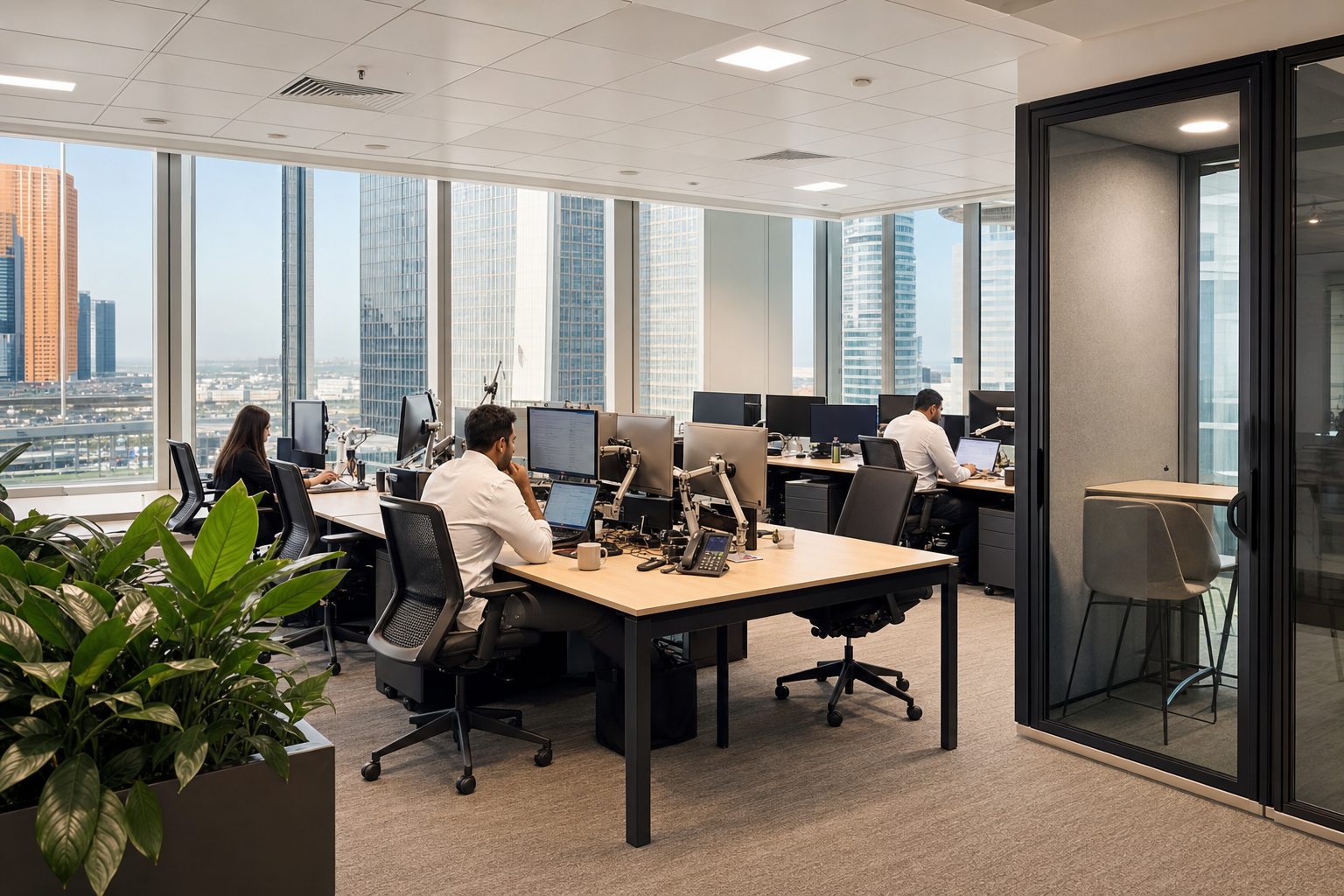
    Last reviewed: June 24, 2026 by the Hotdesk Team
  • Al Maqam Tower Guide: Workspace & Amenities in ADGM

    Al Maqam Tower Guide: Workspace & Amenities in ADGM

    al maqam tower

    Navigating Abu Dhabi’s dynamic business hubs requires understanding not just the buildings, but their context. For professionals seeking prime workspace solutions within the Abu Dhabi Global Market (ADGM) jurisdiction, a clear picture of key locations is essential. Al Maqam Tower stands as a prominent fixture in this financial district, offering more than just an address. It provides a strategic position within a thriving ecosystem. Understanding where this tower sits, its physical attributes, and how it compares to its neighbors helps professionals make informed decisions about their work environment.

    Key Takeaways

    • Al Maqam Tower sits at the center of Abu Dhabi Global Market, giving professionals direct access to a dense business ecosystem.
    • The building’s value extends beyond its address, offering workspace that supports continuity for companies operating in the financial district.
    • Comparing the tower’s physical features and location with neighboring buildings helps professionals choose the right environment for their needs.

    Where Al Maqam Tower Fits in ADGM

    Al Maryah Island Location and Landmarks

    Al Maqam Tower is centrally located on Al Maryah Island, a purpose-built financial free zone that serves as Abu Dhabi’s international financial center. This island district is designed to be a prestigious business and lifestyle destination, attracting global corporations, financial institutions, and innovative startups. Positioned within the ADGM Square complex, Al Maqam Tower is part of a cluster of modern, high-specification office buildings that define the island’s commercial heart. Its presence here signifies a commitment to operating within a world-class regulatory and business environment.

    The tower is a key component of the ADGM Square development, an area recognized for its sophisticated infrastructure and strategic importance. Landmarks on or near Al Maryah Island include The Galleria Al Maryah Island, a luxury shopping and dining destination, and numerous five-star hotels, all contributing to the area’s status as a complete business and leisure hub. Being situated here means immediate access to a network of financial services, legal firms, and corporate headquarters, facilitating seamless business interactions and opportunities for collaboration. The specific designation of Al Maqam Tower Al Maryah Island Abu Dhabi places it firmly within this prestigious zone.

    Al Maqam Tower is a foundational element of ADGM Square on Al Maryah Island, placing it at the nexus of Abu Dhabi’s financial and commercial activities.

    Proximity to Abu Dhabi International Airport and Key Areas

    One of the significant advantages of Al Maqam Tower’s location is its accessibility. It is a mere 20-minute drive from Abu Dhabi International Airport (AUH), a critical factor for professionals who travel frequently or manage international teams. This proximity minimizes transit time, allowing for more productive workdays and less time spent navigating airport logistics. The ease of reaching the airport directly supports global business operations and client meetings.

    Beyond the airport, the tower offers convenient connections to other key areas of Abu Dhabi. It is well-situated for access to the city’s main business districts, government centers, and residential areas. Major road networks link Al Maryah Island to the mainland, providing efficient transit to areas like the Corniche, Reem Island, and Yas Island. This connectivity ensures that professionals working at Al Maqam Tower Abu Dhabi can easily reach a wide range of amenities, services, and business partners across the emirate. The Al Maqam Tower Abu Dhabi location map highlights its strategic placement within these transport corridors.

    ADGM Square Context and Surroundings

    ADGM Square is not just a collection of buildings; it is a meticulously planned urban environment designed to foster business growth and innovation. Al Maqam Tower is an integral part of this vision, contributing to the district’s modern architectural profile and its reputation as a premier business destination. The square itself is characterized by its high-quality infrastructure, pedestrian-friendly design, and integration of commercial, retail, and hospitality services. This thoughtful planning creates an environment where work is efficient and enjoyable.

    The surrounding area within ADGM Square is home to a diverse array of businesses, ranging from major international banks and asset managers to law firms and regulatory bodies. This concentration of expertise and services creates a synergistic effect, making it an ideal location for companies seeking to operate at the forefront of the financial industry. The presence of Al Maqam Tower companies indicates its appeal to established and growing enterprises. The overall context of ADGM Square, with its focus on international standards and connectivity, supports the operational needs of modern businesses.

    Al Maqam Tower Specs and Design Details

    Al Maqam Tower Specs and Design Details

    Building Height, Floor Count, and Developer Profile

    (Content for this section is missing. Please add details about the building’s height, floor count, and developer profile.)

    Workspace Providers and Flexible Booking Options

    Within the impressive structure of Al Maqam Tower, a diverse ecosystem of workspace providers caters to varied professional needs. Established names like Regus and The Executive Centre operate within the building, offering fully serviced offices, meeting rooms, and business support services. These providers are known for their professional environments, catering to multinational corporations and established businesses seeking a premium address and ready-to-use office infrastructure. Their presence ensures that companies can secure dedicated office spaces that are immediately operational, complete with reception services, IT support, and administrative assistance, all within a prestigious Abu Dhabi Global Market (ADGM) location.

    The modern professional often requires greater agility than traditional leasing or long-term memberships allow. The friction of committing to a fixed-term contract or a monthly membership can be a significant hurdle, especially for freelancers, startups, or project-based teams that experience fluctuating workspace demands. This is where the need for flexible, on-demand solutions becomes apparent. Professionals are increasingly looking for ways to access high-quality workspaces without the associated long-term commitments, valuing the ability to pay only for the time and space they actually use.

    Hotdesk addresses this precise need, offering a platform that bridges the gap between premium office providers and the demand for flexible access. Instead of requiring memberships or long-term leases, Hotdesk enables professionals and businesses to book workspace by the hour, day, or week. This model provides unparalleled convenience, allowing users to secure a desk or office space in prime locations like ADGM towers precisely when needed. One might need a quiet space for focused work for a few hours, a meeting room for an afternoon client session, or a temporary office setup for a short project. With Hotdesk, booking such spaces is as straightforward as reserving a hotel room, ensuring continuity and productivity regardless of your physical location or project phase. This approach eliminates the administrative burden and financial risk associated with traditional office solutions, making premium workspaces accessible to a broader range of professionals. Consider Servcorp Almas Tower as an example of a premium provider accessible through such flexible booking platforms, offering executive environments without the commitment.

    Access Premium Workspaces On-Demand

    Hotdesk simplifies securing professional workspace within leading ADGM towers. Book meeting rooms, private offices, or hot desks by the hour or day, fitting your schedule and budget without long-term commitments. Experience the freedom to work where and when you need to, maintaining your productivity and professional presence across the city.

    Explore Hotdesk Options

    Arriving at a new professional destination often involves navigating practical logistics that can significantly impact the workday. For professionals visiting or working within this tower, understanding parking options and transportation links is key to a smooth experience. The Abu Dhabi Global Market (ADGM) complex, including the areas around it, offers substantial parking facilities designed to accommodate the needs of its occupants and visitors. The ADGM complex boasts over 5,000 parking spaces, ensuring ample availability for those driving to the location. Visitors can typically access designated visitor parking areas, often located in the basement levels of the towers, providing direct and convenient access to the building’s lobby and elevators.

    Beyond private vehicle access, ADGM provides a complimentary shuttle bus service, enhancing connectivity for those who prefer not to drive or for inter-building travel within the financial district. This shuttle typically operates from Sunday to Thursday, covering key routes that link various ADGM towers and surrounding points of interest. For specific routes and schedules, consulting the ADGM transport information is advisable, as these services are designed to facilitate seamless movement between different parts of the island. This service is particularly useful for professionals who might be visiting multiple offices or need to commute from nearby areas without direct parking access.

    References

    Frequently Asked Questions

    Navigating the modern professional environment often brings specific questions about location, facilities, and access. For those considering or already working within Abu Dhabi’s financial hub, understanding the details of prominent buildings like Al Maqam Tower is important. This section addresses common queries to provide clarity and ensure a seamless experience for professionals.

    What is the exact address of Al Maqam Tower?

    Al Maqam Tower is situated on Al Maryah Island, the premier financial free zone in Abu Dhabi. The precise address is located within the ADGM Square development, a central point in Abu Dhabi’s business district. While specific suite numbers will depend on the tenant or workspace provider, the building’s general location is recognized as ADGM Square, Al Maryah Island, Abu Dhabi, United Arab Emirates. This strategic placement within the capital’s financial center offers unparalleled access to key business services and infrastructure. For those seeking to pinpoint it on a map, searching for “Al Maqam Tower Abu Dhabi location map” will yield precise geographical data, highlighting its position among other significant ADGM towers.

    Who are the main tenants in Al Maqam Tower?

    Al Maqam Tower hosts a distinguished array of businesses that reflect its status as a prime corporate address within the Abu Dhabi Global Market (ADGM). The tower attracts major international and regional firms, particularly those in financial services, law, and consulting. You will find leading banks, asset management firms, and prominent legal practices operating from this location. Additionally, companies within the oil and gas sector and high-growth technology startups often establish their presence here, drawn by the world-class facilities and the collaborative business environment. The presence of established workspace providers also means a variety of smaller businesses and project teams can secure space, contributing to a dynamic mix of Al Maqam Tower companies.

    Is Al Maqam Tower accessible to the public?

    Al Maqam Tower is a premium commercial office building primarily accessible to its tenants, their clients, and registered visitors. While the ground floor and lobby areas are accessible for security and reception services, entry into the office floors requires proper authorization. Visitors must typically check in with building security and may need to be met by their host tenant. This ensures a secure and controlled environment for the businesses operating within. However, the surrounding ADGM Square area, including retail and dining establishments like The Galleria Al Maryah Island, is open to the public, offering amenities and services that complement the professional environment of the tower. For professionals seeking flexible access to workspaces within such prestigious buildings, platforms like Hotdesk offer solutions to book meeting rooms or desks without needing a permanent tenancy. For example, you can explore options like the Servcorp Almas Tower for adaptable workspace solutions.

    How many parking spaces are available?

    The ADGM complex, which includes Al Maqam Tower, offers extensive parking facilities to accommodate the high volume of professionals and visitors. The entire complex provides over 5,000 parking spaces, ensuring ample availability. These spaces are typically located in multi-story car parks and basement levels integrated with the towers. Visitors can utilize designated visitor parking areas, which are clearly signposted upon entry to the ADGM Square development. This substantial capacity for Al Maqam Tower parking is designed to facilitate easy access and minimize transit friction for those arriving by private vehicle, supporting the overall convenience of working within this prime financial district.

  • Kochi Experts: Flexible Office Solutions

    Kochi Experts: Flexible Office Solutions

    Navigating the evolving professional workspace in Kochi requires understanding the options that truly support business agility. As companies adapt to hybrid models and seek cost-efficiency without sacrificing productivity, the demand for flexible office solutions is skyrocketing. Kochi, a rapidly growing Tier-II city, is at the forefront of this shift, experiencing significant growth in its flexible workspace leasing. Understanding these options is key to making informed decisions. What do real estate experts recommend for flexible office solutions in Kochi?

    The answer lies in matching the space to your specific business needs, whether you’re a solo entrepreneur or a large enterprise. This involves looking beyond traditional leases to embrace models that offer scalability and adaptability. Kochi’s market now presents a spectrum of choices designed to meet diverse operational requirements, from immediate, ready-to-use spaces to custom-built environments.

    Flexible Office Models in Kochi: Matching Space to Business Scale

    Kochi’s dynamic business environment demands workspace solutions that can pivot with organizational growth and project cycles. The flexible office market here offers distinct models, each tailored for different user profiles and operational scales. Understanding these differences is the first step in securing a workspace that aligns with your company’s trajectory and financial planning. Kochi emerged as a leading Tier-II real estate hub with flexible workspace leasing surging 31% in 2024, according to industry reports.

    These models are engineered for scale, providing businesses with the ability to adjust their footprint without the long-term commitments often associated with conventional offices. This adaptability is not just about cost savings; it’s about operational continuity, allowing teams to focus on core business functions rather than real estate management.

    Coworking Spaces for Freelancers and Small Teams

    Coworking spaces are the most accessible entry point into flexible office solutions. They offer a shared environment where individuals and small teams can rent desks or small private offices. This model is ideal for freelancers, startups, and remote workers who value flexibility and a collaborative atmosphere. The primary advantage is the low barrier to entry, often requiring only a monthly membership for access to amenities like Wi-Fi, printing, and communal areas.

    These spaces foster a sense of community and provide networking opportunities. Kochi has over 3 major coworking clusters, including Infopark and Kakkanad, offering more than 30 flexible office options. For many, the ability to book space within 48 hours, as is common with 70% of Kochi’s coworking options according to workin.space data, means immediate operational readiness.

    Managed Offices for Growing Startups

    Managed offices represent a step up in customization and privacy. These are dedicated spaces, often private suites or floors, that are fully furnished and serviced by an operator. Startups and growing companies find this model beneficial because it provides a branded, professional environment without the burden of long-term leases or capital expenditure on fit-outs. The operator handles facility management, IT infrastructure, and daily operations, allowing the tenant to concentrate on scaling their business.

    Providers like Incuspaze and SpazeOne have reported a 40% increase in inquiries for short-term managed office leases in 2024, reflecting a clear demand for this scalable solution. This model offers a blend of the autonomy of a private office with the convenience and flexibility of a serviced arrangement, making it perfect for teams needing a stable base that can adapt as they expand.

    Serviced Offices for Enterprise and Project-Based Teams

    Serviced offices cater to larger organizations, enterprise clients, and teams working on specific projects. These are typically larger, private office suites or entire floors within a larger building, equipped with all necessary amenities and managed services. They offer a high degree of control over the workspace environment while outsourcing the operational complexities. This model is particularly attractive for companies requiring immediate setup for project teams, international expansions, or satellite offices where agility is paramount.

    Compared to coworking or managed offices, serviced offices often provide more bespoke configurations and a greater sense of exclusivity. They allow businesses to establish a significant presence in a prime location like Kochi’s Infopark or MG Road, with the flexibility to scale up or down based on project needs. This structure supports continuity by ensuring that the infrastructure travels with the user, minimizing disruption during transitions.

    Flexible Office Model Comparison

    Feature Coworking Spaces Managed Offices Serviced Offices
    Ideal For Freelancers, remote workers, small teams Startups, growing companies, small to medium teams Enterprise, project teams, large organizations
    Flexibility High (hourly, daily, monthly) Moderate to High (monthly, annual terms) Moderate (annual terms, customizable)
    Privacy Low (shared spaces) Medium to High (private suites) High (dedicated floors/suites)
    Customization Low Moderate High
    Cost Structure Membership-based, pay-as-you-go All-inclusive monthly fee (rent, utilities, services) All-inclusive monthly fee, often with customization charges
    Amenities Shared kitchens, lounges, meeting rooms Private offices, shared meeting rooms, reception services Fully equipped offices, dedicated reception, IT support, catering options

    What Real Estate Experts Recommend for Kochi’s Workspace Market

    What Real Estate Experts Recommend for Kochi’s Workspace Market

    Leading real estate advisors and workspace providers offer clear guidance for businesses navigating Kochi’s flexible office market. Their recommendations focus on strategic location choices, operator reliability, and direct access to space, aiming to bypass traditional complexities. What do real estate experts recommend for flexible office solutions in Kochi? They emphasize identifying prime business districts and understanding the nuances of different provider types. Kochi’s emergence as a significant commercial hub means that careful planning yields substantial benefits.

    Expert insights highlight the importance of aligning workspace location with business objectives and employee accessibility. By understanding these recommendations, businesses can make more strategic decisions. This approach ensures that the chosen workspace not only meets current needs but also supports future expansion and operational efficiency, providing a foundation for sustained business success.

    Location Strategy: Infopark, Kakkanad, MG Road, and Marine Drive

    Real estate experts consistently point to specific zones within Kochi as prime locations for flexible office solutions. Infopark, a major IT and ITES hub, is a natural choice for tech companies seeking proximity to talent and infrastructure. Kakkanad, adjacent to Infopark, offers a mix of commercial and residential development, providing convenience for employees. MG Road, a central business district, is known for its established commercial presence and accessibility, drawing a variety of businesses.

    Marine Drive offers a unique blend of business and scenic appeal, increasingly attracting companies that value an inspiring work environment. These areas are selected for their connectivity, access to amenities, and concentration of business activity, which are critical factors for operational success and employee satisfaction. Choosing among these locations often depends on the specific industry and the company’s strategic priorities.

    Expert Insights from ANAROCK, Regus, and Brigade Group

    Industry leaders like ANAROCK, Regus, and Brigade Group provide valuable perspectives on Kochi’s flexible office sector. ANAROCK, for instance, often recommends managed offices for enterprises needing custom solutions and scalability. Regus, a global leader in flexible workspaces, emphasizes the importance of convenient locations and comprehensive services, suggesting their own centers for businesses seeking immediate operational readiness. Brigade Group, with its significant presence in commercial real estate, highlights the value of well-integrated business parks that offer more than just office space.

    These experts collectively advise businesses to prioritize providers that offer transparency in pricing and service agreements. They also stress the benefit of spaces engineered for scale, ensuring that infrastructure supports growth without demands for constant reconfiguration. For instance, Brigade Group’s projects often integrate amenities that support a productive work life, a factor experts consider essential. Their advice underscores a move towards spaces that provide continuity and connection without unnecessary complexity.

    How to Secure Direct Operator Access Without Brokers

    A common pain point for businesses seeking office space in Kochi is the reliance on brokers, which can lead to inflated costs and a lack of direct communication. Experts strongly recommend seeking direct access to workspace operators. This approach cuts out intermediary fees and ensures a more transparent negotiation process. Platforms like Hotdesk facilitate this by connecting users directly with providers, offering clear pricing and booking options.

    Securing direct access means businesses can engage in more meaningful conversations about their specific needs, negotiate terms more effectively, and gain quicker insights into available inventory. This method aligns with the principle of precise execution, ensuring that the workspace solution is precisely what the business requires. For example, by avoiding brokers, companies can often secure better terms or find spaces that might not be widely advertised through traditional channels, supporting the goal of finding spaces that truly travel with the user.

    Avoiding Hidden Costs and Operator Pitfalls in Kochi

    When business owners ask what do real estate experts recommend for flexible office solutions in Kochi, the answer consistently includes a warning about hidden fees and broker traps. The excitement of finding a workspace can quickly sour when unexpected charges appear on the first invoice or when promised amenities turn out to be unavailable. A methodical approach to contract review and physical verification prevents these costly surprises.

    The most common pitfalls stem from vague service agreements, misrepresented infrastructure, and brokers who dump inventory without matching it to the client’s actual needs. Kochi’s market has grown rapidly, and not every operator maintains the same standards. Systems over announcements: the reliability of a workspace is determined by what its contract guarantees and its infrastructure delivers, not by marketing materials.

    Red Flags in Flexible Office Contracts

    Contracts for flexible office space often contain clauses that shift operational risk onto the tenant. Watch for lock-in periods disguised as “minimum commitment terms” that exceed the flexibility advertised. Some operators include automatic renewal clauses with short notice windows, trapping businesses in spaces they have outgrown. Another red flag is the separation of rent from service charges, where the latter can escalate without clear caps, turning a predictable monthly cost into a variable expense.

    Maintenance fees, utility surcharges, and charges for common area usage should be explicitly stated. Any clause that allows the operator to change terms unilaterally with minimal notice signals instability. The best contracts mirror the infrastructure they represent: clear, stable, and designed for continuity. Before signing, request a breakdown of every fee line item and verify that the total monthly cost matches the operator’s quoted figure.

    Verifying Amenities and Infrastructure Reliability

    Operators might list amenities that exist in the building but remain inaccessible to tenants. A coworking space with “dedicated high-speed internet” might throttle bandwidth during peak hours. Air conditioning schedules, access to meeting rooms, and security protocols should be verified during a physical visit rather than assumed from a brochure. Kochi’s tropical climate makes reliable power backup and HVAC performance non-negotiable for productive work.

    Infrastructure reliability means the absence of re-work. Verify that the internet provider has redundant lines, that the backup generator covers the entire floor, and that the building’s cooling system can handle occupancy at full capacity. Ask to see maintenance logs or speak with a current tenant. A workspace engineered for scale reveals its quality through consistent operation, not through claims on a website.

    A Checklist for Visiting Potential Workspaces

    Use the following checklist during site visits to assess whether a space meets operational requirements. Each item addresses a specific failure mode identified in Kochi’s flexible office market.

    Workspace Verification Checklist

    • Power backup: Confirm generator covers your specific office area, not just common zones. Ask about the transition time between mains and backup.
    • Internet redundancy: Verify two separate fiber connections from different providers. Test speed during peak hours on your own device.
    • Air conditioning schedule: Confirm cooling hours match your team’s work schedule. Ask about weekend and holiday coverage.
    • Meeting room access: Check if room usage is included in the fee or billed separately. Verify availability during peak booking times.
    • Security and access: Review entry protocols, visitor management, and after-hours access. Confirm 24/7 access if your team works non-standard hours.
    • Maintenance response: Ask about the average response time for repairs. Request a point of contact for urgent issues.
    • Contract terms: Review notice periods for termination, renewal clauses, and fee escalation limits. Get all promises in writing.
    • Existing tenants: Ask one current tenant about their experience. This single conversation often reveals more than a building tour.

    This checklist reduces the risk of committing to a space that demands future reconfiguration. What works at 10x capacity should work from day one, and verification at visit time prevents costly transitions later.

    Booking and Scaling Workspace Without Long-Term Commitments

    The core value of flexible office solutions lies in the ability to adjust capacity without penalty. Businesses that understand what do real estate experts recommend for flexible office solutions in Kochi know that lease flexibility directly impacts operational agility. The platform connecting users to space must support this adaptability through transparent booking terms and infrastructure that moves with the team.

    Kochi’s market now supports multiple commitment levels, from hourly coworking passes to annual managed office agreements. The right choice depends on the team’s growth trajectory and project timelines. A step-by-step workflow for securing space eliminates the friction typically associated with commercial leasing, while infrastructure designed for portability ensures that the workspace never becomes a bottleneck.

    Understanding Lease Flexibility: Hourly, Daily, Monthly, and Annual Terms

    Flexible office operators in Kochi offer a spectrum of lease structures, each serving a distinct operational need. Hourly and daily rates suit transient workers, client meetings, or project sprints where a fixed desk is unnecessary. Monthly memberships work for freelancers and small teams that need consistent access but want the freedom to leave without penalty. Annual terms, often associated with managed or serviced offices, provide cost predictability and dedicated space while still offering more flexibility than traditional leases.

    The key is matching the term to the business cycle. A startup in its growth phase benefits from monthly terms that allow desk count adjustments every 30 days. An enterprise running a six-month project can optimize cost through a managed office with a defined end date. Engineering precision means choosing the shortest term that meets operational stability requirements, preserving the option to scale without financial friction.

    Step-by-Step Workflow for Finding and Securing Space

    Securing flexible office space should follow a repeatable process that eliminates guesswork and broker intermediation. Each step builds on the previous one, ensuring the final selection aligns with both budget and operational requirements.

    Step-by-Step Workspace Acquisition Guide

    1. Define requirements: Specify team size, must-have amenities, location radius, and maximum budget per desk. Include growth projections for the next 6 to 12 months.
    2. Search by location cluster: Focus on Kochi’s primary business zones: Infopark for tech teams, Kakkanad for balanced access, MG Road for central presence, or Marine Drive for premium environments.
    3. Filter by lease term: Select only operators that offer the commitment level matching your business cycle. Avoid spaces that require longer terms than necessary.
    4. Book a site visit: Use the checklist from the previous section to evaluate each space in person. Verify every amenity and infrastructure claim.
    5. Review contract terms: Cross-check every fee line item against the operator’s quoted price. Ensure termination notice periods align with your flexibility needs.
    6. Secure the space: Complete the booking through the platform that provides direct operator access, eliminating broker fees and ensuring transparent pricing.
    7. Plan for scaling: Confirm the operator’s process for adding or removing desks. Establish a single point of contact for future adjustments.

    This workflow mirrors the engineering principle of avoiding re-work. Each verification step prevents the need to relocate or renegotiate shortly after move-in, preserving continuity for the team.

    Infrastructure That Travels with Your Team

    The most valuable property of a flexible workspace is its portability in the operational sense. When infrastructure travels with the user, it means the team’s digital tools, access credentials, and service levels remain consistent across locations. A business should not need to reconfigure its network setup, renegotiate internet service, or retrain staff on facility procedures when moving to a different desk or building.

    This principle separates engineered platforms from simple space rentals. Am Office Space exemplifies this approach by providing managed environments where connectivity, security, and facility management follow consistent standards. The team’s workflow continues without disruption because the infrastructure is standardized rather than location-dependent. For businesses in Kochi that also maintain presence in other cities, this consistency eliminates the operational drag of adjusting to new building systems.

    Platforms like Hotdesk extend this portability by aggregating spaces that meet defined infrastructure benchmarks. A team booking a workspace through the platform retains familiar access protocols and service expectations. What works at 10x scale in one location works equally well in another because the infrastructure, not the address, defines the experience. Am Office Space represents one node in this network, demonstrating that quality workspace can be standardized across geographies for teams that value continuity over reset.

    Frequently Asked Questions About Flexible Offices in Kochi

    Frequently Asked Questions About Flexible Offices in Kochi

    Business leaders exploring workspace options consistently raise specific questions about costs, flexibility, and provider reliability. The answers below address the most common commercial investigation queries, drawing on current market data and operational realities in Kochi. These responses help clarify what do real estate experts recommend for flexible office solutions in Kochi by translating general advice into actionable specifics.

    What is the typical cost range for coworking versus serviced offices?

    Coworking spaces in Kochi typically range from INR 3,000 to INR 8,000 per month per desk for hot desks, while dedicated desks run INR 6,000 to INR 12,000. Serviced offices command a premium, generally costing INR 12,000 to INR 25,000 per desk per month, reflecting full-service amenities, private space, and operational support. Managed offices fall between these tiers, averaging INR 8,000 to INR 18,000 depending on customization and location. Infopark and Kakkanad tend toward the upper end due to IT demand, while MG Road offers mid-range options. The cost differential is justified by the level of control and privacy each model provides. Serviced offices include reception, IT support, and housekeeping, reducing hidden operational expenses that coworking members might incur separately.

    Can I switch locations or upgrade my space mid-lease?

    Most flexible office operators in Kochi permit location switches and capacity upgrades within the same provider network, though terms vary. Coworking memberships typically allow same-day desk changes or location swaps at no extra cost. Managed and serviced office agreements often require 30 days notice for capacity changes, with some operators offering clause-based upgrade options. The key is verifying the provider’s network breadth before signing. A single operator with multiple locations across Infopark, Kakkanad, and MG Road provides natural flexibility without contract renegotiation. Platforms like Hotdesk aggregate spaces from multiple operators, enabling cross-provider transitions that preserve familiar booking workflows. This infrastructure travels with the user, ensuring that team productivity remains stable even when the physical address changes.

    How do flexible offices support hybrid work schedules?

    Flexible offices support hybrid schedules through booking systems that allow teams to reserve desks only on days they are in the office. Most operators offer monthly allocations of access days rather than requiring full-time occupancy. This model eliminates wasted spend on unused desks while ensuring available capacity during peak days. Kochi operators increasingly deploy occupancy management software that tracks real-time usage, enabling businesses to right-size their commitment based on actual attendance. The system implication is clear: hybrid schedules demand infrastructure that measures itself. Operators that provide utilization reports allow companies to adjust their footprint with data, not guesswork. This approach prevents the common hybrid trap of paying for more space than the team uses while ensuring no employee lacks a desk when they do come in.

    Which providers operate across Kochi’s major business hubs?

    Kochi’s flexible office market includes several providers with multi-location presence across key business districts. Regus operates centers at MG Road and Kakkanad, offering serviced offices and coworking options. Brigade Group’s properties in the city provide managed and serviced office solutions near major commercial zones. Incuspaze and SpazeOne have expanded into Kochi’s managed office segment, with inquiries for short-term leases rising significantly through 2024. Local operators also maintain strong presences within Infopark and Kakkanad, serving the IT workforce. Am Office Space represents one option for teams seeking managed environments with consistent service standards across locations. The critical factor is not merely which providers operate where, but whether their infrastructure supports the specific team size, term length, and amenity requirements your business demands. Am Office Space demonstrates this principle by offering standardized infrastructure that maintains the same operational quality regardless of which of its locations a team occupies.

    These answers reflect the current state of Kochi’s flexible office market, where operator diversity and lease flexibility continue to expand. For businesses asking what do real estate experts recommend for flexible office solutions in Kochi, the consistent response centers on matching provider capabilities to team requirements while verifying infrastructure claims through direct site visits. The market’s growth trajectory suggests continued improvement in both options and transparency, making now a practical time to transition from traditional leases to flexible models.

  • WeWork Dubai: Compare Options & Save

    WeWork Dubai: Compare Options & Save

    Inside WeWork Dubai: Locations, Layouts, and What to Expect

    WeWork operates two flagship locations in Dubai: One Central and the World Trade Center hub. One Central, located in the Dubai World Trade Centre district, holds a Gold LEED-certified base build and earns a 4.3 out of 5 rating from 49 reviewers on Coworker.com. The World Trade Center location sits within walking distance of the Dubai Metro and offers direct access to the city’s financial corridor. Both spaces provide the standard WeWork aesthetic: exposed ceilings, glass-walled meeting rooms, and communal lounges designed for chance interactions.

    Primary WeWork Dubai Locations

    One Central: Dubai World Trade Centre, Trade Centre District. World Trade Center: Sheikh Rashid Tower, Dubai World Trade Centre. Both within 5 minutes of each other.

    Standard Amenities and Building-Specific Features

    Every WeWork Dubai location includes high-speed WiFi, printing stations, phone booths, and fully stocked pantries. One Central adds a rooftop terrace and bike storage. The World Trade Center hub offers a dedicated event space and a mother’s room. Both buildings provide 24/7 access for members with monthly plans, though day-pass users must enter during staffed hours (typically 8:00 AM to 6:00 PM, Sunday through Thursday).

    Standard Amenities at WeWork Dubai

    • High-speed WiFi (dedicated business-grade connection)
    • Printing and scanning (metered usage included in monthly plans)
    • Phone booths for private calls
    • Pantry with coffee, tea, and filtered water
    • Meeting rooms (bookable via WeWork app)
    • Mail and package handling
    • Cleaning and maintenance included

    Transit, Parking, and Daily Logistics

    Both locations sit directly above the Dubai Metro Red Line (World Trade Centre station). Parking is available but limited; One Central offers valet parking at AED 30 per entry, while the World Trade Center has a paid multi-story lot adjacent. For those driving, Waze directions to WeWork One Central are well established. Ride-hailing drop-offs are seamless at both buildings. If you rely on public transit, the metro is the most reliable option, with trains running every 5 minutes during peak hours.

    Key Insight: The World Trade Center location is better for metro commuters; One Central suits those who drive or prefer a quieter building. Both are within a 10-minute walk of each other, so you can switch between them if you hold a global WeWork membership.

    WeWork Dubai Pricing Breakdown: Day Passes, Desks, and Offices

    WeWork Dubai Pricing Breakdown: Day Passes, Desks, and Offices

    Pricing for WeWork Dubai varies by location, commitment length, and workspace type. The table below summarizes current rates as of mid-2025, based on WeWork’s official site and third-party listings. All figures are in AED (United Arab Emirates dirhams).

    Workspace Type Starting Price (AED/month) Commitment Notes
    Day Pass (hot desk) 100 AED None Access 8:00 AM. 6:00 PM, one-time use
    Coworking Membership (hot desk) 1,450 AED Monthly Promotional price 1,233 AED for first 3 months
    Dedicated Desk 2,100 AED Monthly Includes lockable storage, 24/7 access
    Private Office (2-person) 4,950 AED 12-month 20% off select offices until Sep 30
    Private Office (4-person) 7,200 AED 12-month Includes meeting room credits
    Full-Floor Lease Custom quote 1-3 years Contact WeWork directly

    On-Demand Day Pass Rates

    WeWork Dubai day passes cost approximately 100 AED per day. This grants access to the hot-desk area, WiFi, and basic amenities during staffed hours. You cannot book a day pass more than 30 days in advance, and availability depends on capacity. For freelancers or visitors needing a single day of work, this is the simplest entry point.

    Monthly Coworking and Dedicated Desk Fees

    A monthly coworking membership starts at 1,450 AED (promotional first three months at 1,233 AED). This includes 24/7 access, meeting room credits, and the ability to work from any WeWorld location globally. Dedicated desks cost from 2,100 AED per month and provide a permanent spot with lockable storage. Both options require a monthly commitment, though you can cancel with 30 days’ notice.

    Private Office and Full-Floor Leases

    Private offices for two people start at 4,950 AED per month on a 12-month contract. Larger offices scale proportionally. WeWork currently offers 20% off select private offices, with the promotion ending September 30. Full-floor leases are available for teams of 20 or more, with terms ranging from one to three years. These include custom branding options and dedicated reception services.

    Hidden Costs and Contract Realities

    Beyond the listed prices, budget for meeting room overages (beyond monthly credits), printing fees if you exceed the included quota, and parking costs. The 12-month private office contract is non-negotiable for most spaces; month-to-month options are rare. If you need flexibility without long-term commitment, consider alternatives like The Executive Centre Dubai, which offers day passes and short-term plans with no lock-in. The Executive Centre Dubai provides similar premium amenities but with more transparent pricing and no hidden contract traps.

    Key Insight: WeWork Dubai’s day pass is cost-effective for occasional use, but frequent visitors will save with a monthly coworking membership. For teams needing a private office without a full-year commitment, The Executive Centre Dubai offers a better balance of flexibility and cost.

    Pros

    • Global access to 2,000+ locations
    • Gold LEED-certified buildings
    • Strong community and networking events
    • 24/7 access with monthly plans

    Cons

    • Day passes limited to staffed hours
    • Private offices require 12-month contracts
    • Parking costs not included
    • Meeting room credits may be insufficient for heavy users

    How to Book WeWork Dubai Without a Long-Term Commitment

    For professionals and teams seeking flexible workspace solutions, navigating the booking process for a space like WeWork Dubai can sometimes feel more complex than necessary. While WeWork offers various membership tiers, securing access, especially for short-term needs like a day pass or a few weeks in a private office, requires understanding their direct booking channels and potential limitations. The goal is to get you working in a productive environment quickly, without getting bogged down in lengthy contracts or unclear procedures.

    Direct booking through WeWork’s platform typically involves signing up for an account, browsing available locations and membership types, and then proceeding through a checkout process. For day passes, this often means checking availability on the day or a few days prior. Monthly memberships and private offices usually require more detailed information and a commitment to specific terms. This direct route is straightforward if you know exactly what you need and are prepared for a standard commitment, but it might not cater to the spontaneous or fluctuating workspace requirements many professionals face today.

    WeWork’s “On Demand” service is designed for flexibility, offering access to hot desks and meeting rooms on a pay-as-you-go basis. This is theoretically the simplest way to access WeWork Dubai without a long-term contract. Users can typically book a day pass or a meeting room through the WeWork app or website. For a day pass, expect to pay around 100 AED, granting access to common areas and amenities during business hours. However, availability can be a significant factor; popular locations or peak times might have limited spots, and booking far in advance isn’t always an option, making it less reliable for immediate needs.

    The process involves selecting your desired location, checking for available “On Demand” options, and completing a transaction. While convenient for occasional use, this model can become costly if used frequently. Furthermore, the scope of “On Demand” is usually limited to hot desks and meeting rooms, meaning private office needs are generally outside this flexible framework, requiring longer commitments. Understanding the daily operational hours also becomes important, as day pass access is restricted to staffed periods, unlike full-time members who often receive 24/7 entry.

    Third-Party Booking and Instant Access

    For a more streamlined and often more flexible booking experience, third-party platforms provide a valuable alternative. Services like Hotdesk aggregate workspace options, including those from providers like WeWork, alongside other premium coworking spaces in Dubai. This approach simplifies the search and booking process, often presenting clear pricing and immediate availability without the need to navigate multiple provider portals. For instance, when looking for a WeWork Dubai day pass or a short-term office, using a platform like Hotdesk can present all available options side-by-side, including those from competitors such as The Executive Centre Dubai.

    These platforms are particularly beneficial for users who value continuity and need immediate access to a workspace. They often allow booking with just a few clicks, bypassing the signup friction or availability constraints sometimes found on direct provider sites. This is especially helpful for business travelers or remote workers who need a reliable place to work on short notice. The ability to compare pricing and amenities across different providers, like the coworking space dubai price variations, helps users make informed decisions quickly, ensuring their work continuity is never interrupted by logistical hurdles.

    Key Insight: For instant access and comparison across multiple providers, third-party platforms offer a more efficient booking route than navigating individual coworking space websites. This is particularly true when seeking flexible terms or day passes without long-term commitments.

    Why Flexible Terms Change the Daily Workflow

    The shift towards flexible work arrangements has fundamentally altered how professionals approach their daily routines. When workspace solutions offer adaptable terms, it directly impacts productivity by allowing individuals to align their work environment with their immediate needs and energy levels. Instead of being tied to a single, static location, the ability to book a workspace for just a day, a week, or a month provides a sense of autonomy that fuels focus and creativity. This adaptability means a freelancer can choose a bustling coworking environment for networking on one day, and a quiet, private office for deep work the next.

    This flexibility is not just about convenience; it’s about operational efficiency. For businesses and teams, it means scaling their workspace up or down without the burden of long-term leases or the complexities of managing multiple office spaces. It allows for easier expansion into new markets or the accommodation of project-based teams. When you can secure a workspace at a location like WeWork Dubai or other premium providers through a flexible booking system, you minimize downtime and maximize your ability to adapt to changing project demands or client needs, ensuring work continues uninterrupted, regardless of location or duration.

    WeWork Dubai vs. Local Alternatives: Flexibility and Operational Reality

    When evaluating workspace options in a dynamic city like Dubai, WeWork stands out due to its global brand recognition and extensive network. However, the operational reality for many businesses and individuals involves comparing its offerings against local coworking operators who might provide different advantages in terms of flexibility, community focus, or specific amenities. Understanding these distinctions is key to selecting a space that truly supports your workflow and business objectives, rather than just opting for the most familiar name.

    WeWork’s strength lies in its scale and consistent global standard. Its locations, such as the prominent WeWork Dubai office at One Central, offer a familiar environment for members traveling internationally. Yet, the cost structure and membership terms, particularly for private offices, often involve longer commitments. This is where local alternatives can shine, offering more tailored solutions, potentially more competitive pricing for specific needs, and a deeper integration into the local business ecosystem. The choice often hinges on whether global consistency or local adaptability is the priority.

    Scale vs. Proximity

    WeWork’s primary advantage is its vast global network, enabling members to access spaces across numerous cities. If your work involves frequent travel or you manage a distributed team, the ability to find a consistent workspace in different countries is invaluable. The WeWork Dubai office, for example, connects you to this international framework. However, this scale can sometimes mean that individual locations, while well-equipped, might feel less personalized or deeply embedded within the immediate local business community compared to spaces run by Dubai-based operators.

    Local coworking spaces, on the other hand, often excel in proximity to specific business districts or residential hubs within Dubai. They may offer a more intimate understanding of the local market and foster connections within that specific geographic area. While they might not offer the same breadth of international locations, they can provide a strong sense of community and tailored support for businesses operating primarily within the UAE. This focus on local connections can be a significant differentiator for startups and SMEs looking to build relationships within the Dubai business scene.

    Membership Rigidity vs. On-Demand Access

    WeWork’s pricing model, particularly for private offices, often involves a minimum 12-month commitment, as seen with their private office rates starting at د.إ4,950 per month. While they offer day passes and coworking memberships with more flexibility, the core offerings for dedicated team spaces can be less adaptable. This rigidity might not suit businesses experiencing rapid growth or those with unpredictable staffing needs. The need for a long-term commitment can be a barrier for startups or freelancers who prefer to keep overhead low and commitments short.

    Conversely, many local coworking providers and platforms like Hotdesk emphasize on-demand access and shorter-term commitments. Providers such as The Executive Centre Dubai, for instance, are known for offering month-to-month private office solutions and flexible day pass options without the extended lock-in periods. This allows businesses to scale their workspace needs fluidly, paying only for what they use and when they need it. This approach directly addresses the pain point of long-term contracts, providing a more agile solution for a modern, flexible workforce.

    Choosing a Space That Matches Your Workflow

    Selecting the right workspace involves more than just comparing amenities; it requires an honest assessment of your daily workflow and operational needs. For a freelancer who primarily needs a quiet spot to focus, a WeWork Dubai day pass might suffice, but a dedicated desk in a smaller, more community-focused local space could offer better networking opportunities. Teams requiring private offices need to consider not just the cost but also the contract flexibility. A 12-month lease for a WeWork Dubai office might be ideal for established companies seeking stability, but less so for a startup testing a new market.

    Consider what truly drives your productivity. Is it the global brand and extensive network, or is it the local connections and more adaptable terms offered by regional providers? Evaluating factors like meeting room availability, the ease of booking additional services, the proximity to client offices or transportation hubs like the metro, and the overall community atmosphere are all part of matching a space to your workflow. For instance, while WeWork provides a standard set of amenities, a local operator might offer specialized services or a more unique ambiance that better suits your business’s specific identity and operational rhythm.

    WeWork Dubai Pros

    • Extensive global network for international travelers.
    • Consistent brand standard and amenities across locations.
    • Access to prominent locations like One Central.
    • Offers day passes and coworking for flexible entry.

    WeWork Dubai Cons

    • Private office and team space contracts often require 12-month commitments.
    • Pricing can be higher compared to some local alternatives for similar spaces.
    • On-demand booking can have limited availability during peak times.
    • Focus may be more on global brand than hyper-local community integration.

    Frequently Asked Questions About WeWork in Dubai

    Frequently Asked Questions About WeWork in Dubai

    When evaluating workspace options, clarity regarding logistics, costs, and operational terms is essential for maintaining professional continuity. Professionals often ask specific questions about WeWork Dubai to determine if the space aligns with their workflow and commitment level. The answers below address the most common inquiries, providing verified details on addresses, pricing, access policies, and career paths. Understanding these factors allows you to make a decision based on your actual requirements rather than brand perception alone.

    Exact Addresses and Staffed Hours

    WeWork operates two primary hubs within the Dubai World Trade Centre district. The WeWork Dubai address for One Central is located at Level 2, One Central Building, Dubai World Trade Centre, Sheikh Zayed Road. The WeWork Dubai location at the World Trade Center sits within Sheikh Rashid Tower. Both sites share the same district, making transit between them straightforward for members with global access. Staffed hours generally run from 8:00 AM to 6:00 PM, Sunday through Thursday. Outside these hours, access is restricted for day-pass holders, though monthly members often enjoy 24/7 entry. This distinction matters for your schedule. If your work extends into the evening, a space with flexible access or a provider like The Executive Centre Dubai might better align with a workflow that does not adhere to a standard corporate clock.

    Day Pass Availability and Booking Limits

    The WeWork Dubai day pass provides a straightforward entry point for visitors or freelancers. The WeWork Dubai price for a day pass typically sits around 100 AED, granting access to hot desks and amenities during staffed hours. You can book a day pass no more than 30 days in advance, but availability is subject to capacity limits. Popular locations fill quickly, especially during peak hours. This structure works for occasional needs but introduces variability for regular users. If you rely on a specific workspace for multiple days in a row, the risk of a sold-out day can disrupt your routine. WeWork expands its Coworking Partner Network to 2,000 locations worldwide, which allows day-pass users to access partner spaces, though availability varies by region. For professionals who value a guaranteed spot without contract lock-in, platforms offering The Executive Centre Dubai provide a more reliable booking experience with confirmed availability.

    Career Opportunities and Company Culture

    WeWork has been recognized on the TIME100 Most Influential Companies list and serves half a million members globally. For those exploring WeWork Dubai careers, Glassdoor profiles indicate a fast-paced environment with a focus on growth and innovation. The company emphasizes a culture of transparency and community, traits that appeal to professionals seeking dynamic roles. Opportunities range from facility operations to sales and community management. The workspace itself reflects this energy, with glass-walled meeting rooms and communal lounges designed to encourage interaction. However, the intensity of the culture is a factor to consider. If you prefer a setting that prioritizes deep focus and operational stability over rapid expansion, a local operator with a more established regional footprint might offer a better fit for your professional goals.

    Enterprise or Team Booking Options

    Enterprise teams looking for a WeWork Dubai office can secure private spaces ranging from two-person rooms to full-floor leases. Pricing for a private office for two starts at approximately 4,950 AED per month, usually requiring a 12-month commitment. WeWork frequently offers promotions, such as 20% off select private offices, though these deals often have expiration dates. Full-floor leases provide customization options and dedicated reception services. For larger teams, the ability to scale within the global network is a significant advantage. Yet, the 12-month term limits agility. Businesses navigating uncertain growth trajectories often find value in solutions that allow for month-to-month adjustments. Comparing the coworking space dubai price structures reveals that while WeWork offers premium branding, other providers may deliver equivalent quality with terms that better support long-term financial planning.

    Question Answer Key Detail
    Where is WeWork Dubai located? Dubai World Trade Centre district One Central (Sheikh Zayed Road) and Sheikh Rashid Tower
    What are the staffed hours? 8:00 AM to 6:00 PM Sunday through Thursday; 24/7 for monthly members
    How much is a day pass? Approximately 100 AED Access to hot desks; subject to capacity limits
    Can I book a day pass in advance? Yes, up to 30 days Availability depends on daily occupancy
    What is the minimum contract for a private office? 12 months Pricing starts at 4,950 AED/month for two-person office
    Are there career opportunities? Yes, across operations and community Glassdoor highlights fast-paced culture and growth
  • Ideal Coworking Space in Kochi for a 5-Person Startup

    Ideal Coworking Space in Kochi for a 5-Person Startup

    When your startup hits five people, every decision carries weight. Leasing traditional office space means fixed costs, lock-in contracts, and rooms designed for ten. The ideal coworking space in Kochi for a small startup team of 5 people is not about the biggest square footage or the most bells and whistles. It is about matching your exact headcount, your workflow rhythm, and your growth trajectory without reconfiguring your infrastructure every quarter.

    I have spent years building systems that travel with teams rather than chaining them to a single location. In Kochi, a city where the startup ecosystem grew 40% in 2024 (Infopark data), finding a workspace that scales smoothly from five to fifty without a full reset is the difference between sustaining momentum and wasting it on relocation logistics.

    Location vs. Amenities: A Decision Framework for Teams of Five

    Every distributed system asks you to manage new failure modes. For a five-person team, location and amenities are the two variables that determine whether your daily operations stay fluid or accumulate friction. Use this decision matrix to weight your priorities based on where your team actually works.

    Kakkanad, Panampilly Nagar, or Near the Airport?

    Kakkanad, home to Infopark and major IT zones, offers the highest density of coworking spaces with solid transit links and ample parking. Panampilly Nagar is more central, walkable, and surrounded by cafes and restaurants. Ideal if your team values after-work collaboration or client meetings in the city heart. Near the airport, spaces like those at CIAL trade lower rent for longer commute times. For a five-person team with client visits, Kakkanad gives you access to over 20 coworking options within a three-kilometer radius. If your team is purely remote and rarely meets outsiders, Panampilly Nagar’s lifestyle convenience often justifies a 15% premium on desk costs.

    Core Infrastructure Every Five-Person Team Needs

    Reliability here means absence of re-work. Your infrastructure. Network speed, power backup, meeting room access. Must function identically whether you are at a dedicated desk or a private cabin. A five-person team with one shared printer and two meeting room bookings per week needs symmetrical upload speeds above 50 Mbps, UPS backup covering at least three workstations, and a booking system that does not cap small teams. Test latency during peak hours. Verify that power backup runs long enough for a full workday.

    Checklist: Five Essentials to Verify

    • Dedicated bandwidth of at least 100 Mbps per cabin
    • UPS runtime exceeding 4 hours for all devices
    • Meeting room access with no minimum headcount penalty
    • Parking for at least two vehicles (if team drives)
    • 24/7 access with keycard or biometric. Not reception hours

    How Hotdesk Matches Your Exact Headcount

    Rather than oversubscribing for an eight-person cabin when you are five, Hotdesk surfaces spaces that list exact capacity by seat count. Our platform indexes over 2,500 locations globally, including dedicated desks and private cabins in Kochi that fit five without surplus. For example, Coworking Naubostik demonstrates how on-demand booking allows growing teams to add desks per week rather than per contract cycle. The infrastructure travels with you. No reconfiguration, no reset.

    Decision Matrix: Which Location Fits Your Team?

    Criteria Kakkanad Panampilly Nagar Airport Area
    Density of coworking spaces High (20+) Medium (8-10) Low (2-3)
    Client meeting convenience Excellent (near IT parks) Good (central, cafes) Fair (only for airport clients)
    Typical dedicated desk price (monthly) ₹5,000-₹10,000 ₹7,000-₹12,000 ₹4,000-₹7,000
    Parking & transit Ample parking, metro access Limited parking, good bus/walk Parking abundant, far from city
    Best for Tech startups with daily office use Hybrid teams with social focus Logistics or travel-heavy teams

    Top Coworking Spaces in Kochi and What They Actually Offer

    Top Coworking Spaces in Kochi and What They Actually Offer

    Abstract claims about “community” and “vibes” do not help when you are choosing between a private cabin in Panampilly Nagar and a dedicated desk zone near Infopark. Here is what real spaces deliver for small teams, based on transparent data from providers and verified user feedback.

    Side-by-Side Comparison of Market Leaders

    Space Location Best for 5-Person Team Private Cabin Price Meeting Room Access
    Soul of Work Kakkanad Private cabin for 5; high-speed fiber ₹25,000-₹35,000/month 2 hrs free/wk per cabin
    Innerspace Panampilly Nagar Dedicated desks with flexible terms ₹7,000-₹10,000 per desk Pay-per-use at ₹300/hr
    myHQ Infopark area Enterprise-grade IT infrastructure ₹30,000-₹45,000/month Unlimited basic room
    FlexiSpaces (via Flexo) Multiple Month-to-month no lock-in ₹5,000-₹8,000 per desk 1 hr per desk per day

    Pricing reflects November 2024 averages from listed sources. Always verify with a site visit.

    Real Feedback from Small Startup Teams

    “We moved from a home office to Soul of Work’s private cabin when we hit five. The dedicated internet and power backup let us run video calls without dropouts. Our only hiccup was the booking cap on meeting rooms. We now use Hotdesk’s platform to find overflow space nearby when clients visit.”. Rohan K., co-founder of a Kochi-based SaaS team

    Testimonials like this underscore a recurring pattern: small teams value infrastructure reliability over aesthetics. The consistent network and backup are the table stakes; flexible booking for client meetings adds the margin.

    Meeting Room Capacity and Booking Rules

    Most coworking spaces in Kochi offer meeting rooms that seat 4-6 people, suitable for a five-person startup. However, booking rules vary widely. Some spaces grant a set number of free hours per week; others charge per hour or require a minimum booking duration. For example, Innerspace charges ₹300 per hour for a 6-person room, while myHQ includes unlimited basic room access with their private cabin. Always ask: is there a same-day booking limit? Can you book back-to-back sessions without penalty? The answer determines whether your client pitch slides smoothly or gets stalled by reception desk hand-offs.

    Pricing Breakdown: Dedicated Desks, Private Cabins, and Flexible Terms

    Understanding the financial commitment is paramount when securing an ideal coworking space in Kochi for a small startup team of 5 people. Unlike traditional leases, coworking models offer tiered pricing structures designed for flexibility. For a team of five, the choice often narrows down to dedicated desks within a shared area or a private, enclosed cabin. The average cost for a dedicated desk in Kochi ranges from ₹5,000 to ₹15,000 per month, according to various listings. Securing a private cabin that comfortably fits five individuals typically falls between ₹25,000 and ₹50,000 monthly, reflecting the added privacy and dedicated resources.

    When evaluating costs, consider the total value delivered. A private cabin at the higher end might include dedicated internet, soundproofing, and a private meeting area, justifying its price. Conversely, five dedicated desks, while potentially lower in aggregate cost, mean less privacy and shared meeting room resources. Kochi’s startup ecosystem, which saw a 40% growth in 2024 (Infopark data), offers a competitive market where these pricing models are refined to suit small business needs. Always look beyond the base price to assess what infrastructure is included, such as power backup and high-speed internet, which are non-negotiable for sustained productivity.

    Monthly Costs for a Five-Person Setup

    For a five-person team, monthly costs can vary significantly based on location and the type of space. A cluster of five dedicated desks in a prime area like Panampilly Nagar might cost around ₹7,000-₹12,000 per desk, totaling ₹35,000-₹60,000. This option provides individual workspaces but relies on shared common areas and meeting rooms. Alternatively, a private cabin for five in Kakkanad, often situated near IT hubs, can range from ₹25,000 to ₹35,000 per month. This typically includes a private room, often with its own dedicated internet connection and power backup, offering a more integrated environment for focused work and team collaboration.

    Industry surveys indicate that approximately 70% of small teams prefer private cabins for the enhanced focus and security they offer over open-plan dedicated desks. This preference is driven by the need for uninterrupted client calls and sensitive data handling. When comparing, remember that the price of a private cabin often bundles services that would otherwise be add-ons for dedicated desks, such as managed IT support or exclusive access to smaller huddle rooms. The key is to align the cost with the specific operational requirements of your five-person startup.

    Hourly, Daily, and Monthly Rate Structures

    Coworking spaces in Kochi cater to diverse needs with flexible booking options. While monthly commitments are common for dedicated desks and private cabins, many providers offer hourly or daily rates for meeting rooms or hot desks. For a five-person team, this flexibility is invaluable for accommodating client visits, off-site meetings, or temporary project needs. Hourly rates for meeting rooms typically range from ₹300 to ₹1,000, depending on capacity and amenities. Daily passes for hot desks might cost ₹500-₹1,500 per person.

    These shorter-term options allow startups to test a space before committing to a longer contract or to scale their physical footprint up or down as needed without significant overhead. To illustrate, if your team requires a meeting space for a full day for an intensive workshop, understanding the difference between a daily rate for five people and renting a larger meeting room for eight hours is critical for cost management. Hotdesk’s platform can help identify spaces offering these granular booking options, ensuring your operational costs align with your current business velocity.

    Frequently Asked Questions About Booking and Lock-In

    What is the typical lock-in period for a private cabin for 5 people?

    Most coworking spaces in Kochi offer flexible terms, often with monthly rolling contracts for private cabins. Some may require a 1-3 month commitment, especially for premium spaces or during peak demand. It is uncommon to find long-term lock-ins, unlike traditional office leases.

    Are there hidden fees associated with coworking spaces?

    Common additional costs can include printing credits, premium meeting room bookings, event space usage, or specialized IT support. Always clarify what is included in the monthly rental and what incurs extra charges. Ensure power backup and high-speed internet are not subject to separate fees for the workspace itself.

    Can I book additional desks or meeting rooms if my team grows temporarily?

    Yes, most providers allow you to book extra dedicated desks or meeting rooms on an ad-hoc basis. This is where the flexibility of coworking shines. For example, Coworking Naubostik, while not in Kochi, exemplifies how platforms facilitate on-demand expansion, preventing the need to move offices for short-term capacity needs.

    What happens if I need to downsize my team?

    With monthly contracts, downsizing is usually straightforward, requiring only a notice period (typically 30 days). This operational agility is a core benefit for startups navigating fluctuating team sizes and project demands. Verify the notice period required by the specific provider.

    The Site Visit Checklist: What to Verify Before Signing

    Choosing an ideal coworking space in Kochi for a small startup team of 5 people requires more than just a visual tour. Technical reliability and operational flexibility are the true differentiators that prevent costly re-work later. A systematic site visit, focusing on measurable criteria, ensures your chosen space supports, rather than hinders, your team’s productivity. Think of it as stress-testing your potential operational environment before committing.

    When you visit, go beyond the aesthetics and ask pointed questions about infrastructure stability. This approach aligns with building systems that travel with your team, ensuring continuity. We focus on what stays working, not just what’s new. This diligence protects against unexpected downtime and ensures your team can operate at peak performance, regardless of external factors like power outages or network congestion. Your infrastructure should be engineered for scale and resilience.

    Network Latency and Power Backup Tests

    Reliable internet and consistent power are the bedrock of any modern workspace. For a five-person team, ask for the dedicated bandwidth allocation per cabin or desk. A good benchmark is at least 100 Mbps symmetrical upload/download speeds for consistent video conferencing and cloud access. During your visit, test network latency using a speed test tool; aim for ping times below 50ms. Inquire about the power backup system: what is the UPS runtime, and does it cover all essential equipment (computers, monitors, routers) during a full outage? Verify if the generator kicks in automatically and how long it can sustain operations.

    A common pitfall is relying on shared bandwidth that slows down during peak hours. Ask if they can demonstrate the connection speed in your potential workspace. For power backup, understand its capacity. A system that only lasts 30 minutes might not be sufficient for a workday. These technical aspects are not marketing claims; they are engineering realities that directly impact your team’s ability to deliver. Systems over announcements mean verifying these critical infrastructure components.

    Operational convenience extends to how your team accesses and uses the space daily. For a team of five, consider parking availability if members commute by car; inquire about dedicated spots or nearby paid parking options. Evaluate public transit links. Proximity to bus stops or metro stations can significantly impact employee commute times and costs. Kochi’s growing transit network makes this a key consideration for accessibility. You should also confirm staff access hours. Many startups require flexibility beyond 9-to-5, so 24/7 access via keycards or biometrics is a significant advantage, ensuring your team can work when inspiration strikes or deadlines loom.

    The accessibility of the space impacts not just daily operations but also client visits. Is it easy for external guests to find and reach? Does the reception staff handle visitor check-ins efficiently? These operational details, while seemingly minor, contribute to a professional image and smooth workflow. For example, a space near the airport might be convenient for travel-heavy clients but inconvenient for daily commutes. Understanding these logistical factors ensures your chosen location truly fits your team’s operational rhythm.

    Contract Terms and Exit Clauses

    The fine print of any contract dictates your flexibility. For a five-person team, especially in a dynamic startup environment, avoiding long lock-in periods is essential. Seek out spaces offering monthly rolling contracts or short-term commitments (e.g., 3-6 months) with clear exit clauses. Understand the notice period required for termination or downsizing. Be wary of contracts that automatically renew without explicit consent or impose substantial penalties for early termination.

    Site Visit: Key Verification Points

    Pros

    • Network Stability: Verified bandwidth and low latency during peak hours.
    • Power Resilience: Sufficient UPS runtime and automatic generator switchover.
    • Access Flexibility: 24/7 keycard/biometric access for team members.
    • Clear Terms: Monthly contracts with reasonable notice periods for termination.
    • Team Fit: Space configuration comfortably accommodates five people without overpaying for extra seats.

    Cons

    • Hidden Fees: Unclear charges for meeting rooms, printing, or utilities.
    • Limited Access: Restricted hours requiring staff to leave at closing time.
    • Long Lock-Ins: Contracts requiring 12+ months, limiting agility.
    • Unreliable Infrastructure: Frequent internet drops or power outages not covered by backup.
    • Inadequate Space: Private cabins too small, or dedicated desks lacking privacy.

    Scaling Beyond Five: How to Grow Without Rebuilding Your Setup

    Scaling Beyond Five: How to Grow Without Rebuilding Your Setup

    As your startup team in Kochi expands beyond five, the challenge shifts from finding the *right* initial space to ensuring that space can accommodate your growth without a complete operational reset. Traditional leases demand significant lead time and capital for any expansion, often forcing teams to lease oversized spaces prematurely or endure disruptive relocations. The philosophy of continuity over reset means your workspace solution should be engineered for scale, allowing you to add capacity as your headcount increases, maintaining workflow stability and team focus.

    The infrastructure should travel with your team. This principle is especially relevant in a dynamic city like Kochi, where the startup ecosystem is evolving rapidly. When selecting an ideal coworking space in Kochi for a small startup team of 5 people, consider not just current needs but the projected trajectory. A platform that offers on-demand booking and a wide network of spaces ensures that as your team doubles or triples, your physical workspace can adapt fluidly, preserving the momentum you’ve built.

    Adding Desks Without Disrupting Workflows

    When your team grows from five to seven or ten, the immediate need is for more workstations. In a traditional setting, this often means finding a new, larger office or negotiating with your landlord. Coworking, however, offers a more agile approach. Most providers allow you to add dedicated desks to your existing private cabin or expand your team’s footprint by booking adjacent spaces. For example, if your team of five occupies a private cabin, you might add three more dedicated desks in a nearby zone, keeping your core team together without needing to move.

    This incremental addition is key to maintaining workflow continuity. Your team members retain familiar surroundings, access to the same amenities, and proximity to each other, minimizing the disruption associated with growth. The focus remains on productivity, not on the logistics of relocation. Some spaces, like those found via platforms that aggregate options globally, can even help you secure additional desks in the same building or complex, ensuring your team remains cohesive.

    Migrating to Larger Private Offices or Multi-Floor Spaces

    As your startup scales to twenty or fifty employees, the requirements evolve. You might need a dedicated floor or a significantly larger private office. The advantage of a flexible coworking network is that it often provides these larger footprints within its existing portfolio or through partnerships. Instead of starting a new lease search from scratch, you can often transition smoothly within the same provider’s ecosystem or utilize a platform that maps out these larger opportunities across the city.

    This migration process is streamlined because the core infrastructure. Network, power, security, reception services. Is already established. Your team experiences a change in physical space, but the underlying operational reliability remains consistent. This approach is what we mean by ‘systems over announcements’; the physical space adapts, but the reliable infrastructure that supports your work does not require a complete rebuild. It’s about finding what works at 10x capacity without the typical 10x hassle.

    How Platform Infrastructure Travels With Your Team

    The true power of a platform like Hotdesk lies in its ability to make your workspace infrastructure truly portable. When you book a space, whether it’s a private cabin for five in Kochi or a suite of offices in another city, you are accessing a standardized level of service and technological reliability. This means your team’s operational foundation. High-speed internet, reliable power backup, secure access. Is consistent, regardless of the specific physical location.

    This is the essence of ‘infrastructure travels’. You are not tied to a single building or city. As your business expands globally or your team needs to relocate, the booking and management of workspace become a familiar process. For example, a team that started in an Coworking Naubostik in Barcelona can scale up or move to another location on the platform with the same ease. This continuity of infrastructure is what enables sustained growth and operational excellence, ensuring your team can perform at its best, anywhere.

    Scalability in Action: From 5 to 50+

    • Start Small, Grow Big: Begin with a private cabin for your team of five, securing essential privacy and focus.
    • Incremental Additions: As the team expands, add dedicated desks or smaller meeting rooms within the same building or complex.
    • Strategic Migration: When ready for larger footprints (20+ employees), transition to a larger private office or multi-floor space offered by the same provider or via the platform.
    • Global Mobility: Leverage a unified platform to secure comparable, reliable workspaces in new cities without reconfiguring your operational standards.
  • Office in Abu Dhabi: Costs, Types & Setup Tips

    Office in Abu Dhabi: Costs, Types & Setup Tips

    When your business requires a physical presence in a new city, the search for the right workspace can feel like navigating an unfamiliar maze. Abu Dhabi, a global hub for business and innovation, offers a diverse range of options, from traditional leases to flexible, on-demand solutions. Understanding these choices is the first step toward establishing a productive and cost-effective base. For professionals and companies on the move, securing an Am Office Space or any other suitable location isn’t just about finding a desk; it’s about finding a place that supports continuity and growth, wherever your business takes you.

    This guide breaks down the primary types of office spaces available in Abu Dhabi, helping you discern the best fit for your operational needs and budget. We’ll explore the nuances of each option, from fully furnished serviced offices to flexible coworking arrangements and the foundational virtual office solutions, all designed to offer clarity in your workspace decision-making process.

    Types of Office Space in Abu Dhabi: What You Need to Know

    Abu Dhabi presents a dynamic market for businesses seeking office accommodations, offering a spectrum of choices tailored to different needs. Key districts like the prestigious Al Reem Island and Al Maryah Island, the central business areas along the Corniche and Khalifa Street, and burgeoning zones such as Mussafah and Yas Island each provide unique advantages. Understanding these distinctions is paramount for making an informed decision that aligns with your company’s strategic goals and operational requirements.

    Serviced Offices: Move-In Ready and Fully Furnished

    Serviced offices offer a compelling solution for businesses prioritizing speed and convenience. These spaces are typically fully furnished and equipped with essential amenities like high-speed internet, reception services, meeting rooms, and often, IT support. They are designed for immediate occupancy, allowing companies to bypass the lengthy setup process associated with traditional leases. The flexibility in terms, often available on monthly contracts, makes them ideal for startups, expanding teams, or businesses requiring a temporary presence. They are commonly found in prime commercial towers across Abu Dhabi’s business districts, providing a professional address and immediate operational capability.

    The appeal of serviced offices lies in their all-inclusive pricing model. Monthly fees usually cover rent, utilities, maintenance, and a suite of business services, simplifying budgeting and reducing unexpected expenses. This predictable cost structure is a significant advantage for companies that need financial clarity. Businesses can scale their space up or down relatively easily, adapting to changing team sizes or project demands without the burden of long-term commitments. This adaptability is a cornerstone of modern business operations, allowing for agility in a competitive market.

    Coworking Spaces and Hot Desks: Pay for What You Use

    Coworking spaces and hot desks represent the most flexible end of the office spectrum, catering to freelancers, remote workers, and small teams. This model allows users to pay for access to workspace on an as-needed basis, whether it’s a daily pass for a hot desk or a dedicated desk in a shared environment. Amenities often include Wi-Fi, printing facilities, communal kitchens, and networking opportunities. These spaces are designed to foster collaboration and provide a professional atmosphere outside the home office. Many are strategically located in accessible areas, making them convenient for daily use and supporting a distributed workforce.

    The core benefit of coworking is its pay-as-you-go structure, which can significantly reduce overhead costs compared to traditional office rentals. Users can access professional work environments without the commitment of long leases or the expense of furnishing a private office. This model is particularly attractive for individuals and small businesses operating on tight budgets or those who value the ability to work from different locations within the city. It provides a sense of belonging and community that can be absent in isolated home offices, while still maintaining a professional edge.

    Traditional Leased Offices: Shell, Core, and Long-Term Commitment

    Traditional leased offices are the classic choice for established businesses or those planning for significant, long-term growth. These spaces are typically leased directly from landlords or property management companies, often for periods of one year or more. They usually come in ‘shell and core’ condition, meaning the basic structure is in place, but the tenant is responsible for fitting out the interior to their specific design and functional requirements. This includes installing flooring, partitions, lighting, and any specific technological infrastructure.

    Leasing a traditional office offers the highest degree of control over the workspace environment, allowing for complete customization to reflect a company’s brand and operational workflow. However, this control comes with substantial upfront investment in fit-out, security deposits, and often, broker fees. The commitment is typically long-term, requiring careful financial planning and forecasting. While offering stability and the potential for a unique, branded headquarters, this option demands a significant commitment of time and capital, making it less suitable for businesses prioritizing agility or immediate cost savings.

    Virtual Offices: A Business Address Without the Physical Space

    A virtual office provides a professional business address in a desirable location without the need for a physical workspace. This service is ideal for entrepreneurs, freelancers, or companies with remote teams who need a corporate presence for mail handling, client meetings (often at a designated business center), and establishing credibility. It allows businesses to operate from anywhere while maintaining a formal administrative base in Abu Dhabi. The service typically includes a reputable mailing address, mail forwarding, and often, access to meeting rooms or day offices on an hourly or daily basis.

    The primary advantage of a virtual office is its cost-effectiveness. It offers the prestige of a prime business address and essential administrative support at a fraction of the cost of a physical office. This solution is perfect for companies looking to project a strong local presence without the overheads associated with renting and maintaining a dedicated workspace. It supports businesses that are fully remote, operate primarily online, or are testing the market before committing to a larger physical footprint. It’s a foundational service for many new ventures aiming for a professional image from day one.

    Traditional Lease vs. Serviced Office vs. On-Demand Booking: A Cost and Flexibility Comparison

    Traditional Lease vs. Serviced Office vs. On-Demand Booking: A Cost and Flexibility Comparison

    When considering office space in Abu Dhabi, the decision often hinges on balancing cost, flexibility, and the level of service required. Traditional leases, serviced offices, and on-demand booking platforms like Hotdesk offer distinct approaches, each with its own set of financial implications and operational freedoms. Understanding these differences is key to selecting the most suitable option for your business’s current stage and future trajectory. For example, while a traditional lease offers autonomy, it demands significant upfront capital and long-term commitment, a stark contrast to the immediate, flexible access provided by on-demand solutions.

    The choice between these models directly impacts your business’s financial health and agility. Traditional leases often involve substantial security deposits, commission fees to agents, and the cost of furnishing and fitting out the space. Serviced offices simplify this by bundling rent, utilities, and amenities into a single monthly fee, but can still involve commitments of several months to a year. On-demand booking, however, liberates businesses from these constraints, allowing them to pay only for the time and space they use, offering unparalleled flexibility and cost control, especially for startups or project-based teams.

    Upfront Costs and Hidden Fees: What You Really Pay

    Traditional leased offices typically incur the highest upfront costs. Beyond the first month’s rent, tenants often face security deposits (equivalent to several months’ rent), agency commissions (often 5% of the annual rent), and the considerable expense of interior fit-out, which can include partitions, flooring, lighting, and furniture. This can amount to tens or even hundreds of thousands of dirhams before a single employee enters the space. Additionally, one must account for utility connection fees and potential maintenance charges not covered by the landlord.

    Serviced offices present a more streamlined upfront cost structure. While they may require a deposit and an initial setup fee, these are generally lower than traditional leases. The monthly fee is comprehensive, covering rent, utilities, internet, cleaning, and reception services, eliminating many of the ‘hidden’ costs associated with traditional rentals. However, it’s important to scrutinize what is included, as some services, like extensive printing or catering, might incur additional charges. On-demand booking, such as through Hotdesk, typically requires minimal to no upfront deposit. Payment is usually made per booking or via a simple monthly subscription for credits, making it the most financially accessible option for immediate workspace needs. Costs are transparent and based on usage.

    Flexibility: Short-Term vs. Long-Term Commitments

    Traditional office leases are characterized by their long-term nature, commonly spanning three to five years or more. This provides stability but severely limits a business’s ability to adapt quickly to changing market conditions or growth spurts. Breaking a lease prematurely can result in significant financial penalties. This rigidity makes traditional leases less suitable for startups, project-based companies, or those uncertain about their future space requirements. The commitment is substantial, requiring a confident long-term outlook for the business.

    Serviced offices offer a middle ground, typically with contract terms ranging from three months to two years. This provides more flexibility than a traditional lease, allowing businesses to adjust their space requirements with less financial risk. On-demand booking platforms, on the other hand, provide the ultimate flexibility. With options to book desks or offices by the hour, day, or week, businesses can scale their workspace usage dynamically. This model is perfect for fluctuating workloads, accommodating visiting clients, or enabling remote teams to access professional environments without any long-term obligation. This immediate scalability is a significant advantage for agile businesses.

    Amenities and Support: What’s Included and What’s Not

    Traditional leased offices require tenants to source and manage all amenities and support services themselves. This includes furniture, IT infrastructure, internet providers, cleaning, security, and reception staff. While this offers complete control, it demands significant management effort and expertise. The tenant bears the full responsibility and cost for procuring and maintaining these essential services, which can be time-consuming and complex, especially for businesses focused on core operations rather than facility management.

    Serviced offices come pre-equipped with a comprehensive suite of amenities, often including high-speed internet, fully furnished workstations, meeting rooms, printing facilities, and professional reception services. They often provide IT support and catering options. The benefit here is a ready-to-use environment that minimizes operational distractions. On-demand booking platforms offer varying levels of amenities depending on the specific space booked, but generally include essential services like Wi-Fi, power outlets, and access to communal areas. Some premium options may include meeting rooms or private offices, with support services typically focused on the immediate workspace needs rather than full-time administrative assistance. The convenience of having these services managed by the provider is a key differentiator.

    How Much Does It Cost to Rent an Office in Abu Dhabi? Pricing by Area and Type

    Understanding the financial commitment for securing office space in Abu Dhabi is fundamental for any business planning its setup or expansion. Costs vary significantly based on location, type of space, and the amenities offered. From the prime business districts to more accessible commercial zones, each area presents a different price point and set of advantages. For example, premium locations like Al Maryah Island command higher rates due to their prestige and infrastructure, while areas like Mussafah offer more budget-friendly options. This breakdown aims to provide clarity on typical pricing structures across key Abu Dhabi districts, helping you budget effectively and find an office in Abu Dhabi that aligns with your financial strategy.

    The total cost of an office space extends beyond just the monthly rent. Factors such as service charges, utilities, fit-out expenses for traditional leases, and the flexibility offered by serviced or on-demand options all contribute to the overall expenditure. By examining the pricing across different areas and office types, businesses can make informed decisions that support both their operational needs and their bottom line. This guide will help demystify the costs associated with renting an office in Abu Dhabi, offering insights into what you can expect financially in each major zone.

    Al Reem Island and Al Maryah Island: Premium Business Hubs

    Al Reem Island and Al Maryah Island are Abu Dhabi’s premier business and financial districts, attracting major corporations and international firms. Consequently, office rental prices in these areas are among the highest in the emirate. Modern, high-rise towers dominate these islands, offering state-of-the-art facilities, comprehensive business support services, and prestigious addresses. Here, you can expect to find serviced offices and premium coworking spaces. Monthly rents for a private office space in these prime locations can range from approximately AED 3,500 to AED 7,000 or more per person, according to data from sources like Property Finder. Traditional leased office spaces, which require significant fit-out, can see yearly costs starting from around AED 1,500 per square meter, with yearly rents potentially reaching up to AED 335,000 for larger spaces, as indicated by market data.

    Al Maryah Island, in particular, is home to the Abu Dhabi Global Market (ADGM) Square, a rapidly growing business hub that offers a sophisticated environment for finance and legal services. Businesses locating here benefit from world-class infrastructure and a business-friendly regulatory framework. While serviced offices might offer daily rates starting around AED 36 per person, as seen with providers like Regus, the overall cost of establishing a significant presence in these premium hubs reflects the strategic importance and premium nature of the location. These areas are ideal for companies that prioritize prestige, connectivity, and access to a high-caliber professional network.

    Corniche, Khalifa Street, and Hamdan Street: Central Options

    The Corniche, Khalifa Street, and Hamdan Street areas represent Abu Dhabi’s traditional city center, offering a mix of established commercial buildings and a variety of office types. These districts are well-connected and provide a strong presence for businesses serving the wider city. Rental prices here are generally more moderate than on Al Reem or Al Maryah Islands, making them attractive for small to medium-sized enterprises and startups. You can find a range of options, including traditional office leases, serviced offices, and coworking spaces.

    For traditional leased offices in these central zones, yearly rents might start from around AED 700 to AED 1,200 per square meter. This translates to monthly costs that can begin from approximately AED 1,100 for smaller units, according to data from Property Finder. Serviced offices and coworking day passes offer more flexibility; for example, a daily hot desk could cost around AED 50-100, while a private serviced office might range from AED 2,500 to AED 5,000 per person per month. Dubizzle lists numerous office spaces for rent in these areas, often highlighting options with zero commission, which can further reduce the initial outlay for businesses seeking an office in Abu Dhabi. These central locations provide excellent accessibility and a solid business infrastructure without the highest premium costs.

    Mussafah and Yas Island: Affordable and Emerging Areas

    Mussafah, known for its industrial and commercial activities, and Yas Island, a rapidly developing entertainment and business hub, offer more affordable and emerging options for office space in Abu Dhabi. These areas are attractive to businesses that require more operational space, are in sectors like manufacturing or logistics, or are looking for cost-effective solutions outside the prime central districts. Rents in Mussafah, particularly for shell and core or unfurnished spaces, can be significantly lower, making it accessible for businesses with tighter budgets. Yearly rents might start as low as AED 500 per square meter, based on market reports.

    Yas Island, while also offering entertainment and residential developments, is cultivating its commercial zones, providing modern office facilities at competitive prices. Here, businesses can find a blend of serviced offices, coworking options, and traditional leases. A serviced office on Yas Island might cost between AED 2,000 to AED 4,000 per person per month, offering a good balance of amenities and cost. For those seeking a more economical option for a physical office presence, these emerging areas present compelling value. They allow businesses to establish a footprint in Abu Dhabi without the substantial investment required for premium downtown locations, while still benefiting from developing infrastructure and connectivity.

    Your Step-by-Step Guide to Renting an Office in Abu Dhabi

    Moving between cities requires a steady hand. Securing an Am Office Space or any suitable location in Abu Dhabi follows a clear path, but the details matter. You need a process that minimizes friction and maximizes continuity for your team. This guide provides the actionable steps to navigate the local market, ensuring you establish a productive base without unnecessary delays.

    Step 1: Assess Your Business Needs and Budget

    When planning an office in Abu Dhabi, budget alignment is the first hurdle. Define your headcount, required desk types, and essential amenities. Determine the total budget, including utilities, service charges, and potential fit-out costs. A startup might need a hot desk to preserve cash flow, while a firm may require a private suite with meeting rooms. Align your operational reality with your financial strategy before reviewing listings.

    Step 2: Choose the Right Area and Office Type

    The choice of district shapes your daily operations. An office in Abu Dhabi located in Al Reem Island offers a modern, high-speed environment ideal for tech and creative firms. Al Maryah Island provides a premium financial district setting, while the Corniche offers central accessibility. Match the district to where your clients are and where your team commutes from. Consider proximity to transport hubs and local amenities to support workforce satisfaction.

    Regulatory compliance varies by zone. Securing an office in Abu Dhabi on the mainland requires a trade license and Tawtheeq registration, which validates your lease contract for government services. If you choose to operate within the Abu Dhabi Global Market (ADGM), the rules differ. ADGM has its own registration process and specific office requirements. Ensure your legal structure matches your location to avoid delays in establishing your business presence.

    Step 4: Compare Options and Book. With or Without a Broker

    Booking an office in Abu Dhabi via on-demand platforms simplifies the comparison process. You can review amenities, verify availability, and secure access instantly. This approach reduces the time spent negotiating terms and eliminates the risk of hidden fees. For businesses seeking immediate continuity, on-demand booking allows you to test a location before committing to a longer arrangement.

    Actionable Checklist for Office Setup

    • Define headcount and required desk types.
    • Determine total budget including utilities and service charges.
    • Select district based on client access and team commute.
    • Verify trade license eligibility for the chosen zone.
    • Register lease for Tawtheeq if operating on the mainland.
    • Check specific ADGM requirements if located within the financial hub.
    • Compare on-demand terms against traditional lease structures.
    • Book workspace and confirm access protocols for your team.

    Pro Tip: On-demand platforms often include all essential amenities in the monthly fee, removing the administrative burden of managing separate service contracts for internet, cleaning, and reception.

    Why Flexibility Matters: The Hidden Benefits of On-Demand Workspaces in Abu Dhabi

    Why Flexibility Matters: The Hidden Benefits of On-Demand Workspaces in Abu Dhabi

    Long leases lock capital and agility into concrete. Flexibility offers a different path. It allows you to move with your business needs. On-demand workspaces remove the friction of setup and commitment. Flexibility is the defining advantage of the modern workspace. Businesses looking for an office in Abu Dhabi now have the option to scale up or down without financial penalties. This model supports rapid growth and rapid pivots, keeping your operations aligned with market demands.

    No Long-Term Lease, No Commitment: Ideal for Startups and Freelancers

    Startups and freelancers benefit from pay-as-you-go pricing. You pay for the space you use, preserving cash flow for core business activities. There is no risk of paying for empty desks during slow periods. A startup saved 40% by using on-demand booking instead of a 12-month lease, according to internal case studies. This financial clarity allows for better forecasting and reduces the stress of long-term obligations.

    Instant Access and Global Continuity: Book a Desk or Office in Seconds

    You can book a desk or office in seconds. This is important for teams that travel or work remotely. Hotdesk provides access across locations, ensuring that your workspace access travels with you. This infrastructure supports continuity even when you move cities. Just as a professional might rely on Am Office Space for their home base, booking a desk in Abu Dhabi becomes a seamless extension of that routine. You pick up where you left off, maintaining your workflow without a reset.

    A Growing Ecosystem: Coworking and Hotdesk Culture in Abu Dhabi

    Abu Dhabi is cultivating a culture of flexible work. Coworking spaces are becoming hubs of interaction and efficiency. This model works well for a startup seeking an office in Abu Dhabi that values community and adaptability. You find professionals who prioritize outcomes over presence. Shared presence and ongoing use build a natural network, fostering connection through common behavior rather than forced engagement.

    On-Demand Workspace: Pros and Cons

    Pros

    • Zero long-term commitment.
    • Pay-as-you-go pricing structure.
    • Instant booking and immediate access.
    • Access to multiple locations within the network.
    • All-inclusive amenities and support services.
    • Reduced administrative burden and setup time.

    Cons

    • Less permanent branding opportunities.
    • Daily rates may be higher than long-term lease averages.
    • Shared spaces may lack privacy for sensitive work.
    • Availability can vary during peak hours.

    Insight: The right infrastructure makes continuity possible. Flexibility isn’t just about cost; it’s about maintaining your sense of belonging and operational rhythm, wherever you are.