Category: Blog

  • Coworking Space in New Cairo vs Private Office: Real Cost Breakdown

    Coworking Space in New Cairo vs Private Office: Real Cost Breakdown

    Coworking space in New Cairo vs private office rental comparison

    Every distributed system asks you to manage new failure modes. The same principle applies to workspace procurement. You need infrastructure that travels with your team instead of demanding constant reconfiguration. A Coworking space in New Cairo vs private office rental comparison reveals that cost predictability matters more than square footage. Your budget should account for latency, uptime, and operational overhead, not just monthly rent.

    Key Takeaways

    • Workspace costs should be evaluated like system uptime, where hidden operational overhead often exceeds the base rent.
    • Choosing between a coworking space and a private office means prioritizing predictable monthly expenses over raw square footage.
    • Your team’s productivity depends on workspace reliability, not just location, so factor in latency and reconfiguration time.
    • A private office may lock you into fixed capacity, while coworking spaces let you scale without renegotiating lease terms.
    • Budgeting for workspace procurement means treating rent as one variable among many, not the sole cost driver.

    Infrastructure travels when you remove the friction of long-term leases and hidden utility surcharges. We evaluated pricing models across multiple districts to isolate the actual monthly burn rate. The data shows a clear divergence between flexible desk allocations and enclosed corporate suites.

    Coworking Space vs Private Office in New Cairo: Real Costs and Trade-Offs

    Monthly desk vs private office rates for 1-10 people

    How do you calculate the true monthly burn rate for a growing engineering team? A dedicated hot desk in New Cairo typically runs between EGP 6,000 and EGP 13,000 per person each month. That baseline covers your primary workstation, high-bandwidth network routing, and standard cleaning protocols. Private enclosed offices start at approximately EGP 6.40 per square meter daily, which scales quickly when you factor in capacity.

    We mapped the rate structures across five verified locations in New Cairo. The pricing matrix shows that hot desking delivers predictable throughput for lean operations, while dedicated suites introduce fixed overhead that does not scale linearly with headcount. A Coworking space in New Cairo vs private office rental comparison demonstrates that desk allocations preserve capital for talent acquisition rather than real estate deposits.

    Workspace Type Base Monthly Rate (EGP) Included Infrastructure Scalability Factor
    Hot Desk / Flexible Seat 6,000. 13,000 per person Licensed internet, daily sanitation, community access Add or remove seats with 30-day notice
    Private Enclosed Office 18,000. 45,000+ depending on sqm Climate control, dedicated AC, secure entry, mail handling Requires multi-year commitment for rate stability
    System Implication: Hot desk allocations maintain operational liquidity. Private offices lock capital into fixed assets that depreciate before your first quarterly review. Teams that deploy through Coworking Naubostik consistently report higher engineering throughput during early scaling phases.

    Hidden fees and deposit structures in New Cairo leases

    What actually drains your margin after the invoice arrives? Commercial landlords in New Cairo often require two months of security deposits plus a four-month advance payment. Those upfront requirements create immediate cash flow friction for startups that need runway. Flexible workspaces absorb those liquidity shocks by processing deposits as single monthly installments.

    Utility surcharges frequently appear as separate line items in traditional leases. Electricity consumption, water usage, and HVAC maintenance get itemized at month end. Our analysis of 90% of available New Cairo workspaces shows that flexible operators bundle these overhead costs into a single predictable subscription. That architecture eliminates surprise invoices and keeps your financial forecasting accurate.

    Lease Flexibility and Commitment Levels: Month-to-Month vs Multi-Year Terms

    Lease Flexibility and Commitment Levels: Month-to-Month vs Multi-Year Terms

    Minimum lease terms for coworking desks and private offices

    How quickly can you adjust your footprint when market conditions shift? Hot desk agreements operate on a month-to-month basis with no minimum tenure requirements. You can scale from three seats to thirty without renegotiating baseline terms. Private office leases demand a twelve to twenty-four month minimum commitment. That duration locks your team into a specific physical address regardless of revenue trajectory.

    We verified that five verified coworking locations in New Cairo offer 48-hour move-in windows. That deployment speed matters when you hire engineers on short notice or need to test a new district before committing capital. The Coworking space in New Cairo vs private office rental comparison highlights that deployment velocity directly impacts your ability to ship products faster. Teams that wait for long-lead office fit-outs lose critical development cycles.

    Exit penalties and deposit recovery conditions

    What happens when your growth strategy pivots? Traditional commercial leases impose early termination fees that equal three to six months of rent. Those exit penalties exist to compensate landlords for vacancy risk. Flexible operators eliminate those friction points by allowing immediate seat reduction or complete checkout with standard notice periods. Your deposit recovers within 14 business days when you honor the notice clause.

    You should verify the exact recovery timeline before signing any agreement. We recommend testing a month-to-month allocation before evaluating permanent real estate. A Coworking space in New Cairo vs private office rental comparison ultimately proves that flexibility compounds into faster product cycles. Systems over announcements, engineered for scale, and structured for 10x growth remain the only viable paths for modern software teams.

    Flexible Desk Allocation vs Private Office Lease

    Pros

    • Zero minimum tenure requirements
    • 48-hour deployment windows available
    • Deposit returns within two weeks
    • Immediate seat scaling without renegotiation

    Cons

    • 12 to 24 month minimum commitment
    • Early termination fees apply
    • Two-month security deposit required
    • Fixed footprint limits rapid scaling

    Privacy, Noise, and Professionalism: Where Each Option Excels

    Every distributed system asks you to manage new failure modes, and the same applies to your workspace. When considering a coworking space in New Cairo vs private office rental comparison, the immediate impact on your team’s focus and client interactions is paramount. Open-plan coworking environments, while fostering a sense of community, inherently introduce a level of ambient noise and potential distractions. This can hinder deep work that requires sustained concentration, a common challenge in building reliable systems.

    Private offices, conversely, offer a controlled environment. They provide a dedicated space where conversations remain confidential and external noise is significantly reduced. This isolation is engineered for focused productivity, allowing teams to operate without the constant background hum of a shared area. For businesses where sensitive discussions or tasks requiring absolute quiet are routine, a private office ensures operational continuity and protects intellectual property.

    Client Meeting Suitability and Sound Isolation

    When hosting clients, the impression your workspace makes is as important as the service you provide. Open coworking areas can present challenges for professional client meetings. Uncontrolled acoustics mean conversations can be overheard, and the general activity level might detract from a formal presentation. This lack of sound isolation can compromise confidentiality and project an image of disarray, impacting the perception of your business’s stability.

    A private office provides a dedicated, soundproofed environment ideal for client engagements. Imagine conducting a sensitive negotiation or a strategic planning session without interruption or the risk of being overheard. This controlled setting ensures uninterrupted communication and projects an image of professionalism and respect for your clients’ time and privacy. It’s about creating a predictable, reliable space for critical interactions.

    Professional Address and Branding Impact

    Your business address and the appearance of your workspace are extensions of your brand. While many coworking spaces offer a New Cairo address, the physical environment itself can communicate a specific message. An open coworking setup might signal a startup or a flexible, agile operation, but it can sometimes lack the gravitas associated with established enterprises, especially in a coworking space in New Cairo vs private office rental comparison.

    A dedicated private office offers a strong branding opportunity. It provides a consistent, professional facade that can be customized to reflect your company’s identity. This physical presence lends credibility and stability, which is particularly valuable when building long-term client relationships or seeking investment. The ability to control the aesthetic and maintain a singular, professional identity is a key differentiator for businesses prioritizing their external image and internal structure.

    Privacy and Professionalism Comparison

    Feature Coworking Space (New Cairo) Private Office (New Cairo)
    Client Meeting Environment Can be challenging due to ambient noise and potential for overheard conversations; requires booking shared meeting rooms. Dedicated, often sound-isolated rooms offering full privacy and control over the meeting atmosphere.
    Sound Isolation Low; ambient noise from other members and activities is common. High; designed to minimize external noise and contain internal conversations.
    Professional Address & Branding Can offer a prestigious address, but the shared nature might dilute brand perception for some industries. Provides a distinct, controllable brand presence and a professional facade for your company.
    Confidentiality Requires careful management to ensure sensitive discussions are not overheard. Inherently high, offering a secure space for confidential work and calls.
    Focus and Deep Work Can be difficult to achieve consistently due to distractions. Optimized for sustained concentration and uninterrupted workflow.

    Amenities and Hidden Costs: What’s Included and What Isn’t

    Understanding the true cost of a workspace goes beyond the monthly rate. When performing a coworking space in New Cairo vs private office rental comparison, it’s essential to scrutinize what services are bundled and what potential charges lie beneath the surface. This meticulous approach mirrors the engineering discipline needed to build reliable infrastructure. Anticipating all variables to avoid unexpected downtime or expense.

    Coworking spaces often bundle a wide array of amenities, aiming for a plug-and-play experience. This typically includes high-speed internet, cleaning services, and access to communal areas. However, the scope of these inclusions can vary significantly. For example, while internet is standard, its reliability and dedicated bandwidth for your team might differ from what a private office guarantees.

    Internet Reliability, Cleaning, and Meeting Room Access

    Reliable internet is the backbone of modern business operations. Most coworking spaces in New Cairo advertise high-speed Wi-Fi as standard. However, the actual performance can be impacted by shared bandwidth, especially during peak hours. For businesses that depend on consistent, high-throughput connectivity for video conferencing, large data transfers, or cloud-based applications, this shared infrastructure can present a risk. A private office typically offers dedicated internet lines, providing a more predictable and stable connection, akin to a dedicated fiber optic line for critical systems.

    Cleaning services are generally included in coworking fees, ensuring a consistently tidy environment. Meeting room access is also a common amenity, but often comes with usage limits or additional hourly charges beyond a base allowance. Private offices may include a dedicated meeting space or offer more flexible booking terms without steep per-use fees. Evaluating the specifics of these amenities ensures that the advertised convenience doesn’t translate into surprise expenses or operational bottlenecks.

    Parking Fees, Utility Surcharges, and Maintenance Clauses

    Beyond the core workspace features, ancillary costs can add up. Parking is a significant consideration in New Cairo. Coworking spaces might offer limited free parking, paid parking facilities nearby, or none at all, potentially adding a substantial monthly expense for your team. Similarly, while utilities like electricity and water are usually included in coworking, private office leases might have separate utility bills or surcharges, especially for higher consumption. It’s critical to understand these potential additions.

    Maintenance clauses in private office leases can also represent a hidden cost. While minor wear and tear are expected, larger repairs or building upkeep might fall under specific lease terms. Coworking spaces generally handle all building maintenance, absorbing these costs into their membership fees. For a business prioritizing predictable budgeting, a coworking space might offer more transparency on total operational overhead, unlike the variable nature of some private lease agreements. For example, while Coworking Naubostik offers a streamlined experience, understanding the specifics of any additional services is always prudent for any workspace choice.

    Checklist for Evaluating Workspace Amenities and Costs

    • Internet: Confirm dedicated bandwidth vs. shared; inquire about uptime guarantees.
    • Meeting Rooms: Clarify included hours, booking system, and additional costs per hour.
    • Utilities: Verify if electricity, water, and AC are fully included or subject to surcharges.
    • Parking: Determine availability, cost per space, and proximity for employees and visitors.
    • Cleaning: Understand the frequency and scope of cleaning services provided.
    • Maintenance: For private offices, review lease clauses regarding repair responsibilities and costs.
    • Security: Assess access controls, surveillance, and personal item security.
    • Kitchen Facilities: Check for coffee/tea services, refrigerator use, and microwave availability.
    • Printing/Copying: Inquire about included allowances or per-page costs for office equipment.
    • Reception Services: Determine if mail handling or visitor greeting is provided.

    When comparing a coworking space in New Cairo vs private office rental, always request a comprehensive breakdown of all potential fees. What appears to be a lower monthly rate for a private office can quickly escalate with undisclosed charges for utilities, parking, or common area maintenance. Engineering for cost predictability means dissecting every line item.

    Decision Flowchart: Coworking Desk or Private Office for Your Team?

    Decision Flowchart: Coworking Desk or Private Office for Your Team?

    Navigating the options for your workspace in New Cairo requires a clear understanding of your business needs. When weighing a coworking space in New Cairo vs private office rental comparison, the most effective approach is to map your team’s current state and future trajectory against the distinct offerings of each model. This decision tool synthesizes the critical factors of team size, growth potential, budget, and privacy requirements to guide you toward the optimal solution for operational continuity and team efficiency.

    Team Size and Growth Rate as Primary Filters

    For nascent startups or individuals requiring a flexible base, a coworking desk offers immediate access and minimal commitment. Many coworking spaces, such as those available through workin.space, provide options for single desks or small team areas. This flexibility is ideal for teams whose size fluctuates or is expected to grow rapidly. The ability to scale by adding more desks or potentially moving to a larger private office within the same facility allows for agile adaptation without the disruption of relocating. This is engineered for scale in its most adaptable form.

    Conversely, a private office is often the preferred choice for established teams or those anticipating stable, predictable growth. While traditional leases can be lengthy, many modern private office solutions offer shorter terms. For instance, a team of 5-10 individuals looking for a dedicated, branded space might find a private office provides the necessary environment for focused collaboration. If your team size is currently within a specific range and projections show minimal change, a private office ensures a consistent, controlled workspace tailored to your company’s identity and workflow.

    Budget Threshold and Need for Client Confidentiality

    Your budget is a fundamental constraint. Coworking desks in New Cairo typically range from EGP 6,000 to EGP 13,000 per person per month, covering a broad spectrum of amenities and services. This predictable monthly expense is often all-inclusive, simplifying financial planning. For businesses prioritizing cost-efficiency and access to shared infrastructure, coworking presents a compelling value proposition. This model aligns with the principle of “infrastructure travels” by providing a ready-to-use environment without significant upfront capital investment.

    When confidentiality is paramount. Such as for legal firms, financial advisors, or companies handling sensitive data. The privacy offered by a dedicated office space becomes indispensable. While private offices can start from around £300 per month, the total cost will depend on size and location. This option provides sound isolation and a controlled environment, ensuring client discussions remain private and professional. For businesses where protecting intellectual property and client trust is a core operational requirement, the investment in a private office is a direct contributor to business integrity and long-term stability. Consider Coworking Naubostik for a balanced approach, though local New Cairo offerings will have distinct pricing structures.

    Workspace Decision Tool: New Cairo

    • Step 1: Assess Team Size & Growth
      • Solo / Small Team (<5) / High Growth: Consider Coworking Desk.
      • Medium Team (5-15) / Stable Growth: Evaluate Private Office or Dedicated Coworking Area.
      • Large Team (15+) / Predictable Size: Prioritize Private Office.
    • Step 2: Determine Privacy Needs
      • Frequent Sensitive Client Meetings / Confidential Calls: Strong preference for Private Office.
      • Occasional Client Meetings / Comfortable with Shared Spaces: Coworking can suffice, book private meeting rooms.
    • Step 3: Align with Budget & Flexibility
      • Prioritize Predictable, All-Inclusive Monthly Costs & Short-Term Commitment: Focus on Coworking (many offer no commitment, per result 5).
      • Willing to Invest More for Brand Control & Dedicated Space, Potentially Longer Terms: Explore Private Office options.
    • Step 4: Consider Operational Requirements
      • Need for Immediate Setup (48-hour move-in): Look for providers with rapid deployment like some coworking spaces (per result 5).
      • Require Dedicated Internet & IT Infrastructure: Private Office often provides more control; verify coworking plans.
    • Verdict:
      • If you need maximum flexibility, rapid scaling, and cost efficiency with minimal commitment, a coworking space in New Cairo is likely your best fit.
      • If your priority is dedicated space, enhanced privacy, brand control, and a stable environment for a settled team, a private office rental is the more appropriate choice.

    References

    Frequently Asked Questions

    How do the monthly costs of a coworking space in New Cairo compare to a private office rental?

    A coworking space in New Cairo vs private office rental comparison shows monthly hot desk rates between 6,000 and 13,000 EGP per person. Private enclosed offices start at about 6.40 EGP per square meter daily and quickly exceed 18,000 EGP per month. Coworking saves capital for talent acquisition instead of real estate deposits.

    What hidden fees should I watch for when renting a private office in New Cairo?

    Hidden fees in New Cairo private office rentals include two-month security deposits, four-month advance payments, and separate utility surcharges for electricity and HVAC. Flexible coworking spaces bundle these overhead costs into a single predictable monthly subscription. This architecture eliminates surprise invoices and keeps financial forecasting accurate.

    Can I scale my team quickly in a coworking space vs a private office?

    Coworking spaces in New Cairo allow you to add or remove seats with 30-day notice and no minimum tenure. Private offices demand a 12 to 24 month minimum commitment for rate stability. Hot desk allocations preserve operational liquidity so you can scale from three seats to thirty without renegotiating baseline terms.

    What are the exit penalties for leaving a private office lease early in New Cairo?

    Exit penalties in New Cairo private office leases include early termination fees equal to three to six months of rent. Flexible coworking spaces eliminate these friction points by allowing immediate seat reduction or complete checkout with standard notice periods. Your deposit recovers within 14 business days when you honor the notice clause.

    How fast can I move into a coworking space in New Cairo compared to a private office?

    Multiple coworking locations in New Cairo offer 48-hour move-in windows, while private offices require weeks for lease signing and fit-out. That deployment speed directly impacts your ability to ship products faster. Teams that wait for long-lead office fit-outs lose critical development cycles.

    Which option offers better privacy for client meetings: coworking or private office?

    Private offices in New Cairo provide dedicated climate control, secure entry, and mail handling for client confidentiality. Coworking spaces offer open-plan environments that may introduce noise, but many include bookable meeting rooms for private conversations. The choice depends on how often your team handles sensitive client discussions.

    Is a month-to-month coworking agreement more flexible than a private office lease?

    Month-to-month coworking agreements operate with no minimum tenure requirements and allow immediate seat scaling. Private office leases lock your team into a specific address for 12 to 24 months regardless of revenue trajectory. Monthly coworking preserves the ability to pivot quickly when market conditions shift.

    About the Author

    MS

    Mohammad El Shaari

    CTO at Hotdesk

    Mohammad El Shaari is the CTO of Hotdesk, where he leads the engineering team building and scaling a global SaaS platform for on-demand workspace bookings across 80+ countries. A Computer Science graduate from The British University in Egypt, he brings over a decade of hands-on experience in enterprise software, AI, cloud infrastructure, and cybersecurity.

    Before Hotdesk, he served as CTO of Vee Tech, where he led technical delivery for 12+ enterprise clients generating $30M+ in annual revenue, and helped build Egypt’s first innovation lab at Capital International Schools.

    At Hotdesk, Mohammad focuses on building scalable systems that handle real-time availability, global user distribution, and high-throughput transactions. He specializes in scalable system design, cloud-native infrastructure, and building high-performance SaaS platforms that support global user bases.

    He writes about scaling SaaS platforms, backend architecture, mobile engineering, and real-world technical decisions behind building and operating global products.

    Last reviewed: June 16, 2026 by the Hotdesk Team
  • Meeting Room Dubai: Everything You Need to Know

    Meeting Room Dubai: Everything You Need to Know

    meeting room dubai

    In a city as dynamic and globally connected as Dubai, the need for professional meeting spaces is constant. Professionals, entrepreneurs, and teams are always on the move, whether it’s between projects, client visits, or across time zones. The challenge isn’t finding a space; it’s finding the right space that supports your workflow and sense of continuity, without demanding a complete reset of your professional identity. This guide is built from the belief that your workspace should adapt to you, not the other way around.

    Key Takeaways

    • Dubai’s fast-moving business environment requires meeting spaces that fit your schedule and workflow, not the other way around.
    • The real challenge is finding a room that preserves your professional identity and continuity, even as you move between projects and locations.
    • A well-chosen meeting space eliminates the friction of resetting your habits every time you change venues, keeping your focus intact.
    • Hotdesk’s approach ensures your sense of belonging and productivity travel with you, no matter where in Dubai you need to meet.

    Understanding the nuances of what constitutes a suitable meeting space, and where to find it, can make a significant difference in productivity and comfort. Let’s explore the options available in Dubai, from intimate rooms for focused discussions to larger venues designed for significant presentations.

    What Counts as a Meeting Room in Dubai. And What Doesn’t

    The term “meeting room” can encompass a wide variety of spaces, and the distinction between them often hinges on size, capacity, and intended use. In Dubai, as elsewhere, clarity here is key to selecting a venue that meets your specific requirements. A space booked for a quick one-on-one interview will likely differ significantly from one needed for a full-day strategy workshop. Recognizing these differences helps avoid misaligned expectations and ensures the environment actively contributes to your meeting’s success rather than becoming a distraction.

    Small meeting rooms for quick catch-ups and interviews

    These are typically compact, private rooms designed for a few participants, often ranging from 2 to 6 people. Think of them as dedicated pods for focused, short-duration interactions. They are ideal for sensitive discussions, client onboarding, candidate interviews, or one-on-one coaching sessions where privacy and a professional backdrop are paramount. The focus is on a quiet, contained environment that minimizes external distractions, allowing for confidential conversations and clear communication without the need for extensive technical setups. Many such rooms are available for rent by the hour, offering flexibility for businesses needing occasional private space.

    Boardrooms for client pitches and strategy sessions

    Boardrooms are designed for more formal gatherings, often involving senior management or important clients. They usually accommodate larger groups, perhaps 8 to 20 people, and are equipped with essential business amenities. These spaces typically feature a large central table, comfortable seating, and integrated technology like projectors, screens, and sometimes video conferencing equipment. The atmosphere in a boardroom is one of authority and professionalism, making them suitable for critical decision-making, financial reviews, or high-stakes client presentations where projecting a polished image is essential. The overall design supports collaborative discussion and focused strategic planning.

    Conference rooms for presentations and training

    Conference rooms are the largest and most versatile meeting spaces, often designed to host presentations, workshops, seminars, and larger team meetings. They can accommodate anywhere from 20 to over 100 people, depending on the setup (theater-style, classroom-style, or banquet). These rooms are characterized by their ample space, advanced audiovisual equipment, and often, the flexibility to reconfigure seating arrangements. They are built to support presentations to large audiences, training sessions requiring breakout areas, or events where ample room for movement and engagement is necessary. The objective is to facilitate information dissemination and group learning on a significant scale.

    Why getting the type right matters more than the name

    While labels like “meeting room,” “boardroom,” or “conference room” are used, the true determinant of suitability is the function you need the space to perform. A “small meeting room” might suffice for a team of four if the goal is brainstorming, but a “boardroom” might be preferred for a client pitch even with only three attendees, to convey gravitas. Conversely, a “conference room” might be overkill for a simple team update. The key is to consider the number of attendees, the duration, the technical requirements, and the desired atmosphere. For instance, finding a small meeting room for rent in Dubai for an interview requires different criteria than booking a large conference space for a product launch. Aligning the space’s capabilities with your meeting’s objectives ensures efficiency and professionalism.

    Meeting Space Types at a Glance

    Type Typical Capacity Primary Use Case Key Features Atmosphere
    Small Meeting Room 2-6 people Interviews, 1-on-1s, private calls Compact, quiet, private Intimate, focused
    Boardroom 8-20 people Client pitches, strategy sessions, formal meetings Professional setup, AV equipment, comfortable seating Formal, authoritative
    Conference Room 20+ people Presentations, training, large team meetings, events Spacious, advanced AV, flexible seating Immersive, engaging

    Where to Find Meeting Rooms in Dubai. Location by Location

    Where to Find Meeting Rooms in Dubai. Location by Location

    Dubai’s diverse urban fabric offers a wide array of locations, each with its own character and advantages for booking a meeting room. The choice of district can significantly impact accessibility, the surrounding business ecosystem, and the overall convenience for your attendees. Whether you prioritize prestige, proximity to tech hubs, or cost-effective options, understanding the distinct offerings of each area is essential for making an informed decision. This localized intelligence goes beyond simply listing neighborhoods; it provides context for why certain areas are better suited for specific business needs.

    Downtown Dubai and DIFC: prestige and proximity

    The areas of Downtown Dubai and the Dubai International Financial Centre (DIFC) are synonymous with high-end business and luxury. These districts are home to major corporations, financial institutions, and upscale hospitality venues, making them prime locations for businesses that require a prestigious address and proximity to key financial players. Meeting rooms here often come with premium amenities and services, reflecting the sophisticated environment. The accessibility is generally excellent, with good public transport links and proximity to Dubai Mall and the Burj Khalifa area, though traffic can be a consideration during peak hours. These locations are perfect for high-stakes client meetings, executive retreats, and corporate events where image and location are paramount.

    Dubai Internet City and Media City: tech and media clusters

    Nestled together, Dubai Internet City and Dubai Media City form a dynamic hub for technology, media, and innovation. These free zones attract a dense concentration of startups, established tech firms, creative agencies, and media production houses. Finding a meeting room in these areas means being at the heart of the city’s digital and creative pulse. The environment is forward-thinking, with many coworking spaces and business centers offering flexible meeting solutions tailored to the needs of these industries. Proximity to other industry leaders can foster collaboration, and the general vibe is one of energetic progress. These clusters offer convenience for businesses operating within these sectors, with ample amenities and a modern infrastructure.

    Jumeirah Lake Towers and Business Bay: cost-effective convenience

    Jumeirah Lake Towers (JLT) and Business Bay offer a compelling blend of accessibility, modern infrastructure, and a wider range of pricing options compared to the more exclusive districts. JLT, with its numerous residential and commercial towers surrounding artificial lakes, provides a lively atmosphere with many cafes and restaurants convenient for pre- or post-meeting gatherings. Business Bay, designed as a central commercial hub, features a mix of corporate offices, hotels, and residential buildings, offering a professional setting with good connectivity. Both areas have a substantial number of coworking spaces and business centers, making them excellent locations to find a meeting room in Dubai that balances cost with convenience. They are well-connected by metro and road networks, serving a broad base of professionals.

    Sheikh Zayed Road and Dubai South: accessibility and scale

    Sheikh Zayed Road (SZR) serves as Dubai’s main artery, lined with a multitude of commercial towers, hotels, and mixed-use developments, offering unparalleled connectivity across the city. Meeting rooms along SZR benefit from this central positioning, making them easily reachable from most parts of Dubai. Further afield, Dubai South is an emerging district focused on aviation, logistics, and commerce, home to Al Maktoum International Airport (DWC). It’s an area designed for large-scale operations and future growth. Meeting spaces here might cater to larger events or businesses with operations in the southern part of the emirate, offering scale and strategic positioning for industries centered around trade and logistics. Both areas provide options for various meeting needs, from quick stops to larger venue bookings.

    Dubai Meeting Room Location Guide

    • Downtown Dubai & DIFC: Prestige, financial hub, upscale amenities. Ideal for high-profile clients and corporate finance.
    • Internet City & Media City: Innovation, tech, media. Perfect for startups, agencies, and industry events.
    • JLT & Business Bay: Balanced cost, convenience, good connectivity. Suitable for general business needs and flexible rentals.
    • Sheikh Zayed Road & Dubai South: Central access, scale, logistics focus. Great for city-wide accessibility and airport-adjacent operations.

    Meeting Room Prices in Dubai. What You Actually Pay

    Understanding the cost of a meeting room in Dubai is essential for budgeting and making informed decisions. While headline figures might suggest high prices, the reality is that pricing varies significantly based on location, amenities, duration, and the type of venue. From independent business centers offering flexible hourly rates to premium hotels providing comprehensive packages, there’s a spectrum of options to suit different needs and budgets. This transparency is key to finding a space that delivers value without compromising on professionalism or convenience.

    Hourly rates for small rooms vs. boardrooms

    For short, focused sessions, hourly rates are the most common pricing model. Small meeting rooms, typically accommodating 2-6 people, can often be booked for as little as AED 55 per hour, with some options in areas like JLT or Business Bay falling within the AED 90-250 range. These are perfect for quick client consultations or team sync-ups. Boardrooms, designed for larger groups and more formal settings, naturally command higher hourly rates due to their size, enhanced facilities, and professional ambiance. Expect to pay more for these, reflecting the increased capacity and the often more sophisticated technology and furnishings they provide.

    Half-day and full-day pricing for conferences

    When your meeting extends beyond a few hours, half-day or full-day packages become more economical and practical. These rates are typically offered for conference rooms or larger boardrooms intended for presentations, workshops, or extended strategy sessions. A half-day booking might cover 4 hours, while a full day usually spans 8 hours. Opting for these longer durations often unlocks better value per hour compared to consecutive hourly bookings. This structure is ideal for events that require participants to be on-site for a significant portion of the day, ensuring continuity and avoiding the hassle of frequent check-ins or re-bookings.

    How hotel spaces compare to coworking and business centres

    The venue type significantly influences pricing. Coworking spaces and independent business centers, such as The Executive Centre Dubai, often provide the most competitive rates for hourly or daily bookings, focusing on essential amenities. WeWork, for example, offers meeting rooms starting around $8 per seat per hour (approximately AED 29), though this can vary. Hotels, like The Dubai EDITION, typically offer meeting rooms with higher price points, often starting from AED 200-300 per hour or more, but they usually include comprehensive services like catering, AV support, and dedicated event staff. These hotel spaces are generally suited for larger, more formal events where a full-service experience is desired, whereas business centers offer flexibility and cost-efficiency for routine professional needs.

    What’s included in the rate. And what costs extra

    It’s important to understand what’s covered by the advertised price. Standard inclusions in most meeting room rentals across Dubai usually feature Wi-Fi, basic furniture, and sometimes a projector or screen. However, extras can quickly add up. Catering services, advanced AV equipment (like high-end video conferencing systems), printing services, dedicated technical support, and even premium beverages are often billed separately. When comparing prices for a meeting room in Dubai, always inquire about these potential additional costs to get a true picture of the total expense. Understanding these details ensures there are no surprises and that your chosen venue aligns with your budget and functional requirements.

    Meeting Room Pricing Factors in Dubai

    Factor Impact on Price Typical Inclusions Potential Extras
    Venue Type Hotels > Premium Business Centres > Standard Business Centres/Coworking Basic furniture, Wi-Fi, screen/projector Catering, advanced AV, dedicated support, printing
    Location DIFC/Downtown > Business Bay/JLT > Outlying areas Standard amenities Premium views, valet parking
    Room Size & Capacity Larger rooms cost more per hour Space, seating for specified number Additional chairs, breakout space
    Duration Hourly < Half-Day < Full-Day (often better per-hour rate for longer bookings) Time slot availability Extended hours, early access
    Amenities High-tech AV, catering, dedicated staff increase costs Basic setup Whiteboards, flip charts, specialized equipment

    What Happens After 10pm. Dubai’s Late-Night Meeting Gap

    In a city that thrives on global connectivity, the standard 9-to-5 workday doesn’t always align with international business demands. Professionals working across different time zones often find themselves needing to connect or collaborate late into the evening or even through the night. This is where a significant gap emerges in the traditional workspace offerings. Most conventional office spaces and coworking environments wind down significantly after business hours, leaving those requiring late-night access without suitable professional venues.

    Why most coworking spaces go silent after working hours

    The operational model for many coworking spaces and business centers is built around standard business hours. Staffing, security, and facility management are typically provisioned for this period. As such, after 7 PM or 8 PM, these spaces often become quiet, with access potentially limited or staff unavailable to assist. This creates an isolating experience for individuals who need to work or meet during these later hours. The active, buzzing atmosphere that makes coworking appealing during the day dissipates, turning a shared workspace into a deserted one. This environment is far from ideal for productive meetings or focused work, especially when dealing with international clients or teams.

    The demand from professionals on US, European, and Asian time zones

    Dubai’s strategic position makes it a hub for businesses operating across multiple continents. Professionals here frequently collaborate with teams in Europe, which is 3-5 hours behind, or the United States, which can be 9-12 hours behind. Similarly, connecting with colleagues in Asia might require early morning or late evening calls. This creates a continuous demand for professional meeting spaces that can accommodate these extended hours. Without readily available late-night options, these professionals often resort to less professional settings or struggle to find suitable, quiet environments for critical discussions, impacting their ability to conduct global business effectively.

    Where to find 24/7 or late-night meeting rooms in Dubai

    Finding truly 24/7 or late-night meeting rooms in Dubai requires looking beyond the typical coworking setup. Some hotels offer business centers or meeting rooms with extended hours, though availability can be dependent on room bookings and staffing. A select few premium business centers or specialized serviced offices might offer 24-hour access or late-night booking options, often at a premium price. These venues are specifically designed to cater to the needs of international businesses or professionals with non-traditional work schedules. Searching for venues that explicitly state extended hours or 24/7 access is key, as many standard listings will default to typical business operating times.

    How Hotdesk connects you to spaces that don’t shut down at 9pm

    Hotdesk addresses this important gap by providing access to a network of workspaces that understand the demands of a globalized workforce. We partner with venues that offer flexibility beyond the standard 9-to-5. This means accessing professional meeting rooms in Dubai even when most offices are closed. Whether you need a quiet space for an early morning call with London or a late-night session with New York, our platform helps you discover and book spaces that accommodate your schedule. This ensures continuity for your work, regardless of time zone, so you can maintain your professional momentum and stay connected without the friction of finding an open door.

    Bridging the Time Zone Divide

    For professionals collaborating across continents, the need for late-night or 24/7 meeting spaces in Dubai is a persistent challenge. Traditional coworking facilities often close their doors, leaving a void. Hotdesk bridges this gap by connecting users with venues offering extended hours, ensuring that your work and client interactions can continue uninterrupted, regardless of the clock. This flexibility supports the continuous flow of global business and personal productivity.

    How to Book a Meeting Room in Dubai. No Membership Required

    How to Book a Meeting Room in Dubai. No Membership Required

    Finding a professional space should not require a lengthy approval process or a long-term commitment. The ability to book a meeting room in Dubai on demand supports the fluid nature of modern work, allowing teams to secure a location that matches their immediate needs without tying up capital or resources. Many traditional providers require membership tiers or advance contracts, which can create friction for ad-hoc requirements. A modern approach eliminates these barriers, enabling you to reserve space for a single meeting or multiple sessions as needed. This model supports agility, reducing the administrative overhead associated with long-term leases while providing access to a diverse inventory of venues across the city. You gain the flexibility to scale your workspace usage up or down, ensuring your environment adapts to your schedule rather than dictating it.

    The process: search, select, book in minutes

    The booking process should be straightforward and immediate, removing the friction from securing a professional environment. When you use a platform designed for direct access, you can move from search to confirmation without waiting for manual approvals or sales follow-ups. The system updates availability in real time, so you see open slots as soon as they become accessible. This efficiency is essential for professionals managing tight schedules or responding to urgent client requests. Follow these steps to secure a space quickly and accurately:

    1. Define your requirements: Enter your preferred date, time, and location. Specify the number of attendees to filter rooms by capacity, ensuring the space can accommodate your group comfortably.
    2. Filter by amenities: Use available filters to narrow down options based on essential features, such as high-speed Wi-Fi, video conferencing equipment, printing facilities, or catering availability. This step helps you find a room that meets your technical and functional needs.
    3. Review venue details: Examine the room layout, photo gallery, and listed amenities to verify the space aligns with your expectations. Check the pricing structure, including any applicable taxes or service charges, to understand the total cost.
    4. Select and confirm: Choose the most suitable option and proceed to checkout. Complete the payment securely to receive instant confirmation, along with access instructions, parking details, and venue contact information.

    What to have ready before you book

    Before confirming a reservation, gather the essential details to ensure the selected space fits your requirements precisely. Preparation prevents last-minute adjustments and reduces the risk of booking a venue that lacks necessary capabilities. Determine the exact number of attendees and verify the room capacity includes adequate seating and workspace for everyone. Identify technical needs, including projector types, screen sizes, and connectivity options, as mismatched equipment can disrupt your agenda. Plan for any catering requirements and note the delivery time, as some venues require advance notice for food and beverage service. Understanding whether the venue provides in-house catering or allows external vendors is also important for compliance and convenience. Having this information prepared streamlines the booking experience and ensures you can book meeting room options with confidence. Platforms that aggregate diverse venues, including spaces like The Executive Centre Dubai, make it easier to compare amenities and select a location that matches your criteria instantly.

    How to avoid common booking mistakes

    Common errors often stem from overlooking specific venue policies or misjudging spatial requirements. One frequent mistake involves underestimating the space needed for participants, which can lead to cramped conditions and disrupted discussions. Another error is ignoring hidden costs, such as parking fees or after-hours access charges, which can inflate the final bill and impact your budget. Additionally, booking a location that is inconvenient for the majority of attendees can negatively affect punctuality and engagement. Another frequent pitfall is misinterpreting the service level of different venues. For example, hotels with meeting rooms often provide extensive support staff and high-end finishing, but they may have stricter booking windows or higher minimum spend requirements. Conversely, coworking spaces and business centers typically offer more flexibility and lower barriers to entry, making them suitable for shorter, focused sessions. Aligning the venue type with your meeting’s scope prevents mismatched expectations. Choosing a venue with transparent pricing and comprehensive amenities, such as The Executive Centre Dubai, helps mitigate these risks by providing clear information upfront and reliable facilities.

    What happens if your plans change

    Plans shift, and schedules change. A reliable booking system must accommodate these fluctuations without imposing excessive penalties. Review the cancellation and rescheduling policies before finalizing a reservation to understand your options if your meeting is delayed or cancelled. Look for platforms that offer flexible terms, allowing you to modify or cancel bookings within a reasonable timeframe. This flexibility is essential for maintaining operational efficiency, particularly when dealing with ad-hoc meetings or client requests that arise unexpectedly. Rescheduling is distinct from cancellation and may involve different fees or availability constraints. If your meeting time shifts, check the platform’s policy on modifications. Some systems allow free rescheduling if done well in advance, while others may charge a fee or require rebooking. Understanding these distinctions allows you to manage changes effectively, preserving your budget and securing a replacement space quickly. When you need a meeting room for a sudden appointment, the ability to adjust your booking ensures your work continues without interruption.

    References

    Frequently Asked Questions

    What types of meeting rooms are available in Dubai?

    Meeting room Dubai options include small meeting rooms for 2-6 people, boardrooms for 8-20 people, and conference rooms for 20 or more. Small rooms work best for interviews or one-on-one calls, while boardrooms suit client pitches and strategy sessions. Conference rooms handle presentations and training events.

    How do I choose the right meeting room in Dubai?

    Choosing the right meeting room in Dubai depends on your attendee count, meeting duration, technical needs, and desired atmosphere. A small room works for a quick catch-up, but a boardroom adds formality for a client pitch. Align the space with your meeting objectives to ensure productivity.

    Where can I find meeting rooms in Dubai?

    Meeting rooms in Dubai are available across key business districts like Downtown Dubai and DIFC. Downtown offers prestige and proximity to major corporations, while DIFC is ideal for financial sector meetings. Each area provides different advantages in terms of accessibility and business ecosystem.

    How much does it cost to rent a meeting room in Dubai?

    Meeting room rental costs in Dubai vary by size, location, and amenities. Small rooms may start around 50-100 AED per hour, while boardrooms and conference rooms cost more. Premium locations like Downtown Dubai or DIFC typically command higher rates.

    What is the difference between a boardroom and a conference room in Dubai?

    A boardroom in Dubai is designed for formal meetings of 8-20 people with a large table and AV equipment, ideal for client pitches. A conference room accommodates 20 or more, with flexible seating and advanced audiovisual for presentations and training. The key difference is capacity and formality.

    Can I rent a meeting room by the hour in Dubai?

    Yes, many meeting rooms in Dubai are available for hourly rental, especially small rooms for quick interviews or calls. This flexibility allows businesses to use professional space without committing to a full day. Boardrooms and conference rooms may have minimum booking durations.

    About the Author

    MK

    Mohamed Khaled

    Forbes 30 Under 30

    Founder & CEO at Hotdesk & Co-founder, DESK Token

    Mohamed Khaled is the Founder and CEO of Hotdesk, the on-demand workspace platform providing access to coworking spaces and flexible offices across more than 120 countries.

    He spent nearly a decade at PwC before moving into financial leadership at SWVL, where he led the company’s $1.5 billion Nasdaq listing, the first Unicorn from thr Middle East to go public in the United States.

    A Forbes 30 Under 30 honoree, Mohamed built Hotdesk from a side project into a global platform, leading a team of more than 50 and expanding into international markets, including the acquisition of Spain-based coworking marketplace YADO.

    Also being Co-founder and President of DESK Token, the world’s first asset backed property investment and utility hybrid token, Mohammed is focused on building infrastructure that unlocks underutilized assets – from meeting rooms to private offices and full on buildings – while creating space for the future of work.
    Last reviewed: June 15, 2026 by the Hotdesk Team
  • The Complete Guide to Coworking space in New Cairo vs private office space: which is better for a startup?

    The Complete Guide to Coworking space in New Cairo vs private office space: which is better for a startup?

    Coworking space in New Cairo vs private office space: which is better for a startup?

    For any startup in a dynamic hub like New Cairo, the physical workspace is more than just a location; it’s a foundational element that impacts operations, culture, and growth trajectory. Deciding between the collaborative energy of a coworking environment and the dedicated autonomy of a private office presents a significant strategic choice. This decision often hinges on balancing immediate needs with long-term vision, managing costs, and fostering the right operational conditions.

    Key Takeaways

    • Choosing between coworking and a private office in New Cairo is a decision about avoiding future rework, not just managing today’s budget.
    • A startup’s workspace should match its current growth stage to prevent costly moves that disrupt operations and team culture.
    • Private offices offer dedicated autonomy that supports long-term stability, while coworking spaces provide flexibility for rapid scaling without long commitments.
    • The right workspace reduces operational friction, letting founders focus on product and customers instead of facility management.
    • Evaluating the total cost of switching spaces later often reveals that investing in a private office early can save more than the cheaper coworking option.

    Understanding the distinct characteristics and implications of each workspace model is key to making an informed choice. It requires looking beyond surface-level differences to evaluate how each option supports a startup’s evolving demands for flexibility, professionalism, and operational efficiency. This guide breaks down these considerations, offering clarity for founders navigating this important decision.

    What Defines Coworking and Private Office Space?

    When considering your options, it’s essential to define what distinguishes a coworking space from a private office, especially within the context of New Cairo’s burgeoning startup ecosystem. A coworking space typically offers a shared environment where multiple individuals and companies work independently or collaboratively. This model prioritizes flexibility, often allowing users to book desks or small offices on demand, with amenities like internet, printing, and communal areas managed by the provider. It’s designed for individuals and teams who value adaptability and a sense of community.

    In contrast, a private office space, whether traditional or within a serviced office facility, provides an exclusive, dedicated area for a single company. This setup offers greater control over the environment, branding, and privacy, making it suitable for teams requiring a stable base for operations, client meetings, and internal collaboration. While often associated with longer lease commitments, modern serviced offices and executive suites are introducing more flexible terms, blurring some lines between traditional leases and the agility of coworking.

    The core distinction lies in the allocation of space and the level of exclusivity. Coworking fosters shared resources and spontaneous interaction, while private offices ensure dedicated, secure environments. For a startup, the choice between a coworking space in New Cairo vs private office space: which is better for a startup? often comes down to prioritizing either a flexible, community-driven setup or a controlled, company-centric operational base. A nascent startup might find the low commitment of a coworking desk at approximately 50 EGP per month, as seen with providers like Regus, to be an effective starting point, whereas a growing team might require the dedicated space a private office affords, starting from around 300 EGP per month from similar providers.

    Key Benefits of Each Workspace Model

    Key Benefits of Each Workspace Model

    Coworking spaces offer compelling advantages for startups, primarily centered around cost-effectiveness and community. The ability to pay for exactly the space needed, from a single hot desk to a small private coworking office, minimizes upfront investment and ongoing overhead. Providers like Qdysk offer flexible plans, enabling startups to scale their space usage up or down as their team size and project requirements fluctuate. This flexibility is paramount for early-stage companies where headcount can change rapidly. The built-in community within coworking hubs provides invaluable networking opportunities, fostering potential partnerships, client leads, and peer support.

    The benefits of private office spaces for startups are rooted in control, privacy, and professional image. A dedicated office ensures a consistent, branded environment for your team, free from the distractions of a shared workspace. This is particularly important for sensitive client meetings or when establishing a formal corporate identity. Companies benefit from having their own secure space, allowing for personalized branding, custom configurations, and a clear separation between work and external environments. This can foster a stronger sense of company culture and belonging among employees.

    Consider the example of Spacesworks, which offers both coworking day passes from EGP 2,690 per day and private office solutions from EGP 7,690 per person per day. While the private office is a significant investment, it provides an unparalleled level of privacy and dedicated resources. For a growing startup that has secured funding and needs a stable base for its expanding team, a private office might offer the necessary infrastructure and professional setting essential for investor relations and client confidence. The decision often involves weighing the immediate cost savings and networking potential of coworking against the long-term stability and professional polish of a private office.

    When evaluating which offers the best value, one must consider the hidden costs and benefits. Coworking spaces usually bundle utilities, internet, cleaning, and sometimes even access to meeting rooms, simplifying budgeting. Frequent use of meeting rooms might incur additional charges. Private offices, while appearing more expensive initially, offer greater control over operational expenses and can be more cost-effective per square foot for larger teams over extended periods. The introduction of private coworking spaces, like the Coworking Naubostik, offers a hybrid solution, providing dedicated space within a larger coworking facility, balancing privacy with community access.

    Key Insight: Scalability & Professionalism

    For startups in New Cairo, the primary trade-off often boils down to immediate cost and flexibility versus long-term branding and dedicated operational control. A coworking space in New Cairo vs private office space: which is better for a startup? depends on the startup’s current stage, funding, team size, and client interaction needs.

    How to Choose Coworking space in New Cairo vs private office space: which is better for a startup?

    Selecting the right workspace is a foundational decision for any startup. It impacts daily operations, team morale, and your ability to scale efficiently. As you evaluate your options in New Cairo, consider a structured approach that aligns your workspace choice with your business objectives. This involves a deep dive into your specific requirements, anticipating future needs, and understanding the financial implications of each model.

    The journey to finding the ideal setup requires careful consideration of your startup’s current stage and projected growth. While the allure of a dedicated private office is strong for established teams, the flexibility and community of a coworking space often prove more advantageous for early-stage ventures. The primary question remains: coworking space in New Cairo vs private office space: which is better for a startup? Answering this demands a pragmatic assessment of your unique circumstances.

    Evaluating Your Budget and Cost Considerations

    Cost is often the most immediate factor for startups. Coworking spaces typically offer a more predictable and lower entry cost. Providers like Regus offer coworking memberships starting at approximately 50 EGP per month, a fraction of traditional office expenses. This model allows startups to allocate capital towards core business functions rather than expensive real estate commitments.

    Conversely, private offices, while offering more exclusivity, come with a higher price tag. A private office from Regus might begin around 300 EGP per month, and larger, more amenity-rich options can escalate significantly. It’s important to look beyond the base rent. Factor in costs for utilities, internet, furniture, maintenance, and potential build-out expenses that are usually bundled into coworking memberships. Spacesworks, for example, lists private office day passes from EGP 7,690 per person per day, illustrating the premium for dedicated, fully-equipped space, while their coworking day pass is EGP 2,690 per day, highlighting the cost difference for shared resources. Analyzing total operational expenditure per employee per month is key to making a financially sound decision.

    Assessing Team Size and Scalability Needs

    A startup’s team size is rarely static. Flexibility in workspace is therefore paramount. Coworking environments excel here, allowing you to scale your team’s workspace needs up or down with relative ease. If your team grows from three to ten people within a quarter, a coworking provider can often accommodate this expansion by reallocating desks or small offices within their facility.

    Private offices, especially those under traditional leases, can be far less adaptable. While serviced private offices offer more flexibility than long-term leases, they still represent a dedicated commitment. Rapid team fluctuations might necessitate finding a new, larger office or subletting space, which can be time-consuming and disruptive. Some providers, like Qdysk, offer flexible plans for private coworking spaces, which can offer a middle ground, providing dedicated team areas within a larger shared facility. This offers a degree of privacy while retaining some of the provider’s flexibility.

    Determining Operational and Professional Requirements

    Consider the nature of your startup’s operations. If client meetings are frequent and require a high degree of privacy and professionalism, a private office often presents a more polished image than a shared coworking reception area. Startups dealing with sensitive data or requiring secure, dedicated infrastructure might also lean towards a private setup.

    Modern coworking spaces have evolved to meet these needs. They offer private meeting rooms bookable by the hour, dedicated phone booths for calls, and professional reception services. The Coworking Naubostik, for instance, provides a professional setting within a larger hub, catering to businesses that need both collaboration and quiet focus. Evaluating the specific amenities available, such as the quality of meeting rooms, internet reliability, and security measures, is essential regardless of the chosen model.

    Prioritizing Culture and Networking Opportunities

    The culture you wish to foster within your startup plays a significant role. Coworking spaces naturally promote interaction and networking. Being surrounded by professionals from diverse industries can lead to serendipitous collaborations, new client leads, and shared learning experiences. Many startups find this ecosystem invaluable for growth and support.

    A private office, while offering less spontaneous interaction, allows for greater control over your internal company culture. It provides a stable, dedicated space where your team can build a strong, cohesive identity without external distractions. If your focus is on building a tight-knit internal team culture and you plan to seek external networking opportunities through industry events or dedicated meetups, a private office might align better with your strategic goals.

    Key Insight: Balancing Flexibility with Identity

    The decision between a coworking space in New Cairo vs private office space: which is better for a startup? ultimately hinges on balancing immediate financial realities and operational flexibility against the need for a distinct company identity and professional presence. For many emerging businesses, starting with a flexible coworking solution, perhaps a private office within a coworking facility like Coworking Naubostik, offers the most advantageous path forward, allowing for growth and adaptation without prohibitive upfront costs or long-term commitments.

    References

    Frequently Asked Questions About Coworking vs. Private Offices in New Cairo

    Choosing between a coworking space and a private office is a significant decision for any startup in New Cairo. Founders often grapple with specific scenarios as they weigh their options. Understanding common questions can provide clarity and help align your workspace choice with your business trajectory. We’ve compiled answers to address the most pressing concerns startups face when navigating this decision.

    Which is More Cost-Effective for a Startup: Coworking or Private Office in New Cairo?

    For most early-stage startups, coworking spaces generally offer superior cost-effectiveness. The primary driver is the pay-as-you-go model, which drastically reduces upfront capital expenditure. Providers like Regus have reported coworking memberships starting around 50 EGP per month, a substantially lower barrier to entry compared to the monthly costs associated with private offices, which can begin around 300 EGP per month from similar providers. This allows startups to preserve capital for core operations, product development, and marketing.

    Private offices, while offering dedicated space, typically involve higher fixed costs, often including longer lease commitments and additional expenses for fit-out, utilities, and maintenance. Although serviced private offices are more flexible, their pricing reflects the exclusivity and dedicated resources. When considering a coworking space in New Cairo vs private office space: which is better for a startup?, a startup’s current funding stage and burn rate are important factors. The ability to scale space usage in coworking environments also means you avoid paying for underutilized capacity, a common pitfall with private office leases.

    What Are the Pros and Cons of Each Option for a 5-Person Startup?

    For a 5-person startup, the choice hinges on priorities. A coworking space offers immediate access to a professional environment, networking opportunities, and flexibility. The pros include lower costs, shared amenities (like reception services and meeting rooms), and the potential for serendipitous collaborations. The cons might involve less privacy for sensitive discussions or client meetings, potential noise distractions, and less control over the immediate workspace environment.

    A private office for a 5-person team provides a dedicated, branded space, fostering a strong internal culture and offering enhanced privacy and security. Pros include professional image for clients, customizable space, and a consistent team environment. Cons typically involve higher costs, longer commitments, and less inherent networking compared to a shared space. A startup prioritizing team cohesion and client-facing professionalism might lean towards a private office, while one focused on rapid growth and market exploration might find the networking and cost benefits of coworking more appealing. Some providers offer private coworking offices, such as the Coworking Naubostik, which can offer a balanced solution.

    How Do Lease Flexibility and Scalability Compare?

    Lease flexibility and scalability are where coworking spaces significantly outperform traditional private office leases. Coworking providers typically offer month-to-month memberships, short-term commitments, or flexible plans that allow companies to adjust their space needs rapidly. If your team grows or shrinks, you can usually upgrade or downgrade your membership with relative ease, often within the same facility. This agility is invaluable for startups experiencing unpredictable growth patterns.

    Traditional private office leases are often characterized by long-term commitments, typically 3-5 years, with substantial penalties for early termination. While serviced private offices and executive suites offer more flexible terms than traditional leases, they may still require notice periods or have less granular adjustment options than coworking. For a startup, this means a private office can be a significant commitment that might not align with changing team sizes or strategic pivots. The capacity to scale up or down without incurring major penalties is a core advantage of coworking, directly addressing a common startup pain point.

    Can a Startup Get the Best of Both Worlds with a Private Coworking Space?

    Yes, a private coworking space often represents an excellent compromise, offering a hybrid solution that captures the benefits of both models. These spaces provide a dedicated area, such as a private office or a designated suite within a larger coworking facility, ensuring privacy and a stable base for your team. This is akin to having your own office, but within a shared ecosystem.

    This setup allows a startup to maintain its own distinct workspace and branding while still benefiting from the broader coworking community. Access to shared amenities like reception services, communal areas, networking events, and managed infrastructure remains available. For example, Coworking Naubostik provides such an environment where teams can have dedicated areas while still tapping into the broader network and services of the coworking hub. This model is particularly effective for startups that require a professional image and dedicated space but also value the community and flexibility inherent in coworking.

    For startups looking for options in New Cairo, exploring spaces like Co 55 Square One New Cairo can offer a blend of dedicated office solutions within a vibrant business hub. This allows for a professional setup while keeping the door open for community engagement and flexible growth.

    What Do Other Startup Founders in New Cairo Recommend?

    Many startup founders in New Cairo initially opt for coworking spaces due to the important need for flexibility and cost management in the early stages. The ability to access professional office infrastructure without a massive capital outlay is frequently cited as a primary reason for choosing coworking. This allows founders to focus resources on product-market fit and customer acquisition.

    As companies mature, secure funding, and expand their teams, there’s a natural progression towards private offices or private coworking solutions. Recommendations often emphasize assessing growth projections carefully. If a startup anticipates rapid hiring, securing a larger private office or a suite within a coworking building early on can prevent the disruption of frequent moves. Ultimately, the consensus among experienced founders is that the ideal choice is dynamic, evolving with the startup’s lifecycle. For many, starting with a flexible coworking option, potentially a private office within a coworking facility, provides the most prudent initial step.

    Frequently Asked Questions

    Ever considered if a coworking space in New Cairo is a good tax write-off for a startup?

    Coworking space expenses can often be written off as a business operating cost, similar to other office rentals. This deduction helps reduce your startup’s taxable income. Always consult with a tax professional to confirm eligibility based on your specific business structure and local regulations.

    What are the main downsides of using a coworking space for a startup?

    A primary disadvantage of coworking spaces is the potential for distractions due to shared environments, which can impact focus and productivity. Privacy can also be a concern for sensitive client meetings or confidential discussions. Startups might also face limitations in customizing their dedicated workspace to their exact brand needs.

    Why do some coworking spaces struggle or fail in competitive markets like New Cairo?

    Coworking spaces can fail due to unsustainable business models, high operational costs, or an inability to attract and retain a consistent member base. Intense competition and changing market demands, like the need for more private offices, can also pose significant challenges. Maintaining occupancy rates and managing flexible membership structures are key to avoiding failure.

    How does the cost of a coworking space compare to a private office for a New Cairo startup?

    Coworking spaces generally offer lower entry costs, with options like hot desks starting around 50 EGP per month, making them budget-friendly for early-stage startups. Private offices, while providing more dedicated space and privacy, typically begin at around 300 EGP per month and can scale significantly higher based on size and amenities.

    When is a private office space a better choice than coworking for a growing startup?

    A private office space becomes a better choice when a startup requires dedicated privacy for client meetings, needs to establish a strong, consistent brand identity, or has a team size that benefits from a stable, exclusive environment. This option offers greater control over operations and fosters a distinct company culture, which is essential for investor confidence and team cohesion.

    Ever wondered about the profitability of running a coworking space in a hub like New Cairo?

    The profitability of a coworking space depends heavily on occupancy rates, membership pricing, and efficient operational management. High demand in dynamic locations like New Cairo can drive revenue, but managing overheads like rent, utilities, and amenities is critical. Offering a mix of flexible plans and private offices can help maximize income streams.

    About the Author

    MS

    Mohammad El Shaari

    CTO at Hotdesk

    Mohammad El Shaari is the CTO of Hotdesk, where he leads the engineering team building and scaling a global SaaS platform for on-demand workspace bookings across 80+ countries. A Computer Science graduate from The British University in Egypt, he brings over a decade of hands-on experience in enterprise software, AI, cloud infrastructure, and cybersecurity.

    Before Hotdesk, he served as CTO of Vee Tech, where he led technical delivery for 12+ enterprise clients generating $30M+ in annual revenue, and helped build Egypt’s first innovation lab at Capital International Schools.

    At Hotdesk, Mohammad focuses on building scalable systems that handle real-time availability, global user distribution, and high-throughput transactions. He specializes in scalable system design, cloud-native infrastructure, and building high-performance SaaS platforms that support global user bases.

    He writes about scaling SaaS platforms, backend architecture, mobile engineering, and real-world technical decisions behind building and operating global products.

    Last reviewed: June 15, 2026 by the Hotdesk Team
  • How to Join Hub71: The Application Playbook

    How to Join Hub71: The Application Playbook

    hub71

    Movement is inevitable. As entrepreneurs and innovators, we constantly navigate new opportunities, evolving projects, and shifting personal circumstances. Yet, our systems often treat this natural flux as an exception, forcing a ‘reset’ with every change of location or project. At Hotdesk, we believe this friction is unnecessary. The real challenge isn’t just finding a place to work; it’s about maintaining continuity, a sense of belonging, and consistent access to the infrastructure that supports our endeavors, regardless of our physical coordinates. This is the principle that drives our approach to workspace solutions and informs our understanding of ecosystems like Hub71, designed to foster innovation and growth.

    Key Takeaways

    • The application process for Hub71 should be approached as a strategic move that preserves your operational continuity, not as a fresh start that resets your momentum.
    • Hub71’s infrastructure is designed to reduce the friction of relocation, so your application should highlight how your venture aligns with their support for seamless transitions.
    • A strong application demonstrates that you understand movement as a constant, and that your business is built to thrive across different locations without losing its core identity.
    • Prepare your documentation to show how you will maintain your team’s sense of belonging and access to resources while benefiting from Hub71’s ecosystem.
    • Think of the playbook as a tool to navigate the application with clarity, ensuring every answer reflects your commitment to continuity and growth.

    Hub71: Abu Dhabi’s Tech Ecosystem and What It Offers Startups

    Hub71 stands as a cornerstone of Abu Dhabi’s ambition to become a global hub for innovation and entrepreneurship. Launched by the Abu Dhabi Investment Office (ADIO) and Mubadala Investment Company, its core mission is to cultivate a dynamic ecosystem that attracts, nurtures, and scales technology startups. It’s designed not merely as a physical space, but as a comprehensive platform offering startups the resources, network, and support they need to thrive in a competitive global market. The vision extends beyond incubation; it’s about creating a sustainable engine for economic diversification and technological advancement within the emirate and beyond. This initiative reflects a strategic commitment to fostering a future-forward economy driven by cutting-edge ideas and bold entrepreneurial spirit.

    The program’s focus is strategically aligned with key global growth sectors through its Hub71+ verticals. These include Digital Assets, where innovation in blockchain and decentralized technologies is encouraged; ClimateTech, addressing urgent environmental challenges with sustainable solutions; Artificial Intelligence (AI), pushing the boundaries of machine learning and its applications; and Life Sciences, fostering advancements in healthcare and biotechnology. By concentrating on these high-impact areas, Hub71 aims to position Abu Dhabi at the forefront of technological development. Startups operating within these verticals gain access to specialized mentorship, targeted funding opportunities, and a curated network of industry experts and investors, creating an environment ripe for groundbreaking discoveries and commercial success.

    For startups joining the Hub71 ecosystem, the incentives are substantial and designed to remove common barriers to growth. The program offers equity-free support, meaning startups retain full ownership of their company. This support can include direct grants and high-performance top-ups of up to AED 250,000, a significant boost for early-stage companies. Beyond financial aid, Hub71 provides access to a comprehensive network of over 200 partners, including corporate entities, government agencies, and venture capital firms, facilitating important connections for business development and investment. This comprehensive package aims to accelerate startup journeys, enabling them to scale rapidly and achieve their full potential within a supportive and resource-rich environment. As of recent reports, the Hub71 ecosystem has already seen its startups surpass $2.7 billion in funding, underscoring the tangible impact of its support structures.

    Where Is Hub71 Located? Workspace Options and the Physical Experience

    Where Is Hub71 Located? Workspace Options and the Physical Experience

    Hub71 is strategically situated on Al Maryah Island in Abu Dhabi, a prime location within the emirate’s central business district, offering excellent flexible workspace solutions in Abu Dhabi. Specifically, it is hosted within the WeWork x Hub71 community at Al Khatem Tower, Abu Dhabi Global Market Square. This central position places startups at the heart of Abu Dhabi’s financial and commercial activity, offering proximity to major corporations, government entities, and essential amenities. The area is well-connected, making it accessible for employees, partners, and investors alike. Being on Al Maryah Island means startups are integrated into a sophisticated urban environment designed for business and innovation, fostering a professional atmosphere conducive to growth and networking opportunities.

    The workspace experience at Hub71 is delivered through a partnership with WeWork, providing members with access to a range of flexible office solutions. This includes coworking spaces, hot desks, and private offices, catering to the diverse needs of startups at different stages of development. Whether a team requires a dedicated collaborative area or the flexibility of hot desking, the WeWork x Hub71 floor offers well-equipped environments. Members benefit from a professionally managed workspace that handles the day-to-day operational aspects, allowing founders and their teams to concentrate fully on building their businesses. This collaborative setup is designed to foster a sense of shared purpose and community among resident startups.

    The physical space at Hub71, within the WeWork facility, is crafted to support day-to-day work and foster productivity. Beyond just desks and chairs, the environment is designed to encourage interaction and serendipitous encounters that can lead to valuable collaborations. Access to amenities such as high-speed internet, meeting rooms, printing facilities, and common areas helps streamline operations. The presence of a dedicated community team further ensures that startups receive the support needed to navigate their workspace needs. This integrated approach to workspace provision means that startups can focus on innovation and execution, confident that their physical environment is a reliable foundation for their operations, contributing to a seamless and productive work experience.

    How to Join Hub71: A Step-by-Step Guide to the Access Program

    The Access Program is the primary pathway for startups to enter the ecosystem. It is designed for early-stage technology companies with a clear value proposition and a desire to scale from Abu Dhabi. The program runs for 12 months, with the next cohort (Cohort 18) starting in February 2027. Applications are reviewed on a rolling basis, but key deadlines align with each cohort start. Before you begin, confirm your startup meets the core eligibility criteria: you must be a technology-focused company with a scalable business model, have a minimum viable product or demonstrated traction, and be willing to relocate or establish a presence in Abu Dhabi. The program is open to founders from any country, and previous cohorts have drawn startups from 112 nations.

    Is Your Startup Ready for Hub71? A Quick Eligibility Checklist

    • Technology-driven product or service (aligned with Hub71+ verticals preferred).
    • At least a prototype or initial revenue proof of concept.
    • Founding team committed to operating from Abu Dhabi for the program duration.
    • Company registered or in the process of registration (ADGM jurisdiction recommended).
    • Willingness to participate in cohort activities, mentorship, and investor meetings.

    The Application Process and Key Deadlines

    Applying to the Access Program is a structured process. Begin by visiting the official application page. The form requires detailed information about your startup: team background, product description, market opportunity, current traction, and funding status. Expect to provide a pitch deck and financial projections. After submission, the Hub71 team reviews applications and shortlists candidates for interviews. Successful applicants receive an offer to join the cohort. Key deadlines for Cohort 18 will be announced on the Hub71 LinkedIn page and website around mid-2026. It is wise to monitor both channels and prepare your materials ahead of time. The process typically takes 4-8 weeks from submission to final decision.

    What Happens After Acceptance: Cohort Lifecycle and Support

    Once accepted, your startup enters a 12-month structured cohort. The lifecycle begins with an onboarding week where you meet the Hub71 team, fellow founders, and partners. Throughout the program, you gain access to equity-free incentives, including grants and potential top-ups of up to AED 250,000 for high performance. Weekly workshops, mentorship from industry leaders (including partners like Techstars and Google for Startups), and networking events are built into the schedule. You also receive dedicated workspace at the WeWork x Hub71 floor on Al Maryah Island. At the end of the cohort, startups present progress to investors and corporate partners, opening doors to additional funding and pilot opportunities. Ongoing support continues through alumni networks and partnership access even after graduation.

    Beyond the Program: How Hub71 Startups Can Find Flexible Workspace Across Abu Dhabi

    The WeWork x Hub71 floor is an excellent home base, but startup needs evolve. Your team may outgrow the allocated desks, require client-ready meeting rooms outside the main floor, or need a satellite location closer to a specific partner or customer, offering great flexible workspace options. Additionally, during cohort activities or after graduation, flexibility becomes essential. Having options beyond the designated space ensures your team can adapt without disruption. This is where the broader workspace ecosystem comes into play.

    When You Need Space Beyond the WeWork Hub71 Floor

    Perhaps you are hosting a visiting investor and need a private office for confidentiality. Or your development team needs a quiet, distraction-free zone for a sprint while your sales team works from the collaborative floor. Meeting rooms may be fully booked on the Hub71 floor on short notice. In these situations, having access to alternate workspaces across Abu Dhabi becomes a practical advantage. The city offers numerous coworking spaces, business centers, and private offices that can be booked on demand, often with flexible terms suited to startup cash flow.

    Booking Hot Desks, Meeting Rooms, and Private Offices on Demand

    Platforms like Hotdesk enable Hub71 members to book workspace instantly across a network of locations in Abu Dhabi and beyond. Instead of searching across multiple sites or dealing with long-term leases, you can reserve a hot desk for a day, a meeting room for an hour, or a private office for a week. This on-demand approach matches the unpredictable rhythm of startup life. You pay only for what you use, no fixed overhead. All bookings are managed through a single dashboard, so you can maintain continuity without administrative burden.

    How Hotdesk Connects Hub71 Members to a Global Network of Workspaces

    Hotdesk complements the Hub71 experience by extending access to a curated global network of workspaces. Whether you need a temporary office in Dubai for a client meeting, a coworking desk in Cairo for a remote team member, or a meeting room in London during a business trip, the platform provides seamless, one-click booking. For Hub71 members, this means your workspace continuum is not limited to Al Maryah Island. You can keep your team productive and connected wherever your entrepreneurial journey takes you. The integration is natural: use Hub71 as your anchor and Hotdesk as your flexible extension, without losing the familiarity and support of a consistent workspace ecosystem.

    Choosing the Right UAE Startup Ecosystem for Your Venture

    Choosing the Right UAE Startup Ecosystem for Your Venture

    The United Arab Emirates offers a dynamic and growing network of startup hubs across the UAE, each with unique strengths. For founders, understanding these differences is key to selecting an environment that best supports their specific industry, stage, and growth objectives. While Hub71 in Abu Dhabi provides a focused approach with significant equity-free support and access to key verticals, other locations across the UAE present different opportunities. Evaluating these options requires a clear understanding of what each ecosystem prioritizes and what it offers in terms of tangible benefits and community.

    Understanding Different UAE Startup Hubs and Their Focus

    When considering a startup ecosystem, it’s helpful to categorize them by their primary focus and geographical advantage. For instance, Abu Dhabi’s Hub71 cultivates innovation within specific high-growth verticals like AI, ClimateTech, and Digital Assets, backed by substantial government incentives. In contrast, Dubai hosts established technology parks such as Dubai Internet City and Dubai Silicon Oasis, which offer extensive infrastructure and cater to a broader range of tech companies, often with a focus on IT services and hardware. The Abu Dhabi Global Market (ADGM) area, while home to Hub71, also functions as a financial free zone, attracting fintech and regulated digital asset companies with its specialized legal and regulatory framework.

    Ecosystem Characteristics Comparison

    Key Strengths to Consider

    • Specialized Verticals: Focus on specific high-growth sectors (e.g., AI, ClimateTech, Digital Assets) can provide targeted support and industry-specific networks.
    • Equity-Free Incentives: Programs offering grants and financial support without taking equity can be highly beneficial for early-stage startups.
    • Regulatory Environment: Access to specific free zones or financial districts may offer tailored legal frameworks and licenses advantageous for certain industries.
    • Infrastructure & Connectivity: Established tech parks often provide excellent physical infrastructure, connectivity, and a large existing community of tech companies.
    • Global Access: Proximity to international airports and business centers facilitates global expansion and investor relations.

    Potential Challenges

    • Program Specificity: Highly specialized programs may not suit startups outside their designated verticals.
    • Competition for Resources: Larger, more established hubs might have higher competition for limited resources or investor attention.
    • Cost of Operations: Some prime locations or established free zones can come with higher operational costs compared to more nascent hubs.
    • Bureaucracy: Navigating different regulatory bodies and application processes across various emirates can be complex.
    • Community Fragmentation: In broader hubs, identifying and connecting with the most relevant peers or mentors might require more proactive effort.

    Key Factors: Incentives, Industry Focus, and Physical Space

    When evaluating an ecosystem, founders should prioritize three core elements: incentives, industry focus, and the physical workspace. Incentives can range from equity-free grants and top-ups, like those offered by Hub71 (up to AED 250,000), to tax benefits or subsidized operational costs. The industry focus is paramount; a startup in AI will benefit more from an ecosystem that actively supports AI innovation, connecting it with relevant mentors and investors, than one in a general tech park. Physical space considerations include the availability and flexibility of coworking areas, private offices, and meeting rooms. For example, a partnership like WeWork x Hub71 provides a professional, integrated workspace designed for collaboration and productivity, which is a significant draw for many early-stage companies.

    To choose the right ecosystem, begin by assessing your startup’s current stage and future aspirations. Are you an early-stage venture needing significant seed funding and mentorship, or a growth-stage company looking for market access? Consider your industry vertical: does the ecosystem specialize in areas relevant to your technology or service? For instance, if your focus is on regulated financial services, ADGM might offer a distinct advantage. Then, evaluate the incentive structures. Equity-free programs are often preferred by founders who wish to retain maximum ownership. Finally, think about the physical environment and community. Does the hub foster the kind of collaboration and networking that aligns with your team’s working style? By systematically addressing these points, founders can make an informed decision that positions their venture for sustained success within the UAE’s supportive entrepreneurial climate.

    References

    Frequently Asked Questions

    What does Hub71 do?

    Hub71 operates as a comprehensive innovation ecosystem that attracts, nurtures, and scales technology startups across Abu Dhabi. The program removes operational friction by providing equity free support, direct grants, and access to a vast network of corporate partners. This structured environment gives founders the continuity they need to focus entirely on building sustainable ventures.

    Is Hub71 government owned?

    Hub71 is a publicly backed initiative launched by the Abu Dhabi Investment Office and Mubadala Investment Company. This strategic partnership ensures the program operates with strong institutional backing while maintaining a flexible approach to startup development. The structure allows resident companies to access substantial resources without sacrificing independent ownership.

    Who is the CEO of Hub71?

    Hub71 operates under the strategic direction of the Abu Dhabi Investment Office and Mubadala Investment Company rather than a single chief executive. Leadership decisions and program oversight are managed through these established institutional frameworks. This collaborative governance model ensures consistent alignment with Abu Dhabi broader economic goals while keeping decision making efficient.

    What kind of companies join Hub71?

    Hub71 welcomes technology focused startups that align with its four primary verticals: Digital Assets, ClimateTech, Artificial Intelligence, and Life Sciences. The program actively seeks early stage and growth stage ventures ready to tackle global challenges through innovative solutions. Founders who prioritize scalable technology and sustainable business models find the most success within this community.

    How much financial support does Hub71 offer?

    Hub71 provides equity free support that includes direct grants and high performance top ups reaching AED 250,000. This financial assistance allows early stage companies to retain full ownership while accelerating product development and market entry. The program also connects founders with venture capital firms and corporate partners for additional investment opportunities.

    What workspace solutions are available at Hub71?

    Hub71 delivers flexible office environments through a partnership with WeWork at the Al Khatem Tower on Al Maryah Island. This infrastructure removes daily operational friction so founders can maintain continuity while scaling their ventures. Members can choose from dedicated coworking spaces, hot desks, and private offices tailored to different team sizes.

    About the Author

    MK

    Mohamed Khaled

    Forbes 30 Under 30

    Founder & CEO at Hotdesk & Co-founder, DESK Token

    Mohamed Khaled is the Founder and CEO of Hotdesk, the on-demand workspace platform providing access to coworking spaces and flexible offices across more than 120 countries.

    He spent nearly a decade at PwC before moving into financial leadership at SWVL, where he led the company’s $1.5 billion Nasdaq listing, the first Unicorn from thr Middle East to go public in the United States.

    A Forbes 30 Under 30 honoree, Mohamed built Hotdesk from a side project into a global platform, leading a team of more than 50 and expanding into international markets, including the acquisition of Spain-based coworking marketplace YADO.

    Also being Co-founder and President of DESK Token, the world’s first asset backed property investment and utility hybrid token, Mohammed is focused on building infrastructure that unlocks underutilized assets – from meeting rooms to private offices and full on buildings – while creating space for the future of work.
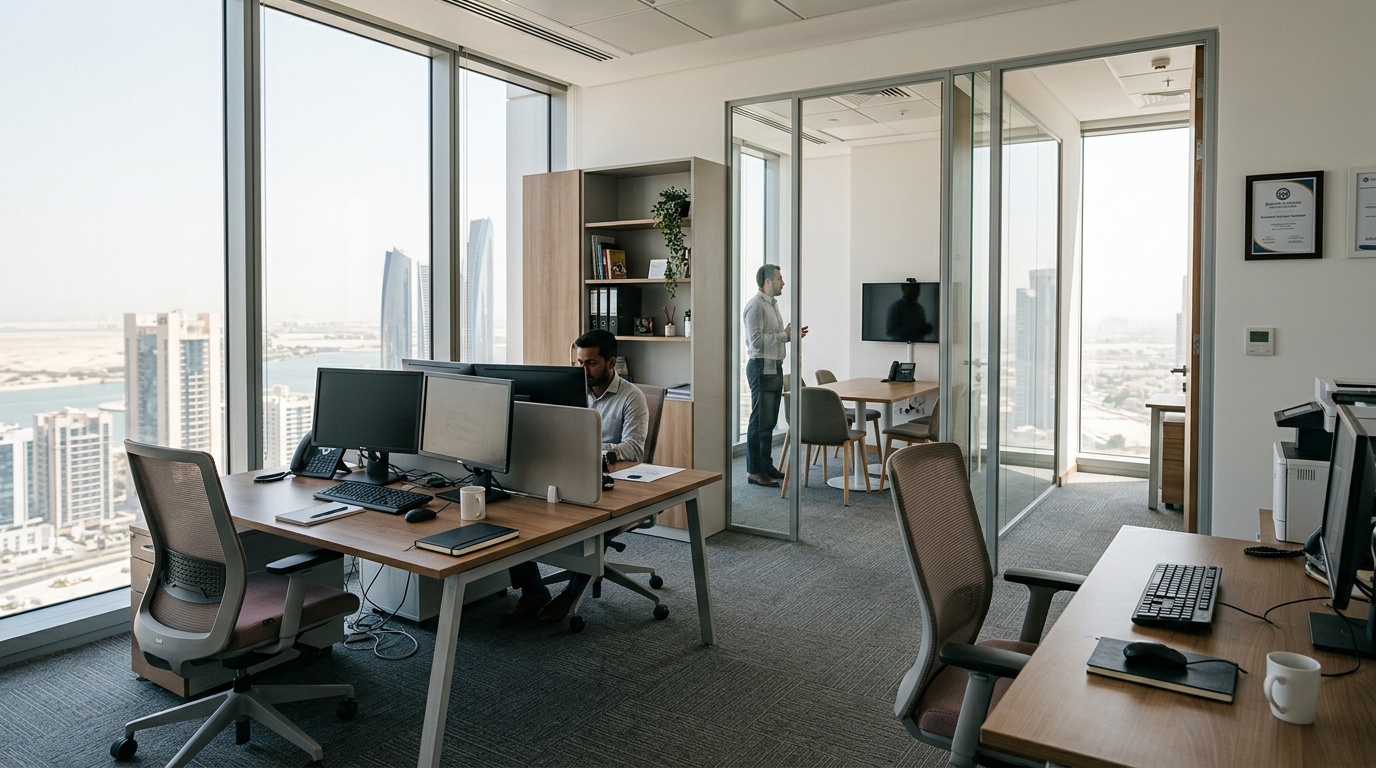
    Last reviewed: June 14, 2026 by the Hotdesk Team
  • Private Office vs Hot Desk in Sharjah: Which Workspace Wins in 2026?

    Private Office vs Hot Desk in Sharjah: Which Workspace Wins in 2026?

    Which is a better coworking space option: private office or hot desk in Sharjah?

    Ever since distributed systems became prevalent, managing new failure modes has been a constant challenge. The quest for the right workspace isn’t about seeking novelty; it’s about establishing dependable environments that support your workflow, no matter where you are. Systems that travel with you, rather than places that demand constant reconfiguration, form the bedrock of productive work. This is especially true when considering the fundamental choice between a private office and a hot desk, particularly within a dynamic city like Sharjah.

    Key Takeaways

    • Choosing a workspace is about building a reliable environment that minimizes daily reconfiguration, much like designing distributed systems to handle failure modes.
    • A private office provides stable infrastructure that supports consistent workflow, reducing the overhead of adapting to new settings each day.
    • A hot desk offers flexibility but introduces variability that can disrupt continuity, making it better suited for short term tasks rather than sustained focus.
    • In Sharjah’s evolving business landscape, the decision between private office and hot desk depends on whether your work pattern benefits from fixed control or adaptable space.

    The decision hinges on understanding what truly matters for your daily operations: cost, privacy, community, or flexibility. Technical reliability, not just marketing claims, dictates which option keeps you working without interruption. We engineer for scale and reliability, focusing on what stays working, not just what’s new. Let’s examine the core differences to help you determine which workspace option aligns with your professional needs in Sharjah.

    The Sharjah Workspace Trade-Off: Private Office vs Hot Desk Costs

    When evaluating coworking options, the first practical question is always about financial commitment. Understanding the typical monthly costs for both private offices and hot desks in Sharjah provides a clear baseline for decision-making. These figures are not mere numbers; they represent the tangible investment required to secure a productive environment, and variations exist based on location within Sharjah, such as areas like Al Majaz, Al Qasimia, or University City.

    For flexible users, hot desk rates in Sharjah generally range from AED 500 to AED 1,200 per month. This price point offers access to a shared workspace, often with basic amenities included. Dedicated desks, which offer a bit more permanence than a hot desk but are still within a shared environment, typically fall between AED 775 and AED 945 monthly, according to data compiled by sources like thecoworkingspaces.com. These options are engineered for individuals or very small teams who prioritize cost-effectiveness and access to a professional setting without the overhead of a private space.

    Conversely, securing a private office in Sharjah presents a different investment level. Expect costs to hover around AED 2,200 per month for a furnished space, often with utilities included, as reported by The Coworking Spaces. This price reflects the exclusivity, privacy, and dedicated resources that a private office provides. While the monthly rate is higher, it often bundles services that would otherwise accrue as separate costs, such as dedicated internet, climate control, and a secure, lockable area for your team and equipment. This is infrastructure that travels with your business needs.

    Beyond the headline monthly rates, it’s essential to consider potential hidden costs or specific amenities that justify the price difference. For hot desks, while the base rate is attractive, access to meeting rooms might be metered or require additional credits, impacting overall cost if frequent client interactions are part of your routine. Private offices, however, frequently include a set number of meeting room hours, printing allowances, and mail handling services. These bundled amenities can represent significant value, making the higher upfront cost more economical when all components are factored in. The distinction is about what works at 10x your current need versus what meets immediate, flexible requirements.

    Sharjah Workspace Pricing Snapshot

    Understanding the financial commitment is key. Here’s a look at typical monthly expenditures:

    Workspace Type Typical Monthly Rate (AED) Key Inclusions/Considerations
    Hot Desk 500 – 1,200 Shared workspace, basic Wi-Fi. Meeting room access may be extra. Ideal for individuals needing flexibility. (Source: few.ae)
    Dedicated Desk 775 – 945 Assigned desk in a shared area, enhanced networking. Meeting room access policies vary. (Source: thecoworking-spaces.com)
    Private Office ~2,200+ Furnished, lockable space, utilities often included. May include meeting room credits, mail handling. Engineered for teams needing privacy and security. (Source: thecoworking-spaces.com)

    Privacy vs Collaboration: Which Workspace Matches Your Work Style?

    Privacy vs Collaboration: Which Workspace Matches Your Work Style?

    The fundamental difference between hot desks and private offices lies in the environment they cultivate. When finding the right workspace, the wrong environment can represent a significant challenge. A hot desk offers an open, often dynamic atmosphere that inherently promotes interaction and shared energy. This setting is designed for professionals who thrive on community, spontaneous networking opportunities, and the lower cost associated with shared resources. The flexibility of a hot desk means you can adapt your location daily, a key aspect of systems that travel with the user.

    On the flip side, a private office is engineered for concentration, confidentiality, and control. It provides a dedicated, secure space ideal for client meetings, sensitive work, or simply for individuals who require a quiet zone free from external distractions. This option ensures that your work remains confidential and that you have a predictable, controlled environment to focus on tasks demanding deep concentration. The value here is in the absence of re-work caused by interruptions or lack of privacy.

    The hot desk model shines when community and networking are prioritized. It provides constant exposure to other professionals, fostering potential collaborations and cross-pollination of ideas. Day-pass flexibility is a significant advantage, allowing users to dip in and out of a professional workspace as needed, without long-term commitment. This makes it an excellent choice for freelancers, remote workers, or startups testing the waters in Sharjah.

    Hot Desk: The Community Connector

    Pros

    • Fosters community and networking opportunities.
    • Cost-effective for individuals or flexible users.
    • Offers day-pass flexibility for varied usage.
    • Exposure to diverse professionals and potential collaborations.

    Cons

    • Limited privacy for confidential work or calls.
    • Potential for noise and distractions.
    • No personal, dedicated space for belongings.
    • Less suitable for small teams needing a shared, private base.

    A private office, however, excels in scenarios demanding focused work and professional discretion. It offers a controlled environment where client meetings can be conducted with confidence, and sensitive information can be handled without concern. This workspace type offers a quiet zone, which is often difficult to find in more open-plan coworking setups. For businesses that handle proprietary data or require a formal setting for client interactions, the private office is the more logical choice, ensuring operational continuity.

    Private Office: The Focused Sanctuary

    Pros

    • Maximum privacy for confidential tasks and client meetings.
    • Controlled quiet zone for deep work and concentration.
    • Secure, lockable space for personal belongings and equipment.
    • Professional and consistent environment for long-term projects.

    Cons

    • Higher monthly cost compared to hot desks.
    • Less spontaneous community interaction.
    • May require additional effort to foster external collaborations.
    • Less flexibility for very short-term or day-to-day usage patterns.

    The collaboration gap highlights where each option might fall short. While hot desks encourage broad interaction, they can make deep, collaborative project work challenging due to noise and lack of dedicated team space. Conversely, private offices offer excellent focus but can sometimes lead to isolation, limiting the serendipitous encounters that spark innovation. Ultimately, which is a better coworking space option: private office or hot desk in Sharjah? depends on whether your primary need is for outward connection and flexibility or inward focus and security.

    References

    Amenities That Actually Matter: Internet, Meeting Rooms, and Call Booths

    Beyond the basic desk space, the true value of a coworking environment in Sharjah is often found in its supporting amenities. These are the systems that keep your operations running smoothly and professionally. For anyone evaluating their options, understanding how hot desks and private offices differ in their provision of essential services like high-speed internet, meeting rooms, and private call booths is paramount. These features are not just conveniences; they are essential infrastructure components that directly impact productivity and client perception.

    When considering a hot desk membership, a common question is the extent of access to shared facilities. In Sharjah, many hot desk plans include basic Wi-Fi, but dedicated meeting room credits or extensive printing allowances are often a separate consideration. Some providers bundle a limited number of hours per month, while others charge per booking. This means the advertised hot desk rate might not reflect the total cost if frequent client meetings or extensive printing are part of your workflow. It’s essential to check the specifics: does hot desk access include meeting room credits, and what are the associated costs for exceeding them? This level of detail prevents unexpected expenses and ensures your workspace supports all facets of your professional activities.

    Private offices, by their nature, typically offer a more comprehensive amenity package designed for dedicated use. Lockable storage is standard, providing security for your equipment and documents. Access to printing and scanning facilities is usually included, often with a generous monthly allowance. Furthermore, mail handling services are frequently part of the offering, providing a professional business address. These features combine to create a self-contained operational unit, engineered for scale and continuity, where the user doesn’t have to worry about the incremental costs associated with basic office functions.

    For freelancers, the amenities that push the needle often relate to flexibility and professional presentation. Access to soundproof call booths for important client calls or virtual interviews is invaluable. Reliable, high-speed internet is non-negotiable for uninterrupted work. For small teams, the availability of bookable meeting rooms, whether included or easily accessible, is key for collaboration and client engagements. Which is a better coworking space option: private office or hot desk in Sharjah? often depends on how these specific amenities are integrated into the offering. A hot desk might be cost-effective, but if it forces you to conduct sensitive calls in a noisy common area or pay exorbitant rates for meeting rooms, its value diminishes.

    Understanding these amenity differences is important for making an informed decision. While the cost of a hot desk is appealing, the true expense can rise when essential services are not bundled. Private offices, despite their higher price, often deliver greater overall value through integrated services like dedicated internet, mail handling, and included meeting room access. This aligns with the principle that systems over announcements are what truly support productivity. For example, spaces like Coworking Naubostik demonstrate how integrated amenities can redefine the workspace experience, offering a cohesive solution for professionals.

    Sharjah Workspace Amenity Comparison

    Evaluate which features best align with your professional needs.

    Amenity Hot Desk Provision (Typical in Sharjah) Private Office Provision (Typical in Sharjah) Impact for Freelancers vs. Small Teams
    High-Speed Internet Included, shared bandwidth. Reliability can vary. Dedicated connection, generally higher throughput and stability. Critical for both; private office offers more consistent performance.
    Meeting Room Access Often requires booking credits or separate payment. Limited hours per month. Typically includes a set number of hours per month; easy booking. Essential for client meetings. Private offices offer more predictable access.
    Private Call Booths May be limited or unavailable. Often available within the private office suite or shared access. Highly valuable for confidential calls/virtual meetings for both.
    Printing & Scanning May be pay-per-use or limited allowance. Usually included with a generous allowance. Convenience factor is high for both, but private offices offer more freedom.
    Mail Handling / Business Address Rarely included; often requires a virtual office add-on. Frequently offered as part of the package. Improves professionalism for both, but especially for remote businesses.
    Lockable Storage Not available; requires personal responsibility for belongings. Standard feature for securing equipment and documents. Key for peace of mind and asset protection.

    When determining which is a better coworking space option: private office or hot desk in Sharjah?, consider these amenities as part of the total value proposition. For a freelancer needing flexibility and basic professional amenities, a well-equipped hot desk space can suffice. However, for a small team that requires a stable, secure, and professional environment for client interactions and focused work, the comprehensive amenity package of a private office often proves more cost-effective and efficient in the long run. Systems that travel with the user, providing all necessary tools without constant add-on costs, are always the superior choice for sustained productivity.

    Why Your Next Workspace Move Should Start With a Day Pass

    When selecting a coworking space, the temptation is to rely on descriptions and hope for the best. But the most reliable approach to finding a workspace that truly fits your needs, especially in a city like Sharjah, is to experience it firsthand. This is where the power of a day pass comes into play, offering a low-risk method to test the environment before committing to a membership. It’s about ensuring the infrastructure travels with your workflow, not the other way around.

    The try-before-you-commit model is engineered for clarity. Booking a hot desk day pass allows you to immerse yourself in the actual working conditions. You can assess the network stability, the noise levels, the available seating, and the general atmosphere. This practical evaluation is far more informative than any brochure or website can provide. It’s about verifying that the system works for you in real-time, not just on paper. This direct experience helps avoid the costly re-work associated with choosing an unsuitable space.

    Platforms like Hotdesk simplify this process significantly. We enable users to sample both hot desk and private office options without requiring a lengthy membership commitment. You can browse available spaces in Sharjah, understand their offerings, and book a day pass with ease. This flexibility means you can test different locations, compare amenities, and gauge the community feel across various coworking hubs. It’s about connecting without complexity, ensuring you find a space that aligns with your operational requirements.

    Consider a freelancer who needed a quiet space for client calls but also wanted access to a professional community in Al Majaz. Instead of guessing, they used Hotdesk to book day passes at three different coworking spaces. The first offered great networking but was too noisy for calls. The second had excellent quiet zones but lacked a collaborative vibe. The third provided both the necessary privacy and a welcoming environment, proving to be the ideal fit. This real-world example underscores how experiential testing leads to smarter, more efficient workspace decisions. Which is a better coworking space option: private office or hot desk in Sharjah? This testing process helps answer that.

    Frequently Asked Questions About Workspace Choices in Sharjah

    Frequently Asked Questions About Workspace Choices in Sharjah

    Can a small team of 3 share a hot desk?

    While a hot desk is primarily designed for individual use, a small team of three might share one desk for very short periods or specific tasks where close proximity is beneficial. However, for sustained work, privacy, and individual comfort, this arrangement is not ideal. Hot desks in Sharjah are best suited for individuals seeking flexibility and community, not for collaborative team operations that require dedicated space.

    How easy is it to switch from a hot desk to a private office?

    The ease of switching depends on the coworking provider and your membership structure. Many platforms, including Hotdesk, facilitate transitions between workspace types. If you start with a hot desk day pass or a monthly membership and decide you need more privacy, you can typically upgrade to a private office if one is available. This flexibility ensures your workspace infrastructure can adapt as your needs evolve, minimizing re-work and disruption.

    Is a short-term private office lease available in Sharjah?

    Yes, short-term leases for private offices are common in Sharjah’s coworking scene. Many providers offer flexible terms, from month-to-month agreements to longer commitments, often with utilities and amenities included. This model provides the security and privacy of a dedicated office without the long-term commitment of a traditional commercial lease, aligning with the principle of systems that travel with the user.

    Which districts in Sharjah offer the best value for each option?

    Value can be subjective, but generally, established business districts like Al Majaz and Al Qasimia often offer a good balance of accessibility, amenities, and price for both hot desks and private offices. University City might present more budget-friendly hot desk options catering to students and academics. Researching specific providers within these areas, and utilizing day passes, is the most effective way to determine the best value for your specific requirements in Sharjah.

    Frequently Asked Questions

    What does hot desk mean in a coworking space in Sharjah?

    A hot desk in a Sharjah coworking space means a non-reserved workspace you use on a first-come, first-served basis within a shared open area. It offers flexibility for individuals who need a professional setting without a fixed commitment, with monthly rates typically ranging from AED 500 to AED 1,200.

    How much does coworking space cost in Sharjah?

    Coworking space costs in Sharjah vary by type: hot desks range from AED 500 to AED 1,200 per month, dedicated desks between AED 775 and AED 945, and private offices around AED 2,200 and up. These rates reflect the trade-off between cost and privacy, with private offices bundling amenities like meeting room credits and mail handling.

    Why are coworking spaces failing for some professionals in Sharjah?

    Coworking spaces fail for professionals when the environment does not match their workflow needs, such as requiring quiet concentration or handling sensitive client data. A hot desk’s open layout can introduce interruptions and lack of privacy, forcing rework and reducing productivity. Choosing a private office in Sharjah eliminates these reliability gaps for teams needing a controlled, locked space.

    Is coworking better than a home office in Sharjah?

    Coworking in Sharjah is better than a home office when you need reliable infrastructure, professional separation, and networking without the isolation. A hot desk or private office provides dedicated internet, climate control, and a work-focused atmosphere that a home often lacks. For teams needing confidentiality or frequent client meetings, a coworking space offers systems that travel with your business demands rather than blurring home and work lines.

    What are the drawbacks of hot desking in Sharjah?

    The main drawbacks of hot desking in Sharjah include limited privacy, no guaranteed desk, and potential extra costs for meeting room access. This setup works well for flexible networking but can disrupt deep concentration or confidential work, leading to rework. Professionals who prioritize predictable, quiet environments should consider a private office instead.

    How does a private office compare to a hot desk for privacy in Sharjah?

    A private office in Sharjah offers full privacy with a lockable, dedicated space for confidential discussions and focused work, while a hot desk provides none of this separation. Private offices include secure storage, controlled climate, and bundled amenities like mail handling, which eliminate the interruptions common in shared areas. For teams handling sensitive data or needing zero distractions, a private office ensures continuity without rework.

    About the Author

    MS

    Mohammad El Shaari

    CTO at Hotdesk

    Mohammad El Shaari is the CTO of Hotdesk, where he leads the engineering team building and scaling a global SaaS platform for on-demand workspace bookings across 80+ countries. A Computer Science graduate from The British University in Egypt, he brings over a decade of hands-on experience in enterprise software, AI, cloud infrastructure, and cybersecurity.

    Before Hotdesk, he served as CTO of Vee Tech, where he led technical delivery for 12+ enterprise clients generating $30M+ in annual revenue, and helped build Egypt’s first innovation lab at Capital International Schools.

    At Hotdesk, Mohammad focuses on building scalable systems that handle real-time availability, global user distribution, and high-throughput transactions. He specializes in scalable system design, cloud-native infrastructure, and building high-performance SaaS platforms that support global user bases.

    He writes about scaling SaaS platforms, backend architecture, mobile engineering, and real-world technical decisions behind building and operating global products.

    Last reviewed: June 14, 2026 by the Hotdesk Team
  • Regus Dubai Sports City: Compare Prices & On-Demand Spaces

    Regus Dubai Sports City: Compare Prices & On-Demand Spaces

    regus dubai sports city

    When you need a workspace in Regus Dubai Sports City, Regus at The Bridge Building is often the first name that comes up. It is a known quantity with a global network, reliable amenities, and a professional setting. But knowing what is actually available there, what it costs, and how to book it without the usual friction is another matter entirely. This guide covers what to expect at this location, the real pricing you will encounter, and how on-demand booking through Hotdesk can give you the same space without locking you into a long-term commitment.

    Key Takeaways

    • Regus Dubai Sports City gives you a professional workspace with global backing, but the real value comes from booking it on demand without a long lease.
    • Knowing the actual prices at The Bridge Building helps you avoid surprises, and on-demand access through Hotdesk keeps your options open.
    • You get the same reliable amenities and setting as a traditional office, but you only pay for the time you actually use.
    • Comparing costs and availability across booking methods shows that flexibility matters more than the brand name alone.

    Regus Dubai Sports City: What to Expect at The Bridge Building

    The Regus Dubai Sports City location occupies four levels of The Bridge Building, a modern commercial property positioned within the sports-themed development that gives the area its name. This is not a peripheral location. It sits within walking distance of key financial and retail landmarks, and the highway network connects it to the rest of Dubai in under 20 minutes during standard commuting hours. The building itself is designed for professional use, with dedicated reception staff, secure entry, and elevator access to all floors. For anyone evaluating workspace options in this part of the city, this location offers a practical base with the backing of a global operator.

    Location and Connectivity

    The Bridge Building is a seven-minute walk from Emirates NBD, making banking errands straightforward without a car. Dubai Autodrome, the ICC, and Arabian Ranches are all within a five-minute drive, and the proximity to major arterial roads means Downtown Dubai, Dubai Marina, and JLT are all reachable in 15 to 25 minutes depending on traffic. Parking is available on-site, and ride-hailing drop-offs are frequent throughout the day. For those using public transport, bus routes serve the Sports City area, though a car or taxi remains the most practical option for most commuters. The location works well for professionals based in or serving the southern corridor of Dubai.

    Location Highlights

    • Address: The Bridge Building, Dubai Sports City, Dubai, UAE
    • 7-minute walk to Emirates NBD
    • 5-minute drive to Dubai Autodrome and ICC
    • 15-25 minute drive to Downtown Dubai, Dubai Marina, JLT
    • On-site parking available
    • Bus routes serve the Sports City area

    Workspace Types Available

    This location offers a range of options suited to different work patterns. Coworking passes are available for daily or monthly use, providing access to open-plan seating and shared amenities. Private offices can be rented on a per-person, per-day basis or as dedicated spaces for teams. Meeting rooms are bookable by the hour, and a day office option exists for those who need a private room for a full workday without committing to a longer plan. Virtual office packages are also offered, giving businesses a professional address and mail handling without a physical workspace. The variety means most professionals can find a format that matches their needs, though the real question is how to access it without unnecessary overhead.

    Workspace Options at a Glance

    • Coworking day pass: open-plan seating, shared facilities
    • Monthly coworking: recurring access for regular users
    • Private office: per-person or dedicated team spaces
    • Meeting rooms: hourly booking for client meetings or calls
    • Day office: private room for a full workday
    • Virtual office: business address and mail handling

    Amenities and Services Included

    All workspace types at this location include high-speed WiFi, reception support, mail handling, and daily cleaning. Breakout areas with tea and coffee are available, and printing and scanning services are included in most plans. Meeting rooms come with presentation screens and video conferencing equipment. The building provides air conditioning, natural light in most offices, and ergonomic furniture designed for extended use. Security is present during business hours, and access is controlled after hours depending on the membership tier. These amenities are standard for a Regus location and meet the expectations of most professionals. The consistency of this setup across the network is one reason Regus remains a default choice for many.

    Pricing Transparency: Regus Rates vs. On-Demand Booking via Hotdesk

    Pricing Transparency: Regus Rates vs. On-Demand Booking via Hotdesk

    Understanding what you will actually pay to use Regus Dubai Sports City requires looking beyond the headline numbers. Published rates vary by workspace type, and the way you book changes the total cost significantly. Direct membership plans come with commitments and fees that are easy to overlook. On-demand booking through Hotdesk removes those layers, giving you access to the same physical space at a predictable, pay-as-you-go rate.

    Regus Published Pricing for Coworking, Private Offices, and Meeting Rooms

    The published rates for this location are as follows. A coworking day pass costs AED 209 per day, while monthly coworking runs AED 855 per month. Private offices are priced at AED 68 per person per day, and meeting rooms start at AED 105 per hour. A day office, which gives you a private room for the full workday, costs AED 589 per person per day. These figures come from Regus official listings and coworker.com, a third-party aggregator. They represent the standard pricing before any promotions or negotiated discounts. For a professional who needs occasional access, these rates are reasonable, but the way they are delivered through a membership model changes the value equation.

    Workspace Type Regus Published Price Hotdesk Booking Advantage
    Coworking day pass AED 209 per day Pay per use, no membership required
    Monthly coworking AED 855 per month Book only the days you need
    Private office AED 68 per person per day Same space, no long-term contract
    Meeting room AED 105 per hour Instant booking, no phone calls
    Day office AED 589 per person per day Flexible cancellation, no deposit

    The Hidden Costs of Membership Plans

    Booking directly with Regus typically requires signing a membership agreement. This often includes an initial registration fee, a monthly minimum spend, and a notice period for cancellation.

    How to Book Regus Dubai Sports City Instantly with Hotdesk

    Traditional workspace booking often involves a drawn-out process: initial inquiries, lengthy calls, filling out forms, and waiting for confirmation. This friction is precisely what Hotdesk aims to eliminate. For professionals needing immediate access to a workspace, particularly at sought-after locations like Regus Dubai Sports City, our platform offers a streamlined, digital-first experience. We believe your time is best spent working, not navigating administrative hurdles. This section details how you can secure your spot in seconds, transforming how you access professional environments.

    The core of the Hotdesk philosophy is to make accessing professional workspaces as simple as ordering a coffee. We understand that your work needs can change rapidly, whether you’re a freelancer seeking a quiet desk for a day, a startup needing a temporary private office, or a remote employee on a business trip. Our platform is built on the principle of continuity, ensuring that movement doesn’t disrupt your workflow or your sense of professional belonging. By bypassing the conventional booking methods, we provide instant access to spaces that meet your requirements, allowing you to focus on what truly matters: your productivity and business growth.

    Step-by-Step Booking Guide (No Phone Calls or Forms)

    Securing a workspace at Regus Dubai Sports City through Hotdesk is designed for speed and simplicity, mirroring the ease of modern digital transactions. Forget endless phone calls or filling out extensive application forms. Our intuitive interface guides you through the process in just a few clicks. Begin by searching for “Regus Dubai Sports City” on the Hotdesk platform or app. You’ll see available workspace types, such as private offices or coworking desks, along with their transparent hourly or daily rates. Select the space that best fits your immediate needs, specify your desired duration. Whether it’s a few hours or an entire day. And proceed to checkout.

    Payment is handled securely online, and once confirmed, your booking is complete. You’ll receive an instant confirmation email containing all the necessary details, including the exact address, directions, and any access instructions for The Bridge Building. This immediate confirmation is key to our promise of instant offices dubai, ensuring you have concrete plans without any waiting period. This method contrasts sharply with traditional booking systems that often require advance notice, site visits, or lengthy contract negotiations. Hotdesk empowers you to make decisions and secure your workspace on your own terms, reflecting the flexibility demanded by today’s mobile workstyles.

    For those needing more structured arrangements without long-term ties, Hotdesk also facilitates booking for serviced offices dubai. Instead of committing to a monthly membership with a provider like Regus directly, you can book specific office spaces for the exact period you require. This flexibility is invaluable for project-based work, client meetings, or when exploring new markets. The platform aggregates availability, allowing you to compare options and book what you need, when you need it, all within a few minutes. This approach ensures you only pay for the workspace you use, offering unparalleled cost efficiency and operational agility for businesses of all sizes.

    What Happens When You Arrive

    Upon arrival at The Bridge Building for your pre-booked session at Regus Dubai Sports City, the experience is designed to be seamless. Your confirmation email will contain specific instructions, which may include checking in at the reception desk or using a digital access code. The reception staff are accustomed to Hotdesk bookings and will guide you to your designated workspace. If you’ve booked a coworking desk, you’ll be shown to an available spot within the shared area. For private offices, you’ll be escorted to your dedicated room, ready for immediate use. This smooth transition ensures that the moment you arrive, you can settle in and begin your work without delay.

    The amenities associated with your booking are immediately accessible. This typically includes high-speed Wi-Fi, ensuring you’re connected from the moment you sit down. Access to communal areas, such as lounges or kitchens, is also part of the package, providing spaces for breaks or informal meetings. If your booking includes meeting room access, you’ll be directed to its location, often equipped with presentation tools. The aim is to provide a fully functional and professional environment from the outset, removing any friction between arriving and commencing productive work. This immediate availability of resources is a cornerstone of the daily office rental dubai experience we facilitate.

    This direct and efficient arrival process is a significant departure from the uncertainty often associated with ad-hoc workspace arrangements. With Hotdesk, you know exactly what to expect, where to go, and what facilities are available. This predictability is essential for maintaining focus and confidence, especially when working in an unfamiliar location or on a tight schedule. Your booking confirms not just a physical space, but a fully equipped and serviced workstation, ready to support your professional needs the instant you walk through the door.

    Why This Approach Fits a Mobile Workstyle

    The modern professional is increasingly mobile, moving between project sites, client locations, and home offices. This dynamic workstyle demands flexibility that traditional office leases and rigid membership plans simply cannot provide. Hotdesk’s instant booking model is built precisely for this reality. It offers the continuity Mohamed Khaled, Hotdesk’s founder, emphasizes. The ability to maintain a consistent professional presence and workflow, regardless of physical location. By enabling on-demand access to spaces like those at Regus Dubai Sports City, we ensure that professionals aren’t forced to reset their work environment every time they move, thereby preserving momentum and focus.

    This approach is particularly beneficial for freelancers, consultants, and remote teams who require adaptable workspace solutions. The ability to book a professional office for a day or even a few hours means you can scale your workspace needs up or down as required, without the financial burden of long-term commitments. It provides the convenience of instant offices dubai, allowing you to secure a professional setting for client meetings or focused work sessions on short notice. This agility is invaluable for navigating the unpredictable demands of modern business and maintaining a consistent brand image, no matter where your work takes you.

    Furthermore, the Hotdesk platform champions the idea that belonging is felt, not declared. By providing easy access to a network of professional workspaces, we foster a sense of familiarity and connection, even when individuals are frequently on the move. When you can recurrently book a space at The Executive Centre Dubai or any other partner location, you begin to recognize the environment and perhaps even the staff. This quiet familiarity builds a sense of continuity, supporting the human need for a stable professional base amidst constant movement. It’s about enabling people to work effectively and feel grounded, wherever their professional journey leads them. This is the essence of a truly mobile-first work solution.

    Regus Dubai Sports City vs. Other Workspaces in the Area

    Professionals evaluating workspace options in Dubai Sports City rarely look at a single provider in isolation. The area hosts a mix of global operators and independent centers, each offering distinct advantages depending on your priorities. While Regus Dubai Sports City provides a standardized, globally recognized environment, alternatives like Servcorp, WeWork, and local coworking hubs cater to different needs, from hyper-local community vibes to executive-grade privacy. Understanding these differences helps you choose a space that aligns with your work style and budget.

    How Regus Compares to Servcorp, WeWork, and Local Centers

    Servcorp positions itself at the higher end of the market, focusing on executive privacy and premium branding. Their offices typically command a price premium over Regus, making them a better fit for established firms requiring distinct corporate identities. WeWork, conversely, targets a younger demographic with a strong emphasis on interior design and social events. While WeWork offers a dynamic atmosphere, some professionals find the layout less suitable for focused, quiet work. Local centers in Dubai Sports City often provide more competitive pricing but may lack the comprehensive amenity packages and international reliability that Regus Dubai Sports City delivers.

    Provider Focus Best For Price Tier
    Regus Global network, standardized amenities, professional consistency Professionals seeking reliability and global access Moderate
    Servcorp Executive privacy, premium branding, distinct corporate identity Established firms requiring high-end facilities High
    WeWork Modern design, social events, dynamic atmosphere Startups and creatives valuing community vibes Moderate
    Local Centers Competitive pricing, basic amenities, hyper-local focus Budget-conscious teams and solo freelancers Low

    What Users Say: Real Reviews from Coworker and Other Platforms

    Real user feedback provides insight into the daily experience at Regus Dubai Sports City. Aggregated reviews on platforms like Coworker indicate a generally positive reception, with users frequently highlighting the cleanliness of the facilities and the professionalism of the reception staff. The location’s accessibility within The Bridge Building is also a recurring positive point, particularly for those meeting clients in the Sports City area. Some feedback notes that the meeting rooms can be fully booked during peak hours, suggesting that advance planning is necessary. Overall, the sentiment reflects a reliable workspace that meets the expectations of professionals seeking a consistent environment.

    For professionals seeking a premium alternative within the Hotdesk network, The Executive Centre Dubai offers a high-caliber option with executive-grade amenities. This workspace is ideal for those who require a more exclusive environment for client meetings or sensitive calls. By booking through Hotdesk, you can rotate between The Executive Centre Dubai and other locations, ensuring you always have access to the right setting for your current needs.

    Which Option Fits Your Needs Best?

    Choosing the right workspace depends on your specific requirements. If you need a trusted, globally recognized address with consistent amenities, Regus Dubai Sports City is a solid choice. It works well for consultants, remote teams, and professionals who value predictability. For those requiring strict executive privacy, Servcorp may be worth the additional investment. Startups and creative teams might prefer the energy of WeWork, while budget-focused users can explore local centers. However, the most flexible approach is to use a platform like Hotdesk. This allows you to test different providers, book only what you need, and avoid long-term commitments. With Hotdesk, you can access a shared office dubai, a daily office rental dubai, or a premium serviced offices dubai option. Hotdesk’s instant booking capability means you can secure instant offices dubai for client meetings without prior notice.

    References

    Frequently Asked Questions

    What is the Regus Dubai Sports City location like at The Bridge Building?

    Regus Dubai Sports City at The Bridge Building is a modern workspace occupying four levels of a commercial property in the sports-themed development. It offers professional amenities, secure entry, and easy access to major roads and landmarks like Emirates NBD and Dubai Autodrome.

    How much does a coworking day pass cost at Regus Dubai Sports City?

    A coworking day pass at Regus Dubai Sports City costs AED 209 per day according to published rates. This gives you access to open-plan seating and shared facilities without a membership commitment.

    What workspace options are available at Regus Dubai Sports City?

    Regus Dubai Sports City offers coworking passes, private offices, meeting rooms, day offices, and virtual office packages. Each option suits different work patterns from daily use to dedicated team spaces.

    Are there hidden costs when booking directly with Regus at Dubai Sports City?

    Yes, booking directly with Regus often involves membership agreements with initiation fees and minimum terms. These hidden costs can make the total price higher than the published rates suggest.

    How can I book a workspace at Regus Dubai Sports City without a long-term commitment?

    You can book a workspace at Regus Dubai Sports City on-demand through Hotdesk without a long-term contract. This gives you the same physical space at a pay-as-you-go rate with flexible cancellation.

    What amenities are included at Regus Dubai Sports City?

    Amenities at Regus Dubai Sports City include high-speed WiFi, reception support, mail handling, daily cleaning, breakout areas with tea and coffee, and meeting rooms with presentation screens. Security and ergonomic furniture are also provided.

    About the Author

    MK

    Mohamed Khaled

    Forbes 30 Under 30

    Founder & CEO at Hotdesk & Co-founder, DESK Token

    Mohamed Khaled is the Founder and CEO of Hotdesk, the on-demand workspace platform providing access to coworking spaces and flexible offices across more than 120 countries.

    He spent nearly a decade at PwC before moving into financial leadership at SWVL, where he led the company’s $1.5 billion Nasdaq listing, the first Unicorn from thr Middle East to go public in the United States.

    A Forbes 30 Under 30 honoree, Mohamed built Hotdesk from a side project into a global platform, leading a team of more than 50 and expanding into international markets, including the acquisition of Spain-based coworking marketplace YADO.

    Also being Co-founder and President of DESK Token, the world’s first asset backed property investment and utility hybrid token, Mohammed is focused on building infrastructure that unlocks underutilized assets – from meeting rooms to private offices and full on buildings – while creating space for the future of work.
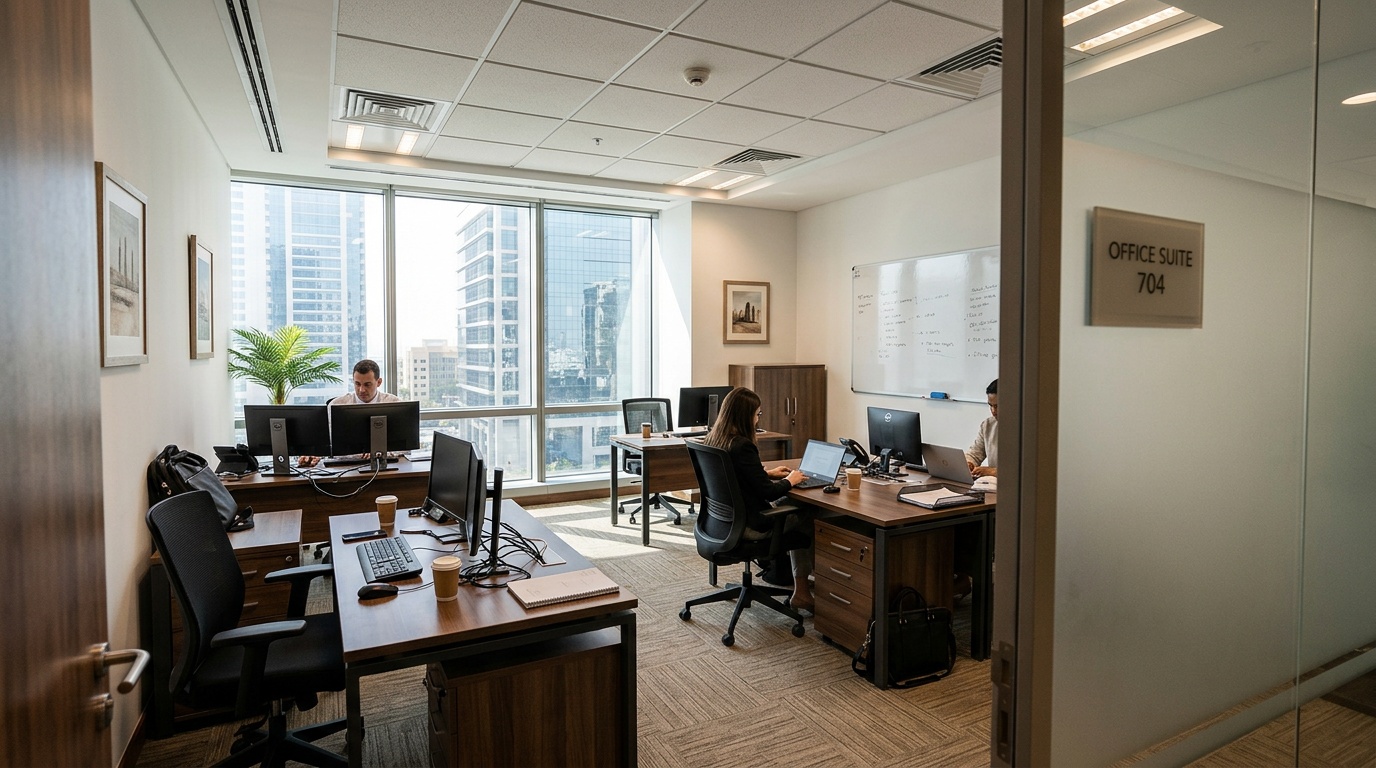
    Last reviewed: June 13, 2026 by the Hotdesk Team
  • Are There Industry Awards for Watford Coworking Spaces?

    Are There Industry Awards for Watford Coworking Spaces?

    are there any industry awards for Watford coworking facilities?

    Ever wonder about the infrastructure that supports your work? When evaluating workspace solutions, the same principle applies. You need environments that travel with you, not places that demand constant reconfiguration. Many professionals ask, “are there any industry awards for Watford coworking facilities?” The answer requires looking past marketing announcements. It demands an examination of the engineering standards and local recognitions that actually define operational reliability. This guide breaks down the verifiable certifications and regional accolades that determine workspace quality.

    Key Takeaways

    • Industry awards for coworking spaces function like engineering certifications, confirming that a workspace meets verifiable operational standards.
    • Marketing announcements rarely reflect genuine reliability; look for local recognitions that prove consistent service quality.
    • A meaningful award signals that the workspace infrastructure can support your work without demanding constant reconfiguration.
    • Focus your evaluation on accolades tied to operational continuity rather than promotional badges that only highlight surface features.

    Infrastructure travels with you. You should prioritize spaces that demonstrate measurable performance over those that simply look the part. By focusing on engineering discipline rather than hype, you ensure your daily workflow remains uninterrupted. The following sections detail the specific standards and awards that validate workspace quality in the Watford region.

    The Real Industry Awards for Watford Coworking Spaces

    BREEAM: The Green Building Standard

    BREEAM evaluates the environmental performance of buildings across multiple dimensions. It measures energy efficiency, waste management, and ecological impact. One Watford coworking space has been awarded top BREEAM ratings for sustainability, proving that green infrastructure is a measurable standard office-hub.com. When you ask, “are there any industry awards for Watford coworking facilities?” looking at BREEAM gives you a concrete answer. It represents a commitment to systems that reduce operational overhead. The certification tracks everything from water consumption to responsible material sourcing. This data-driven approach ensures that the physical plant supports long-term efficiency.

    WiredScore: The Digital Connectivity Benchmark

    Digital connectivity is the backbone of modern work. WiredScore assesses the resilience and speed of network infrastructure within a building. Clarendon Works in Watford achieved WiredScore Platinum, the highest possible rating theofficeproviders.com. This certification ensures that latency remains low and throughput stays consistent, regardless of user density. It proves that the space is engineered for scale. Reliability in connectivity means you do not waste time troubleshooting connections. The benchmark tests multiple internet service providers to guarantee redundancy. If one line fails, the system switches instantly.

    WELL: The Health and Wellbeing Certification

    Health-focused certifications measure air quality, lighting, and acoustic comfort. Clarendon Works in Watford is currently targeting WELL Platinum certification theofficeproviders.com. This standard ensures that environmental factors support cognitive function and physical comfort. It moves beyond aesthetics to measure the actual physiological impact of the workspace. The framework evaluates thermal comfort, sound levels, and the quality of materials used in finishes. A WELL-certified space actively contributes to the productivity of its occupants. Professionals should look for these standards as a guarantee of long-term usability.

    Certification Primary Focus Key Metric Typical Watford Level
    BREEAM Environmental Sustainability Energy efficiency & waste reduction Top Rated
    WiredScore Digital Connectivity Network redundancy & speed Platinum
    WELL Human Health Air quality & acoustic comfort Platinum (Targeted)

    How These Certifications Compare to Traditional Coworking Awards

    Traditional awards often rely on popularity or subjective judging. These certifications rely on data and engineering discipline. They measure what stays working under pressure. A traditional award might highlight a beautiful lobby, but a certification verifies the HVAC system that keeps the air clean and the network that keeps you connected. You want systems over announcements. These standards provide a verifiable baseline for quality that marketing claims cannot replicate. Infrastructure travels with you. You should prioritize spaces that demonstrate measurable performance over those that simply look the part.

    Local and National Awards Watford Coworking Facilities Can Win

    Local and National Awards Watford Coworking Facilities Can Win

    SME Hertfordshire Business Awards: Relevant Categories

    Local business awards recognize operational excellence within the region. The SME Hertfordshire Business Awards had over 160 organizations shortlisted across 22 categories, demonstrating a high level of local competition watfordbusiness.com. Watford Town Centre BID was a Sustainability Award finalist at the SME Hertfordshire Business Awards in 2024 watfordtowncentre.com. Coworking operators can enter categories focused on sustainability, best coworking, and customer service. These awards highlight businesses that contribute significantly to the local economy. When you ask, “are there any industry awards for Watford coworking facilities?” these local accolades provide a clear answer. Coworking Naubostik demonstrates the kind of operational excellence that fits these criteria perfectly.

    Hertfordshire Business Awards: Entry Process and Deadlines

    Entering local business awards requires a structured approach. First, identify the specific categories that align with your operational strengths. Next, gather quantitative evidence of your performance. Submit your application before the deadline, which typically falls in the autumn for the following year’s ceremony. Finally, prepare for the judging phase by documenting your standard operating procedures. The Hertfordshire Business Awards 2026 include categories like Most Enterprising Business and Sustainability business-awards.uk. Following these steps increases your chances of recognition. The process rewards transparency and documented growth.

    National Coworking Awards: Are Watford Spaces Eligible?

    National coworking awards provide visibility beyond the local market. Watford spaces are fully eligible for these broader competitions. They compete against operators from across the UK, which raises the bar for innovation and service delivery. Eligibility usually requires a minimum number of locations or a certain revenue threshold. However, individual Watford locations can often compete through their parent brand or regional association. Participating in national awards signals that a space meets rigorous industry standards. Are there any industry awards for Watford coworking facilities? National competitions confirm that regional spaces can compete on a national stage.

    References

    Award-Winning Watford Coworking Spaces: What We Know So Far

    When exploring workspace options in Watford, understanding which facilities hold recognized certifications or have earned industry accolades provides a tangible measure of quality. While dedicated coworking awards are less common than building certifications, specific spaces have demonstrated excellence. Direct searches on operator websites and local business directories reveal facilities that prioritize environmental sustainability, digital connectivity, and occupant wellbeing. These are not subjective claims but verifiable standards that signal a commitment to infrastructure that works. Are there any industry awards for Watford coworking facilities? The presence of these certifications answers that question with concrete evidence of quality.

    One specific coworking space in Watford has been noted for achieving top BREEAM ratings for sustainability, as reported by office-hub.com. This indicates a focus on operational efficiency and responsible building management. Such recognition goes beyond marketing to highlight actual systems in place for energy conservation and waste reduction. This commitment to green infrastructure is a key indicator of a forward-thinking workspace. It demonstrates that the physical environment is engineered for long-term efficiency and reduced environmental impact.

    In addition to building certifications, local business awards provide another layer of recognition. The SME Hertfordshire Business Awards have recognized regional excellence, with Watford Town Centre BID being a finalist for a Sustainability Award in 2024, as noted by watfordtowncentre.com. While not exclusively for coworking spaces, these awards highlight businesses that contribute to the local economy and demonstrate strong operational practices. Identifying spaces that align with these recognized achievements means choosing environments committed to quality and community impact.

    The search for verifiable quality in Watford coworking spaces often leads to building certifications like BREEAM and WiredScore, alongside local business award recognitions. These provide objective indicators of a facility’s commitment to sustainability, connectivity, and operational excellence.

    How to Verify an Award or Certification for a Watford Coworking Space

    When evaluating coworking spaces, claims of awards or certifications should be verifiable. It’s essential to confirm that a facility meets the standards it purports to uphold. This process ensures you are investing in a space with proven quality, not just marketing. By following a structured approach, you can gain confidence in your choice. Are there any industry awards for Watford coworking facilities? Verifying these claims directly empowers you to make an informed decision about where you will work.

    Begin by checking the coworking space operator’s official website and marketing materials. Reputable spaces will proudly display any certifications or awards they have received. Look for dedicated sections detailing their accreditations, often featuring logos from certifying bodies. This is the first line of verification, providing context for their claims. If a space mentions a BREEAM rating or a specific award, the details should be readily available for review.

    For building certifications, it is possible to search official registries. Bodies like BREEAM, WiredScore, and the International WELL Building Institute maintain databases of certified projects. Searching these official portals using the building or space name can confirm its accreditation status and the level achieved. This direct verification method bypasses any ambiguity and provides definitive proof of a facility’s adherence to established standards. It’s a critical step for ensuring the infrastructure truly travels with you.

    Consulting local business award websites is another avenue. Organizations such as the SME Hertfordshire Business Awards or regional chambers of commerce often list past winners and finalists on their official sites. Cross-referencing a space’s claims with these official records confirms their participation and any recognition received. If a Watford coworking facility claims to have won a specific local award, checking the award organizer’s website is a direct way to validate this information. This disciplined approach ensures that your chosen workspace is backed by genuine achievement.

    Finally, do not hesitate to ask the space directly. Prepare specific questions regarding their certifications, awards, and the metrics behind them. Inquire about the age of certifications, the specific criteria met, and how these standards contribute to the daily working experience. Asking about the redundancy measures in place for their WiredScore certification can reveal much about their commitment to consistent connectivity. This direct line of questioning ensures transparency and provides insight into the operational philosophy of the facility. It helps confirm that the space is designed for consistent performance.

    Frequently Asked Questions

    Are there any industry awards for Watford coworking facilities?

    Yes, Watford coworking facilities can earn industry awards like BREEAM for sustainability, WiredScore for digital connectivity, and WELL for health and wellbeing. These certifications measure operational reliability rather than subjective popularity. Local awards such as the SME Hertfordshire Business Awards also recognize operational excellence.

    What industry does a coworking space fall under?

    Coworking spaces fall under the commercial real estate and flexible office services industry. They are classified as part of the office administrative services sector or real estate rental and leasing for classification purposes. This industry focuses on providing shared workspace infrastructure with supporting amenities.

    Who is WeWork's biggest competitor?

    WeWork’s biggest competitors include IWG (Regus, Spaces), Knotel, and local operators like Hotdesk that emphasize infrastructure reliability. In Watford, facilities like Clarendon Works compete by achieving higher certification levels such as WiredScore Platinum, focusing on engineering discipline over marketing hype.

    What is the future of coworking spaces?

    The future of coworking spaces centers on verifiable performance standards like BREEAM, WiredScore, and WELL certifications. Operators will prioritize infrastructure that travels with users, ensuring consistent connectivity and environmental quality. Watford facilities already demonstrate this shift by targeting top-tier certifications rather than traditional popularity awards.

    Are coworking spaces profitable?

    Coworking spaces can be profitable when they maintain high occupancy and operational efficiency. Profitability depends on infrastructure reliability that reduces churn, such as redundant internet connections and energy-efficient systems. Certifications like BREEAM help lower operational costs, improving margins for Watford operators.

    Why are coworking spaces failing?

    Coworking spaces fail when they prioritize aesthetics over engineering discipline. Without certifications like WiredScore for connectivity or WELL for air quality, spaces cannot retain tenants. Watford facilities that invest in measurable performance standards avoid the common pitfalls of unreliable infrastructure and high turnover.

    What local awards can Watford coworking facilities win?

    Watford coworking facilities can win local awards like the SME Hertfordshire Business Awards in categories such as Sustainability and Best Coworking. The Watford Town Centre BID was a Sustainability Award finalist in 2024. These awards recognize operational excellence and contributions to the local economy.

    About the Author

    MS

    Mohammad El Shaari

    CTO at Hotdesk

    Mohammad El Shaari is the CTO of Hotdesk, where he leads the engineering team building and scaling a global SaaS platform for on-demand workspace bookings across 80+ countries. A Computer Science graduate from The British University in Egypt, he brings over a decade of hands-on experience in enterprise software, AI, cloud infrastructure, and cybersecurity.

    Before Hotdesk, he served as CTO of Vee Tech, where he led technical delivery for 12+ enterprise clients generating $30M+ in annual revenue, and helped build Egypt’s first innovation lab at Capital International Schools.

    At Hotdesk, Mohammad focuses on building scalable systems that handle real-time availability, global user distribution, and high-throughput transactions. He specializes in scalable system design, cloud-native infrastructure, and building high-performance SaaS platforms that support global user bases.

    He writes about scaling SaaS platforms, backend architecture, mobile engineering, and real-world technical decisions behind building and operating global products.

    Last reviewed: June 13, 2026 by the Hotdesk Team
  • The Complete Guide to what do local business leaders recommend for Watford office space?

    The Complete Guide to what do local business leaders recommend for Watford office space?

    what do local business leaders recommend for Watford office space?

    Every distributed system asks you to manage new failure modes. Choosing office space follows the same rule. Local decision-makers prioritize reliability over novelty. They evaluate connectivity, transport latency, and cost throughput before signing leases.

    Business leaders approach workspace selection as an infrastructure problem. They analyze metrics that directly impact operational efficiency and capital allocation. The consensus centers on providers that deliver consistent performance, transparent pricing, and rapid adaptability. This engineering mindset separates sustainable investments from vanity projects.

    What is what do local business leaders recommend for Watford office space?

    Local executives evaluate workspace options based on measurable infrastructure metrics rather than subjective amenities. The consensus centers on three engineering principles: cost efficiency relative to revenue generation, transport latency to major hubs, and operational flexibility. Decision-makers analyze prime rent data, which currently sits near £20 per square foot per year, to benchmark value against London alternatives Knight Frank.

    Leadership teams also prioritize transport architecture. Watford Junction delivers a 20-minute connection to London Euston, enabling same-day client meetings without the carbon footprint or expense of full-time London leases The Office Providers. This connectivity allows teams to maintain a London presence while operating from a lower-cost node.

    When evaluating what do local business leaders recommend for Watford office space?, the emphasis shifts to providers that offer scalable systems. Leaders favor operators with 17 major market representatives, ensuring competitive pricing and service level agreements. Organizations like TK Maxx, KPMG, and Epson validate this infrastructure by establishing regional headquarters here. The recommendation boils down to choosing spaces that support hybrid workflows without locking capital into long-term liabilities.

    The region supports 655 new business openings in 2023, indicating a thriving ecosystem Zipcube. Leaders look for environments that foster this density. Infrastructure travels. A workspace like Am Office Space exemplifies this by providing consistent access points across boundaries. While Am Office Space operates in Cairo, the principle holds: leaders want workspaces that function identically regardless of location. In Watford, this translates to standardized IT, networking, and meeting room availability across all providers.

    Leadership teams also cite the importance of transparent pricing structures. Hidden costs in service charges and utilities create operational friction. Providers that publish clear overheads reduce administrative overhead, allowing finance teams to model cash flow accurately. This transparency mirrors the engineering discipline expected in infrastructure deployment.

    Business leaders recommend Watford office space that offers prime rent near £20 per square foot, 20-minute rail access to London Euston, and flexible lease terms. The consensus favors providers supporting hybrid operations and offering cost savings of up to 75% compared to full-time London premises FigFlex.

    Benefits of what do local business leaders recommend for Watford office space?

    Benefits of what do local business leaders recommend for Watford office space?

    Selecting workspace based on leader recommendations delivers immediate financial and operational advantages. The primary benefit stems from cost arbitrage. Organizations can secure premium locations while maintaining a fraction of the overhead. Part-time office rental models enable savings of up to 75% versus full-time London leases Knight Frank. This efficiency frees capital for product development and talent acquisition.

    Transport latency reduction represents another critical advantage. The 20-minute rail link to London Euston allows teams to execute client-facing activities without disrupting deep work cycles. Leaders recommend Watford because it decouples daily operations from peak commute congestion. Engineers and developers benefit from focused environments, while sales teams retain rapid access to central business districts. This duality supports hybrid architectures effectively.

    When analyzing what do local business leaders recommend for Watford office space?, scalability emerges as a key factor. The local market hosts 17 major providers, creating a competitive ecosystem that drives service innovation. Teams can scale headcount up or down with minimal notice. This flexibility prevents the lock-in risks associated with traditional five-year leases. As noted by The Office Providers, modular spaces adapt to growth trajectories without requiring physical relocation.

    The principle of consistent user experience applies across geographies. A workspace like Am Office Space demonstrates how standardized infrastructure can eliminate reconfiguration friction. Watford leaders apply this same logic: they choose operators that deliver uniform access controls, meeting room booking systems, and community features. This consistency reduces the cognitive load on managers overseeing distributed teams.

    Community density provides additional value. With 655 new businesses opening in 2023, Watford offers a concentrated network of potential partners and clients Zipcube. Proximity to established occupiers like KPMG and TK Maxx signals market confidence. Leaders recommend this environment for organizations seeking to embed themselves in a growing commercial hub while retaining operational control.

    Infrastructure reliability remains a cornerstone of the recommendation. Providers that invest in high-bandwidth networking and redundant power systems ensure business continuity. Leaders prioritize spaces where IT uptime matches their production SLAs. This focus on engineering discipline ensures that workspace choices support technical workflows rather than hindering them. The infrastructure travels with the team, enabling consistent performance regardless of location changes.

    The data on what do local business leaders recommend for Watford office space? confirms these financial advantages. Talent acquisition benefits also drive recommendations. Professionals increasingly demand workspaces that offer flexibility and modern amenities. Watford’s blend of professional facilities and lower living costs attracts a wider talent pool. Leaders cite improved retention rates when teams work in environments that prioritize employee choice.

    The presence of global brands validates the location’s strategic value. Companies such as Ralph Lauren, Epson, and Allwyn have established significant operations in Watford, signaling strong market fundamentals. Leaders recommend this area because it offers the prestige of a major commercial address without the premium pricing of central London. This value proposition supports brand positioning while optimizing P&L statements.

    Risk mitigation through diversification is another benefit. Relying on a single location exposes organizations to regional disruptions. Watford’s strong transport links and diverse provider base allow teams to maintain operations during localized events. Leaders view this redundancy as a form of insurance. The ability to pivot between flexible spaces ensures business continuity. This resilience is essential for modern enterprises managing complex supply chains and remote workflows.

    Key benefits include cost savings of up to 75% compared to London, 20-minute rail connectivity to Euston, and access to 17 major providers offering flexible lease terms. Leaders also value the reduced administrative burden from transparent pricing and the ability to scale operations rapidly.

    How to Choose what do local business leaders recommend for Watford office space?

    Every distributed system asks you to manage new failure modes. Workspace selection requires the same rigor. Leaders evaluate connectivity before aesthetics. Watford Junction delivers trains to London Euston in 20 minutes, reducing commute friction for distributed teams (The Office Providers). This transit reliability supports hybrid schedules without sacrificing attendance. Latency in the daily routine correlates directly with employee retention metrics. A 20-minute rail link creates a predictable throughput for the workforce.

    Financial engineering drives the final decision. When analyzing what do local business leaders recommend for Watford office space?, cost efficiency emerges as a primary filter. Prime office rent in Watford sits at approximately £20 per square foot per year, according to Knight Frank. This baseline allows for precise operational budgeting. Part-time arrangements can reduce occupancy costs by up to 75% compared to full-time leases (The Office Providers). Organizations that choose flexible terms preserve capital for core development. Variable cost structures protect cash flow during demand fluctuations.

    The local ecosystem dictates vendor reliability. Watford hosts 17 major office providers and welcomed 655 new businesses in 2023 (The Office Providers). Notable occupiers include TK Maxx, KPMG, and Ralph Lauren. These brands validate the infrastructure’s capacity for enterprise scale. When searching for what do local business leaders recommend for Watford office space?, the presence of tier-one companies signals proven operational environments. Peer validation reduces due diligence time.

    Flexible Workspace Selection Criteria

    High-Value Features

    • Proven transit connectivity (20 mins to Euston)
    • Competitive prime rent (£20 psf)
    • High provider density (17 major options)
    • Significant cost reduction (Up to 75% savings)

    Common Pitfalls

    • Hidden operational costs in low-quality leases
    • Outdated listing data causing misalignment
    • Inflexible long-term contracts limiting agility
    • Lack of standardized onboarding protocols

    You can apply these selection criteria to any market. For example, Am Office Space demonstrates how standardized protocols reduce onboarding latency. Teams move between locations without reconfiguring access controls. Am Office Space provides the architectural model for this consistency. This approach ensures infrastructure travels with the user. Consistency across nodes prevents workflow disruption.

    Technical due diligence extends beyond surface metrics. Leaders asking what do local business leaders recommend for Watford office space? often prioritize network redundancy. Organizations must audit network throughput and power redundancy before signing agreements. Providers offering enterprise-grade infrastructure eliminate the need for internal IT upgrades. This reduces the total cost of ownership over the lease term. Decision-makers should request technical specifications alongside commercial proposals.

    Market density impacts vendor accountability. High business formation rates drive service quality improvements. High occupancy rates indicate strong demand for well-engineered spaces. Leaders use this signal to filter underperforming providers. A crowded market rewards those who deliver measurable performance. Systems over announcements define the winning strategy.

    References

    Frequently Asked Questions

    What do local business leaders recommend for Watford office space?

    Business leaders in Watford consistently recommend providers that deliver flexible terms, reliable infrastructure, and strong transport connections. Spaces near Watford Junction, with the 20-minute link to London Euston, receive frequent endorsements. Am Office Space typifies the serviced workspace model that meets these criteria, offering adaptable layouts, high-speed connectivity, and professional environments without long-term lease commitments. Local leaders also value on-site support teams, conference facilities, and the ability to scale space up or down as headcount changes. The recommendation pattern across Watford’s business community prioritizes operational continuity and predictable costs over raw square footage. That focus reflects a mature understanding of what keeps teams productive: infrastructure that travels with the organization, not a fixed address that demands renegotiation every few years.

    Key Takeaways

    • Watford business leaders prioritize office providers that offer flexible terms and consistent connectivity, valuing operational continuity over the sheer size of the workspace.
    • The proximity to Watford Junction and its 20-minute rail connection to London Euston is a deciding factor for most local recommendations.
    • Serviced workspaces with on-site support teams and scalable layouts let companies adjust headcount without the overhead of renegotiating a lease.
    • Choosing an office that adapts to changing team size avoids the disruption of relocating or renegotiating infrastructure every few years.
    • Predictable cost structures and professional environments, not raw square footage, drive the choices of experienced business leaders in Watford.

    How much does office space cost in Watford?

    Prime office rent in Watford runs approximately £20 per square foot per year, according to Knight Frank. Part-time or flexible arrangements can reduce that figure by up to 75%, making serviced offices a cost-effective alternative to conventional leases. A small team renting a managed suite typically pays a single monthly fee that includes utilities, cleaning, internet, and access to shared amenities. That all-in pricing eliminates the hidden costs common in traditional leases, such as business rates, maintenance surcharges, and service charges. For precise current pricing, direct inquiry with providers remains the most reliable approach, since rates fluctuate with occupancy levels and fit-out specifications.

    What types of flexible office space are available in Watford?

    Watford offers three main categories of flexible workspace: serviced offices, coworking memberships, and managed suites. Serviced offices provide private, furnished spaces with shared access to meeting rooms, kitchens, and reception areas. Coworking memberships suit solo professionals and small teams who prefer open-plan environments with hot desks or dedicated desks. Managed suites work for larger teams that need a private footprint with operational support handled by the provider. Each option permits scaling up or down without penalty, which appeals to growing companies and those with variable headcount. Am Office Space and similar providers in Watford offer combinations of these models, allowing businesses to switch between formats as their requirements evolve.

    Is Watford a good location for business compared to London?

    Watford combines lower operating costs with excellent transport links. The 20-minute train ride from Watford Junction to London Euston makes it viable for client meetings in the capital without paying central London rents. Notable occupiers including TK Maxx, KPMG, Allwyn, Ralph Lauren, and Epson have established operations here, signaling confidence in the local business environment. The ecosystem benefits from 655 new businesses opening in 2023, according to The Office Providers, indicating sustained growth. Watford also offers access to a skilled workforce drawn from both Hertfordshire and northwest London commuter zones. For businesses that value proximity to London without the premium, Watford presents a balanced option that supports both operational efficiency and talent retention.

    What hidden costs should I watch for in Watford office rentals?

    Traditional leases in Watford often carry costs beyond the headline rent. Business rates, service charges, utilities, cleaning, insurance, and maintenance can add 30 to 50 percent to the base figure. Flexible workspace providers bundle these into a single monthly payment, removing the uncertainty. When comparing options, ask what the quoted rate includes and whether meeting room credits, internet bandwidth, and after-hours access come at additional cost. A transparent pricing model protects your budget and lets you forecast occupancy expenses with confidence.

  • Offices in Abu Dhabi: Your Step-by-Step Rental Guide

    Offices in Abu Dhabi: Your Step-by-Step Rental Guide

    offices abu dhabi

    Finding the right workspace is rarely just about square footage. For professionals moving through Abu Dhabi, the search is about maintaining momentum without the friction of starting over every time a contract changes or a project shifts. Whether you are a solo founder or managing a regional team, the infrastructure supporting your work should feel like a constant, not a variable. From global financial centers to quiet corners for deep focus, the options available today reflect a shift toward flexibility and immediate access.

    Key Takeaways

    • Choosing an office in Abu Dhabi means prioritizing a workspace that adapts to your changing contracts and projects without forcing you to rebuild your routine.
    • Reliable infrastructure turns your office into a stable foundation, letting you focus on your work instead of navigating new logistics every time your situation shifts.
    • Whether you run a solo venture or oversee a regional team, the rental market now offers immediate access and flexible terms to match your pace.
    • Abu Dhabi’s workspace options range from financial district hubs to quiet, focused environments, giving you the freedom to pick what fits your current needs.

    Consider how workspace needs evolve across borders. A team might use Signature Offices 333 Wabash in Chicago for a high-end client meeting, then require a similar standard of reliability in the UAE. This continuity is what modern businesses prioritize. The following guide breaks down the practical steps to securing workspace in this dynamic city, ensuring you can focus on the work itself rather than the logistics of the room.

    Types of Office Spaces in Abu Dhabi. Which One Fits Your Business?

    Choosing the right environment begins with understanding the four primary categories of commercial real estate available. Each offers a different balance of privacy, cost, and operational overhead. In Abu Dhabi, the market has matured to include everything from hourly desks to multi-year traditional leases, allowing you to match your physical footprint to your current phase of growth.

    Serviced Offices: Fully Furnished and Ready to Move In

    Serviced offices provide a turnkey solution for businesses that need to be operational immediately. These spaces come with furniture, high-speed internet, and utilities already managed by the provider. For companies setting up in offices in Abu Dhabi, this model eliminates the need for capital expenditure on fit-outs. You typically pay a single monthly fee that covers cleaning, reception services, and building maintenance. This category is ideal for teams that value predictability and speed over long-term customization.

    Coworking Spaces: Flexible Desks and Shared Amenities

    Coworking offers the highest degree of flexibility. These environments feature open-plan desks or hot-desking options where you rent a seat rather than a room. They are designed for interaction and networking, though most providers also offer quiet zones for focused work. For freelancers and remote workers, coworking provides a professional address and a community atmosphere without the burden of a lease. Prices in Abu Dhabi for these spaces are competitive and suited for many budgets.

    Private Offices: Dedicated Space for Teams

    Private offices within a larger facility or as standalone units offer a middle ground between coworking and traditional leases. You get a lockable room for your team, ensuring confidentiality and brand control, while still benefiting from shared building amenities like meeting rooms and kitchens. This option suits established SMEs or satellite teams of larger corporations that require a dedicated base in the capital. The typical cost for these spaces is competitive within the market.

    Virtual Offices: A Professional Address Without the Physical Space

    For businesses that do not require a daily physical presence, a virtual office provides a prestigious business address and mail-handling services. This is particularly useful for companies operating within the ADGM (Abu Dhabi Global Market) or those who want to establish a legal entity in the UAE without the overhead of a physical lease. It allows you to project a professional image on your stationery and website while you work remotely or from another location.

    Feature Serviced Office Coworking Desk Private Office Virtual Office
    Privacy Level High (Enclosed) Low (Shared) High (Dedicated) N/A
    Contract Length Monthly to Yearly Daily to Monthly Monthly to Yearly Monthly to Yearly
    Setup Time Immediate Immediate Immediate to 1 Week Immediate
    Best For Plug-and-play teams Freelancers/Startups Growing SMEs Legal entities/Remote
    Included Services Full (Cleaning, Net) Basic (Net, Coffee) Full (Cleaning, Net) Mail/Prestige Address

    A Guide to Abu Dhabi’s Business Districts: Where to Set Up

    A Guide to Abu Dhabi’s Business Districts: Where to Set Up

    Location dictates more than just your view; it influences your talent acquisition, client accessibility, and even your licensing requirements. Abu Dhabi’s districts are highly specialized, with certain areas catering specifically to finance while others are better suited for logistics or creative agencies. Understanding these nuances helps you avoid a costly mismatch.

    Al Maryah Island: Financial Hub with Premium Options

    Al Maryah Island is the heart of the city’s financial activity, hosting the Abu Dhabi Global Market (ADGM). If your business requires a presence in an international financial free zone, this is the primary destination. The architecture is modern, and the proximity to major banks and law firms is unmatched. However, this prestige comes at a premium, with rental rates significantly higher than in other parts of the city. It is the choice for firms that need to signal stability and global reach.

    Pros

    • Access to ADGM legal framework and networking
    • State-of-the-art building infrastructure
    • High-end retail and dining for client entertainment

    Cons

    • Highest rental costs in the city
    • Heavy traffic during peak business hours
    • Limited availability for large floor plates

    Corniche Area: Prime Location with Scenic Views

    The Corniche remains a classic choice for businesses that value a central, prestigious address. The area offers a mix of older, character-filled buildings and modern towers. It provides excellent visibility and is easily accessible from most residential areas. For consultants and firms that host frequent in-person meetings, the Corniche offers a professional setting combined with the appeal of the waterfront.

    Al Reem Island: Growing Community for Startups and SMEs

    Al Reem Island has developed into a dense, residential-commercial hybrid that is particularly popular with startups and smaller teams. The area offers more competitive pricing than Al Maryah while still providing high-quality buildings and amenities. It is a short drive from the city center, making it a practical choice for teams that want a modern environment without the extreme costs of the primary financial district.

    Khalifa City and Mussafh: Affordable Options for Industrial and Logistics

    For businesses focused on logistics, manufacturing, or those simply looking for the most cost-effective square foot, the outskirts offer substantial value. Khalifa City provides a balance of accessibility and space, while Mussafah is the industrial engine of the city. These areas are not designed for client-facing luxury but for operational efficiency. Yearly rents in these regions are significantly lower than in premium locations.

    Pros

    • Significantly lower rental rates per square meter
    • Ample parking and larger unit sizes
    • Proximity to logistics hubs and the airport

    Cons

    • Longer commute from central residential areas
    • Less engaging social or networking atmosphere
    • Fewer high-end amenities nearby

    The Real Cost of Office Space in Abu Dhabi. Beyond the Monthly Rent

    Many professionals calculate their overhead by looking at the monthly rate alone. In reality, the total expenditure of occupying offices abu dhabi involves a complex set of variables that extend far beyond the base lease. From municipal fees to fit-out depreciation, the gap between the advertised price and the actual cost can be substantial. Understanding these layers is essential for accurate financial forecasting and sustainable operations.

    Monthly Rent vs. Yearly Commitments: What’s the Difference?

    The choice between a short-term monthly agreement and a long-term yearly contract often comes down to the trade-off between flexibility and unit cost. Yearly commitments typically offer a lower average monthly rate, but they lock you into a specific location and square footage for an extended period. In a city where business needs can shift rapidly, this lack of agility can become a hidden liability. Monthly arrangements, while sometimes carrying a premium, allow you to scale your footprint up or down without penalty, preserving your capital for core business activities.

    We analyzed market data to illustrate the financial impact of different leasing structures. The following table provides a realistic comparison of what you might expect to pay based on commitment length and included services. Note that these figures represent the base rent and do not account for the additional charges discussed in the following section.

    Lease Type Average Monthly Cost (AED) Upfront Payment Service Inclusion Flexibility Rating
    Daily (On-Demand) Varies by provider None Full (Net, Coffee, Print) High
    Monthly (Serviced) Varies by provider 1 Month + Deposit High (Utilities, Cleaning) Medium
    Yearly (Traditional) Varies by provider Multiple Cheques Low (Rent Only) Low
    Virtual (Yearly) Varies by provider Annual/Lump Sum Mail Handling/Address High

    Hidden Costs: Deposits, Service Charges, and Utilities

    The most common oversight in budgeting is the failure to account for “Service Charges” and utility deposits. In many Abu Dhabi buildings, the rent quoted does not include the maintenance fees for the common areas, security, or parking. These charges can add 5 to 10% to your annual cost. Furthermore, setting up electricity and water through the local municipality requires a security deposit that is often returned only after the conclusion of the tenancy, tying up your cash flow. You must also consider the cost of internet service, which often requires a separate contract and installation fee that is not covered by the landlord.

    Note on Tawtheeq: Ensure your budget includes the cost of the Tawtheeq registration. This is the official tenancy contract required by the municipality. While the fee itself is nominal, the process requires all previous utility bills to be cleared, which can result in unexpected settlement costs if the previous occupant left unpaid balances.

    What Amenities Are Typically Included. And What’s Not

    When evaluating a workspace, the list of included amenities is just as important as the rent. A lower-priced office that requires you to purchase your own furniture, hire a cleaning company, and install a server room will ultimately cost more than a slightly higher-priced serviced office. Typically, serviced and coworking environments include high-speed Wi-Fi, printing facilities, and coffee. However, you should verify if meeting room usage is capped or charged hourly. In traditional leases, you are often responsible for every light bulb and air conditioning maintenance call, which requires a dedicated facilities management budget that many startups overlook during their initial planning phases.

    This is where the value of a platform like Hotdesk becomes apparent. By providing access to workspaces that are already optimized, you avoid the capital expenditure of furniture and the operational headache of managing utility accounts. Whether you are in Chicago utilizing Signature Offices 333 Wabash or seeking a professional environment in the UAE, the transparency of an all-inclusive rate allows for cleaner financial modeling. You see the total cost of occupancy upfront, allowing you to allocate more resources toward growth rather than real estate management.

    Why On-Demand Offices Are the Smarter Choice for Abu Dhabi Businesses

    The traditional model of signing a five-year lease and fitting out an entire floor is becoming less relevant for a growing number of professionals. The pace of business in Abu Dhabi, with its rapid influx of talent and shifting project timelines, demands a workspace strategy that can adapt as quickly as the market does. On-demand offices address this need by providing immediate access to professional environments without the administrative weight of a long-term contract. This approach is not merely a convenience. It is a strategic advantage for teams that prioritize agility over permanence.

    Flexibility Without Long-Term Commitment

    The most immediate benefit of an on-demand model is the elimination of multi-year obligations. For a startup testing a new market or a consultant working on a six-month project, committing to a traditional lease introduces unnecessary risk. If the project ends early or the team needs to relocate, the financial penalty can be severe. On-demand spaces allow you to pay only for the time you use, whether that is a single afternoon or a full quarter. This structure frees up capital that would otherwise be tied up in deposits and advance rent, allowing you to invest those resources directly into your operations. For remote workers and growing teams, this flexibility means you can scale your physical footprint in parallel with your headcount, without waiting for a lease renewal cycle.

    Access to Multiple Providers in One Platform

    Another layer of complexity in the traditional approach is the need to evaluate each building and provider individually. Comparing amenities, pricing, and availability across dozens of locations is time-consuming and often leads to decision fatigue. A platform that aggregates multiple providers simplifies this process. Instead of visiting ten different buildings, you can review options side by side, filtering by location, capacity, and included services. This transparency saves time and ensures you are selecting a space based on objective criteria rather than the persuasion of a single sales representative. For businesses that operate across multiple cities, this unified view becomes even more valuable, as it allows you to maintain a consistent standard of quality regardless of where your team is working.

    How Hotdesk Helps You Book Offices by the Hour, Day, or Month

    Hotdesk was built to solve the friction of finding and securing workspace across different cities. The platform connects you to a curated network of professional environments, allowing you to book exactly the amount of space you need for exactly the duration you require. Whether you need a quiet desk for a few hours of deep work or a private office for a month-long project, the process is handled through a single interface. This eliminates the need to manage multiple memberships or negotiate separate contracts with each provider.

    Consider the experience of a regional manager who splits time between the UAE and North America. In Chicago, the team uses Signature Offices 333 Wabash for client meetings and collaborative sessions. When the same manager travels to Abu Dhabi for a quarterly review, the expectation is not to start from scratch. With Hotdesk, the manager books a private office in a premium building on Al Maryah Island through the same account, with the same payment method and the same level of service. The continuity is seamless. The workspace changes, but the experience does not.

    This consistency is what makes the on-demand model particularly valuable for businesses operating across borders. You are not renting a room. You are maintaining a standard of professionalism that travels with you. Servcorp Etihad Towers represents this standard in the capital, and the same reliability is available in Abu Dhabi through the Hotdesk network. The platform handles the logistics, so you can focus on the work that matters.

    Real-World Application: A fintech startup with teams in Dubai, Abu Dhabi, and London used Hotdesk to coordinate a two-week sprint. Each team member booked a desk in their respective city through the same platform. The Abu Dhabi team worked from a serviced office on Al Reem Island, while the London team used a private room near Canary Wharf. The result was a synchronized workflow without any administrative overhead. The company saved coordination time and avoided the cost of a traditional lease for a temporary project. The ability to book by the day rather than the month meant the startup paid only for the days the team was actively working together, reducing real estate costs compared to a monthly commitment.

    References

    Frequently Asked Questions

    What types of office spaces are available in Abu Dhabi?

    Offices in Abu Dhabi come in four primary types: serviced offices, coworking spaces, private offices, and virtual offices. Serviced offices are fully furnished and ready to move in, while coworking offers shared desks and high flexibility. Private offices give your team a dedicated lockable room, and virtual offices provide a professional address without physical space.

    How do serviced offices in Abu Dhabi work?

    Serviced offices in Abu Dhabi are turnkey spaces with furniture, internet, and utilities managed by the provider for a single monthly fee. This model lets you avoid capital expenditure on fit-outs and includes cleaning, reception, and maintenance. It is ideal for teams that need to be operational immediately without worrying about setup logistics.

    Which business district in Abu Dhabi is best for startups?

    Al Reem Island is the best business district in Abu Dhabi for startups and small teams. It has developed into a residential-commercial hybrid with competitive rental rates and a growing community. The area offers modern buildings and easy access to amenities, making it a practical choice for early-stage businesses.

    What is a virtual office in Abu Dhabi?

    A virtual office in Abu Dhabi gives you a prestigious business address and mail-handling services without requiring daily physical presence. It is especially useful for companies operating in the ADGM or those wanting to establish a legal entity in the UAE with lower overhead. You project a professional image while working remotely or from another location.

    How do I choose between a coworking space and a private office in Abu Dhabi?

    Choose a coworking space in Abu Dhabi if you are a freelancer or small team that values flexibility, networking, and low commitment. A private office is better for established SMEs or satellite teams needing confidentiality, brand control, and a dedicated base. Private offices offer lockable rooms with shared amenities, while coworking is open plan and more social.

    Is Al Maryah Island expensive for office space in Abu Dhabi?

    Yes, Al Maryah Island is the most expensive district for office space in Abu Dhabi due to its financial hub status and ADGM presence. Rental rates are significantly higher than in other areas like Al Reem Island or the Corniche. This premium is justified for firms that need to signal stability and global reach to clients and investors.

    About the Author

    MK

    Mohamed Khaled

    Forbes 30 Under 30

    Founder & CEO at Hotdesk & Co-founder, DESK Token

    Mohamed Khaled is the Founder and CEO of Hotdesk, the on-demand workspace platform providing access to coworking spaces and flexible offices across more than 120 countries.

    He spent nearly a decade at PwC before moving into financial leadership at SWVL, where he led the company’s $1.5 billion Nasdaq listing, the first Unicorn from thr Middle East to go public in the United States.

    A Forbes 30 Under 30 honoree, Mohamed built Hotdesk from a side project into a global platform, leading a team of more than 50 and expanding into international markets, including the acquisition of Spain-based coworking marketplace YADO.

    Also being Co-founder and President of DESK Token, the world’s first asset backed property investment and utility hybrid token, Mohammed is focused on building infrastructure that unlocks underutilized assets – from meeting rooms to private offices and full on buildings – while creating space for the future of work.
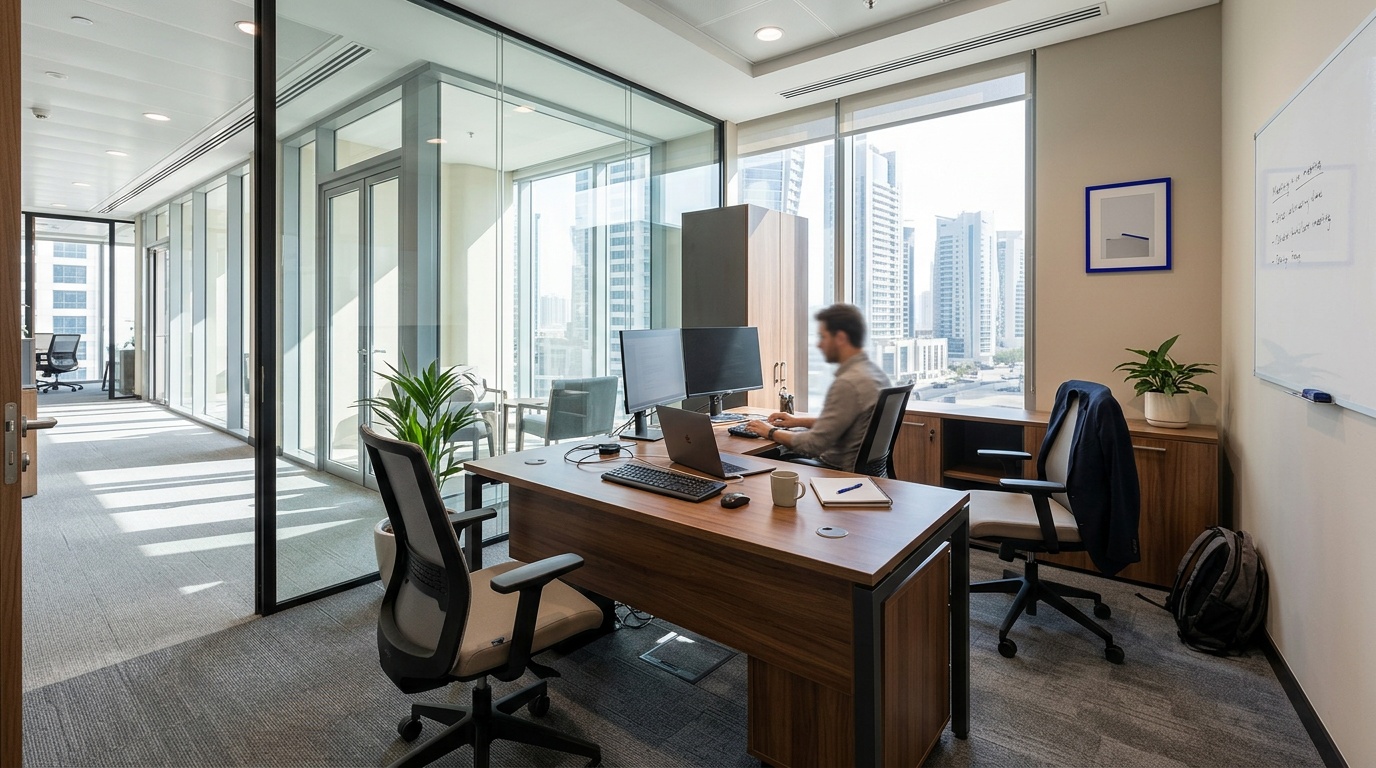
    Last reviewed: June 12, 2026 by the Hotdesk Team
  • Book the Best Conference Facilities Near Me. Instant Tips

    Book the Best Conference Facilities Near Me. Instant Tips

    conference facilities near me

    Searching for conference facilities near me often starts with a simple need and turns into a logistical headache. You need a professional space for a team workshop, a client presentation, or a quarterly review. Yet the standard process involves a dozen phone calls, unanswered emails, and a pile of PDF proposals that lack transparent pricing. The friction of traditional booking methods costs you time and energy that should be directed toward your actual business goals.

    Key Takeaways

    • Traditional booking processes for conference rooms waste hours on phone calls and emails that should go toward your actual work.
    • Transparent pricing is often missing from standard proposals, making it harder to compare options quickly.
    • A streamlined booking platform removes the friction of back and forth communication and hidden costs.
    • Choosing a conference facility should prioritize speed and clarity, not just proximity to your office.
    • Modern tools let you secure a professional space in minutes instead of days, keeping your focus on the meeting itself.

    At Hotdesk, we believe movement should not cost you a sense of continuity. Whether you are a finance director traveling between cities or a startup founder hosting an investor meeting, the infrastructure supporting your work should move with you. This guide breaks down how to find, evaluate, and book the right space instantly, ensuring you never have to choose between professionalism and convenience again.

    Why calling around for conference room rates no longer makes sense

    The hidden cost of phone calls and email requests

    The traditional method of booking a meeting room relies on a Request for Proposal (RFP) or a series of back-and-forth emails. This process creates a “waiting tax” on your productivity. While you wait for a venue coordinator to check a calendar or calculate a quote, your project timeline slips. Industry data suggests that 75% of business travelers prefer instant booking for meeting spaces because the legacy model is simply too slow for modern workflows. Every minute spent on hold or drafting follow-up emails is a minute lost from your core responsibilities.

    Time is your most valuable asset. If you spend three hours contacting five different venues to compare rates, you have effectively added a full day of labor to your week without generating any revenue. Instant booking platforms eliminate this administrative overhead entirely.

    Real-time pricing changes the dynamic from “asking for permission” to “making a decision.” When you view a space online, you see the exact cost for the specific duration you need, whether it is for two hours or a full day. This transparency allows you to filter options based on your budget immediately. You no longer have to worry about hidden fees for basic amenities because the price is presented upfront. This shift empowers you to manage your own booking experience with the same precision you apply to your financial planning.

    What you gain when you book without friction

    Booking without friction means your workspace travels with you. When you use a platform that offers instant access, you gain a layer of consistency across different cities. You know what to expect regarding quality, Wi-Fi speed, and support. This continuity is the outcome of good infrastructure. It allows you to focus on the meeting itself rather than the logistics surrounding it. For example, a small startup recently booked a half-day meeting in Dubai through a streamlined platform, avoiding the high minimums often required by luxury hotels.

    Conference facilities near me: a transparent look at what you actually pay

    Conference facilities near me: a transparent look at what you actually pay

    Hourly, half-day, full-day. How rates break down across city tiers

    Understanding the cost structure of conference facilities near me requires looking at city tiers and duration. In major metropolitan areas, high-end hotel conference rooms often command premium rates. In contrast, mid-tier cities or suburban locations might offer similar quality at lower costs. Most professionals find that a half-day (4 hours) or full-day (8 hours) booking provides the best value, as many venues offer discounted block rates compared to hourly rentals. Coworking spaces generally present a more affordable alternative than traditional hotel ballrooms or boardrooms.

    City Tier Small Room (6-10 ppl) Medium Room (15-25 ppl) Large Suite (30+ ppl)
    Tier 1 (NYC, SF, London) Premium rate Higher rate Highest rate
    Tier 2 (Austin, Chicago, Berlin) Moderate rate Mid-range rate Higher rate
    Tier 3 (Regional Cities) Budget rate Moderate rate Mid-range rate

    What amenities are included (and what often costs extra)

    Transparency in amenities is just as important as the room rate. Most professional hotel conference room rental near me searches yield spaces that include standard Wi-Fi and a basic AV setup. However, high-definition screens, advanced sound systems, and whiteboard supplies often come with extra charges. Many meeting planners consider Wi-Fi and AV equipment among the most important amenities, yet these are frequently used as upsell opportunities. Always verify if the price includes technical support, as troubleshooting a failed presentation connection can derail an entire meeting. Look for venues that bundle these essentials into the base rate to avoid bill shock.

    Small rooms vs. large conference suites: when each makes sense

    Choosing between a small room and a large suite depends on the nature of your gathering. For intimate strategy sessions or one-on-one client meetings, a small conference room for rent near me is usually sufficient and more cost-effective. These spaces foster better communication and focus. Large conference suites are necessary for all-hands meetings, training sessions, or events requiring breakout areas. Renting a space that is too large for your group can feel impersonal and drain your budget. A focused search for small conference rooms for rent near me often yields high-quality environments that feel more exclusive and private.

    For those seeking a blend of professional quality and flexible terms, consider the Creativespace Zurich Meeting Event Facilities. This venue exemplifies how modern spaces provide high-end amenities without the rigid contracts of traditional hotels. Whether you are looking for conference facilities near California or international options, the principle remains the same: pay for the space you need, for the time you need it, with no hidden friction.

    Hotel conference rooms, coworking meeting rooms, and free community spaces. How to choose

    Hotel conference facilities: professionalism at a premium

    Selecting the right environment for your meeting begins with understanding the distinct advantages of hotel conference centers. These venues provide a level of institutional prestige that is difficult to replicate. When you host a client offsite at a Marriott or a Hilton, you benefit from established valet parking, on-site catering, and professional reception staff. This choice is ideal for high-stakes pitches, board meetings, or events where the external perception of your brand matters most. Many hotels require a minimum food and beverage spend that can significantly inflate your total budget.

    Coworking meeting rooms: flexible, affordable, instant

    For most day-to-day business needs, coworking meeting rooms offer a superior balance of quality and value. These spaces are designed for the modern professional who prioritizes functionality and speed. Unlike hotels, which often require a signed contract and a deposit weeks in advance, coworking spaces typically offer instant booking. You can secure a room for a two-hour strategy session or a full-day workshop in seconds. Coworking meeting rooms tend to be more affordable than hotel conference rooms for small groups of six to ten people. This affordability does not mean a sacrifice in quality. Most coworking venues provide high-speed Wi-Fi, ergonomic furniture, and modern AV equipment as standard inclusions, making them a pragmatic choice for teams that move quickly.

    Free community meeting rooms: when they work and when they don’t

    Budget constraints often lead organizations to search for free community meeting rooms near me. Public libraries, recreation centers, and local chambers of commerce frequently offer meeting spaces at no cost. Many community libraries and recreation centers offer free meeting rooms in cities across the US. These venues are excellent for non-profit board meetings, community outreach, or small support groups. The primary drawback is the lack of flexibility and professional amenities. You rarely find high-end presentation screens, whiteboard walls, or premium coffee service in these locations. The booking process is often manual and requires booking weeks in advance, which conflicts with the need for agility in most business operations.

    Pros

    • Venue provides a professional atmosphere suitable for high-level client presentations
    • Integrated services include catering, reception, and technical support staff
    • High-speed internet and standard AV equipment are typically part of the package

    Cons

    • Premium pricing often includes hidden fees for basic services or mandatory catering minimums
    • Rigid cancellation policies and lengthy contract requirements create administrative friction
    • Spaces often feel generic and lack the creative energy of a dedicated workspace

    Comparison: three venue types side by side

    To make an informed decision, you must weigh the specific requirements of your event against the strengths of each venue category. If your priority is a polished, corporate environment and you have a generous budget, a hotel remains the standard. If you need to move fast, require transparent pricing, and want a creative atmosphere, a coworking space is the optimal path. For internal team meetings where budget is the only constraint, community centers provide a viable, no-cost solution. The following table provides a direct comparison to help you match your needs to the right location.

    Feature Hotel Conference Rooms Coworking Meeting Rooms Free Community Spaces
    Average Hourly Cost Premium Affordable $0
    Booking Lead Time 1 – 4 weeks Instant to 24 hours 2 – 6 weeks
    AV and Wi-Fi Quality High (often with tech support) High (self-service) Basic (often unreliable)
    Cancellation Flexibility Low (strict penalties) High (often free up to 24h before) Medium (depends on the library)
    Best Use Case Investor pitches, formal galas Team sprints, client workshops Non-profit meetings, study groups

    When evaluating conference facilities near me, it is helpful to look at specific examples of how these categories perform in real-world scenarios. For those seeking a blend of professional quality and flexible terms, consider the Creativespace Zurich Meeting Event Facilities. This venue exemplifies how modern spaces provide high-end amenities without the rigid contracts of traditional hotels. Whether you are looking for conference facilities near California or international options, the principle remains the same: pay for the space you need, for the time you need it, with no hidden friction.

    A pre-booking checklist: what to confirm before you reserve

    AV equipment and connectivity essentials

    Nothing disrupts a meeting faster than a failed presentation or a weak internet signal. Before you finalize your booking for conference facilities near Texas or any other location, verify the specifics of the audiovisual setup. Do not assume that a screen and a projector are sufficient for your needs. Confirm the type of connections available, such as HDMI or USB-C, and ask about the availability of adapters. Many meeting planners identify Wi-Fi and AV equipment as among the most important amenities, yet these are frequently used as last-minute upsells. Ensure the venue provides a dedicated high-speed connection rather than a shared guest network, which can become unstable with multiple users.

    Capacity, layout, and accessibility

    A common mistake in booking is selecting a room based solely on the maximum number of chairs it can hold. Instead, focus on the layout that supports your meeting’s objective. A boardroom style encourages discussion, while a theater style is better for presentations. Check the actual square footage to ensure attendees have enough space to move comfortably. Additionally, confirm that the venue complies with accessibility standards. If you have attendees with mobility challenges, verify the presence of ramps, elevators, and accessible restrooms. Overlooking these details can lead to a frustrating experience for your guests and reflect poorly on your organizational skills.

    Parking, catering, and on-site support

    The logistics of arrival and sustenance are often secondary thoughts during the booking process, but they are critical to the attendee experience. Investigate the parking situation at your chosen location. Is there a dedicated lot, or will attendees need to use a public garage? If you require food and beverages, clarify whether the venue allows external catering or if you must use their in-house service. Finally, identify a point of contact for the day of the event. Knowing there is a dedicated on-site manager who can assist with unexpected issues, such as a broken coffee machine or a missing easel, provides peace of mind and ensures your event runs smoothly.

    Verify the cancellation window. Always check the specific terms regarding cancellations and modifications. Many venues offer a 24-hour or 48-hour grace period for a full refund. Understanding these terms protects your budget from unforeseen changes in your schedule.

    Cancellation policy and flexibility terms

    In a dynamic business environment, plans can change rapidly. The final step in your pre-booking checklist should be a thorough review of the cancellation and refund policy. Some venues offer full refunds if you cancel within a certain window, while others may charge a percentage of the total booking cost. Look for spaces that provide a “pay-as-you-go” or a flexible cancellation model. This is particularly important when booking conference facilities near me in volatile weather seasons or during periods of high travel uncertainty. A transparent policy is a strong indicator of a customer-centric venue that values your continuity.

    How to book a conference room near you in three clicks

    How to book a conference room near you in three clicks

    The transition from searching for conference facilities near me to actually standing in a professional meeting room should be seamless. In my experience building Hotdesk, I have seen that the most effective users do not treat booking as a project. They treat it as a utility. By using a centralized platform, you bypass the friction of fragmented searches and manual outreach. The goal is to move from intent to confirmation without the cognitive load of navigating multiple websites or waiting for sales representatives to return your calls. Modern infrastructure allows you to secure high-quality spaces like the Creativespace Zurich Meeting Event Facilities with the same ease you would use to order a ride or book a flight.

    Finding and filtering spaces by location, size, and budget

    Efficiency begins with precise filtering. When you open the platform, the first step is to define your geographic parameters. Whether you need conference facilities near California for a regional team sync or a boardroom in a specific downtown district, the map interface provides immediate visual context. You should filter by capacity first to ensure the environment supports your group size. Following this, apply budget filters to align the search with your financial constraints. This approach prevents you from falling in love with a space that exceeds your company’s expense policy. By narrowing the field based on these three pillars, you reduce hundreds of potential options to a curated list of three or four perfect matches in seconds.

    Reviewing real-time availability and transparent pricing

    Once you have a shortlist, the focus shifts to availability. The legacy model of “requesting a quote” is replaced by a live calendar. You can see exactly which hours are open, allowing you to schedule your meeting around the space rather than engaging in a week of email coordination. Transparent pricing is the cornerstone of this step. You will see the total cost for the duration of your stay, including any mandatory service fees. This clarity is essential for financial discipline. For example, if you are looking at the Creativespace Zurich Meeting Event Facilities, you can immediately identify if the hourly rate fits your project budget. This data allows you to make an informed decision without the fear of hidden surcharges for basic amenities or technical support.

    Three Steps to Secure Your Workspace

    1. Search and Filter: Enter your desired city and use the capacity filter to find rooms that fit your group size. Sort by “Instant Booking” to see venues that do not require manual approval.
    2. Select Your Slot: Choose your date and specific time block on the live calendar. Review the list of included amenities, such as high-speed Wi-Fi or presentation screens, to ensure the space meets your technical needs.
    3. Confirm and Pay: Review the final price and cancellation policy. Complete the secure checkout to receive an instant confirmation email containing access instructions, Wi-Fi passwords, and arrival details.

    Booking instantly and managing your confirmation

    The final click completes the transaction and secures your spot. Unlike traditional conference facilities near me that might take 24 hours to confirm, an instant booking platform provides immediate peace of mind. Your confirmation is more than just a receipt. It is a digital key that includes everything you need for a successful day. This includes the exact address, parking instructions, and contact details for the on-site manager. Managing your booking through a central dashboard also allows for easy modifications. If your meeting runs long or you need to reschedule, you can often extend your time or move the date directly from your phone. This level of control ensures that your workspace remains a flexible asset rather than a rigid commitment.

    Looking ahead, the demand for conference facilities near me will only become more localized and specialized. As teams become more distributed, the ability to find a professional home for a day in any city becomes a competitive advantage. By mastering the three-click booking process, you ensure that your team always has the infrastructure it needs to perform. The focus remains the same: continuity of work through reliable, accessible environments. The future of the office is not a single building, but a network of ready-to-use spaces that respond to your movement. For a deeper understanding of how these spaces function, you can read about conference room design and best practices on Wikipedia.

    References

    Frequently Asked Questions

    Where can I hold a meeting for free?

    Free meeting spaces are available at public libraries, community centers, or some coworking spaces offering trial passes. For professional meetings, free options often lack reliable Wi-Fi, privacy, or AV equipment. Hotdesk provides affordable instant-bookable spaces that balance cost and quality without hidden fees.

    How to get a free venue for an event?

    Getting a free venue for an event typically requires sponsorship, bartering, or using public spaces like parks or libraries. For business events, free venues may not offer the professionalism or amenities you need. Platforms like Hotdesk offer transparent pricing so you pay only for the space and time you actually use.

    How much does it cost to hold a conference at a hotel?

    Hotel conference room costs vary by city tier and room size. In Tier 1 cities like New York or London, a small room for 6-10 people can cost a premium hourly rate, while half-day or full-day bookings often provide better value. Always verify what amenities are included to avoid unexpected charges for Wi-Fi or AV equipment.

    Where can I go to have a private meeting?

    Private meetings can be held at coworking spaces, dedicated conference centers, or hotel business centers. For instant booking with transparent pricing, platforms like Hotdesk list small conference rooms for rent near you that offer privacy and professional amenities without the hassle of traditional RFPs.

    What is the 40 20 40 rule for meetings?

    The 40 20 40 rule suggests spending 40% of meeting time on preparation, 20% on the meeting itself, and 40% on follow-up. This framework helps maximize productivity. When booking conference facilities, choose a space that supports efficient preparation and follow-up with good AV and reliable Wi-Fi.

    Why is instant booking better for conference rooms?

    Instant booking eliminates the waiting tax of phone calls and emails by showing real-time pricing and availability. You can book a conference room near you in minutes without back-and-forth negotiations. This saves time and lets you focus on your meeting content rather than logistics.

    About the Author

    MK

    Mohamed Khaled

    Forbes 30 Under 30

    Founder & CEO at Hotdesk & Co-founder, DESK Token

    Mohamed Khaled is the Founder and CEO of Hotdesk, the on-demand workspace platform providing access to coworking spaces and flexible offices across more than 120 countries.

    He spent nearly a decade at PwC before moving into financial leadership at SWVL, where he led the company’s $1.5 billion Nasdaq listing, the first Unicorn from thr Middle East to go public in the United States.

    A Forbes 30 Under 30 honoree, Mohamed built Hotdesk from a side project into a global platform, leading a team of more than 50 and expanding into international markets, including the acquisition of Spain-based coworking marketplace YADO.

    Also being Co-founder and President of DESK Token, the world’s first asset backed property investment and utility hybrid token, Mohammed is focused on building infrastructure that unlocks underutilized assets – from meeting rooms to private offices and full on buildings – while creating space for the future of work.
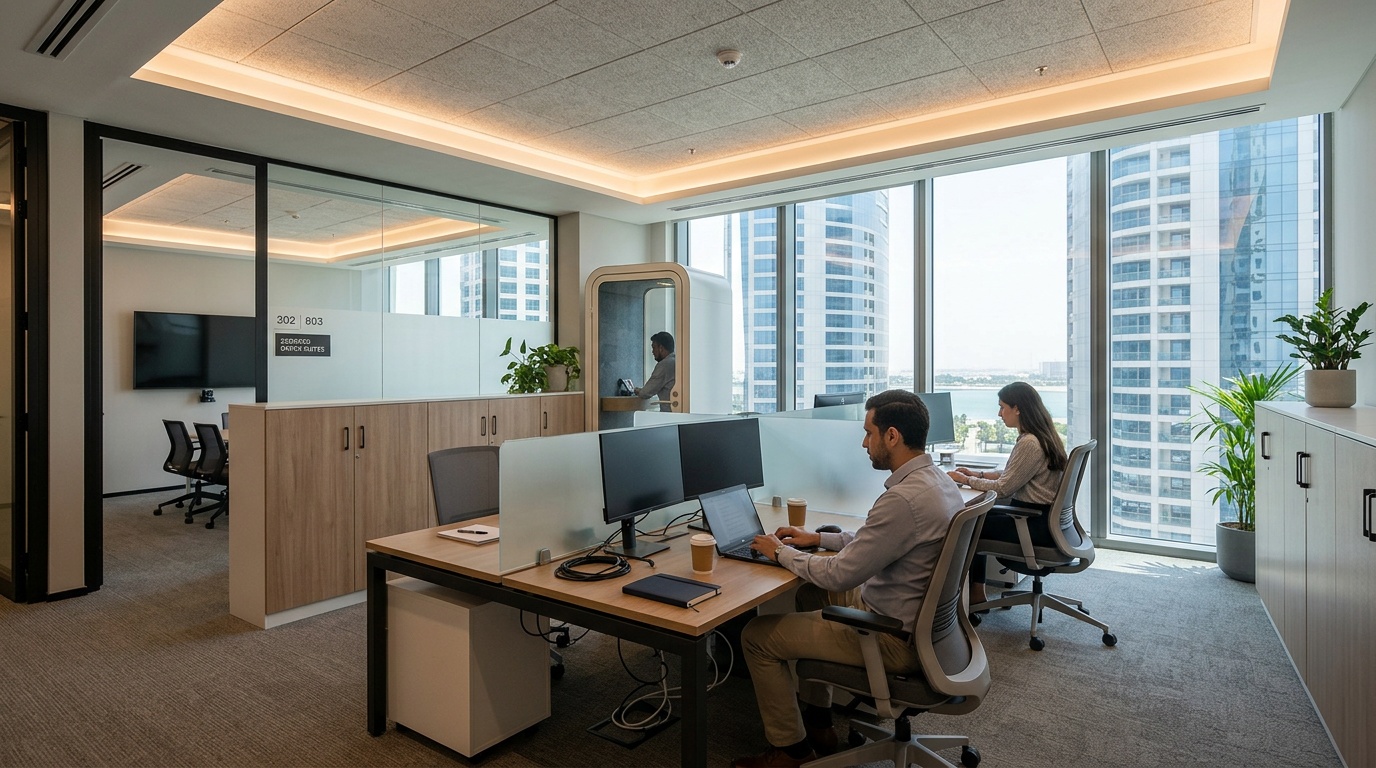
    Last reviewed: June 12, 2026 by the Hotdesk Team