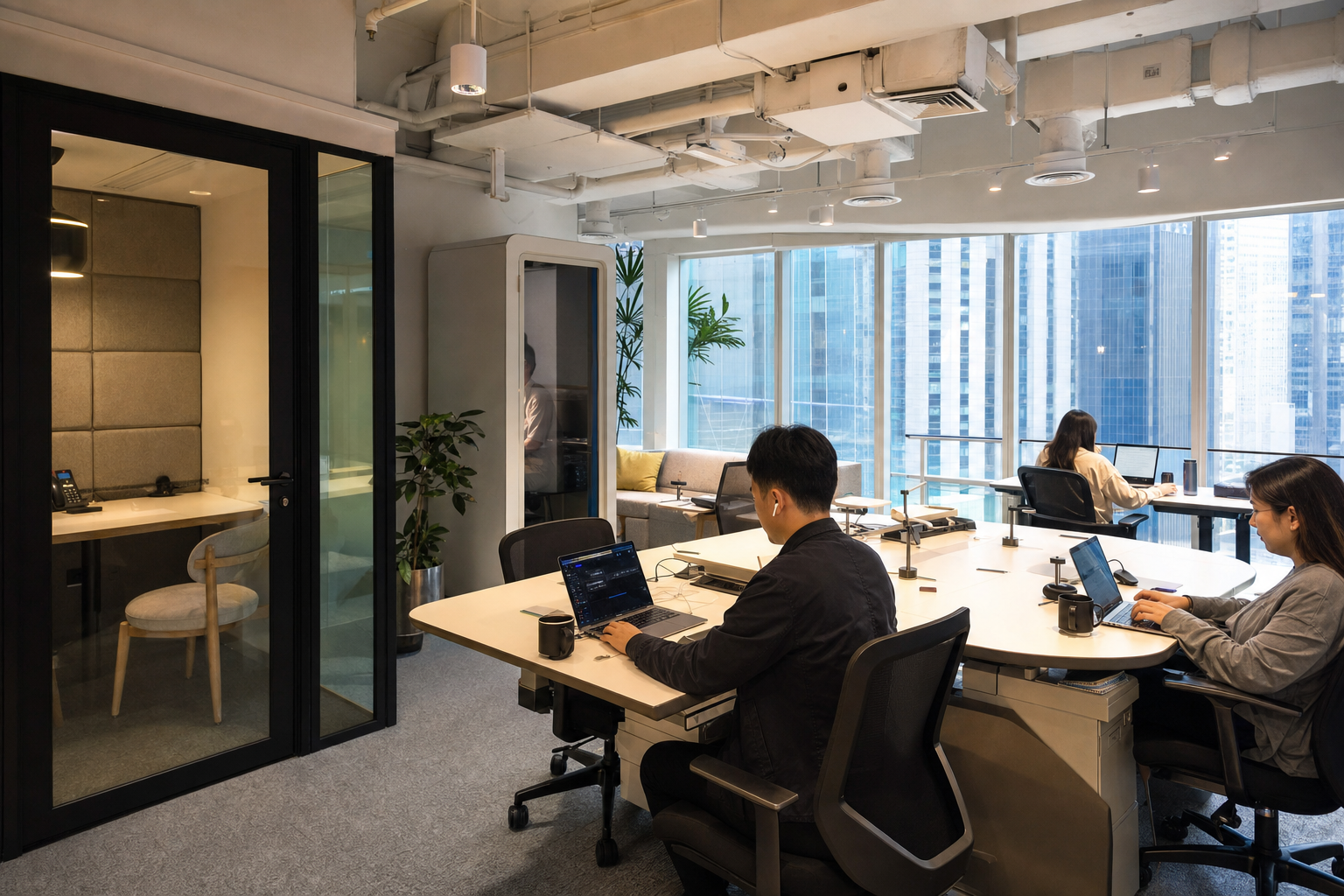
What's a good coworking space in Hong Kong if I work mostly remotely but occasionally need a professional address?
What’s a good coworking space in Hong Kong if I work mostly remotely but occasionally need a professional address? The practical answer is a workspace system, not a permanent desk. Separate your business address from your physical work area, then pay for meeting rooms, private offices, or day access only when your schedule requires them.
Key Takeaways
- What’s a good coworking space in Hong Kong if I work mostly remotely but occasionally need a professional address?
- The practical answer is a workspace system, not a permanent desk.
- Separate your business address from your physical work area, then pay for meeting rooms, private offices, or day access only when your schedule requires them.
Hong Kong’s commercial property market makes this distinction especially useful. A remote consultant, overseas founder, or distributed team may need local credibility, mail handling, and a place for client meetings without carrying the cost of an unused office lease. Infrastructure should travel with the user, while each location handles the specific task required there.
The Hybrid Remote Setup: Decoupling Your Professional Address From Your Desk
Choose a legitimate virtual office or registered address service for correspondence and company administration, then add coworking access for the days you need a physical setting. This arrangement suits people who work from home, travel between cities, or visit Hong Kong only for selected meetings, workshops, and focused work sessions.
Do You Need a Full-Time Membership Just for a Business Address?
No. A professional address and a dedicated workstation solve different problems. The address supports public records, client confidence, invoices, banking correspondence, and official mail. A desk supports concentration, collaboration, video calls, and in-person appointments. Paying for both through a full-time membership can leave you funding capacity that remains unused most of the month.
Ask the provider whether its address service is separate from desk access. Confirm the building location, suite details, permitted business use, visitor process, and mail procedures before paying. A prestigious address has limited value if reception cannot identify your company, notify you about official correspondence, or provide a reliable method for collecting documents.
Combining a Virtual Address With Workspace Access
The hybrid model creates two connected layers. The virtual address gives your business a stable local point of contact. Workspace access supplies a meeting room or desk when the work itself requires a professional environment. If available under current terms, Hotdesk may be considered as one way to look for workspace for a specific session rather than treating it as a permanent home base. The same logic applies across locations, including Coworking Naubostik, which illustrates how a workspace can be reserved for a specific session rather than treated as a permanent home base.
What’s a good coworking space in Hong Kong if I work mostly remotely but occasionally need a professional address? Look for flexible access, clear address terms, dependable reception, meeting-room availability, strong internet, and transparent booking conditions. Coworking Naubostik is another Hotdesk workspace example of the broader on-demand model: reserve the environment needed for the task, then return to your normal remote setup when the task is complete.
Hong Kong Company Registration: Address Compliance and Mail Handling
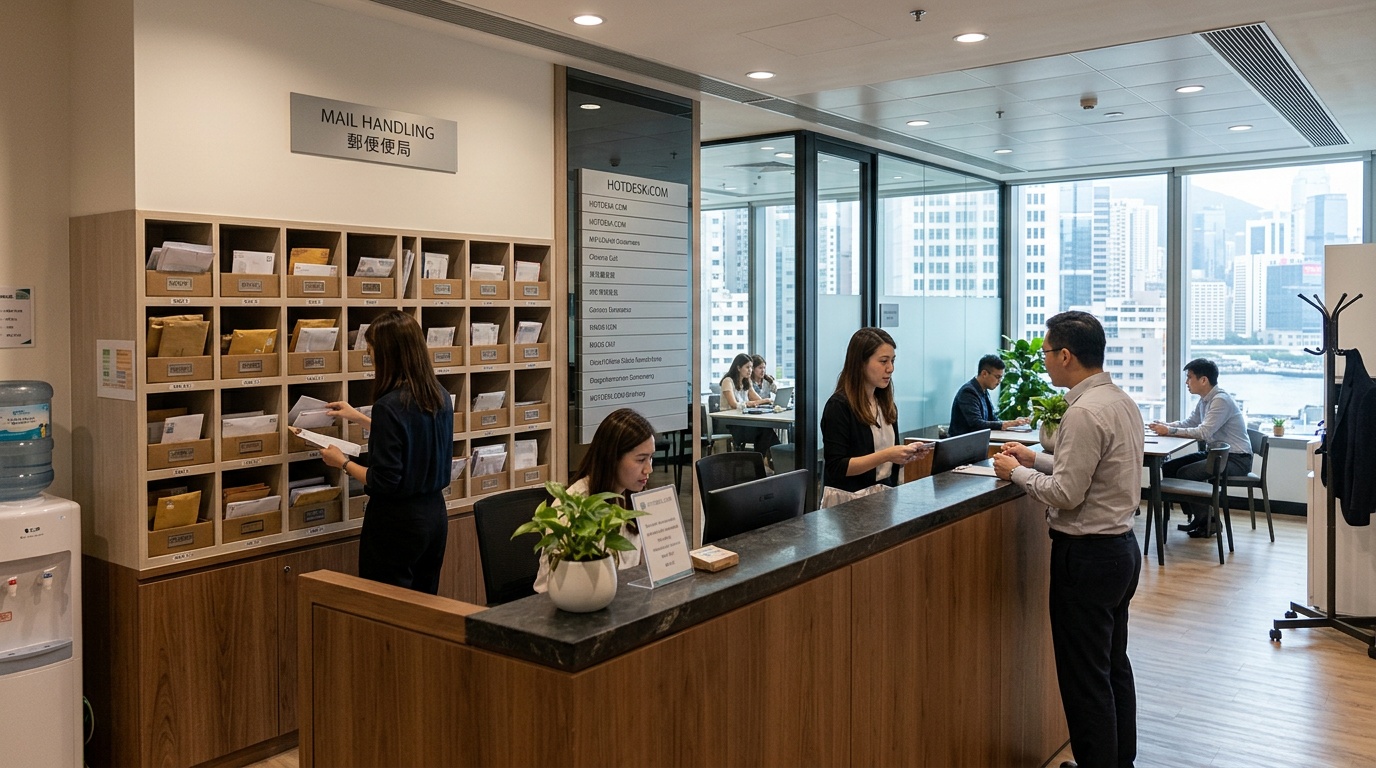
Can I Use a Coworking Address for My Hong Kong Business Registration?
A coworking address may be suitable for Hong Kong company registration if the provider supplies a legitimate physical local address and permits that use under its service terms. The Hong Kong Companies Registry requires a registered office address in Hong Kong. A P.O. Box alone does not satisfy that requirement. Review the latest guidance from the Hong Kong Companies Registry and confirm the arrangement with your company secretary or qualified adviser.
Do not assume that a mailing address, virtual office label, or reception desk automatically qualifies as a registered office. Request written confirmation of the address format, registration permission, occupancy details, and document-handling process. Company incorporation, banking, licensing, tax correspondence, and statutory notices may involve different requirements, so your provider should explain the scope of its service without making promises outside its authority.
Evaluating Mail Handling, Scanning, and Forwarding Policies
Mail handling is an operational system, not a decorative amenity. Official letters can contain filing deadlines, renewal notices, identity checks, or requests from government departments. Before selecting a service, examine how staff record incoming items, how quickly they notify you, and how securely they store documents awaiting collection or forwarding.
- Confirm that the provider accepts government, banking, legal, and courier correspondence.
- Check whether your company name appears on the mailbox, directory, or reception record.
- Ask how mail arrival is logged and whether notifications include the sender and receipt date.
- Review scanning rules, file formats, image quality, privacy controls, and document deletion periods.
- Verify forwarding destinations, shipping fees, dispatch schedules, and tracking availability.
- Ask who may collect physical mail and which identification documents are required.
- Confirm the process for rejected, oversized, registered, or confidential items.
- Identify an escalation contact for missing documents or delivery disputes.
What’s a good coworking space in Hong Kong if I work mostly remotely but occasionally need a professional address? It is a provider that treats compliance, reception, data privacy, and physical access as measurable processes. A low monthly price cannot compensate for a missed statutory notice or an address that fails your registration requirements.
Matching District Infrastructure to Your Business Needs
What’s a good coworking space in Hong Kong if I work mostly remotely but occasionally need a professional address? District selection should follow the work requirement, not only the appearance of the building. Central may support a finance-facing brand, while Kowloon can offer practical access for a distributed team. Review address recognition, transit connections, client expectations, meeting-room availability, building quality, and likely occupancy before choosing a location.
Central and Admiralty: Financial and Corporate Considerations
Central and Admiralty may suit companies whose visitors include banks, investors, legal advisers, multinational clients, or senior executives. When assessing these districts, review proximity to financial institutions, government offices, hotels, office towers, transit connections, pedestrian routes, and dining options.
The trade-off is cost. A prestigious address can create a large fixed commitment even when the founder works remotely. A virtual office service paired with occasional private rooms may preserve the address benefit without requiring a dedicated desk. Confirm the exact suite and reception arrangement before using the address in client materials.
Wan Chai and Quarry Bay: Operational Efficiency and Accessibility
Wan Chai may suit teams that need a central location with a mix of commercial, hospitality, and transit infrastructure. It connects to Central, Causeway Bay, and the harborfront, while its restaurants and hotels support informal meetings. Quarry Bay may be useful for technology, media, and corporate teams that value modern office buildings, access to the Island Eastern Corridor, and proximity to large employers.
These districts may provide an operating balance that differs from Central. The right workspace should still be tested against rush-hour travel, elevator access, sound levels, cellular coverage, and the availability of enclosed rooms. A lower desk rate has limited value if a client meeting requires an expensive last-minute room elsewhere.
Kowloon and West Kowloon: Practical Location Considerations
Kowloon and West Kowloon can work well for remote businesses that need a Hong Kong presence without positioning themselves directly in the core financial district. Tsim Sha Tsui offers hospitality, retail, and client-service infrastructure. West Kowloon provides rail connectivity through the high-speed rail station and access across the harbor, which may be useful for visitors arriving from mainland China or other parts of the city.
These areas may provide usable floor space, meeting capacity, and operating costs that differ from Central. Address perception still depends on the exact building, postal details, reception standards, and service quality. Choose based on visitor routes and business activity rather than assuming that a district label alone guarantees credibility.
| District | Potential fit | Infrastructure strengths | Cost consideration |
|---|---|---|---|
| Central and Admiralty | Finance, legal, investor, and executive meetings | Financial institutions, office buildings, transit access, hotels, government proximity | Address and office costs may be higher |
| Wan Chai and Quarry Bay | Technology, media, corporate, and hybrid teams | Island-wide transit, office buildings, dining, business services | Operating costs depend on the building and service |
| Kowloon and West Kowloon | Growing firms, cross-harbor teams, and mainland-facing visitors | Rail links, hotels, retail, and cross-harbor accessibility | May offer different fixed-cost options while preserving city access |
Cost Analysis: Traditional Leases vs. Virtual Offices and Workspace Sessions
The True Cost of a Hong Kong Office Lease
A traditional lease charges for continuity, even when your work pattern does not require daily occupancy. Rent is only one line item. A tenant may also need a security deposit, fit-out, furniture, utilities, internet service, cleaning, insurance, access control, repairs, business rates, and administrative support. Premium towers can add management rules, signage limits, visitor registration procedures, and meeting facilities that are billed separately.
Monthly coworking memberships reduce setup work but still create a recurring capacity charge. That structure makes sense for a team that uses desks most weekdays. A remote professional who visits Hong Kong occasionally should calculate the unused portion of the membership, along with travel, room bookings, and storage fees. The relevant cost is not the advertised desk price. It is the total amount paid for access that the team actually consumes.
Calculating the ROI of Pay-As-You-Go Workspace
Pay-as-you-go workspace changes the calculation from reserved capacity to completed tasks. A remote worker can maintain a professional address separately, then book a desk, phone booth, private office, or conference room for a defined period, subject to the provider’s current availability and terms. Hotdesk may be one option to investigate for finding suitable workspace, but its current booking features and inventory should be confirmed before relying on them.
What’s a good coworking space in Hong Kong if I work mostly remotely but occasionally need a professional address? It is a location and pricing structure that keeps fixed costs low while preserving access for high-value moments, such as a client presentation, hiring interview, board meeting, or focused planning day. Calculate ROI by comparing the monthly fixed cost avoided with the number of sessions purchased, then include the value of reliable internet, reception, privacy, and reduced setup time.
| Model | Fixed commitments | Variable charges | Best operating pattern |
|---|---|---|---|
| Traditional office lease | Rent, deposit, fit-out, utilities, furnishings, maintenance | Extra rooms, repairs, expansion, visitor services | Daily occupancy with predictable team size |
| Monthly coworking membership | Recurring desk or access fee | Meeting rooms, printing, storage, guest access | Regular weekly use without a private lease |
| Virtual address plus workspace sessions | Address and mail-service fee | Desk, office, and meeting-room bookings | Remote work with occasional physical attendance |
The relevant financial signal is utilization. If a desk sits empty, its rent still runs; if a booked room is used for a defined meeting, the payment has a clear operational purpose. Infrastructure travels with the user, and the workspace becomes a controlled input rather than a permanent obligation.
Deploying Your Hong Kong Workspace System: A Step-by-Step Guide
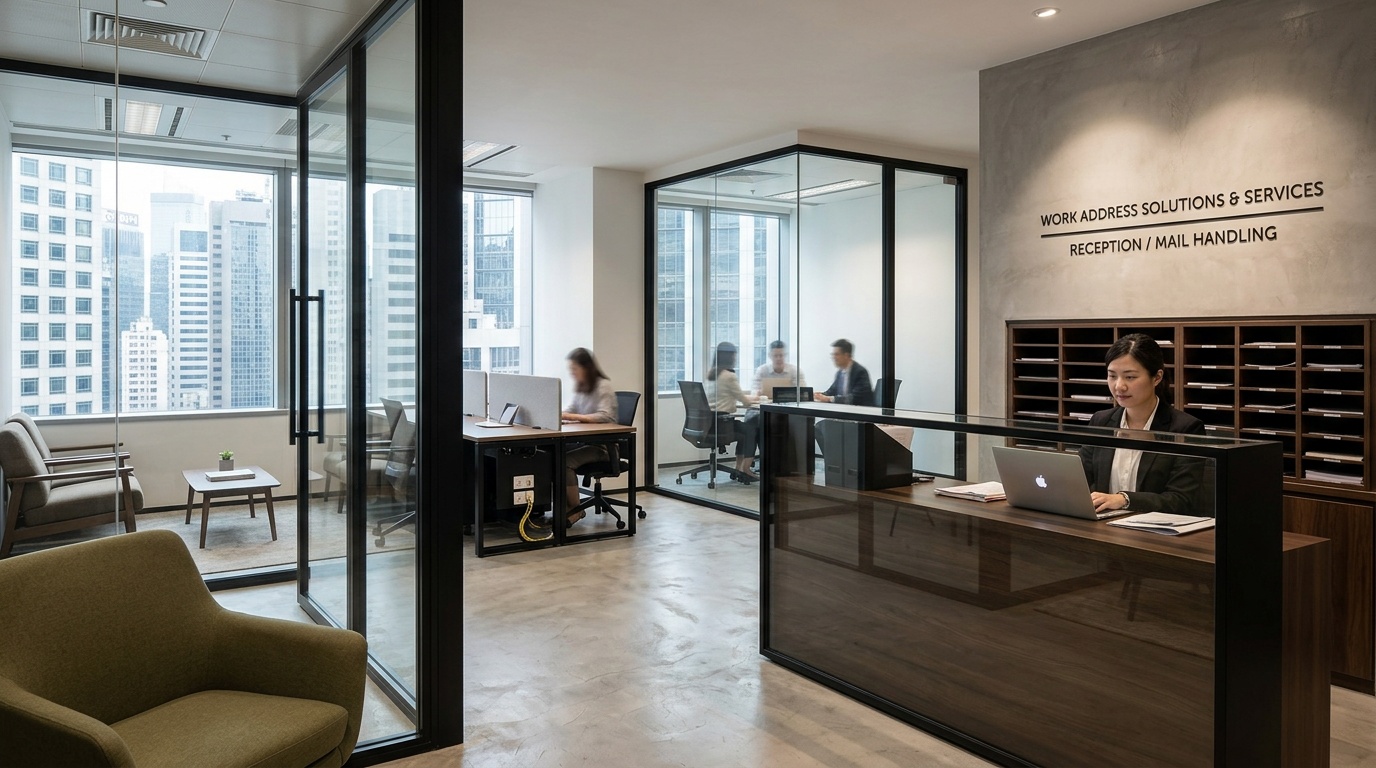
Build the arrangement in layers: establish the address first, then add physical workspace according to your calendar. This sequence prevents a common operating mistake, paying for a permanent desk before confirming the registration service, mail workflow, meeting requirements, and visitor experience your business actually needs.
Start with the administrative foundation, document the service terms, and test the booking process before an important client visit. Infrastructure travels with the user when each component has a defined job, clear ownership, and a predictable handoff between digital administration and physical workspace.
Step 1: Secure Your Virtual or Registered Address
List the activities that require a Hong Kong address. Company registration, banking correspondence, invoices, government notices, courier deliveries, and client-facing contact details may each involve different documentation. Ask the provider whether the address is permitted for your intended use, whether the location is a physical office, and whether the contract identifies the suite, floor, and building accurately.
Request the mail policy before submitting incorporation documents. It should explain receipt logging, notification timing, document scanning, forwarding destinations, collection authorization, identity checks, storage periods, and handling for registered or confidential mail. Keep the service agreement and written confirmation of permitted use with your corporate records. If the arrangement supports registration, confirm the final details with your company secretary or qualified adviser.
- Verify the physical Hong Kong location and complete address format.
- Confirm whether the service supports registered-office use or only general correspondence.
- Check reception hours, access rules, and the escalation contact for missing mail.
- Review scanning quality, privacy controls, forwarding fees, and delivery tracking.
- Ask how your company name will appear to visitors, couriers, and building reception.
Step 2: Source Meeting Rooms and Workspace Sessions
Map your likely work sessions by task rather than by habit. A video call may require a phone booth, a client presentation may require a private meeting room, and a full planning day may justify a dedicated desk. Note the preferred district, arrival time, internet requirements, screen or whiteboard access, guest capacity, noise conditions, and cancellation terms.
If its current terms and inventory meet your needs, you can investigate Hotdesk when searching for workspace by the hour or day. Check the booking confirmation for floor instructions, reception procedures, Wi-Fi details, room equipment, access windows, and any guest policy before traveling.
Run a small operational test before committing to a major meeting. Book one short session, check the route from the MTR, test the call environment, confirm visitor sign-in, and record the time required to reach the room. This is practical capacity planning: the workspace must support the task under real conditions, not only appear suitable in a listing.
Coworking Operators to Compare in Hong Kong
Hong Kong has workspace operators with different service structures and building footprints. Compare The Executive Centre, Eaton Club, and The Hive by address terms, room availability, reception coverage, privacy, and contract conditions rather than relying on the operator name alone.
For occasional users, an on-demand marketplace may add a separate access layer. Hotdesk may help users investigate desks, private offices, and meeting rooms without requiring a full-time membership, subject to current product availability and terms. The same booking principle appears in Coworking Naubostik: reserve a defined environment for a defined session, then release it when the work is complete. Coworking Naubostik is not a Hong Kong address service, but it illustrates how location access can remain independent from corporate administration.
Recommended Operating Model
Pros
- Separates registration and mail duties from desk occupancy.
- Allows meeting rooms and private offices to match specific tasks.
- Reduces unused capacity when most work happens remotely.
- Supports travel between districts and international work locations.
- Creates a clear audit trail through contracts and booking records.
Cons
- Address eligibility must be checked before company registration.
- Mail forwarding can add fees and delivery time.
- Popular rooms may require advance scheduling.
- Separate providers can create more administrative coordination.
- Workspace quality varies by building, room, and access period.
A suitable setup is one that survives a busy week: official mail is recorded, visitors know where to go, and physical workspace is available when a real task requires it. Start with the address, validate the document workflow, then use Hotdesk or a suitable operator for specific sessions. Systems over announcements determine whether a remote business can operate confidently across Hong Kong.
Leave a Reply