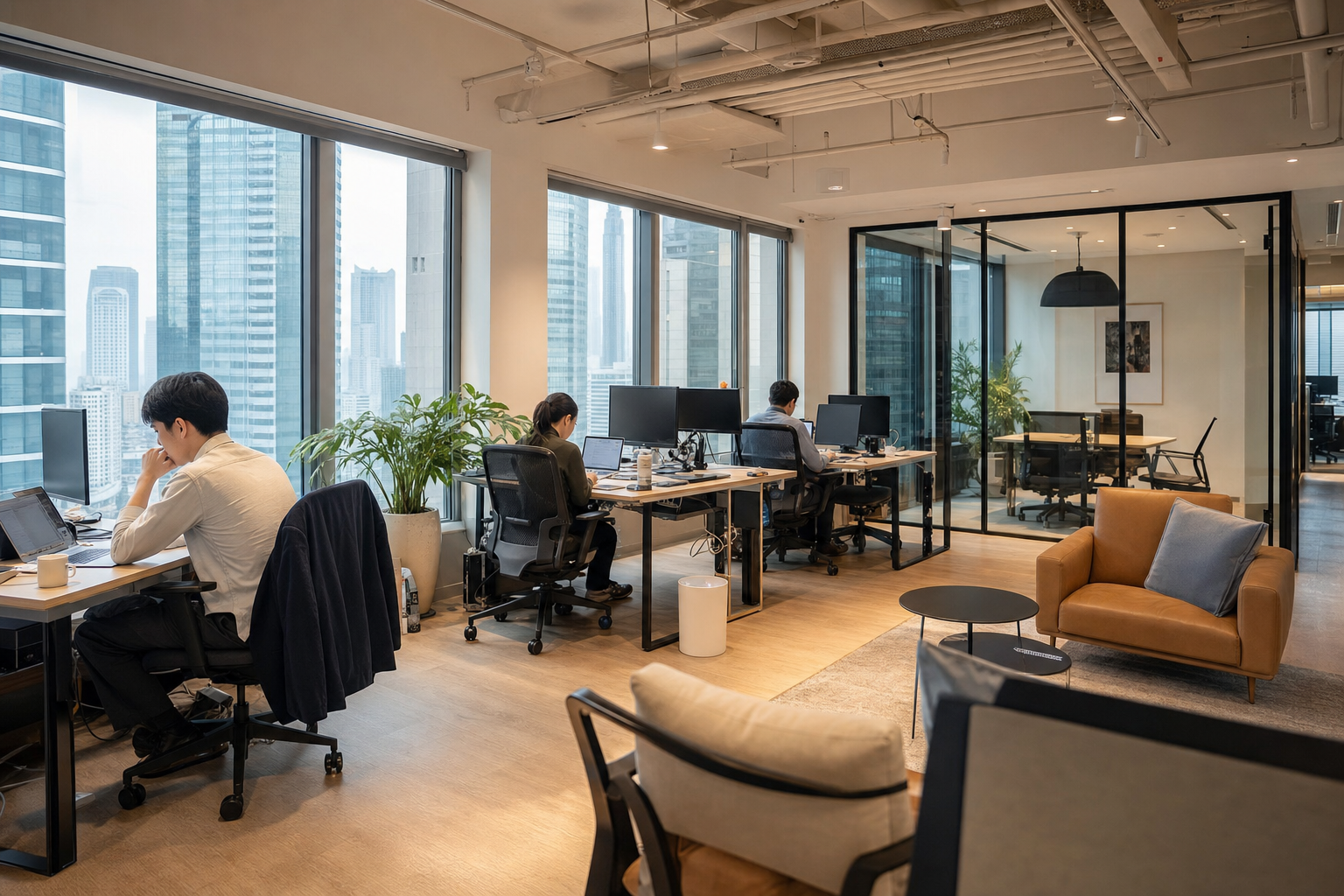
Coworking space in Hong Kong vs. traditional office lease: which is better for startups?
Every distributed system asks you to manage new failure modes. For a startup in Hong Kong, the workspace is one of them: a fixed lease can create predictable control, but it can also lock capital into rent, deposits, fit-out, furniture, and unused desks before the business has found its operating rhythm.
Key Takeaways
- The answer depends on headcount, cash runway, privacy requirements, and the speed at which the team may change.
- Flexible workspace usually reduces upfront risk, while a traditional office can make sense once space needs are stable and long-term.
- A small private office can also require construction work, desks, chairs, access control, utilities, cleaning, insurance, and technology setup.
Coworking space in Hong Kong vs. traditional office lease: which is better for startups? The answer depends on headcount, cash runway, privacy requirements, and the speed at which the team may change. Flexible workspace usually reduces upfront risk, while a traditional office can make sense once space needs are stable and long-term.
What is Coworking space in Hong Kong vs. traditional office lease: which is better for startups??
Coworking may provide access to desks, meeting rooms, internet, reception services, and a professional address, depending on the provider and plan, through a shorter commitment. Traditional leasing gives the company direct control over layout, access policies, branding, storage, and daily operations, but usually requires a 2 to 3 year commitment and a deposit equal to 2 to 3 months of rent, according to Statrys’ Hong Kong office rental guide.
Hong Kong’s prime office rents commonly average HKD 50 to HKD 100 per square foot each month, based on figures reported by The Executive Centre. A small private office can also require construction work, desks, chairs, access control, utilities, cleaning, insurance, and technology setup. Those costs arrive before the startup knows whether its team will remain the same size.
Coworking desks in Hong Kong generally range from HKD 3,000 to HKD 6,000 per month with core services included, according to Move and Stay. A virtual office with meeting-room access can suit a distributed team that needs a business address without daily seating. The right model is less about office style and more about matching fixed commitments to actual usage.
Benefits of Coworking space in Hong Kong vs. traditional office lease: which is better for startups?
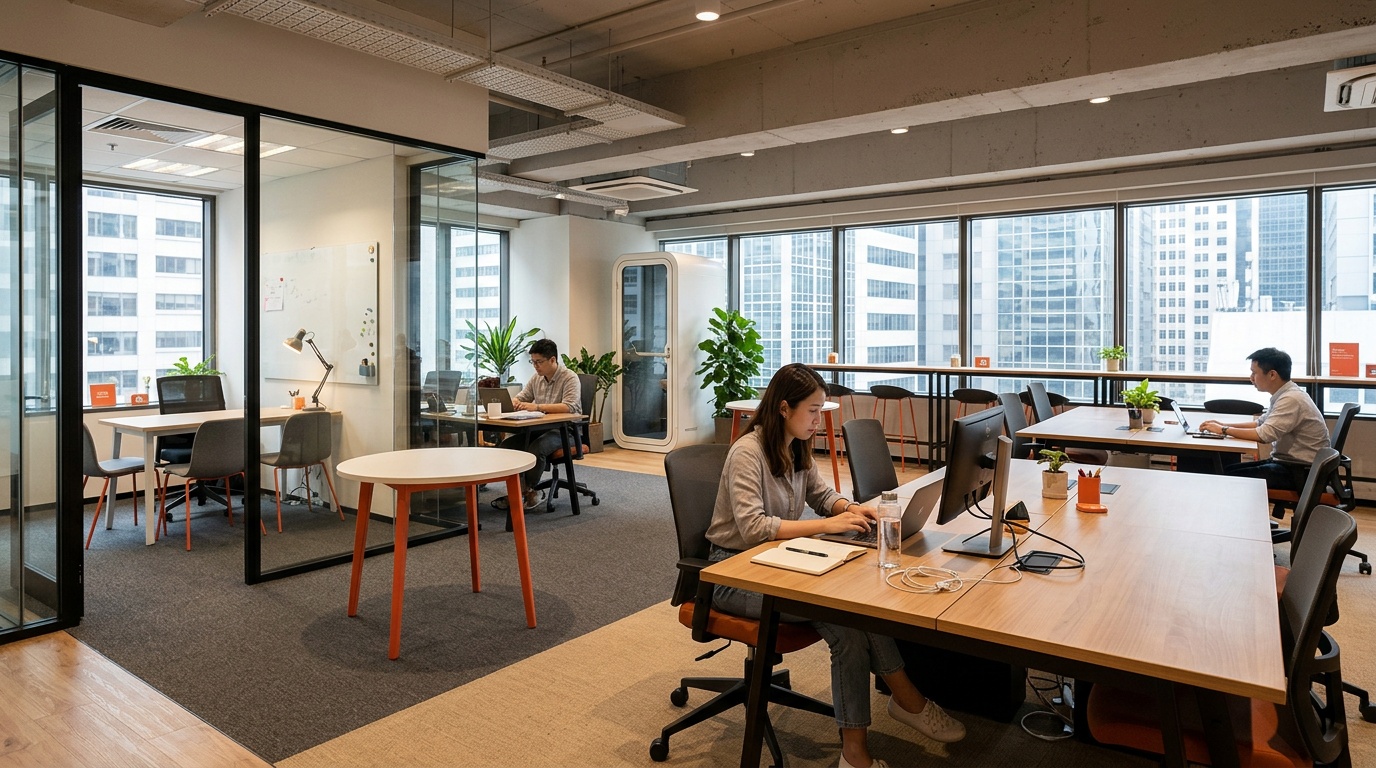
The first benefit is capital control. A monthly membership converts a large office project into a recurring operating expense. That can preserve cash for hiring, product development, licensing, customer acquisition, and regulatory work. A documented NextSpace example describes a fintech startup saving more than HKD 250,000 annually by choosing a virtual office and on-demand meeting rooms instead of a small physical office: read the case details.
Flexibility is the second benefit. A startup can begin with a hot desk, add dedicated seats during a hiring period, and reserve conference rooms for investor meetings or client workshops. If hiring slows, unused capacity does not remain tied to a multi-year lease. This variable capacity is particularly useful for remote teams, project-based staff, and companies serving customers across time zones.
Location and operating infrastructure also matter. A managed workspace may provide a central business address, high-speed connectivity, phone booths, shared kitchens, printing, reception support, and meeting facilities without requiring the team to manage vendors.
Operational test: Calculate the cost of occupied seats, meeting-room hours, private calls, storage, address services, internet, cleaning, furniture, and employee travel. Then compare that usage profile with the full cost of a lease, including deposits and fit-out. Teams can start with bookable workspace instead of assuming that a permanent office is the first requirement.
The trade-off is control. Shared workspaces can limit signage, storage, noise management, access customization, and sensitive equipment installation. A traditional office may be the better fit for a team handling confidential research, specialized hardware, regulated records, or a consistent workforce that needs a dedicated floor plan. The decision should be based on utilization, privacy, runway, and growth assumptions, not on the appearance of the office.
How to Choose Coworking space in Hong Kong vs. traditional office lease: which is better for startups?
How should a startup decide between flexible workspace and a private lease? Start with actual usage rather than an ideal office plan. List current headcount, expected hiring over the next 12 months, weekly desk usage, meeting-room demand, privacy needs, storage, client access, and the number of days employees work remotely. This operating profile gives you a more reliable answer to Coworking space in Hong Kong vs. traditional office lease: which is better for startups? than a tour or a monthly headline price.
Hong Kong office costs make this analysis especially important. Prime-area offices commonly average HKD 50 to HKD 100 per square foot monthly, according to The Executive Centre’s Hong Kong workspace guide. A conventional lease also may require a 2 to 3 year commitment and a deposit equal to 2 to 3 months of rent, as reported by Statrys. Include fit-out, furniture, utilities, cleaning, insurance, security, repairs, and reinstatement obligations in the calculation.
| Decision factor | Flexible workspace | Traditional office lease |
|---|---|---|
| Commitment | Often monthly or short-term | Typically 2 to 3 years |
| Upfront cost | Membership and possible access deposit | Deposit, legal costs, fit-out, furniture, and setup |
| Capacity changes | Seats can often increase or decrease with availability | Floor area remains fixed until a lease event |
| Control | Shared rules, amenities, and access policies | Greater control over layout, branding, security, and equipment |
| Best initial fit | Early-stage, hybrid, remote, or uncertain teams | Stable teams with specialized space requirements |
Next, inspect the contract instead of relying on the sales summary. Confirm whether the membership includes internet, printing, reception, mail handling, phone booths, meeting-room credits, kitchen access, and after-hours entry. Ask about taxes, setup fees, locker charges, extra meeting time, guest access, cancellation notice, renewal terms, and service interruptions. These details determine the real monthly cost.
Test the workspace during the hours your team works. Check connection stability, noise levels, elevator access, phone privacy, power outlets, video-call acoustics, accessibility, and proximity to transit. A professional address can support registration, mail, and client meetings, yet it does not replace a review of data handling or document storage requirements. Teams with regulated records, laboratory equipment, dedicated servers, or strict visitor controls may need a private suite or leased office.
Growth planning should be explicit. Ask whether additional desks, private rooms, storage, and meeting capacity are available in the same location, and confirm the notice period for adding or removing seats. A flexible plan works only if capacity exists when hiring accelerates.
Use a 12-month model with three scenarios: current staffing, planned growth, and a slower hiring case. Compare total occupancy cost, not rent alone. If the team needs daily dedicated desks, customized security, and long-term layout control, a lease may eventually earn its fixed cost. If headcount, attendance, or funding remains uncertain, preserving cash and keeping the workspace adjustable usually reduces operational risk.
Frequently Asked Questions
How much can a startup save by choosing coworking over a traditional lease in Hong Kong?
The amount depends on team size, desk usage, location, meeting-room demand, and how much setup a private office requires. Coworking generally avoids major upfront expenses such as fit-out, furniture, utilities, and long-term vacancy. A NextSpace case study reports that a fintech startup saved more than HKD 250,000 annually by using a virtual office with meeting-room access instead of a small physical office. Build a 12-month cost model before choosing a plan.
What are typical traditional office lease terms in Hong Kong?
Traditional office leases commonly require a 2 to 3 year commitment and a deposit equal to 2 to 3 months of rent, according to Statrys’ Hong Kong office rental guide. Review renewal rights, rent increases, reinstatement duties, repair obligations, permitted business activities, subletting restrictions, and early termination conditions. Legal advice can help identify obligations that a headline rental figure does not show.
Can a startup get a prime business address without signing a long-term lease?
Yes. A virtual office or coworking membership may provide a business address, mail handling, reception support, and access to meeting rooms without requiring daily use of a private suite. Confirm whether the address supports company registration, mail forwarding, visitor reception, and local compliance requirements. A business address is an administrative service, not a substitute for workspace, storage, or dedicated office access.
What happens if my startup grows quickly?
Ask about available desks, private offices, meeting capacity, storage, and the notice period for adding seats before signing. Growth is easier to manage when the provider has capacity in the same location and clear upgrade terms.
Are there hidden costs in coworking memberships?
Potential extras include meeting-room fees, printing, lockers, guest passes, mail handling, phone booths, access outside standard hours, taxes, deposits, and cancellation charges. Traditional offices have their own additional expenses, including insurance, cleaning, internet, security, furniture, repairs, utilities, and reinstatement. Compare the full service schedule and contract, then calculate cost per occupied desk and meeting hour. That is the practical test for Coworking space in Hong Kong vs. traditional office lease: which is better for startups?.
Mohammad El Shaari
CTO at Hotdesk
Mohammad El Shaari is the CTO of Hotdesk, where he leads the engineering team building a SaaS platform for on-demand workspace bookings.
Before Hotdesk, he served as CTO of Vee Tech, where he led technical delivery for enterprise clients and helped build an innovation lab at Capital International Schools.
At Hotdesk, Mohammad focuses on building systems for real-time availability, user distribution, and transactions. He specializes in system design, cloud infrastructure, and SaaS platforms.
He writes about scaling SaaS platforms, backend architecture, mobile engineering, and real-world technical decisions behind building and operating global products.
Leave a Reply