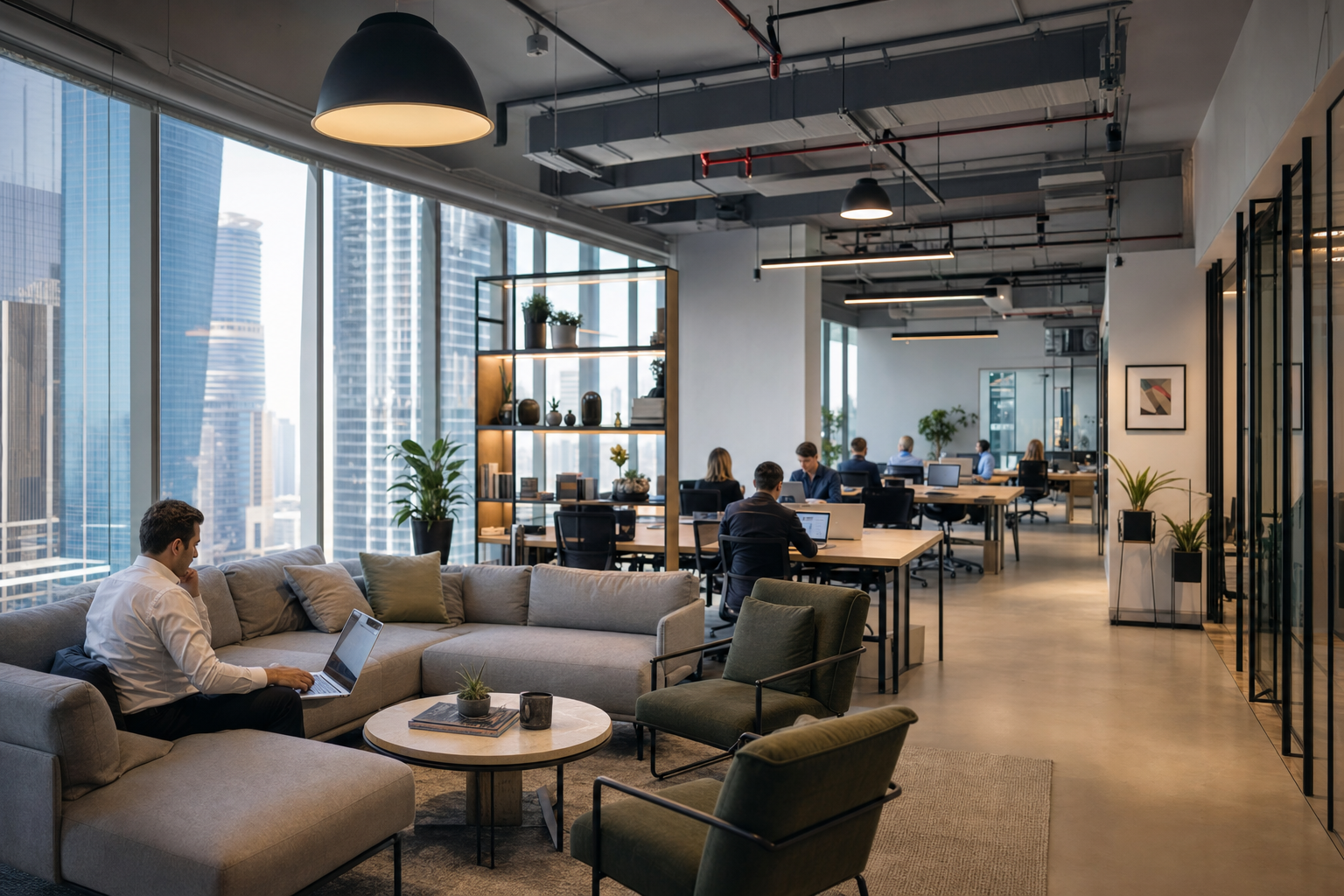
Looking for a quiet coworking space in Dubai with meeting rooms.
Every distributed system asks you to manage new failure modes. When seeking a productive environment, especially in a dynamic city like Dubai, the challenge often shifts from finding a space to finding a truly quiet one. This isn’t about avoiding chatter; it’s about engineering an atmosphere where deep work and critical conversations can occur without interruption. Many spaces claim to offer peace, but few engineer it with the precision required for sustained focus.
Key Takeaways
- Quiet coworking spaces require deliberate infrastructure design, not just noise reduction, to support uninterrupted deep work.
- Reliability in a workspace means eliminating the need to re-establish focus after disruptions, much like a stable system avoids rework.
- Spaces that claim peace often fail because they treat quiet as a feature rather than an engineered outcome of layout, materials, and policies.
- Critical conversations demand environments where acoustics and privacy are built into the architecture, not added as afterthoughts.
- In a fast-moving city like Dubai, finding a space that sustains concentration is a systems problem, not a simple amenity search.
For professionals looking for a quiet coworking space in Dubai with meeting rooms, the distinction lies in the underlying infrastructure and design choices that actively mitigate noise. We’re not just talking about a ‘no loud music’ policy. We’re examining the physical and architectural elements that ensure sound stays where it belongs, allowing you to concentrate on your tasks or conduct your business with clarity. This requires understanding what truly blocks noise and how spaces are designed for continuity of focus.
The Acoustics of Productivity: What Makes a Coworking Space Actually Quiet?
The quest for a quiet workspace often leads to a superficial assessment. People look for signs of quiet, like visible acoustic panels or distant conversations. But, the true measure of a space’s quietness is rooted in its engineering. It’s about constructing barriers against sound transmission, not just absorbing echoes. When systems are designed for continuity, they account for sound bleed from the outset, ensuring that the environment supports, rather than disrupts, productivity. This is about what stays working, not just what looks new.
From an infrastructure perspective, reliability in a workspace means predictable quiet. It means sitting down at your desk or entering a meeting room knowing that the ambient noise level is controlled. This predictable quiet is achieved through specific material choices and structural designs that address sound at its source and along its path. Without this engineering discipline, even the most aesthetically pleasing coworking space can fail to deliver the core requirement of a focused work environment.
Decoding Sound Transmission Class (STC) Ratings
When evaluating the acoustic performance of walls, doors, and windows, the Sound Transmission Class (STC) rating is a key metric. This standardized measurement indicates how effectively a barrier blocks airborne sound. A higher STC rating means less sound is transmitted through the barrier. For example, a standard interior wall might have an STC rating of around 35, sufficient for privacy in an office, but a truly quiet coworking space or meeting room needs higher ratings, often above STC 45-50, especially for shared walls or glass partitions.
Understanding STC ratings helps differentiate between spaces that merely dampen noise and those engineered for genuine sound isolation. It’s a technical specification that speaks to the quality of construction. When you’re looking for a quiet coworking space in Dubai with meeting rooms, inquiring about the STC ratings of private rooms or walls adjacent to common areas provides a concrete indicator of their soundproofing capabilities, moving beyond subjective claims to objective performance.
Layouts vs. Materials: What Actually Blocks Noise
While open-plan layouts can foster collaboration, they are inherently challenging for quiet work. The effectiveness of a space’s quietness relies more heavily on materials and construction than on its layout alone. High-density materials like concrete or thick drywall, combined with specialized acoustic insulation, form the primary defense against sound transmission. Double-glazed windows, solid-core doors with effective seals, and the strategic placement of sound-absorbing materials on surfaces all contribute significantly to blocking noise.
It’s the combination of these elements that creates an environment engineered for scale and focus. For example, a space might feature designated quiet zones, but if the walls are thin or the doors lack proper seals, noise will still permeate. When assessing a workspace, observe the materials used in private offices and meeting rooms. Are the doors solid and heavy? Do they have effective seals around the frame? Are windows double-paned? These are the details that speak to genuine sound isolation, ensuring that what works at 10x. Meaning in demanding situations or at higher occupancy. Is built into the very fabric of the space.
Key Insight: Noise Reduction Checklist
When evaluating a coworking space for quietness, consider these engineering factors:
- Wall Construction: Look for solid walls, ideally with acoustic insulation, rather than thin partition walls.
- Door Seals: Proper, tight seals around doors are essential to prevent sound leakage.
- Window Quality: Double or triple-glazed windows significantly reduce external noise intrusion.
- Flooring: Carpeting or acoustic underlayment can absorb impact noise and general footfall.
- Ventilation Systems: Ensure HVAC systems are designed for quiet operation and don’t introduce constant background hum.
Top Quiet Coworking Spaces in Dubai for Focused Work and Meetings
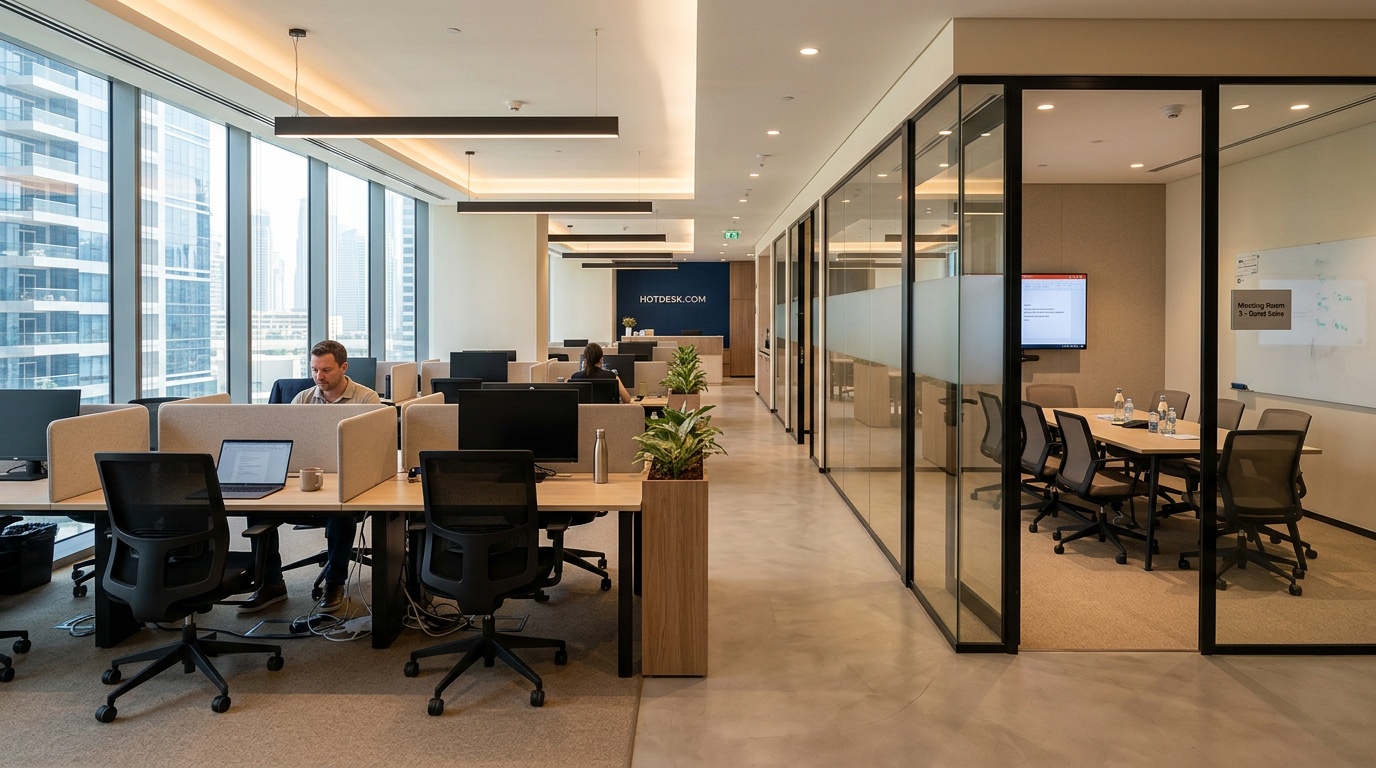
Dubai offers a diverse array of coworking options, but finding spaces that prioritize genuine quiet requires looking beyond the surface. The city’s business hubs are increasingly incorporating design elements to support focused work, recognizing that productivity is a key driver for professionals. When you are looking for a quiet coworking space in Dubai with meeting rooms, certain areas and types of centers stand out for their commitment to acoustic quality and professional amenities.
Hotdesk aggregates spaces that meet these exacting standards, ensuring that users can find environments where their work is not compromised by ambient noise. Whether you need a private office, a dedicated desk in a quiet zone, or a soundproof meeting room, the platform connects you with options designed for continuity and concentration. This approach simplifies the process, allowing you to reserve precisely what you need without the guesswork.
Premium Business Centers Along Sheikh Zayed Road
Sheikh Zayed Road, Dubai’s main artery, is home to numerous premium business centers that cater to enterprises and professionals demanding high standards. These locations often feature modern infrastructure designed for corporate needs, which typically includes a greater emphasis on acoustic privacy. Spaces here often provide well-appointed private offices and meeting rooms that are engineered to minimize sound transmission, making them ideal for confidential calls and deep work sessions.
These centers understand that availability is just the first step; quality of environment is paramount. They invest in soundproofing materials and construction techniques to ensure that meeting rooms are truly private and desk areas offer focused tranquility. Many offer day passes or flexible booking options, allowing users to experience these high-quality environments without long-term commitment. For professionals looking for a quiet coworking space in Dubai with meeting rooms, this corridor offers reliable access to facilities built for performance.
Boutique and Focused Workspaces in JLT and Downtown Dubai
Beyond the main business corridors, areas like Jumeirah Lakes Towers (JLT) and Downtown Dubai host a mix of boutique and specialized coworking spaces. These venues often distinguish themselves by focusing on specific user needs, such as enhanced tranquility for freelancers and small teams. While JLT offers a more community-driven atmosphere, Downtown Dubai provides proximity to key business and leisure attractions, with many centers here designed to offer a professional escape from the city’s bustle.
These focused workspaces frequently prioritize acoustic design, offering smaller, more intimate environments that are easier to keep quiet. They are often equipped with dedicated phone booths, quiet zones, and meeting rooms that boast superior soundproofing. For example, the Coworking Naubostik in Barcelona, while not in Dubai, exemplifies this trend of offering curated, quiet environments, a philosophy mirrored by many top-tier Dubai spaces available via Hotdesk. These locations are engineered for professionals who require a reliable, quiet setting to conduct their business effectively, distinguishing themselves through thoughtful design and a commitment to minimizing distractions.
| Feature | Sheikh Zayed Road Premium Centers | JLT & Downtown Boutique Spaces |
|---|---|---|
| Primary Focus | Corporate professionalism, enterprise solutions | Niche professional needs, community focus |
| Acoustic Engineering | High STC ratings, strong soundproofing in meeting rooms | Dedicated quiet zones, soundproof phone booths, effective wall materials |
| Meeting Room Quality | Equipped for high-stakes calls, often with advanced AV | Private, quiet spaces for focused discussions, good audio isolation |
| Atmosphere | Formal, business-oriented | Often more relaxed, community-centric |
| Booking Flexibility | Day passes, private office rentals, dedicated desks | Hot desks, day passes, private office options, often pay-as-you-go |
| Example Availability (via Hotdesk) | Multiple options featuring quiet zones and private rooms | Curated selection of spaces prioritizing quiet and focus, like the Coworking Naubostik philosophy |
Evaluating Meeting Room Quality: Beyond Simple Availability
When you are looking for a quiet coworking space in Dubai with meeting rooms, the focus often lands on booking availability and basic amenities like Wi-Fi. But, the true value of a meeting space is determined by its ability to facilitate productive communication and collaboration without technical or acoustic interference. This requires an engineering approach to quality, ensuring that the environment supports critical conversations and presentations. Systems designed for continuity ensure that these spaces are not just available, but performant, time after time.
A truly functional meeting room is more than just a table and chairs. It’s an integrated system designed for reliability. From the hardware powering your video calls to the architectural elements that ensure privacy, every component plays a role. For professionals who depend on these spaces for client interactions or team strategy sessions, understanding the specific features that contribute to a high-stakes call environment is paramount. This moves beyond marketing claims to a precise evaluation of what actually works at 10x capacity and demand.
Hardware Requirements for High-Stakes Calls
The success of a modern business meeting hinges significantly on the quality of its audiovisual hardware. When you need to conduct a high-stakes call, particularly when you are looking for a quiet coworking space in Dubai with meeting rooms, the expectation is for technology that performs without glitches. This means screens capable of displaying detail clearly, microphones that capture every word accurately without excess background noise, and stable, low-latency internet connections. For example, a 4K display can make a significant difference in reviewing documents collaboratively, while a dedicated, high-fidelity microphone array ensures participants on both ends hear and are heard distinctly.
Investing in meeting room technology is an investment in a professional image and operational efficiency. Systems that are engineered for scale anticipate the need for strong performance, even under pressure. This includes reliable video conferencing equipment, intuitive controls, and compatibility with various platforms. For professionals needing to present or collaborate remotely, the absence of technical friction is as important as the absence of audible distractions. It’s about systems that travel with your workflow, ensuring continuity from your desk to the meeting room.
Checking for True Soundproofing: Door Seals and Glass
Beyond the electronics, the physical construction of a meeting room is critical for ensuring genuine quiet and privacy. For spaces that claim to be soundproof, the details in their build matter immensely. This includes the quality of door seals and the type of glass used in partitions or windows. Solid-core doors with effective perimeter seals are non-negotiable for preventing sound leakage. A standard hollow door with a poor seal offers minimal acoustic resistance, allowing conversations and ambient noise to easily penetrate.
The choice of glass also plays a substantial role. Double-glazed or even triple-glazed windows, often with a specific gap filled with inert gas, provide a much higher Sound Transmission Class (STC) rating than single panes. This architectural discipline ensures that external noises are significantly attenuated, and internal conversations remain private. When you are looking for a quiet coworking space in Dubai with meeting rooms, inspecting these elements. The weight and seal of the door, the type of window glazing. Provides tangible evidence of the space’s commitment to acoustic integrity. It’s a direct reflection of whether the space is engineered for focus or merely designed for appearance. For example, while not in Dubai, the Coworking Naubostik exemplifies how attention to such construction details creates a more reliable and private working environment, a principle important for any professional seeking undisturbed meeting spaces.
Evaluating Meeting Room Features
Pros
- High-resolution displays (4K) for clear presentations and document review.
- Dedicated, high-fidelity microphone arrays for accurate audio capture during calls.
- Low-latency, stable internet connections essential for video conferencing.
- Solid-core doors with comprehensive perimeter seals to block sound transmission.
- Double or triple-glazed windows to minimize external noise intrusion.
- Intuitive, user-friendly control systems for AV equipment.
Cons
- Thin partition walls that allow sound to bleed between rooms.
- Single-pane windows that let in significant external noise.
- Basic or low-quality microphones that distort voices or pick up ambient noise.
- Hollow-core doors with gaps that fail to provide acoustic privacy.
- Unreliable Wi-Fi or slow internet speeds hindering virtual meetings.
Choosing a meeting room requires looking past the superficial. It’s about verifying the technical specifications and construction quality that guarantee a functional, private space. When you are looking for a quiet coworking space in Dubai with meeting rooms, prioritizing these tangible features ensures that your bookings support, rather than hinder, your professional objectives.
The emphasis is always on systems that provide continuity. A well-equipped meeting room, engineered with acoustic principles and quality hardware, offers a predictable environment where work can progress without interruption. This level of reliability is what distinguishes spaces committed to supporting deep work and critical business functions, ensuring that what works at 10x remains effective under constant use.
Booking a Quiet Desk and Meeting Room Combo With No Memberships
The traditional model of coworking often involves long-term commitments and hefty membership fees, which can be a significant barrier for professionals needing flexible, quiet workspace solutions. But, the infrastructure powering modern workspace booking has evolved. Platforms like Hotdesk are engineered to provide continuity of access without the requirement for ongoing memberships. This means you can find and book a quiet desk or a private meeting room precisely when you need it, paying only for the time you use. This pay-as-you-go approach aligns with the need for agility in today’s work environment, ensuring that finding a productive space is as straightforward as managing your workflow.
When you are looking for a quiet coworking space in Dubai with meeting rooms, the ability to book on-demand removes the friction of commitment. It allows you to test different environments, secure private spaces for critical calls, or simply find a focused zone for deep work without being tied to a single location or contract. This flexibility is a direct outcome of systems designed for scale and user convenience, offering a practical alternative to conventional office leases or rigid coworking plans. It’s about having access to the infrastructure you need, when you need it, engineered for your specific requirements.
Step-by-Step: Finding and Reserving a Space via Hotdesk
Securing a productive workspace with Hotdesk is designed for immediate action and precision. The process begins with a clear search query, specifying your location. Dubai, in this case. And your needs, such as a quiet desk or a meeting room. Our platform then presents available options, filtered by essential criteria like noise levels and amenity availability. Each listing provides detailed information on the space, its features, and pricing, allowing for informed decisions.
Once you identify a suitable space, booking is typically achieved in just a few clicks. For example, if you are looking for a quiet coworking space in Dubai with meeting rooms, you can select a particular meeting room, specify the duration, and confirm your reservation. The system handles the transaction and provides instant confirmation, often including access details. This engineered workflow ensures that the process of finding and securing a reliable workspace is efficient and free from unnecessary complexity, mirroring the continuity we strive for in all our technical systems.
Understanding Pay-As-You-Go Pricing Models
The core advantage of platforms like Hotdesk is the pay-as-you-go pricing model, which contrasts sharply with traditional membership structures. Instead of a recurring monthly fee, users are charged based on actual usage. Whether it’s booking a hot desk for a few hours or reserving a meeting room for an entire afternoon. This model offers unparalleled transparency and cost control, ensuring that you only pay for the resources you consume. For example, a hot desk in Dubai can range from AED 500 to AED 1,500 per month under a membership, but with Hotdesk, you might pay AED 40-100 for a day pass, depending on the specific space. Meeting room rentals, which can cost AED 50-200 per hour, are billed precisely for the time booked.
This approach is particularly beneficial for freelancers, remote workers, and small teams who require flexibility and predictability in their expenses. It eliminates the risk of paying for unused capacity and allows for easy scaling of workspace needs. The system is engineered for efficiency, ensuring that the billing reflects actual usage accurately. This financial discipline translates into greater control for the user, making it easier to manage budgets while still accessing high-quality, quiet work environments. It’s about delivering value through precise execution, ensuring that what works at 10x doesn’t come with a fixed, high overhead for occasional use.
Typical Pay-As-You-Go Workspace Costs in Dubai
| Service | Typical Hotdesk (Per Day) | Typical Meeting Room (Per Hour) | Typical Private Office (Per Month, Flexible) |
|---|---|---|---|
| Estimated Cost Range (AED) | 40 – 100 | 50 – 200 | 1,000 – 3,000+ |
| Billing Basis | Daily pass or hourly rate | Hourly booking | Monthly or weekly commitment (flexible) |
| Key Benefit | Flexibility, cost-effective for occasional use | On-demand privacy for meetings | Dedicated space without long-term lease |
Note: Costs are estimates and vary based on location, amenities, and provider. Always check specific listings for exact pricing.
Common Questions About Quiet Workspaces in Dubai
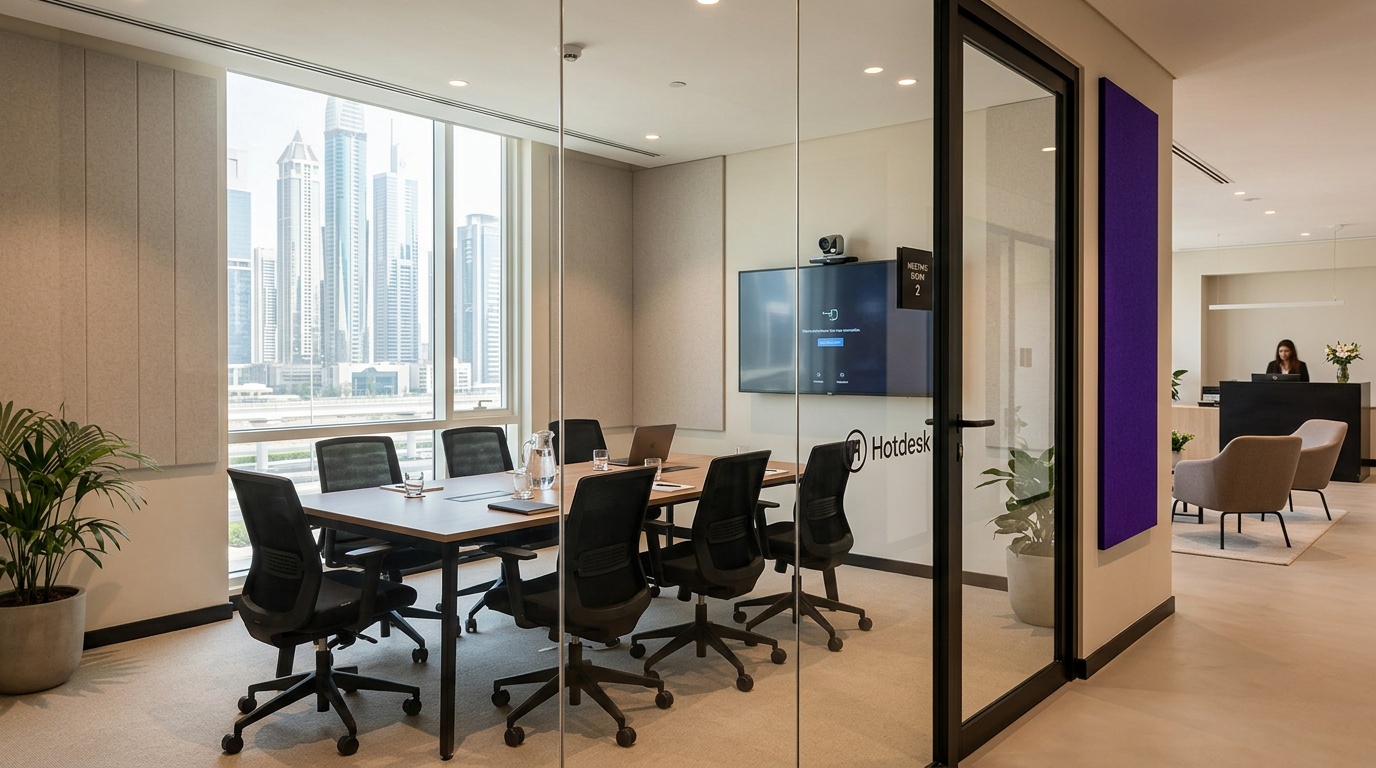
Navigating the options for focused work in a bustling city like Dubai can bring forth specific queries. Professionals are often looking for guaranteed quiet, cost-effective solutions, and the ability to ascertain a space’s suitability before committing. These questions reflect a practical need for reliable, well-engineered environments that support productivity without complexity.
Addressing these common inquiries directly provides clarity for anyone looking for a quiet coworking space in Dubai with meeting rooms. It highlights the practical considerations and the solutions available through platforms designed for user convenience and operational excellence. Our aim is to ensure that finding a productive sanctuary is a transparent and straightforward process, powered by systems that prioritize user needs.
Are there free quiet coworking spaces in Dubai?
While dedicated coworking spaces typically require payment for their amenities and infrastructure, certain public spaces can offer a quiet environment for work. Libraries, such as the Mohammed Bin Rashid Library, often provide quiet zones and free Wi-Fi. But, these spaces may have limitations on booking meeting rooms or the availability of dedicated professional services. For consistent, reliable quiet with professional amenities, paid options are generally more suitable.
How much does a quiet meeting room cost per hour?
The cost of renting a quiet meeting room in Dubai can vary significantly based on location, size, and the quality of soundproofing and technology. Generally, you can expect prices to range from AED 50 to AED 200 per hour. Premium business centers or those in prime locations, equipped with advanced AV systems and superior acoustic design, will likely fall at the higher end of this spectrum. Hotdesk provides access to numerous such spaces, allowing you to compare options and find one that fits your budget and requirements for focused meetings.
Can I evaluate a space’s noise level before booking?
Evaluating a space’s noise level before booking is key to ensuring a productive experience. While direct measurement apps might not be feasible before arrival, Hotdesk provides detailed descriptions and user reviews for many spaces. Look for mentions of dedicated quiet zones, soundproof meeting rooms, or acoustic design features. For spaces like the Coworking Naubostik, the emphasis is on engineered quiet, which is often reflected in space descriptions. When looking for a quiet coworking space in Dubai with meeting rooms, prioritize listings that specify acoustic treatments and offer private, sealed rooms.
References
Frequently Asked Questions
How can I verify if a coworking space in Dubai is actually quiet before booking?
Looking for a quiet coworking space in Dubai with meeting rooms requires checking specific construction details rather than relying on marketing claims. Ask about wall materials, door seals, and window glazing specifications. A space with solid-core doors, double-glazed windows, and acoustic insulation in walls will deliver predictable quiet that supports sustained focus throughout your workday.
What STC rating should I look for in meeting rooms for confidential discussions?
Meeting rooms intended for confidential business conversations should have an STC rating of 45 to 50 or higher to effectively block airborne sound transmission. Standard interior walls typically rate around STC 35, which allows some sound to pass through shared partitions. Higher STC ratings indicate genuine sound isolation engineering rather than superficial noise dampening.
Do open-plan coworking spaces in Dubai offer dedicated quiet zones?
Many coworking spaces in Dubai designate specific quiet zones within their open layouts, but the effectiveness of these zones depends entirely on construction quality rather than the designation itself. Thin partition walls or doors without proper seals will still allow noise to permeate regardless of signage. Look for spaces where quiet zones are backed by solid wall construction and proper acoustic materials.
What construction materials make the biggest difference in blocking coworking noise?
High-density materials like concrete, thick drywall with acoustic insulation, and solid-core doors with tight seals form the primary defense against sound transmission in any coworking environment. Double-glazed windows, carpeting with acoustic underlayment, and properly designed HVAC systems also contribute significantly. These material choices separate spaces engineered for focus from those that merely look modern.
How does Hotdesk help professionals find quiet workspaces in Dubai?
Hotdesk aggregates coworking spaces across Dubai that meet specific standards for acoustic quality and professional amenities, connecting users with environments designed for both focused work and confidential meetings. The platform lists options ranging from soundproof meeting rooms to dedicated desks in acoustically engineered quiet zones. Each space is evaluated against infrastructure criteria that go beyond surface-level aesthetics.
Are private offices in Dubai coworking spaces suitable for confidential client calls?
Private offices in quality Dubai coworking spaces can support confidential calls if they are built with solid wall construction, proper door seals, and adequate STC ratings above 45. The key factor is whether the space treats sound isolation as an engineering requirement rather than an afterthought. Ask about the construction specifications of adjacent walls and the quality of door frames before committing.
What should I check during a coworking space tour to assess noise levels?
During a tour of any coworking space, inspect door seals, wall construction thickness, window glazing type, and whether HVAC systems produce noticeable background noise. Pay attention to whether doors close with a solid feel and whether you can hear conversations from adjacent rooms. These physical indicators reveal more about acoustic performance than any marketing materials or visible acoustic panels.
Leave a Reply