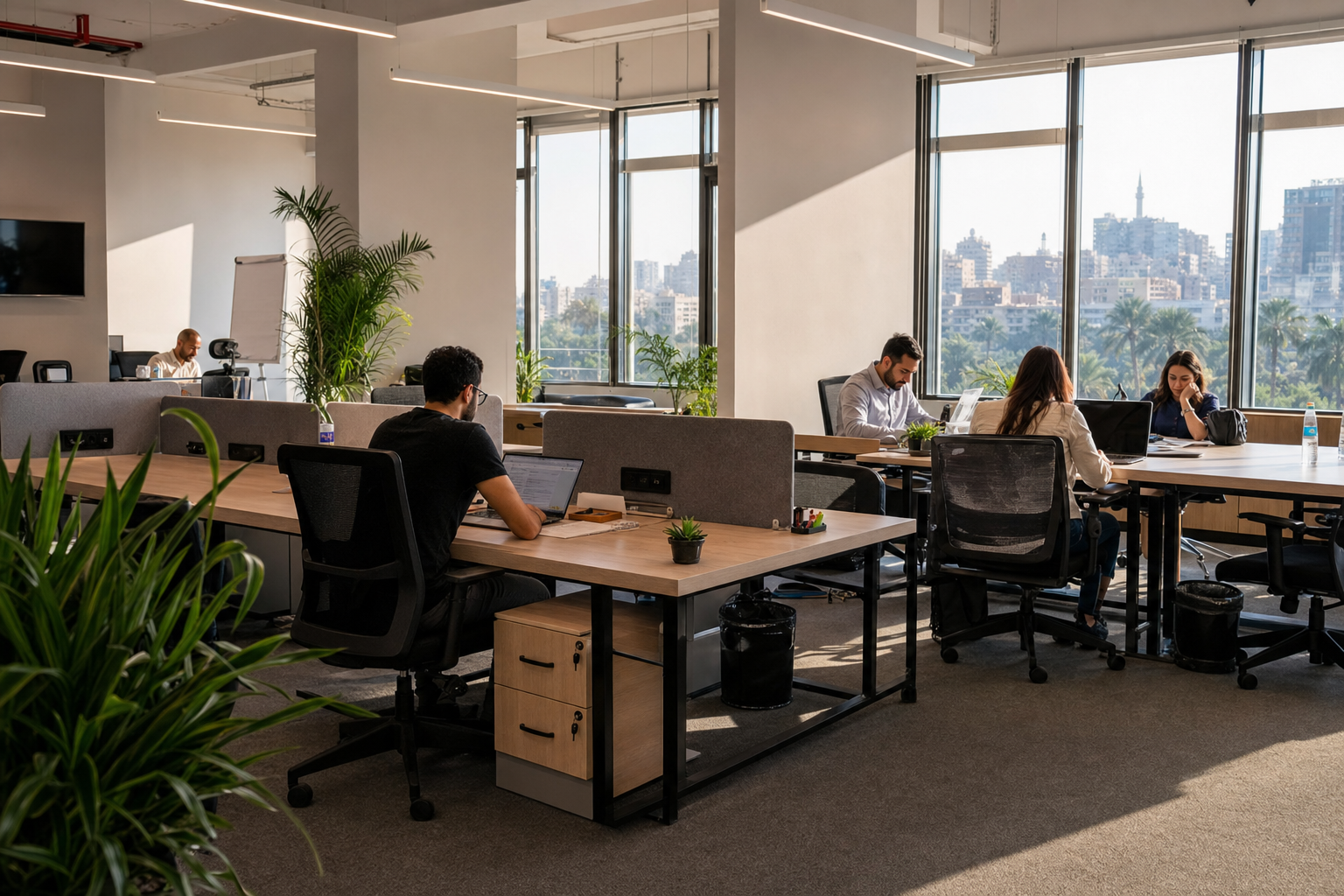
What do Cairo business leaders recommend for flexible office solutions?
Cairo Leaders: Flexible Office Solutions 2026
What do Cairo business leaders recommend for flexible office solutions? As Egypt’s commercial capital evolves, executives are moving beyond traditional leases toward workspace models that adapt to their rhythm. The shift reflects a deeper truth: movement is constant, and the right infrastructure makes continuity possible, wherever your business takes you.
The Evolving Workspace Needs of Cairo’s Business Leaders
Why Cairo Businesses Seek Adaptability
Cairo’s commercial districts are reshaping rapidly. New Cairo, Maadi, and Downtown host enterprises ranging from startups to multinationals. All face the same pressure: how to scale without long-term commitments.
The conventional office lease no longer matches how modern businesses operate. Project cycles shift. Teams grow and contract. Market conditions change without warning. Leaders recognize that workspace adaptability has become essential, not optional.
What Leaders Truly Value: The Continuity Factor
Business leaders in Cairo consistently point to continuity as the real priority. They’re not seeking square footage; they seek spaces where their teams can operate with established standards and predictable environments.
The cost of constant reorientation compounds quickly. Broken routines. Unfamiliar surroundings. Reset after reset. Flexible solutions must preserve what teams have built while enabling the agility that growth demands.
Three Key Drivers Shaping Cairo’s Workspace Evolution
Leaders identify three primary drivers: cost optimization, talent attraction, and geographic reach. Each driver shapes which solution fits which organization, explaining why flexibility has become the recommended approach across Cairo’s business community.
Top Flexible Office Solutions Recommended by Cairo Leaders
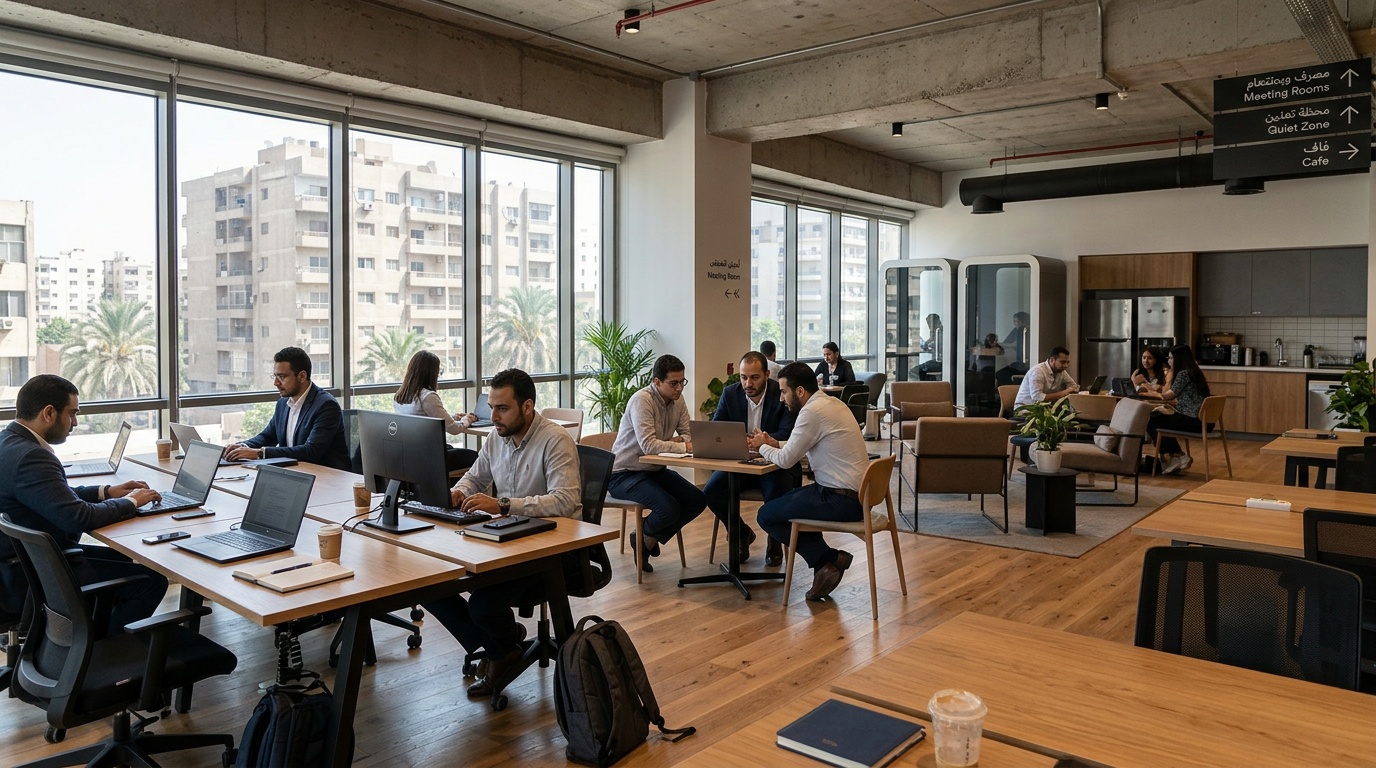
Coworking Spaces: Collaboration Without Capital Outlay
Coworking environments earn strong recommendations from Cairo leaders who value community without capital investment. Hot desks and dedicated zones let teams interact with peers while splitting overhead.
The model suits startups and freelancers seeking professional settings at predictable monthly rates. No construction. No furniture purchases. No multi-year commitments.
Private Offices: Focus With Flexibility
Organizations requiring confidentiality or concentrated effort often choose private offices. These solutions provide lockable areas for sensitive work while maintaining the flexibility to scale as teams evolve.
Cairo leaders favor this option because it delivers focus without sacrificing adaptability.
Meeting Rooms: On-Demand Professional Infrastructure
Meeting rooms serve as essential business infrastructure. Client presentations. Team workshops. Recruiting sessions. Hourly bookings let organizations access professional spaces without owning conference facilities.
Cairo leaders recommend reserving rather than owning when demand fluctuates seasonally or by project.
Virtual Offices: Market Presence Without Physical Overhead
Virtual office services provide business addresses and call-handling capabilities for entities operating remotely. This approach eliminates the cost of full-time physical workspace while maintaining market presence in desirable locations.
Cairo leaders note this option works well for satellite teams, international branches, or businesses testing new markets before committing to permanent space.
Strategic Advantages of Flexible Workspaces in Cairo
Scalability for Dynamic Markets
Flexible workspaces enable rapid scaling when teams expand and rapid contraction when markets tighten. Cairo business leaders appreciate avoiding the months-long process of traditional lease negotiations when opportunities arise.
Flexibility aligns workspace with business reality, not the other way around.
Talent Attraction in a Competitive Market
Professionals increasingly expect workspace options that match their preferences. Cairo leaders recognize that modern environments attract candidates seeking flexibility, mobility, and contemporary amenities.
Retention improves when organizations provide spaces that support how talent wants to work.
Cost Optimization That Actually Works
Budget allocation shifts from capital expenditure on long-term leases toward operational expenditure on flexible arrangements. This transition enables Cairo organizations to redirect capital toward core business activities.
Leaders report meaningful savings when comparing all-in costs of flexible arrangements against traditional commitments that include furniture, utilities, maintenance, and staffing overhead.
Global Infrastructure for International Ambitions
Organizations expanding beyond Egypt benefit from workspace networks spanning multiple cities. Cairo leaders recommend solutions that provide consistent standards across locations, enabling smooth operations when teams move between markets.
International ambitions require infrastructure that travels with the organization rather than anchoring it to a single address.
Flexible Workspaces in Cairo: Key Considerations
Pros
- Rapid scaling without lengthy lease negotiations
- Predictable monthly costs replacing variable capital outlays
- Access to premium locations in New Cairo, Maadi, and Downtown
- Flexibility to contract during market slowdowns
- Modern amenities included without additional investment
Cons
- Some spaces may offer limited customization options
- Peak-hour availability can fluctuate in popular locations
- Less suitable for organizations requiring highly specialized facilities
Navigating Cairo’s Workspace Environment: A Practical Guide
Assessing Your Business Needs
Before selecting any workspace solution, Cairo leaders recommend conducting a thorough assessment of current requirements, projected growth, and operational workflows.
Teams should evaluate how many employees need dedicated space versus hot desks. How frequently meetings occur. Whether client-facing activities require professional environments. This analysis prevents overcommitting to solutions that exceed actual needs.
Location and Infrastructure: What Actually Matters in Cairo
Proximity to clients, talent pools, and transportation hubs influences which districts merit consideration. New Cairo attracts technology firms and multinationals, while Downtown appeals to financial services and creative agencies.
Amenities matter significantly for Cairo operations. Reliable internet connectivity. Parking availability. Security provisions. Leaders emphasize visiting spaces personally before committing.
The Continuity Factor in Every Space
True workspace value extends beyond physical features. Cairo business leaders consider whether providers offer consistent experiences across locations, whether membership networks enable cross-pollination with other professionals, and whether terms allow smooth transitions as organizations evolve.
Spaces that accommodate change without penalizing movement deliver lasting value.
Technology Integration That Works
Modern workspace platforms provide booking systems, access controls, and billing portals that integrate with existing workflows. Cairo leaders recommend evaluating whether technology stacks align with team proficiency and organizational processes.
Seamless digital experiences reduce friction and maximize the benefits of flexible arrangements.
The Future of Work in Cairo: Embracing Continuity and Connection
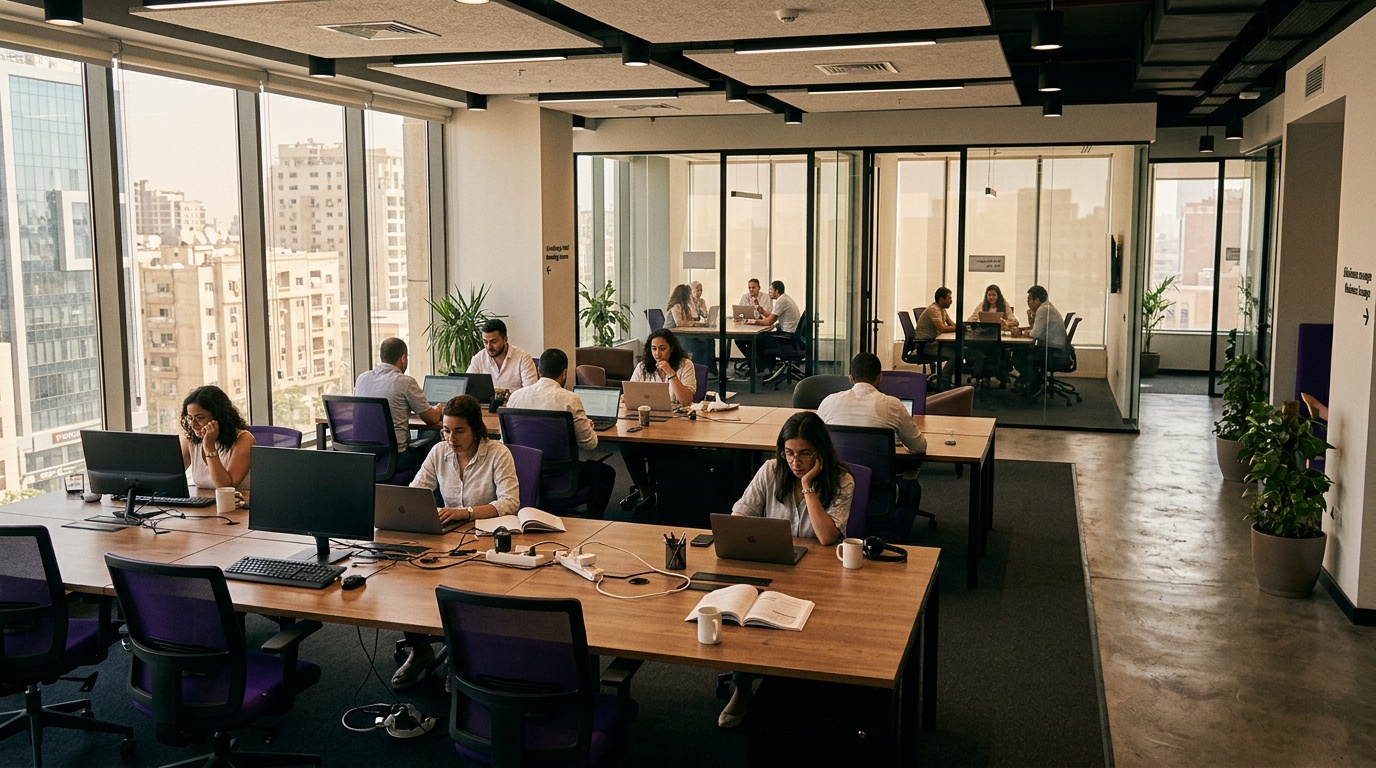
Redefining “Office” for Modern Organizations
The concept of the office is undergoing fundamental transformation across Cairo. Rather than a fixed location where work happens, modern workspace solutions treat the office as a service that adapts to organizational needs.
This reorientation eliminates the friction of constant resets while preserving the familiarity that teams require for sustained productivity.
Building Networked Presence
Cairo organizations increasingly recognize that presence across multiple locations creates network effects. Consistent standards. Recurring faces. Established relationships. These compound over time.
Leaders recommend building networked presence deliberately and choosing providers that offer genuine connectivity rather than isolated sites.
Cairo’s Strategic Position in Global Hybrid Work
As international business embraces hybrid models, Cairo positions itself as a strategic hub connecting African, Middle Eastern, and European markets. Flexible workspace infrastructure enables Cairo-based organizations to participate fully in global talent pools and client networks.
The city’s geographic advantage pairs effectively with workspace solutions that match international expectations.
How Hotdesk Serves Cairo’s Business Leaders
Hotdesk provides the infrastructure that Cairo business leaders expect: seamless access across locations, consistent operational standards, and terms that honor how organizations actually grow.
The platform’s network spans Cairo and key markets, including Dubai’s Rag Global Business Hub, enabling teams to operate with continuity regardless of geography.
Business leaders trust Hotdesk because the solution matches how modern organizations work: mobile, scalable, and always available.
Looking ahead: What do Cairo business leaders recommend for flexible office solutions? The consensus points to platforms that prioritize continuity over contracts, connection over isolation, and adaptability over rigidity. The right workspace infrastructure makes expansion possible without sacrificing the professional consistency that teams need to thrive.
Strategic Verdict: Cairo’s Workspace Evolution
Core Principles Driving Leader Recommendations
What do Cairo business leaders recommend for flexible office solutions? The answer converges on three principles: continuity over reset, connection over isolation, and adaptability over rigidity.
Organizations adopting workspace strategies grounded in these principles report stronger team cohesion, faster market entry, and predictable operational expenditure.
Where Cairo Workspaces Head Next
Cairo’s commercial real estate sector is shifting toward hybrid models that blend physical presence with digital infrastructure. Leaders anticipate continued evolution toward workspace-as-a-service models that prioritize access over ownership, flexibility over fixed commitments, and network effects over isolated locations.
Frequently Asked Questions
Why are Cairo business leaders shifting away from traditional office leases?
Cairo’s commercial areas are changing quickly, and businesses need to scale without long-term commitments. Traditional leases don’t fit modern operations where project cycles and team sizes change often. Leaders see workspace adaptability as a necessity for their business rhythm.
What do Cairo leaders prioritize most when choosing flexible office solutions?
Cairo business leaders consistently prioritize continuity. They seek spaces where teams can operate with established standards and predictable environments. This helps avoid the cost of constant reorientation and broken routines.
What are the main reasons Cairo businesses choose flexible office solutions?
Leaders in Cairo identify three main reasons: optimizing costs, attracting top talent, and expanding their geographic reach. These pressures explain why flexible approaches are widely recommended across the business community. We believe the right infrastructure makes continuity possible, wherever your business takes you.
What types of flexible office solutions do Cairo leaders recommend?
Cairo leaders recommend several options, including coworking spaces for collaboration, private offices for focused work, and meeting rooms for on-demand needs. Virtual offices are also popular for establishing a presence without physical overhead. These solutions help businesses adapt to their evolving needs.
How do flexible workspaces help Cairo businesses grow?
Flexible workspaces enable rapid scaling or contraction, aligning workspace with business reality. They also attract and retain talent who expect modern work environments. This approach shifts budget from capital expenditure to operational expenditure, freeing up capital for core business activities.
What types of flexible workspace solutions are popular globally and in Cairo?
Globally, and certainly in Cairo, solutions like coworking spaces, private offices, and virtual offices are gaining traction. These models offer businesses the agility to adapt to changing market conditions and team sizes. We believe movement shouldn’t cost you a sense of belonging, and these solutions support that.
What are some advantages of using flexible workspaces in Cairo?
Flexible workspaces offer rapid scaling, predictable monthly costs, and access to premium locations like New Cairo and Maadi. They also provide modern amenities without extra investment and allow businesses to contract easily during slowdowns. This adaptability supports continuity for your business.
Leave a Reply