Which coworking space offers better amenities: private offices or shared spaces?
Unpacking Coworking Amenities: Private Offices vs. Shared Spaces
Defining the Workspace Types
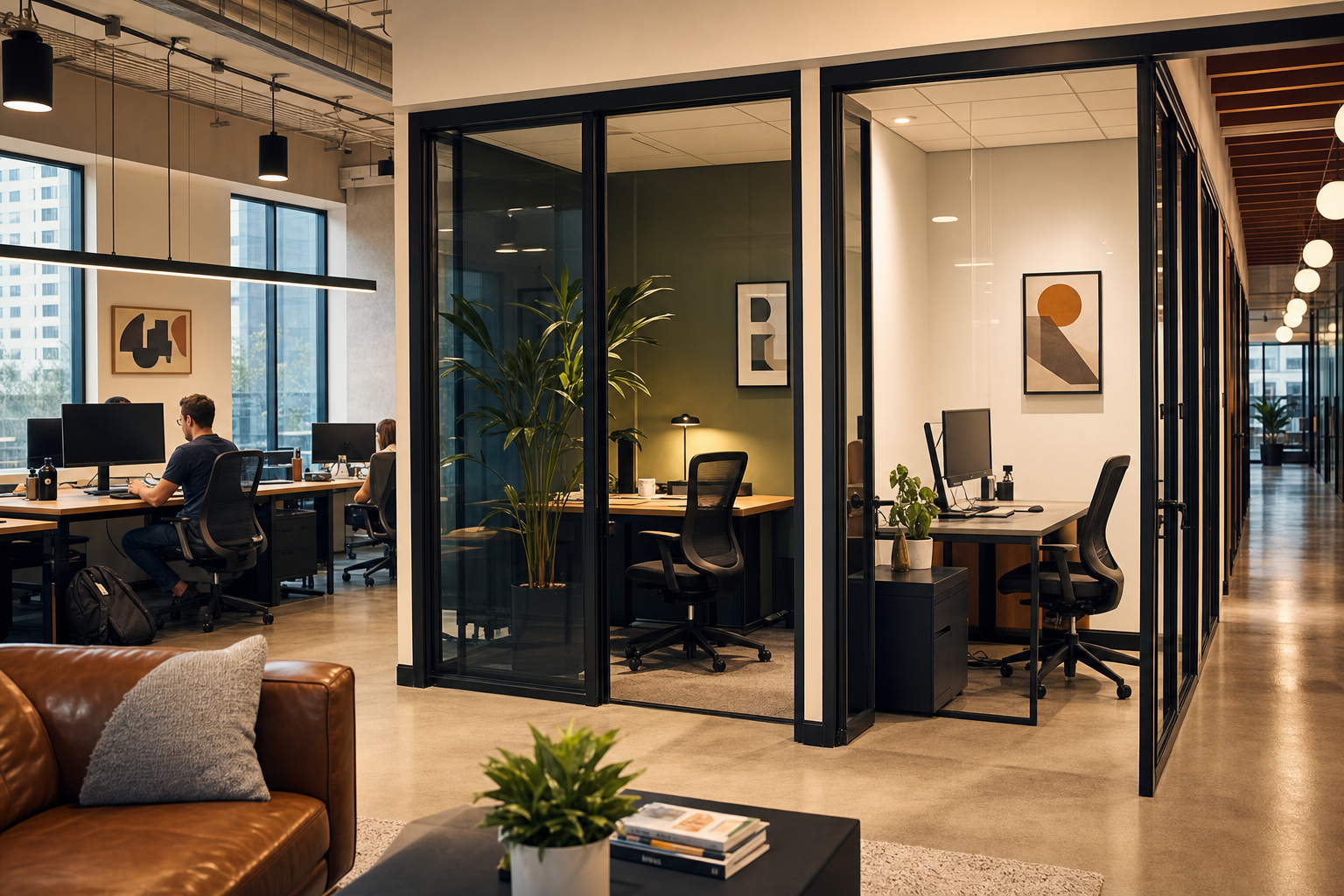
A private office in a coworking setting provides a fully enclosed, dedicated space assigned to one tenant. You get four walls, a door that locks, and complete control over your immediate environment. Shared spaces offer flexible seating where members rotate through unassigned desks.
The Amenity Spectrum: What to Expect
Private offices typically include furniture, storage, and often an allocation of meeting room hours. Shared spaces pool resources: meeting rooms, printers, kitchens, and common areas get divided among all members. This reduces individual cost while increasing competition for popular amenities.
Beyond the Basics: Core Offerings
Most coworking venues deliver internet connectivity, utilities, and reception services as standard. The difference? Exclusivity.
Infrastructure travels when your workspace adapts to your workflow. The honest answer depends entirely on your daily tasks.
Private Offices Within Coworking: Systems Over Announcements
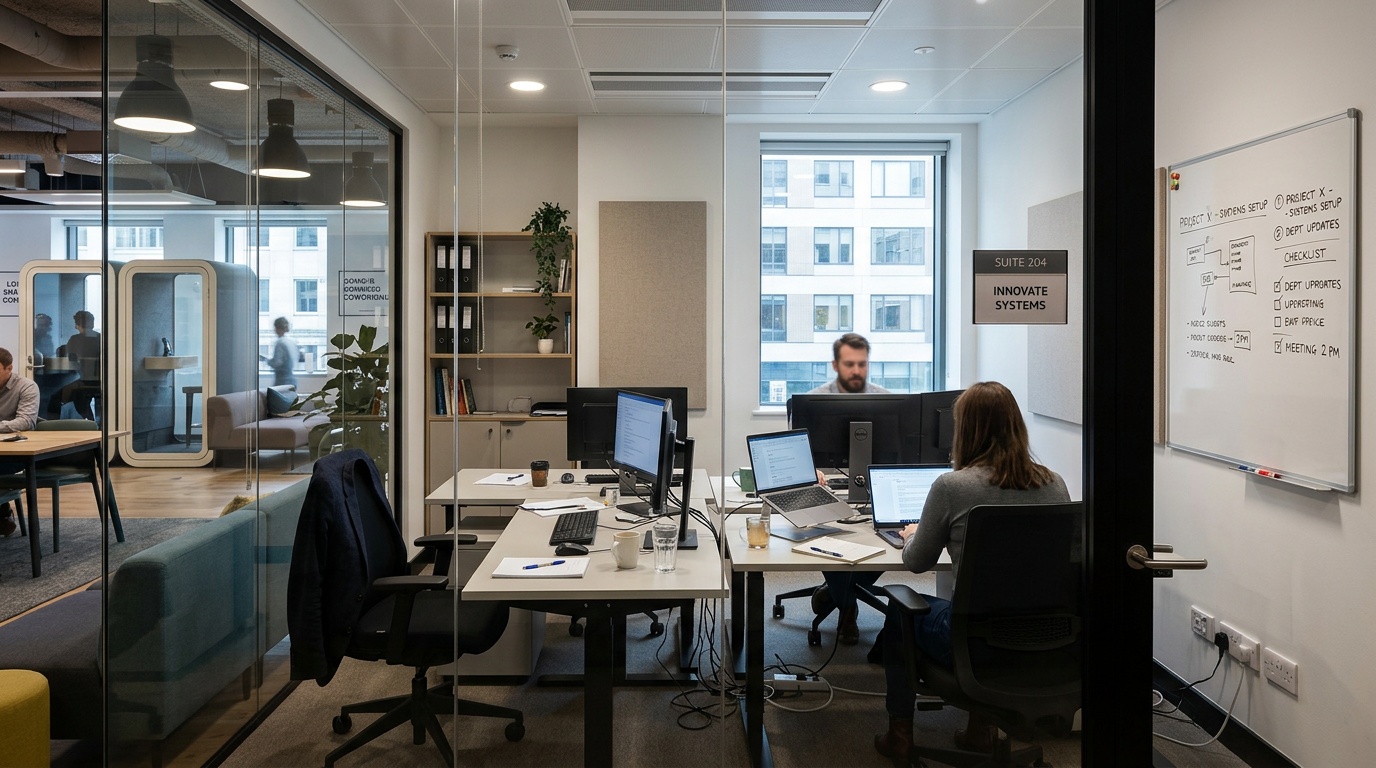
Private offices inside coworking buildings grant access to shared infrastructure while maintaining dedicated space. No reset required between individual focus and community benefits.
Exclusive Access and Control
Your private office supports uninterrupted calls, confidential client meetings, and a door that locks. No one wanders past your desk during video calls. You control temperature, lighting, and noise levels without compromise.
Shared Infrastructure Access
Beyond your office walls, community amenities remain available: client-facing meeting rooms, networking events, global location access, and business support services. Kube Coworking Lisboa demonstrates this model in practice.
Private Office Amenity Balance
Pros
- Guaranteed workspace availability every day
- Sound privacy for sensitive conversations
- Personalized environment customization
- Full access to shared building amenities
Cons
- Higher monthly cost than hot-desk plans
- Less spontaneous collaboration with other members
- Fixed footprint regardless of actual use
Shared Spaces: Engineered for Scale
Shared coworking environments optimize for community density. Every dollar goes further because infrastructure costs get distributed across more users.
Pooled Infrastructure Economics
High-end coffee equipment, premium printing facilities, and professional meeting rooms see heavy use in shared spaces. These assets would cost individual users far more outside the pooling model.
I’ve seen this work at scale. When 50+ professionals share overhead costs, each member accesses amenities they couldn’t afford individually.
Open Environment Value
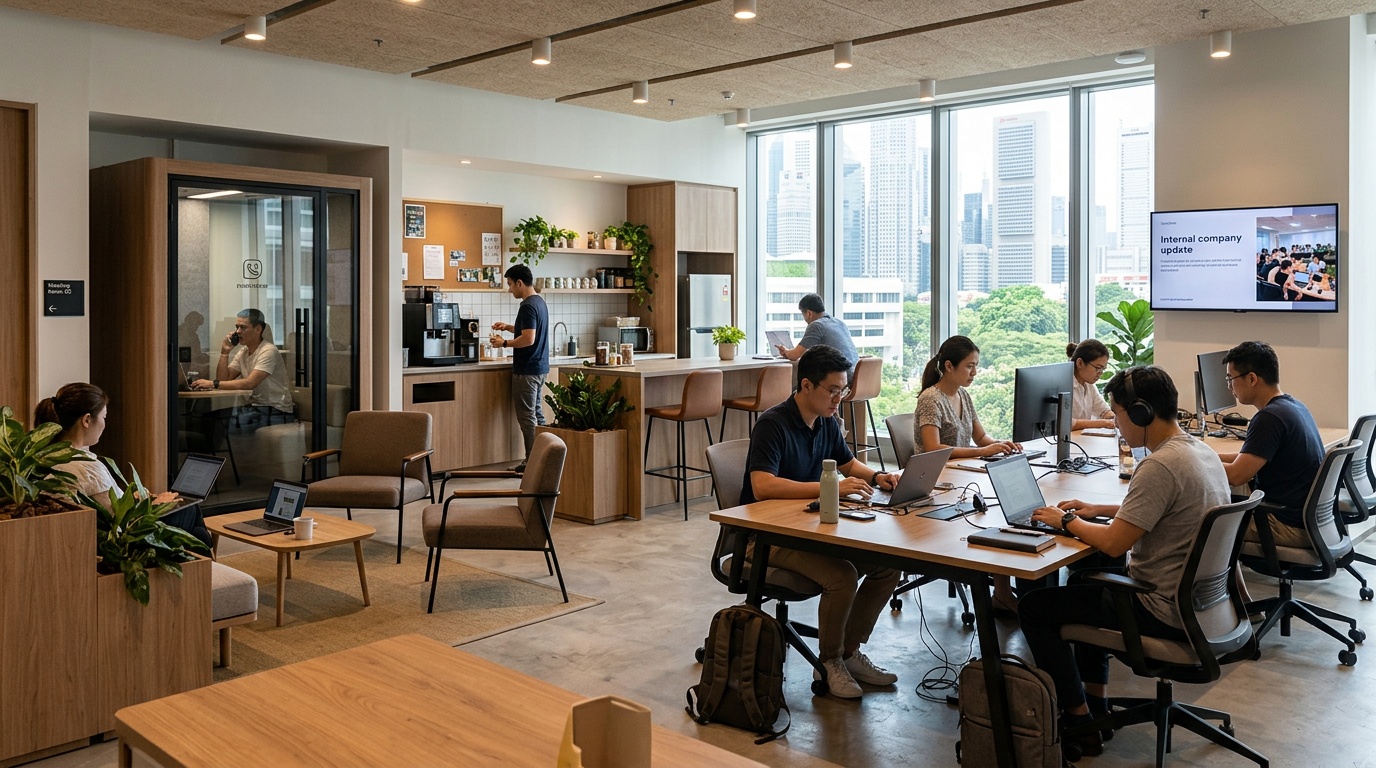
Open-plan layouts attract solopreneurs, remote workers, and small teams prioritizing networking over privacy. If collaboration drives your business development, shared spaces place you among diverse professionals daily.
| Feature | Private Office | Shared Space |
|---|---|---|
| Dedicated desk | Yes, enclosed | Rotating allocation |
| Sound privacy | Full control | Limited |
| Meeting room access | Allocated hours | Booking system |
| Monthly cost | Higher | Lower |
| Community access | Full | Full |
Cost-Benefit Analysis: What Works at 10x
Use Case Calculations
Call-heavy roles, legal work, and client confidentiality requirements favor private offices. The amenity premium pays for itself when HIPAA discussions, NDA reviews, or board-level conversations occur daily.
Growth-stage startups and consultants building networks often extract more value from shared spaces. The math changes based on interaction frequency.
Privacy and Security Implications
Consider data sensitivity. Can you run operations with neighbors overhearing? Do competitors share your building?
Private offices provide enforceable boundaries. Shared spaces require discipline around sensitive conversations.
Testing Both Models
Hotdesk aggregates workspaces across 80+ countries, letting you test both models before committing. The platform shows real availability, transparent pricing, and community details so you match amenities to real workflow needs.
Ever notice how much work disappears into rework when the environment fights the task? Infrastructure travels when your workspace moves with you.
Matching Your Workspace Model to Your Work Style

Your optimal amenity choice depends on how you work. A sales executive conducting client calls needs sound isolation. A content creator who needs focus time often values enclosed space.
A business development manager building partnerships benefits from an open community.
Decision Triggers for Private Offices
Evaluate your daily activities: Do you host client meetings in your workspace? Do you discuss pricing, contracts, or sensitive strategy regularly? Do you need consistent desk availability without reservation anxiety?
Two or more “yes” answers point toward private office amenities.
Decision Triggers for Shared Spaces
Shared environments make sense when your work involves frequent collaboration with different people each day. When you prefer separating home and office through movement. When budget constraints make every dollar count.
When you thrive on unexpected conversations and cross-pollination of ideas.
Amenity Comparison by Team Size
Team composition changes amenity calculations significantly. Solo operators and small teams of two to five people often find shared spaces sufficient, provided they can book meeting rooms for confidential sessions.
Larger teams often need dedicated space to maintain operational coherence.
Solo Professionals
Individual contributors often maximize value in shared plans. The community aspect adds professional serendipity that isolated work lacks. Hot-desk or dedicated desk plans in shared areas provide flexibility as projects change.
Growing Teams
Teams scaling from three to fifteen people often benefit from hybrid arrangements. A private office for core operations with shared amenity access for overflow and collaboration creates sustainable infrastructure.
Kube Coworking Lisboa offers configurations that scale with team growth.
Long-Term Amenity Planning
Short-term decisions often miss the cumulative cost of amenity mismatches. A private office at a premium rate can be economical if it prevents lost deals due to poor call quality.
Shared space savings can disappear if you rent hotel meeting rooms each week to compensate for limited privacy.
Hidden Cost Variables
Account for indirect expenses beyond monthly fees: commute time tied to the amenities you need, equipment you purchase because shared resources aren’t available, and productivity loss during disruptions in open environments.
These factors can exceed the price difference between workspace types.
Flexibility as Insurance
Workspace flexibility carries value that spreadsheets can’t capture. Hotdesk memberships grant access across locations, letting you match environment to task without relocating your business.
This optionality becomes more valuable as your client base and project types diversify.
Your Amenity Investment
Neither wins universally. The answer comes from an honest assessment of your work patterns, confidentiality needs, collaboration frequency, and growth trajectory.
Private offices deliver predictable environments, guaranteed availability, and acoustic control. Shared spaces provide community density, networking opportunities, and lower baseline costs.
Test your assumptions before committing long-term. Hotdesk enables short-term access across both workspace types, letting you validate which amenity package matches your workflow rather than your projections.
Browse available spaces, compare amenity packages, and measure utilization before you sign agreements. Your optimal choice becomes clear through direct experience.
Final Verdict: Making Your Amenity Decision
The better amenity package depends on how disruption affects your work.
For teams handling sensitive communications, confidential client matters, or concentration-heavy tasks, enclosed private offices deliver superior value. For professionals prioritizing networking, collaboration, and cost efficiency, shared spaces offer clear advantages.
Key Indicators for Private Offices
- Regular client meetings in your workspace
- Frequent confidential conversations or negotiations
- Need for consistent, guaranteed workspace availability
- Work requiring deep focus without ambient distractions
Key Indicators for Shared Spaces
- Business development depends on spontaneous networking
- Budget constraints limit monthly workspace spending
- Work style adapts well to varying environments
- Collaboration drives most daily activities
Future Considerations for Amenity Selection
Workspace amenities continue evolving. Hybrid models like those at Kube Coworking Lisboa increasingly blur the distinction between private and shared.
They offer bookable focus pods, phone booths, and configurable team zones alongside traditional enclosed offices.
Technology integration shapes future amenity value. High-bandwidth connectivity, video conferencing facilities, and acoustic treatment become baseline expectations rather than premium features.
Anticipating Shifting Needs
Your current decision need not be permanent. Evaluate amenity fit quarterly against your project pipeline and client base evolution.
Teams expanding into regulated industries may require privacy infrastructure they previously overlooked. Consultants building partnership networks may discover they need community access more than originally anticipated.
Flexibility in membership terms matters as much as physical amenities. Hotdesk structures contracts across varying commitment levels, enabling you to test private office amenities during growth phases and shift to shared plans when stability returns.
The best answer is the one backed by usage data from your own weeks of work. Direct experience across both workspace types provides the most reliable signal for this decision.
Frequently Asked Questions
What is the difference between shared office space and coworking space?
A coworking space is a general venue offering various workspace options. Shared office space, also called open-plan coworking, refers to the flexible seating areas within these venues where members use unassigned desks. Private offices are also available within the broader coworking setting, providing dedicated, enclosed areas.
What are the differences between private and shared working sets?
Private working sets offer a dedicated, enclosed space with a lockable door, ensuring sound privacy and control over your immediate environment. Shared working sets provide flexible seating where you rotate through unassigned desks, prioritizing community and cost-sharing. Both types typically include access to common amenities like internet and reception services.
When might a coworking space not be the right fit for a user?
A coworking space might not be the right fit if its amenities do not align with a user’s workflow, leading to rework. For example, a sales executive needing sound isolation for client calls would struggle in an open-plan shared space. Matching your work style to the correct private office or shared space prevents such inefficiencies.
Which coworking space offers better amenities: private offices or shared spaces?
The better amenities depend entirely on your specific workflow and priorities. Private offices provide dedicated space, sound privacy, and control, ideal for confidential work. Shared spaces excel in community, collaboration, and cost-effectiveness, perfect for networking and flexible work.
What is the benefit of a private office within a coworking building?
A private office within a coworking building gives you the best of both worlds: dedicated, enclosed space for focus and privacy, plus full access to shared community amenities. This hybrid approach ensures you have a consistent, controlled environment while still benefiting from client-facing meeting rooms and networking events.
Who benefits most from shared coworking spaces?
Shared coworking spaces benefit solopreneurs, remote workers, and small teams who prioritize networking and community over privacy. These environments are cost-effective and place you among diverse professionals daily, which helps with business development and spontaneous collaboration.
Who should consider a private office in a coworking setting?
Professionals who host client meetings, discuss sensitive information like pricing or contracts, or require consistent desk availability should consider a private office. This ensures sound privacy, a personalized environment, and prevents rework from interruptions or security concerns.
Leave a Reply