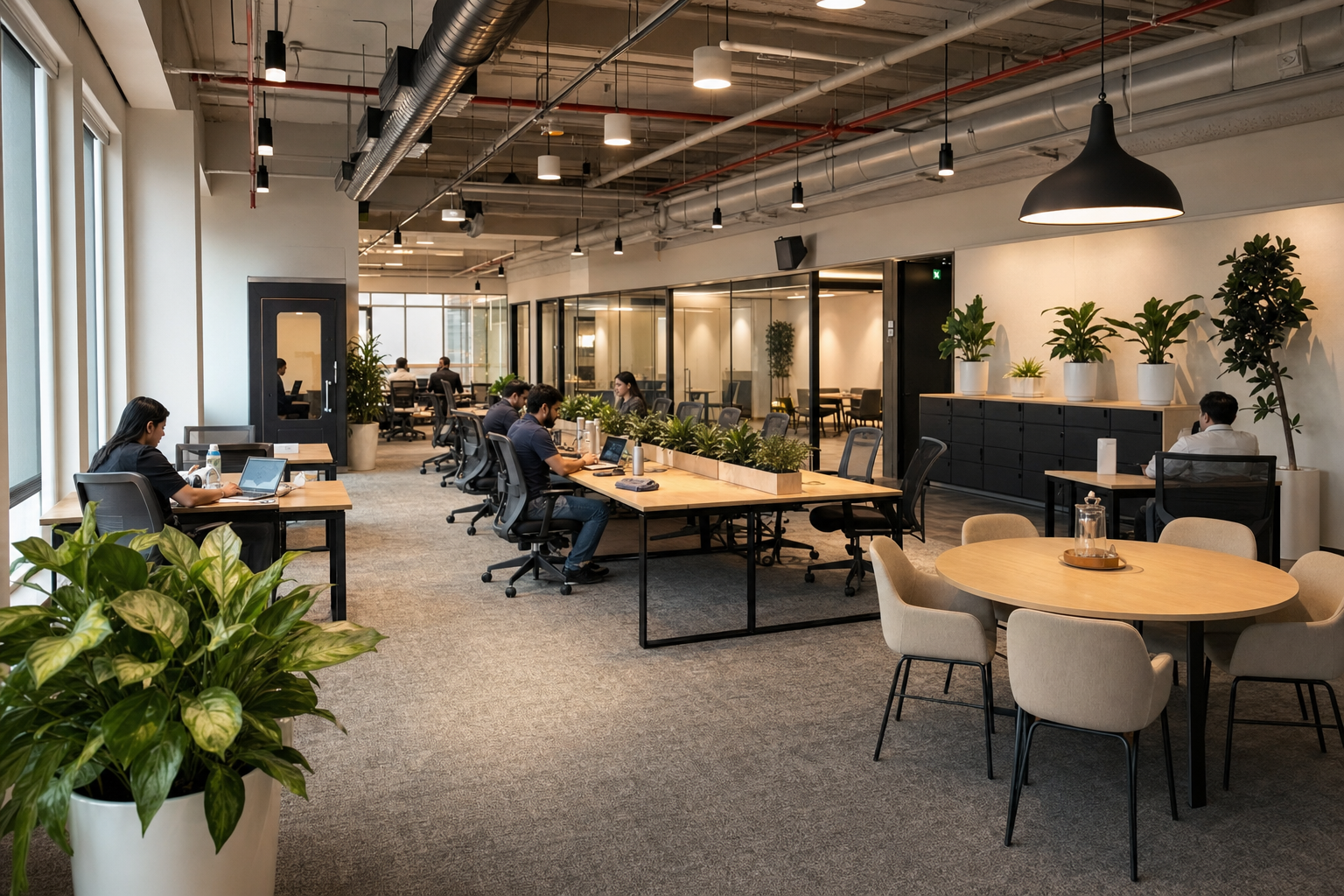
What do Riyadh business consultants recommend for flexible office solutions?
Riyadh’s Shifting Workspace Needs: A Consultant’s Perspective
What do Riyadh business consultants recommend for flexible office solutions? The answer starts with understanding how dramatically the city’s commercial environment has changed. Vision 2030 initiatives have accelerated foreign investment and entrepreneurship, creating demand for workspace that adapts as quickly as business strategy shifts.
Traditional leases lock enterprises into multi-year commitments. Scaling teams up or down, establishing a presence in new districts, or responding to market opportunities requires infrastructure that travels with the business, not sites that demand constant reconfiguration.
Five Workspace Models Riyadh Consultants Recommend
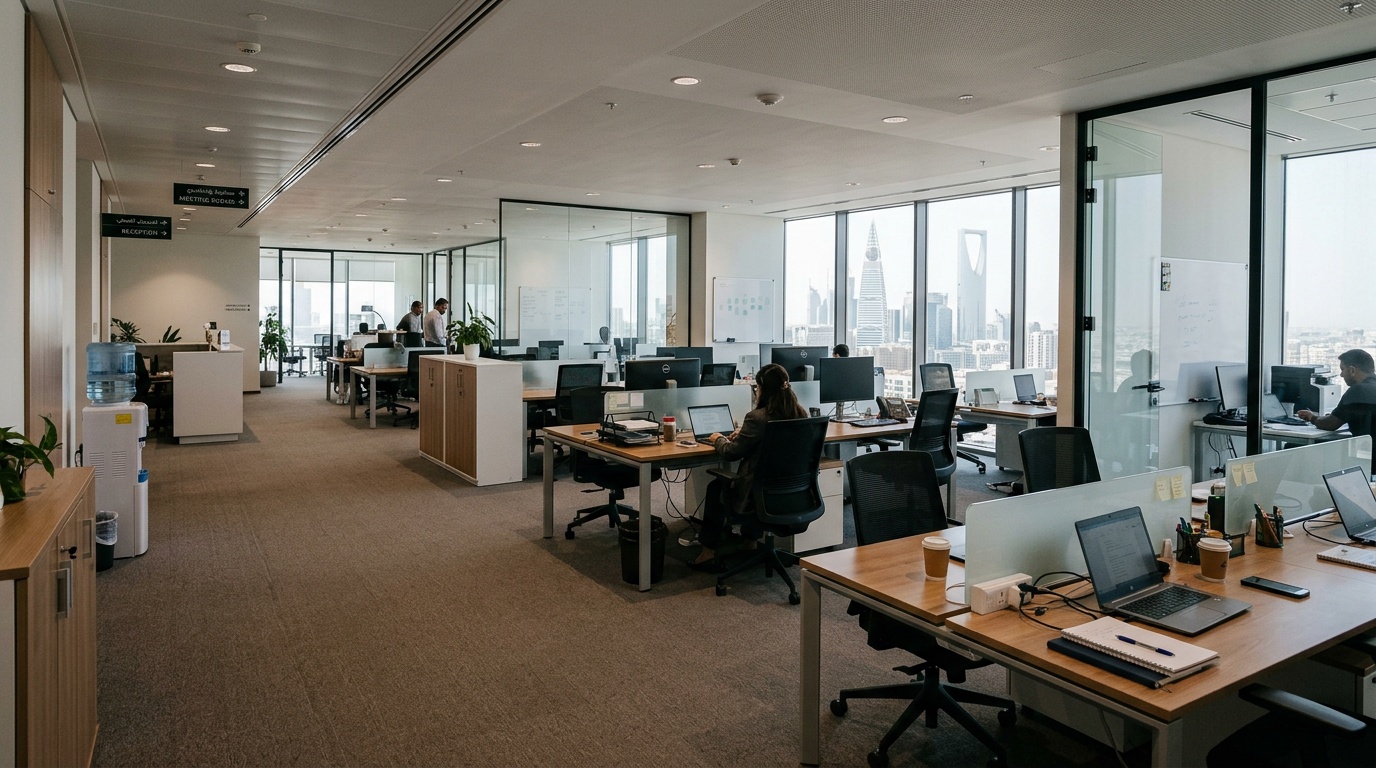
Business consultants in Riyadh typically recommend workspace models based on specific operational requirements:
| Workspace Type | Best Suited For | Primary Advantage |
|---|---|---|
| Hot Desks | Freelancers, mobile professionals | Pay-per-use access without commitment |
| Coworking Spaces | Startups, cross-functional teams | Built-in networking and collaboration |
| Private Offices | SMBs, growing departments | Dedicated space with scalability |
| Meeting Rooms | Client presentations, training sessions | Professional environments on demand |
| Virtual Offices | Remote-first businesses, market testing | Legitimate address without physical overhead |
Three Criteria Riyadh Consultants Prioritize
Location within Riyadh’s primary business districts. Al Olaya or the King Fahd District. Directly impacts client accessibility and talent acquisition. Network uptime above 99.5%, bandwidth guarantees of 100+ Mbps, and integrated conference technology separate functional workspaces from marketing promises.
The real cost extends beyond monthly fees. Factor in setup time saved (typically 2-3 weeks vs. 6 months for traditional office setup), reduced overhead, and the ability to scale without relocation expenses.
Contract terms should align with growth trajectories, not current headcount. Month-to-month arrangements provide the agility modern enterprises require under Vision 2030’s economic diversification goals.
Finding the Right Fit: A Consultant-Guided Approach
Start by mapping current workflows against workspace requirements. Remote-heavy teams need virtual office capabilities and occasional meeting room access. Growing startups benefit from private offices with expansion options. Established enterprises often require hybrid solutions spanning multiple space types.
Evaluating Flexible Workspace Providers
Pros
- Zero capital expenditure for real estate
- Operational flexibility within 30-day notice periods
- Premium locations in Riyadh’s commercial hubs
- Integrated technology and administrative support
Cons
- Higher per-square-meter costs than traditional leases
- Limited customization of branded environments
- Potential scheduling constraints during peak hours
For enterprises expanding across the Gulf region, providers with proven multi-country infrastructure support consistent operations without relocation. The Rag Global Business Hub demonstrates enterprise-grade infrastructure that scales with organizational growth. Engineered for scale across regional operations.
Select providers based on network reliability, contractual transparency, and alignment with long-term business objectives. Not immediate cost savings alone.
Implementation Framework: From Recommendation to Action
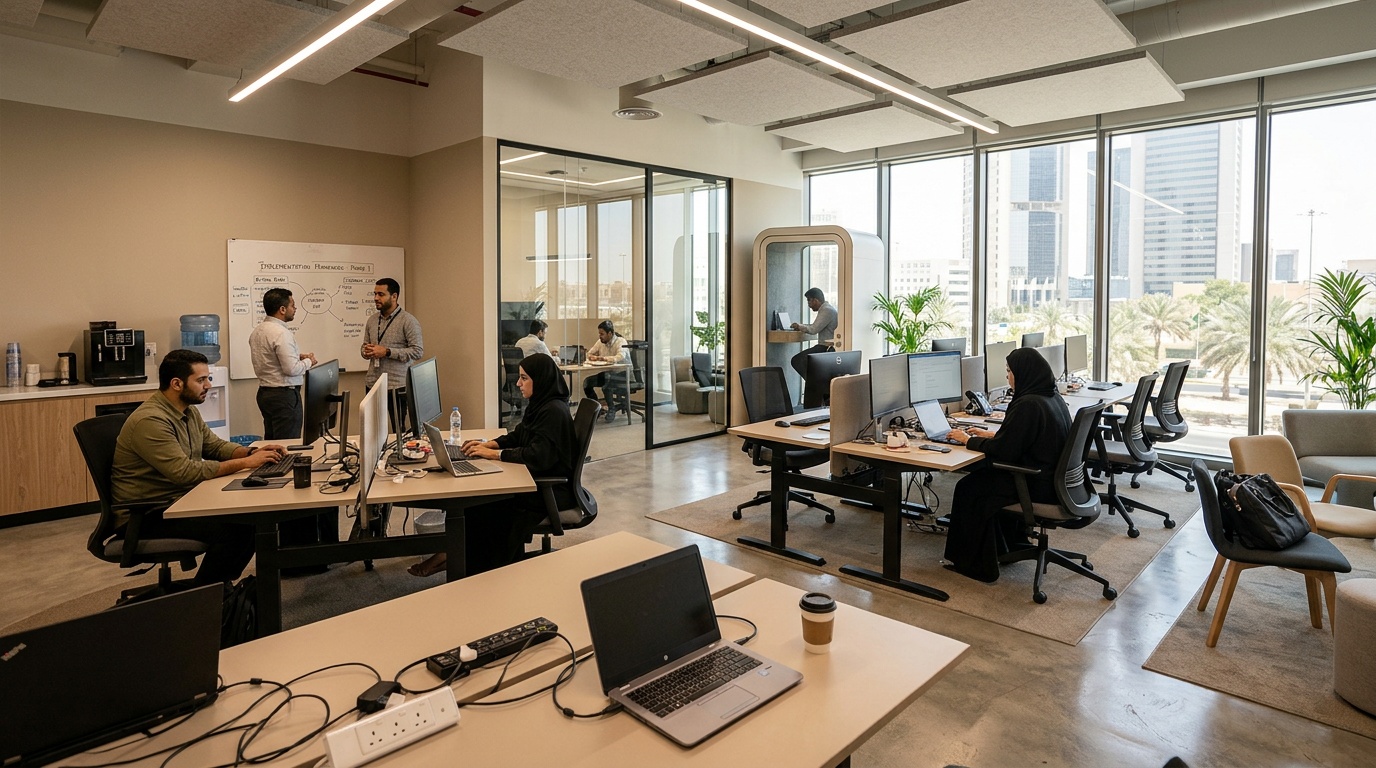
Every distributed system introduces new failure modes. Workspace selection is no different. The wrong lease creates friction that compounds over time.
Consultants evaluate workspace decisions through three lenses: current capacity, growth trajectory, and operational overhead. Organizations optimizing for present-day headcount alone face relocation costs when teams expand. Infrastructure should travel with the business, or it becomes a constraint.
Organizations scaling beyond 50 employees typically require hybrid workspace configurations. A single approach rarely sustains growth at that threshold. Hybrid models combining hot desks for mobile staff with dedicated suites for core operations support the throughput growing organizations need.
Beyond Square Footage: What Really Matters
Location and Business Hubs
Proximity to financial districts and diplomatic quarters ranks high. A 15-minute reduction in travel time translates into measurable productivity gains across distributed teams. We’ve measured this across 80+ countries of infrastructure deployment.
Technology Infrastructure: The Non-Negotiables
Infrastructure travels. Network latency below 50ms, redundant internet paths, and enterprise-grade security protocols separate functional workspaces from decorative ones. Without reliable connectivity, operational throughput degrades immediately.
Support Services That Actually Matter
Reception support, mail handling, and on-site technical assistance remove administrative overhead that distracts from core business objectives. These aren’t luxuries. They’re operational necessities.
Total Cost of Occupancy
Analyze total cost, not monthly rates. Month-to-month agreements, scaling clauses, and transparent fee structures prevent capital lock-in. Organizations gain agility when exit costs stay predictable.
Vision 2030 Alignment
Saudi Arabia’s economic diversification demands workspace strategies supporting international partnerships and local talent development. Rag Global Business Hub provides infrastructure for cross-border collaboration across the MENA region. Systems over announcements.
The Consultant’s Toolkit: Getting This Right
Assessing Current and Future Requirements
Start with headcount projections at 6, 12, and 18 months. Map team functions against workspace types. Mobile sales staff perform best with hot desks. Engineering teams need dedicated suites with consistent infrastructure. Don’t guess. Measure.
Agility vs. Stability Trade-offs
Organizations entering new markets benefit from month-to-month flexibility. Established operations with stable headcount realize cost advantages through longer commitments. The decision hinges on projected variance in team size.
Provider Evaluation Framework
Prioritize uptime commitments, bandwidth specifications, and contractual transparency. Rag Global Business Hub delivers measurable infrastructure reliability across its network. What works at 10x matters more than what works at 1x.
Select workspace solutions that sustain 10x growth without repeated reconfiguration. Systems over announcements.
Frequently Asked Questions
How do Riyadh business consultants see flexible offices supporting new businesses or foreign investment?
Consultants recognize that Vision 2030 drives new ventures and foreign capital into Riyadh. Flexible offices provide immediate operational presence without the long-term commitment of traditional leases. This allows businesses to test the market and scale operations without capital lock-in, ensuring continuity as strategies evolve.
What types of flexible office solutions do consultants recommend for businesses scaling teams in Riyadh?
For scaling teams, consultants often recommend private offices with expansion options or hybrid models. These solutions prevent the need for costly relocations as headcount changes. They ensure that infrastructure can travel with the business, avoiding operational friction.
What key factors do Riyadh business consultants prioritize when evaluating flexible office providers?
Consultants prioritize strategic location, reliable technology infrastructure, and contractual flexibility. They look for providers with high network uptime and transparent cost structures to prevent unexpected operational overhead. The goal is to select a solution that supports business operations without interruption.
How do flexible office solutions help businesses align with Saudi Vision 2030 goals?
Flexible office solutions support Vision 2030 by enabling rapid market entry and operational agility for new businesses and international partnerships. They provide the adaptable infrastructure needed for economic diversification and local talent development. This ensures businesses can respond quickly to new opportunities without being constrained by fixed real estate.
Can large enterprises in Riyadh benefit from flexible office solutions, or are they just for startups?
Large enterprises in Riyadh absolutely benefit from flexible office solutions, often through hybrid configurations. These solutions allow them to establish presences in new districts or accommodate project-based teams without long-term commitments. This prevents the operational reset that comes with reconfiguring traditional spaces for fluctuating needs.
What is the first step Riyadh consultants suggest when considering flexible office solutions?
Riyadh consultants recommend starting by mapping current workflows against workspace requirements. This helps identify specific needs, such as virtual office capabilities for remote teams or dedicated suites for core operations. Understanding these requirements ensures the chosen solution supports business continuity and avoids future operational constraints.
Leave a Reply