
Best hybrid work management software for enterprise teams with offices in multiple countries 2026
Best Hybrid Work Software for Global Enterprise 2026
The Real Problem: Managing People Who Move
Your team spans Cairo, London, Singapore, and São Paulo. Each location has different tax obligations, labor laws, data requirements, and cultural expectations around flexibility. Most workplace platforms treat this as an edge case. It’s not. The best hybrid work management software for enterprise teams with offices in multiple countries 2026 must function as unified infrastructure, not regional tools held together with hope.
Standard collaboration platforms assume everyone shares a time zone, speaks the same language, follows identical legal frameworks. They don’t account for reality: a manager in Dubai needs approval workflows that respect UAE data sovereignty. A colleague in Barcelona requires integration with Spanish labor reporting systems. Without purpose-built multi-country support, you’re patching together spreadsheets, regional vendors, and manual processes that create risk.
What You Actually Need
- Regional compliance engines covering labor law, workspace regulations, and reporting requirements
- Unified reporting dashboards that aggregate utilization data across geographies
- Centralized admin controls with role-based permissions tied to local legal entities
- Localized interfaces and multilingual support built into the core product
- Flexible booking rules that adapt per office based on local policies
Time Zones Expose Everything
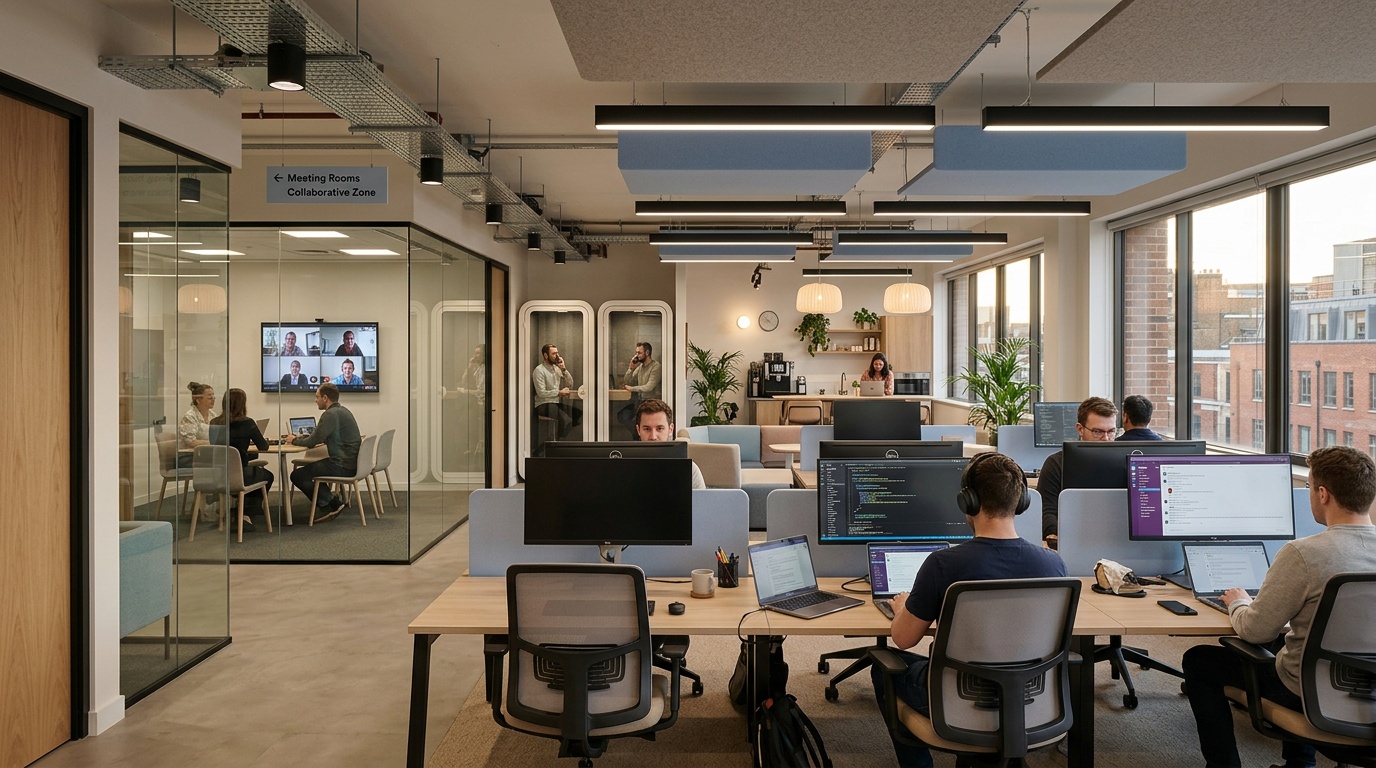
Tools designed for co-located teams break when your engineering spans Lagos to Lisbon. Meetings appear at midnight. Booking windows close without warning. The cognitive load falls on employees, not the software.
Sophisticated platforms handle this through intelligent availability windows that display local time automatically, buffer periods between cross-region bookings, and automated conflict detection that flags double bookings before they happen. This isn’t a feature. It’s the baseline for any enterprise operating globally.
Data Residency Can’t Be an Afterthought
EU, UAE, and APAC data residency laws mandate that employee check-in data, booking history, and office utilization metrics remain within specific jurisdictions. Platforms without regional data centers create legal exposure. You need configurable data residency, audit-ready reporting, and compliance modules that adapt to local requirements without separate product instances.
Why We Built Hotdesk Differently
People move among offices, cities, and countries more than enterprise systems expect. When you transfer from Dubai to Hong Kong, your badge works. Your calendar stays intact. Your access credentials persist. But workspace platforms often reset you to zero. Forcing re-registration, re-onboarding, new learning curves exactly when continuity matters most.
The The Work Project Midtown workspace exemplifies what we support across our global network. Whether a team member in Hong Kong books a day pass or a consultant in Barcelona reserves a hot desk for a week, the experience feels familiar. The platform travels with them.
Single Credential System, Global Access
Hotdesk connects more than 1,500 workspace locations across MENA, Europe, and Asia. One credential system that works from Dubai to Barcelona. Booking rules, approval workflows, and reporting structures configured globally while respecting regional differences. Your operations team sees aggregated utilization data. Local office managers retain control over their specific spaces.
Desk Booking Is Just the Beginning
Enterprise agility depends on how well your hybrid work platform connects to systems already running your business. Visitor management, conference room scheduling, resource allocation, space utilization analytics. These must function as a single ecosystem, not isolated modules requiring separate licenses and admin overhead.
Key Insight: Platforms that treat visitor management and desk booking as separate products introduce reconciliation overhead. Prioritize unified solutions where check-in data, booking records, and utilization metrics flow into single reporting.
Portfolio-Level Intelligence
Real estate teams managing global footprints need visibility into which offices are underutilized, which floors are overbooked, where demand’s growing. Hotdesk provides occupancy dashboards that aggregate data across all connected locations, enabling portfolio-level decisions about lease renewals, space reconfigurations, capital allocation. This transforms hybrid work management from operational expense into strategic asset.
Making the Right Choice

Questions That Matter
- Does the platform support your specific regional compliance requirements out of the box?
- Can you manage all locations from a single admin dashboard without regional product instances?
- What does the integration ecosystem look like for your existing enterprise stack?
- How does the platform handle data residency for all jurisdictions where your employees work?
- What does onboarding look like for a new country within an existing enterprise contract?
The right software isn’t the one with the most features. It’s the one that reduces friction for your employees, minimizes risk for your legal team, and gives your operations leadership visibility to make informed decisions across every location where your people work.
Built to Scale
Your workspace platform needs to grow with you. Enterprise teams expanding into new markets need solutions that add locations without renegotiated contracts or separate admin instances. Ask whether the platform handles 10 offices or 100 with the same infrastructure. Whether API limits and data caps scale with your headcount or remain fixed regardless of utilization.
The Human Element Matters Most
Features mean nothing if adoption stalls. Global teams include employees with varying comfort levels with technology, different native languages, distinct work cultures. The software you choose must deliver consistent, intuitive interface that works equally well for your Cairo finance team and Singapore engineering group.
Prioritize platforms that offer localized interfaces, clear iconography, support resources accessible without VPN dependencies. When employees can use the system without training sessions or support tickets, you’ve found a platform that respects their time and autonomy.
Hotdesk remains purpose-built for enterprises that treat workspace continuity as infrastructure, not overhead. Every location in our network operates on the same principles: reduce friction, maintain continuity, let your people focus on work instead of workspace logistics.
What Separates Adequate from Essential
Enterprise teams face a choice between tools that manage bookings and systems that enable continuity. The distinction matters. Booking tools solve access. Continuity platforms solve the reality that your people move among offices, time zones, and legal jurisdictions without wanting to relearn how their workspace functions.
Key Insight: The platforms worth investing in reduce the number of decisions employees make about where and how they work, not increase them. When a team member traveling from Cairo to Hong Kong books The Work Project Midtown without creating new accounts, learning new interfaces, or submitting separate expense reports, the platform’s doing its job.
Three Shifts That Will Matter
Portfolio rationalization. Companies carrying excess real estate will consolidate. Platforms providing granular utilization data across regions will determine which locations stay, which shrink, which close. You need this intelligence natively, not through third-party analytics added after the fact.
Regulatory fragmentation. Data sovereignty laws continue to diverge. What works for European headquarters may violate regulations in Abu Dhabi. Platforms with configurable compliance engines built into core architecture will outlast those relying on regional workarounds.
Employee expectation convergence. Workers in Singapore, Dubai, and Madrid increasingly expect the same experience. They don’t care about your backend complexity. They care whether booking a desk feels as natural as ordering a car.
The Reality
Hotdesk addresses the problem most platforms ignore: the friction of starting over every time your people cross borders or change offices. By maintaining single credential systems, unified reporting, and localized compliance across more than 1,500 locations, it eliminates the reset that other systems require.
For enterprises operating across multiple countries, evaluation comes down to one question: does your platform treat movement as an exception or as the baseline assumption? Platforms built for single-office deployments will always struggle at global scale. Systems designed for continuity from the start operate the way your people actually work.
Effective hybrid work management software reduces complexity for employees, limits exposure for compliance teams, and gives operations leadership visibility across every location. That’s not a feature list. It’s an operational principle.
Frequently Asked Questions
How do global labor laws and regulations affect hybrid work software choices?
Managing hybrid work across countries means navigating different labor laws, tax obligations, and cultural expectations. A truly effective hybrid work management software must have regional compliance engines built in, adapting to local requirements. This ensures your operations remain compliant, wherever your teams are located.
Why is data residency a key consideration for global hybrid work platforms?
Data residency laws, like those in the EU, UAE, and APAC regions, require employee data to stay within specific jurisdictions. Platforms without configurable data residency create legal exposure for enterprises. The right software offers compliance modules that adapt to local rules, without needing separate product instances.
What makes a hybrid work platform truly unified for international teams?
A unified platform acts as a single operating layer, not just regional tools patched together. It offers centralized admin controls, role-based permissions tied to local entities, and localized, multilingual interfaces. This ensures a consistent, compliant experience across all your global offices.
How does hybrid work software handle different time zones for global teams?
Global teams often span many time zones, making scheduling complex. Sophisticated hybrid work platforms manage this with intelligent availability windows that display local times automatically. They also include automated conflict detection for cross-region bookings, making asynchronous work smoother for everyone.
Beyond desk booking, what other features should global enterprises look for in hybrid work software?
Desk booking is a starting point. For true enterprise agility, look for integrated solutions like visitor management, conference room scheduling, and space utilization analytics. These should function as a single ecosystem, streamlining operations and providing a unified reporting layer.
How can a company ensure continuity for employees moving between international offices?
When employees move between global offices, their workspace platform should travel with them, not reset. Hotdesk, for example, provides a single credential system that works across its global network of over 1,500 locations. This ensures a familiar, seamless experience, from Dubai to Barcelona, maintaining a sense of belonging.
Can hybrid work software help with real estate decisions for global offices?
Absolutely. Platforms with space utilization analytics provide occupancy dashboards that aggregate data across all connected locations. This intelligence helps real estate teams make informed decisions about lease renewals, space reconfigurations, and capital allocation, turning hybrid work into a strategic asset.
Leave a Reply