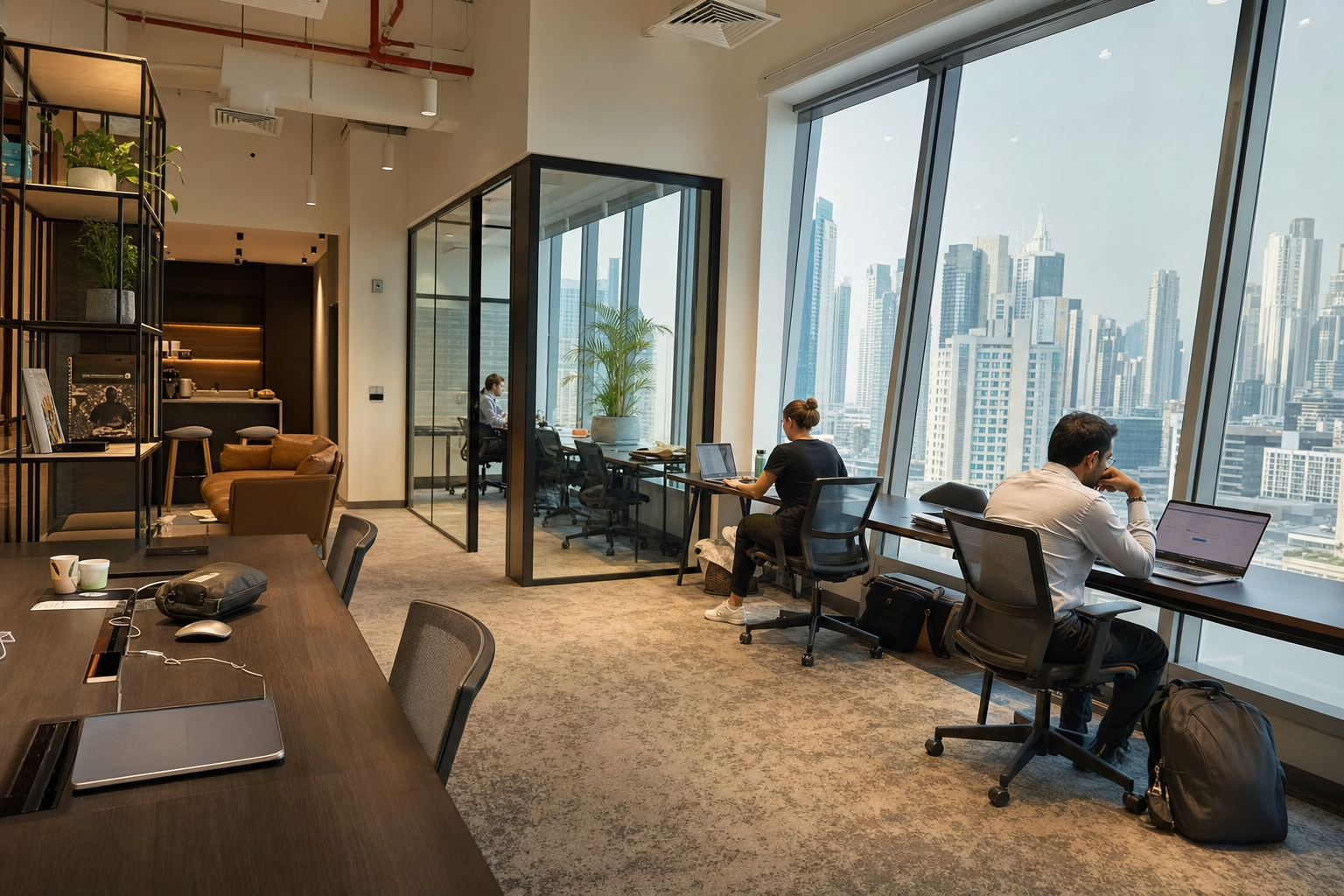
What's the difference between a private office and a hot desk in a Dubai coworking space?
Every distributed system asks you to manage new failure modes. When considering where and how your team works, this complexity escalates. The choice between a private office and a hot desk in a coworking space isn’t merely about where you place your laptop; it’s an infrastructure decision that impacts productivity, security, and operational continuity. Understanding the foundational differences is the first step in engineering an effective workspace solution, especially in dynamic markets like Dubai.
Key Takeaways
- Choosing between a private office and a hot desk is an infrastructure decision that directly affects your team’s productivity and security, not just where you sit.
- Every workspace setup introduces new failure modes you need to manage, similar to how distributed systems require careful planning for reliability.
- In a dynamic market like Dubai, the wrong workspace choice can break operational continuity and force you to rework your entire setup.
- Understanding the foundational differences between private offices and hot desks helps you engineer a workspace that avoids costly disruptions.
What’s the difference between a private office and a hot desk in a Dubai coworking space? At its core, it’s about dedicated resources versus shared access. We engineer solutions that travel with the user, minimizing the friction of setup and reconfiguration. This distinction is paramount for businesses seeking reliable, scalable environments. Let’s break down the infrastructure of each.
Defining the Workspace Infrastructure: Private Offices vs. Hot Desks
A private office within a Dubai coworking space offers a dedicated, enclosed environment for individuals or teams. Think of it as your company’s physical anchor point within a larger managed facility. This space is exclusively yours for the duration of your agreement, providing a consistent location for your operations. It’s not just a room; it’s an extension of your business’s infrastructure, designed for focused work and team cohesion, free from the transient nature of shared areas.
In contrast, a hot desk represents a flexible, unassigned workspace within a coworking facility. Users can occupy any available desk on a first-come, first-served basis. This model prioritizes agility and cost-efficiency, allowing professionals to access workspace amenities without the commitment of a dedicated station. It’s infrastructure that truly travels, enabling work from virtually any available spot within the designated coworking zone.
What exactly is a private office in a Dubai coworking space?
A private office in a Dubai coworking space is a fully enclosed, lockable unit designed for exclusive use by a single company or team. It provides a consistent and secure environment, allowing for personalization and the permanent setup of equipment. This dedicated space is engineered for scale, accommodating teams from two to twenty or more, ensuring that your operational footprint is stable and accessible whenever needed.
Unlike shared areas, a private office offers predictable acoustics, enhanced privacy for confidential calls or meetings, and a stable base for your team. It’s the infrastructure choice for entities prioritizing continuity over the constant need for reconfiguration, ensuring that work systems remain intact and accessible without daily setup.
What exactly is a hot desk?
A hot desk is an unassigned workspace within a coworking environment. When you book a hot desk, you are granted access to any available workstation in the common areas. This model emphasizes flexibility and immediate access, allowing professionals to work from different locations within the coworking space each day. It’s the epitome of infrastructure that travels, fitting your work needs into a portable setup.
The primary benefit of a hot desk lies in its adaptability. It’s an ideal solution for freelancers, remote workers, or hybrid teams who don’t require a permanent physical presence or constant equipment setup. This approach removes the complexity of managing fixed office space, offering a ready-to-use station whenever and wherever you need it.
Key Insight: Workspace as Infrastructure
Framing workspace choices as infrastructure decisions highlights the importance of reliability and continuity. A private office is dedicated infrastructure, while a hot desk is shared, mobile infrastructure. Both serve distinct operational needs, but understanding this distinction guides the selection process towards optimal system performance.
Side-by-Side Feature Comparison
| Feature | Private Office | Hot Desk |
|---|---|---|
| Assigned Space | Yes, dedicated and lockable | No, unassigned, first-come, first-served |
| Privacy Level | High (enclosed, soundproofed options) | Low (open-plan shared areas) |
| Customization | Allowed (personal items, branding) | Not allowed (no personal items overnight) |
| Team Size Suitability | Small to large teams (2-20+ people) | Individual workers, very small teams |
| Equipment Storage | Secure, permanent setup possible | None; requires daily setup/teardown |
| Cost Per User | Higher (includes dedicated space) | Lower (shared resource cost) |
| Operational Continuity | High (stable environment) | Lower (requires daily adaptation) |
| Networking Potential | More contained within the team | Higher potential with diverse users |
Dubai Pricing Data: The Real Cost of Private Offices and Hot Desks
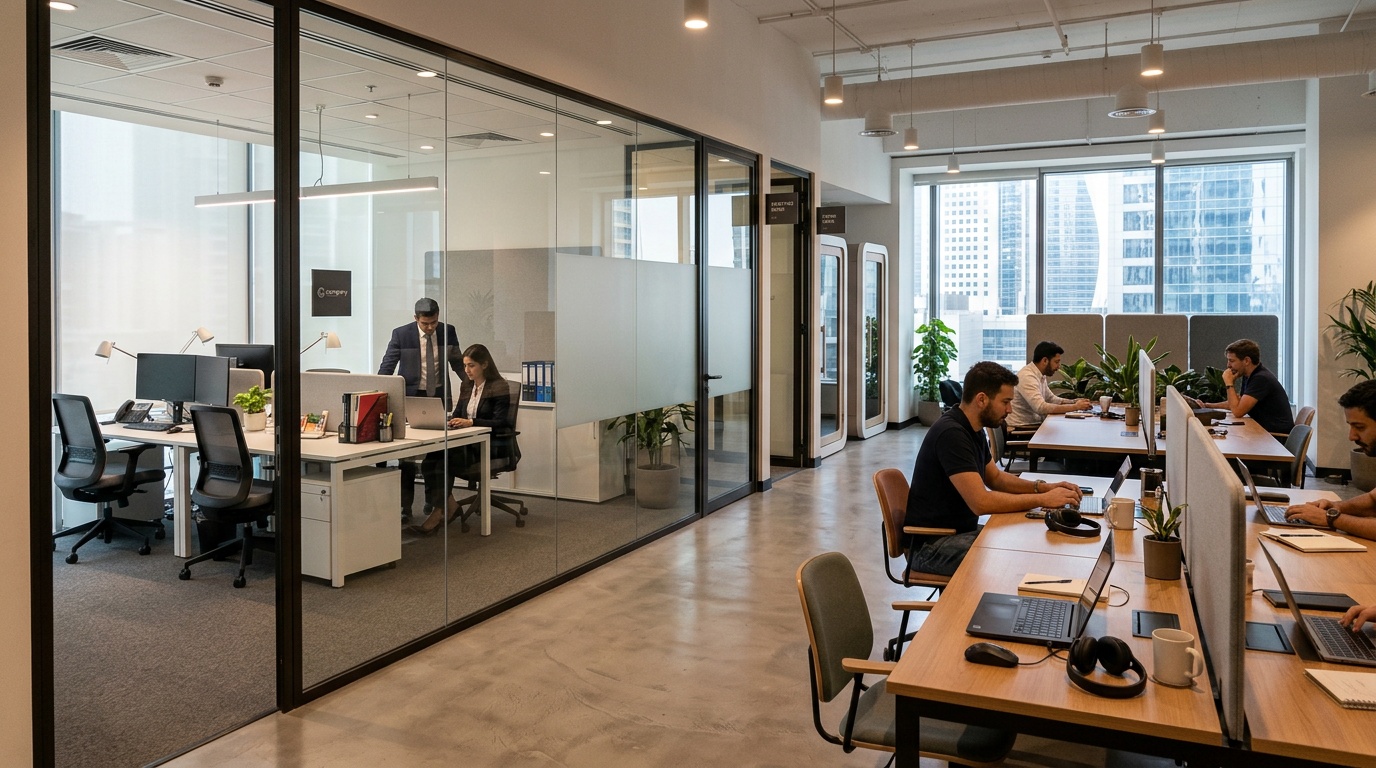
Understanding the financial implications is critical when evaluating workspace infrastructure. In Dubai, the cost structure for private offices and hot desks varies significantly, influenced by location, amenities, and the specific operator’s model. While marketing might simplify these costs, a precise analysis reveals the true operational expense, helping businesses make informed decisions based on tangible metrics rather than vague promises.
Our data from the Hotdesk platform and industry analysis indicates that private offices in prime Dubai locations typically start from around 6,500 AED per month. This figure reflects the dedicated infrastructure, security, and private amenities provided. Conversely, hot desk access in Dubai coworking spaces can begin as low as 950 AED per month, offering a gateway to professional workspace at a fraction of the cost. This disparity underscores the fundamental difference in resource allocation and service provision.
Average monthly rates for hot desks and private offices
Analyzing market rates provides a clear picture of investment required for each workspace type. Hot desks in Dubai coworking spaces commonly range from approximately 950 AED to 2,000 AED per month, depending on the provider and included services. This price point grants access to shared facilities and a flexible working environment.
For private offices, the investment is substantially higher, reflecting the dedicated nature of the space. Rates for small private offices in Dubai typically begin around 6,500 AED per month and can extend upwards of 15,000 AED or more for larger configurations or premium locations. This price reflects the provision of exclusive, secure, and fully equipped infrastructure for a business’s operational needs.
Location pricing differences: Downtown, Business Bay, and D3
Geographic positioning profoundly impacts workspace costs in Dubai. Downtown Dubai and Business Bay, as established commercial hubs, generally command higher rental rates for both private offices and hot desks due to their prestige and accessibility. Here, private offices might start at 7,000 AED, while hot desks could range from 1,200 to 2,500 AED.
Areas like Dubai Design District (D3) or emerging tech zones may offer slightly different pricing structures, sometimes with competitive entry points to attract creative and tech-focused businesses. While private offices in D3 might start in a similar range, hot desk options could be more varied. It’s essential to examine specific provider listings, as these districts often have unique offerings. Understanding these location-based price variations helps in budgeting for workspace infrastructure that aligns with business location strategy.
Uncovering hidden costs: deposits, utilities, and fit-outs
Beyond the advertised monthly rates, businesses must account for potential ancillary costs. Many coworking operators require a security deposit for private offices, typically equivalent to one to three months’ rent, refundable upon lease termination. Utilities like electricity, water, and high-speed internet are usually bundled into the monthly fee for both private offices and hot desks, but it’s critical to confirm this inclusion.
While hot desks require minimal setup, private offices might involve costs for initial fit-outs if custom configurations are desired beyond standard furnishings. Although most coworking spaces provide ready-to-use offices, any personalization or specialized equipment installation could incur additional expenses. It’s prudent to obtain a comprehensive breakdown of all potential charges to accurately assess the total cost of workspace infrastructure.
| Workspace Type | Estimated Monthly Cost (AED) | Key Considerations |
|---|---|---|
| Hot Desk | 950 – 2,500 | Shared access, flexible, no dedicated space, daily setup required. |
| Private Office (Small, 2-4 people) | 6,500 – 10,000+ | Dedicated, secure, lockable, consistent environment, can be personalized. |
| Private Office (Medium, 5-10 people) | 10,000 – 20,000+ | Increased space, team capacity, higher cost per user than hot desks. |
Source: Hotdesk platform data and industry averages for Dubai locations.
System Friction: The Hidden Productivity and Security Costs of Hot Desking
Every distributed system asks you to manage new failure modes. When considering where and how your team works, this complexity escalates. The choice between a private office and a hot desk in a coworking space isn’t merely about where you place your laptop; it’s an infrastructure decision that impacts productivity, security, and operational continuity. Understanding the foundational differences is the first step in engineering an effective workspace solution, especially in dynamic markets like Dubai.
What’s the difference between a private office and a hot desk in a Dubai coworking space? At its core, it’s about dedicated resources versus shared access. We engineer solutions that travel with the user, minimizing the friction of setup and reconfiguration. This distinction is paramount for businesses seeking reliable, scalable environments. Let’s break down the infrastructure of each.
The daily rhythm of hot desking can introduce unexpected friction that erodes productivity. Imagine arriving each morning, only to spend 15-20 minutes setting up your workstation: connecting monitors, docking laptops, arranging peripherals, and logging into multiple systems. This repetitive process, multiplied across a team, represents a significant drain on valuable work hours. It’s an operational overhead that detracts from core business tasks and introduces variability into the start of every workday. Systems over announcements mean we must account for this genuine time cost.
Additionally, the lack of personalization inherent in hot desking creates a subtle but potent emotional cost. Employees may feel disconnected from their workspace when they cannot leave personal items, photos, or project materials. This transient setup can lead to feelings of disassociation and resentment, as the space feels less like a personal hub and more like a temporary rental. Research indicates that nearly 75% of businesses in coworking spaces opt for private setups, a trend driven partly by the desire for a stable, personalized environment where employees feel a sense of belonging and ownership. This isn’t about luxury; it’s about psychological continuity and fostering team cohesion.
From a security perspective, open-plan hot desking environments present inherent challenges, especially in a bustling city like Dubai. Access control becomes more complex when anyone can occupy an available desk. Sensitive documents left unattended, even for short periods, pose a risk. Cybersecurity is also a concern; shared networks, while often managed, can be more vulnerable than isolated private networks. While many operators implement security measures, the fundamental design of hot desking prioritizes access over absolute control, a trade-off that businesses requiring stringent data protection or client confidentiality must carefully consider. A private office provides an engineered solution for these specific bottlenecks.
Pros of Hot Desking
- Cost-effective entry point for flexible workspace access.
- Encourages mobility and interaction across different areas.
- Adaptable for individuals with highly variable work schedules.
Cons of Hot Desking
- Significant daily setup and teardown time reduces productivity.
- Lack of personalization leads to disassociation and resentment.
- Enhanced security and access control challenges in shared areas.
- Inconsistent environment hinders deep work and focus.
Work Style Alignment: Networking vs. Deep Work
The environment you choose directly influences your workflow and output. Understanding whether your primary need is broad collaboration or focused, uninterrupted work is key to selecting the appropriate workspace infrastructure. In Dubai’s dynamic business ecosystem, the ability to align your daily operational needs with your workspace setup can significantly impact both your team’s effectiveness and your business’s ability to innovate.
Hot desking environments, by their very nature, foster opportunities for serendipitous encounters and broader networking. The constant flux of professionals from various industries creates a fertile ground for cross-pollination of ideas and potential collaborations. For example, a designer working from a hot desk might strike up a conversation with a marketing consultant, leading to a new client engagement.
Conversely, private offices are engineered for deep work and concentration. The enclosed nature provides acoustic dampening, minimizing distractions from ambient noise and conversations in shared areas. This controlled environment is essential for tasks requiring sustained focus, such as coding, complex data analysis, writing, or strategic planning. When 77% of employees prefer workspaces offering both open and private areas, it highlights the need for dedicated zones that support different work modes. A private office guarantees that such a zone is consistently available, allowing individuals and teams to enter a state of flow without interruption, which is critical for achieving high-quality output at scale.
As businesses navigate return-to-office (RTO) strategies, the choice between hot desking and private offices becomes a critical capacity planning decision. For companies mandating hybrid work, hot desking offers flexibility, allowing a larger number of employees to use a smaller physical footprint throughout the week. But this requires careful coordination to ensure desk availability and can lead to the productivity friction mentioned earlier. For larger teams or those requiring consistent presence and collaboration, private offices provide a predictable and stable environment. They simplify capacity planning by offering a fixed number of dedicated workstations, ensuring that team members have a reliable place to work together, fostering continuity and a shared operational base. For example, a 5-person startup might find a small private office in a place like Coworking Naubostik offers more predictable collaboration than relying on fluctuating hot desk availability.
Workspace Alignment Checklist
- Primary Goal: Is your main objective networking and client interaction, or focused, uninterrupted work?
- Team Size: How many people consistently need dedicated workspace?
- Confidentiality Needs: Do you handle sensitive client data or require private calls?
- Equipment Requirements: Do you need to set up specialized equipment daily or permanently?
- Budget Flexibility: Are you prioritizing lower monthly costs with shared resources, or investing in dedicated infrastructure?
- Personalization: Is it important for your team to personalize their immediate workspace?
Decision Framework: How to Choose Your Dubai Workspace
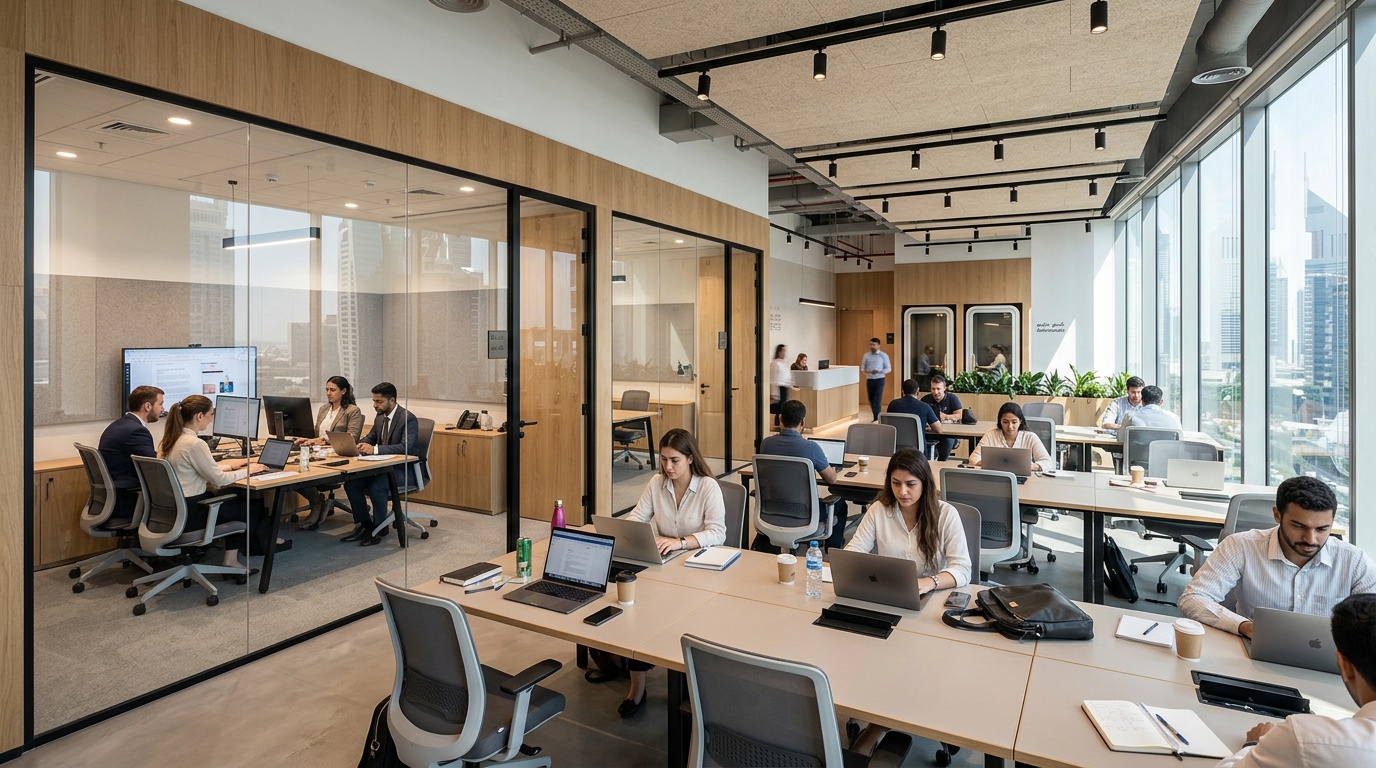
Selecting the right workspace infrastructure is an engineering challenge that balances operational needs with strategic goals. In Dubai’s competitive market, aligning your physical workspace with your team’s work style and business objectives is paramount. This framework helps you move from understanding the options to making a concrete, informed decision that supports your productivity and growth, ensuring you build systems that travel with you.
Your Workspace Personality Checklist
To pinpoint the ideal workspace, assess your core operational requirements. Do you primarily require an environment for deep, uninterrupted focus, or is your business model built on constant collaboration and networking? Consider your team’s size and their need for privacy and security. If your team thrives on spontaneous interaction and you need a cost-effective entry point, hot desking might appear suitable. But if your work involves sensitive data, confidential calls, or requires a stable, personalized environment for maximum output, a private office configuration becomes the more logical infrastructure choice.
Reflect on your daily workflow. How much time do you dedicate to focused tasks versus client interactions or team syncs? Do you need to store equipment or personal items securely overnight, or is a ‘pack-up-and-go’ mentality aligned with your operational rhythm? Understanding these preferences helps define the friction points an ideal workspace should eliminate. For example, if deep work is your priority, the distractions inherent in shared hot desk areas will introduce significant system friction.
How to Test Both Options Without Long-Term Commitments
The most effective way to determine the right fit is through direct experience. Hotdesk empowers you to test different workspace infrastructures without the burden of lengthy contracts. You can book hot desks on a daily or weekly basis, experiencing the flexibility and dynamic atmosphere of shared spaces. This allows you to gauge the actual productivity impact and networking opportunities firsthand.
For those considering a dedicated setup, short-term private office rentals are also available. This provides a trial period to assess if a private office meets your team’s specific needs for continuity, security, and focused work. For example, you might book a day pass at a location like Coworking Naubostik to evaluate its hot desk offerings, and then explore short-term private office options in Dubai to compare the two models directly. This approach minimizes risk and ensures your final decision is data-driven, based on real-world operational performance.
Frequently Asked Questions
Can I try a private office before committing to a long lease?
Yes, many coworking spaces, including those listed on Hotdesk, offer flexible booking options for private offices, allowing for short-term rentals. This enables businesses to test the environment and its suitability before signing longer agreements.
What is the primary advantage of hot desking for a solo entrepreneur?
The primary advantage is cost-efficiency and flexibility. For solo entrepreneurs, a hot desk provides access to professional amenities and a dedicated workspace without the overhead of a private office, allowing them to adapt their work location as needed.
How does Hotdesk facilitate testing different workspace types in Dubai?
Hotdesk provides a platform to search, compare, and book various workspace solutions, from daily hot desk passes to short-term private office bookings. This allows users to experience different environments and operator models to find the best fit for their workflow.
Is it possible to scale up or down easily with either option?
Hot desking offers inherent scalability for individuals as you can simply book more days. For teams, private offices offer easier scaling options than traditional leases, as coworking operators often have larger offices available or can facilitate moves to bigger spaces within their network, like exploring options at Coworking Naubostik if their needs evolve.
References
Frequently Asked Questions
What is the difference between a private office and a hot desk in a Dubai coworking space?
A private office is a dedicated, lockable space assigned to one team or company, offering continuity and permanent setup without daily reconfiguration. A hot desk is an unassigned, first-come-first-served workstation in a shared area, prioritizing flexibility and lower cost over stability. This distinction matters for businesses that need reliable infrastructure versus those that value mobility.
Is hot desking cheaper than a fixed desk in Dubai?
Yes, hot desking is significantly cheaper than a fixed desk in Dubai, with average monthly rates starting around 950 AED compared to 6,500 AED for a private office. The lower cost reflects shared resources and no permanent assignment, making it suitable for freelancers and remote workers who do not require dedicated space. But, the trade-off includes daily setup and reduced privacy.
What are the disadvantages of hot desking in coworking spaces?
Hot desking requires daily setup and teardown of equipment, with no secure storage or personalization options. Privacy is low due to open-plan environments, and operational continuity suffers because you may get a different desk each day. These factors make hot desking less reliable for teams that need consistent, private workstations.
What are the benefits of a private office for a team in Dubai?
A private office offers a stable, lockable environment with predictable acoustics and full privacy for confidential calls or meetings. Teams can customize the space with branding and leave equipment permanently set up, eliminating daily reconfiguration friction. This infrastructure choice supports team cohesion and operational continuity essential for scaling businesses.
Can you customize a private office in a Dubai coworking space?
Yes, private offices in Dubai coworking spaces generally allow customization such as adding personal items, company branding, and permanent equipment installation. This dedicated space functions as your company’s anchor point, enabling a consistent setup that minimizes the distractions of shared areas. Customization is not permitted in hot desk zones.
Is hotdesking the same as remote work?
No, hotdesking is not the same as remote work. Hotdesking refers to using unassigned desks within a coworking facility, meaning you work in a shared physical office but without a fixed spot. Remote work means working from any location outside a central office, such as home or a cafe. Both offer flexibility, but hotdesking provides access to professional amenities and networking opportunities.
Leave a Reply