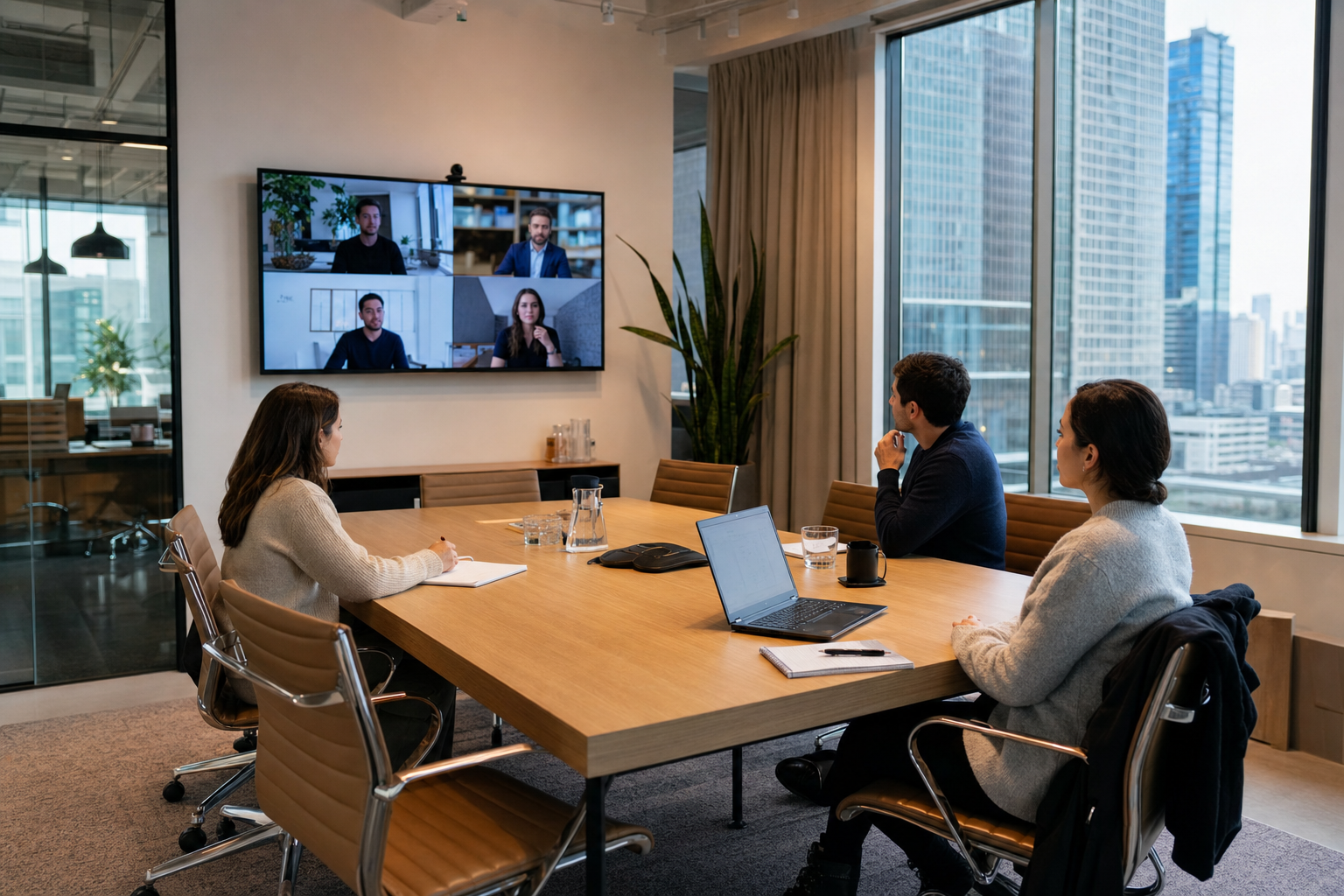
active listening techniques for video conferences
Video conferences have become a staple of modern work, connecting teams across cities, countries, and continents. Yet, despite their convenience, they present unique challenges for communication. Active listening techniques for video conferences address these challenges by helping participants stay engaged, understand each other clearly, and reduce misunderstandings that arise from the digital divide. These techniques are not about simply hearing words but about fully processing and responding to messages in a way that builds trust and clarity.
Key Takeaways
- Active listening goes beyond simply hearing words to fully processing and responding to what others communicate during virtual meetings.
- Remote conversations create unique barriers that demand intentional effort to maintain focus and genuine understanding.
- Practicing focused listening during video calls helps prevent the miscommunication that stems from digital interactions.
- Trust and clarity emerge naturally when participants commit to being fully present in online conversations.
Adopting active listening in video calls means shifting focus from passive reception to deliberate engagement. Unlike in-person meetings, where body language and subtle cues fill gaps, video calls limit nonverbal signals, making conscious listening essential. Professionals who master these techniques improve collaboration, reduce meeting fatigue, and foster a sense of connection despite physical distance.
What is active listening techniques for video conferences?
Active listening techniques for video conferences encompass a set of deliberate behaviors and strategies designed to ensure full attention, comprehension, and thoughtful response during virtual meetings. Unlike traditional listening, which can be passive, active listening requires conscious effort to avoid distractions, confirm understanding, and demonstrate engagement despite the constraints of video technology.
Video conferencing limits many natural cues we rely on, such as posture shifts, peripheral glances, or subtle facial expressions. Research shows nonverbal communication accounts for over half of our message interpretation, yet much of this is lost on screen. Active listening techniques compensate by emphasizing verbal affirmations, intentional eye contact, and focused body language within the camera frame. This prevents the common pitfall of multitasking. Which can reduce comprehension by up to 50%, according to research from Asana. By guiding participants toward mindful presence.
Key elements include maintaining eye contact by looking into the camera, using verbal nods such as “I see” or “That makes sense,” and avoiding interruptions. These approaches create a virtual environment where speakers feel heard and participants retain more information. Leaders who integrate these techniques are perceived as more effective and trustworthy, as highlighted by the Center for Creative Leadership. Practicing active listening on video calls is a skill that requires adaptation but rewards with stronger connections and clearer communication.
Benefits of active listening techniques for video conferences

Implementing active listening techniques during video conferences delivers several tangible benefits, directly impacting productivity, team cohesion, and individual focus. First, these techniques reduce misunderstandings by ensuring that messages are fully received and clarified. When participants confirm what they hear and respond thoughtfully, the chances of miscommunication drop significantly, which saves time and frustration down the line.
Another major benefit is improved engagement. The feeling of being heard increases motivation and encourages participation. When people use verbal affirmations and maintain attentive postures, speakers gain confidence, leading to more open and effective discussions. This is particularly important in remote settings where physical distance can easily cause feelings of isolation or detachment.
Active listening also combats the widespread issue of Zoom fatigue, which affects about 70% of workers. By focusing attention and reducing distractions, participants maintain higher energy levels and mental clarity throughout calls. This focus supports better information retention and decision-making. It also helps prevent multitasking, which studies show can cut comprehension nearly in half.
Finally, applying these techniques fosters trust and builds stronger professional relationships. Leaders who listen actively are seen as more approachable and reliable. This trust translates into better collaboration and smoother problem-solving. Consistent active listening creates a cycle where team members feel valued and are more willing to contribute ideas and feedback.
From practical experience, teams that have adopted active listening strategies report fewer follow-up clarifications and more efficient meetings. Encouraging small changes. Like turning off notifications, looking at the camera to simulate eye contact, and using short verbal acknowledgments. Can transform the virtual meeting experience, making it feel as natural and connected as face-to-face conversations.
How to Choose Active Listening Techniques for Video Conferences
Selecting the right active listening techniques for video conferences involves assessing your personal communication style, the nature of your team’s virtual interactions, and the specific challenges you face. It’s not a one-size-fits-all approach; rather, it’s about identifying strategies that best support comprehension and engagement in your unique remote or hybrid setting. Consider the primary goal: to ensure messages are not just heard, but understood and retained, fostering a sense of connection and trust despite physical distance.
When evaluating techniques, think about how they align with your daily workflow and the tools you use. The goal is to integrate these practices naturally, so they don’t feel like an added burden but rather an improvement to existing communication patterns. If your team struggles with frequent interruptions or a lack of clarity on action items, you might prioritize techniques that encourage thoughtful pauses and confirmation. Research from CCL indicates that leaders who listen actively are perceived as more effective and build greater trust, making this choice a direct investment in team dynamics and leadership presence.
One of the first considerations should be how you plan to demonstrate engagement. In video calls, non-verbal cues are limited. While Albert Mehrabian’s rule suggests non-verbal communication is significant, much of it is lost on screen. You need to be more deliberate. Think about how you can signal attentiveness through your camera presence. Should you look directly at the camera to simulate eye contact, or focus on the speaker’s video feed? The consensus often leans towards looking at the camera when speaking and glancing at the screen when listening, a subtle adjustment that can make a significant difference in how present you appear to others.
Another key area is managing distractions and maintaining focus. A common challenge is the temptation to multitask, which studies suggest can reduce comprehension by as much as 50%. When choosing techniques, prioritize those that actively pull you back into the conversation. This might involve consciously turning off notifications on your computer and phone during meetings, closing unnecessary tabs, or even adopting a practice of jotting down key points as they are spoken. Asana’s research on active listening highlights how multitasking severely impacts information absorption, so selecting strategies that combat this is paramount for effective participation.
Verbal cues are also essential components to consider. Since much of the non-verbal feedback loop is diminished, verbal affirmations become more important. Techniques such as using short phrases like “I understand,” “That makes sense,” or “Go on” can confirm you are listening without interrupting the speaker’s flow. These are particularly useful in managing long pauses or during periods of lag, where silence can be misinterpreted. The key is to use them judiciously, ensuring they add to the conversation rather than detract from it. Experts like Allison Shapira, a communication coach, often advise on using these verbal affirmations to signal active engagement during virtual calls, helping to bridge the gap created by digital distance.
When selecting active listening techniques for video conferences, it’s also wise to consider the context of communication. Are these high-stakes decision-making meetings, or more informal brainstorming sessions? For critical discussions, techniques that involve summarizing and paraphrasing to confirm understanding are invaluable. After a colleague presents an idea, you might say, “So, if I understand correctly, you’re proposing X because of Y?” This not only confirms your comprehension but also provides an opportunity for immediate correction if there’s any misunderstanding. This approach helps prevent the issues that arise from misinterpretation, which can snowball into larger problems.
Addressing the common issue of “Zoom fatigue,” which affects a significant portion of workers, is a practical aspect of choosing techniques. Techniques that promote brief, focused engagement can help alleviate this. Instead of passive listening for extended periods, actively participating through thoughtful questions or brief confirmations can keep your mind more engaged and less susceptible to burnout. This mindful presence is a core principle of active listening, transforming potentially draining meetings into productive exchanges. By consciously choosing and practicing these methods, individuals can significantly improve their communication effectiveness on video, ensuring that every virtual interaction is as clear and connected as possible.
The selection process should also involve an element of self-awareness. What are your personal listening habits? Are you prone to interrupting, or do you tend to zone out? Identifying your own tendencies is the first step toward improvement. If you find yourself frequently interrupting, you might choose to focus on techniques that encourage waiting for a pause or using a non-verbal cue, like raising a hand icon, before speaking. If you struggle with focus, techniques that involve active note-taking or summarizing can be particularly beneficial. The aim is to build a toolkit of strategies that address your specific needs and improve your overall ability to connect and comprehend during virtual meetings.
Choosing What Works for You
The most effective active listening techniques for video conferences are those that you can consistently implement in your daily work. Start by experimenting with one or two simple strategies, such as looking at the camera more often or practicing verbal affirmations. As you become more comfortable, gradually incorporate additional techniques. Remember that consistency is key; regular practice will make these behaviors second nature, leading to more meaningful and productive virtual interactions for you and your team.
References
Frequently Asked Questions
Active listening techniques for video conferences raise several practical questions as professionals adapt to remote communication. One common concern is how to show engagement when muted. Since verbal feedback isn’t possible in this state, you can use nonverbal cues such as nodding, smiling, or raising your eyebrows within the camera frame. These actions signal attention without interrupting the speaker. Additionally, chat messages or quick emoji reactions offer subtle acknowledgments that you are following the conversation closely.
Another frequent question is whether to look at the camera or the screen. The general recommendation is to look at the camera when speaking to simulate direct eye contact, which builds connection and trust. When listening, it is more natural to watch the speaker’s video feed on the screen, allowing you to catch facial expressions and gestures essential for comprehension. This balance helps maintain presence without seeming distracted or disengaged.
Multitasking during video meetings often undermines active listening. To avoid this, create a distraction-free environment by turning off notifications and closing unrelated applications. Setting a clear intention to focus solely on the meeting can also improve attention. Jotting down key points helps anchor your concentration and aids retention. Research from Asana highlights that multitasking can reduce comprehension by up to 50%, emphasizing the need for dedicated focus during calls.
Verbal cues remain important for signaling attentiveness in virtual calls. Using brief affirmations like “I see,” “That makes sense,” or “Go on” encourages speakers without interrupting their flow. These phrases are especially useful during silent moments or lag, which can feel awkward or cause participants to doubt engagement. Communication coach Allison Shapira advises using such affirmations sparingly and naturally to maintain a smooth interaction.
Handling long pauses or technical lag requires patience and clarity. When silence occurs, resist the urge to fill gaps hastily. Instead, use verbal cues or a gentle prompt such as, “Are you still there?” to check in. This approach respects the speaker’s space while clarifying any connection issues. It also prevents misunderstandings that arise from unintended interruptions during delays.
Many remote workers struggle with feeling disconnected from colleagues during video calls. Active listening techniques help bridge this gap by fostering a sense of recognition and respect. Consistent use of these strategies builds familiarity and trust over time, which supports smoother collaboration and reduces the emotional friction of physical distance.
Remember, active listening is a skill that grows with practice. Being intentional about your presence on video calls strengthens relationships and improves meeting outcomes. The benefits extend beyond the conversation itself, influencing team cohesion and overall productivity in remote and hybrid work environments.
Leave a Reply