Best ways to set up a team office in Saudi Arabia for a startup expanding into the GCC 2026
Saudi Arabia Office Setup: Startup GCC 2026
Every expansion asks you to rebuild systems from scratch. Saudi Arabia shouldn’t be different. Except Vision 2030 has changed the conditions. The Kingdom now offers infrastructure that lets startups move without losing momentum.
Why Saudi Arabia Works for Gulf Expansion
The Numbers That Matter
34 million people. The Gulf’s largest economy. A government actively courting foreign enterprise through regulatory reform and direct investment incentives.
You’re not just picking a country. You’re picking the regional center that other markets reference.
Three Cities, Three Functions
Riyadh handles government and finance. Every major bank and ministry operates here. If you’re selling to institutions, this is your base.
Jeddah runs on commerce and trade. Port access, retail networks, and a business culture that moves faster than the capital.
Dammam serves the Eastern Province. Oil money, logistics infrastructure, and proximity to the rest of the Gulf.
Pick the one where your customers actually work.
Legal Foundation: Structures That Actually Work
Entity Types: LLC, Branch, or Entrepreneur License
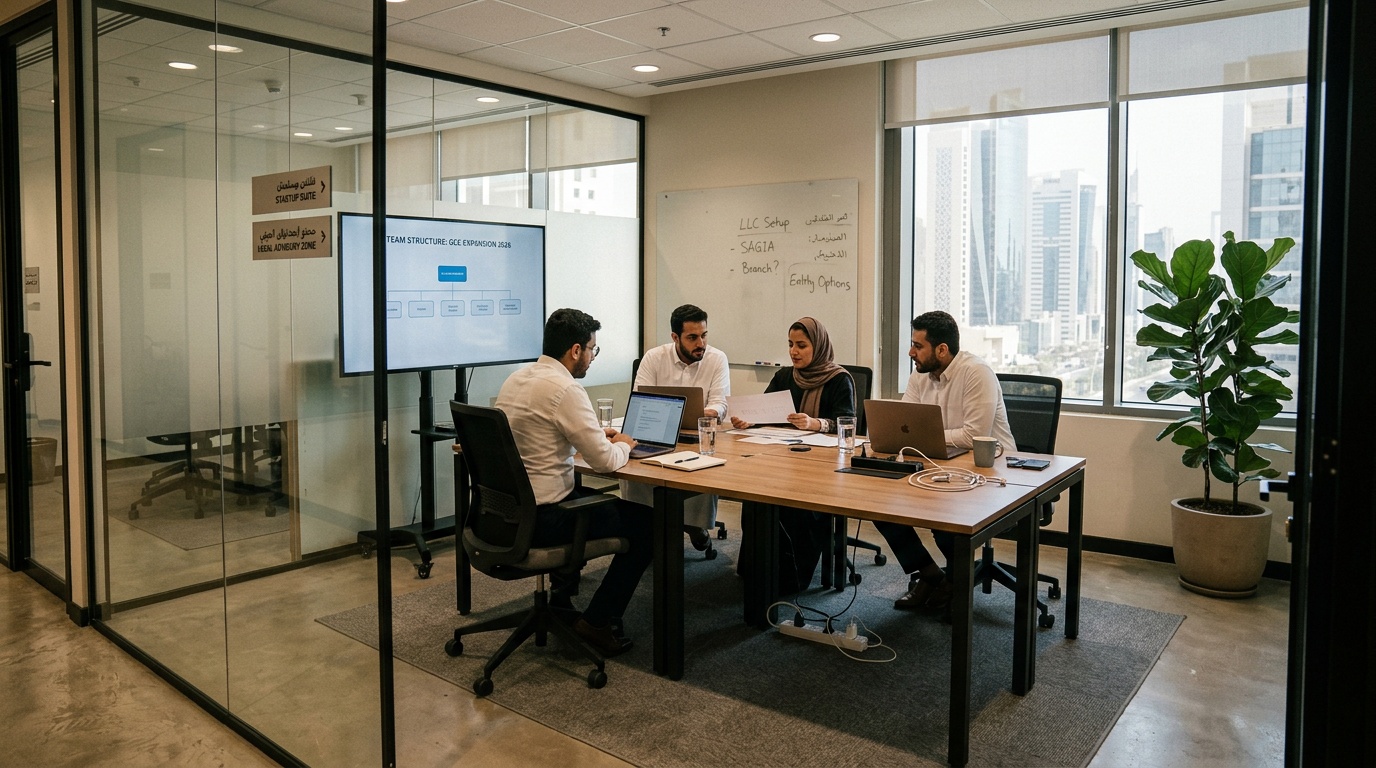
LLCs give you liability protection and operational flexibility. You scale at your own pace. Branch offices provide direct control but extend your parent company’s liability to Saudi operations. Choose this if you want complete oversight.
The entrepreneur license targets innovation-focused ventures. Faster setup, fewer requirements, but you need to meet specific criteria around technology and business model.
MISA Licensing: What Actually Happens
The Ministry of Investment runs everything through a digital portal. You’ll need certified corporate documents, financial statements that prove you have capital, and a business plan that explains what you’re building.
Processing takes 5-15 business days if your paperwork is clean. Most delays happen because companies submit incomplete applications.
Foreign Ownership: The Reform Reality
100% foreign ownership is now permitted across most sectors. This wasn’t true five years ago. You don’t need a local partner unless your sector specifically requires one.
Check the negative list before you assume you need joint venture structure.
Building the Operating System
Saudization: Planning for Local Hiring
Nitaqat sets workforce nationalization quotas based on your company size and sector. Green status means you’re compliant and can sponsor international hires freely. Yellow or red status restricts your sponsorship capacity.
Plan local hiring for client-facing roles early. Use international sponsorship for specialized technical positions.
Visas and Work Authorization
Work permits require employer sponsorship, medical clearance, and iqama issuance. The process takes 2-4 weeks for standard roles, faster for executives through premium processing.
Start visa applications before you need the person in-country. Delays here cost more than application fees.
Banking: Relationship Building
Corporate accounts take 2-4 weeks to open. Saudi banks want to understand your business model and revenue sources. They’re not just checking compliance. They’re assessing long-term relationship potential.
Start banking conversations early. You’ll need accounts before your first hire or vendor payment.
Tax Structure
Corporate tax is 20% for resident entities. VAT registration becomes mandatory once you hit the threshold. Currently SAR 375,000 annually. Zakat applies to qualifying organizations under Sharia principles, separate from corporate tax.
Workspace Strategy: Skip the Lease Trap
Traditional vs. Flexible: The Real Numbers
Traditional leases lock you into 3-5 year terms with significant deposits. Great if you know exactly how many people you’ll have and where they’ll sit. Most startups don’t.
Flexible workspace lets you scale up or down monthly. You pay for what you use, when you use it.
Hotdesk: Ready When You Are
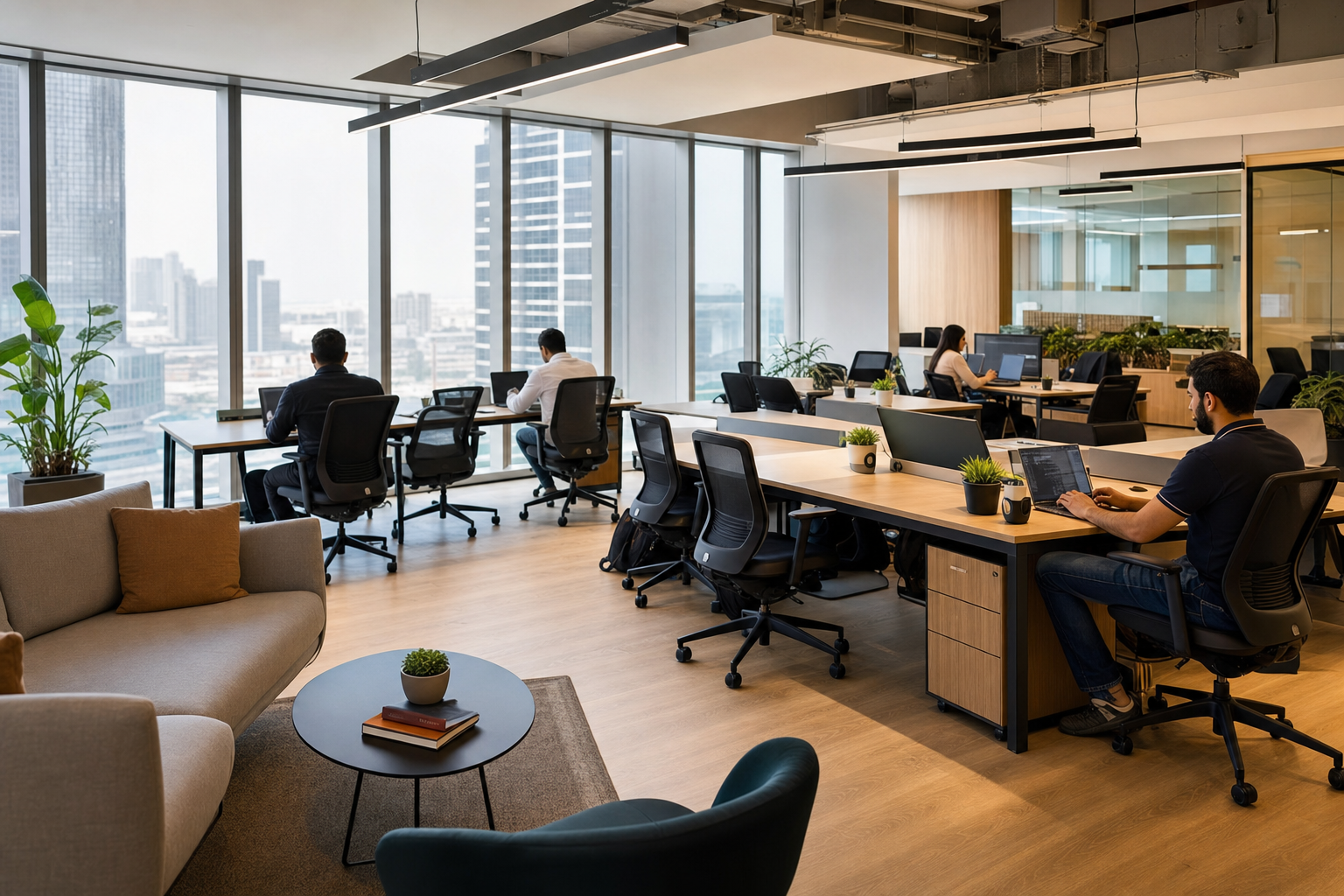
We’ve built Hotdesk because continuity shouldn’t stop at a border. Teams expanding into Saudi Arabia need workspace that works immediately, not after a three-month lease negotiation.
The Place Samama Holding on King Fahd Road in Riyadh gives you move-in access within days. Ready internet, meeting rooms, and support infrastructure.
If your expansion includes Europe, The Office Bcn maintains the same standard across markets. Same platform, same booking process, same reliability.
Location Selection Criteria
Commute time matters more than address prestige. Your team needs to get there consistently. IT infrastructure should work without explanation. Space should fit your actual headcount, not your aspirational org chart.
Shared environments often provide unexpected network access. You’ll meet service providers and potential partners through daily proximity.
Implementation Sequence
Before You Start
- Choose your target city based on where customers actually operate
- Engage MISA-licensed legal counsel and confirm document requirements
- Model Saudization impact on your hiring plan and payroll projections
- Research banking options and understand account opening timelines
Setup Phase
- Reserve your trade name through the portal
- Submit MISA licensing application with complete documentation
- Complete commercial registration with the Ministry of Commerce
- Secure flexible workspace for immediate operations
Launch Operations
- Hire initial team with visa sponsorship prioritized by role criticality
- Open corporate bank accounts and establish signatory policies
- Deploy IT, security, and communication infrastructure
- Implement payroll and compliance reporting systems
Getting It Done in 2026
Pre-Setup: Validation Before Investment
Talk to buyers in your target sector before committing resources. Legal counsel experienced in Saudi commercial law helps you choose entity structure that matches how you plan to sell, hire, and invoice.
The setup sequence that actually works starts with understanding what you’re building, not just how to build it.
Setup: Parallel Workstreams
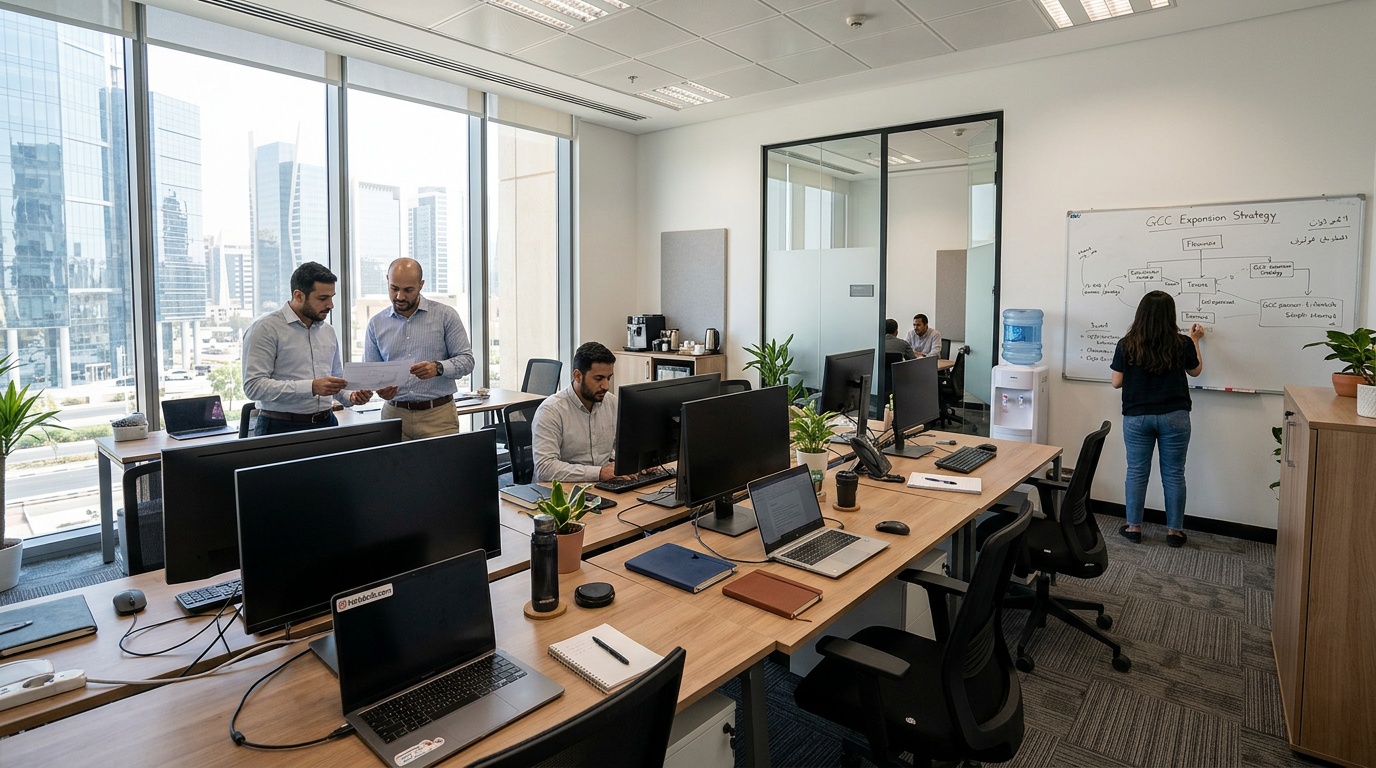
While MISA reviews your investment license, secure workspace under flexible terms. Hotdesk provides day-one access in Riyadh, Jeddah, and Dammam while longer-term decisions stay open.
For teams expanding across the Gulf, Astrolabs in Dubai offers similar flexibility. Same booking platform, consistent experience.
Operations: Hiring Strategy
Build your hiring plan around Saudization requirements first, international expertise second. Many teams prioritize local hiring for client-facing roles, then use sponsorship allocations strategically.
Skills that need international sourcing: specific technical expertise, regional experience, language capabilities that don’t exist locally.
Ongoing: Staying Adaptive
Annual compliance includes license renewals, Zakat declarations, and audit requirements. Workspace flexibility matters as headcount changes. And it will change.
For GCC-wide coverage, Regus Marina Gate in Dubai provides dedicated desk options that scale with your team.
Key Insight: Successful Gulf expansion comes down to adaptability. Market conditions shift, teams evolve, regulations update. Infrastructure that flexes without disruption keeps expansion cost-controlled.
Building for What’s Next
Regional expansion never follows the plan. Saudi Arabia’s regulatory environment continues evolving under Vision 2030, with new sector incentives and ownership updates introduced regularly.
Startups that build adaptable foundations move faster when conditions change. That adaptability is a core reason we built Hotdesk. So teams don’t rebuild infrastructure every time they move.
Monitor MISA announcements quarterly. Maintain relationships with local compliance advisors. Run quarterly checks of Saudization ratios against hiring plans. Review workspace utilization data so expansion timing stays tied to actual demand.
Done well, your Saudi office becomes the operating base for broader Gulf expansion. Rag Global Business Hub in Dubai supports regional reach when you’re ready.
Treat it as a system you refine, not a one-time project. Your setup will support wherever the team goes next.
Three choices determine success: pick the right entity structure, plan hiring and visas early, and use flexible workspace until demand becomes predictable.
Frequently Asked Questions
What specific conditions in Saudi Arabia support startups expanding into the GCC?
Saudi Arabia’s Vision 2030 has created strong support for foreign enterprises, making it an ideal gateway. The Kingdom is the largest economy in the Gulf, with a growing population and a diversification agenda that welcomes entrepreneurial ventures. This environment helps startups find a solid footing for regional growth.
What are the best ways for a startup to speed up MISA licensing in Saudi Arabia?
To speed up MISA licensing, startups should prepare certified corporate documents, financial statements showing capital, and a clear business plan in advance. Using the digital portal efficiently and ensuring all requirements are met from the start can help processing often takes 5 to 15 business days. This preparation ensures a smoother path to getting your investment license.
How should startups approach hiring to meet Saudization requirements while building their team?
Startups must balance Nitaqat regulations, which set nationalization quotas, with their need for specialized roles. A practical hiring plan integrates local talent goals with international recruitment for specific expertise. This approach ensures compliance while securing the right people for your team office.
What financial steps are essential for a startup setting up an office in Saudi Arabia?
Startups should prioritize early relationship building with Saudi banks, as account opening can take 2-4 weeks. Understanding corporate tax, which applies at 20%, and VAT registration thresholds is also key. Don’t forget Zakat obligations, which apply to qualifying organizations under Sharia principles.
Why do flexible workspaces make sense for startups expanding into Saudi Arabia?
Flexible workspaces reduce major upfront investment and long-term commitments, which is perfect for a startup’s agile growth. They allow teams to scale quickly across locations without delays, supporting faster market entry. Hotdesk, for example, offers ready-to-use offices in Riyadh’s business districts, providing immediate move-in options.
What is the quickest way for a startup to get its team office operational in Saudi Arabia?
Parallel workstreams are key: while MISA reviews your investment license, secure a flexible workspace that matches your initial headcount and budget. Services like Hotdesk can provide day-one access in cities like Riyadh, removing long setup cycles. This approach supports immediate market entry and operational readiness.
Leave a Reply