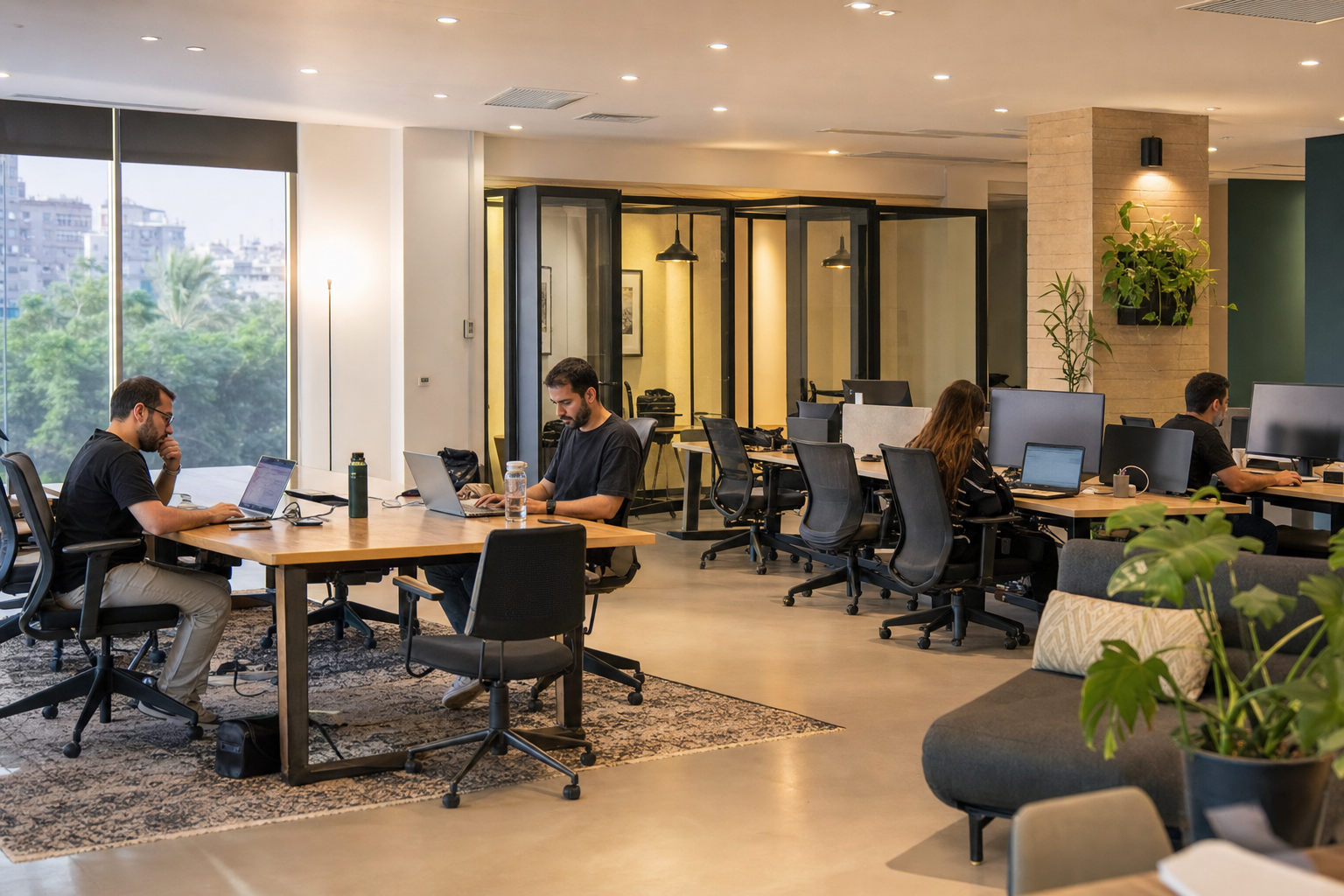
Best coworking spaces in Maadi with reliable high-speed internet for remote work.
How to Verify Internet Uptime and Speed Before Committing
The headline number a workspace advertises rarely tells the full story. A “100 Mbps” connection might serve thirty users simultaneously with acceptable latency, or it might buckle under five concurrent video calls. The difference lies in how the network is architected, not just the plan the operator pays for. When you evaluate one of the best coworking spaces in Maadi with reliable high-speed internet for remote work, you are really evaluating the operator’s engineering discipline. That starts with asking the right questions before you hand over payment details or sign a membership form.
Key Takeaways
- Advertised bandwidth means nothing without understanding how the network handles concurrent load from multiple users sharing the same pipe.
- Network architecture and engineering discipline separate a workspace that sustains thirty video calls from one that collapses under five.
- The right infrastructure questions reveal whether an operator invested in proper design or simply pays for a fast plan each month.
- Peak-hour performance testing gives you better data than any speed number plastered on a pricing sheet.
Run a baseline speed test on your device
Do not rely on the speeds the manager quotes or the test they run on their own phone. Their device might be connected to a separate admin network with dedicated bandwidth. Use your own laptop or phone, connect to the guest or public SSID, and run a test using a service that measures latency, jitter, and packet loss alongside download and upload throughput. For remote work, a minimum of 25 Mbps download and 10 Mbps upload is reasonable for video conferencing and large file transfers. Ping below 30 ms is ideal for real-time collaboration tools. Run the test at different times of day, ideally during peak usage hours in late morning and mid-afternoon, to see how the connection degrades under load.
Check backup connectivity and power redundancy
Internet failures happen. What separates a professional workspace from a glorified cafe is whether the connection stays up when something goes wrong. Ask the operator about their backup internet source. Do they have a secondary ISP on a different physical line, or a 4G/5G failover that kicks in automatically? Power redundancy matters just as much. A UPS that keeps the network gear running for thirty minutes after a mains failure can mean the difference between finishing a client call and dropping it. Some Maadi spaces in older buildings face frequent power fluctuations, so a generator or battery backup for the router and access points is a strong signal that the operator treats connectivity as a core utility, not an amenity.
Ask operators about fiber redundancy and load balancing
Fiber is the gold standard for low-latency, high-throughput connections in Cairo, but not all fiber deployments are equal. Ask whether the space uses a single fiber line or has two separate fiber drops from different providers. Load balancing across two connections means that if one link saturates, traffic shifts to the second link automatically. This is standard in enterprise IT, but many coworking operators skip it to cut costs. Also ask about the quality-of-service (QoS) rules on the network. Without QoS, one user streaming 4K video can degrade audio quality for everyone on a VoIP call. Spaces that implement proper traffic shaping and prioritize real-time communication traffic demonstrate a level of operational maturity that matches what you would expect from a dedicated office.
Top Maadi Workspaces Ranked by Connectivity and Cost
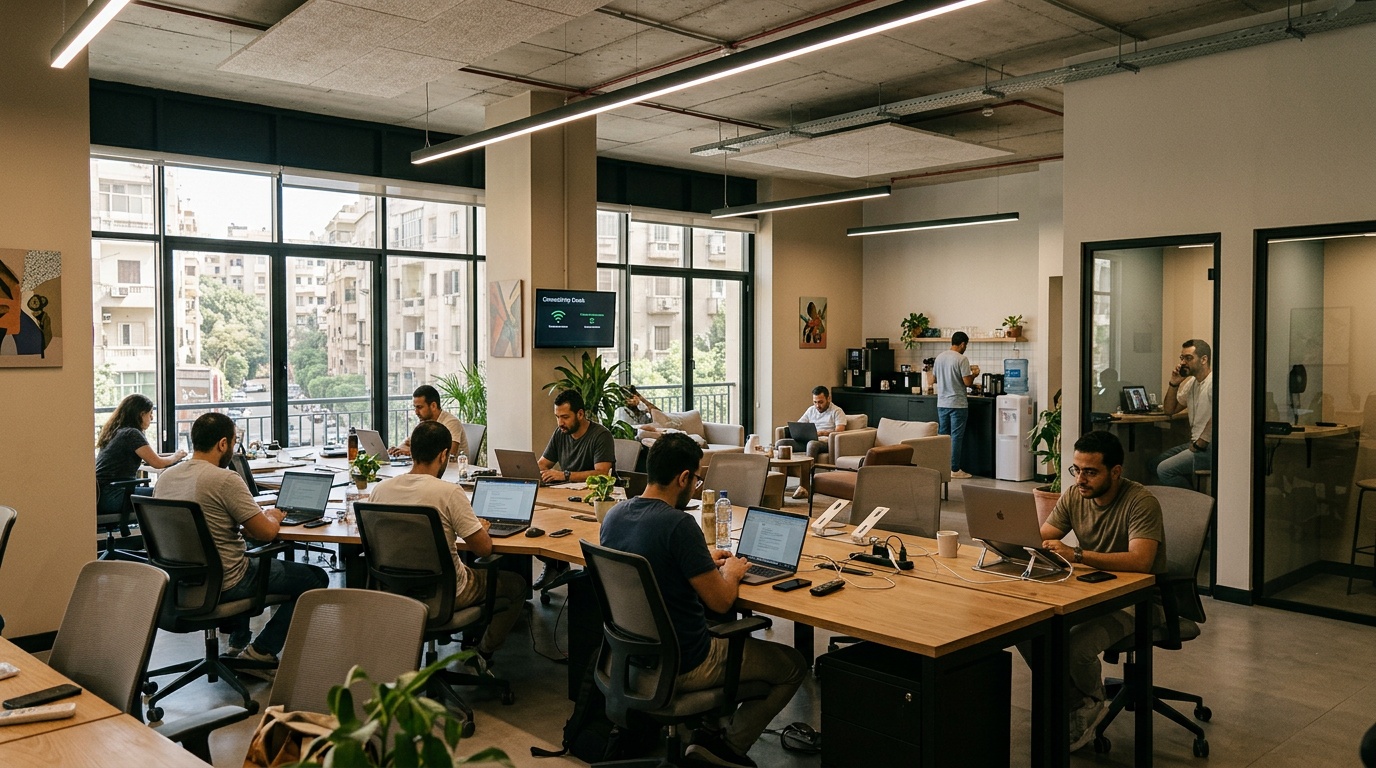
After establishing what to look for in a network, the next step is matching that criteria against the actual spaces operating in Maadi. Not every workspace that advertises “high-speed WiFi” delivers it at a level that supports consistent remote work. The list below draws on booking data, user reviews from platforms like Reddit and Coworker, and direct verification of advertised throughput claims. Each space is evaluated on connection reliability, pricing transparency, and suitability for the kind of work that demands stable internet. For remote workers who need the best coworking spaces in Maadi with reliable high-speed internet for remote work, these venues represent the strongest options available today.
Meccano: High-throughput infrastructure and instant booking
Meccano Coworking Space, located on Road 9 in Zahraa Al Maadi, has built a reputation for dependable connectivity backed by fiber infrastructure and consistent throughput. User reviews describe it as an ideal place to study or work. Meccano is listed on the Hotdesk platform with instant booking capability, which means you can reserve a desk by the day without a membership commitment. The space maintains separate networks for guest and member traffic, reducing the risk of congestion during peak hours. For anyone who prioritizes predictable upload and download speeds over flexible decor or free coffee, Meccano delivers where it matters most. The starting rate, aligned with the general Maadi coworking market of approximately EGP 1,400 per month, offers clear value for the connectivity standard provided.
Road9 and HQ Space: Enterprise-grade reliability
Reddit threads asking for good places to work in Maadi consistently return two names: Road9 Coworking Space and HQ Space. Both operators have invested in enterprise-grade networking gear, including commercial routers with active load balancing and backup ISP links. HQ Space, in particular, features sound-treated private offices suitable for video calls, which signals that the operator understands the acoustic and bandwidth requirements of remote professionals. Neither space advertises the lowest price in the district, but their retention rates and repeat customer base suggest that the connection quality justifies the premium. For teams or individuals who run multiple devices simultaneously and cannot tolerate dropped packets during client presentations, Road9 and HQ Space represent the safer long-term choice. Hotdesk data shows these two spaces receive the highest average ratings from users who filter specifically for internet reliability.
Ebda3 Capital and MQR Spaces: Budget-friendly with solid uptime
Ebda3 Capital in Maadi offers a more accessible price point while maintaining a respectable uptime record. Listed on coworking directories with positive reviews, it functions well for task-oriented work that does not require the absolute lowest latency. MQR Spaces, also listed on Coworker with verified reviews, provides a similar value proposition: basic fiber connectivity, adequate seating density, and a professional environment without the premium price tag. Neither space claims the throughput levels of Meccano or HQ Space, but both operate with sufficient bandwidth to handle standard remote work tasks such as email, document editing, and light video conferencing. For users whose work does not involve large file uploads or multi-party video calls, these spaces eliminate the overhead of a more expensive plan while still providing a reliable connection.
How pricing structures affect your monthly overhead
The advertised monthly rate for coworking in Maadi starts around EGP 1,400, but that figure rarely tells the full cost story. Some spaces add separate charges for high-speed access, printing, or meeting room booking. Others bundle everything into a single flat rate. A space that costs EGP 1,800 per month but includes unlimited internet, printing credits, and two hours of meeting room time per week may be cheaper overall than a EGP 1,400 space that charges EGP 50 per hour for meeting rooms and EGP 100 for printing. Remote workers must calculate their effective monthly overhead based on their actual usage patterns. For a worker who does three video calls per week and prints ten pages, the cheaper rate may work fine. A developer who uploads large build artifacts daily needs to prioritize spaces with confirmed upload speeds over those with the lowest nominal rent. The table below summarizes the key trade-offs across the top Maadi workspaces for users seeking the best coworking spaces in Maadi with reliable high-speed internet for remote work.
| Space | Starting Price | Connection Type | Backup ISP | Instant Booking | Best For |
|---|---|---|---|---|---|
| Meccano | ~EGP 1,400/mo | Fiber with dedicated guest network | Yes | Yes (Hotdesk) | Consistent throughput, day passes |
| Road9 | ~EGP 1,800/mo | Fiber with load balancing | Yes | Limited | Multi-device users, low latency |
| HQ Space | ~EGP 2,000/mo | Fiber, enterprise-grade routing | Yes | Limited | Private offices, video calls |
| Ebda3 Capital | ~EGP 1,200/mo | Fiber, standard QoS | No | Limited | Budget-conscious, standard tasks |
| MQR Spaces | ~EGP 1,300/mo | Fiber, basic configuration | No | Limited | Simple remote work, lower cost |
Note: Prices are indicative and based on listings from coworkingers, Office Hub, and Hotdesk at the time of writing. Verify current rates directly with each space before making a commitment. Through the Hotdesk platform, you can compare verified internet specs and user reviews for these venues, alongside spaces like Coworking Naubostik in Barcelona, which maintains similar throughput standards for remote professionals. Another space that exemplifies how thorough infrastructure verification works is Coworking naubostik, where the network setup mirrors the fiber-redundancy best practices discussed in this guide.
Flexible Booking Models That Remove Membership Friction
The decision about where to work should not require a signed commitment that outlasts your actual need. Membership models that lock you into monthly cycles create friction for workers whose schedules vary week to week. The best coworking spaces in Maadi with reliable high-speed internet for remote work recognize this pattern and offer tiered access options that match real usage patterns rather than forcing a one-size-fits-all contract. The goal is to pay for the days you actually use, not the days you plan to use.
Day passes versus monthly hot desks
A day pass in Maadi typically costs between EGP 150 and EGP 300 per day, while monthly hot desks start around EGP 1,400 according to listings on Coworkingers and Office Hub. The math seems clear on the surface. But the calculation shifts when you factor in utilization rates. If you work from a coworking space three days per week, four weeks per month, day passes would cost EGP 1,800 to EGP 3,600 per month, potentially exceeding the monthly rate. The reverse holds if your schedule requires only one or two days per week. Day passes preserve flexibility without the overhead of an unused membership. The right choice depends on your actual weekly attendance, not an aspirational goal.
| Factor | Day Pass | Monthly Hot Desk |
|---|---|---|
| Commitment length | None, pay per visit | 30-day minimum lock-in |
| Cost for 8 days per month | EGP 1,200 to EGP 2,400 | EGP 1,400 to EGP 2,500 |
| Cost for 16 days per month | EGP 2,400 to EGP 4,800 | EGP 1,400 to EGP 2,500 |
| Desk guarantee | Available until capacity fills | Reserved desk or guaranteed spot |
| Cancellation policy | No penalty for skipping a day | Notice period typically 30 days |
| Best suited for | Variable schedules, trial periods | Consistent weekly attendance |
Hidden cost traps and how to avoid them
The price on a website rarely reflects the full monthly outlay. Some operators charge separately for internet access, printing, or meeting room bookings. Others require a refundable deposit that ties up capital for weeks. The most common trap is the introductory rate that escalates after the first three months without clear notice. Before you pay, request a complete breakdown of all recurring and incidental fees. Ask for the rate schedule covering the first twelve months of membership. A transparent operator provides these details in writing without hesitation. Vagueness on pricing signals similar vagueness on network management.
Hidden Cost Traps to Avoid
- Separate high-speed internet charges not included in the base rate
- Meeting room hourly fees required for taking client calls in a private space
- Printing credits that expire monthly without rollover
- Administrative fees for changing plans or canceling early
- After-hours access surcharges for evening or weekend work
- Introductory promotional rates that double after the first quarter
Instant reservation workflows that scale with your schedule
The ideal booking model operates like a hotel reservation, not a lease agreement. Hotdesk enables instant booking across workspaces in Maadi and beyond, letting you reserve a desk by the day with confirmed availability and no back-and-forth with the operator. Coworking Naubostik demonstrates how a well-architected workspace removes this friction. You select your date, confirm your spot, and arrive knowing the desk and network are ready. The same pattern applies to Maadi spaces listed on the platform. For remote workers who move between districts or travel frequently, this model eliminates the risk of paying for days you do not use. The infrastructure travels with you, not the contract. Spaces that offer instant reservation also tend to maintain their network gear more consistently, because they know walk-in bookings depend on first impressions that last only seconds. Coworking Naubostik exemplifies this approach, with its booking flow designed for professionals who value speed and certainty over lengthy onboarding forms.
References
Frequently Asked Questions
How can I verify the actual internet speed at a coworking space in Maadi before signing up?
Run your own speed test on the guest network during peak hours to verify the actual speed at a Maadi coworking space. Use a service that measures latency, jitter, and packet loss. For remote work, aim for at least 25 Mbps download and 10 Mbps upload with ping below 30 ms. Test at different times to see how the connection degrades under load.
What backup internet options should a reliable coworking space in Maadi have?
A reliable coworking space in Maadi should have a secondary ISP on a different physical line or a 4G/5G failover that activates automatically. Power redundancy like a UPS for network gear is also critical. These features ensure work continues during outages, which is common in older Maadi buildings.
Why is fiber redundancy and load balancing important in Maadi coworking spaces?
Fiber redundancy and load balancing are important because they prevent a single point of failure and automatically shift traffic if one link saturates. Coworking spaces in Maadi with two separate fiber drops from different providers and quality-of-service rules ensure stable performance for video calls and real-time tools.
Which coworking space in Maadi has the most reliable internet for remote work?
Meccano Coworking Space on Road 9 in Zahraa Al Maadi is known for dependable fiber infrastructure and consistent throughput. It separates guest and member networks to reduce congestion. Instant booking via Hotdesk lets you test the connection daily without a membership commitment.
Are Road9 and HQ Space good choices for remote workers needing stable internet in Maadi?
Yes, Road9 Coworking Space and HQ Space are top choices for remote workers needing stable internet in Maadi. Both invest in enterprise-grade networking gear with active load balancing and backup ISP links. HQ Space also has sound-treated private offices for video calls. Their retention rates reflect reliable connectivity.
Are there budget-friendly coworking spaces in Maadi with decent internet for remote work?
Ebda3 Capital and MQR Spaces offer budget-friendly options in Maadi with solid uptime for task-oriented work. They maintain a respectable connection record at a lower price point. For work that does not require the lowest latency or highest throughput, these spaces provide adequate internet for remote tasks.
What should I ask a Maadi coworking space operator about their network setup?
Ask about their backup internet source, whether they have fiber redundancy, and if they use load balancing across two connections. Also ask about quality-of-service rules that prioritize real-time communication. These questions reveal whether the operator treats connectivity as a core utility rather than just an amenity.
Leave a Reply