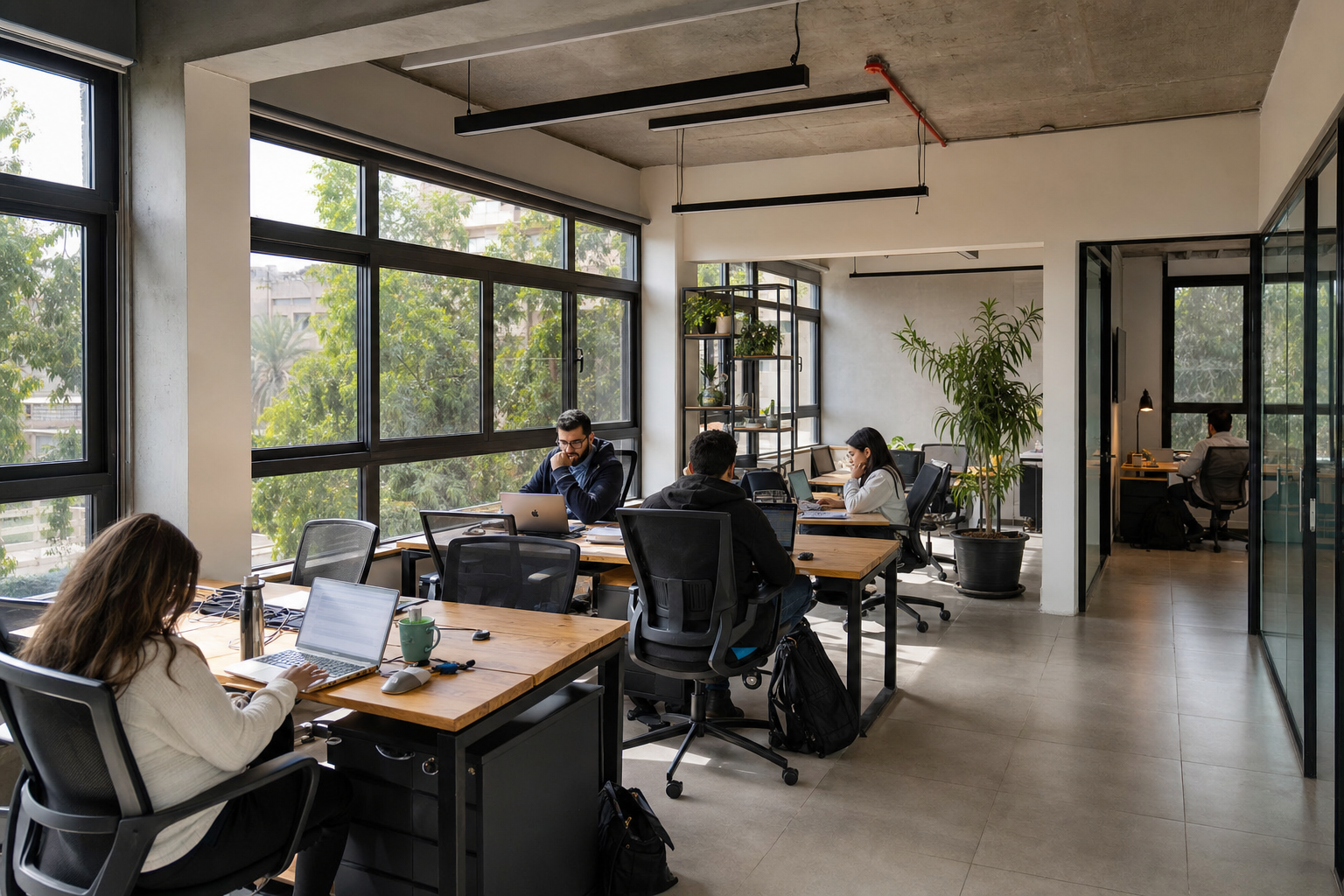
What's the difference between a shared workspace and a private office in Maadi?
Every distributed system asks you to manage new failure modes. When seeking a workspace, the fundamental question isn’t just about location, but about how the system of work itself will operate. What stays working when your needs shift? This is where understanding the core differences between shared environments and private offices becomes foundational for making an informed decision, especially in a dynamic hub like Maadi.
Key Takeaways
- A workspace choice is a system design decision that determines how work continues when conditions change.
- Shared workspaces offer flexibility but introduce coordination overhead, while private offices provide stability at the cost of isolation.
- In Maadi’s dynamic environment, the key metric is how quickly your workspace adapts to shifting team needs without requiring a full reset.
- Reliability in workspace means minimizing the need to reconfigure your work setup when team size or focus changes.
- The difference between shared and private is not just space but the failure modes each introduces to your daily operations.
Understanding What’s the difference between a shared workspace and a private office in Maadi? is fundamental to our exploration. We’ll dissect the structural and operational distinctions, moving beyond surface-level descriptions to examine how each model supports your business continuity and growth. This isn’t about marketing claims; it’s about the engineering of your daily work.
Core Differences Between Shared and Private Workspaces
Shared Workspaces Defined
Shared workspaces, often referred to as coworking spaces, are environments designed for collaborative or individual work within a common area. These spaces typically offer a variety of seating arrangements, from open-plan desks to communal tables. The emphasis is on flexibility and community, allowing users to choose their spot daily or have a designated hot desk. This model is engineered for scale by accommodating many users simultaneously, providing a base level of infrastructure without individual commitment.
The operational model for shared desks centers on accessibility and shared resources. Users gain access to Wi-Fi, printing facilities, and common areas like kitchens or lounges. The appeal lies in a lower entry cost and the potential for spontaneous interaction. You’re paying for access to a functional work environment rather than exclusive occupancy of a specific area, which aligns with systems that travel with the user.
Private Offices Defined
Private offices, in contrast, provide an exclusive, enclosed space for individuals or teams. These are dedicated rooms, offering a controlled environment free from the immediate proximity of other workers. While often located within larger coworking facilities or business centers, they stand apart by guaranteeing personal space and security. This setup is ideal for teams requiring a consistent, private operational base.
The defining characteristic of a private office is the guarantee of personal space and isolation when needed. This allows for focused work, confidential calls, and secure storage of equipment. While less about spontaneous community, it offers a stable platform for established teams or individuals prioritizing privacy and a fixed operational footprint. It’s an infrastructure choice that prioritizes continuity for a specific unit.
Privacy and Acoustic Control
Privacy and acoustic control are significant differentiators. Shared workspaces, by their nature, involve a degree of ambient noise and visual proximity. While many offer designated quiet zones or phone booths, the overall acoustic environment is shared. This can be a benefit for those who thrive on background buzz, but a challenge for tasks demanding deep concentration or sensitive conversations.
Private offices excel in offering a high degree of acoustic and visual privacy. The enclosed nature of these spaces significantly reduces external noise distractions and ensures conversations remain confidential. This level of control is essential for businesses that handle sensitive data, require uninterrupted focus for complex tasks, or frequently conduct private client calls. It’s about engineering a predictable sensory environment.
Access and Scheduling Models
Access and scheduling models vary considerably. Shared workspaces often operate on flexible terms, allowing for hourly, daily, or monthly bookings. This means you can scale your usage up or down based on immediate needs, paying for what you use. This system is engineered for agility, allowing quick adaptation to fluctuating team sizes or project demands.
Private offices typically involve longer-term commitments, often monthly or annually, providing a fixed base. While some providers, like Regus, offer private office day passes in locations such as Zahraa Maadi, the standard model is a dedicated space secured for a defined period. This offers predictability and a consistent address, but with less hourly flexibility than a hot desk option. What works at 10x for a growing team often means securing that dedicated space.
Shared Workspace Pros
- Cost-effective entry point for individuals and small teams.
- Opportunities for networking and community interaction.
- Flexible usage terms (hourly, daily, monthly).
- Access to shared amenities and services.
Shared Workspace Cons
- Limited privacy and potential for noise distractions.
- Less control over the immediate work environment.
- May not be suitable for highly confidential work.
Am Office Space – Featured Option
For professionals and teams in Maadi seeking a blend of focused work and convenient access, Am Office Space offers a compelling solution. This workspace is engineered to provide a reliable and professional environment, supporting continuity for your business operations.
Best for: Freelancers, small teams, and project groups needing a professional base with reliable infrastructure in the heart of Maadi.
Maadi Pricing Structures and Cost Breakdown
Hot Desk and Dedicated Desk Rates
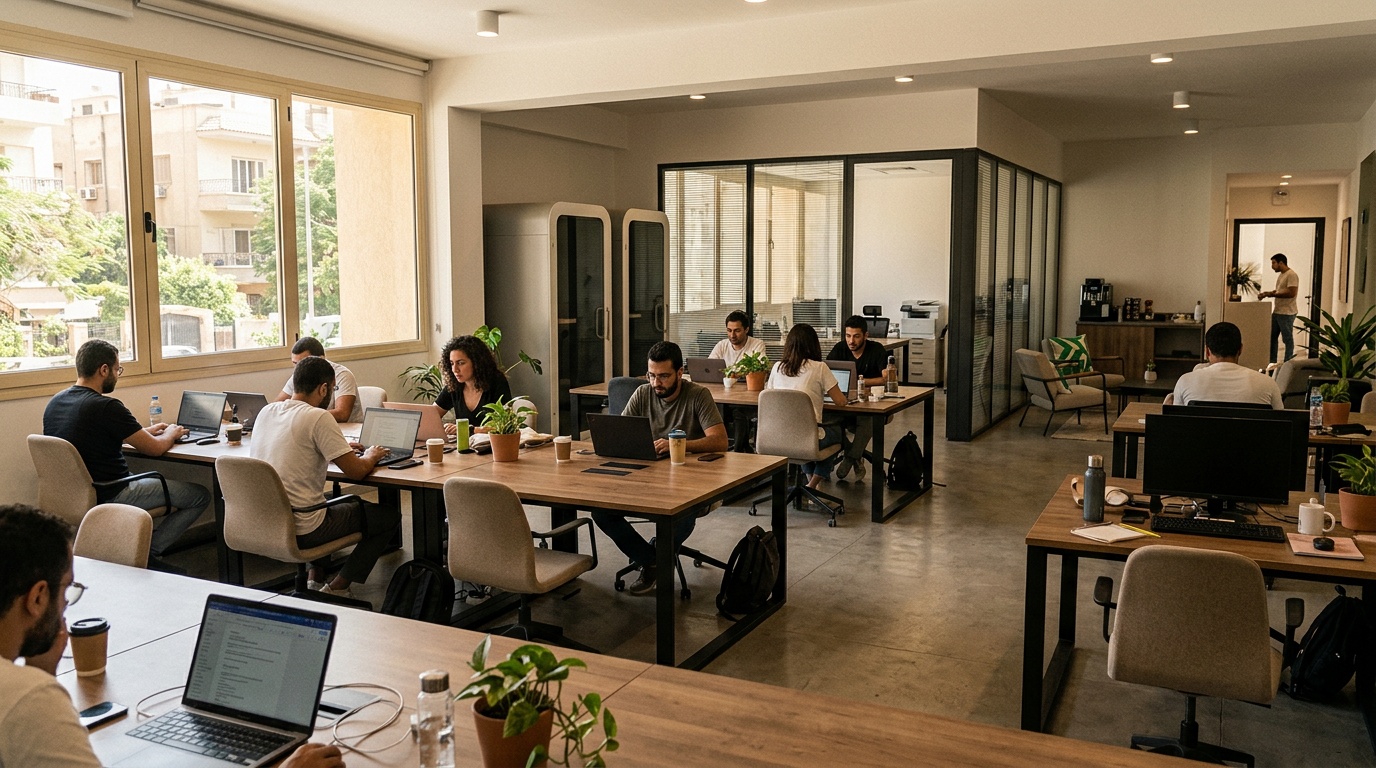
In Maadi, the cost for shared workspace access begins with hot desks, offering the most economical option. These desks are available for use on a first-come, first-served basis within common areas. Research indicates the average cost per desk in Maadi’s shared workspaces is around 412 (currency unspecified, likely EGP), according to Office Hub data. Dedicated desks offer a step up, providing a reserved spot within the shared area, usually at a slightly higher rate than hot desks, but still significantly less than a private office.
These rates reflect a system designed for high occupancy and efficient resource utilization. The flexibility comes with a predictable, lower price point, making it accessible for solo operators and early-stage startups. The infrastructure is shared, and so are the costs, allowing businesses to maintain a physical presence without substantial upfront investment in real estate.
Private Office Monthly Pricing
Private office pricing in Maadi is structured differently, reflecting the exclusive use of a dedicated room. Monthly rates are higher than shared desk options because they account for the dedicated space, furniture, and the privacy it affords. While specific figures vary based on size, amenities, and location within Maadi, these offices provide a fixed cost for a defined operational unit. For comparison, Regus Zahraa Maadi offers private office day passes, indicating a range of options from short-term to long-term occupancy, each with its own pricing model.
The cost of a private office is an investment in stability and control. It’s a system that guarantees a specific footprint for your team, ensuring a consistent environment for focused work and client interactions. This higher cost is directly tied to the increased privacy, security, and dedicated infrastructure provided, making it a foundational choice for established teams or those with specific operational requirements.
Value Metrics Beyond Base Rent
When evaluating workspace costs in Maadi, it’s essential to look beyond the base rental price and consider the value metrics. Shared workspaces often include utilities, high-speed internet, cleaning services, and access to communal facilities like meeting rooms or kitchens within their rates. These bundled services reduce the operational overhead for users, simplifying budgeting and management.
Private offices also typically bundle many services, but the value proposition shifts towards the exclusivity, security, and potential for branding within the dedicated space. Factors like the number of included meeting room hours, reception services, and IT support contribute to the overall value. Understanding what stays working without additional charges is key. Am Office Space provides a comprehensive package designed for productivity, ensuring your operational needs are met without hidden costs. The average cost per desk in Maadi shared workspaces, around 412 EGP, is a starting point, but the total value includes the complete service infrastructure.
When considering the total cost, evaluate the included services, the level of privacy required, and the flexibility your business needs. A shared workspace may offer a lower per-desk rate, but a private office can provide better value for teams prioritizing focus and security, especially when factoring in all operational necessities.
Operational Flexibility and Workspace Infrastructure
What’s the difference between a shared workspace and a private office in Maadi? From an operations standpoint, the difference is not just about walls but about how the underlying systems handle your work continuity. Every distributed system asks you to manage new failure modes. The workspace you choose determines how often you have to reconfigure your setup. True flexibility is the absence of re-work, the ability to move between tasks without resetting your environment.
Booking Cadence and Lease Terms
Shared workspaces in Maadi offer booking cadences measured in hours, days, or months. This means you can occupy a desk for a single afternoon or secure a dedicated spot for a quarter. The system lets you scale usage to match project demands, paying only for what you use. Private offices, by contrast, typically require monthly or annual commitments. A Regus private office day pass in Zahraa Maadi provides a middle ground, but the standard model still locks you into a fixed duration. The infrastructure travels with you only when the booking model matches your workflow peaks.
Lease terms directly affect your ability to respond to change. A shared workspace with month-to-month access allows you to expand or contract without penalty. Private offices often include notice periods and renewal clauses that introduce friction. For teams that operate in sprints or face fluctuating headcounts, the shorter cadence of shared space reduces operational overhead.
Network, Power, and System Reliability
Technical reliability is the foundation of productive work. Shared workspaces maintain shared network infrastructure, which can become congested during peak hours if the provider does not engineer for scale. Quality providers in Maadi, such as those listed on Office Hub, invest in redundant fiber connections and backup power. Private offices offer dedicated network resources, ensuring consistent throughput for bandwidth-intensive tasks. Power reliability also differs: shared spaces typically have central UPS systems covering common areas, while private offices may need individual power backups if you run sensitive hardware.
System reliability extends beyond connectivity. Shared workspaces often restrict access to internal printers, storage, and meeting rooms through a centralized booking system. Private offices allow you to install your own equipment and control access. When evaluating a space, ask about uptime guarantees, backup generator availability, and internet service level agreements. These metrics matter more than advertised speeds.
Scaling Without Infrastructure Resets
Scaling your team should not require a physical move. Shared workspaces let you add desks by simply reserving more spots in the same location. This is the absence of re-work. Private offices demand relocation or expansion of the leased area, which often involves renegotiating terms, moving furniture, and updating addresses. For a team growing from two to five people, the shared model scales without resetting your operational base.
Infrastructure resets waste time and disrupt workflows. Systems that travel with the user, like hot desking platforms with consistent network profiles, eliminate the need to reconfigure devices. Private offices can also scale if the provider offers adjacent rooms, but this often involves moving to a different floor or building. The decision framework here is simple: if you anticipate growth or contraction within 12 months, choose a model that allows incremental changes without a full infrastructure reboot.
| Criterion | Shared Workspace | Private Office |
|---|---|---|
| Booking commitment | Hourly, daily, or monthly | Monthly or annual |
| Network infrastructure | Shared, may require load balancing | Dedicated connection |
| Power backup | Central UPS for common areas | Individual UPS possible |
| Scaling headcount | Add desks instantly without move | Requires expansion or relocation |
| Equipment ownership | Provider-managed | Tenant-controlled |
| Lease flexibility | Month-to-month typical | Fixed term with notice period |
Maadi Logistics, Community, and Hybrid Models
Answering “What’s the difference between a shared workspace and a private office in Maadi?” also requires understanding the local context of transit, community, and hybrid configurations. Maadi’s tree-lined streets and expat-friendly amenities create a specific work ecosystem. A private office in a coworking building might offer the same square footage as a shared desk, but the logistics around client meetings and community access tip the balance.
Expat Networks and Professional Environments
Maadi hosts one of Cairo’s largest expat communities, with many professionals working in development, education, and consulting. Shared workspaces naturally foster networking through common areas, events, and open layouts. Operators like the spaces listed on Office Hub often organize monthly meetups, creating a built-in professional network. Private offices provide seclusion but at the cost of serendipitous interaction. If you rely on referrals or cross-industry contacts, the shared model offers a higher density of potential connections. For teams that need a team address without the open floor, hybrid options exist.
Transit Access and Client Meeting Logistics
Maadi’s geography is compact, with most workspaces clustered along Road 9 and near the Maadi Metro station. Shared workspaces usually offer ground-floor access or easily navigable buildings. Client meetings in a shared workspace require booking a meeting room in advance, which may limit spontaneity. Private offices allow you to host clients directly at your desk space, projecting stability and control. For teams that meet three or more clients per week, a private office with a dedicated reception area adds professionalism without the overhead of a separate meeting room booking system.
Parking and ride-hailing are consistent in Maadi. Many shared workspaces offer parking vouchers or nearby garages. Private offices occasionally include dedicated parking spots in the lease. These logistics affect daily overhead. Choosing a workspace within a 10-minute walk of the Metro reduces commute friction, saving time that would otherwise be spent resetting focus.
Private Rooms Inside Coworking Layouts
A growing number of Maadi workspaces now offer private rooms inside coworking layouts. These hybrid setups combine the privacy of an enclosed office with the community benefits and flexible terms of a shared environment. For instance, Am Office Space provides soundproofed private rooms within a coworking building, granting teams a dedicated zone while maintaining access to common kitchens, lounges, and event spaces. This model answers the primary question by offering a middle path: you get the acoustics and security of a private office without a long-term lease.
Private rooms inside coworking spaces typically accommodate two to six people. They are ideal for small teams that value both focus and community. The pricing falls between a dedicated desk and a full private office, making this option cost-effective. Hybrid models also reduce isolation while ensuring confidential work stays behind closed doors.
Top Hybrid Workspaces in Maadi
-
Am Office Space. Private rooms inside a coworking layout with access to shared facilities. Best for teams of 2-6 needing occasional client meeting space. Bookable via Hotdesk.
-
Regus Zahraa Maadi. Offers private office day passes and dedicated desks in a business center. Good for professionals who need a part-time private address.
-
Office Hub listed spaces. Many Maadi coworking operators (over 109 according to their data) now designate private rooms that can be rented by the month without long-term commitment.
The hybrid model resolves many pain points around privacy and flexibility. For teams that require a consistent address but also want to remain connected to the local professional community, a private room inside a coworking space like Am Office Space provides the infrastructure that travels with your growth, not against it. Consider this option if you value both isolation and interaction.
Selecting the Right Layout for Your Team Size
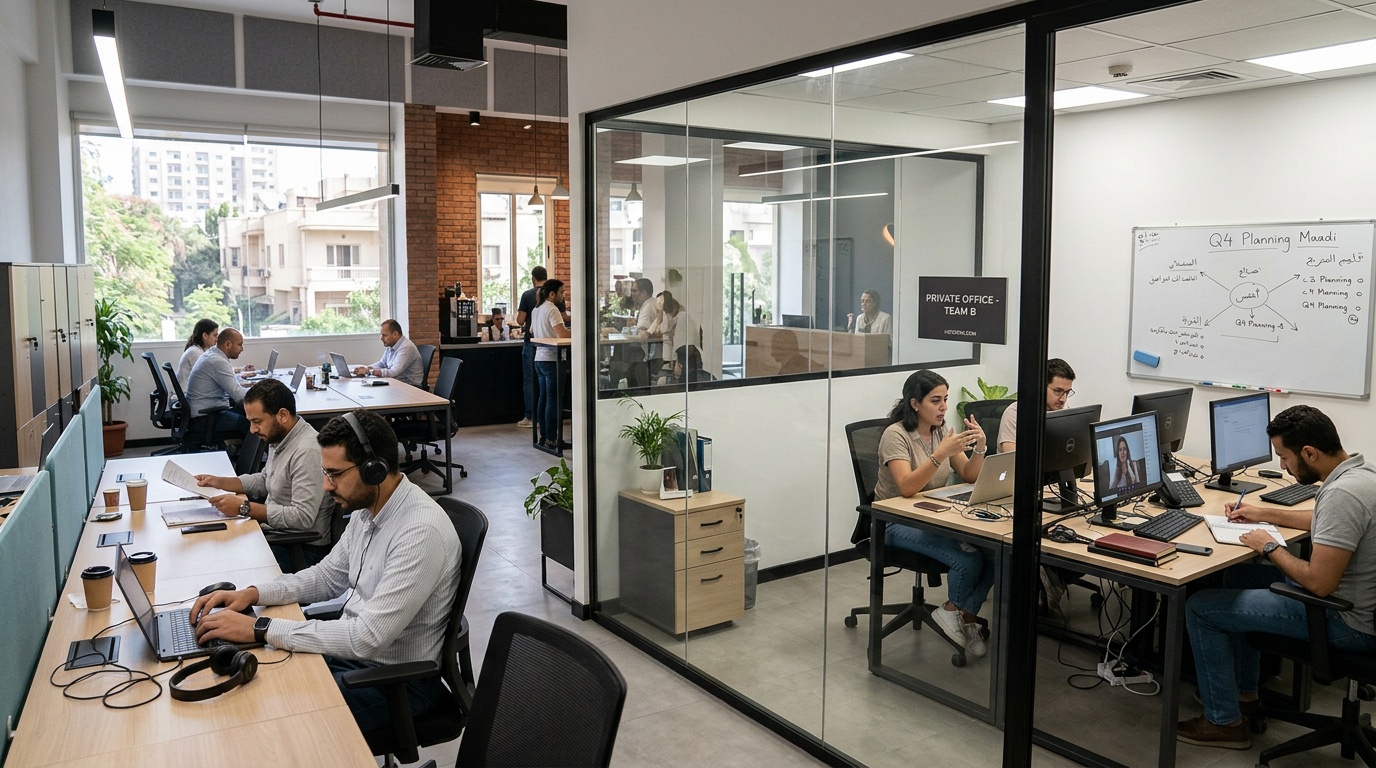
What’s the difference between a shared workspace and a private office in Maadi? The answer evolves based on who you are and how your team operates. Choosing the right workspace isn’t just about finding a desk; it’s about selecting an operational infrastructure that supports your workflow, budget, and growth trajectory. For solo professionals, early-stage startups, and established teams, the ideal setup varies significantly. We’ll guide you through a framework to match your team size with the workspace that works best, ensuring continuity and enabling scalable operations.
Solo Operators and Freelancers
For individuals working independently, the primary needs are affordability, flexibility, and a professional environment that minimizes distractions while offering connectivity. Shared workspaces, particularly those offering hot desks or dedicated desk options, present a compelling solution. The average cost per desk in Maadi shared workspaces, around 412 EGP according to Office Hub data, makes this the most economical choice. This model provides access to essential amenities like Wi-Fi, printers, and communal areas without the commitment or cost of a private office.
The infrastructure here is about access and convenience. You gain a professional base of operations and the potential for networking without the burden of managing a dedicated space. For freelancers, the ability to book by the day or month, as offered by providers like Regus Zahraa Maadi and Hotdesk’s Am Office Space, allows for cost management that aligns with fluctuating project income. It’s about having systems that travel with you, adapting to your work schedule rather than dictating it.
Early-Stage Startups
Startups often operate with lean budgets and a need for agility. They require a professional environment that can accommodate a small, growing team while remaining cost-effective and adaptable. Shared workspaces offer a scalable solution, allowing a startup to begin with a few dedicated desks and expand as headcount increases, all within the same operational infrastructure. This avoids the need for frequent office moves or lease renegotiations.
However, as a startup grows and team members require more focused work or confidential discussions, a dedicated private office within a coworking building emerges as a strong contender. This hybrid approach, exemplified by private rooms inside coworking layouts, provides the privacy for deep work and client meetings while retaining access to the community and amenities of a larger shared space. It supports continuity by offering a stable foundation that can expand incrementally. For a startup navigating rapid growth, choosing a model that scales without requiring infrastructure resets is paramount.
Established Teams and Enterprise Units
For larger, established teams or enterprise units, the priorities shift towards stability, security, dedicated resources, and a consistent brand presence. While shared workspaces can accommodate larger groups, the inherent noise and lack of privacy may not suit every operational requirement. Dedicated private offices offer the necessary control over the environment, acoustics, and security for sensitive data or focused team collaboration.
These teams often benefit from private offices that can be customized to their specific needs, including branding and specialized equipment. The infrastructure is about predictability and control. While the cost is higher, it reflects the guaranteed space, dedicated services, and the ability to establish a fixed, professional headquarters. For instance, securing a multi-room suite or a large private office provides a consistent base that works at 10x for a growing enterprise, ensuring that systems remain stable as the team expands. If your team requires absolute privacy and dedicated resources, a private office is engineered for that level of continuity.
Workspace Selection Checklist by Team Size
Use this checklist to determine the best workspace type for your needs:
-
Solo Operators & Freelancers:
- Prioritize budget-friendly options? (Hot Desk/Shared Workspace)
- Need flexibility for variable work hours? (Hourly/Daily/Monthly access)
- Value networking opportunities? (Coworking with common areas)
- Require a professional address without high overhead? (Shared Workspace)
-
Early-Stage Startups:
- Need a cost-effective space for 2-5 people? (Dedicated Desk/Small Private Office)
- Anticipate rapid growth within 6-12 months? (Scalable Private Room in Coworking)
- Require a balance of privacy and community? (Hybrid Coworking Office)
- Need a professional meeting space for occasional clients? (Coworking with Meeting Rooms)
-
Established Teams & Enterprise Units:
- Require significant privacy and acoustic control? (Dedicated Private Office Suite)
- Need space for 10+ employees with dedicated infrastructure? (Larger Private Office/Multiple Connected Offices)
- Prioritize security and controlled access? (Private Office with Keycard Entry)
- Need a consistent, branded company address? (Private Office)
- Demand reliable, high-bandwidth internet and power? (Private Office with dedicated lines)
References
Frequently Asked Questions
What is the difference between a shared workspace and a private office in Maadi?
A shared workspace in Maadi offers flexible, open-plan seating in a common area with shared amenities, while a private office provides an exclusive, enclosed room for your team. Shared spaces prioritize community and low cost, whereas private offices focus on privacy, acoustic control, and a fixed operational base for business continuity.
What are the disadvantages of a private office?
Private offices typically require longer-term commitments and higher monthly costs compared to shared workspaces. They also limit spontaneous networking and community interaction, as the space is isolated, making them less agile for teams that need to scale up or down frequently.
What is an advantage of a shared workspace?
A shared workspace offers a cost-effective entry point with flexible usage terms like hourly or daily bookings, ideal for freelancers and small teams. It also provides access to shared amenities and opportunities for networking without the overhead of a dedicated lease.
What types of workspaces are available in Maadi?
The main types of workspaces in Maadi are shared workspaces (including hot desks and dedicated desks) and private offices. Shared workspaces offer flexible seating in open areas, while private offices provide exclusive enclosed rooms for teams that need a consistent, private operating base.
How does privacy differ between shared workspaces and private offices in Maadi?
Shared workspaces have limited privacy with ambient noise and visual proximity, though quiet zones or phone booths may be available. Private offices offer high acoustic and visual privacy, making them suitable for confidential calls and deep focus tasks without external distractions.
What are the cost differences between hot desks and private offices in Maadi?
Hot desks in Maadi are the most economical option, averaging around 412 EGP per month, offering first-come seating in common areas. Private offices cost more due to exclusive occupancy and guaranteed privacy, with rates varying based on size and contract length.
What type of business is a private office best suited for?
A private office is best suited for established teams handling sensitive data, requiring uninterrupted focus for complex tasks, or conducting frequent private client calls. It prioritizes continuity and a fixed operational footprint over the flexibility of a shared workspace.
Leave a Reply