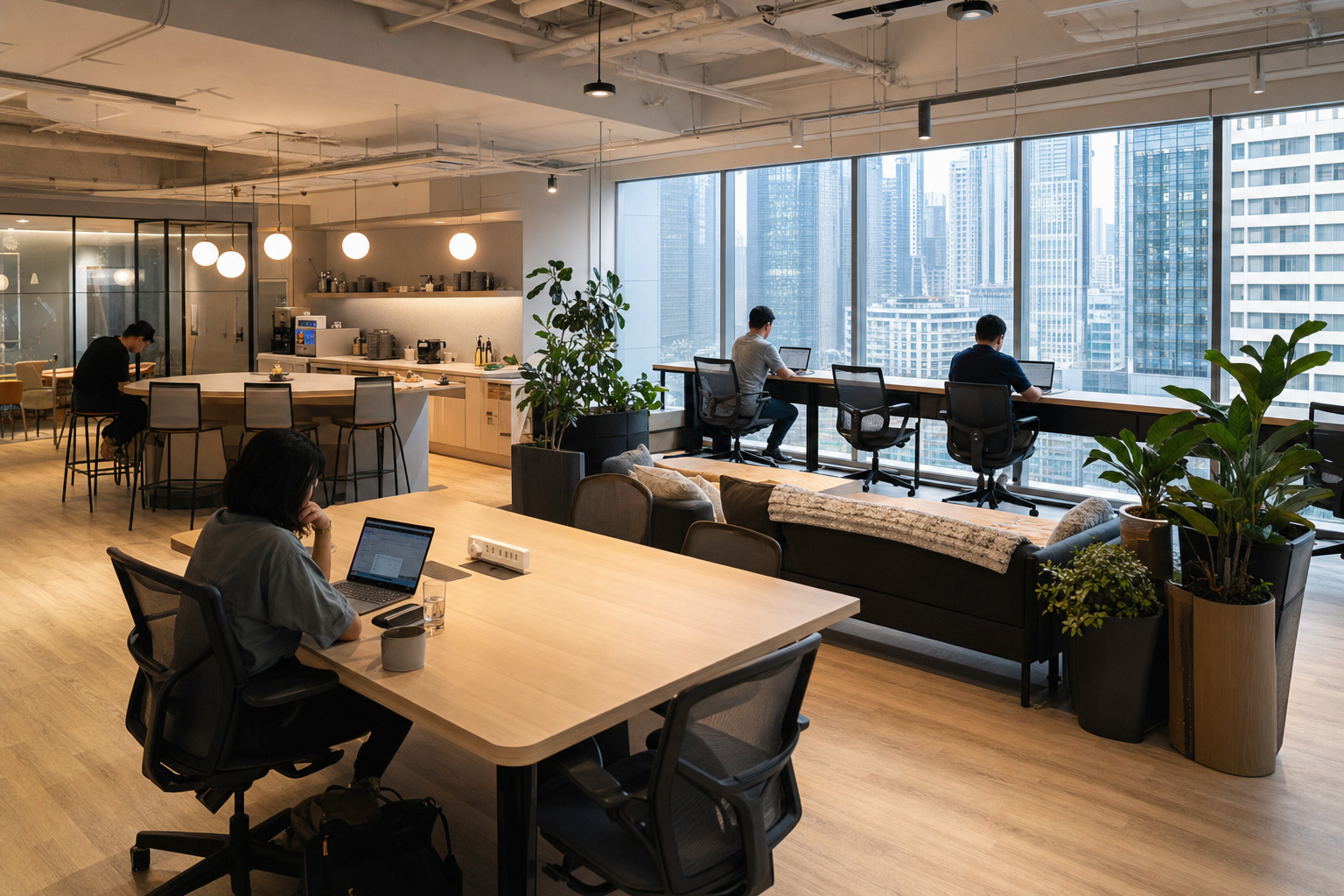
I'm a digital nomad visiting Hong Kong, which business center should I choose for short-term rentals?
I’m a digital nomad visiting Hong Kong, which business center should I choose for short-term rentals? Start with your daily route, not the office photos. Hong Kong Island, Kowloon, and the New Territories each support different work patterns, and the right choice is usually the center that keeps your commute predictable while providing dependable Wi-Fi, power, meeting space, and access control.
Key Takeaways
- A desk near one MTR line may serve you better than a cheaper office that requires multiple transfers, a long walk, or repeated setup changes.
- The same logic applies to booking flexibility: a short stay should not require a lease designed for a permanent company.
- Hong Kong Island, Kowloon, and the New Territories each support different work patterns, and the right choice is usually the center that keeps your commute predictable while providing dependable Wi-Fi, power, meeting space, and access control.
Infrastructure travels with you only when the workspace fits your operating routine. A desk near one MTR line may serve you better than a cheaper office that requires multiple transfers, a long walk, or repeated setup changes. The same logic applies to booking flexibility: a short stay should not require a lease designed for a permanent company.
Hong Kong’s Infrastructure: Geography, Transit, and Workspace Basics
The Quick Answer: Choosing a Business Center by Region
If you are asking, “I’m a digital nomad visiting Hong Kong, which business center should I choose for short-term rentals?”, use a three-step filter. First, mark your accommodation and the locations of your meetings. Second, select a neighborhood reachable with no more than one practical transfer. Third, verify the workspace details: day access, desk type, phone booths, conference rooms, upload performance, backup connectivity, reception hours, and building entry rules.
Budget-conscious nomads report that HKD 16,000 can go “much, much further” in the New Territories than on Hong Kong Island, according to Goats on the Road. That saving has an operational cost if your work requires frequent Island meetings. Reports also indicate that travel from the New Territories to Hong Kong Island can lengthen a daily commute, so calculate time, transit fares, and fatigue together.
Hong Kong Island vs. Kowloon vs. New Territories
Hong Kong Island concentrates major commercial districts, including Central, Admiralty, and Wan Chai. It is a strong base for founders meeting investors, banks, agencies, or regional partners. The trade-off is a higher commercial rent environment and greater pressure on private office availability, especially for short stays.
Kowloon offers a useful middle position. Tsim Sha Tsui connects directly with Hong Kong Island by the Tsuen Wan line and Star Ferry, while Mong Kok provides dense retail, dining, residential, and transport access. The New Territories include more residential options and generally more space, with districts such as Tsuen Wan connected to central routes. That arrangement works best for remote-first schedules with limited face-to-face appointments.
Internet Infrastructure and MTR Transit Connectivity
Do not treat internet access as a decorative amenity. Ask whether the center provides dedicated business broadband, wired Ethernet, separate guest and private networks, stable video-call performance, sufficient electrical outlets, and a documented process for outages. A workspace operator should also explain how visitors authenticate, how long access takes, and whether meeting rooms have their own network capacity.
The MTR is the practical backbone of a Hong Kong work routine. The Island line serves the north side of Hong Kong Island, while the Tsuen Wan line links Kowloon with Central through cross-harbor service. Check the full route in Google Maps before booking, then confirm station exits and walking time. A location that appears close on a map may still require a steep street climb or a long passage through a major interchange.
Matching Business Centers to MTR Lines by Neighborhood
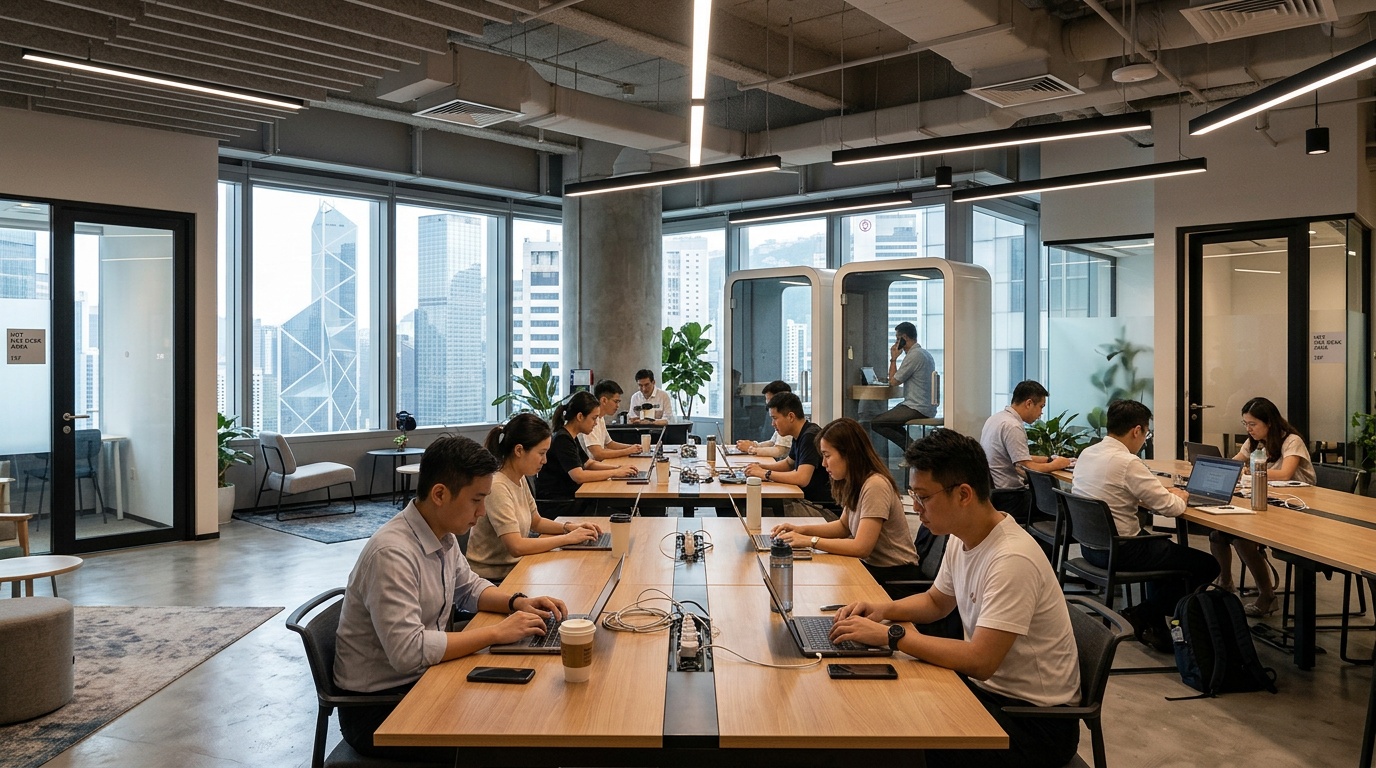
If you are still asking, “I’m a digital nomad visiting Hong Kong, which business center should I choose for short-term rentals?”, match the office to your dominant MTR line. This reduces transfer risk and protects your working hours. The best neighborhood is rarely the one with the most prestigious address. It is the one that keeps your morning route, client access, and return trip within a repeatable pattern.
| Area | Primary MTR access | Best fit | Operational trade-off |
|---|---|---|---|
| Central and Wan Chai | Island line, Tsuen Wan line, interchange access | Client meetings, finance, consulting, regional headquarters | Higher rent pressure and denser streets |
| Tsim Sha Tsui | Tsuen Wan line, East Rail connections nearby | Cross-harbor access, hospitality, international appointments | Visitor traffic and busy pedestrian routes |
| Mong Kok | Tsuen Wan line, Kwun Tong line, East Rail access | Retail, e-commerce, flexible daily work, central Kowloon | Compact streets and variable noise levels |
| Tsuen Wan | Tsuen Wan line | Longer stays, residential convenience, cost control | Longer journeys for frequent Island meetings |
Hong Kong Island: Central and Wan Chai Workspace Profiles
Central suits a schedule built around client calls, investor meetings, financial institutions, and formal presentations. Wan Chai can be more practical for a mixed routine because the Island line provides direct east-west movement, and the district combines offices, restaurants, hotels, and residential buildings. Prioritize a center within a short walk of the station, since heat, rain, and steep streets affect the real commute.
For a short-term rental, inspect meeting-room booking rules and visitor reception before choosing a desk. A polished lobby does not guarantee quiet calls, reliable printing, or after-hours access. Operators should provide clear information about desk availability, lockers, phone booths, and cancellation terms.
Kowloon: Tsim Sha Tsui and Mong Kok Accessibility
Tsim Sha Tsui is useful when your week includes both sides of Victoria Harbour. The Tsuen Wan line provides a direct rail connection toward Central, and nearby ferry services add another transport option. Mong Kok is better suited to founders who value street-level convenience, local suppliers, retail activity, food access, and several MTR route choices.
Ask for the exact station entrance, floor number, elevator access, and sound conditions around the office. In dense districts, a five-minute route can change significantly during peak pedestrian periods. If you need a business address for meetings, confirm the visitor policy before payment.
New Territories: Tsuen Wan and Cost-Effective Alternatives
Tsuen Wan works for remote professionals who need a stable base more than a central address. The Tsuen Wan line offers a direct route toward Kowloon and Hong Kong Island, while nearby residential services can reduce daily errands. This can support focused writing, software development, design, and asynchronous e-commerce work.
The calculation changes if you cross the harbor every day. A lower rental cost may be offset by extra transit time, transfer exposure, and reduced energy for client work. If the New Territories fits your accommodation, book a trial day first, test the network during your real work hours, and measure the complete door-to-desk route.
For travelers who later work from Dubai, Ascendris Business Bay provides an example of a named workspace listing. The same evaluation habit applies in Hong Kong: verify location, access, desk format, and booking conditions before committing. Details about the listing should be confirmed on its current page before publication.
I’m a digital nomad visiting Hong Kong, which business center should I choose for short-term rentals? Select the neighborhood that minimizes repeated friction: one practical rail route, dependable connectivity, suitable meeting access, and a booking period that matches your stay.
Transparent Pricing for Day Passes and Weekly Office Rentals
Short-term workspace pricing in Hong Kong depends on location, privacy, access hours, and the services included with the desk. Central and Causeway Bay generally carry higher commercial costs, while Kowloon and the New Territories can offer more measured operating expenses. A lower rate only helps if the location also protects your time, connectivity, and ability to meet clients.
Ask for the complete price before booking. The total may include taxes, meeting-room credits, printing, mail handling, security deposits, weekend access, or charges for additional visitors. A clear listing should state whether the booking covers a shared desk, dedicated workstation, private office, reception support, Wi-Fi, power, and access during your intended hours.
How Much Short-Term Workspace Actually Costs in Hong Kong
Expect a day pass to cost more per working day than a weekly booking because the operator carries higher turnover and access-management costs. A hot desk usually provides a shared seating area, while a private office adds lockable space, greater privacy, and more predictable control over calls or sensitive work. Exact rates vary by building and availability, so use the following as a comparison framework rather than a quoted tariff.
| Workspace format | Best for | Price structure to verify | Operational questions |
|---|---|---|---|
| Day pass | One-off workday or short visit | Daily rate, tax, access hours | Is seating guaranteed, and are calls permitted? |
| Hot desk | Flexible work across several days | Daily or weekly bundle, booking limits | Can you reserve a desk, locker, or monitor? |
| Private office | Confidential calls or focused project work | Daily, weekly, or monthly rate, deposit | Are furniture, utilities, cleaning, and meeting access included? |
Comparing Day Passes, Hot Desks, and Private Offices
Choose a day pass when your itinerary is uncertain or you need a workspace near a specific meeting. A weekly hot desk is more suitable when your schedule has repeated work blocks but does not justify a fixed office. A private office makes sense when your work involves confidential documents, frequent video conferences, a small project team, or equipment that should remain in place.
Calculate the effective cost per productive day, not only the advertised rental price. Include transportation, meals during a long commute, meeting-room fees, and time lost through transfers. A cheaper center in Tsuen Wan may be financially sensible for asynchronous work, while a higher-priced Kowloon location may produce better total value if it prevents repeated cross-harbor travel.
Avoiding Long-Term Lease Commitments in High-Cost Districts
Traditional office agreements can require deposits, minimum terms, furnishing decisions, utility setup, and administrative work that exceed a nomad’s actual stay. Avoid committing before testing the building, network performance, noise level, access control, and meeting facilities during normal working hours.
Short-term access preserves optionality. You can work near a client for one day, move closer to your accommodation for a focused week, or change districts when your meeting schedule changes. The right system treats workspace as an operating input that can move with your schedule, rather than a permanent real estate decision.
Bypassing Rigid Leases With On-Demand Workspace Systems
How can a visiting professional access a business center without signing a corporate lease? Compare available workspace options, booking conditions, access instructions, and operator details before choosing a day, week, or month.
How Instant Booking Platforms Operate
Before using any platform, verify whether membership is required and review the current booking terms. Search and listing information may include city, neighborhood, workspace type, date, duration, photographs, desk capacity, opening hours, address, amenities, cancellation policy, and building-entry instructions; confirm each detail before payment.
Before using Hotdesk, verify its current booking terms, availability, payment status, and access instructions. Ascendris Business Bay is an example of a named Hotdesk listing. Its current workspace details and booking path should be confirmed on the linked page before publication. A specific listing is more useful for evaluation than a generic promise of office access.
Workspace Operator Reliability
At Hotdesk, confirm how booking data, availability, payment status, and access instructions are handled for the specific workspace and booking. Infrastructure supports the user only when those records are accurate from search through arrival.
From an infrastructure perspective, reliability means reducing re-work. A traveler should not need to repeat the same request across email threads, wait for manual confirmation, or discover that the listed desk is unavailable after payment. Operator workflows still matter: reception procedures, access credentials, room readiness, internet support, and escalation paths determine whether the digital booking matches the physical workspace.
Steps to Secure a Flexible Workspace for a Day or Month
Use this sequence before confirming any short-term office:
- Set the booking window around your actual workdays, not your entire trip.
- Filter for the required format, such as a hot desk, dedicated desk, or private office.
- Check the route, station exit, building entry process, and walking time.
- Confirm Wi-Fi, power, phone booths, meeting rooms, printing, and visitor rules.
- Review the full price, cancellation conditions, and access hours.
- Save the booking confirmation and arrival instructions offline.
For a single day, prioritize verified access and a short route. For a month, test the center first or choose a booking that preserves the ability to change location. A repeatable process is preferable to a longer contract. It keeps workspace, payment, and access aligned with the user’s changing schedule.
Visa Rules and Cross-Border Technical Operations
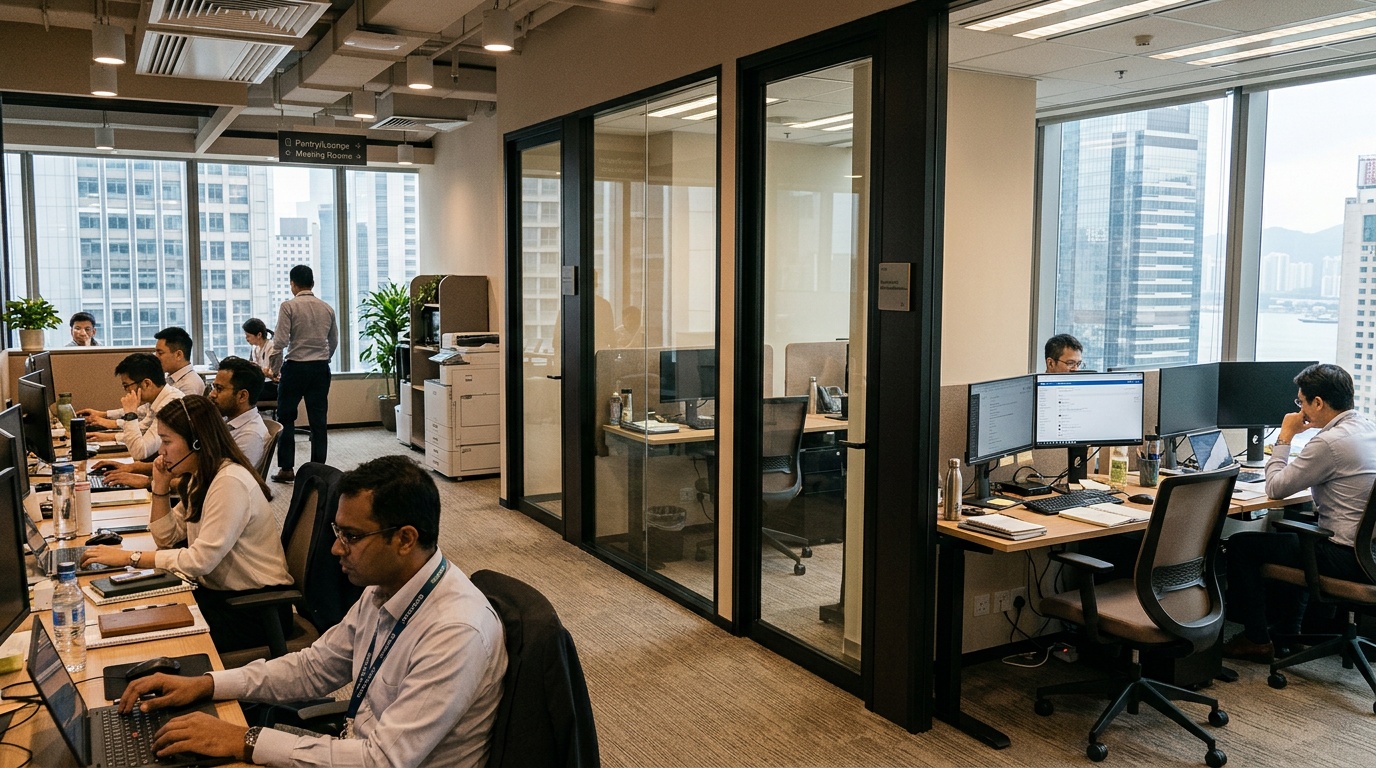
A business center solves only one part of a Hong Kong workday. Before booking a desk, confirm your right to enter and conduct permitted activities, then prepare the software, payments, and network access your business depends upon. Immigration status and technical continuity should be checked together, especially if your trip includes mainland China.
Visa Pathways and Tax Rules for Remote Workers
Many visitors enter Hong Kong under a visa-exempt arrangement or visitor permission, depending on nationality and passport conditions. The permitted period and activities vary, so check the Hong Kong Immigration Department before departure. A visitor status should not be treated as a general work authorization, particularly if you will serve local clients, receive employment income from a Hong Kong entity, or operate a locally established business.
Tax treatment depends on the source of income, where services are performed, contract structure, and the facts connected with a jurisdiction. Do not rely on a general claim that offshore income is taxed at 0%; check current official Hong Kong Inland Revenue Department guidance. Consult a qualified tax professional for your circumstances, and keep invoices, contracts, travel dates, business registration records, and payment documentation.
Managing Digital Infrastructure: Hong Kong vs. Mainland China
Hong Kong and mainland China should be treated as separate operating environments. Verify whether a Hong Kong business center supports the services your team uses globally, including Google Workspace, Google Maps, Slack, GitHub, cloud dashboards, and international payment tools. Access patterns can differ after crossing the boundary, and a mainland connection may require approved business tools, local accounts, or a company-managed network configuration.
Do not assume that a Hong Kong SIM, eSIM, VPN, or cloud login will provide the same behavior in Shenzhen or another mainland destination. Test authentication before travel, confirm multifactor authentication methods, store recovery codes securely, and ask your employer or hosting provider about regional access policies. Alipay can be useful for local payments, while Google Maps remains practical for Hong Kong route planning. Keep an offline address, station name, and meeting contact available if mobile data becomes unreliable.
Software and Network Preparation for E-Commerce Founders
E-commerce operators should map every dependency before arrival: storefront administration, payment gateway, advertising account, inventory system, customer support inbox, warehouse portal, analytics dashboard, and supplier communications. Record which services require a specific country setting, trusted device, phone number, or security key. This prevents a login challenge from stopping order management during a short booking.
At the workspace, ask whether the network uses a shared guest connection or a private VLAN, which separates traffic logically. Use HTTPS, a password manager, hardware-based multifactor authentication where available, and a company-approved VPN. Avoid handling payment credentials on unknown computers, and confirm upload performance before scheduling large product media transfers or live customer-support sessions.
Ascendris Business Bay illustrates a useful booking principle: a named workspace should be evaluated through its location, access details, desk format, and stated amenities. It is not a Hong Kong visa solution, and the same operational checklist applies when selecting temporary workspace in any country.
The practical verdict is straightforward: verify immigration permission first, separate Hong Kong and mainland connectivity assumptions, and test your business software before the first workday. Infrastructure travels with the user only when legal status, network access, identity controls, and workspace procedures have been checked as one system.
Leave a Reply