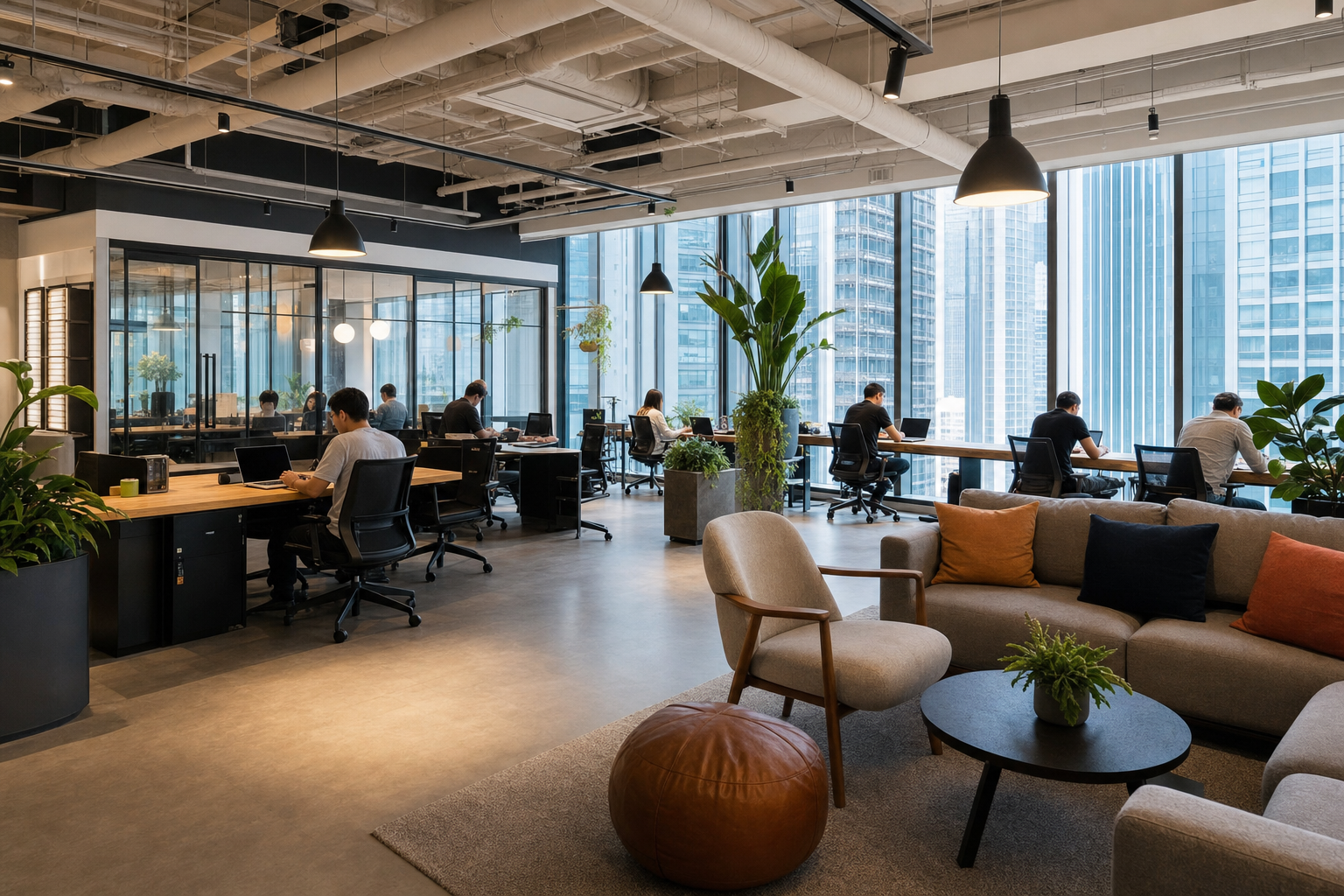
Which Hong Kong coworking space offers better amenities: private offices or hot desks?
Private offices usually provide more privacy, storage, and control. Hot desks suit people who need a dependable place to work without a long commitment. In Hong Kong, the better choice depends on your routine: a private office supports confidential, team-based work, while a hot desk suits mobile professionals booking by the day or for shorter periods.
Key Takeaways
- Private offices usually provide more privacy, storage, and control.
- Hot desks suit people who need a dependable place to work without a long commitment.
- In Hong Kong, the better choice depends on your routine: a private office supports confidential, team-based work, while a hot desk suits mobile professionals booking by the day or for shorter periods.
What do private offices and hot desks include in Hong Kong?
Hot desks commonly include a shared workstation, Wi-Fi, power, air conditioning, and access to common areas. A private office may add a lockable room, dedicated desks, team seating, and more control over noise and visitors. Facilities vary by workspace, so check the individual listing, access hours, and booking terms before paying.
Some Hong Kong locations also provide printing, coffee, kitchen facilities, or breakout space. These extras can matter more than the desk type if you spend the day on calls, meet clients, or need somewhere to take a short break.
Review current Hong Kong workspace listings and compare the facilities included in each booking.
Which amenities suit your work: private offices or hot desks?
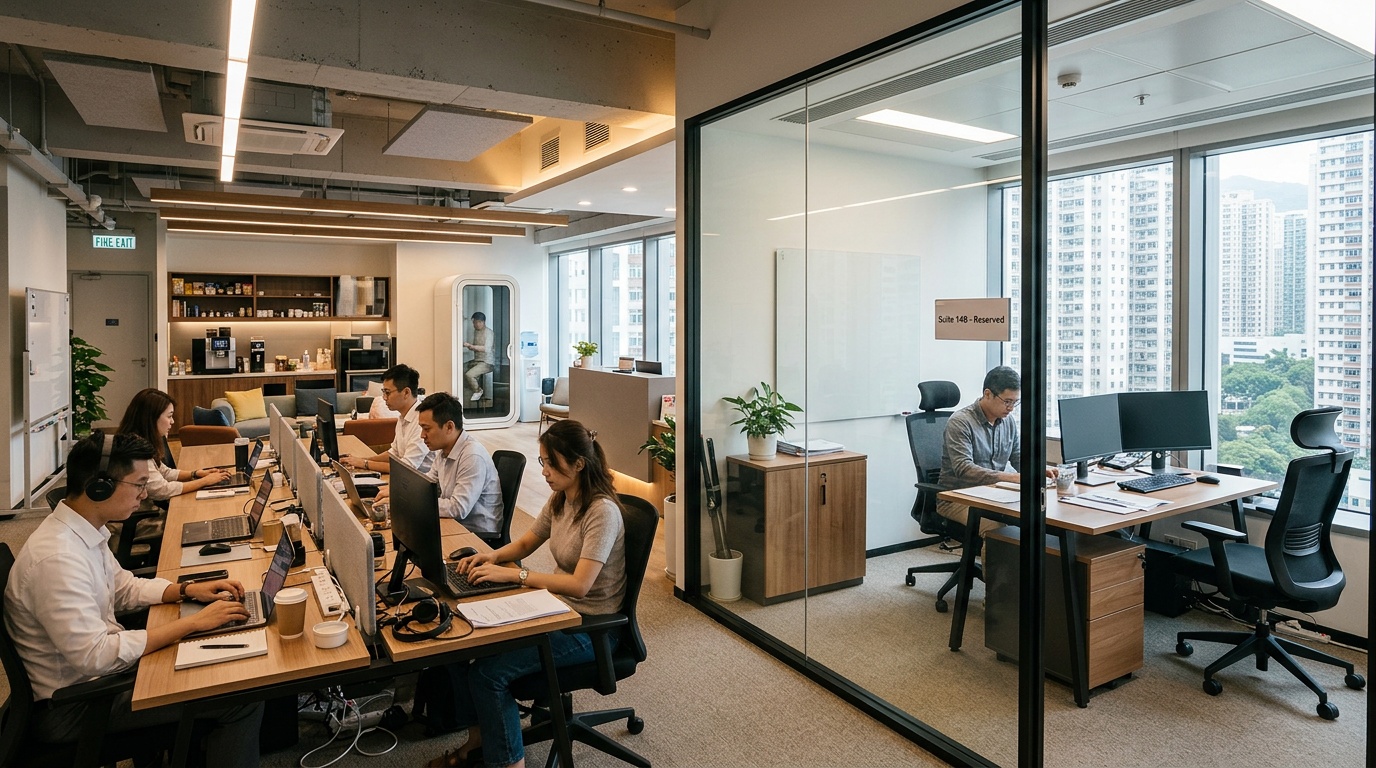
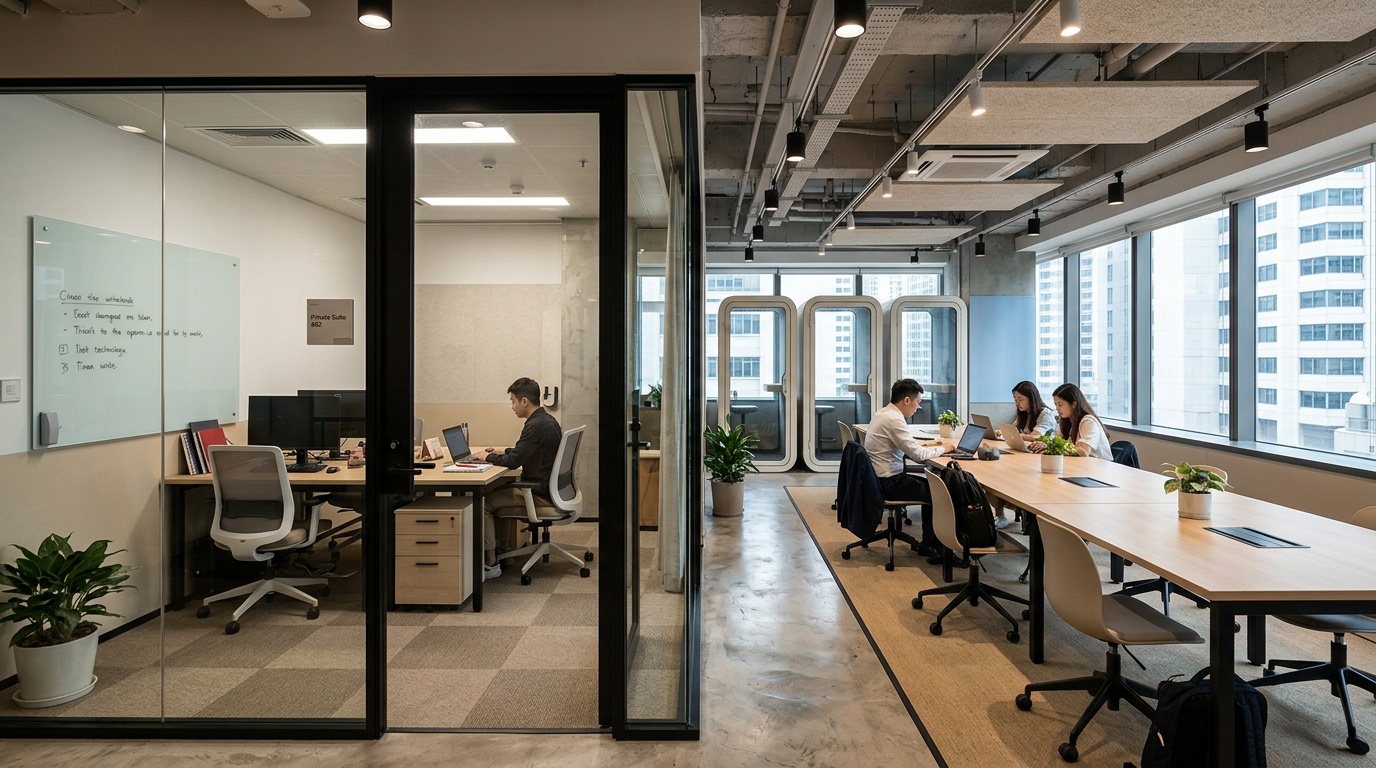
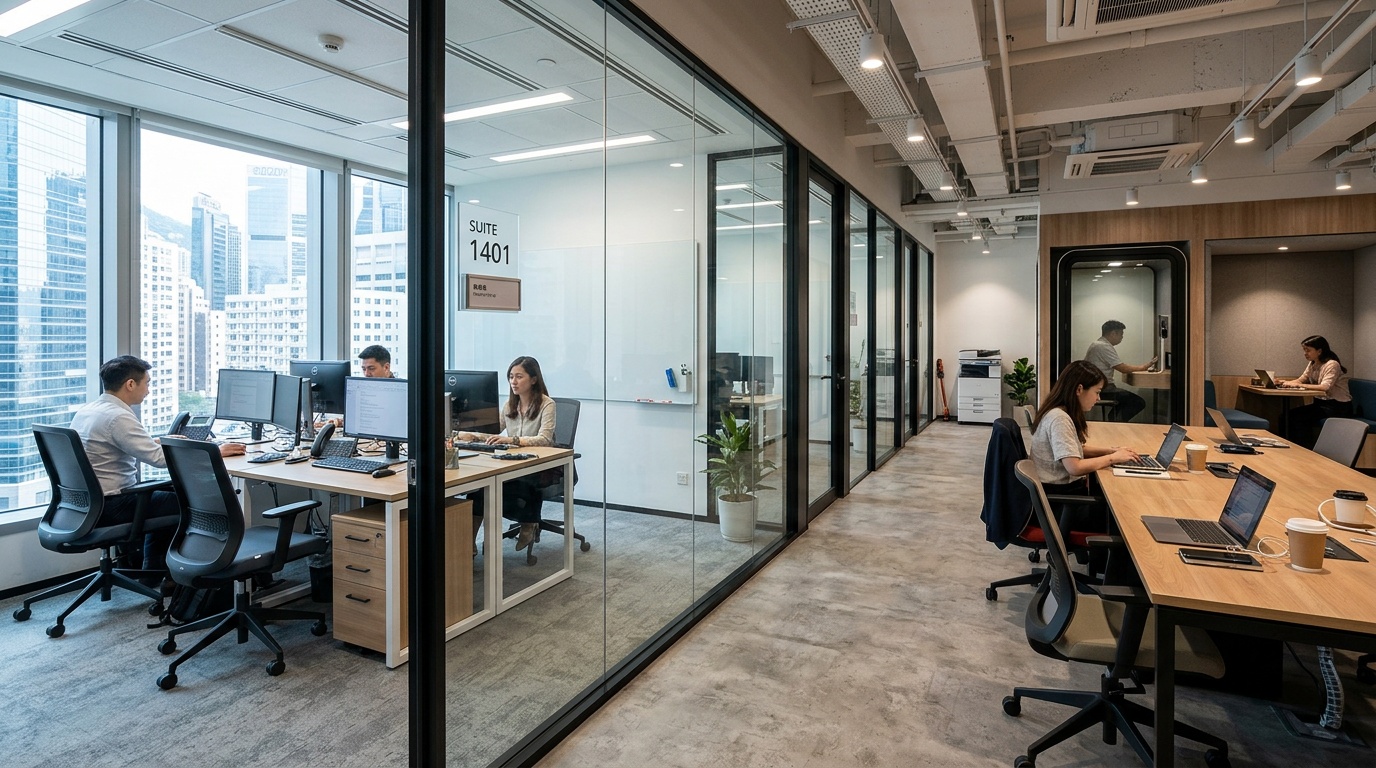
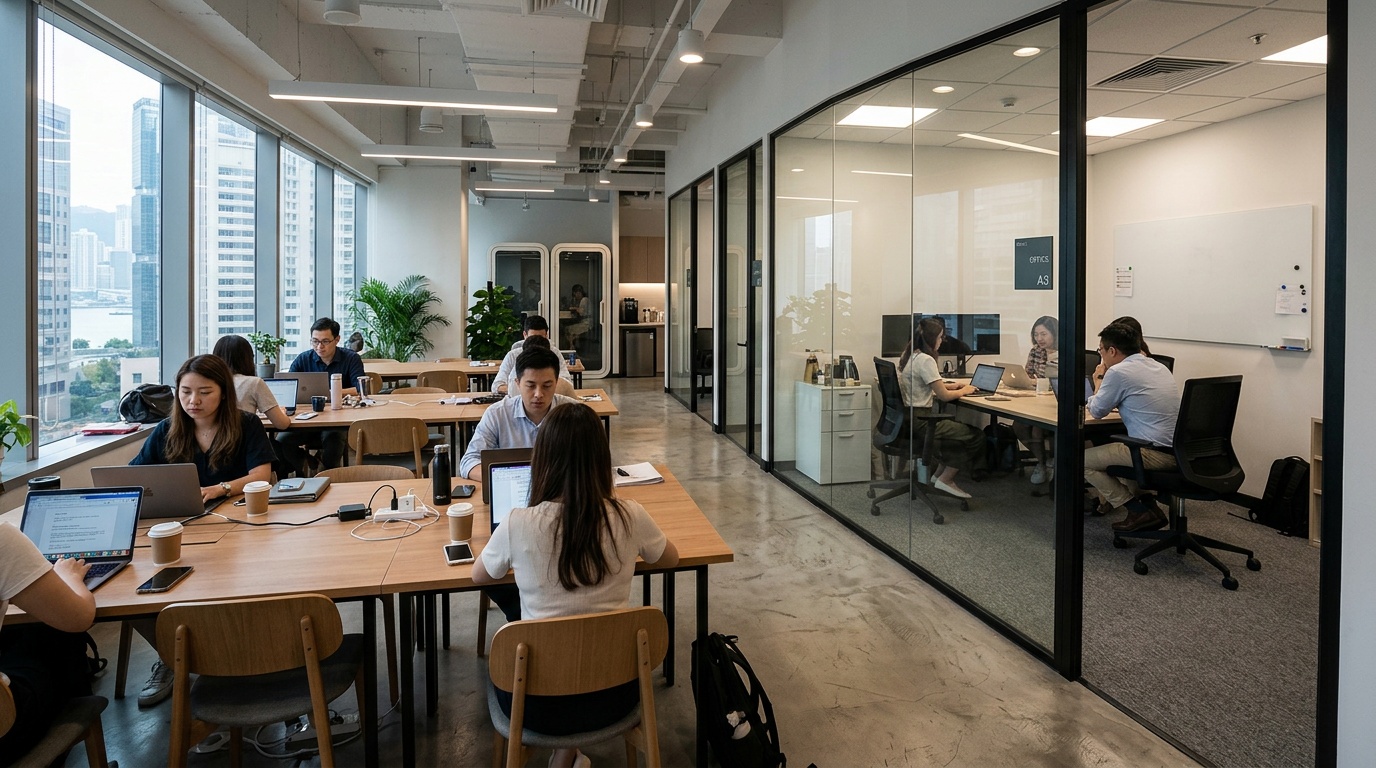
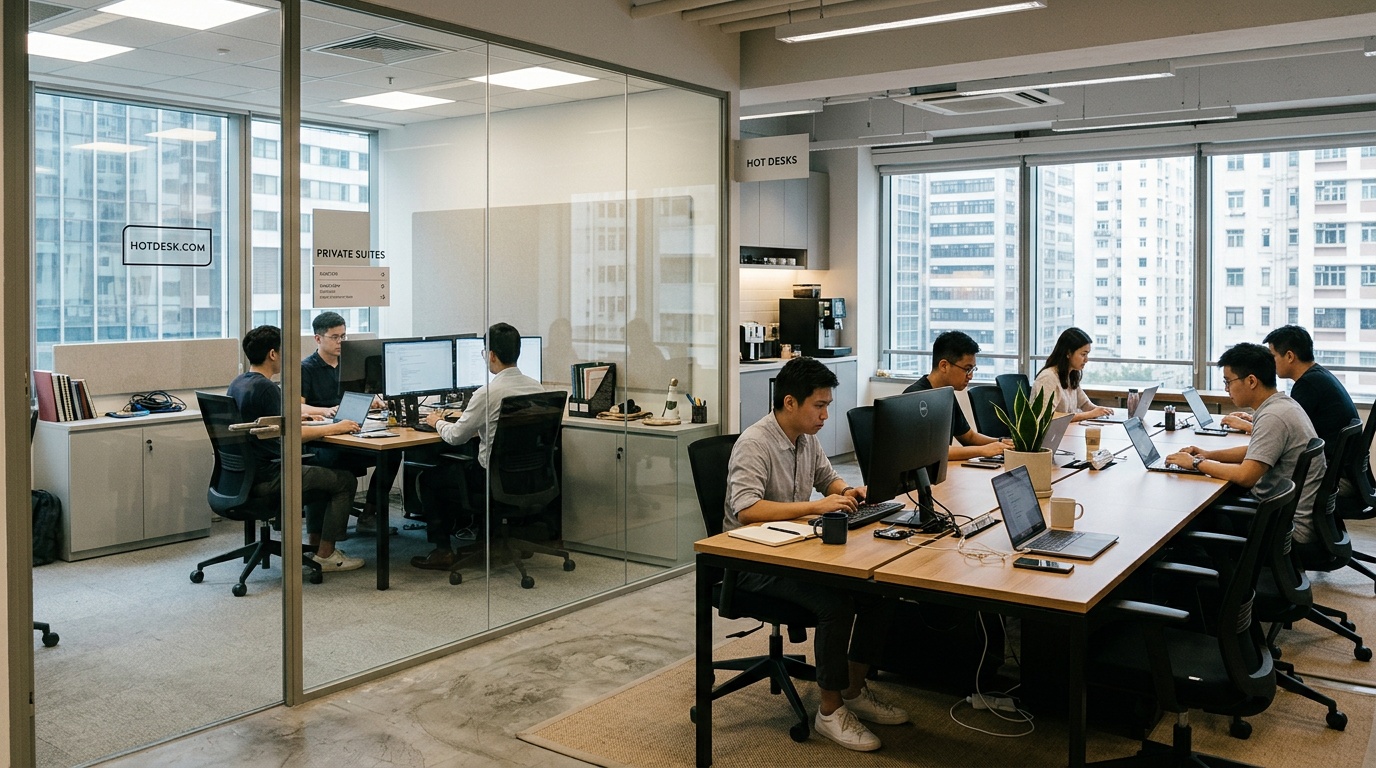
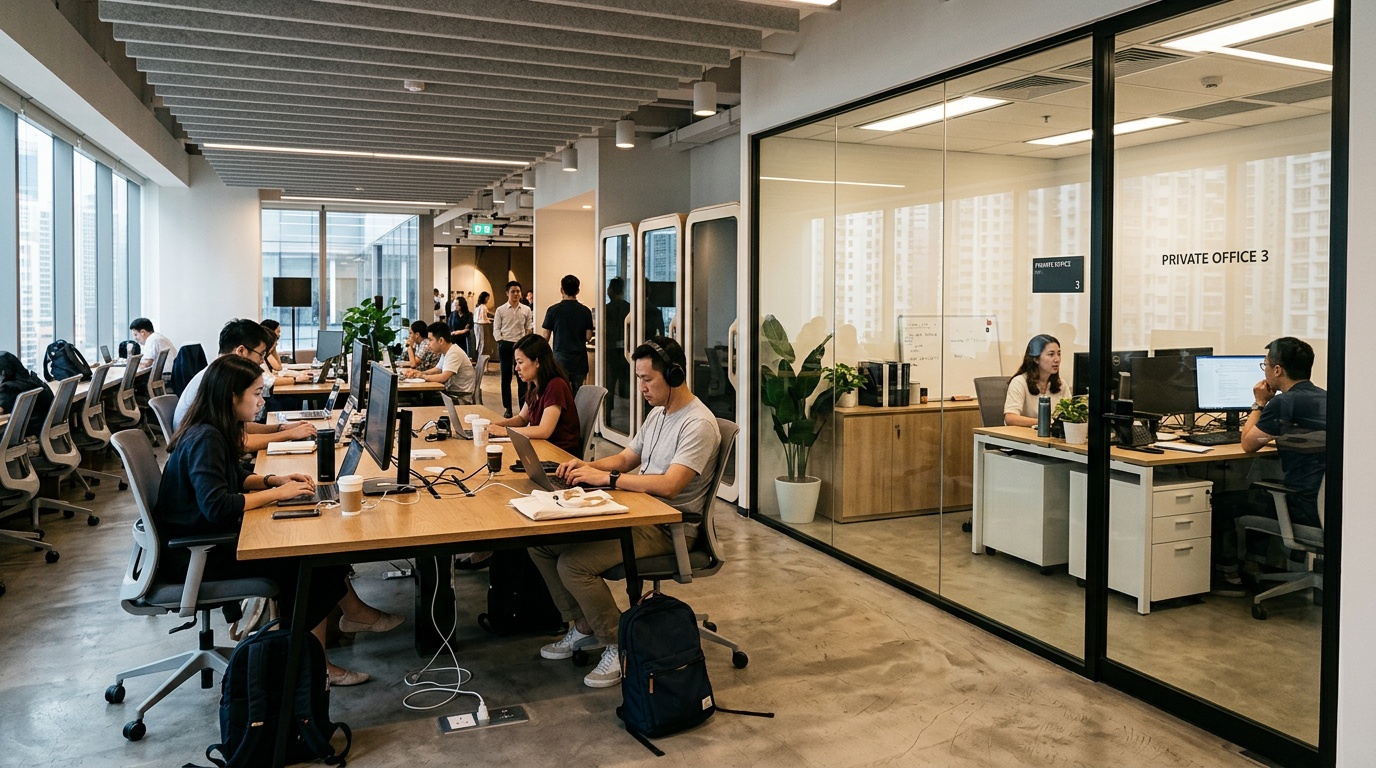
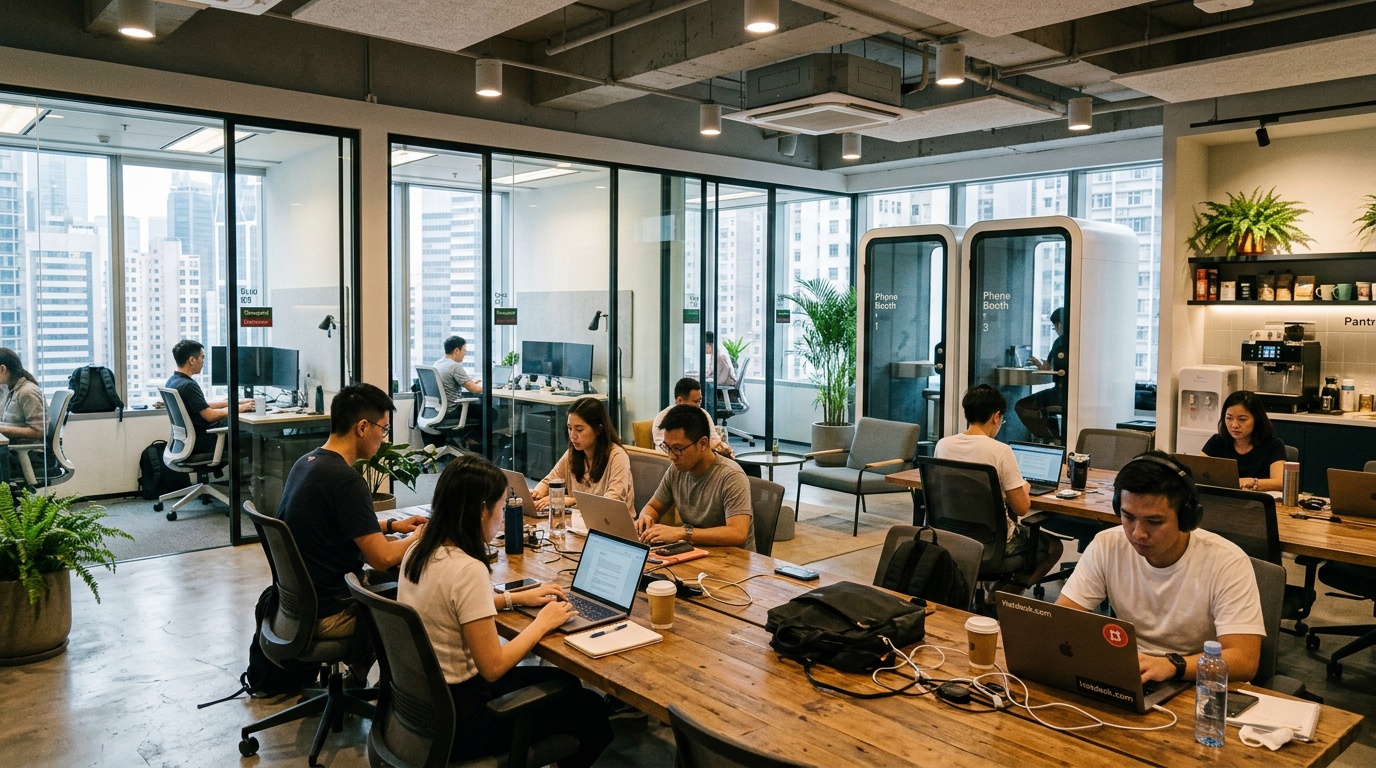
Private offices are the stronger fit when privacy, secure storage, fixed equipment, or a consistent team base affects your day. Hot desks are usually the better fit for solo work, changing schedules, and short bookings. More amenities don’t automatically make one option better; the useful choice is the one that removes friction from your routine.
How should you choose a Hong Kong coworking space?
Start with the work itself, then compare the facilities that support it. A hot desk can suit a solo professional who needs a place for focused work. A private office becomes more practical for confidential conversations, frequent video calls, fixed equipment, or several people sharing one base.
- Count how often you need a desk and whether your schedule changes from week to week.
- Decide whether calls, documents, visitors, or equipment require a lockable room.
- Check opening hours, shared facilities, guest access, storage, and additional fees.
- Compare the total booking cost with the consistency your work requires.
A useful test is simple: if moving between desks creates daily setup work, a private office may repay its higher cost through continuity. If your needs change often, a hot desk keeps the commitment lighter.
References
- DOI: 10.1007/s11846-016-0215-y
Frequently Asked Questions
What standard amenities do hot desks in Hong Kong typically include?
A hot desk may include a shared workstation, ergonomic seating, Wi-Fi, power access, air conditioning, printing, drinking water, coffee, and communal areas, depending on the location and booking terms.
What standard amenities do private offices in Hong Kong typically include?
Private offices may include a lockable room, dedicated desks, furniture, Wi-Fi, electricity, air conditioning, reception services, and shared facilities.
Mohamed Khaled
Forbes 30 Under 30
Founder & CEO at Hotdesk & Co-founder, DESK Token
Mohamed Khaled is the Founder and CEO of Hotdesk, the on-demand workspace platform providing access to coworking spaces and flexible offices across more than 120 countries.
He spent nearly a decade at PwC before moving into financial leadership at SWVL, where he led the company’s $1.5 billion Nasdaq listing, the first Unicorn from thr Middle East to go public in the United States.
A Forbes 30 Under 30 honoree, Mohamed built Hotdesk from a side project into a global platform, leading a team of more than 50 and expanding into international markets, including the acquisition of Spain-based coworking marketplace YADO.
Also being Co-founder and President of DESK Token, the world’s first asset backed property investment and utility hybrid token, Mohammed is focused on building infrastructure that unlocks underutilized assets – from meeting rooms to private offices and full on buildings – while creating space for the future of work.
Leave a Reply