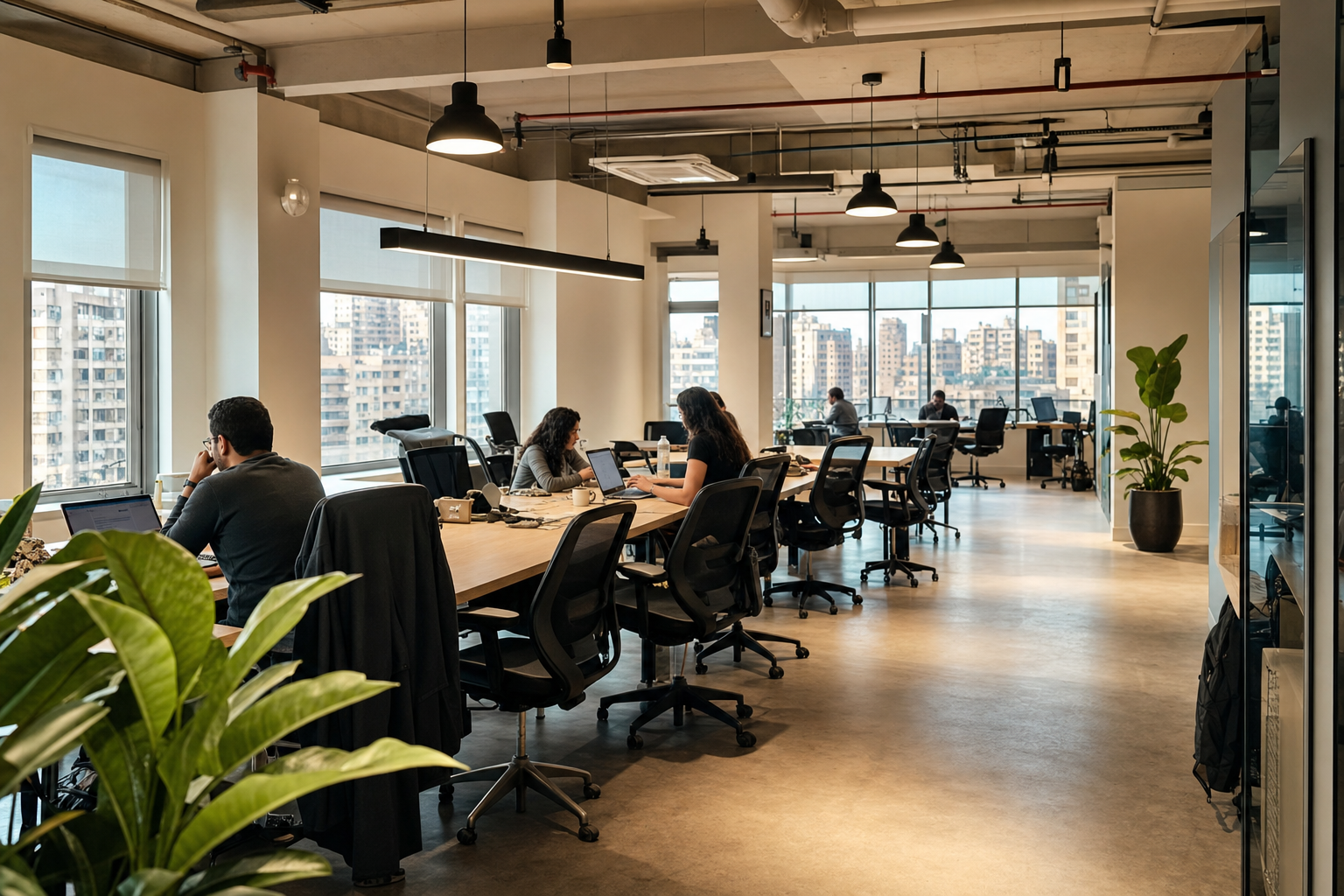
Coworking space vs. traditional office rental in Dokki
Ever considered the infrastructure behind your workspace? Navigating the evolving workspace needs in a dynamic city like Dokki requires a clear understanding of available options. As businesses and professionals seek environments that support productivity, collaboration, and growth, the distinction between a flexible coworking setup and a traditional office rental becomes essential. This guide unpacks these differences, focusing on what matters for operational continuity and connection.
Key Takeaways
- Choosing between coworking and a traditional office in Dokki comes down to how each option supports operational continuity without forcing you to rebuild your setup from scratch.
- Coworking spaces provide ready-to-use infrastructure that scales with your team, removing the need to manage physical assets like furniture and internet connections.
- Traditional office rentals in Dokki give you full control over the space but require a larger upfront investment in setup and ongoing maintenance to keep operations running smoothly.
- For professionals who value smooth connectivity and minimal downtime, coworking eliminates the repeated resets that come with managing a dedicated office.
- Looking at workspace choices through an infrastructure lens shows that long-term operational stability often matters more than the perceived security of a fixed lease.
Every distributed system asks you to manage new failure modes. Similarly, every workspace choice introduces different operational considerations. We look at systems that travel with you, not places that demand constant reconfiguration. This means examining the underlying infrastructure of how work gets done, not just the surface-level amenities.
What is Coworking Space vs. Traditional Office Rental in Dokki?
A coworking space in Dokki offers a flexible, communal work environment where individuals and teams can rent desk space or private offices. These spaces are designed to foster collaboration and provide amenities such as high-speed internet, meeting rooms, and networking opportunities. Unlike a traditional setup, coworking memberships typically operate on shorter terms, from daily passes to monthly subscriptions, providing agility for businesses that experience fluctuating team sizes or project-based needs. It is about accessing a ready-to-use workspace infrastructure without the burden of long-term leases or property management.
In contrast, a traditional office rental in Dokki involves leasing a dedicated physical space for an extended period, usually one to several years. This model provides exclusivity and the ability to customize the environment to a specific company’s branding and operational requirements. Yet, it also entails significant upfront costs, including security deposits. Which can range from three to six months’ rent in Cairo. And requires the tenant to manage utilities, maintenance, and office fit-outs. The infrastructure demands of a traditional office are considerably higher, demanding a commitment that may not suit rapidly changing business dynamics.
The fundamental difference lies in the operational model and the flexibility provided. Coworking spaces are engineered for scale and adaptability, allowing users to scale their space up or down as needed. This operational model is built on shared resources and community management, reducing the overhead and complexity for the end-user. Traditional rentals, while offering autonomy, demand a full spectrum of facility management from the tenant, creating a more rigid structure that can hinder the quick adaptation required in the market.
For professionals and businesses in Dokki, understanding this distinction is key to making an informed decision. Whether you prioritize immediate access and flexibility or long-term control and customization, the choice impacts your operational overhead, team mobility, and overall business agility. The average rating of coworking spaces in Dokki is 4.1, according to CoworkIntel, reflecting a generally positive user experience with these adaptable environments.
Benefits of Coworking Space vs. Traditional Office Rental in Dokki
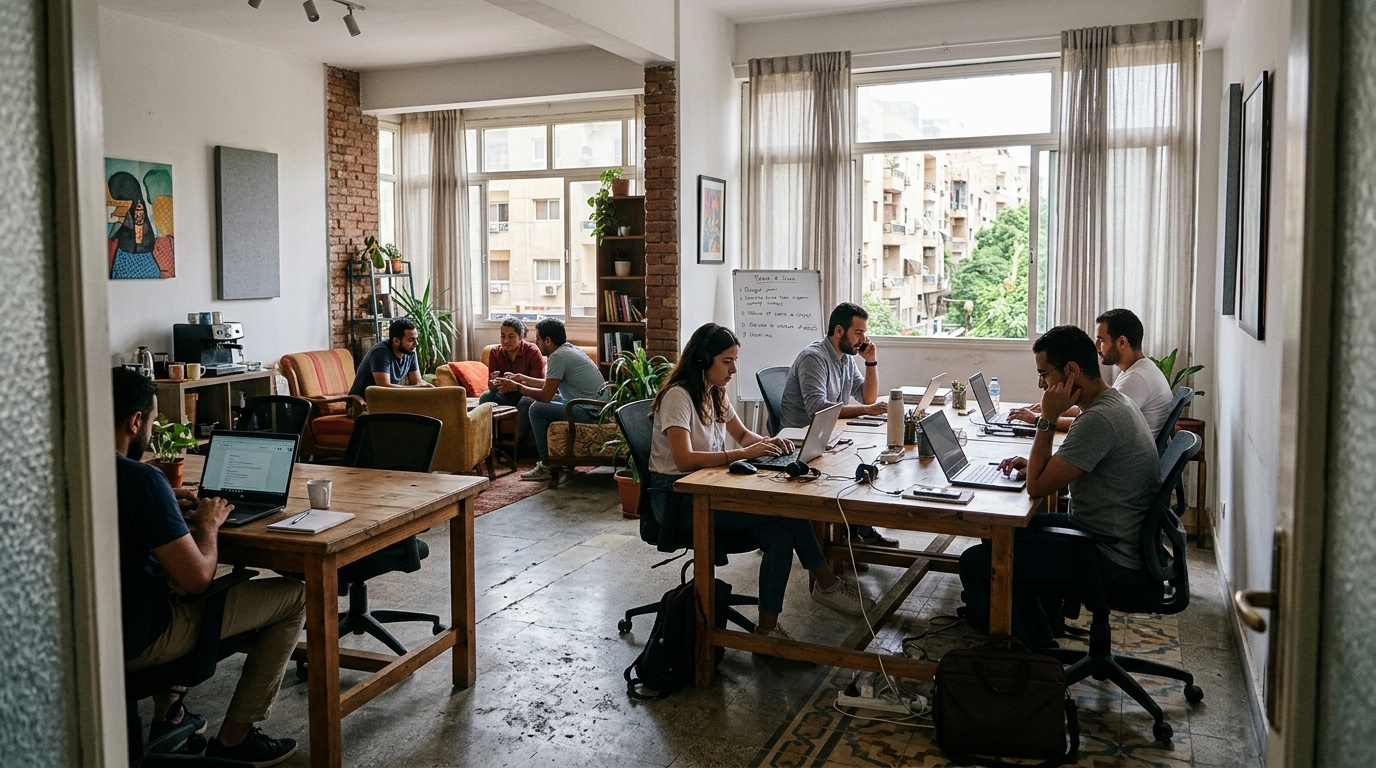
Coworking spaces offer a compelling set of benefits, primarily centered around flexibility and cost efficiency. For many, especially freelancers, startups, and small teams in Dokki, the ability to pay only for the space and time used is a significant advantage. Monthly memberships for hot desks in Dokki can range from EGP 1,500 to EGP 4,000, an estimate derived from market observations. This contrasts sharply with the financial commitment of traditional leases, where security deposits alone can be substantial. Additionally, coworking environments often provide access to a diverse professional community, fostering organic networking and potential business collaborations that are harder to cultivate in an isolated traditional office.
The operational infrastructure within coworking spaces is a major draw. Reliable, high-speed internet, fully equipped meeting rooms, printing facilities, and often, kitchen access with complimentary beverages, are standard inclusions. This means users can walk in and start working immediately, without the setup delays or ongoing management of utilities and maintenance inherent in traditional rentals. Some Dokki coworking spaces are noted for amenities like power backup, ensuring continuity even during local disruptions. This focus on ‘what stays working’ is a core engineering principle applied to workspace solutions, minimizing re-work and maximizing productive time.
Traditional office rentals, conversely, offer unparalleled control over privacy and branding. Companies can design their space precisely to their culture and operational needs, which is essential for larger enterprises or those with specific security or compliance requirements. The ability to establish a permanent, branded headquarters can be a significant asset for corporate identity and team cohesion. Yet, this autonomy comes with a higher degree of responsibility. Managing leases, negotiating with vendors for services, overseeing office upkeep, and handling unexpected repairs all add layers of complexity and cost that are typically managed by the coworking operator on behalf of their members.
The speed of deployment is another benefit favoring coworking. Companies using workspace platforms can often find and secure suitable office space in less than 30 days, a significant acceleration compared to the lengthy negotiation and setup periods associated with traditional leases. This agility allows businesses to respond rapidly to market opportunities or unexpected growth spurts. As an example, a project requiring a temporary team expansion can be accommodated quickly in a coworking environment, whereas a traditional lease might prevent such immediate scaling. This is the essence of infrastructure that travels with your business needs, not a fixed point requiring extensive re-planning.
Considering specific amenities, while coworking spaces provide shared access to meeting rooms and communal areas, traditional rentals offer dedicated private spaces. For organizations requiring absolute privacy or a highly specialized environment, a traditional office might be the only viable option. Yet, for many, the shared resources, lower entry cost, and built-in operational reliability of coworking spaces, like the Coworking Naubostik, offer a more practical and scalable solution for their workspace needs in Dokki.
How to Choose Coworking space vs. traditional office rental in Dokki
Selecting the right workspace infrastructure in Dokki involves a careful evaluation of your business’s current needs and future trajectory. The decision between a coworking space and a traditional office rental hinges on several practical factors, ranging from financial commitments to operational flexibility. It is not merely about finding a physical location; it is about implementing a system that supports your team’s productivity and your company’s agility. We must consider what works at 10x, not just for today, but for anticipated growth or shifts in demand, ensuring continuity over resets.
When evaluating your options, ask critical questions about your team’s size, budget, and required amenities. Do you need a space that can adapt quickly to changing team dynamics, or is a fixed, customized environment more suitable for your long-term strategy? Understanding these core requirements will guide you toward the workspace model that minimizes re-work and maximizes your operational efficiency. As an example, a startup expecting rapid growth might find the rigid structure of a traditional lease a significant impediment, whereas a well-established firm with predictable staffing needs might prioritize the control offered by a dedicated office.
Assessing Your Business Needs
The first step in choosing between a coworking space and a traditional office rental in Dokki is a thorough assessment of your operational requirements. Consider the size of your team and its projected growth over the next 1-3 years. If your team fluctuates significantly or operates on project-based cycles, the inherent flexibility of a coworking membership is a significant advantage. This model allows you to scale your workspace footprint up or down without the lengthy processes associated with lease renegotiations or subletting.
Conversely, if your team size is stable and your business operations demand a highly specific, branded environment that requires extensive customization. Such as custom shelving, unique branding elements, or specialized technical infrastructure. A traditional office rental may offer the necessary control. Yet, be prepared for the associated commitment. Traditional office rentals typically require security deposits of three to six months’ rent in Cairo, a substantial upfront capital requirement that coworking spaces largely bypass.
Evaluating Cost Structures and Commitments
The financial implications are often a deciding factor. Coworking memberships in Dokki can range from EGP 1,500 to EGP 4,000 per month for hot desks, providing a predictable, all-inclusive operational cost. This often covers utilities, internet, cleaning, and access to shared amenities like meeting rooms and kitchens. This model is engineered for simplicity, minimizing unexpected expenses and reducing the administrative burden of managing multiple service providers. It offers a clear path for budgeting, especially for smaller businesses or freelancers.
Traditional office rentals, while potentially offering a lower cost-per-square-foot for large, long-term commitments, come with a more complex cost structure. Beyond the base rent and security deposit, tenants are responsible for utilities, building maintenance fees, property taxes, and often, the fit-out costs to make the space functional. Hidden costs can accumulate, from office furniture and IT setup to ongoing repairs. The commitment is typically for one to several years, demanding a level of financial certainty that may not be present for all businesses operating in dynamic markets.
Considering Flexibility and Scalability
Flexibility is where coworking spaces truly differentiate themselves. They are built around the principle of ‘infrastructure that travels’ with your business. Need an extra desk for a short-term contractor? A coworking space can accommodate that change in days, not months. This agility is invaluable for startups, remote teams, or companies navigating market uncertainty. Many companies using workspace platforms find an office in less than 30 days, a testament to the speed and adaptability of flexible solutions, as noted by workin.space data.
Traditional office rentals, by their nature, are less flexible. Once a lease is signed, you are committed to that space for the duration. While some leases may include options for expansion or contraction, these clauses are often costly and complex to activate. For businesses that anticipate rapid scaling or potential downsizing, the rigidity of a traditional lease can become an operational bottleneck, forcing re-work and unnecessary expense. The ability to adjust your workspace without a complete organizational reset is a key advantage of coworking environments.
Amenities and Operational Support
Coworking spaces typically offer a comprehensive suite of amenities designed for immediate productivity. This includes reliable, high-speed Wi-Fi, ergonomic furniture, printing facilities, and often, fully equipped meeting rooms bookable by the hour. Many locations, including some in Dokki, provide essential services like power backup systems, ensuring continuity of operations even during power outages. The average rating of coworking spaces in Dokki is 4.1, according to CoworkIntel, indicating a strong user satisfaction with the provided infrastructure and services. These spaces are managed to ensure systems remain operational, embodying the principle of ‘what stays working’.
While traditional offices offer complete control over amenities, the responsibility for their provision and maintenance falls entirely on the tenant. This means procuring and managing internet services, setting up and maintaining printers, ensuring adequate power supply, and handling all aspects of office upkeep. For many businesses, particularly SMEs, the administrative overhead and technical expertise required to manage these elements can be substantial. While it offers autonomy, it also introduces complexity that can distract from core business activities. For a truly adaptable and hassle-free workspace solution, consider options like Coworking Naubostik, which provides ready-to-go infrastructure.
Community and Networking Opportunities
A significant, though sometimes overlooked, aspect of coworking spaces is the built-in community. These environments are designed to foster interaction among professionals from diverse industries. This can lead to organic networking, knowledge sharing, and potential business collaborations. While it is possible to build a company culture within a traditional office, the spontaneous connections that arise in a shared workspace are a unique benefit. This collaborative atmosphere supports innovation and can provide valuable peer support, especially for solo entrepreneurs or small teams.
Traditional office rentals offer a private, controlled environment for your team. This allows you to cultivate a specific company culture and ensure a high degree of privacy for sensitive discussions or client meetings. While community building is still possible within your own four walls, it is an internal effort rather than an external, organic one. For businesses where privacy and an exclusive team environment are paramount, a traditional office remains the preferred choice. Yet, the operational simplicity and accessibility of coworking spaces, such as those available through Hotdesk, often make them the more practical choice for businesses prioritizing agility and connection without complexity.
References
Frequently Asked Questions
The decision between coworking space vs. traditional office rental in Dokki often raises practical questions from businesses and professionals alike. Understanding the nuances behind cost, flexibility, and amenities can clarify which option aligns with specific operational needs.
How much does a coworking space in Dokki cost compared to renting a traditional office? Coworking memberships in Dokki typically range from EGP 1,500 to EGP 4,000 per month for hot desks. In contrast, traditional office rentals require a significant upfront commitment, including security deposits equivalent to three to six months’ rent, along with monthly rent payments and often separate costs for utilities and maintenance. This makes coworking a more predictable and accessible expense for smaller teams or freelancers, while traditional offices may suit businesses with stable, long-term occupancy needs.
What hidden costs are associated with traditional office rental in Dokki? Beyond rent and deposits, traditional leases often involve additional charges such as building maintenance fees, property taxes, utility bills, and fit-out expenses to customize the space. Tenants bear responsibility for IT infrastructure setup, furniture procurement, and ongoing repairs. These factors contribute to the total cost of occupancy and require dedicated management resources, increasing both financial and operational overhead.
Which option offers better flexibility for short-term projects or growing teams? Coworking spaces provide superior flexibility, allowing businesses to scale workspace usage quickly without long-term lease commitments. This is especially valuable for project-based teams or startups experiencing rapid growth or contraction. Memberships can be adjusted monthly or even daily, matching fluctuating demand. Traditional office rentals are less adaptable since leases lock businesses into fixed periods, often spanning one to several years, making adjustments costly and complex.
What amenities are typically included in Dokki coworking spaces versus traditional offices? Coworking spaces in Dokki generally include high-speed internet, ergonomic furniture, meeting rooms, printing services, kitchen access, and sometimes power backup systems. These amenities are maintained by the operator, reducing administrative burden on users. Traditional offices require tenants to arrange and maintain these services independently, which adds operational complexity. For example, power backup is not standard in most traditional offices, potentially affecting business continuity during outages.
Are there coworking spaces in Dokki with kitchen access and power backup? Yes, several coworking venues in Dokki offer kitchen facilities and power backup to ensure uninterrupted work. These features support operational reliability and user comfort, aligning with the principle of ‘what stays working’ that many operators emphasize. Spaces like Coworking Naubostik exemplify this approach by combining essential infrastructure with flexible terms, serving as a recommended solution for professionals seeking dependable, ready-to-use workspace.
Key Insight
Choosing between coworking space vs. traditional office rental in Dokki depends largely on your business’s operational tempo and budget. Coworking spaces offer a lower entry barrier with predictable costs and embedded infrastructure, ideal for dynamic teams. Traditional offices provide full control and customization but require significant upfront investment and ongoing management. Prioritizing ‘infrastructure that travels’ can reduce overhead and avoid costly resets when adapting to changing conditions.
In practice, coworking options like Coworking Naubostik deliver engineered-for-scale environments that suit both individual professionals and growing teams. These spaces allow users to focus on work rather than facility management, supporting connection without complexity. For businesses managing rapid shifts or needing short notice workspace, coworking remains the operationally sound choice. Traditional offices retain their place for those needing exclusivity and full control, but the trade-offs in flexibility and cost are considerable.
Leave a Reply