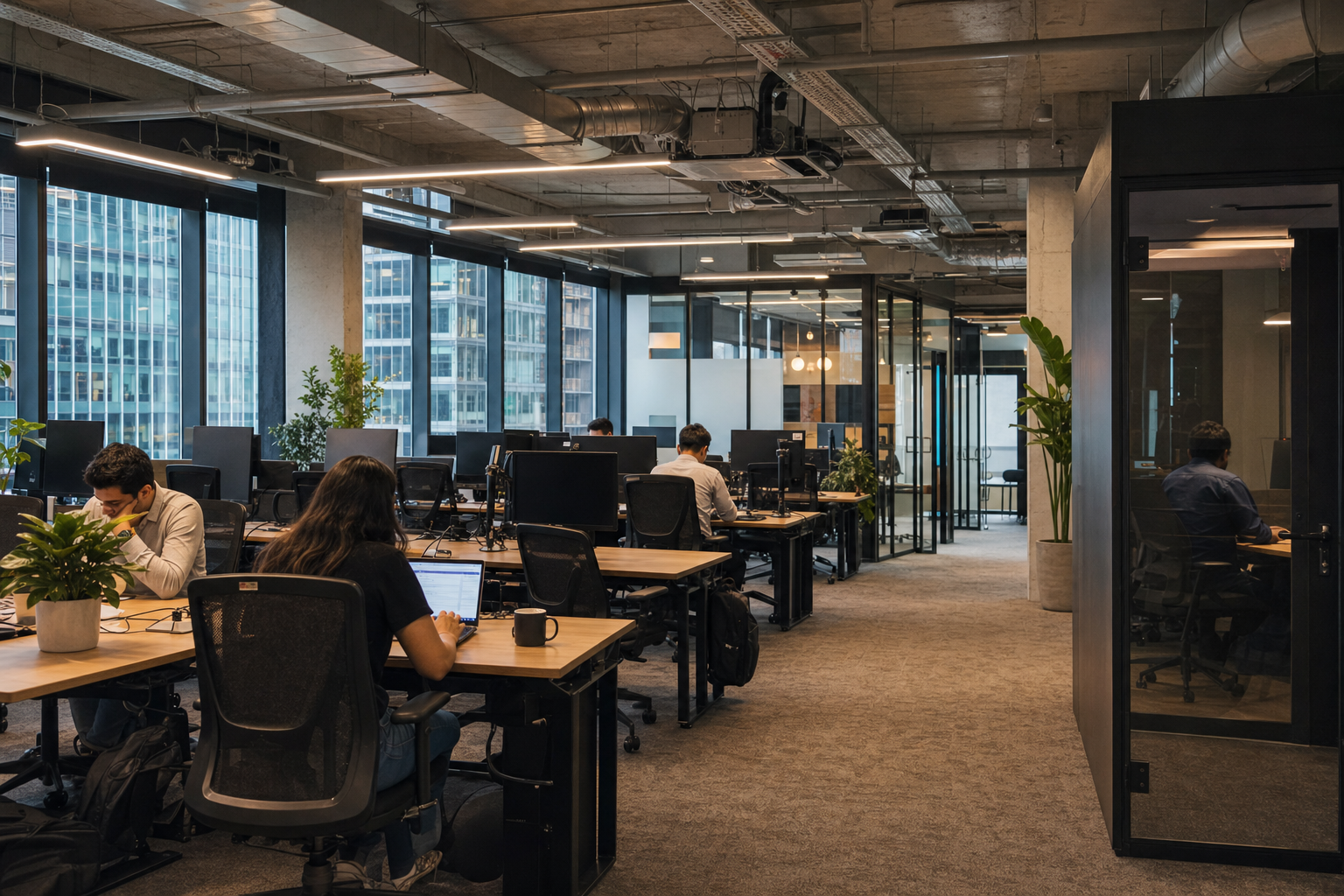
Hybrid work policy / return-to-office workspace strategy
Why Hybrid Work Policy and Workspace Strategy Are Now Essential
From Fixed Desks to Flexible Futures
The old model assumed people stayed put. You had a desk, a routine, a fixed location. Movement was the exception. Now people work across cities, time zones, and office locations without losing their sense of place within your organization.
This shift isn’t about remote work versus office work. It’s about designing work that doesn’t break when people move. The companies getting this right aren’t just writing flexible policies. They’re building infrastructure that makes flexibility feel stable.
Three Essential Policy Components
Your policy needs clear expectations about when presence matters, defined standards for remote work quality, and systems that maintain connection regardless of location. The third element is where most policies fail.
You can mandate office days and set remote work guidelines, but without consistent workspace access, you’re asking people to restart every time they change locations. Spaces like Comspace represent what works: familiar interfaces, consistent booking processes, and environments that feel intentional rather than improvised.
Return-to-Office Needs More Than Just an Office
Return-to-office fails when it means return-to-reset. People come back to find their routines disrupted, their workspace preferences ignored, and their sense of belonging diminished. Your return-to-office workspace strategy should feel like continuation, not interruption.
“The office” isn’t one place anymore. It’s any professional environment where your people can maintain their standards and connections. This requires platforms that work across locations, booking systems that remember preferences, and spaces that uphold consistent quality standards.
Building a Connected Hybrid Workspace Strategy
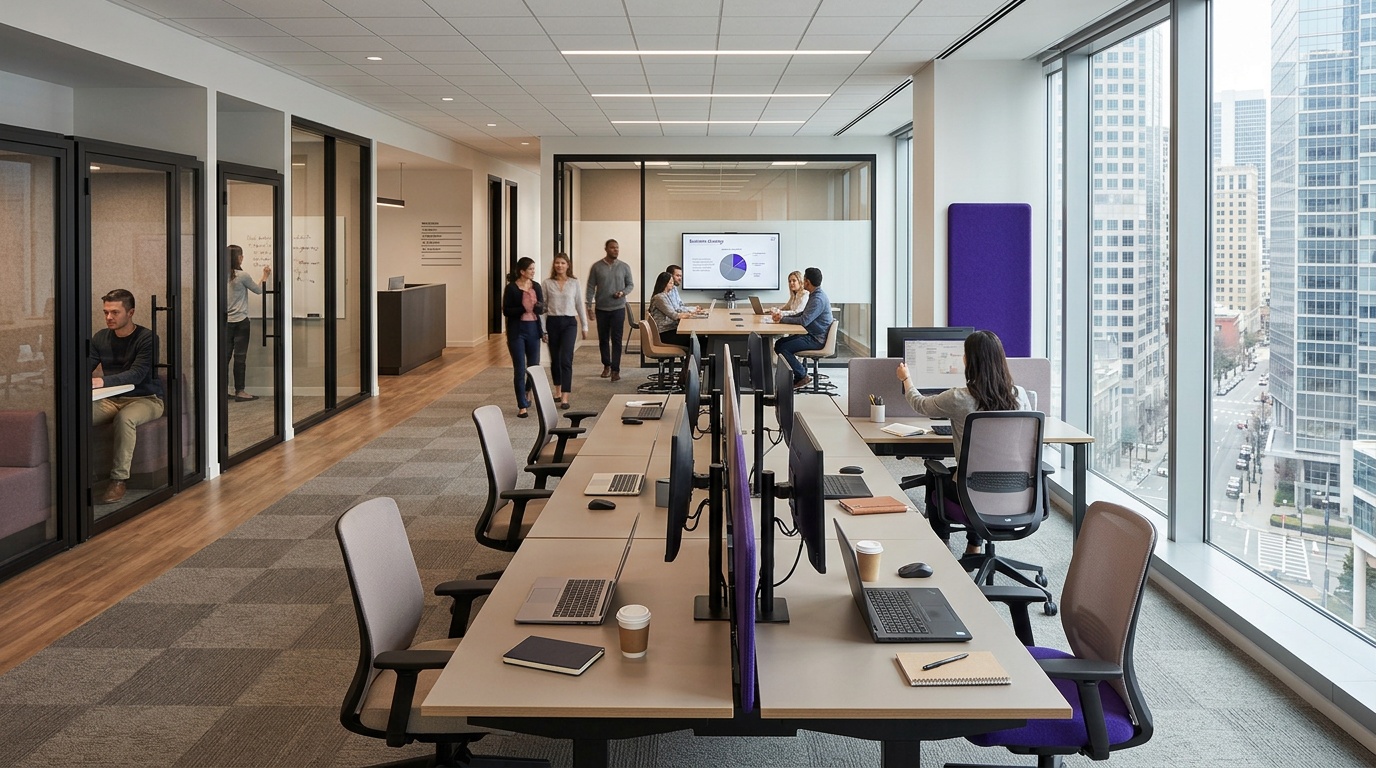
What Your People Actually Want
Your team doesn’t want to learn new systems every time they change locations. They want to walk into any workspace and know how things work. The booking process should feel familiar. Quality standards should be predictable.
Belonging builds through repeated positive interactions, not grand gestures. When someone can book the same type of workspace in Dubai or London using the same platform, continuity replaces disruption. This isn’t about creating artificial community. It’s about removing the friction that prevents natural connection from forming.
How Space Supports Your Hybrid Model
Physical space either supports your hybrid work policy or undermines it. Spaces that work understand that flexibility doesn’t mean chaos. They maintain consistent standards while adapting to different work styles and needs.
Quality workspaces like Comspace demonstrate this balance: professional environments that feel consistent across locations while respecting local context. Your workspace strategy should prioritize this kind of reliability over novelty or cost savings alone.
The Hotdesk Advantage
Hotdesk exists because most booking systems treat each location as a separate problem to solve. Our platform connects professional workspaces across regions, maintaining the same booking experience whether your team is in Cairo, London, or Ho Chi Minh City.
Key Insight: Consistency Scales
When your team knows they can find quality workspace anywhere using the same platform, location becomes a choice rather than a constraint. This is how return-to-office workspace strategy becomes a return-to-productivity strategy.
This approach works because it treats movement as normal rather than exceptional. Policy becomes easier to implement when the infrastructure supports it. People focus on their work instead of figuring out where and how to work.
Building Scalable Hybrid Infrastructure
When Technology Disappears
The best technology disappears. Your team shouldn’t think about booking systems or workspace platforms. They should think about their work. This happens when the underlying infrastructure maintains the same standards and processes across all locations.
Effective hybrid work policy implementation depends on platforms that remember preferences, maintain booking history, and provide consistent interfaces regardless of geography. When someone books workspace in Ho Chi Minh City after working in London, the process should feel identical.
Using Real Data to Refine Your Strategy
Your return-to-office workspace strategy should change based on actual usage patterns, not assumptions about how people work. Track which spaces get booked most frequently, when people prefer collaborative environments versus focused work areas, and how booking patterns shift across different time zones and seasons.
Key Insight: Usage Data Reveals Preferences
Real workspace data shows that people book differently based on task type, team composition, and even weather patterns. Use this information to refine your policy rather than relying on generic best practices.
This data helps optimize space allocation, predict demand, and identify which locations serve your team most effectively. The goal isn’t to control where people work, but to ensure quality options exist where they need them.
Lessons from Building Across Borders
Building workspace infrastructure across different markets teaches you what actually matters. Quality standards that work in Cairo must also work in Barcelona. Booking processes that make sense in Dubai should feel intuitive in London.
Cultural context matters, but the core experience should remain consistent. Each market has different expectations for professional environments, but the fundamental need for reliable, bookable workspace remains constant. Your hybrid strategy should account for these regional differences while maintaining operational consistency.
Common Challenges and How to Solve Them
Preventing Two-Tier Systems
Hybrid work can accidentally create two-tier systems where office-present employees receive different opportunities than those working remotely. Your policy should explicitly address how meetings, project assignments, and informal interactions work across different locations and schedules.
Equal access to quality workspace becomes part of this equation. When some team members have access to professional environments while others work from improvised spaces, productivity and engagement suffer. Consistent workspace standards help level this playing field.
Maintaining Culture When People Aren’t Always Together
Culture forms through repeated interactions, not scheduled team-building events. The challenge in hybrid environments is creating opportunities for these natural interactions to occur, even when people aren’t physically present at the same time.
Effective Approaches
- Overlap hours when all team members are available
- Consistent workspace booking that supports spontaneous collaboration
- Regular rotation between locations to maintain personal connections
- Shared workspace standards that feel familiar across locations
Common Mistakes
- Forcing artificial collaboration without considering natural work patterns
- Treating remote and office work as completely separate experiences
- Ignoring time zone differences in global teams
- Assuming technology alone can replace in-person interaction
Optimizing Without Sacrificing Flexibility
The goal isn’t maximum occupancy. It’s optimal utilization that serves your team’s actual work patterns. This means understanding when people need collaborative space versus focused work environments, and how these needs change throughout project cycles and seasons.
Your hybrid work policy should allow for this natural variation while maintaining access to quality workspace when needed. Platforms like Hotdesk help by providing usage analytics that inform decisions about space allocation and booking policies without restricting flexibility.
Movement will continue to accelerate. Companies that build infrastructure supporting this reality, rather than fighting against it, will attract and retain the best people. Your workspace strategy should support continuity, not create friction. The goal is making location a choice rather than a constraint.
Frequently Asked Questions
What are the core elements of a good hybrid work policy?
A strong hybrid work policy has three key elements. It sets clear expectations for when office presence matters and defines quality standards for remote work. Most importantly, it includes systems that keep people connected, no matter their location, ensuring work doesn’t break when they move.
How many days do employees typically spend in the office under a hybrid model?
The exact number of days in the office varies greatly among companies. What truly matters is that the hybrid work policy and workspace strategy create stability and continuity, whether people are in the office or working remotely. The goal is to design work that flows seamlessly, not to fixate on a rigid day count.
Why do some return-to-office strategies struggle?
Many return-to-office strategies struggle because they feel like a ‘return-to-reset’ for employees. When routines are disrupted and workspace preferences are ignored, people lose their sense of belonging. A successful strategy creates continuity, making the office feel like a natural extension of their work, not an interruption.
How does consistent workspace access support a hybrid work policy?
Consistent workspace access is fundamental for a successful hybrid policy. It prevents people from having to restart their work every time they change locations. When booking processes and workspace quality are predictable across different places, it creates a stable, familiar experience that supports continuous productivity.
What role does technology play in a connected hybrid workspace strategy?
Technology should provide the quiet infrastructure that makes hybrid work seamless. It should disappear into the background, allowing people to focus on their tasks, not on how to find a workspace. Platforms that offer consistent interfaces and remember preferences across all locations are key to this continuity.
How can companies foster a sense of belonging in a hybrid environment?
Belonging in a hybrid environment comes from consistent, positive experiences, not just big events. When employees can reliably access and use professional workspaces with familiar systems, no matter their location, it removes friction. This continuity allows natural connections to form and strengthens their sense of place within the organization.
What makes a workspace booking system effective for hybrid teams?
An effective workspace booking system for hybrid teams offers consistency across all locations. It should provide a single, familiar interface and maintain the same quality standards, whether someone is booking in Cairo or London. This approach ensures that movement becomes a choice, not a constraint, and people can focus on their work.
Leave a Reply