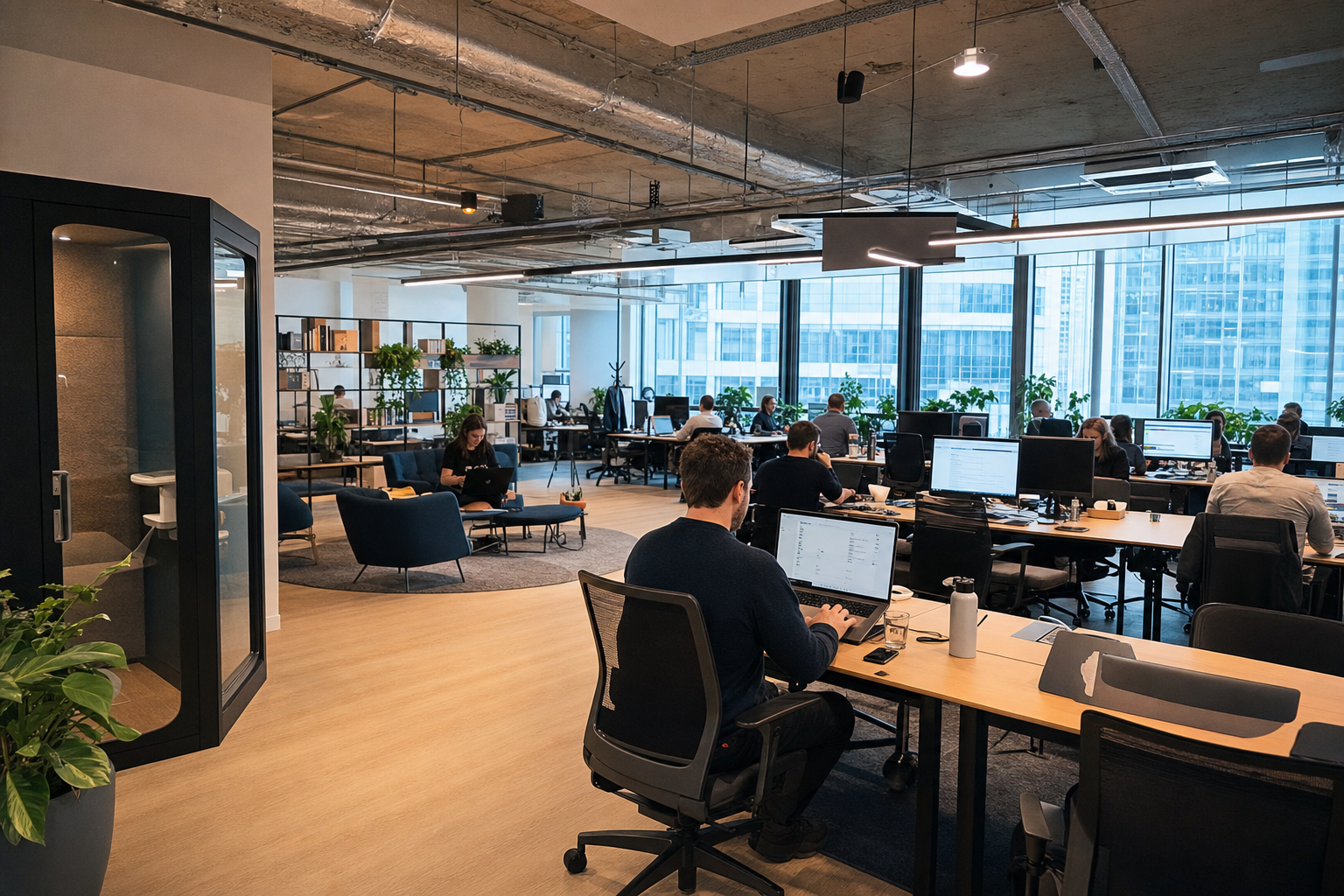
Hot desk vs dedicated desk vs private office
Hot Desk vs Dedicated Desk vs Private Office: Which Workspace Fits Your Team?
Defining the Workspace Trinity
Every distributed system asks you to manage new failure modes. The same applies to choosing workspace types: Hot desk vs dedicated desk vs private office. Each option reflects a different balance of flexibility, consistency, and control.
Hot desks operate on a first-come, first-served basis. You book a workspace for the day, work, then leave. No permanent setup and no assigned spot. Dedicated desks give you a fixed location that you can customize and use each day. Private offices provide enclosed spaces with doors, walls, and full privacy.
Hot Desk: Infrastructure That Travels
Hot desking works like cloud computing for physical space. You access resources when needed without maintaining your own infrastructure. This model works well for professionals who travel often or prefer changing environments to support creative work.
The Office Bcn exemplifies this approach, offering workspace access without long-term commitments. You can also find a flexible hot desk in Ho Chi Minh City through Hotdesk.
Cost: $15-$40 per day in major markets. No contracts, but limited predictability.
Dedicated Desk: What Works at 10x
Dedicated desks provide a stable setup that fits your routine. You get the same location each day while still sharing amenities like meeting rooms and kitchens. Your monitor, keyboard, and personal items stay put. No daily reconfiguration required.
This option suits professionals who need consistency but don’t require full privacy. Dedicated desks in Dubai let you maintain your personalized workspace.
Cost: $200-$600 per month with 1-3 month commitments.
Private Office: Systems Over Announcements
Private offices provide maximum control and privacy. You get four walls, a door, and autonomy over your environment. This option suits teams handling sensitive information or leaders who require confidential meeting space.
The trade-off? Higher costs and fewer casual networking opportunities than open configurations. Consider a private office in Riyadh for your team’s exclusive needs.
Cost: $800-$3,000+ per month depending on location and size.
Core Differences: Functionality, Privacy, and Commitment
Access Patterns
**Hot desks** operate on first-come, first-served access. You book daily or hourly slots without guarantees of the same spot. This model fits schedules that change often or work that requires space only occasionally.
**Dedicated desks** lock in your location. The same physical space, the same monitor height, the same notebook placement. You pay whether you show up or not.
**Private offices** control both space and schedule. Most require 3-12 month commitments. You decide who enters and when.
Privacy: From Open to Enclosed
| Workspace Type | Visual Privacy | Audio Privacy | Storage Security |
|---|---|---|---|
| Hot Desk | Open floor plan | Shared ambient noise | Daily pack-up required |
| Dedicated Desk | Assigned but visible | Shared ambient noise | Locked drawer or cabinet |
| Private Office | Four walls and a door | Sound isolation | Full room security |
Privacy affects more than comfort. Client calls, financial reviews, and strategic planning require different isolation levels. These choices often depend on confidentiality requirements rather than personal preference.
Setup Control
**Hot desks** reset daily. You adapt to whichever monitor, chair, and lighting are available. Equipment standards vary by operator.
**Dedicated desks** allow personal optimization. Dual monitors, standing desk converters, and task lighting become worthwhile investments. Your workspace supports your work style.
**Private offices** allow full customization. Whiteboards, client-facing furniture, and branded elements create a professional environment that extends your company presence.
Decision Framework: Match Usage to Infrastructure
Freelancers: Optimize for Variable Demand
Freelancers need flexibility that matches project cycles. Hot desking works here. You pay only when you need space, switch locations based on client meetings, and avoid monthly commitments when work becomes unpredictable.
Budget around $25-$40 per day for hot desking versus $200-$400 per month for dedicated desks. The math is simple: if you work three days each week, hot desking costs less. Daily workspace needs make dedicated desks more economical.
Find a suitable hot desk in London that fits your flexible schedule.
Startups: Build Culture While Managing Cash
Early-stage teams often do best with dedicated desks. They support day-to-day collaboration while keeping costs predictable. Team members benefit from consistent proximity for fast iteration.
Consider a dedicated desk in Maidenhead for your growing startup team.
Scale with hybrid approaches: dedicated desks for core team members, hot desk passes for contractors. This optimizes culture building and financial flexibility as headcount fluctuates.
Remote Workers: Reliability Over Novelty
Remote workers seeking alternatives to home offices often choose hot desking for variety and networking. The key? Find spaces with reliable infrastructure and well-run communities.
The Office Bcn provides consistent Wi-Fi performance and professional environment without long-term commitment. Infrastructure reliability beats marketing claims.
Enterprise Teams: Privacy and Scale
Enterprise teams often need private offices when handling sensitive information or running frequent video conferences. Privacy reduces distractions and supports stronger security practices.
Choose private offices when your team exceeds eight people or when client confidentiality requires enclosed space.
Choose based on work patterns, team dynamics, and budget constraints. Match the choice to actual usage patterns, not aspirational habits.
Frequently Asked Questions
What is the difference between a hot desk and a dedicated desk?
A hot desk operates on a first-come, first-served basis, requiring you to set up and pack up daily. A dedicated desk provides a fixed location that you can customize and use each day. The dedicated option offers consistency, meaning your personalized setup remains, removing the need for daily reconfiguration.
What are the common types of office workspaces?
The common types of office workspaces are hot desks, dedicated desks, and private offices. Each option balances flexibility, consistency, and control differently. Hot desks offer ultimate flexibility, dedicated desks provide a consistent spot, and private offices give maximum privacy and control.
What are the drawbacks of hot desking?
Hot desking requires you to pack up your items daily, with no guarantee of the same spot or setup. This lack of consistency means you constantly adapt to different equipment, hindering personalization and ergonomic comfort. For frequent users, hot desking can also become more expensive than dedicated options over time.
Is hot desking more cost-effective than a dedicated desk?
Hot desking costs $15-$40 per day, without long-term contracts, offering flexibility. Dedicated desks typically cost $200-$600 per month with commitments of 1-3 months. If you need space only occasionally, hot desking can be less expensive, but for usage eight or more days per month, a dedicated desk usually offers better value due to its consistent monthly rate.
Why choose a private office for your team?
A private office provides maximum control and privacy with four walls and a door. This option suits teams handling sensitive information or leaders who require confidential meeting space. It allows full customization, creating a professional environment that extends your company presence and supports team culture.
How do privacy levels differ across workspace options?
Hot desks offer an open floor plan with shared ambient noise, requiring daily pack-up for security. Dedicated desks are assigned but visible, also with shared ambient noise, though they often include locked storage. Private offices provide sound isolation, four walls, a door, and full room security, offering the highest level of confidentiality for client calls or strategic planning.
Leave a Reply