Blog

  • Hotdesk vs. Lease: First Dubai Office Worth It?

    Hotdesk vs. Lease: First Dubai Office Worth It?

    Is using Hotdesk to set up your first office in Dubai worth it vs signing a direct commercial lease?

    Hotdesk vs. Lease: First Dubai Office Worth It?

    Should you use Hotdesk for your first Dubai office or sign a direct commercial lease? The answer shapes your operational runway for years to come.

    Setting Up Your First Dubai Office: The Hotdesk vs. Direct Lease Dilemma

    What Is Truly “Worth It” for a Startup?

    Most new ventures ask the wrong question. They focus on per-square-meter costs rather than operational agility. A direct commercial lease demands that you commit capital to physical infrastructure before you know whether your team will grow, shrink, or pivot. This model expects months of fit-out coordination, security deposits, and landlord negotiations while day-to-day business operations become secondary.

    Hotdesk: Immediate Access for New Ventures

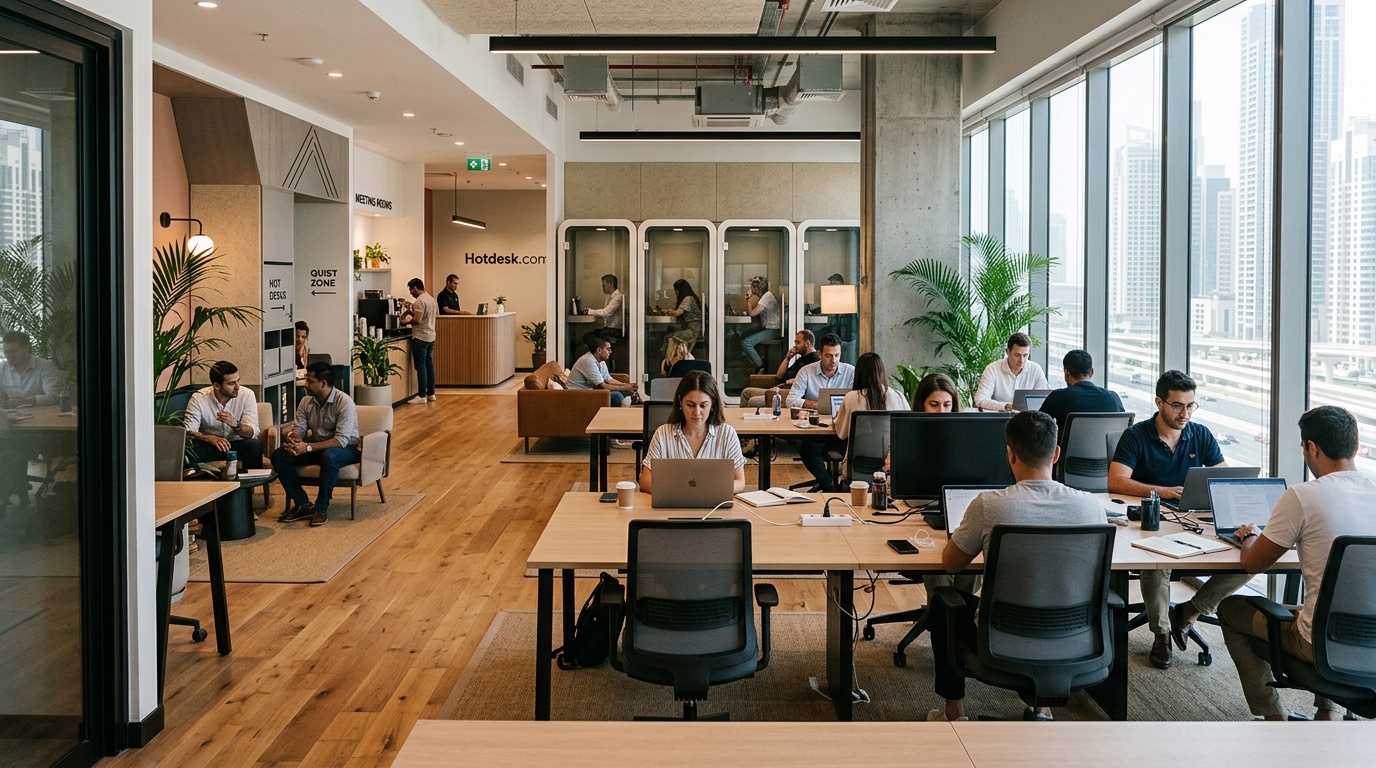
    Hotdesk provides access to workspace across Dubai’s key districts. Instead of spending months on lease negotiations and fit-outs, you get fully serviced offices with professional addresses, high-speed connectivity, and included amenities.

    Locations such as The Place Dubai Chambers deliver operational capability without traditional long-term commitments. Infrastructure travels with you, not the other way around.

    The Dubai Business Environment

    Is using Hotdesk to set up your first office in Dubai worth it vs signing a direct commercial lease?

    Dubai moves quickly. Teams often change headcount, operating districts, and compliance needs during their first year. Your workspace choice can either reduce rework or add coordination burden when focus matters most.

    Financial Footprint: Cost Analysis

    Direct Lease Expenses: Beyond Monthly Rent

    Direct commercial leases in Dubai include expenses beyond quoted rental rates. Security deposits typically range from 5% to 10% of annual rent, plus agency fees, trustee fees, and registration costs. Fit-out requirements, even for shell spaces, add substantial upfront spend. Maintenance, utilities, and insurance fall entirely on the tenant.

    These layers can turn an attractive per-square-meter rate into a much higher total cost of occupancy.

    Hotdesk’s Transparent Pricing Model

    Hotdesk uses transparent per-seat pricing that bundles common services into a single monthly figure. High-speed connectivity, reception services, utility costs, and building access are included. You avoid surprise invoices and cascading fee structures.

    For a startup testing the Dubai market, this predictability supports accurate forecasting without setting aside large reserves for property issues.

    Key Insight: Compare total cost of occupancy, not headline rental rates. Hotdesk removes many hidden costs that accompany traditional leasing.

    Flexibility and Agility: Workspace That Scales

    The Rigidity Problem

    Commercial leases often run three to five years. Ending early triggers penalties and legal complexity. That rigidity becomes expensive when your team grows faster than expected, relocates, or needs to downsize. Each month of unused office space is capital tied up in fixed overhead.

    Built for Scale

    Hotdesk supports adding or reducing seats with short notice periods. Adding team members takes days rather than months. Opening satellite locations across Dubai districts happens without new lease negotiations or fit-out timelines.

    Hotdesk vs. Direct Lease: Operational Trade-offs

    Hotdesk Advantages

    • Month-to-month flexibility available
    • Scale up or down without lengthy timelines
    • Less capital tied up in deposits
    • Fewer maintenance responsibilities
    • Change locations without relocation projects

    Direct Lease Considerations

    • Potential long-term cost savings
    • Full customization control
    • Brand visibility with dedicated signage
    • Perceived stability for some clients

    Location and Operational Ease

    Is using Hotdesk to set up your first office in Dubai worth it vs signing a direct commercial lease?

    Access to Prime Business Hubs

    Hotdesk provides addresses in DIFC, Downtown Dubai, JLT, and other premium districts. Securing comparable locations through direct leasing often requires months of landlord processes, approvals, and higher commitment thresholds.

    The Place Dubai Chambers exemplifies workspace positioned in sought-after corridors, helping startups build presence near clients and partners.

    Reduced Administrative Burden

    Direct leasing includes Ejari registration, municipality approvals, fit-out permits, and multiple utility activations. Each step takes time and attention from your team. Hotdesk reduces that administrative load because the workspace is already operational with core services in place.

    The CTO’s Perspective: Infrastructure That Travels

    Why Your Workspace Should Not Be a Fixed Asset

    In any distributed operation, work slows down when it depends on fixed physical infrastructure. Relocating traditional offices requires reconfiguration, productivity loss, and downtime. Hotdesk treats workspace as a service rather than an owned setup.

    Infrastructure travels with the team across locations, reducing rework and protecting continuity.

    Making the Right Infrastructure Choice

    For most startups, the decision favors flexibility. Predictable costs, operational agility, and minimal capital lock-in create conditions where business can scale faster than workspace commitment. Choose infrastructure that supports growth rather than restricting it.

    The Verdict: Making Your Decision

    After reviewing costs, flexibility, location access, and operational continuity, the pattern is consistent: workspace decisions create long-term friction that extends beyond monthly rent.

    For teams still validating market fit and building initial headcount plans, flexible workspace usually wins. Direct leases lock capital into fixed commitments during maximum uncertainty.

    When a Direct Lease Makes Sense

    Established operations with stable headcount, strict branding requirements, or clear multi-year economics might prefer traditional leases. If your company has secured longer-term contracts and needs permanent customization, direct leasing provides control that flexible setups may not match.

    These conditions are less common for a first Dubai office.

    Future-Proofing Your Dubai Presence

    Dubai rewards speed. Free zone regulations evolve, market conditions shift, and client locations change. Workspace that moves with your operations instead of anchoring them to a single space helps you adapt without repeated relocation projects.

    Providers such as The Place Dubai Chambers show how flexible workspace can deliver enterprise-grade basics without multi-year commitments. This model supports growth while preserving capital for revenue-generating work.

    Final Recommendation: Start with flexible workspace, build operational proof points, and consider a permanent lease once your Dubai presence shows sustained demand. This sequence reduces downside risk while keeping options open.

    If you value continuity and want to avoid rework during your first phase of growth, Hotdesk is usually the better starting point.

    Frequently Asked Questions

    What are the true costs of setting up an office in Dubai, beyond just rent?

    The true cost of a direct commercial lease in Dubai extends beyond monthly rent, including security deposits, agency fees, fit-out expenses, Ejari registration, and utility deposits. Hotdesk simplifies this with transparent per-seat pricing that bundles high-speed connectivity, reception services, and utilities, removing many hidden costs and supporting accurate financial forecasting.

    Does Hotdesk offer a legitimate business address for companies in Dubai?

    Yes, Hotdesk provides immediate access to fully serviced offices with professional addresses in prime Dubai business hubs. This ensures your business has a legitimate physical presence and operational capability without the complexities of direct lease negotiations or fit-out timelines. It allows you to focus on your business from day one.

    Is Dubai a good place to start a new business?

    Dubai is a dynamic market where teams often change headcount and operating districts, making it a good place for agile businesses. The worth of starting a business here often depends on choosing an operational setup that reduces rework and allows for quick adaptation. Hotdesk supports this by providing workspace that scales with your growth, ensuring continuity.

    How does Hotdesk provide more flexibility than a traditional office lease in Dubai?

    Traditional leases in Dubai often run for three to five years, making early exit costly and scaling difficult. Hotdesk offers month-to-month flexibility, allowing you to add or reduce seats with short notice periods. This means your workspace scales with your team’s demand, protecting continuity and capital.

    What administrative burdens does Hotdesk reduce compared to a direct lease?

    A direct lease involves significant administrative work, including Ejari registration, municipality approvals, fit-out permits, and multiple utility activations. Hotdesk reduces this burden by providing already operational workspaces with core services in place. This streamlines your setup, allowing your team to focus on business operations rather than coordination work.

    About the Author

    MS

    Mohammad El Shaari

    Mohammad El Shaari

    CTO at Hotdesk

    Mohammad El Shaari is the CTO of Hotdesk, where he leads the engineering team building and scaling a global SaaS platform for on-demand workspace bookings across 80+ countries. A Computer Science graduate from The British University in Egypt, he brings over a decade of hands-on experience in enterprise software, AI, cloud infrastructure, and cybersecurity.

    Before Hotdesk, he served as CTO of Vee Tech, where he led technical delivery for 12+ enterprise clients generating $30M+ in annual revenue, and helped build Egypt’s first innovation lab at Capital International Schools.

    At Hotdesk, Mohammad focuses on building scalable systems that handle real-time availability, global user distribution, and high-throughput transactions. He specializes in scalable system design, cloud-native infrastructure, and building high-performance SaaS platforms that support global user bases.

    He writes about scaling SaaS platforms, backend architecture, mobile engineering, and real-world technical decisions behind building and operating global products.

    Last reviewed: April 25, 2026 by the Hotdesk Team
  • Coworking vs. Office: Cheaper for 5-Person Startups?

    Coworking vs. Office: Cheaper for 5-Person Startups?

    Is booking coworking space on-demand cheaper than renting a traditional office for a 5-person startup?

    Is On-Demand Coworking More Affordable Than a Traditional Office for a 5-Person Startup?

    When a five-person startup evaluates workspace options, the math shapes your burn rate for the next 24 months. The real question: can you preserve capital while maintaining operational flexibility?

    Cost vs. Commitment: The Infrastructure Decision

    Every distributed system asks you to manage new failure modes. Workspace decisions work the same way. A traditional lease demands upfront capital and locks you into fixed square footage. On-demand booking trades commitment for adaptability.

    The operational model beneath the pricing matters more than the monthly rate.

    Quick Answer: For a 5-person startup, on-demand coworking often costs 30-40% less once you account for setup, maintenance, and flexibility. The comparison depends on what your monthly budget covers versus what your team actually needs.

    Capital Preservation vs. Sunk Costs

    Early-stage teams face specific pressure: every dollar spent on office infrastructure can’t be spent on product development or hiring. Traditional leases require security deposits, legal review, and furniture procurement before day one.

    These create sunk expenses before a single line of code ships.

    On-demand coworking removes that barrier. You pay for usage, not potential. Hotdesk lets teams book across 80+ countries with transparent pricing. For five team members, this means capital stays liquid instead of tied up in a physical location that might not fit your needs six months later.

    Beyond Per-Square-Foot: Total Cost of Operations

    Traditional rent quotes focus on one misleading number: price per square foot. That figure obscures what your organization actually needs.

    A traditional office requires additional spending on:

    • Furniture and equipment
    • IT support contracts
    • Connectivity and phone systems
    • Office supplies and printing
    • Mail handling
    • Cleaning and maintenance

    These line items rarely appear in rent estimates but show up reliably in spending.

    Coworking memberships bundle high-speed internet, shared printing, cleaning services, and business support into a single invoice. The monthly cost reflects combined operational expense, making budgeting predictable while reducing vendor relationships.

    What works at 10x scale? Infrastructure that adapts to demand. When your team shrinks or grows, traditional leases leave you paying for unused space or scrambling for more. On-demand booking means workspace scales with headcount.

    Hotdesk aggregates venues across cities and countries. Five-person teams can provision space in Lisbon through Kube Coworking Lisboa without negotiating local leases or coordinating build-outs.

    Infrastructure travels with your team rather than anchoring you to a lease.

    Breaking Down the Numbers: A 5-Person Startup’s True Office Costs

    Is booking coworking space on-demand cheaper than renting a traditional office for a 5-person startup?

    Traditional Office: The Hidden Expenses

    A traditional office for five team members requires 1,500-2,500 square feet in a commercial district. At $40-60 per square foot annually, base rent runs $5,000-12,500 monthly. Add security deposits (three to six months), tenant improvements, and legal fees. You’re committing $30,000-75,000 before day one.

    Coworking: What’s Actually Included

    Coworking memberships average $300-800 per person monthly, varying by location and amenities. This covers desk access, internet, utilities, cleaning, and shared business services. No surprise invoices.

    Kube Coworking Lisboa demonstrates this model. Dedicated desks with meeting room access and community events on one predictable bill.

    The Real Numbers

    Monthly Cost Estimate: 5-Person Startup
    Expense Category Traditional Office On-Demand Coworking
    Base Rent $6,000 $2,500 (5 × $500)
    Furniture/Equipment $800 Included
    IT Support $600 Included
    Utilities $400 Included
    Maintenance $300 Included
    Insurance $200 Included
    Total Monthly $8,300 $2,500

    Build-Out Costs and Long-Term Lock-In

    Build-Out Reality

    Commercial spaces aren’t move-in ready. Build-out costs for network drops, lighting, and partitioning average $20-50 per square foot. For 2,000 sq ft, that’s $40,000-100,000 in upfront capital that depreciates over the lease term.

    Money that could fund two engineers for a year instead goes into walls and wiring.

    The Lock-In Tax

    Traditional leases run three to five years. During that period, your team may grow, contract, or shift to remote operations. Scaling traditional space means renegotiating leases, paying double rent during transitions, or maintaining underused square footage.

    Coworking reduces exposure by keeping commitments flexible.

    The Real Value: Flexibility and Risk Mitigation

    Scaling Without Penalties

    Startup cycles move fast. A five-person team might become 15 within 12 months or contract to three during a pivot. On-demand coworking accommodates these shifts without renegotiation costs or stranded assets.

    Your workspace scales with headcount instead of working against it.

    Geographic Distribution

    Hotdesk provides access across 80+ countries. A team distributed between Lisbon, Berlin, and Austin can work from locations in each city without separate vendor relationships or lease agreements.

    Systems over announcements: infrastructure must serve the team, not constrain it.

    When you include setup, maintenance, and the cost of being locked into fixed square footage, on-demand models often deliver better unit economics. Fixed leases anchor teams to locations that may not serve them through the startup lifecycle.

    On-demand booking converts capital expense into operating expense while reducing setup friction and geographic constraints.

    Final Verdict and Strategic Projections

    Is booking coworking space on-demand cheaper than renting a traditional office for a 5-person startup?

    The Math on Cost Efficiency

    Variable cost structures reduce fixed liabilities. Capital stays available for product development instead of furniture depreciation. Engineered for scale means infrastructure adapts to demand.

    For most five-person startups analyzing total expenditure, on-demand coworking delivers 30-40% savings while maintaining operational flexibility.

    Trade-Offs to Consider

    Pros

    • Lower upfront spending on build-outs
    • More predictable monthly operating expenses
    • Geographic flexibility across 80+ countries

    Cons

    • Less control over custom office branding
    • Potential variability in day-to-day desk availability by venue
    • Meeting rooms may cost extra, depending on the location and plan

    Decision Framework

    If you’re deciding based on reliability and cash flow, start with constraints you can’t renegotiate later: lease term, deposit, build-out time, and expected headcount in six and 12 months.

    If your plan includes hiring bursts, geographic changes, or uncertain runway, on-demand coworking generally reduces rework.

    For most startups facing a multi-year lease with significant upfront costs, on-demand booking proves both cheaper and lower-risk.

    Frequently Asked Questions

    Is coworking space a tax write-off?

    Business expenses, including fees for coworking space, are generally deductible for tax purposes. This helps reduce your taxable income, making the operational cost of on-demand coworking even more financially efficient. Always consult with a tax professional for specific guidance related to your startup’s situation.

    What are the downsides of coworking for a startup?

    While on-demand coworking offers significant flexibility and cost savings, some startups might find less privacy or customization compared to a dedicated, traditional office. However, the ability to scale your workspace with headcount and avoid long-term commitments often outweighs these considerations. It’s about managing your operational model for adaptability.

    How much can a 5-person startup save by choosing on-demand coworking?

    For a 5-person startup, on-demand coworking often costs 30-40% less than a traditional office. This saving comes once you account for setup, ongoing maintenance, and the inherent flexibility. The comparison shifts when you consider the total cost of operations, not just base rent.

    Why is capital preservation important for early-stage startups when considering office space?

    Early-stage startups must prioritize capital preservation, ensuring every dollar supports product development or hiring. Traditional leases demand significant upfront capital for security deposits, legal fees, and furniture, creating sunk expenses before operations even begin. On-demand coworking removes this barrier, allowing capital to remain liquid for core business growth.

    What hidden costs does a traditional office lease include that coworking avoids?

    Traditional office leases often hide costs beyond the per-square-foot rent, such as furniture, equipment, IT support, utilities, and ongoing maintenance. You also face significant build-out expenses for network drops or partitioning. Coworking spaces bundle these essentials into a single, predictable fee, simplifying your operational budget.

    How does on-demand coworking offer flexibility for a growing or shrinking startup team?

    On-demand coworking allows your workspace to scale directly with your headcount, adapting without penalty. If your team of five grows to fifteen or contracts to three, you avoid renegotiation costs or paying for unused space. This operational model ensures your infrastructure adapts to demand, rather than working against it.

    What services are typically included in a coworking membership for a startup?

    Coworking memberships commonly include essential services like high-speed internet, utilities, and cleaning. Many also offer shared printing resources, mail handling, and access to meeting rooms. This comprehensive bundling simplifies budgeting and reduces the need for multiple vendor relationships, streamlining your operations.

    About the Author

    MS

    Mohammad El Shaari

    Mohammad El Shaari

    CTO at Hotdesk

    Mohammad El Shaari is the CTO of Hotdesk, where he leads the engineering team building and scaling a global SaaS platform for on-demand workspace bookings across 80+ countries. A Computer Science graduate from The British University in Egypt, he brings over a decade of hands-on experience in enterprise software, AI, cloud infrastructure, and cybersecurity.

    Before Hotdesk, he served as CTO of Vee Tech, where he led technical delivery for 12+ enterprise clients generating $30M+ in annual revenue, and helped build Egypt’s first innovation lab at Capital International Schools.

    At Hotdesk, Mohammad focuses on building scalable systems that handle real-time availability, global user distribution, and high-throughput transactions. He specializes in scalable system design, cloud-native infrastructure, and building high-performance SaaS platforms that support global user bases.

    He writes about scaling SaaS platforms, backend architecture, mobile engineering, and real-world technical decisions behind building and operating global products.

    Last reviewed: April 24, 2026 by the Hotdesk Team
  • Hotdesk Dubai: Worth It? Sub vs. Per Booking

    Hotdesk Dubai: Worth It? Sub vs. Per Booking

    Is a Hotdesk subscription worth it vs paying per booking for a Dubai-based freelancer?

    The Dubai Freelancer’s Workspace Dilemma: Subscription vs. Pay-Per-Booking

    You’ve watched the AED tick up on overpriced coffee while your “office” loses Wi-Fi during a client call. Dubai’s freelance economy has grown since 2018’s permit program, but most workspace platforms still treat movement as an exception. For freelancers here, the question isn’t about access. It’s about whether monthly commitments serve your actual work patterns better than booking by the day.

    The reset shouldn’t be the default. Whether you need a desk for three days or thirty, your workspace infrastructure should travel with you.

    Breaking Down the Real Numbers

    Is a Hotdesk subscription worth it vs paying per booking for a Dubai-based freelancer?

    What Monthly Plans Actually Cover

    Subscriptions bundle unlimited hot-desk access, meeting room credits, and basic amenities. The predictable invoice helps with budgeting, but verify coverage for premium locations in DIFC, JBR, or Downtown Dubai. Not all plans include peak-hour access to high-demand areas.

    The Per-Booking Reality

    Per-booking charges by hour or day at individual spaces. Three weekly sessions at AED 150 each exceeds most monthly subscriptions within two weeks. Lower commitment sounds attractive until you run the actual numbers.

    Subscription vs. Per-Booking: Feature Comparison

    Feature Monthly Subscription Pay-Per-Booking
    Cost predictability Fixed monthly fee Variable based on usage
    Network access All partner locations included Pay per location visited
    Meeting room access Included credits Additional charge
    Booking flexibility Unlimited daily access Subject to availability
    Ideal for Regular users (3+ days/week) Occasional users (1-2 days/week)

    What the Price Tag Doesn’t Show

    Consider commute time and context-switching costs. Changing locations resets your rhythm. Different check-in processes, unfamiliar layouts, explaining your needs to new staff. A consistent workspace builds recognition and familiarity that compounds over time.

    Why Platform Reliability Matters

    Clear Booking, Honest Pricing

    Nothing frustrates freelancers more than apps that promise availability and deliver nothing. Real-time inventory and transparent pricing reduce the friction that comes with uncertainty. We built Hotdesk with one principle: what you see is what you get.

    Connection Through Presence

    Hotdesk doesn’t announce community. We make the conditions for it. Repeated presence at the same locations, recognition from staff, and familiarity with spaces create connection naturally. People don’t join a community on Hotdesk. They show up. Then they keep showing up.

    Matching Payment Model to Work Style

    Thinking Beyond the Expense Line

    View workspace cost as a business decision, not a convenience expense. A dedicated setup increases productivity, improves client-facing professionalism, and provides mental separation between work and personal life.

    Quick Decision Framework

    Choose Subscription When

    • You work from a workspace 3+ days weekly
    • You need meeting room access regularly
    • Budget predictability matters more than flexibility
    • You want priority access during peak hours

    Choose Pay-Per-Booking When

    • Your usage varies significantly month to month
    • You work remotely for extended periods
    • You prefer testing different locations before committing
    • Your project pipeline is unpredictable

    When Revenue Fluctuates

    Pay-per-booking lets you scale usage with revenue. One month you need daily access; the next, you travel to meet clients abroad. No penalty for the variation. Established freelancers with consistent client pipelines benefit from subscriptions’ predictable costs and simplified tax calculations.

    Making Your Decision

    Is a Hotdesk subscription worth it vs paying per booking for a Dubai-based freelancer?

    Start With Data, Not Assumptions

    Track your actual workspace usage for 30 days. Many freelancers discover they underestimate how often they need professional settings. That usage data makes the subscription versus per-booking decision clearer than any cost comparison chart.

    Experience Before You Decide

    Book individual days across different Dubai neighborhoods. Monitor your attendance and productivity over a few weeks. You don’t have to commit blindly. Start with flexible bookings, then decide whether a subscription aligns with your workflow.

    The Dubai Context

    Dubai’s freelancer ecosystem moves across DIFC meetings, JBR creative sessions, and Business Bay deadlines. Your workspace needs to keep up without creating financial drag. The choice between subscription and per-booking depends on how predictable your schedule actually is.

    Model Best For Typical Cost Range Key Advantage
    Pay-Per-Booking Variable schedules, project-based work AED 50-200 daily Zero commitment
    Subscription Regular office needs, networking focus AED 400-800 monthly Unlimited access, network savings

    Why Consistency Beats Lowest Price

    Is a Hotdesk subscription worth it vs paying per booking for a Dubai-based freelancer?

    The lowest-cost option isn’t always the best value. Hotdesk’s subscription model builds continuity into your freelance practice. Familiar spaces mean faster setup, known workflows, and productive rhythms that compound over time. That efficiency translates into better client work. Something pay-per-booking can’t easily match.

    Regular hours favor subscriptions. Variable schedules favor pay-per-use. The right choice aligns your workspace spend with your actual output and revenue patterns, not theoretical usage.

    Find a Space That Already Knows You’re Coming

    Run the numbers against both models for one month before committing. Hotdesk spans Dubai’s key business districts, so whether you choose flexibility or predictability, you gain access to professional environments that support how freelancers actually work.

    Your calendar will answer the core question better than any comparison chart. Book a day pass to experience the network firsthand, then decide whether a subscription supports your growth trajectory.

    Frequently Asked Questions

    How much does a hotdesk or coworking space cost in Dubai?

    Monthly hotdesk subscriptions in Dubai typically offer unlimited access and amenities, with predictable pricing for budgeting. Pay-per-booking rates vary per hour or day, often starting around AED 150 per session. The true cost depends on your usage, but subscriptions often become more cost-effective for regular users working three or more days weekly.

    How does the Hotdesk platform work for freelancers in Dubai?

    Hotdesk provides a platform for freelancers to book flexible workspaces, either through a monthly subscription or on a pay-per-booking basis. Our app shows real-time availability and honest pricing, ensuring your spot is held immediately without hidden fees. We built it for continuity, so your workspace infrastructure travels with you, wherever you are.

    What is a flexi desk in Dubai?

    A flexi desk in Dubai refers to a non-dedicated workstation within a coworking space, available on a flexible basis. It’s ideal for freelancers who need a professional workspace without the commitment of a private office. This setup allows you to access various locations as needed, supporting your mobile work style and ensuring continuity.

    Do you have to pay to use coworking spaces?

    Yes, using coworking spaces generally requires payment, either through a monthly subscription or on a pay-per-booking model. While coffee shops might seem free, their hidden costs, like inflated drinks and unreliable Wi-Fi, add up quickly. Investing in a coworking space provides reliable infrastructure, professional amenities, and a dedicated work environment.

    When is a hotdesk subscription a better choice than paying per booking?

    A hotdesk subscription is often better if you work from a workspace three or more days weekly and need regular meeting room access. It provides cost predictability, simplifying your budgeting as an established freelancer with a consistent client pipeline. This approach views your workspace as an investment, not just an expense, supporting your professional presence.

    Who benefits most from the pay-per-booking model for workspaces?

    Pay-per-booking works best for freelancers whose usage varies significantly month to month or who travel often for client meetings. It allows you to scale your workspace costs directly with your revenue, keeping fixed expenses low when your project pipeline is unpredictable. This model offers maximum flexibility without long-term commitment, aligning costs with actual usage.

    What unseen value does a consistent workspace offer beyond just a desk?

    A consistent workspace offers more than just a desk; it builds familiarity with staff and allows for faster check-ins, reducing context-switching costs. This stability creates a professional impression for clients and fosters a sense of belonging that forms naturally, without forced community events. It’s about continuity and creating the conditions for connection.

    About the Author

    MK

    Mohamed Khaled

    Mohamed Khaled

    Forbes 30 Under 30

    Founder & CEO at Hotdesk & Co-founder, DESK Token

    Mohamed Khaled is the Founder and CEO of Hotdesk, the on-demand workspace platform providing access to coworking spaces and flexible offices across more than 120 countries.

    He spent nearly a decade at PwC before moving into financial leadership at SWVL, where he led the company’s $1.5 billion Nasdaq listing, the first Unicorn from thr Middle East to go public in the United States.

    A Forbes 30 Under 30 honoree, Mohamed built Hotdesk from a side project into a global platform, leading a team of more than 50 and expanding into international markets, including the acquisition of Spain-based coworking marketplace YADO.

    Also being Co-founder and President of DESK Token, the world’s first asset backed property investment and utility hybrid token, Mohammed is focused on building infrastructure that unlocks underutilized assets – from meeting rooms to private offices and full on buildings – while creating space for the future of work.

    Last reviewed: April 24, 2026 by the Hotdesk Team
  • Coworking Spain: Expert Tips for 2026

    Coworking Spain: Expert Tips for 2026

    What do workspace industry experts recommend for coworking in Spain?

    Coworking Spain: Expert Tips for 2026

    Understanding Expert Criteria for Top Coworking Spaces in Spain

    Ever notice how every distributed system introduces new failure modes? Workspace infrastructure follows the same rule. Experts evaluate spaces by what stays working, not by announcements.

    Industry specialists prioritize three factors: reliable connectivity, productivity-driven amenities, and community access that creates real collaboration. Location matters, but only when infrastructure supports daily operations.

    The Non-Negotiables: Connectivity and Infrastructure

    What do workspace industry experts recommend for coworking in Spain? Reliable internet ranks first. Spaces should deliver consistent high-speed service with clear redundancy planning and fast incident response. Backup power and well-maintained electrical systems keep operations running during outages.

    Productivity Amenities That Actually Matter

    Ergonomic furniture, sound-dampening areas, and dependable video conferencing setups matter more than coffee bars. Experts look for adjustable standing desks, private phone booths, and adequate natural lighting. These elements support sustained work sessions.

    The Human Element and Location

    Community managers who facilitate introductions matter more than fancy lounges. Proximity to public transit, 24-hour access policies, and walkability to restaurants shape daily convenience. The best spaces combine accessibility with a professional atmosphere.

    Expert evaluation blends technical reliability, member support, and practical geography. Spaces that score well across all three categories tend to outperform options built mainly for aesthetics.

    Spain’s Coworking Hotspots: Cities and Neighborhoods Experts Champion

    What do workspace industry experts recommend for coworking in Spain?

    Madrid drives demand for flexible workspace. Barcelona attracts creative professionals and international startups. Both cities offer options that scale as teams grow.

    Emerging hubs like Valencia and Málaga reduce costs without sacrificing infrastructure quality. Seville adds cultural depth alongside a growing tech ecosystem. Hotdesk supports discovery and booking across these regions.

    Madrid: The Capital’s Evolving Workspace Scene

    Gran Vía and nearby areas host a dense concentration of coworking facilities. Chamberí appeals to professionals seeking quieter work environments. Easy access to financial districts and government offices keeps Madrid attractive for consultants and corporate freelancers seeking a professional workspace in Madrid.

    Barcelona: Innovation and Coastal Energy

    Barcelona’s 22@ district in Poblenou anchors the city’s technology corridor. Creative teams and tech startups cluster near the coast at spaces like Cloudworks Sant Joan. They balance focused work with a Mediterranean pace. The city’s design culture shapes how many spaces look and feel.

    Emerging Hubs: Beyond the Big Two

    Valencia, Málaga, and Bilbao attract professionals seeking lower operating costs with strong infrastructure. Spaces like Wayco Cabanyal in Valencia support growing startup communities. These cities fit remote workers planning longer-term bases.

    Neighborhood Nuances: Finding the Right Fit

    Each district carries distinct personality. Salamanca skews more formal and network-driven. Malasaña attracts creative industries through flexible environments like Cwork Gracia. Barceloneta suits members who value waterfront proximity and easy outdoor breaks.

    Expert-Backed Strategies for Maximizing Coworking in Spain

    Isolation erodes motivation over time. Coworking counters this through routine, social proximity, and work settings that signal focus. Infrastructure travels with you. Your setup doesn’t reset every day.

    Countering Career Stagnation Through Community Access

    Member events create intentional contact with professionals outside immediate circles. Cross-industry conversations surface opportunities that don’t appear in siloed remote setups. Mentorship programs connect emerging talent with experienced operators willing to share hard-earned lessons.

    Finding Meaningful Work: The Community Connection

    Freelancers often struggle with lead generation while working from home. Coworking spaces create referral networks where members recommend each other for projects. Joint ventures begin with quick conversations that don’t happen easily through chat tools alone.

    Taking Control: How Flexible Booking Supports You

    Industry experts recommend flexibility with clear terms. Hotdesk lets professionals book workspaces by the day, week, or month across multiple cities. This approach reduces long commitments while maintaining access to professional facilities. You can review a comparable model at Kube Coworking Lisboa.

    The Future of Work in Spain: Trends and Expert Outlooks for Workspace Selection

    The Hybrid Work Reality and Coworking’s Role

    Companies reducing real estate footprints still need dependable options for traveling employees. Coworking spaces fill that gap with consistent work settings across cities. No corporate lease overhead. Membership models fit hybrid schedules that change by season and project load.

    Sustainability and Wellness: Growing Expert Priorities

    Industry experts recommend practical wellness and measurable building performance. Green certifications, stronger air quality practices, and outdoor work areas support retention and productivity. Efficient operations reduce energy use while controlling costs.

    Technology Integration: What Experts Expect

    Smart access systems that reduce front-desk friction save time during peak hours. Utilization tracking helps operators tune layouts and helps members identify open seating. App-based booking and payments reduce administrative overhead. Systems over announcements.

    Operator Insights: What Makes a Space Stand Out

    Consistency in service delivery. Community teams who actively make introductions create better outcomes than passive “WiFi plus furniture” offerings. Spaces that invest in staff training and member programming retain members longer. You can compare operational standards via Kube Coworking Lisboa.

    Frequently Asked Questions

    What types of businesses thrive in Spain's current market?

    Experts note strong growth in tech and creative industries, particularly in cities like Barcelona and Madrid. These sectors benefit from flexible workspace options that support scaling teams and collaboration. Coworking spaces provide the reliable infrastructure these businesses need to operate consistently.

    How do coworking spaces reflect Spain's work culture?

    Spain’s work culture values both professional focus and community connection. Coworking spaces in Spain adapt to this, offering quiet work zones alongside opportunities for social interaction and networking. They support a balance between focused work and a more relaxed, Mediterranean pace in some regions.

    Who uses coworking spaces in Spain?

    Coworking spaces in Spain serve a wide range of professionals, including creative teams, international startups, consultants, and corporate freelancers. Remote workers seeking a stable base also find value in these facilities. Spaces often scale to support growing teams and traveling employees.

    Are there specific tech hubs for coworking in Spain?

    Yes, Spain has several prominent tech hubs. Barcelona’s 22@ district is a major technology corridor, and Madrid also has a strong evolving workspace scene for tech. Seville is another city with a growing tech ecosystem, offering specialized coworking options.

    Which industries are seeing significant growth in Spain?

    The tech industry, creative sectors, and international startups are experiencing considerable growth across Spain. These industries often cluster in cities like Madrid, Barcelona, Valencia, and Málaga. Coworking spaces provide the flexible infrastructure and community support these booming sectors require.

    About the Author

    MS

    Mohammad El Shaari

    Mohammad El Shaari

    CTO at Hotdesk

    Mohammad El Shaari is the CTO of Hotdesk, where he leads the engineering team building and scaling a global SaaS platform for on-demand workspace bookings across 80+ countries. A Computer Science graduate from The British University in Egypt, he brings over a decade of hands-on experience in enterprise software, AI, cloud infrastructure, and cybersecurity.

    Before Hotdesk, he served as CTO of Vee Tech, where he led technical delivery for 12+ enterprise clients generating $30M+ in annual revenue, and helped build Egypt’s first innovation lab at Capital International Schools.

    At Hotdesk, Mohammad focuses on building scalable systems that handle real-time availability, global user distribution, and high-throughput transactions. He specializes in scalable system design, cloud-native infrastructure, and building high-performance SaaS platforms that support global user bases.

    He writes about scaling SaaS platforms, backend architecture, mobile engineering, and real-world technical decisions behind building and operating global products.

    Last reviewed: April 24, 2026 by the Hotdesk Team
  • Giza Coworking: Startup Teams & Collaboration

    Giza Coworking: Startup Teams & Collaboration

    Coworking spaces in Giza suitable for small startup teams needing collaboration areas

    Finding Your Startup’s Collaborative Hub in Giza: Beyond the Desk

    Small startup teams in Giza need spaces that support both spontaneous collaboration and focused individual work. The right venues combine open areas for brainstorming with quiet zones for deep thinking, plus meeting rooms for client calls. Hotdesk streamlines discovery and booking across these options, helping teams find environments that match their workflow without lengthy negotiations.

    Why Small Teams Need Flexible Environments

    When your entire team shares a workspace, proximity changes how work happens. A quick discussion over coffee becomes a problem-solving session. A whiteboard conversation replaces lengthy email threads. But this only works when the environment supports both collaboration and concentration.

    Small startup teams face a unique challenge: they must constantly shift between group brainstorming and individual execution. Unlike larger organizations with dedicated departments, every team member wears multiple hats. Your space should accommodate this reality.

    Giza’s Growing Startup Infrastructure

    Giza has developed into a hub for entrepreneurs and early-stage companies. Its proximity to Cairo, combined with improving infrastructure, attracts startups seeking affordable yet connected environments. Venues like Hive Hub Co Working Space have emerged to meet this demand.

    What Actually Matters: Infrastructure for Team Success

    Coworking spaces in Giza suitable for small startup teams needing collaboration areas

    Internet and Power That Works

    Slow connections kill momentum. Frequent outages disrupt workflows and waste meeting room time. Look for venues offering enterprise-grade Wi-Fi with backup systems. Multiple power outlets at every workstation prevent the daily scramble for charging points that plagues poorly designed spaces.

    Acoustic Design and Privacy

    Open-plan spaces often sacrifice acoustic privacy. For teams conducting client calls or entering deep work phases, ambient noise becomes a serious obstacle. Quality venues address this through phone booths, soundproof meeting rooms, and quiet zones where concentration stays protected.

    Adaptable Layouts and Meeting Access

    Your workflow changes daily. Morning standups might happen at communal tables, while afternoon sprints require individual focus. Venues with bookable meeting rooms, standing-desk options, and reconfigurable open areas let teams adapt their environment to match their immediate needs.

    Supporting Daily Operations

    Meaningful amenities include unlimited coffee, natural light, and outdoor break areas. These seemingly minor features shape daily experience and influence team morale more than most founders expect during selection.

    What to Prioritize

    Essential

    • Reliable high-speed internet
    • Bookable meeting rooms
    • Soundproof focus zones
    • Flexible desk arrangements

    Nice to Have

    • On-site coffee bar
    • Outdoor terrace
    • Standing-desk options
    • 24/7 access

    Giza’s Venue Landscape

    Different Philosophies, Different Results

    Giza’s venues vary in philosophy. Some prioritize networking events and community programming. Others focus purely on functional workspace. For small teams, the ideal venue. Such as Bosla Coworking Space Dokki. Balances dependable infrastructure with enough community interaction for organic networking.

    Intentional Zone Design

    Several venues have distinguished themselves by creating deliberate zones for different work modes. They allocate specific square footage to collaborative brainstorming, separate from areas for heads-down work or client presentations. This design reduces friction when teams share floors with other members.

    Modular Furniture Advantage

    Spaces like MQR Al Rabwa offer reconfigurable layouts that allow teams to reshape their environment throughout the day. This adaptability proves valuable for teams in rapid-growth phases where needs change weekly.

    Budgeting for Team Workspace

    Understanding Pricing Models

    Giza venues offer familiar models: hot desk access at daily or monthly rates, dedicated desks for consistent users, and private office suites for teams needing enclosed space. Monthly packages often provide better value for teams committing to regular usage, while day passes suit initial evaluations.

    Hidden Costs to Consider

    Base pricing rarely tells the complete story. Setup fees, minimum commitment periods, and costs for add-ons such as printing, meeting room overages, and after-hours access can inflate monthly expenses. Some venues charge separately for locker rental, mail handling, or phone-booth usage.

    Optimizing Your Investment

    Teams that negotiate based on actual usage patterns often secure better arrangements. If your team works remotely most days, dedicated desks for each member may waste resources. Consider hot desk packages supplemented by meeting room credits, a flexible approach found at venues like Espaces Mohandessin.

    Streamlining the Selection Process

    Navigating Giza’s varied market demands time most founders lack. Hotdesk aggregates available spaces, displays transparent pricing, and enables instant booking across venues. This reduces negotiation time and supports predictable monthly costs.

    Package Type Best For Typical Monthly Range Flexibility
    Hot Desk Freelancers, hybrid workers $$ Highest
    Dedicated Desk Regular team members $$$ Moderate
    Private Office Teams needing enclosure $$$$ Lowest
    Team Package Startup squads, project groups $$$ High

    Your Selection Framework

    Coworking spaces in Giza suitable for small startup teams needing collaboration areas

    When narrowing choices, evaluate spaces against your team’s actual workflow. Test the Wi-Fi during peak hours. Request a trial day that matches your typical schedule. Observe how teams use the space rather than relying on promotional photographs.

    Quality venues like Index Co Working Space October Branch combine functional infrastructure with an atmosphere that supports both focused work and creative exchange. That balance creates a competitive advantage when done well.

    Hotdesk handles the logistics. Centralizing options, presenting verified reviews, and enabling same-day bookings. Whether your team needs a single desk for a sprint week or a private suite for quarterly planning, the platform removes friction so you can focus on building.

    What Actually Determines Success

    The selection process distills into one question: which venue accelerates your team’s output rather than merely housing it? Successful workspaces remove friction from daily operations, not just offer lengthy amenity lists.

    Prioritize the Invisible Infrastructure

    Choose acoustic design and internet reliability over interior aesthetics. A beautiful space with spotty connectivity or constant noise interruptions undermines productivity within days. Quality venues invest in redundant internet connections, soundproof meeting rooms, and ventilation systems that support focus during long sessions.

    Location convenience compounds over time. Pick a venue accessible to your entire team by metro, rideshare, or walking from nearby residential areas. A workspace doesn’t help if team members avoid the commute.

    Decision Principle: Select the space where your team can transition between collaborative brainstorming and focused execution without logistical negotiation. This capability determines whether coworking becomes an asset or an obstacle.

    Market Evolution in Giza

    Giza’s market continues maturing. Venues increasingly offer specialized zones for different work modes, reflecting growing awareness that startup teams need variety within a single location. This mirrors broader shifts in how organizations structure hybrid work.

    Expect deeper technology integration: smart booking systems, occupancy analytics, and environmental controls that adapt to usage patterns. Platforms like Hotdesk already centralize discovery across multiple locations, helping teams maintain workspace continuity as operations expand.

    Before You Commit

    Test before signing. Most quality venues offer day passes or trial periods. Use them to evaluate working conditions during your typical hours. Check internet performance during peak usage. Listen for acoustic interference during calls. Confirm that the space supports collaboration rather than only marketing it.

    The right workspace functions as infrastructure, not as a project requiring constant management. Hotdesk supports this evaluation with transparent venue information, verified reviews, and instant booking across Giza’s options.

    Frequently Asked Questions

    What makes Giza a good location for small startup teams seeking coworking spaces?

    Giza is becoming a hub for entrepreneurs due to its proximity to Cairo and improving infrastructure. This makes it an attractive, connected, and often more affordable option for small startup teams. Coworking spaces in Giza are multiplying to meet this demand, providing environments for growth.

    How do coworking spaces in Giza support both team collaboration and individual focus for startups?

    The best coworking spaces in Giza balance open collaboration areas with private focus zones. This design allows small startup teams to easily shift between brainstorming sessions and deep, individual work. It creates an environment where ideas flow freely, but concentration is also protected.

    What kind of internet and power setup should small startup teams expect from Giza coworking spaces?

    Dependable internet is non-negotiable for any startup team. Look for coworking spaces in Giza that offer enterprise-grade Wi-Fi with backup redundancy to avoid disruptions. Multiple power outlets at every workstation are also key, preventing the constant search for charging points.

    How do Giza coworking spaces handle noise and privacy for client calls or focused work?

    Many Giza coworking spaces address ambient noise through dedicated phone booths and soundproof meeting rooms. They also often provide quiet zones, ensuring concentration for deep work or confidential client calls. This helps small startup teams maintain professionalism and productivity.

    What are typical pricing options for coworking spaces in Giza for startup teams?

    Coworking spaces in Giza usually offer hot desk access daily or monthly, dedicated desks, and private office suites. Monthly packages often provide the best value for teams needing regular usage. Day passes are good for short-term projects or initial evaluations.

    Are there any extra costs beyond the base price when choosing a coworking space in Giza?

    Yes, base pricing often doesn’t cover everything. Watch for setup fees, minimum commitment periods, or costs for add-ons like printing, meeting room overages, or after-hours access. Some venues also charge separately for locker rental or mail handling.

    How can Hotdesk simplify finding coworking spaces in Giza for my startup team?

    Hotdesk streamlines the discovery and booking process for coworking spaces in Giza. We help small startup teams find environments that match their workflow without lengthy negotiations. Our platform makes it easier to secure flexible seating and collaboration areas quickly.

    About the Author

    MK

    Mohamed Khaled

    Mohamed Khaled

    Forbes 30 Under 30

    Founder & CEO at Hotdesk & Co-founder, DESK Token

    Mohamed Khaled is the Founder and CEO of Hotdesk, the on-demand workspace platform providing access to coworking spaces and flexible offices across more than 120 countries.

    He spent nearly a decade at PwC before moving into financial leadership at SWVL, where he led the company’s $1.5 billion Nasdaq listing, the first Unicorn from thr Middle East to go public in the United States.

    A Forbes 30 Under 30 honoree, Mohamed built Hotdesk from a side project into a global platform, leading a team of more than 50 and expanding into international markets, including the acquisition of Spain-based coworking marketplace YADO.

    Also being Co-founder and President of DESK Token, the world’s first asset backed property investment and utility hybrid token, Mohammed is focused on building infrastructure that unlocks underutilized assets – from meeting rooms to private offices and full on buildings – while creating space for the future of work.

    Last reviewed: April 24, 2026 by the Hotdesk Team
  • GCC Expansion: Best Flex Office for Egypt Cos

    GCC Expansion: Best Flex Office for Egypt Cos

    Best flexible office space platforms for companies expanding from Egypt into the GCC 2026

    Why Egyptian Companies Need Continuity, Not Just an Office in the GCC

    When your team moves into a new market, the first question is not about square footage. It’s about identity. Do your people feel like they belong on day one, or do they start from scratch? Companies expanding from Egypt into the GCC in 2026 face a challenge that generic workspace platforms miss entirely: the cost of repeated resets. Every new city asks your team to rebuild trust, reestablish patterns, and rediscover each other. The right flexible office platforms solve this differently. They don’t just give you desks. They give your people a way to show up as themselves in every city.

    The “Jingling Keys” Problem: When Every New Space Feels Foreign

    Your finance team lands in Dubai for a quarterly review. They’ve never worked from this building. The Wi-Fi password isn’t saved. The reception doesn’t recognize your company. The meeting room layout forces awkward introductions. Every point of friction costs something. It’s not dramatic. It’s quietly exhausting.

    Teams that expand without consistent infrastructure spend their first weeks managing confusion instead of doing work. The “jingling keys” feeling. That sense of being a visitor in a space that hasn’t learned your name yet. Compounds across months and across people.

    Beyond Access: What Egyptian Companies Actually Need in the GCC

    Egyptian companies entering the GCC bring operational expertise, regional relationships, and proven models. What they shouldn’t have to rebuild is their working environment. Traditional leases demand long-term commitments in markets you may not fully understand yet. Hoteling apps give you access without presence.

    Presence. The quiet familiarity that lets people work instead of orienting. Comes from continuity infrastructure. Your workspace platform should travel with you, not merely unlock doors.

    How Hotdesk Bridges Egypt to the GCC

    Hotdesk was built on a simple observation: people move more than systems expect. The platform functions as a layer of consistency across GCC cities, so teams expanding from Espaces Maadi in Cairo or Alexandria arrive in spaces that already know their preferences, billing structures, and operational rhythms.

    This isn’t about premium amenities. It’s about eliminating the reset entirely. Teams utilizing Astrolabs in Dubai can work with the same familiarity they had at Sarai Co Working Space in Cairo. That consistency compounds into culture, retention, and focus on actual growth instead of logistics.

    Platform Comparison: How They Handle the Egypt-GCC Corridor

    Not all platforms serve this corridor equally. Here’s how they stack up:

    Platform Regional Coverage Egypt Integration Billing Simplicity Best For
    Hotdesk GCC + Europe Native (Cairo and Alexandria hubs) Unified invoicing, multi-currency Companies seeking continuity across MENA
    WeWork Global Limited Egypt presence Enterprise agreements available Large global teams needing brand familiarity
    Regus/IWG Extensive global Some Egypt coverage Complex per-location billing Companies prioritizing location count
    Cred Platform Regional focus Growing presence Standardized options Niche regional operators

    Hotdesk: Your Global Extension, Grounded in MENA

    • Built specifically for MENA expansion patterns
    • Egypt-to-GCC continuity without reset friction
    • Sarai Co Working Space and similar integrated hubs across the network
    • Unified billing simplifies multi-country operations
    • Team management tools travel with your people
    • Smaller footprint than WeWork in some GCC cities
    • Enterprise features require an appropriate subscription tier

    WeWork: Strengths and Limitations for Egyptian Businesses

    • Strong brand recognition globally
    • Reliable standard of environment
    • Extensive network in the UAE
    • Limited Egypt integration creates discontinuity
    • Billing structures become complex across the region
    • Premium pricing without MENA-specific fit

    Regus/IWG: Extensive but Fragmented

    • Large global location inventory
    • Flexible terms available
    • Per-location billing creates administrative overhead
    • Quality varies across markets
    • No integrated Egypt-to-GCC continuity solution

    What Expansion Actually Requires: Beyond the Desk

    Choosing a workspace platform isn’t about today’s desk count. It’s about the infrastructure that supports your next phase of growth. Egyptian companies entering the GCC need partners that scale with their ambitions, not against them.

    Scalability Without Renegotiation

    Your headcount will change. Markets will shift. Projects will end and begin. The right platform handles that flux without demanding renegotiation. Hotdesk’s model lets you expand seat counts, add locations, or consolidate operations without lease restructuring. Your workspace should flex as fast as your business does.

    First Impressions Matter

    When your Egyptian company walks into a GCC workspace for the first time, everything communicates. The lobby, the meeting rooms, the Wi-Fi response time. These shape how partners, clients, and potential hires evaluate you. Professional workspace infrastructure signals that you’re serious, established, and worth trusting. It’s not about showing off. It’s about removing doubt.

    IT Infrastructure: The Foundation Everything Else Builds On

    Your team can’t work without reliable internet, secure network access, and equipment that functions. In flexible workspace environments, these basics vary widely. Before committing to any platform, verify IT standards across your target GCC cities. Hotdesk maintains standardized connectivity requirements across its network, so your Cairo team’s workflow remains compatible with your Dubai setup.

    Security and Compliance: What GCC Markets Demand

    Egyptian companies entering the GCC operate in markets with distinct data protection frameworks. The UAE’s PDPL, Saudi Arabia’s PDPL, and Qatar’s Law No. 13 each impose specific requirements on how businesses collect, store, and process information.

    Your workspace provider should demonstrate alignment with these regional standards, not offer generic security assurances. Ask providers directly about data center locations, encryption protocols, and incident response procedures. Physical security matters equally: access control systems, visitor management, and CCTV coverage should meet local expectations without requiring your team to manage that infrastructure.

    Cultural Considerations: Beyond Compliance

    Cultural considerations extend beyond regulation. Prayer rooms, gender-specific amenities, and privacy in meeting spaces reflect local norms that shape employee satisfaction and retention. Providers established in these markets understand these requirements daily.

    Hotdesk addresses these concerns by vetting every workspace against regional security and cultural standards. From Sarai Co Working Space to RAG Global Business Hub, each location meets criteria that matter to Egyptian businesses entering Gulf markets.

    The Verdict: Choosing Your Expansion Partner

    Best flexible office space platforms for companies expanding from Egypt into the GCC 2026

    After examining the market, one platform stands out as purpose-built for the Egypt-to-GCC corridor. Hotdesk delivers what generic competitors cannot: infrastructure that travels with your team.

    WeWork offers global familiarity but lacks Egypt integration. Regus provides location breadth but adds administrative complexity. Cred Platform serves regional niches without the scale many expansions demand. Hotdesk treats the Egypt-to-GCC corridor as a first-class route, not an afterthought.

    What 2026 Demands from Your Workspace Partner

    The GCC continues evolving. Saudi Arabia’s economic diversification accelerates. The UAE refines its business infrastructure. Qatar positions for post-tournament growth. Egyptian companies entering these markets need partners that understand where these economies are going, not just where they stand today.

    Hotdesk’s acquisition of Spain’s YADO signals ambitions that extend beyond the GCC, while its roots remain in MENA. That focus matters.

    Your team deserves to arrive in a new city and recognize the experience. Your finance team deserves unified billing across borders. Your IT team deserves standardized connectivity. Your HR team deserves confidence that your people will feel at home.

    Expansion is hard enough. Your workspace platform shouldn’t make it harder.

    Explore how Sarai Co Working Space and the broader Hotdesk network can support your GCC growth strategy.

    Frequently Asked Questions

    What is the primary challenge for Egyptian companies expanding into the GCC?

    The biggest challenge isn’t just finding office space, it’s the ‘reset tax’. The hidden cost of teams constantly re-orienting in unfamiliar environments. This friction quietly exhausts teams and diverts their focus from actual work, impacting productivity from day one.

    Why are traditional office leases or basic hotdesking apps not ideal for GCC expansion?

    Traditional leases demand long-term commitments in markets you may not fully understand yet. Basic hotdesking apps offer access without true ‘presence’ or continuity. Neither provides the consistent, familiar working environment teams need to perform without constant re-orientation.

    How do the best flexible office space platforms support Egyptian companies expanding into the GCC?

    The best platforms offer continuity as infrastructure, eliminating the ‘reset tax’ entirely. They ensure teams experience a familiar operational rhythm and environment across different GCC cities. This allows people to show up as themselves and focus on work, not managing confusion.

    What makes Hotdesk a strong choice for Egyptian companies expanding from Egypt to the GCC?

    Hotdesk was built specifically for MENA expansion patterns, offering native integration with hubs in Cairo and Alexandria. This provides seamless continuity and unified billing across GCC cities. It ensures teams feel they belong from day one, without the ‘jingling keys’ feeling.

    How does workspace continuity impact a company's success when expanding to new GCC markets?

    Continuity allows teams to perform better by removing the burden of unfamiliarity, making them more efficient. This consistent experience shapes company culture and helps retain talent. It makes your expansion mean something beyond just a physical footprint.

    What key features should Egyptian companies look for in a flexible office platform for GCC expansion?

    Companies need platforms that offer scalability, adapting quickly to changing headcount and markets without complex renegotiations. Credibility and professionalism in the workspace also make the right first impression on partners and clients. Look for unified billing and integrated regional coverage.

    About the Author

    MK

    Mohamed Khaled

    Mohamed Khaled

    Forbes 30 Under 30

    Founder & CEO at Hotdesk & Co-founder, DESK Token

    Mohamed Khaled is the Founder and CEO of Hotdesk, the on-demand workspace platform providing access to coworking spaces and flexible offices across more than 120 countries.

    He spent nearly a decade at PwC before moving into financial leadership at SWVL, where he led the company’s $1.5 billion Nasdaq listing, the first Unicorn from thr Middle East to go public in the United States.

    A Forbes 30 Under 30 honoree, Mohamed built Hotdesk from a side project into a global platform, leading a team of more than 50 and expanding into international markets, including the acquisition of Spain-based coworking marketplace YADO.

    Also being Co-founder and President of DESK Token, the world’s first asset backed property investment and utility hybrid token, Mohammed is focused on building infrastructure that unlocks underutilized assets – from meeting rooms to private offices and full on buildings – while creating space for the future of work.

    Last reviewed: April 24, 2026 by the Hotdesk Team
  • Giza Leaders: What’s Next for Flexible Offices?

    Giza Leaders: What’s Next for Flexible Offices?

    what do Giza business leaders recommend for flexible office solutions?

    Giza Business Leaders: Redefining Office Space for Agility

    Quick answer: When asking what do Giza business leaders recommend for flexible office solutions?, the consistent recommendation is on-demand workspace access that reduces long-term lease risk and keeps teams productive across hybrid schedules.

    Static office commitments create re-work the same way a fragile system does. On-demand offices reduce long-term commercial lease liabilities and limit operational drag. Every distributed system introduces failure modes; fixed office commitments create failure modes that smart executives now avoid.

    what do Giza business leaders recommend for flexible office solutions?

    Systems over announcements. Leaders prioritize workspace patterns that are measurable: utilization, booking speed, privacy, and predictable costs.

    Solution Primary metric Operational benefit
    Hot desking Throughput per square meter Higher utilization without fixed-seat overhead
    Private offices Acoustic isolation Confidential work and fewer interruptions
    Meeting rooms Booking time to confirmation Fast collaboration without long commitments
    Coworking Resource access per member Shared services and cross-company connections

    Business leaders select a mix that matches headcount variability, meeting cadence, and privacy requirements, rather than paying for unused capacity.

    Addressing Key Concerns: Autonomy, Trust, and Performance

    Hybrid teams expose a management tension: too much oversight signals distrust, too little clarity creates confusion. Flexible offices work best when performance management builds around outcomes, not attendance tracking.

    Trust Dividend vs. Time Theft

    Pros

    • Outcome-based evaluation reduces busywork
    • Autonomy limits re-work and strengthens accountability
    • Clear KPIs reduce guesswork for managers and teams

    Cons

    • KPI definitions must be written before rollout
    • Managers may need coaching to avoid habit-based oversight

    Governance should set targets, meeting norms, and escalation paths, so trust stays high and output stays measurable.

    Infrastructure That Travels: Reliability and Scalability for Giza Businesses

    I treat workspace like infrastructure: if a team relocates for a day, a week, or a quarter, the experience should stay consistent. That’s the same reliability principle I used while architecting Hotdesk infrastructure across 80+ countries and earlier while delivering systems for 12+ enterprise clients at Vee Tech.

    What works at 10x needs precise execution: stable connectivity, predictable uptime, clean check-in flows, and booking rules that prevent conflicts. The goal is continuity, not a reset, when teams move between locations.

    Implementing Flexible Workspaces: A Practical Guide for Giza Leaders

    what do Giza business leaders recommend for flexible office solutions?
    • Map roles to space types: focus work, client meetings, interviews, and workshops
    • Define utilization targets and a cadence for capacity reviews
    • Standardize booking, cancellation, and no-show policies
    • Audit Wi-Fi, video conferencing, and access control before scaling

    The Rag Global Business Hub demonstrates on-demand booking for teams that need predictable operations. If geographic fit doesn’t work for a given week, apply the same selection criteria locally: booking reliability, clear pricing, and consistent room standards.

    Treat the office as a service layer that can scale up or down without forcing process changes on the team.

    Frequently Asked Questions

    What is the core recommendation from Giza business leaders for flexible office solutions?

    Ever notice how static office commitments create re-work? Giza business leaders consistently recommend on-demand workspace access. This approach reduces long-term lease risk and keeps teams productive across hybrid schedules, ensuring continuity.

    Which flexible office solutions do Giza leaders find most effective?

    Giza leaders prioritize solutions like hot desking, private offices, meeting rooms, and coworking spaces. They recommend selecting a mix that matches headcount variability, meeting cadence, and privacy requirements. This avoids paying for unused capacity and ensures resources are available when needed.

    How do flexible office solutions support trust and performance in Giza businesses?

    Flexible offices work best when performance management focuses on outcomes, not attendance. Giza leaders recommend governance that sets targets, meeting norms, and clear escalation paths. This keeps trust high and output measurable, preventing management tension.

    What infrastructure considerations are important for flexible office solutions, according to Giza leaders?

    Giza leaders treat workspace like infrastructure, expecting consistency when teams relocate. This means stable connectivity, predictable uptime, and clean check-in flows. Precise booking rules also prevent conflicts, ensuring continuity rather than a reset for teams.

    What practical steps do Giza business leaders suggest for implementing flexible workspaces?

    Implementing flexible workspaces involves mapping roles to space types, like focus work or client meetings. Leaders also define utilization targets and standardize booking, cancellation, and no-show policies. Auditing Wi-Fi and video conferencing before scaling ensures a reliable experience.

    Why do Giza business leaders emphasize reducing long-term lease risk with flexible offices?

    Ever notice how static office commitments create failure modes? Giza business leaders prioritize reducing long-term commercial lease liabilities. This approach limits operational drag and provides financial agility, allowing businesses to adapt without the burden of unused capacity.

    About the Author

    MS

    Mohammad El Shaari

    Mohammad El Shaari

    CTO at Hotdesk

    Mohammad El Shaari is the CTO of Hotdesk, where he leads the engineering team building and scaling a global SaaS platform for on-demand workspace bookings across 80+ countries. A Computer Science graduate from The British University in Egypt, he brings over a decade of hands-on experience in enterprise software, AI, cloud infrastructure, and cybersecurity.

    Before Hotdesk, he served as CTO of Vee Tech, where he led technical delivery for 12+ enterprise clients generating $30M+ in annual revenue, and helped build Egypt’s first innovation lab at Capital International Schools.

    At Hotdesk, Mohammad focuses on building scalable systems that handle real-time availability, global user distribution, and high-throughput transactions. He specializes in scalable system design, cloud-native infrastructure, and building high-performance SaaS platforms that support global user bases.

    He writes about scaling SaaS platforms, backend architecture, mobile engineering, and real-world technical decisions behind building and operating global products.

    Last reviewed: April 23, 2026 by the Hotdesk Team
  • Hot Desk vs. Dedicated Desk in Giza: Which is Better?

    Hot Desk vs. Dedicated Desk in Giza: Which is Better?

    which is better: a hot desk or a dedicated desk in Giza coworking?

    Understanding Your Options in Giza

    Defining the Hot Desk Experience

    A hot desk provides unassigned seating. Workers claim any available spot upon arrival. This model suits those who value variety and cross-team interaction. Popular at spaces like Kube Coworking Lisboa, hot desks eliminate commitment to a single location.

    Defining the Dedicated Desk Advantage

    A dedicated desk reserves one spot exclusively for you. Storage comes included. You can customize your setup over time. This consistency appeals to remote workers who need a reliable professional base.

    Key Distinctions

    Hot desks cost less and offer maximum flexibility. Dedicated desks cost more but deliver predictability. The question of which is better: a hot desk or a dedicated desk in Giza coworking? depends on your workflow priorities.

    The Giza Context: Where Flexibility Meets Your Workflow

    which is better: a hot desk or a dedicated desk in Giza coworking?

    Giza attracts remote workers, digital nomads, and consultants who need professional infrastructure without long-term leases. Spaces like Hive Hub Co Working Space offer the flexible hot-desk arrangements these professionals prefer. Hot desks align with this dynamic environment.

    The Substitute Office Scenario

    For those replacing a traditional office, hot desks can serve as a daily base. You arrive, find a seat, and work. No maintenance required.

    When a Hot Desk Delivers More

    Variety keeps work fresh. Switching environments supports cognitive flexibility. Different seating positions, lighting, and neighbors prompt new perspectives.

    I’ve seen developers switch between quiet zones and collaborative areas based on their current task. Morning code reviews work better near the coffee station. Afternoon debugging sessions need the back corner.

    Securing Your Permanent Workspace: The Case for Dedicated Desks

    Consistency Beats Novelty

    Some work demands routine. Developers, writers, and analysts benefit from muscle memory. A fixed location means everything stays where you left it.

    Your Personal Command Center

    Dedicated desks include storage and customization options. You can leave monitors, keyboards, and documents in place. Privacy improves when your workspace remains unshared. For professionals seeking this kind of consistency in Giza, Espaces Mohandessin provides dedicated setups designed for long-term productivity.

    Professional Image Under Scrutiny

    Remote workers reporting to employers face expectations. A dedicated desk signals stability to clients or management during video calls. Your background doesn’t change. Your setup doesn’t shift.

    Hot Desk vs. Dedicated Desk: Quick Comparison

    Hot Desk Benefits

    • Lower monthly cost
    • Access to different work zones
    • Ideal for varied schedules
    • Networking opportunities

    Dedicated Desk Benefits

    • Permanent storage included
    • Consistent workspace environment
    • Higher privacy level
    • Better for video calls

    Privacy, Hygiene, and Your Giza Coworking Experience

    Privacy Concerns

    Hot desks require extra care with sensitive information. Lockers at coworking spaces can protect documents and devices. Confidential calls often require booking private rooms, rather than taking them at open desks.

    Maintaining a Healthy Workspace

    Coworking spaces enforce cleaning protocols. Individual responsibility matters, too. Wiping your desk before and after use protects you and colleagues.

    The Hotdesk Advantage

    The Hotdesk platform aggregates verified spaces across 80+ countries. Filtering by amenities, location, and workspace type simplifies finding the right fit. Kube Coworking Lisboa represents the type of quality-assured option available.

    Making the Decision: Which Workspace Is Right for You in Giza?

    which is better: a hot desk or a dedicated desk in Giza coworking?

    Your Work Style Assessment

    Choose hot desks if you thrive on variety, collaborate across teams, or work unpredictable hours. Choose dedicated desks if your work requires deep focus, includes sensitive content, or demands employer-facing professionalism.

    Budget Considerations

    Hot desks typically cost 30% to 40% less than dedicated options. Factor in storage needs and equipment requirements when calculating the true expense.

    How Hotdesk Simplifies Your Search

    Browse verified spaces with transparent pricing. Filter by location, amenities, and desk type. Whether you prefer a hot desk at Bosla Coworking Space Dokki or a dedicated desk elsewhere in Giza, infrastructure travels with you when you choose platforms built for reliability.

    The answer to which is better: a hot desk or a dedicated desk in Giza coworking? follows one rule: match your desk type to your work pattern, not assumptions about what professionals should want.

    The Engineering Behind Your Desk Choice

    Ever notice how the best systems fade into the background? They don’t require rework. Your workspace works the same way.

    Hot desks function like elastic compute: resources scale on demand, but guaranteed availability isn’t part of the deal. Dedicated desks resemble reserved instances: higher cost, deterministic performance, and storage persistence.

    The Giza market supports both models. Remote workers building client relationships often need consistent professional presentation. Freelancers juggling multiple projects may prefer environments that match shifting priorities.

    Matching Workspace Architecture to Technical Workflow

    Developer workflows benefit from dedicated infrastructure. Build environments, SSH keys, and monitor configurations persist. VPN connections often depend on consistent network behavior.

    Hot desks can interrupt this predictability. New IP addresses trigger security alerts. New displays require setup. Each change adds friction.

    Consultants and client-facing professionals face different constraints. Video calls demand reliable backdrops. Confidential discussions require private rooms. A dedicated spot at Kube Coworking Lisboa provides the stable foundation these roles require.

    Platform Scalability: Why Infrastructure Travels

    which is better: a hot desk or a dedicated desk in Giza coworking?

    Global platforms like Hotdesk solve the consistency problem. Verified spaces undergo technical due diligence: network speed, power backup, and security practices are reviewed against published standards. This infrastructure travels with you across 80+ countries.

    The answer to which is better: a hot desk or a dedicated desk in Giza coworking? follows the same engineering principle: match your reservation type to your workload pattern. Distributed teams often need flexible access. Stable projects often need fixed resources.

    Choose the model that cuts reconfiguration overhead.

    The Final Verdict: Matching Desk Type to Work Pattern

    The comparison between hot desks and dedicated desks in Giza coworking reduces to a single question: does your work tolerate variability, or does it require consistency?

    Hot desks serve mobile workers who move between projects and clients. The flexibility removes long-term commitment. You pay only for what you use, access diverse environments, and avoid the rigidity of fixed leases. This model fits schedules that change frequently.

    Dedicated desks serve professionals who need predictable infrastructure. Storage persistence, customized setups, and stable video call backgrounds matter when client relationships depend on polished presentations. The premium cost covers resources that remain available regardless of arrival time.

    Future Considerations for Giza Coworking

    Giza’s workspace market continues to evolve. Remote work adoption in Egypt is accelerating. New spaces open regularly, increasing competition and pushing quality upward across both desk types.

    Hybrid models are emerging as spaces experiment with mixed packages. Businesses that need occasional team gatherings can combine hot desk access with dedicated meeting rooms. This approach reduces conference room bottlenecks that appear with hot-desk-only arrangements.

    Infrastructure standards are improving across Giza. Network reliability, power backup systems, and security practices are trending toward higher benchmarks. Both desk types benefit from these broader improvements.

    Your Action Plan

    If you prioritize flexibility, networking, and lower costs, hot desks may fit. Test a few locations like MQR Al Rabwa before committing to a single space. Hot desk quality varies between venues, even within the same coworking brand.

    If you need reliability, privacy, and professional consistency, dedicated desks can justify the investment. Calculate storage needs and equipment requirements before signing agreements.

    The question of which is better: a hot desk or a dedicated desk in Giza coworking? resolves through trial. Short-term commitments let you test both models before selecting a longer-term workspace strategy.

    Browse available options through platforms built for distributed teams. Infrastructure travels with you across regions when you choose systems engineered for scale.

    Frequently Asked Questions

    What is the core difference between a hot desk and a dedicated desk in Giza coworking?

    A hot desk offers unassigned, flexible seating, ideal for varied schedules and networking, much like elastic compute. A dedicated desk provides a reserved, consistent workstation with storage, ensuring predictability and eliminating daily setup, similar to a reserved instance. The choice depends on whether your work thrives on fluidity or a stable, persistent environment.

    What does "hot desk" mean in a Giza coworking space?

    A hot desk in a Giza coworking space means you select any available workstation upon arrival. This model provides maximum flexibility and variety, allowing you to experience different work zones without committing to a single spot. It functions like elastic compute, scaling resources on demand to match your dynamic needs.

    What is a dedicated desk in a Giza coworking space?

    A dedicated desk in a Giza coworking space is a workstation reserved exclusively for you, including personal storage. This setup ensures a consistent and predictable environment, allowing you to leave equipment and customize your space without daily rework. It resembles a reserved instance, offering deterministic performance and storage persistence for focused tasks.

    What are the cost differences between hot desks and dedicated desks in Giza?

    Hot desks are generally more affordable, typically costing 30% to 40% less than dedicated options. This lower cost reflects the flexibility of unassigned seating. Dedicated desks come at a higher price due to the guaranteed consistency, privacy, and included storage they provide.

    What are the potential drawbacks of using a hot desk?

    Hot desking can introduce unpredictability, potentially requiring daily setup of equipment and leading to rework. It also demands extra vigilance with sensitive information due to the open environment, often necessitating private rooms for confidential calls. This lack of persistence can interrupt workflows that require a stable setup.

    Who benefits most from a dedicated desk in Giza coworking?

    Professionals requiring deep focus, handling sensitive content, or needing a consistent professional image for video calls benefit most from a dedicated desk. Developers, writers, and consultants often find the stable environment and included storage reduce rework and support long-term productivity. This setup ensures deterministic performance for critical tasks.

    About the Author

    MS

    Mohammad El Shaari

    Mohammad El Shaari

    CTO at Hotdesk

    Mohammad El Shaari is the CTO of Hotdesk, where he leads the engineering team building and scaling a global SaaS platform for on-demand workspace bookings across 80+ countries. A Computer Science graduate from The British University in Egypt, he brings over a decade of hands-on experience in enterprise software, AI, cloud infrastructure, and cybersecurity.

    Before Hotdesk, he served as CTO of Vee Tech, where he led technical delivery for 12+ enterprise clients generating $30M+ in annual revenue, and helped build Egypt’s first innovation lab at Capital International Schools.

    At Hotdesk, Mohammad focuses on building scalable systems that handle real-time availability, global user distribution, and high-throughput transactions. He specializes in scalable system design, cloud-native infrastructure, and building high-performance SaaS platforms that support global user bases.

    He writes about scaling SaaS platforms, backend architecture, mobile engineering, and real-world technical decisions behind building and operating global products.

    Last reviewed: April 23, 2026 by the Hotdesk Team
  • Giza: Serviced Office vs. Coworking Space

    Giza: Serviced Office vs. Coworking Space

    What is the difference between a serviced office and a coworking space in Giza?

    Giza: Serviced Office vs. Coworking Space

    What is the difference between a serviced office and a coworking space in Giza? The answer shapes your operational strategy. Both offer flexible workspace, but differ in structure, privacy, and cost models.

    Workspace Options in Giza: Infrastructure That Works

    Serviced Office: Dedicated Infrastructure

    A serviced office provides fully equipped, standalone workspace for exclusive company use. The operator manages utilities, maintenance, internet service, and front-desk support. Your team gets complete office environment access without sharing.

    Coworking Space: Shared Resource Model

    A coworking space operates on shared infrastructure. Multiple companies work in the same facility using hot desks, dedicated desks, or private offices within a communal environment. Shared amenities include lounges, kitchens, and meeting rooms.

    The Engineering Decision: Exclusivity vs. Resource Sharing

    Serviced offices prioritize dedicated resources and brand isolation. Coworking spaces optimize for shared amenities and lower fixed costs. In Giza’s commercial districts, both models serve different operational requirements.

    Matching Infrastructure to Business Requirements

    What is the difference between a serviced office and a coworking space in Giza?

    Model Comparison for Giza Operations

    Pros

    • Serviced offices deliver turnkey operations with fixed monthly pricing
    • Coworking spaces provide built-in networking for startups and freelancers
    • Both eliminate upfront furniture and fit-out costs
    • Flexible terms accommodate business scaling

    Cons

    • Serviced offices carry higher costs for dedicated resources
    • Coworking creates noise and confidentiality constraints
    • Layout customization options may be restricted
    • Peak-demand periods can limit availability

    Business Type Mapping: Who Fits Which Model

    Established firms with stable headcounts typically select serviced offices for privacy and brand control. Startups, freelancers, and satellite teams often prefer coworking for flexibility and community access.

    Implementation Details: Contracts, Costs, and Infrastructure

    Feature Serviced Office Coworking Space
    Lease Term Often 12-36 months Monthly to annual options
    Setup Cost Move-in ready Minimal to none
    Privacy Level Dedicated, lockable space Shared or semi-private
    Meeting Rooms Included or reservable, depending on plan Usually booked by the hour or via credits
    Network Access Private network options may be available Shared infrastructure is common

    Contract Terms: Managing Commitments

    Serviced offices typically require longer commitments but provide operational stability. Coworking arrangements support month-to-month changes, though dedicated desks and private offices may have waiting lists during peak periods.

    Systems That Scale: Infrastructure Planning for Growth

    Infrastructure That Travels

    Teams expanding across Egypt’s business corridors need workspace infrastructure that scales without repeated setup. Serviced office agreements tie you to one location. Some coworking networks offer multi-site access, reducing reconfiguration overhead for distributed teams.

    Operational Support Models

    Coworking spaces foster collaboration through shared events and mixed tenant communities. Serviced offices focus on dedicated support aligned with single-company workflows. The choice depends on whether your team values external connectivity or internal control.

    Decision Framework for Giza Businesses

    Evaluate three variables: headcount stability, privacy requirements, and growth trajectory. Teams expecting rapid hiring benefit from coworking flexibility. Companies prioritizing brand separation prefer serviced offices. The trade-off is control versus shared access, matched to your operating model.

    Giza Market Analysis: Operator Infrastructure Standards

    What is the difference between a serviced office and a coworking space in Giza?

    Giza has expanded flexible workspace options significantly. Business districts connected to major transportation routes attract both local startups and international teams establishing Egyptian operations.

    When evaluating Giza providers, consider proximity to business clusters, transportation access, and operator infrastructure maturity. Compare provider standards, privacy controls, and on-site support capabilities.

    Operator Evaluation: What Matters in Giza

    Experienced operators typically offer service-level agreements (SLAs) specifying maintenance response times and facility management standards. Newer entrants may offer lower pricing but limited operating history. Request tenant references and review other sites operated by the same company.

    Infrastructure quality determines operational reliability: connectivity, backup power, access control, and incident response processes. Ask about network redundancy, maintenance SLAs, and the provider’s ability to sustain operations during outages.

    Implementation Checklist: Technical Requirements

    Requirements Assessment

    Before committing, map your team’s operational requirements against Giza’s available options. Consider whether you need dedicated phone lines, specialized equipment, or confidential meeting space. These requirements often determine model fit.

    Key evaluation criteria: contract terms and exit clauses, included versus metered utilities, maximum occupancy rules, and maintenance issue resolution processes. Clear operator responses predict ongoing relationship quality.

    Key insight: Infrastructure travels when your workspace operator maintains consistent network and support standards across multiple sites. This reduces reconfiguration overhead for distributed teams or companies planning expansion within Egypt.

    Engineering the Decision

    The choice reduces to three variables: team stability, privacy requirements, and operational scale. Teams with predictable headcounts and confidentiality needs typically perform better in serviced offices. Teams growing or testing staffing models can benefit from coworking flexibility.

    This is an infrastructure decision affecting flexibility, privacy, and cost visibility over time. Evaluate operators on proven delivery, not marketing claims. Test the internet, inspect backup power systems, and confirm support request handling. Your workspace choice becomes the operational foundation for your team.

    Frequently Asked Questions

    Ever wondered, what is the core difference between a serviced office and a coworking space in Giza?

    A serviced office is a fully equipped, exclusive workspace for one company, with the operator handling all utilities and support. A coworking space uses a shared model, where multiple companies and individuals work in the same facility, sharing amenities. The main distinction is exclusivity and privacy versus community and shared access.

    Which businesses benefit most from a serviced office compared to a coworking space in Giza?

    Established firms with stable teams often choose serviced offices for privacy and brand control, ensuring consistent operations without re-work. Startups, freelancers, and satellite teams often choose coworking spaces for flexibility and community access. The choice depends on headcount stability and privacy requirements.

    How do the cost and contract terms differ between a serviced office and a coworking space in Giza?

    Serviced offices often require longer commitments, typically 12-36 months, and generally cost more due to exclusivity. Coworking spaces offer more flexible monthly to annual options, with minimal setup costs and lower entry barriers. This flexibility helps avoid re-work when business needs change.

    How can businesses scale their operations using serviced offices or coworking spaces in Giza?

    Serviced office agreements can limit mobility, tying the footprint to one site, which might require re-setup if you move. Some coworking networks support multi-site access, reducing friction for distributed teams and allowing scaling without repeated reconfiguration. This networked model enables consistent day-to-day operations across locations.

    What are the main considerations for privacy and collaboration when choosing a workspace in Giza?

    Serviced offices prioritize privacy with dedicated, lockable spaces, supporting internal control and brand separation. Coworking spaces encourage collaboration through shared events and a mixed tenant base, but this communal environment can introduce noise and confidentiality risks. The right choice depends on whether your team values external connectivity or internal control.

    Ever wondered, what defines a modern coworking space operator like Kube Coworking Lisboa?

    A modern coworking space operator provides a shared work environment where multiple companies and individuals use hot desks, dedicated desks, or private offices in a communal setting. They offer shared lounges, kitchens, and meeting rooms, focusing on community and flexibility. Kube Coworking Lisboa exemplifies this approach, offering a networked model that supports consistent operations across participating locations.

    About the Author

    MS

    Mohammad El Shaari

    Mohammad El Shaari

    CTO at Hotdesk

    Mohammad El Shaari is the CTO of Hotdesk, where he leads the engineering team building and scaling a global SaaS platform for on-demand workspace bookings across 80+ countries. A Computer Science graduate from The British University in Egypt, he brings over a decade of hands-on experience in enterprise software, AI, cloud infrastructure, and cybersecurity.

    Before Hotdesk, he served as CTO of Vee Tech, where he led technical delivery for 12+ enterprise clients generating $30M+ in annual revenue, and helped build Egypt’s first innovation lab at Capital International Schools.

    At Hotdesk, Mohammad focuses on building scalable systems that handle real-time availability, global user distribution, and high-throughput transactions. He specializes in scalable system design, cloud-native infrastructure, and building high-performance SaaS platforms that support global user bases.

    He writes about scaling SaaS platforms, backend architecture, mobile engineering, and real-world technical decisions behind building and operating global products.

    Last reviewed: April 23, 2026 by the Hotdesk Team
  • Hotdesk Dubai: Worth it for 2-3 Days/Week?

    Hotdesk Dubai: Worth it for 2-3 Days/Week?

    Is Hotdesk worth it for a remote worker in Dubai who needs a desk two or three days a week?

    Is a Hot Desk the Right Fit for Your 2-3 Day Work Week in Dubai?

    Understanding the “Hybrid Nomad” in Dubai

    Many professionals split time between home and office and lose momentum each time they switch settings. A hot desk gives you an on-demand workstation in a shared professional environment, like Astrolabs in Dubai, without the commitment of a long-term lease. Two or three days per week creates the right rhythm: enough in-person structure to keep your workdays grounded, with enough flexibility to avoid paying for unused space.

    The Continuity Advantage: How Hotdesk Moves With You

    Is Hotdesk worth it for a remote worker in Dubai who needs a desk two or three days a week?

    The Real Cost of Starting Over

    Each new place quietly taxes your attention: different check-in steps, different noise levels, different expectations. The cost isn’t logistical. It’s the mental load of rebuilding your setup each time. Hotdesk exists so you can repeat what works instead of starting from scratch.

    Building Familiarity, Not Just Access

    When you return to the same space regularly, your day gets easier. You know where to sit, when it gets busy, and which corners stay quiet during calls. Book The Place Dubai Chambers a few times, and you can walk in, settle quickly, and get to work. No introductions required.

    Dubai’s Flexible Workspace Reality: What Actually Works

    Beyond the Obvious Numbers

    Working from home looks cheap until you count the extras: higher utility bills, backup internet plans, coffee-shop spending, and interruptions that stretch tasks across the day. A dedicated desk at places like Regus Marina Gate solves focus issues but forces you to pay for a full week when you need three days. Hotdesk matches your spend to your actual schedule.

    Factor Dedicated Lease Hotdesk On-Demand
    Payment structure Monthly flat rate Pay per use
    Location access Single site Multiple venues
    Setup required Long-term commitment Instant access
    Workday consistency High, if you attend daily High, if you repeat preferred spaces

    Most spaces include reliable Wi-Fi, comfortable seating, power access, and meeting rooms you can book when you need privacy. You get professional infrastructure without paying for unused days.

    Simple Booking, Steady Work: Your Experience in Dubai

    How the Process Actually Works

    The workflow should feel routine: open the app, choose a space, confirm, show up, work. Filter by area, price, and amenities so the choice fits the day you’re planning. If your schedule changes often, the ability to book quickly and keep your routine intact becomes valuable.

    Who This Model Actually Serves

    Pros

    • Cost control: pay only for the days you attend
    • Choice of locations across Dubai, including OBC JLT
    • Professional setup without long-term obligations
    • Easy to adjust bookings when plans change

    Cons

    • You won’t get the same desk on every visit
    • Noise levels vary by venue and time
    • Popular spaces fill up during peak hours

    The Verdict

    Is Hotdesk worth it for a remote worker in Dubai who needs a desk two or three days a week?

    For a remote worker in Dubai who needs a desk two or three days a week, Hotdesk works when you value steady execution over a fixed address. You avoid unused weekly rent, keep access to professional tools, and build a repeatable work rhythm. Start with a day at The Place Dubai Chambers and see how it fits your next month of hybrid work.

    Frequently Asked Questions

    Is hot desking a good idea for remote workers in Dubai?

    For a remote worker in Dubai needing a desk two or three days a week, hot desking is a smart choice. It offers a structured workday in a professional setting without the burden of a long-term lease. You gain access to reliable infrastructure and avoid paying for unused space, building a repeatable work rhythm.

    What is a flexi desk in Dubai?

    A flexi desk in Dubai, often called a hot desk, is an on-demand workstation within a shared professional environment. It allows you to book a space by the hour or day, matching your spend precisely to your schedule. This model provides instant access to professional amenities without a dedicated lease.

    What does "hot desk" mean in a coworking space?

    In a coworking space, a hot desk means you use any available workstation rather than having a permanently assigned spot. It provides the flexibility to choose a desk when you arrive, allowing you to settle fast and get to work. This setup gives you access to professional tools and a community without commitment.

    What are the disadvantages of hot desking?

    While hot desking offers great flexibility, there are a few points to consider. You might not always get the exact same desk on every visit, and noise levels can differ across venues or times of day. Also, popular spaces might fill up during peak hours, so booking ahead is wise.

    How does Hotdesk provide continuity for hybrid workers?

    Hotdesk is built around making your workday consistent, even when you move between locations. By returning to familiar spaces, you reduce the mental load of starting over, knowing where to sit and how things work. This allows you to repeat what works, maintaining your focus and productivity.

    How does Hotdesk compare to working from home or a dedicated office in Dubai?

    Working from home often comes with hidden costs like utilities and interruptions, while a dedicated office means paying for days you do not use. Hotdesk offers a middle ground, providing professional infrastructure and focus for only the days you need it. It matches your spend to your schedule, giving you the best of both worlds.

    About the Author

    MK

    Mohamed Khaled

    Mohamed Khaled

    Forbes 30 Under 30

    Founder & CEO at Hotdesk & Co-founder, DESK Token

    Mohamed Khaled is the Founder and CEO of Hotdesk, the on-demand workspace platform providing access to coworking spaces and flexible offices across more than 120 countries.

    He spent nearly a decade at PwC before moving into financial leadership at SWVL, where he led the company’s $1.5 billion Nasdaq listing, the first Unicorn from thr Middle East to go public in the United States.

    A Forbes 30 Under 30 honoree, Mohamed built Hotdesk from a side project into a global platform, leading a team of more than 50 and expanding into international markets, including the acquisition of Spain-based coworking marketplace YADO.

    Also being Co-founder and President of DESK Token, the world’s first asset backed property investment and utility hybrid token, Mohammed is focused on building infrastructure that unlocks underutilized assets – from meeting rooms to private offices and full on buildings – while creating space for the future of work.

    Last reviewed: April 23, 2026 by the Hotdesk Team