Author: hotdesk

  • Dubai Coworking Apps for Remote Workers 2026

    Dubai Coworking Apps for Remote Workers 2026

    Best coworking space booking apps for remote workers in Dubai 2026

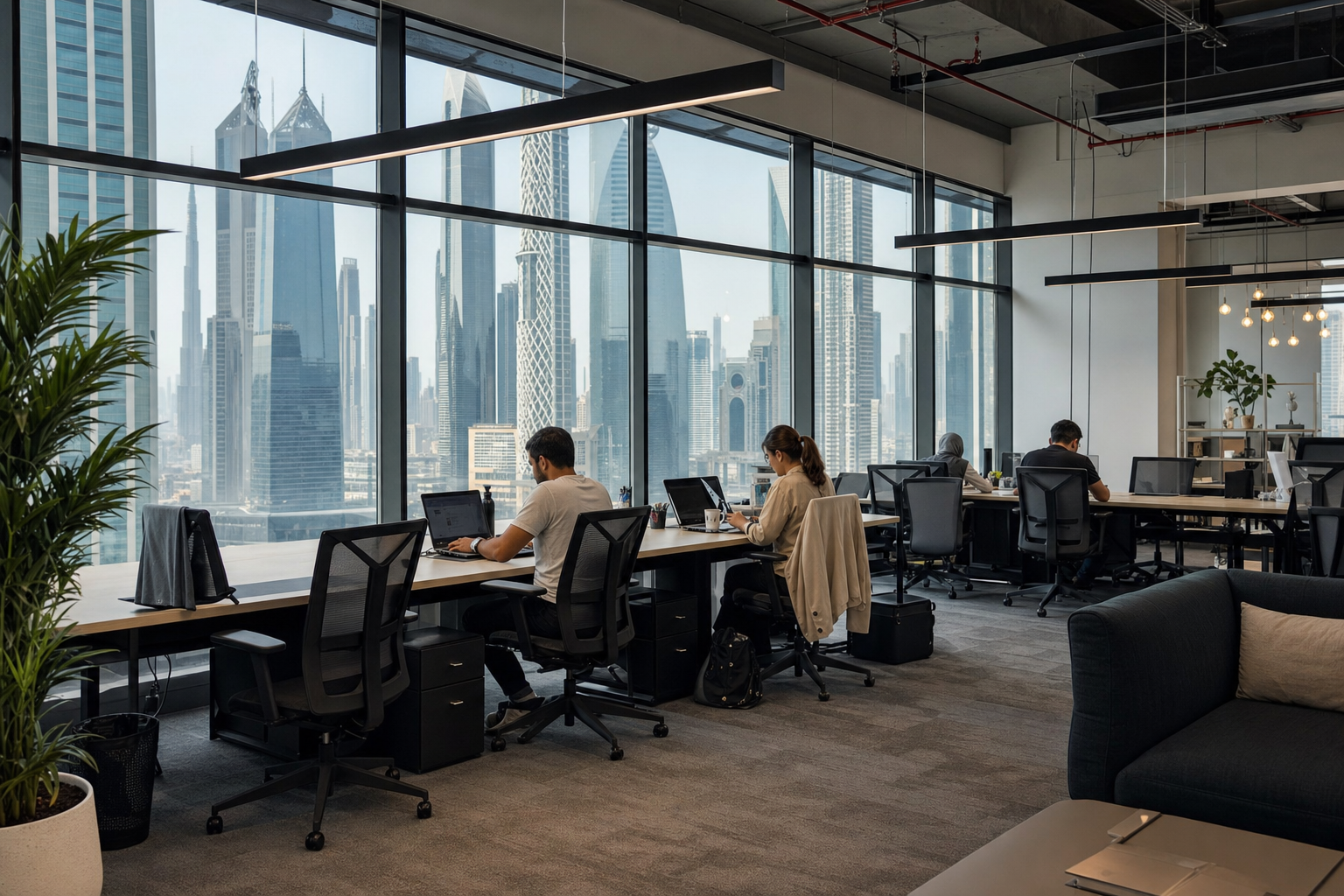
    Dubai’s remote work scene has shifted from exception to expectation. The best coworking space booking apps for remote workers in Dubai 2026 solve a problem most platforms miss: continuity. People move between projects, time zones, and neighborhoods. Most booking systems treat this as disruption. The right app treats it as normal.

    The Evolving Work Environment in Dubai

    Dubai hosts over 200,000 remote workers across finance, tech, and creative sectors. They don’t work from a single location. They move between Downtown offices for client meetings, Marina spaces for deep work, and DIFC hubs for networking. Traditional office leases can’t match this fluidity.

    The city’s infrastructure supports this shift. High-speed internet, diverse neighborhoods, and business-friendly policies create conditions where workspace flexibility becomes a competitive advantage. Remote workers need systems that move with them.

    The Friction of Traditional Workspace Hunting

    Finding workspace in Dubai typically means calling venues, checking availability, negotiating rates, and starting relationships from zero. Each new location requires reorientation.

    You reset your habits, your routes, your sense of who’s around.

    This friction compounds when you work across multiple areas: a project in Business Bay, meetings in DIFC, and team sessions in JLT. Without consistent access, productivity drops. Not from logistics, but from constant restarting.

    How Booking Apps Bridge the Gap

    Quality booking apps create a layer of consistency across locations. Your profile travels. Your preferences persist. Recognition builds through repeated presence rather than repeated introductions. The platform becomes familiar even when the physical space changes.

    Key Insight: The best apps don’t just book desks. They maintain your workspace identity across Dubai’s diverse business districts, reducing the emotional cost of movement.

    The Top Coworking Space Booking Apps in Dubai for 2026

    Best coworking space booking apps for remote workers in Dubai 2026

    Hotdesk: Your Global Workspace Network

    Hotdesk operates across 50+ cities with no membership fees. Book by the hour or day. The platform connects independent spaces like Comspace with corporate travelers and local remote workers. Your booking history and preferences sync across locations.

    Dubai inventory spans Business Bay to Jumeirah. Real-time availability, instant confirmation, and flexible cancellation come standard. The interface stays consistent whether you’re booking in DIFC or Downtown.

    Alternative Apps: Strengths and Considerations

    Other platforms serve specific niches. Some focus on premium corporate spaces with higher hourly rates. Others emphasize community features over booking efficiency. Many require monthly commitments or membership structures.

    Regional apps can offer deeper local relationships but limited scale. International platforms may lack Dubai-specific inventory or understanding of local business customs.

    Feature Hotdesk Traditional Platforms
    Membership Fees None Monthly/Annual Required
    Booking Flexibility Hourly to Daily Weekly/Monthly Minimum
    Global Network 50+ Cities Limited Coverage
    Payment Options Pay-per-use Subscription Model

    Beyond the Listing: Features That Make Apps Work for You

    Effective booking apps share features that reduce friction. Real-time availability prevents double bookings. Instant confirmation eliminates waiting periods. Flexible payment options accommodate different project timelines. These are operational necessities for remote workers managing multiple commitments.

    Quality platforms integrate these features seamlessly. Search filters match workspace type to task requirements. User reviews provide insights from previous visitors. Payment systems handle hourly, daily, or project-based billing without manual intervention.

    Instant Booking & Real-Time Availability

    Last-minute schedule changes happen. Client calls move up. Team sessions extend. Apps with real-time availability let you adapt without scrambling. You can book a quiet corner for calls or reserve a meeting room for presentations within minutes.

    Hotdesk’s system updates availability every 30 seconds across Dubai locations. When spaces like Comspace show availability, the desk is accessible. No phone calls. No waiting for confirmation emails.

    Intuitive Search & Filtering

    Effective search goes beyond location. Filter by desk type, noise level, available equipment, and proximity to metro stations. Some days call for complete silence for deep work. Others call for social settings for brainstorming. The right filters match the environment to the task.

    Key Insight: Advanced filtering saves time and improves work quality by matching workspace characteristics to specific project requirements, rather than settling for the first available option.

    Flexible Payment Options

    Payment flexibility matters for project-based work. Some platforms require monthly commitments that don’t suit occasional users. Others charge premium rates for hourly booking. Quality apps offer multiple payment structures: pay-per-use, credit packages, or corporate billing for team bookings.

    Transparent pricing eliminates surprises. Hidden fees for equipment use or extended stays create friction. The best platforms display total costs upfront, including any additional charges for amenities or services.

    The Hotdesk Advantage: How We’re Redefining Workspace Access in Dubai

    No Membership Fees, Just Presence

    Most platforms require monthly commitments before you can book your first hour. Hotdesk operates differently. You pay only when you work. This approach suits Dubai’s project-based economy, where remote workers juggle client schedules, seasonal workloads, and travel commitments.

    No membership fees means no pressure to justify monthly costs through forced usage. Book three hours in Business Bay this week and a full day in Marina next month. Your usage patterns follow actual work demands rather than subscription obligations.

    Global Network, Local Understanding

    Hotdesk’s network spans 50+ cities with a consistent booking experience. The same interface that reserves space in Dubai works in London, Singapore, or Cairo. Your profile, preferences, and booking history travel with you.

    This consistency matters for frequent travelers. Learn the system once and apply it anywhere. Dubai spaces fit into a broader network that recognizes your patterns and adapts to your workflow across time zones.

    Key Insight: True workspace access means your digital experience remains constant even when physical locations change, reducing cognitive load and decision fatigue.

    For Seekers and Operators

    Hotdesk serves both workspace seekers and space operators. This dual approach supports better inventory and more responsive service. Operators gain access to verified users and streamlined booking management. Users benefit from diverse options and competitive pricing.

    The platform connects independent operators with remote workers who value flexibility over corporate uniformity. Spaces keep their character while gaining access to a broader user base.

    Making the Right Choice: Your Action Plan for Finding the Right Dubai Workspace

    Best coworking space booking apps for remote workers in Dubai 2026

    Assessing Your Needs

    Start with task requirements, not location preferences. Deep work needs quiet corners with minimal interruptions. Client calls require private spaces with reliable internet. Collaborative projects benefit from open areas with whiteboard access and flexible seating.

    Consider your weekly patterns. Do you need the same desk each day, or different environments for different projects? Quality booking platforms support both steady routines and variety through flexible booking options.

    Prioritizing App Features

    Rank features by actual frequency of use. Real-time availability matters more than social features if you book spaces reactively. Payment flexibility matters more than loyalty programs if your project schedules change often.

    Test booking flows before committing to a platform. Some apps excel at browsing but complicate reservations. Others streamline booking but provide limited space details. Choose based on your primary use case.

    Testing the Waters

    Start with short bookings in familiar areas. Book three hours rather than full days until you understand the space and the app experience. Choose locations near metro stations or familiar landmarks to reduce navigation stress.

    Read recent reviews and check amenity lists before booking. Confirm equipment availability if you need specific tools. Contact space operators directly if you have unique requirements, such as presentation setup or additional power access.

    If you want a simple baseline in 2026, start with apps that offer real-time inventory, clear pricing, and flexible cancellation. That mix tends to protect your schedule when the week shifts.

    Frequently Asked Questions

    What is the best coworking space booking app for remote workers in Dubai?

    For remote workers in Dubai, Hotdesk stands out as a leading coworking space booking app. We offer a global network with no membership fees, allowing you to book by the hour or day across diverse Dubai locations. Our platform ensures your preferences and booking history sync, providing continuity wherever your work takes you.

    How much does it cost to use a coworking space in Dubai?

    The cost of coworking spaces in Dubai varies, but quality booking apps offer flexible payment options. With Hotdesk, you pay only for the time you use, whether hourly or daily, without needing monthly commitments. We believe in transparent pricing, so you always see the total cost upfront.

    Are there free coworking spaces available in Dubai?

    While some informal spots might exist, most professional coworking spaces in Dubai have associated costs to provide quality amenities and services. Coworking space booking apps like Hotdesk offer various payment structures, including pay-per-use, making professional workspaces accessible without long-term commitments. This flexibility ensures you get the right environment for your work.

    Why are coworking space booking apps important for remote workers in Dubai?

    Coworking space booking apps are important because they solve the problem of continuity for remote workers in Dubai. They eliminate the friction of traditional workspace hunting, allowing you to move seamlessly between different districts and projects. The right app ensures your workspace identity travels with you, reducing the emotional cost of movement.

    What features should I look for in a coworking space booking app in Dubai?

    When choosing a coworking space booking app in Dubai, look for features like real-time availability and instant confirmation to adapt to your schedule. Intuitive search filters that match workspace type to your task requirements are also key. Flexible payment options, like pay-per-use, ensure the app fits your project-based workflow.

    How does Hotdesk provide continuity for remote workers in Dubai?

    Hotdesk provides continuity by ensuring your profile and preferences persist across all locations in Dubai. Instead of starting from zero at each new space, our platform becomes familiar, maintaining your workspace identity. This means you can focus on your work, not on reorienting yourself, wherever you choose to work in the city.

    About the Author

    MK

    Mohamed Khaled

    Mohamed Khaled

    Forbes 30 Under 30

    Founder & CEO at Hotdesk & Co-founder, DESK Token

    Mohamed Khaled is the Founder and CEO of Hotdesk, the on-demand workspace platform providing access to coworking spaces and flexible offices across more than 120 countries.

    He spent nearly a decade at PwC before moving into financial leadership at SWVL, where he led the company’s $1.5 billion Nasdaq listing, the first Unicorn from thr Middle East to go public in the United States.

    A Forbes 30 Under 30 honoree, Mohamed built Hotdesk from a side project into a global platform, leading a team of more than 50 and expanding into international markets, including the acquisition of Spain-based coworking marketplace YADO.

    Also being Co-founder and President of DESK Token, the world’s first asset backed property investment and utility hybrid token, Mohammed is focused on building infrastructure that unlocks underutilized assets – from meeting rooms to private offices and full on buildings – while creating space for the future of work.

    Last reviewed: April 15, 2026 by the Hotdesk Team
  • UAE 2026: Best On-Demand Desks for Business

    UAE 2026: Best On-Demand Desks for Business

    Best on-demand desk booking platforms for business travelers in the UAE 2026

    Navigating the UAE: Why Business Travelers Need On-Demand Workspaces

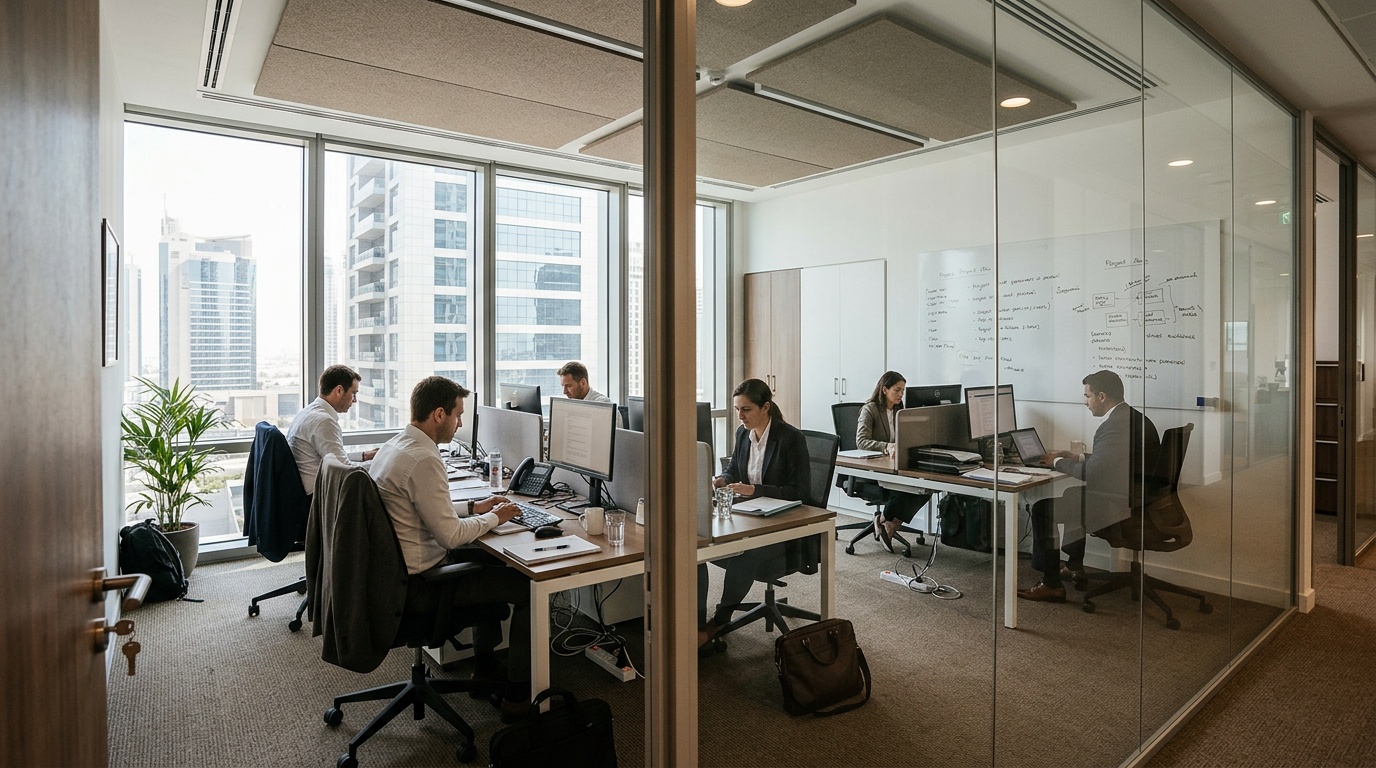
    Business travel across the UAE presents a unique challenge: maintaining productivity while constantly adapting to new environments. The best on-demand desk booking platforms for business travelers in the UAE 2026 address a fundamental problem that goes beyond simple access to a workspace. They solve the friction of starting over in each new location.

    The Evolving Business Travel Scene in the UAE

    Dubai, Abu Dhabi, and emerging business hubs like Sharjah see thousands of professionals each week who need more than hotel lobbies or coffee shops. The UAE’s position as a global business gateway means travelers often spend extended periods in the country, requiring professional environments that match their standards at home.

    Traditional solutions fall short. Hotel business centers close early, coworking spaces require lengthy sign-ups, and coffee shops lack the infrastructure for serious work.

    The Hidden Cost of Constant Reset

    Every new workspace asks you to reorient. You reset your habits, your preferred seating, and your sense of who is around you. This isn’t just inconvenience. It’s cognitive overhead that drains energy from actual work.

    The Real Problem: Most platforms treat mobility as an exception. They’re built for locals who occasionally need flexibility, not for professionals whose work spans cities and time zones.

    What Business Travelers Actually Need

    Professional work demands professional environments: reliable internet, quiet zones for calls, proper ergonomics, and the ambient energy of other working professionals. Hotel rooms isolate. Coffee shops distract. Purpose-built workspaces such as Regus Marina Gate are designed around these requirements.

    On-demand platforms eliminate setup friction. You book from your phone, walk in, and start working. No negotiations, no explanations, no adjustment period. The best platforms maintain consistent quality standards across locations, so your workspace experience travels with you.

    The Best On-Demand Desk Booking Platforms for Business Travelers in the UAE 2026

    Best on-demand desk booking platforms for business travelers in the UAE 2026

    Hotdesk: Built for Professionals Who Move

    Hotdesk operates from a different premise than most booking platforms. Built in the UAE by professionals who understand regional business travel patterns, it focuses on consistency across locations rather than access alone. The platform spans MENA, Europe, and beyond, offering the same booking experience whether you’re in Dubai, London, or Cairo.

    Your seating preferences, typical booking duration, and workspace requirements travel with your account. This reduces the repetitive setup that affects many other platforms.

    Platform Comparison: Strengths and Gaps

    Platform UAE Coverage Instant Booking Profile Continuity Mobile Experience
    Hotdesk Extensive Dubai and Abu Dhabi Yes Full preference sync Native app
    WeWork On Demand Limited locations Yes Basic Mobile web
    Regus Businessworld Good coverage Advance booking required None Functional
    Deskpass Minimal UAE presence Yes Basic App available

    WeWork provides recognizable spaces but limited flexibility in the UAE market. Regus offers broad coverage but often requires advance booking that doesn’t suit spontaneous business travel. Deskpass works well in other markets but lacks the local depth that UAE travelers need.

    Essential Platform Features for UAE Business Travel

    Instant Booking and Real-Time Availability

    Business travel schedules change rapidly. Your platform must show real-time desk availability and allow immediate booking without approval delays. The best platforms refresh availability every few minutes, not hours.

    Coverage Beyond Dubai’s Business District

    Strong platforms include locations in Abu Dhabi’s government quarter, Dubai’s emerging neighborhoods, and secondary cities where business increasingly happens. Depth beats breadth when you need reliable options.

    Pricing That Matches Travel Patterns

    Look for hourly rates for brief meetings, daily rates for intensive work sessions, and weekly packages for extended stays. Transparent pricing without hidden fees or membership requirements lets you choose based on actual needs, not platform restrictions.

    Mobile-First Experience

    Book while in transit, modify reservations between meetings, and access spaces without relying on a laptop. The best platforms treat mobile as the primary interface, not an afterthought.

    What Truly Sets a Platform Apart

    Integration with Your Travel Workflow

    The best platforms sync with calendar systems and travel apps. You book workspace at the same time you book flights and receive location details alongside hotel confirmations. Integration reduces the mental overhead of managing separate systems.

    The Continuity Factor: Platforms that remember your preferences across cities reduce the cognitive load of starting over. Your workspace experience stays consistent even when locations change.

    Understanding UAE Business Culture

    The UAE’s diverse business environment calls for platforms that support different working styles and cultural expectations. Clear information about prayer room access, quiet zones for calls during Ramadan, and flexible cancellation policies that respect local business customs makes a difference.

    Rather than treating each booking as isolated, Hotdesk builds user profiles that create familiarity across locations. Your preferred workspace type, usual booking times, and connectivity requirements shape recommendations in new places. This approach recognizes that business travelers need consistency, not constant adaptation.

    Making the Right Choice for Your UAE Business Travel Needs

    Best on-demand desk booking platforms for business travelers in the UAE 2026

    Choosing among the best on-demand desk booking platforms for business travelers in the UAE 2026 comes down to your travel patterns and workspace requirements. Frequent travelers between Dubai and Abu Dhabi need different options than occasional visitors.

    Matching Platform Strengths to Your Travel Style

    Hotdesk works well for professionals who value consistency across multiple cities and regions. Its UAE origins translate into stronger local context and coverage beyond the usual hotspots. WeWork suits travelers who prefer familiar branded environments and can accept fewer location options. Regus fits planned visits when advance booking isn’t a constraint.

    For spontaneous business travel, platforms that require advance notice create avoidable friction. Real-time booking becomes essential when flight delays change your schedule or client meetings move to a different district.

    Cost Considerations Beyond Hourly Rates

    Hidden costs add up quickly in business travel. Membership fees, cancellation penalties, and minimum booking requirements can raise workspace spend. Transparent pricing that charges only for time used offers clearer budget control.

    ROI Reality: The lowest hourly rate rarely delivers the best value. Factor in booking flexibility, reliable internet, professional environment, and time saved on setup when you calculate true cost.

    The UAE’s business environment continues expanding beyond traditional centers. New developments in Dubai South, Abu Dhabi’s Yas Island, and Sharjah’s business districts reward platforms with growth plans that match where work is moving.

    Smart platforms are integrating with transportation apps and hotel booking systems to create smoother travel experiences. This reduces the mental overhead of managing multiple services across time zones.

    The Clear Choice for UAE Business Travelers

    Hotdesk offers comprehensive workspace access across the UAE and beyond. Its focus on continuity, not access alone, addresses the real challenges of mobile professionals. The platform’s regional experience and expanding network make it a practical choice for serious business travel.

    Other platforms serve specific needs, but few match Hotdesk’s mix of local depth, broader reach, and user experience designed around travel workflows. If your work spans cities and countries, Hotdesk removes much of the friction that comes with constant location changes.

    When evaluating the best on-demand desk booking platforms for business travelers in the UAE 2026, prioritize consistency, real-time availability, and coverage that matches where you actually work during a trip.

    Frequently Asked Questions

    What core problem do on-demand desk booking platforms solve for business travelers in the UAE?

    Business travel across the UAE often means constantly adapting to new environments, which creates a significant drain on productivity. On-demand desk booking platforms solve the friction of repeatedly setting up and reorienting in each new location. They provide the infrastructure for immediate, productive work, allowing you to focus on your business, not your workspace.

    How do the best on-demand platforms ensure a consistent workspace experience across different cities?

    The best platforms understand that movement shouldn’t mean starting over. They achieve consistency by allowing your user profile to carry your preferences, like seating and equipment needs, across locations. This means your workspace experience travels with you, reducing the cognitive load of adapting to new surroundings every time.

    What types of professional environments can I expect from on-demand workspaces in the UAE?

    You can expect professional environments designed for serious work, far beyond what a hotel lobby or coffee shop offers. These spaces provide reliable internet, quiet zones for calls, proper ergonomics, and the ambient energy of other working professionals. They are purpose-built to meet the standards you maintain at home.

    Why is instant booking and real-time availability so important for business travelers in the UAE?

    Business schedules in the UAE are dynamic and can change rapidly. Instant booking with real-time availability means you can secure a workspace immediately, without delays or approvals. This flexibility is essential for maintaining productivity when your plans shift unexpectedly, ensuring you always have a place to work.

    How do on-demand desk booking platforms cater to the specific cultural needs of business travelers in the UAE?

    Platforms designed for the UAE understand its diverse business environment. They provide clear information on amenities like prayer room access and quiet zones for calls, especially during periods like Ramadan. Flexible cancellation policies that respect local customs also make a significant difference for travelers.

    Do these platforms offer coverage beyond major cities like Dubai and Abu Dhabi?

    Yes, the most effective on-demand desk booking platforms for the UAE offer depth beyond just the main business hubs. They include locations in emerging neighborhoods, government quarters, and secondary cities where business is increasingly happening. This ensures you have reliable options wherever your work takes you across the country.

    About the Author

    MK

    Mohamed Khaled

    Mohamed Khaled

    Forbes 30 Under 30

    Founder & CEO at Hotdesk & Co-founder, DESK Token

    Mohamed Khaled is the Founder and CEO of Hotdesk, the on-demand workspace platform providing access to coworking spaces and flexible offices across more than 120 countries.

    He spent nearly a decade at PwC before moving into financial leadership at SWVL, where he led the company’s $1.5 billion Nasdaq listing, the first Unicorn from thr Middle East to go public in the United States.

    A Forbes 30 Under 30 honoree, Mohamed built Hotdesk from a side project into a global platform, leading a team of more than 50 and expanding into international markets, including the acquisition of Spain-based coworking marketplace YADO.

    Also being Co-founder and President of DESK Token, the world’s first asset backed property investment and utility hybrid token, Mohammed is focused on building infrastructure that unlocks underutilized assets – from meeting rooms to private offices and full on buildings – while creating space for the future of work.

    Last reviewed: April 15, 2026 by the Hotdesk Team
  • Al Mansurah Flexible Workspaces: Expert Reviews 2026

    Al Mansurah Flexible Workspaces: Expert Reviews 2026

    industry expert reviews of flexible workspaces in Al Mansurah

    Deconstructing “Industry Expert” in Al Mansurah’s Flexible Workspace Market

    Expert reviews of flexible workspaces in Al Mansurah focus on infrastructure reliability, scalability metrics, and operational precision rather than surface-level amenities. Real expertise evaluates what keeps working at 10x growth, not what looks impressive on day one.

    Defining Expertise: Beyond User Ratings

    Every distributed system asks you to manage new failure modes. User reviews describe yesterday’s experience. Expert analysis predicts tomorrow’s performance under stress.

    True workspace evaluation expertise comes from understanding how systems scale. An expert examines network architecture, backup power systems, and service level agreements. They measure uptime in nines, not satisfaction in stars.

    What Experts Look for: Infrastructure That Travels

    Infrastructure travels with productive teams. Experts evaluate whether workspace systems maintain consistency across locations and usage patterns. They test connectivity under peak loads, measure response times during outages, and verify redundancy protocols.

    Expert Insight: A workspace earning genuine expert approval maintains sub-100ms network latency, 99.9% uptime, and standardized service protocols across all locations. These metrics predict long-term reliability better than any amenity list.

    The Al Mansurah Context: Local Nuances Experts Observe

    Al Mansurah’s business environment demands specific infrastructure considerations. Experts evaluate power stability, internet backbone quality, and local support team responsiveness. They account for regional peak usage patterns and seasonal demand fluctuations.

    Local expertise includes knowing which providers deliver consistent service during Egypt’s summer peak loads. Understanding cultural work patterns and designing systems that fit them.

    Beyond Amenities: Community and Business Support as Expert Metrics

    Community infrastructure matters more than coffee quality. Experts measure networking event frequency, business development program effectiveness, and member retention rates. They evaluate whether workspace operators actively help business growth or primarily provide desks.

    Platforms like Comspace show community building through structured networking routines and measurable business outcomes for members.

    Al Mansurah’s Flexible Workspace Environment: An Expert’s Checklist

    industry expert reviews of flexible workspaces in Al Mansurah

    Connectivity and Uptime: The Foundation of Productivity

    Network performance determines workspace viability. Experts test fiber backbone quality, measure packet loss during peak hours, and verify redundant internet service providers. Al Mansurah’s infrastructure often benefits from dual-path connectivity to handle Egypt’s variable grid conditions.

    Uptime metrics reveal operational discipline. Quality spaces maintain 99.9% availability through uninterruptible power systems and generator backup. They document mean time to recovery and publish transparent incident reports.

    Scalability and Adaptability: Workspaces That Evolve With You

    Systems over announcements. Expert evaluations focus on how spaces handle growth without service degradation. They examine booking system capacity, space allocation logic, and member onboarding workflows.

    Expert-Approved Features

    • Real-time availability tracking with 30-second refresh rates
    • Automated space optimization based on usage patterns
    • Standardized service levels across all locations
    • Member portal with API access for business integrations

    Red Flags Experts Avoid

    • Manual booking processes requiring phone calls
    • Inconsistent Wi-Fi performance between areas
    • No documented service level agreements
    • Limited scalability for team growth

    Service Excellence: Precision in Every Interaction

    Engineering for scale means predictable service delivery. Experts examine response time metrics, staff training routines, and issue resolution procedures. They measure first-contact resolution rates and escalation paths.

    Service consistency across shifts indicates systematic operations. Quality operators maintain detailed procedure documentation and recurring staff certification programs.

    Community Infrastructure: Fostering Genuine Connection

    Community building requires intentional systems. Experts evaluate event programming frequency, networking success metrics, and member introduction routines. They track business partnerships formed and revenue generated through workspace connections.

    What works at 10x: structured networking events, mentorship matching systems, and collaborative project facilitation. Comspace reflects this approach through data-driven community programming and measurable business outcomes.

    Bridging the Gap: How Hotdesk Connects You to Expert-Rated Spaces

    Hotdesk’s Data-Driven Approach to Workspace Evaluation

    Ever had a workspace look great at first glance then fail under load? Every workspace listing on Hotdesk undergoes systematic evaluation before platform approval. We measure network latency, verify power redundancy, and audit service protocols. Our evaluation framework mirrors expert criteria, using quantifiable metrics instead of subjective impressions.

    Infrastructure travels through standardized verification processes. We test connectivity during peak hours, document uptime history, and validate operator certifications. This systematic approach supports consistent quality across our network spanning 80+ countries.

    Instant Booking, Informed Decisions: The Hotdesk Advantage

    Real-time availability data removes booking uncertainty. Our platform provides workspace specifications, verified amenity lists, and performance metrics before reservation. Users see the same criteria used in workspace evaluations without needing deep technical context.

    Evaluation Factor Hotdesk Verification Standard Listings
    Network Performance Speed tests during peak hours Self-reported claims
    Power Reliability UPS and generator verification Basic amenity mentions
    Service Standards Response time metrics User review averages
    Scalability Capacity planning documentation Available space counts

    Global Standards, Local Expertise: Our Al Mansurah Presence

    Local market knowledge shapes our Al Mansurah workspace curation. We account for regional power grid patterns, peak business hours, and cultural workspace preferences. This context guides operator selection and service standard implementation.

    Local Insight: Al Mansurah workspaces benefit from backup power planning during summer peak loads and community programming that fits local work patterns. Hotdesk highlights operators meeting these requirements.

    Empowering Operators: Building Better Workspaces, Together

    Operator partnerships focus on continuous improvement through data sharing and best-practice adoption. We provide performance benchmarks, usage analytics, and optimization recommendations. This collaborative approach raises overall market quality.

    What works at 10x requires systematic operator development. We share global insights while respecting local market dynamics, helping Al Mansurah operators reach international service standards.

    The Unseen Value: Expert Insights into Al Mansurah’s Flexible Workspace Future

    Beyond the Present: Anticipating Al Mansurah’s Evolving Needs

    Al Mansurah’s business growth patterns indicate increasing demand for hybrid work solutions. Expert workspace reviews now factor in scalability for remote team integration and international collaboration capability.

    Future workspace success depends on adapting to distributed team requirements while maintaining local community connections. Smart operators invest in video conferencing infrastructure and strong global connectivity standards.

    The “Infrastructure Travels” Principle in Local Growth

    Consistent service delivery across locations enables business expansion. As Al Mansurah companies grow regionally or internationally, their workspace requirements travel with them. Expert evaluations increasingly prioritize operators with multi-location consistency and standardized service protocols.

    Measuring Success: Metrics That Matter for Al Mansurah Businesses

    Business outcomes beat amenity lists in expert workspace evaluations. We track member company growth rates, networking event ROI, and partnership formation through workspace connections. These metrics predict long-term value better than facility features.

    Future Focus: Successful Al Mansurah workspaces will differentiate through measurable business impact rather than facility amenities. Expect increased emphasis on networking ROI, skill development programs, and quantified community value.

    Your Next Workspace: A Strategic Decision Guided by Expertise

    Workspace selection affects productivity, network development, and business growth. Expert guidance helps identify spaces supporting long-term objectives rather than immediate comfort preferences. Consider infrastructure reliability, community quality, and scalability potential.

    Systems over announcements guide smart workspace decisions. Choose operators demonstrating consistent service delivery, documented performance metrics, and clear growth pathways. Your workspace should evolve with your business requirements.

    Frequently Asked Questions

    What do experts look for in a top flexible workspace provider in Al Mansurah?

    Ever had a workspace look great but fail under load? Experts in Al Mansurah focus on infrastructure reliability, scalability metrics, and operational precision. They verify network architecture, backup power systems, and service level agreements to predict performance under stress.

    What kind of support do flexible workspaces in Al Mansurah offer beyond just a desk?

    Beyond basic amenities, experts evaluate community and business support. They look at networking event frequency, business development programs, and member retention rates. Quality spaces actively facilitate business growth through structured connections, preventing re-work in finding opportunities.

    What are common red flags experts identify in Al Mansurah's flexible workspaces?

    Ever experienced inconsistent service? Experts avoid spaces with manual booking processes requiring phone calls, inconsistent Wi-Fi performance, and no documented service level agreements. Limited scalability for team growth is another clear sign of potential operational issues.

    How do experts evaluate flexible workspaces specifically for Al Mansurah's business environment?

    Al Mansurah’s environment demands specific infrastructure considerations like power stability and internet backbone quality. Experts account for regional peak usage patterns and seasonal demand fluctuations. They know which local providers deliver consistent service, especially during Egypt’s summer peak loads.

    How does Hotdesk's evaluation compare to industry expert reviews of flexible workspaces?

    Ever booked a workspace that failed under load? Hotdesk’s data-driven approach mirrors expert checks, using quantifiable metrics instead of subjective impressions. We systematically verify network latency, power redundancy, and service protocols to ensure consistent quality across our network.

    What key metrics do industry experts use to judge flexible workspaces?

    Experts measure network latency, aiming for sub-100ms, and verify 99.9% uptime through uninterruptible power systems and generator backup. They also check for standardized service protocols across all locations. These metrics predict long-term reliability, avoiding future re-work.

    Why is scalability important for flexible workspaces, according to experts?

    Scalability ensures a workspace can handle growth without service degradation, providing continuity for your operations. Experts examine booking system capacity, space allocation logic, and member onboarding workflows. This ensures the workspace evolves with your team, preventing the need for a complete reset.

    About the Author

    MS

    Mohammad El Shaari

    Mohammad El Shaari

    CTO at Hotdesk

    Mohammad El Shaari is the CTO of Hotdesk, where he leads the engineering team building and scaling a global SaaS platform for on-demand workspace bookings across 80+ countries. A Computer Science graduate from The British University in Egypt, he brings over a decade of hands-on experience in enterprise software, AI, cloud infrastructure, and cybersecurity.

    Before Hotdesk, he served as CTO of Vee Tech, where he led technical delivery for 12+ enterprise clients generating $30M+ in annual revenue, and helped build Egypt’s first innovation lab at Capital International Schools.

    At Hotdesk, Mohammad focuses on building scalable systems that handle real-time availability, global user distribution, and high-throughput transactions. He specializes in scalable system design, cloud-native infrastructure, and building high-performance SaaS platforms that support global user bases.

    He writes about scaling SaaS platforms, backend architecture, mobile engineering, and real-world technical decisions behind building and operating global products.

    Last reviewed: April 15, 2026 by the Hotdesk Team
  • Mansoura Coworking: Professional Address Guide 2026

    Mansoura Coworking: Professional Address Guide 2026

    what coworking space should I choose if I need a professional address in Mansoura?

    Understanding Professional Addresses: More Than Just a Mailbox

    When asking what coworking space should I choose if I need a professional address in Mansoura?, look for spaces offering mail forwarding, business registration support, and call answering services. The best options provide dedicated street addresses (not P.O. boxes) with package handling and meeting room access.

    What Makes a Professional Address Actually Professional?

    A professional address through coworking means using the space’s physical street address for your business correspondence and registration. This isn’t a mailbox rental. It’s integrated workspace operations.

    You get dedicated mail sorting, package acceptance, and phone answering under your business name. The address appears on your business cards, website, and legal documents with full commercial backing.

    Why Your Home Address Isn’t Cutting It

    Professional addresses separate your personal and business mail streams completely. Clients see a commercial district address instead of your apartment building. Instant credibility boost.

    Infrastructure travels: Your business address becomes location-independent. You maintain the same professional presence whether working from the coworking space, home, or while traveling.

    Advanced services include digital mail scanning, package photo notifications, and secure document storage. Spaces like Comspace integrate these with booking systems.

    Call forwarding and virtual assistant services create a complete virtual office that scales with your business.

    what coworking space should I choose if I need a professional address in Mansoura?

    Which Mansoura Spaces Actually Offer Business Addresses?

    Contact coworking spaces directly about their virtual office packages. Many advertise hot desks but don’t promote professional address services. Ask specifically about business registration support and mail handling procedures.

    Target spaces in Mansoura’s commercial districts, not residential areas. The address location directly impacts business credibility and legal registration for certain business types.

    What Separates Good Address Services From Great Ones

    Premium services send real-time mail notifications with digital scanning. Basic packages offer weekly mail collection. For time-sensitive correspondence, this difference matters.

    Systems over announcements: Test response times before committing. Call the space and ask about mail notification processes. Spaces that answer immediately with specific procedures show operational reliability.

    Package handling varies dramatically. Some accept packages during business hours only. Others provide 24/7 secure storage. Match service hours to your delivery patterns.

    The Nuts and Bolts: Mail, Calls, and Admin Support

    Mail forwarding typically runs on weekly schedules unless you pay for expedited service. Record the forwarding address accurately and update your business registration.

    Call answering ranges from simple forwarding to full virtual reception. Comspace provides integrated communication systems maintaining consistent professional standards across all touchpoints.

    Getting More Than Just an Address

    The Hidden Value: Networking and Community Access

    Professional address clients often access networking events and business meetups. This turns a mail service into a business development channel.

    Regular interaction with other address clients creates referral opportunities. When evaluating Mansoura options, consider the existing business community and networking calendar.

    On-Demand Access to Professional Facilities

    Most professional address packages include discounted meeting room and day office access. This gives you flexibility for client meetings without permanent office costs.

    Book meeting rooms at your business address location to maintain consistency. Clients expect to meet you at the address on your business cards.

    Building for Scale: How Your Address Solution Evolves

    Professional address services adapt as your team expands. Start with basic mail forwarding, then add call answering and virtual assistant services as client volume grows.

    What works at 10x: Choose spaces offering modular service upgrades. Your address solution should scale from solo entrepreneur to multi-person team without requiring a complete provider change.

    Upgrade paths include dedicated phone lines, expanded storage, and priority meeting room access. Plan for growth when selecting your initial package.

    Can You Actually Register Your Business at a Coworking Address?

    Egyptian business law permits commercial address registration at coworking spaces if the space holds proper commercial licensing. Verify the space’s commercial registration status before proceeding.

    Some business types require specific zoning compliance. Check with your accountant about industry-specific address requirements before committing to any coworking space.

    Mail and Package Reality Check

    Package acceptance policies depend on space size and staffing. Larger coworking spaces offer extended reception hours and secure storage. Smaller spaces accept packages during limited hours only.

    International shipping requires careful coordination. Ensure your chosen space handles customs documentation and provides timely pickup notifications for sensitive deliveries.

    The Numbers: Address Service vs. Traditional Office

    Professional address services cost 70-85% less than traditional office leases while providing similar credibility benefits. Monthly fees range from $50-200, depending on service level.

    Traditional offices require security deposits, utility setup, and long-term lease commitments. Professional address services provide month-to-month flexibility with quick activation.

    Your Action Plan: Securing the Right Address

    what coworking space should I choose if I need a professional address in Mansoura?

    How Hotdesk Cuts Through the Search Noise

    Hotdesk’s platform filters coworking spaces by specific services, including professional address offerings. Search results display service details and availability for direct booking.

    The platform connects you directly with space operators to discuss address service specifics before booking. This prevents miscommunication about service scope and pricing.

    Your 3-Step Booking Process

    First, define your address service requirements: mail forwarding frequency, package handling needs, and call answering preferences. Use these criteria to filter Hotdesk search results.

    Contact shortlisted spaces through Hotdesk’s messaging system to verify service details. Ask about business registration support, mail notification systems, and upgrade options.

    Why Your Address Choice Matters Every Day

    Your business address appears on every client touchpoint. A professional coworking address in Mansoura’s commercial district establishes local presence and business legitimacy instantly.

    The right address solution builds trust before the first client meeting. Choose wisely. Your address becomes a business asset working 24/7.

    Frequently Asked Questions

    Ever wonder how to pick the right coworking space for your business address in Mansoura?

    When choosing a coworking space for a professional address, prioritize dedicated street addresses, not P.O. boxes. Look for comprehensive mail handling, business registration support, and call answering services to ensure smooth operations. Always check if the space is located in a commercial district for better credibility and legal compliance.

    Ever think about what truly defines a professional address service beyond just mail?

    A truly professional address service goes beyond basic mail forwarding to prevent re-work and ensure continuity. It includes digital mail scanning, package photo notifications, and secure storage for sensitive documents. Services like Comspace also integrate communication systems, offering a complete virtual office solution that scales with your business.

    Ever consider why a dedicated professional address is more than just a mailing point for your business?

    A professional address builds immediate credibility by presenting a commercial district location to clients, avoiding a residential appearance. It also separates your personal and business mail streams, preventing mix-ups. This ensures your business maintains a consistent, professional presence regardless of your physical working location.

    Ever question if you can legally register your business using a coworking space address in Mansoura?

    Yes, you can typically register your business with a coworking space address in Mansoura, provided the space holds proper commercial licensing. To avoid future re-work, verify the space’s commercial registration status beforehand. It’s also wise to consult your accountant or legal advisor about any specific zoning compliance your business type might require.

    Ever wonder about the practical differences in mail and package handling when choosing a coworking address?

    Mail and package handling varies significantly, impacting your operational continuity. Premium services offer real-time mail notifications with digital scanning, preventing delays in critical correspondence. Consider spaces with 24/7 secure package storage if your deliveries are frequent or outside standard business hours, minimizing missed shipments.

    Ever consider how a professional address service can support your business as it expands?

    A well-chosen professional address service should offer modular upgrades, ensuring continuity as your business grows without needing a complete provider change. Start with basic mail forwarding and add services like call answering or virtual assistants as client volume increases. Look for options that include dedicated phone lines, expanded storage, and priority meeting room access for seamless scaling.

    Ever think about the hidden value a professional address service can offer beyond just a physical location?

    Beyond the address itself, these services often provide access to networking events and business meetups, transforming a simple mail service into a business development channel. Many packages also include discounted access to meeting rooms and day offices, offering flexible client meeting options and maintaining consistency with your listed business address.

    About the Author

    MS

    Mohammad El Shaari

    Mohammad El Shaari

    CTO at Hotdesk

    Mohammad El Shaari is the CTO of Hotdesk, where he leads the engineering team building and scaling a global SaaS platform for on-demand workspace bookings across 80+ countries. A Computer Science graduate from The British University in Egypt, he brings over a decade of hands-on experience in enterprise software, AI, cloud infrastructure, and cybersecurity.

    Before Hotdesk, he served as CTO of Vee Tech, where he led technical delivery for 12+ enterprise clients generating $30M+ in annual revenue, and helped build Egypt’s first innovation lab at Capital International Schools.

    At Hotdesk, Mohammad focuses on building scalable systems that handle real-time availability, global user distribution, and high-throughput transactions. He specializes in scalable system design, cloud-native infrastructure, and building high-performance SaaS platforms that support global user bases.

    He writes about scaling SaaS platforms, backend architecture, mobile engineering, and real-world technical decisions behind building and operating global products.

    Last reviewed: April 15, 2026 by the Hotdesk Team
  • Rent a Meeting Room in Dubai: 2026 Guide

    Rent a Meeting Room in Dubai: 2026 Guide

    rent meeting room in dubai

    When Dubai Demands Presence: Finding Your Ideal Meeting Room

    To rent meeting room in dubai, book through platforms like Hotdesk for instant access to professional spaces across the city. Expect hourly rates from AED 50-300 depending on location and capacity. You can book the same day or weeks ahead with flexible cancellation policies.

    Key Takeaways

    • Secure professional meeting rooms in Dubai instantly by booking through platforms such as Hotdesk.
    • Expect hourly rates between AED 50 and 300, with pricing based on the room’s location and capacity.
    • Book your space for the same day or weeks in advance, benefiting from flexible cancellation options.

    The Dubai Business Environment: A Need for Professional Spaces

    Dubai operates on presence. The emirate hosts more than 200,000 businesses, from Fortune 500 headquarters to fast-scaling startups. Client meetings happen face-to-face. Deals close in conference rooms. Your workspace reflects your credibility.

    Traditional office leases can’t match this reality. You need space when deals demand it, not when contracts allow it.

    Why Renting Makes Sense

    Home offices lack the gravitas for serious negotiations. Coffee shops create distractions and privacy concerns. Hotel lobbies feel temporary. Professional meeting rooms give you the environment your business conversations deserve.

    The math works too. You pay for space only when you use it. No utilities, no maintenance, no empty rooms draining your budget during quiet months.

    Hotdesk’s Approach: Continuity, Not Just Access

    Most platforms treat room booking like hotel reservations. You search, you book, you start over next time. Hotdesk recognizes that business relationships require consistency. When you book through our platform, your preferences travel with you.

    The Reset Shouldn’t Be the Default: Spaces like Regus Marina Gate support repeat bookings and consistent setups, including your technical requirements and typical booking patterns.

    Your next meeting shouldn’t require rebuilding your sense of place. That’s the difference between booking a room and having infrastructure that supports how you operate.

    Dubai’s Meeting Room Options: Types, Amenities, and What to Expect

    meeting rooms rental

    From Huddles to Boardrooms: Matching Room Type to Meeting Purpose

    Small huddle rooms accommodate 2-4 people for quick decisions and focused discussions. These spaces work best for one-on-one client meetings or small team check-ins. Mid-size conference rooms seat 6-12 participants and suit department meetings and presentations that require screen sharing.

    Executive boardrooms handle 12-20 attendees with premium furnishings and advanced AV systems. These spaces project authority during high-stakes negotiations and board meetings. Training rooms offer flexible seating arrangements for workshops and seminars, often featuring movable furniture and multiple presentation displays.

    Essential Amenities for Productive Sessions

    High-speed WiFi and power outlets at every seat form the foundation of any functional meeting space. Video conferencing equipment with 4K cameras and noise-canceling microphones connects remote participants. Whiteboard walls or digital displays support real-time collaboration.

    Room Type Capacity Key Features Best For
    Huddle Room 2-4 people Basic AV, informal seating Quick decisions, 1:1 meetings
    Conference Room 6-12 people Presentation screen, video conferencing Team meetings, client presentations
    Executive Boardroom 12-20 people Premium furniture, advanced AV, catering prep Board meetings, major negotiations

    The Infrastructure That Goes Unnoticed

    Professional reception services handle guest check-ins and refreshment coordination. Climate control maintains comfortable temperatures throughout extended sessions. Dedicated parking and building security add convenience and peace of mind for attendees.

    Spaces like Regus Marina Gate include administrative support, printing facilities, and breakout areas for informal discussions. These details reduce friction and let you focus on the meeting content rather than logistics.

    Acoustics, Lighting, and Ambiance: The Unspoken Factors

    Sound isolation prevents external noise from disrupting conversations while keeping sensitive discussions inside the room. Natural lighting reduces eye strain during long sessions. Adjustable blinds help control glare on presentation screens.

    Temperature consistency matters more than most people realize. Rooms that swing between too hot and too cold distract participants and reduce engagement. Quality meeting spaces maintain steady climate control that adapts to occupancy levels.

    The Real Cost of Collaboration: Dubai Meeting Room Pricing Models

    Hourly, Daily, Monthly: Understanding Dubai’s Flexible Rental Structures

    Hourly rates start at AED 50 for basic huddle rooms and reach AED 300 for premium boardrooms in prime locations. Half-day packages typically offer 10-15% savings over hourly rates, while full-day bookings can reduce costs by 20-25%.

    Monthly memberships work for regular users, providing allocated hours at discounted rates. Most providers require at least 20-30 hours of monthly usage to make membership pricing worthwhile. Pay-as-you-go remains the most flexible option for occasional meetings.

    What’s Not in the Sticker Price

    Setup fees for AV equipment can add AED 50-150 per session. Catering minimums often require AED 200 or more regardless of actual needs. Cancellation penalties can range from 50-100% of the booking cost within 24 hours.

    Transparent Pricing Benefits

    • No surprise charges at checkout
    • Clear cancellation policies
    • Included amenities listed upfront

    Hidden Cost Risks

    • Equipment fees added during booking
    • Mandatory catering minimums
    • Peak-hour surcharges

    How Hotdesk Simplifies Pricing: No Surprises, Just Clarity

    When you book through Hotdesk, pricing includes core amenities without add-on fees. WiFi, basic AV setup, and climate control come standard. No membership requirements or minimum-hour commitments.

    The platform shows total costs upfront, including applicable taxes or service charges. Flexible cancellation policies protect your budget when plans change. Payment processing happens securely with instant confirmation.

    Pricing Transparency: What you see is what you pay. No hidden equipment fees, no mandatory minimums, no surprise surcharges at checkout.

    Booking in Seconds, Not Days: The Hotdesk Advantage in Dubai

    The Friction of Traditional Booking

    Traditional booking requires phone calls, email exchanges, and manual availability checks. Many property managers work only during business hours. Confirmation can take 24-48 hours, assuming the preferred time slot remains open.

    Deposits and manual paperwork slow the process further. Multiple back-and-forth messages just to secure a two-hour booking. The administrative overhead can outweigh the meeting time.

    How Instant Access Changes Everything

    Real-time inventory shows available spaces immediately. Book with confirmed pricing and calendar integration. No waiting for callbacks or manual confirmations.

    The platform handles payment processing, access instructions, and setup details. You receive what you need to enter the room and start working right away.

    A Global Network, Grounded in Dubai

    Hotdesk connects locations across Dubai’s business districts. From DIFC to Dubai Marina, consistent standards help you book with confidence across different operators.

    Your booking history and preferences sync across locations. You get the same experience whether you’re downtown or in the free zones.

    For Operators: Helping Your Space Work Harder

    Property owners list spaces once and reach demand across a wider network. Automated booking management reduces administrative work while improving occupancy.

    Continuity Travels: Your preferences, payment methods, and booking patterns stay consistent across Dubai’s network of professional meeting spaces.

    Frequently Asked Questions

    How can I easily rent a meeting room in Dubai?

    You can easily rent a meeting room in Dubai by booking through platforms like Hotdesk. These platforms offer instant access to professional spaces across the city. You have the flexibility to book the same day or weeks ahead, with clear cancellation policies.

    Why should businesses choose to rent meeting rooms instead of using traditional offices or coffee shops?

    Renting a professional meeting room in Dubai provides the right environment for serious business conversations, unlike home offices or noisy coffee shops. It offers flexibility, allowing you to pay for space only when you use it, avoiding the costs of long-term leases, utilities, and maintenance. This approach aligns with Dubai’s fast-paced business environment, where presence matters.

    What kinds of meeting rooms can I find for rent in Dubai?

    Dubai offers a variety of meeting rooms to suit different needs. You can find small huddle rooms for 2-4 people, mid-size conference rooms for 6-12, and executive boardrooms for 12-20 attendees. There are also training rooms with flexible seating for workshops and seminars.

    What essential amenities are usually included when I rent a meeting room in Dubai?

    When you rent a meeting room in Dubai, expect high-speed WiFi and power outlets at every seat. Many spaces also provide video conferencing equipment, whiteboard walls or digital displays, and professional reception services. Dedicated parking and building security are often included for convenience and peace of mind.

    How is the pricing structured for renting meeting rooms in Dubai?

    Pricing for meeting rooms in Dubai is flexible, with options for hourly, half-day, and full-day rates. Hourly rates can start from AED 50, reaching AED 300 for premium spaces. Monthly memberships are available for regular users, offering discounted rates for allocated hours.

    What makes a meeting room truly effective beyond just its features?

    Beyond features, an effective meeting room considers acoustics, lighting, and ambiance. Sound isolation ensures privacy and focus, while natural lighting reduces eye strain. Consistent climate control maintains comfort, allowing participants to stay engaged and productive.

    How does Hotdesk support businesses that frequently rent meeting rooms in Dubai?

    Hotdesk goes beyond simple room booking by focusing on continuity for businesses that frequently rent meeting rooms in Dubai. Your preferences, technical requirements, and typical booking patterns can travel with you across repeat bookings. This means your next meeting can start without rebuilding your sense of place, providing infrastructure that supports how you operate.

    About the Author

    MK

    Mohamed Khaled

    Mohamed Khaled

    Forbes 30 Under 30

    Founder & CEO at Hotdesk & Co-founder, DESK Token

    Mohamed Khaled is the Founder and CEO of Hotdesk, the on-demand workspace platform providing access to coworking spaces and flexible offices across more than 120 countries.

    He spent nearly a decade at PwC before moving into financial leadership at SWVL, where he led the company’s $1.5 billion Nasdaq listing, the first Unicorn from thr Middle East to go public in the United States.

    A Forbes 30 Under 30 honoree, Mohamed built Hotdesk from a side project into a global platform, leading a team of more than 50 and expanding into international markets, including the acquisition of Spain-based coworking marketplace YADO.

    Also being Co-founder and President of DESK Token, the world’s first asset backed property investment and utility hybrid token, Mohammed is focused on building infrastructure that unlocks underutilized assets – from meeting rooms to private offices and full on buildings – while creating space for the future of work.

    Last reviewed: March 26, 2026 by the Hotdesk Team
  • Coworking Spaces and the Circular Economy Guide

    Coworking Spaces and the Circular Economy Guide

    coworking spaces and the circular economy

    Coworking Spaces and the Circular Economy: How Shared Workspaces Reduce Waste

    Coworking Spaces: The Unseen Engines of the Circular Economy

    The circular economy creates closed loops where materials stay in use longer, waste becomes input, and efficiency drives value. In workspace design, this means shared infrastructure, extended equipment lifecycles, and systems that adapt rather than replace.

    Coworking spaces and the circular economy align naturally. A single office serves dozens of users across different schedules. Equipment gets maximum use. Furniture lasts longer because maintenance costs spread across multiple tenants. The model doesn’t reduce waste by accident. It makes waste reduction profitable.

    The Reset vs. Continuity Model: Traditional offices reset with each tenant change. Coworking spaces maintain continuity. At Comspace, the same desk serves a designer in the morning, a developer in the afternoon, and a consultant in the evening. The infrastructure stays consistent. The impact multiplies.

    Beyond Shared Desks: How Coworking Actively Reduces Waste and Resource Strain

    coworking spaces and the circular economy

    Individual offices stock supplies for peak usage that rarely occurs. Coworking spaces stock for actual usage patterns. Energy systems optimize for real occupancy, not estimated capacity. This approach cuts per-person resource consumption by 30-40% compared to traditional office models.

    Shared printers reduce the need for individual device purchases. Conference rooms serve multiple companies without duplication. High-speed internet infrastructure supports dozens of businesses through one connection. This isn’t cost splitting. It’s resource optimization at scale.

    Comspace demonstrates this principle through smart booking systems that match space allocation to actual needs, reducing energy waste and operational overhead.

    The Economic Pulse: Cost Savings and Brand Value in Circular Coworking

    For the User: Smarter Spending, Bigger Impact

    The financial benefits of coworking spaces and the circular economy extend far beyond splitting rent. Users access premium equipment, high-speed internet, and professional amenities without the capital investment of individual ownership. A freelancer pays for desk access rather than purchasing a printer, scanner, and conference room setup.

    This model reduces individual overhead by 60-70% compared to traditional office leases. More importantly, it eliminates the waste of underused resources. Instead of owning equipment that sits idle most days, users rely on shared infrastructure that operates at higher capacity rates.

    For the Operator: Efficiency, Attraction, and Revenue

    Operators benefit from reduced operating costs through optimized resource use. Shared printers serve 50+ users instead of individual desktop models. Energy consumption drops when spaces support flexible occupancy rather than fixed tenant loads. Waste management becomes more efficient through consolidated collection and recycling programs.

    Revenue Impact: Operators implementing circular practices often report 15-25% higher occupancy rates as environmentally conscious professionals seek sustainable workspace options.

    The brand differentiation matters. Comspace shows how circular principles attract users who value environmental responsibility alongside professional functionality. This positioning supports premium pricing while building stronger user loyalty.

    Hotdesk’s Role in Supporting Circular Operators

    We help operators improve resource efficiency through real-time demand matching. Instead of maintaining static capacity, spaces adjust offerings based on actual booking patterns. This reduces energy waste from unused areas while improving cleaning schedules and supply management.

    Hotdesk analytics help operators identify peak usage periods, allowing for better resource planning. Comspace uses these insights to schedule maintenance during low-demand windows and adjust amenity availability to match user patterns.

    Bridging Borders: Hotdesk as the Global Connector for Circular Work

    The “Continuity Travels” Advantage

    Traditional business travel creates resource waste through temporary setups and single-use accommodations. Hotdesk’s global network reduces this inefficiency by providing consistent workspace access across cities. Users keep their productivity patterns without needing new equipment or setup processes at each location.

    This continuity lowers the environmental cost of business mobility. Instead of companies shipping equipment or users purchasing temporary solutions, existing coworking infrastructure supports seamless transitions. The circular model travels with the user.

    Global Inventory, Local Impact: Expanding Reach Responsibly

    Our expansion strategy prioritizes optimizing existing space over new construction. We connect underused spaces with mobile professionals, increasing occupancy rates without adding to the built environment. This approach supports local economies while limiting construction-related environmental impact.

    Each new market entry focuses on making better use of current resources rather than creating parallel infrastructure. Users access local amenities and services, supporting community businesses while meeting professional needs.

    Beyond Greenwashing: How Hotdesk Facilitates Genuine Circularity

    Real circular economy work requires measurable resource optimization, not marketing claims. Hotdesk provides operators with utilization data that shows efficiency gains. Spaces can track energy consumption per user, waste reduction metrics, and resource-sharing statistics.

    This transparency lets users make informed choices about environmental impact. They can select spaces based on verified sustainability practices rather than superficial green marketing. The platform becomes a tool for environmental responsibility.

    Building the Future: Actionable Steps for a More Circular Workspace

    coworking spaces and the circular economy

    For Individuals: Making Circular Choices When You Book

    Select coworking spaces that demonstrate measurable sustainability practices. Look for spaces with energy-efficient lighting, recycling programs, and shared equipment policies. Book during peak hours to maximize space use rather than choosing empty periods that require additional energy for minimal occupancy.

    Bring reusable water bottles and coffee cups to reduce single-use waste. Choose spaces within walking distance or accessible by public transit when possible. These decisions compound across your work routine, creating meaningful environmental impact through coworking spaces and the circular economy principles.

    Smart Booking: Reserve space for the time you’ll use. Canceling unused bookings lets operators optimize energy consumption and accommodate other users efficiently.

    For Operators: Integrating Circularity Into Your Offering

    Install smart lighting systems that adjust based on occupancy levels. Provide filtered water stations to reduce bottled-water waste. Create equipment-sharing protocols that maximize use of printers, scanners, and presentation tools across all users.

    Track and display resource-usage metrics for transparency. Users appreciate knowing their environmental impact, and operators benefit from data-driven efficiency improvements. Digital-first policies reduce paper consumption while maintaining professional service standards.

    The Next Frontier: Technology’s Role in Scalable Circularity

    Smart building systems enable real-time resource optimization across global networks. IoT sensors automatically adjust heating, cooling, and lighting based on actual occupancy patterns. This technology moves coworking spaces and the circular economy from manual practices to automated efficiency systems.

    Predictive analytics help operators anticipate demand patterns, reducing waste from over-preparation while ensuring adequate resources during peak periods. Integrating these technologies through platforms like Hotdesk creates seamless user experiences while maximizing environmental benefits at scale.

    Frequently Asked Questions

    How do coworking spaces actually apply circular economy principles?

    Coworking spaces apply circular economy principles by maximizing resource use. They share infrastructure like printers and conference rooms, extending equipment lifecycles and reducing individual consumption. This model ensures materials stay in use longer, turning waste into input.

    What are the financial benefits for individuals using circular coworking spaces?

    For individuals, circular coworking means smarter spending and a bigger impact. Users access premium equipment and amenities without the capital investment of ownership, reducing individual overhead by 60-70%. This also eliminates the waste of underused resources.

    How do coworking operators benefit from adopting circular practices?

    Operators benefit from reduced operating costs through optimized resource use and more efficient waste management. Implementing circular practices can also lead to 15-25% higher occupancy rates, attracting environmentally conscious professionals. This creates strong brand differentiation and loyalty.

    How does Hotdesk help coworking spaces become more circular?

    Hotdesk helps operators improve resource efficiency through real-time demand matching. Our platform adjusts space offerings based on actual booking patterns, reducing energy waste from unused areas. We provide utilization data, allowing spaces to track efficiency gains and make informed choices.

    Can circular coworking principles extend to business travel?

    Yes, the continuity of circular coworking travels with you. Hotdesk’s global network reduces resource waste from temporary setups by providing consistent workspace access across cities. This means users maintain productivity without needing new equipment or setup processes at each location, lowering the environmental cost of business mobility.

    Beyond sharing desks, how do coworking spaces actively reduce waste?

    Coworking spaces actively reduce waste by optimizing individual consumption, from office supplies to energy. They stock supplies for actual usage patterns, not peak estimates, and energy systems optimize for real occupancy. This results in 30-40% lower per-person resource consumption compared to traditional offices.

    How does Hotdesk's expansion strategy support the circular economy?

    Hotdesk’s expansion prioritizes optimizing existing space over new construction. We connect underused spaces with mobile professionals, increasing occupancy rates without adding to the built environment. This approach supports local economies and limits construction-related environmental impact.

    About the Author

    MS

    Mohammad El Shaari

    Mohammad El Shaari

    CTO at Hotdesk

    Mohammad El Shaari is the CTO of Hotdesk, where he leads the engineering team building and scaling a global SaaS platform for on-demand workspace bookings across 80+ countries. A Computer Science graduate from The British University in Egypt, he brings over a decade of hands-on experience in enterprise software, AI, cloud infrastructure, and cybersecurity.

    Before Hotdesk, he served as CTO of Vee Tech, where he led technical delivery for 12+ enterprise clients generating $30M+ in annual revenue, and helped build Egypt’s first innovation lab at Capital International Schools.

    At Hotdesk, Mohammad focuses on building scalable systems that handle real-time availability, global user distribution, and high-throughput transactions. He specializes in scalable system design, cloud-native infrastructure, and building high-performance SaaS platforms that support global user bases.

    He writes about scaling SaaS platforms, backend architecture, mobile engineering, and real-world technical decisions behind building and operating global products.

    Last reviewed: March 26, 2026 by the Hotdesk Team
  • What is Hot Desking? The Complete Guide

    What is Hot Desking? The Complete Guide

    What is Hot desking?

    What is Hot Desking? Unpacking the Modern Workspace Revolution

    Hot desking is a workspace organization system where desks are shared by different people at different times. No assigned seats, no wasted square footage. Every desk earns its place. The model traces back to naval “hot racking,” where sailors shared bunks on rotating shifts, and it translated directly into corporate real estate strategy: stop paying for empty chairs.

    Key Takeaways

    • Hot desking is a workspace system where desks are shared by different people at different times, meaning no assigned seats.
    • This model ensures that every desk is utilized, preventing wasted office space.
    • The concept comes from naval “hot racking,” applying to corporate strategy to stop paying for empty chairs.

    Hot Desking vs. Traditional Seating

    Traditional offices treat a desk like a personal asset. The chair sits empty on Wednesdays, empty during travel, empty when the employee works from home. But the lease keeps running. Hot desking treats space as a service. For founders watching unit economics, that shift matters. You’re not cutting amenities; you’re aligning cost with actual usage.

    Explore reliable hot desking options at Regus London 63 St Mary Axe to see how premium workspaces adapt to this modern approach.

    The Strategic Advantages: Why Hot Desking Is Essential Hybrid Infrastructure

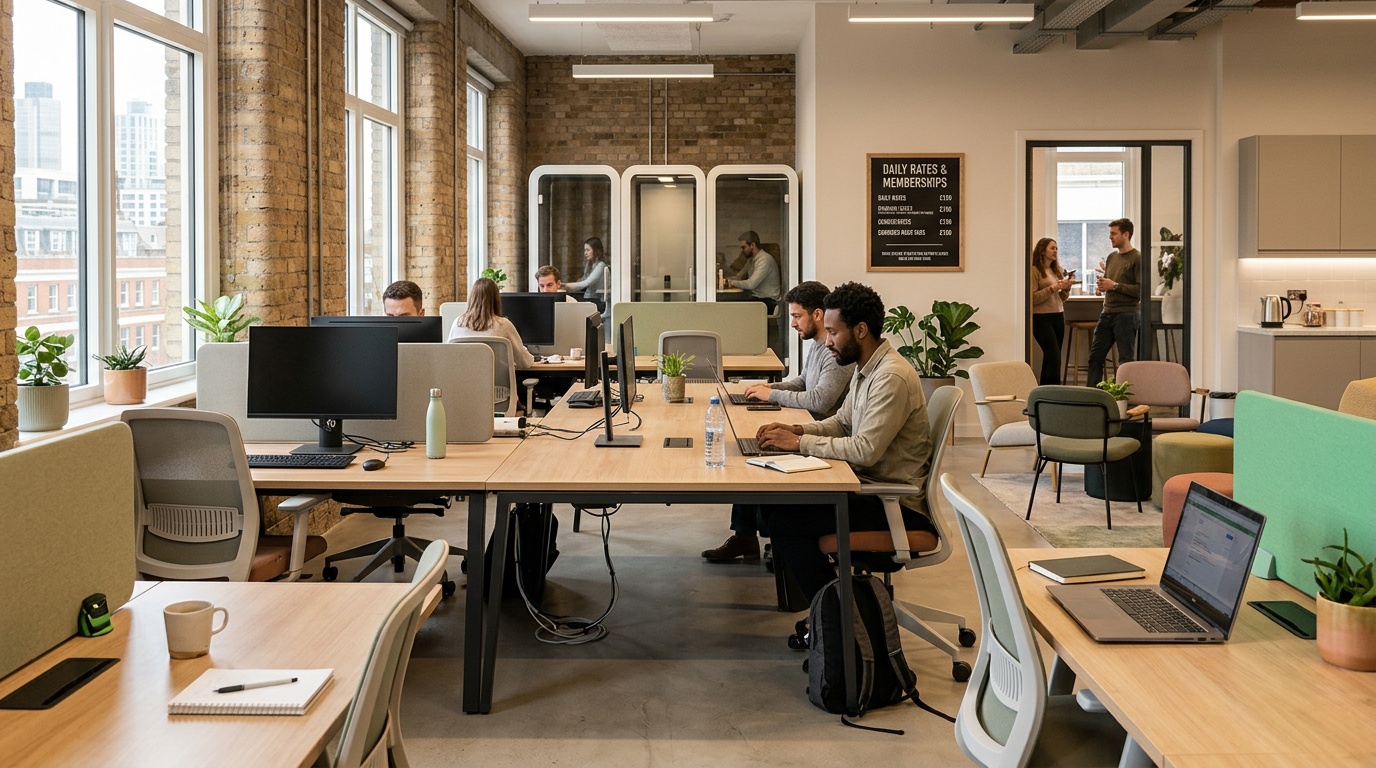
    A modern open-plan coworking space with shared desks demonstrating hot desking in practice

    Think of hot desking as yield management for real estate. Airlines don’t let seats fly empty; smart operators don’t let desks sit idle. By reducing the physical footprint required per employee, organizations free up capital that would otherwise be locked into square footage. Teams can scale up for a busy quarter and pull back without penalty. No long-term lease holding you hostage to headcount projections you made eighteen months ago.

    There’s a second-order benefit that often gets missed: cross-team collision. When people aren’t anchored to the same corner of the office every day, they end up sitting next to colleagues they’d otherwise never meet. I’ve seen this dynamic play out inside fast-scaling teams. The informal conversations that happen at a shared desk often move faster than a scheduled Zoom.

    Strategic Flexibility Analysis

    Pros

    • Reduced Real Estate Costs
    • Increased Cross-Team Collaboration
    • Scalability on Demand

    Cons

    • Lack of Personal Storage
    • Requires Change Management
    • Potential for Disorganization

    The honest criticism of hot desking isn’t wrong. It’s just incomplete. Yes, without structure, you get hygiene issues, desk hoarding, and a workforce that feels unmoored. These aren’t reasons to abandon the model. They’re a change management checklist.

    The teams that struggle with hot desking skip the infrastructure. They announce the policy, remove the nameplates, and expect culture to figure itself out. It won’t. You need booking software that shows real-time availability, physical storage solutions so people aren’t lugging laptops and notebooks daily, and clear sanitization protocols. Get those three right, and most of the friction disappears.

    Challenge Strategic Solution
    Lack of Personal Space Implement digital lockers for daily storage needs.
    Hygiene Concerns Enforce strict sanitization protocols and supply stations.
    Desk Availability Anxiety Use real-time booking apps to guarantee access.

    The Hotdesk Difference: Instant Booking, Global Access, No Membership Fees

    When I was traveling for audits across Cairo, Abu Dhabi, and Doha, finding a professional workspace on short notice was a genuine problem. Either you knew someone with an office, or you ended up in a hotel lobby. That friction. Multiplied across thousands of remote workers and distributed teams. Is exactly what Hotdesk was built to remove.

    Today, the platform gives freelancers and enterprise teams instant, membership-free access to 2,500+ workspaces across the UAE, Egypt, Spain, India, and beyond. Need a private office in Barcelona? Our YADO acquisition put that inventory on the same platform as a hot desk in Dubai. Book by the hour, the day, or the month. Whatever the project demands. Plug-and-play productivity, without the overhead of a permanent lease.

    Global Footprint

    From Dubai to Barcelona, Hotdesk consolidates inventory so hybrid professionals book once and work anywhere. No membership, no long-term commitment.

    Discover coworking opportunities at Kube Coworking Lisboa for flexible access across Europe.

    Implementing Hot Desking: A Founder’s Playbook for Getting It Right

    Founder reviewing workspace utilization data to implement a hot desking strategy

    Start with data, not assumptions. Audit your current occupancy. Most offices run at 60-70% capacity on a good day. That number tells you how aggressive you can be with your desk-to-employee ratio. A 70% occupancy rate typically supports a 0.7:1 ratio, but you want buffer. Start at 0.8:1, measure for a quarter, then adjust.

    Three non-negotiables for rollout: booking software that integrates with your access controls, a written policy on storage and cleanliness, and a feedback loop. Utilization rates tell you if the model is working operationally; employee feedback tells you if it’s working culturally. You need both signals.

    If you operate a workspace, this is also where the revenue opportunity sits. Unused desks are overhead. List them on Host.hotdesk.com and turn that idle square footage into a consistent revenue stream. The same way a hotel monetizes every room rather than leaving them dark.

    Operator’s Edge

    Monetize unused space with Host.hotdesk.com to turn overhead into revenue streams.

    Hot Desking Is Infrastructure, Not a Trend

    Work is becoming an activity, not a location. That shift isn’t coming. It’s already here, and the organizations still designing around permanent desks are building for a workforce model that no longer reflects how people actually operate. Hot desking isn’t a cost-cutting measure dressed up as innovation. It’s the structural response to a genuinely different relationship between people and place.

    From where I sit. Having built Hotdesk from evening sessions alongside a full-time role to a platform operating across multiple continents. The teams winning in this environment are the ones who stopped treating flexibility as a perk and started treating it as infrastructure. That’s the mindset shift. Everything else follows.

    Boost your hybrid strategy with workspace flexibility at Astrolabs in Dubai.

    Frequently Asked Questions

    What is the purpose of hot desking?

    Hot desking’s core purpose is to optimize real estate efficiency and reduce overhead for organizations. It transforms space from an underutilized asset into a service, aligning capital expenditure with actual workforce usage. This strategic approach allows businesses to scale teams with agility, supporting a dynamic, hybrid work future.

    What are the disadvantages of hot desking?

    While hot desking offers significant advantages, challenges include a lack of personal storage and the potential for disorganization if not managed well. There can also be hygiene concerns and anxiety around desk availability. Overcoming these requires clear policies, reliable booking software, and amenities that foster community.

    What is an example of hot desking?

    An example of hot desking is when employees arrive at an office and choose any available desk for the day, rather than having a permanently assigned seat. Our platform, Hotdesk, provides a real-world application, allowing users to book desks on demand in locations from Dubai to Barcelona. This ensures space is always utilized efficiently, adapting to a mobile workforce.

    Is hot desking still a thing?

    Absolutely, hot desking is not just “still a thing,” it is the operating system for the future of work. As businesses embrace hybrid models and a nomadic workforce, this approach provides the essential infrastructure for productivity. It allows enterprises to book, scale, and thrive without silos, making work an activity rather than a fixed location.

    How does hot desking benefit organizations financially?

    From a financial perspective, hot desking serves as a yield optimization tool for organizations. It significantly reduces real estate costs by decreasing the physical footprint required per employee, aligning capital expenditure with actual workforce usage. This model also allows operators to monetize unused space, transforming overhead into revenue streams.

    What technology is important for successful hot desking?

    Successful hot desking relies heavily on technology to ensure seamless execution. Reliable booking software is essential for employees to find and reserve desks efficiently, preventing chaos and desk availability anxiety. Additionally, digital lockers can address personal storage needs, and integration with existing access controls streamlines operations.

    How does hot desking support hybrid work?

    Hot desking is foundational for the hybrid work future, providing dynamic, infrastructure-level flexibility. It offers employees the autonomy to choose environments that suit their daily tasks, whether for focused work or collaboration. This model supports a global, borderless professional ecosystem, making work an activity rather than a fixed location.

    About the Author

    MK

    Mohamed Khaled

    Mohamed Khaled

    Forbes 30 Under 30

    Founder & CEO at Hotdesk & Co-founder, DESK Token

    Mohamed Khaled is the Founder and CEO of Hotdesk, the on-demand workspace platform providing access to coworking spaces and flexible offices across more than 120 countries.

    He spent nearly a decade at PwC before moving into financial leadership at SWVL, where he led the company’s $1.5 billion Nasdaq listing, the first Unicorn from thr Middle East to go public in the United States.

    A Forbes 30 Under 30 honoree, Mohamed built Hotdesk from a side project into a global platform, leading a team of more than 50 and expanding into international markets, including the acquisition of Spain-based coworking marketplace YADO.

    Also being Co-founder and President of DESK Token, the world’s first asset backed property investment and utility hybrid token, Mohammed is focused on building infrastructure that unlocks underutilized assets – from meeting rooms to private offices and full on buildings – while creating space for the future of work.

    Last reviewed: March 26, 2026 by the Hotdesk Team
  • Hotdesk: The Homegrown UAE Platform Providing Instant Access to Remote Workspaces

    Hotdesk: The Homegrown UAE Platform Providing Instant Access to Remote Workspaces

    Company Story

    Hotdesk is the homegrown UAE platform providing instant access to remote workspaces at your fingertips. Here’s the story of how we built it, why we built it, and where we’re headed next.

    Key Takeaways

    • Hotdesk was born from CEO Mohamed Khaled’s experience at PwC, where limited workspace options while travelling sparked the idea for an on-demand booking platform.
    • The platform grew from 15 bookings in its first month to 10,000+ monthly bookings in under 12 months across the UAE and Egypt.
    • Hotdesk supports the “3.0 work model” — a hybrid blend of office, home, and co-working — with no fixed commitments.
    • The platform is expanding into Saudi Arabia and the European market, led by a team of 50+ professionals from Google, Swvl, WeWork, and more.

    The Origin Story: From Big Four to Startup

    Before entering the startup world, our CEO Mohamed Khaled spent more than six years as a Senior Associate at one of the Big Four — PwC, Deloitte, EY, and KPMG — the world’s largest consulting firms, accounting for nearly 40 percent of the industry’s $150 billion global market.

    Mohamed spent most of his time travelling and working from various locations across the region, often in silos. He was limited to where he could work from when it wasn’t at a client’s office. Towards the end of his time at PwC, he began to rethink the ways of co-working, realizing that more flexible working options were needed for workforces of the future to adapt and thrive. That was the germinal idea behind Hotdesk.

    Hotdesk began simultaneous operations in 2020 in the UAE and Egypt. The UAE serves as the company’s headquarters, while Egypt acts as the base for operations and technology teams. Today, Mohamed leads a team of over 50 top-flight professionals who have joined Hotdesk from Google, Swvl, WeWork, and other leading companies.

    The 3.0 Work Model

    Hotdesk supports what we call the “3.0 work model” — where the new work order is a hybrid blend of working from the office, home, and now co-working spaces. The world evolved from Work 1.0 (everyone in the office) through Work 2.0 (everyone at home) to this current hybrid model, and Hotdesk provides the infrastructure to make it work seamlessly.

    Work Model Era How It Works
    Work 1.0 Pre-pandemic Everyone goes to the office, every day
    Work 2.0 Pandemic Everyone works from home
    Work 3.0 Now Hybrid blend of office, home, and co-working spaces

    Solving the Flexibility Problem

    Many startups, consultants, freelancers, and creatives looking to work in co-working spaces are restricted to fixed locations, often with large fees and long-term agreements, which lead to limited flexibility. That’s where Hotdesk comes in.

    Hotdesk empowers users to search for and book workspaces, meeting rooms, and private offices on an hourly, daily, monthly, or yearly basis — with no fixed commitment. The result: workspace access that adapts to you, not the other way around.

    The Old Way vs. The Hotdesk Way

    Traditional Coworking

    • Fixed locations with limited options
    • Large upfront fees
    • Long-term agreements and commitments
    • Limited flexibility to scale or move

    Hotdesk

    • On-demand access to workspaces globally
    • No fixed commitment
    • Book by the hour, day, month, or year
    • Scale up or down instantly

    Disrupting Enterprise Workspace

    Since the COVID-19 pandemic, many corporate houses have adopted more flexible working policies, driven by employee demand and the importance of enabling ease of working wherever staff happen to be based. Mohamed spotted an opportunity here — to offer flexible, company-vetted and approved spaces for businesses to provide their staff when they are travelling or prefer to work from somewhere other than the traditional office environment.

    This enterprise angle transformed Hotdesk from a consumer booking app into a platform that serves the world’s largest companies alongside individual freelancers and startups.

    Growth in Numbers

    From 15 bookings in our first month to over 10,000+ monthly bookings in less than 12 months — across the UAE and Egypt. That growth came from solving a genuine pain point at the right moment in the evolution of work.

    What’s Next: KSA and Europe

    Following a year of tremendous growth in the UAE and Egypt, Hotdesk is expanding into the Kingdom of Saudi Arabia (KSA). For years, the KSA has offered an abundance of opportunity, and Hotdesk now feels this is the time to lay down its marker and offer solutions to the ever-growing ecosystem of freelancers, startups, and small and medium enterprises (SMEs).

    Beyond the region, Hotdesk has its sights set on scaling from East to West — providing its unique product offering to the ever-demanding European market.

    Market Status Opportunity
    UAE Headquarters — fully operational Established base with 10,000+ monthly bookings
    Egypt Operations & tech base — fully operational Technology development and regional growth
    KSA Expanding Growing ecosystem of freelancers, startups, and SMEs
    Europe Planned High demand for flexible working solutions

    Press Coverage

    The Arabian Press: Read the feature  Khaleej Times: Read the feature

    Frequently Asked Questions

    What is Hotdesk and where was it founded?

    Hotdesk is a homegrown UAE platform that provides instant access to remote workspaces. It began simultaneous operations in 2020 in the UAE and Egypt, with the UAE serving as headquarters and Egypt as the base for operations and technology teams. The company was founded by Mohamed Khaled, who spent over six years as a Senior Associate at PwC before entering the startup world.

    What is the 3.0 work model that Hotdesk supports?

    The 3.0 work model is a hybrid blend of working from the office, home, and co-working spaces. It represents the evolution from Work 1.0 (everyone in the office) through Work 2.0 (everyone at home) to the current model where workers move fluidly between all three environments based on their needs.

    How does Hotdesk solve workspace flexibility challenges?

    Many professionals and businesses are restricted to fixed workspace locations with large fees and long-term agreements, limiting their flexibility. Hotdesk empowers users to search for and book workspaces, meeting rooms, and private offices on an hourly, daily, monthly, or yearly basis with no fixed commitment.

    How does Hotdesk serve enterprise clients?

    Since the pandemic, many corporate houses have adopted more flexible working policies. Hotdesk offers flexible, company-vetted and approved spaces for these businesses to provide their staff when they are travelling or prefer to work from somewhere other than the traditional office environment.

    Is Hotdesk expanding to Saudi Arabia?

    Yes, following tremendous growth in the UAE and Egypt, Hotdesk announced expansion into the Kingdom of Saudi Arabia (KSA) to serve its growing ecosystem of freelancers, startups, and SMEs. The company also has plans to scale into the European market.

    About the Author

    MK

    Mohamed Khaled

    Mohamed Khaled

    Forbes 30 Under 30

    Founder & CEO at Hotdesk & Co-founder, DESK Token

    Mohamed Khaled is the Founder and CEO of Hotdesk, the on-demand workspace platform providing access to coworking spaces and flexible offices across more than 120 countries.

    He spent nearly a decade at PwC before moving into financial leadership at SWVL, where he led the company’s $1.5 billion Nasdaq listing, the first Unicorn from the Middle East to go public in the United States.

    A Forbes 30 Under 30 honoree, Mohamed built Hotdesk from a side project into a global platform, leading a team of more than 50 and expanding into international markets, including the acquisition of Spain-based coworking marketplace YADO.

    Also being Co-founder and President of DESK Token, the world’s first asset backed property investment and utility hybrid token, Mohammed is focused on building infrastructure that unlocks underutilized assets – from meeting rooms to private offices and full on buildings – while creating space for the future of work.

    Last reviewed: April 7, 2025 by the Hotdesk Team
  • How Hotdesk Takes Co-Working to the Next Level

    How Hotdesk Takes Co-Working to the Next Level

    Company Story

    At STEP 2023, our CEO and Co-Founder Mohamed Khaled sat down to share the story behind Hotdesk — from the eureka moment that started it all, to how we grew from 15 bookings a month to over 10,000, and why we believe the workspace spectrum is the future of work.

    Key Takeaways

    • Hotdesk was inspired by a consulting career that gave Mohamed office access in 158 countries — the eureka moment behind building the “Airbnb of offices.”
    • The platform grew from 15 bookings/month at launch (September 2021) to 10,000+ bookings/month across 40 countries and 186 cities.
    • Hotdesk evolved from a consumer app to an enterprise platform after Fortune 500 companies came knocking with hybrid workforce challenges.
    • Hotdesk OS — a free tool for coworking operators — handles invoicing, accounting, data analytics, and calendars in one platform.
    • The workspace spectrum (office, home, co-working, metaverse) is the framework for the future of where people work.

    The Eureka Moment

    Mohamed started his career in consulting, a job that required traveling around the world. One late night, it hit him: he had office access in 158 countries worldwide with a single pass. That was the eureka moment behind the concept of Hotdesk.

    When Hotdesk started, it was primarily considered the “Airbnb of offices” — a simple aggregation play where coworking spaces from different brands around the world were connected in a single app. Users could book desks, meeting rooms, and offices anytime, anywhere.

    From 15 to 10,000 Bookings a Month

    Hotdesk launched in September 2021 and grew from 15 bookings a month to over 10,000 bookings a month across 40 countries and 186 cities. The growth came down to solving a genuine pain point at the right time.

    The world went from Work 1.0 — where everybody went to the office — to Work 2.0 — where everybody worked at home — to the current hybrid model. Hotdesk arrived at the exact moment when people and businesses needed a platform to navigate this shift.

    Metric At Launch (Sep 2021) Within One Year
    Monthly Bookings 15 10,000+
    Countries Starting in UAE 40
    Cities Dubai-focused 186

    The Enterprise Pivot

    Hotdesk started with a consumer angle — individuals and SMEs booking spaces on an app. But quickly, something unexpected happened. Fortune 500 companies started reaching out with a very different challenge.

    Their message was clear: “We have 200,000 people worldwide and every day they’re randomly split between home, office, and co-working. We have no idea where our people are and if our offices are actually being used. Which floors do we keep?”

    That demand pushed Hotdesk to adapt its technology to serve enterprise clients — a fundamental shift from consumer aggregation to enterprise workspace management.

    Hotdesk’s Evolution

    Phase 1: Consumer

    • “Airbnb of offices” aggregation model
    • Individuals and SMEs booking on an app
    • Desks, meeting rooms, offices on demand
    • Single-user booking experience

    Phase 2: Enterprise

    • Fortune 500 hybrid workforce management
    • Office utilization data and analytics
    • Multi-location, multi-country coordination
    • Hotdesk OS for coworking operators

    Hotdesk OS: Powering Coworking Operators

    As the platform evolved, Hotdesk built its flagship product: Hotdesk OS. It’s a one-stop-shop that coworking spaces can use for everything — invoicing, accounting, data analytics, calendars, and more. Hotdesk provides this tool for free to help operators better manage their spaces and enhance their unit economics alongside the aggregator platform.

    The offering expanded well beyond bookings. Hotdesk now aims to help coworking operators automate their entire space management.

    What Is Hotdesk OS?

    A free, all-in-one platform for coworking space operators. Handles invoicing, accounting, data analytics, calendars, and space management — designed to enhance unit economics and automate operations.

    The Workspace Spectrum

    Hotdesk believes in the workspace spectrum — a framework built on four distinct pillars: office, home, co-working, and the metaverse. All four will continue to be used at different intensity levels, depending on many factors: what industry you’re in, which company you work for, whether your job can be done remotely, how you feel on a specific day, the weather, the traffic, and more.

    The future isn’t about choosing one pillar over another — it’s about having the infrastructure to move between them seamlessly.

    Workspace Pillar Best For
    Office Team collaboration, company culture, structured meetings
    Home Deep focus, personal flexibility, zero commute
    Co-working On-demand professional space, networking, change of scenery
    Metaverse Virtual collaboration, global team interaction, emerging use cases

    The ESG Impact

    Every day, employees make a decision about where they work on the workspace spectrum — informed by the policy of their company. Every choice has a CO2 emission impact depending on travel distance to and from a location.

    In a simulation Hotdesk ran for a client, the results were staggering: if only 10% of their staff — 20,000 people — booked coworking spaces near their homes rather than commuting two hours to the office, they would save 40,000 hours a day. That translates to 7,500 years of commute time per year — for only 10% of the workforce.

    The decisions companies make on how they implement their hybrid work strategy — that Hotdesk enables — can save tons of CO2 emissions. But the goal isn’t to put everyone on the couch. It’s about giving people the right options, in the right places, at the right time.

    The ESG Math

    10% of staff (20,000 people) booking coworking near home instead of commuting → 40,000 hours saved per day → 7,500 years of commute time saved per year. Smart hybrid strategy = massive CO2 reduction.

    Press Coverage

    Tahawul Tech: Read the full interview

    Frequently Asked Questions

    How did Hotdesk start?

    Hotdesk was born from a eureka moment during CEO Mohamed Khaled’s consulting career, where he had office access in 158 countries worldwide with a single pass. That experience inspired the concept of an on-demand workspace booking platform — initially described as the “Airbnb of offices” — connecting coworking spaces around the world in a single app.

    How fast did Hotdesk grow?

    Hotdesk launched in September 2021 and grew from 15 bookings a month to over 10,000 bookings a month across 40 countries and 186 cities. The growth was driven by solving a real pain point at a time when the world was shifting from traditional office work to hybrid models.

    What is Hotdesk OS?

    Hotdesk OS is a flagship product — a one-stop-shop that coworking spaces can use for everything from invoicing and accounting to data analytics and calendars. Hotdesk provides this tool for free to help coworking operators better manage their spaces and enhance their unit economics alongside the aggregator platform.

    What is the workspace spectrum?

    The workspace spectrum is Hotdesk’s framework for understanding the future of work. It consists of four pillars: office, home, co-working, and the metaverse. All four will continue to be used at different intensity levels depending on factors like industry, company, job type, personal preference, and even the weather or traffic on a given day.

    How does Hotdesk contribute to ESG and sustainability goals?

    Hotdesk enables companies to reduce CO2 emissions through smarter hybrid work strategies. In a simulation for one client, if only 10% of their staff (20,000 people) booked coworking spaces near their homes instead of commuting two hours to the office, it would save 40,000 hours a day — translating to 7,500 years of commute time per year for just 10% of staff.

    About the Author

    MK

    Mohamed Khaled

    Mohamed Khaled

    Forbes 30 Under 30

    Founder & CEO at Hotdesk & Co-founder, DESK Token

    Mohamed Khaled is the Founder and CEO of Hotdesk, the on-demand workspace platform providing access to coworking spaces and flexible offices across more than 120 countries.

    He spent nearly a decade at PwC before moving into financial leadership at SWVL, where he led the company’s $1.5 billion Nasdaq listing, the first Unicorn from the Middle East to go public in the United States.

    A Forbes 30 Under 30 honoree, Mohamed built Hotdesk from a side project into a global platform, leading a team of more than 50 and expanding into international markets, including the acquisition of Spain-based coworking marketplace YADO.

    Also being Co-founder and President of DESK Token, the world’s first asset backed property investment and utility hybrid token, Mohammed is focused on building infrastructure that unlocks underutilized assets – from meeting rooms to private offices and full on buildings – while creating space for the future of work.

    Last reviewed: April 7, 2025 by the Hotdesk Team
  • Breaking Up with Cafes: How and Why I Shifted to Workspaces

    Breaking Up with Cafes: How and Why I Shifted to Workspaces

    Remote Work

    In a discussion with our Head of Brand, Ali Khattab, we remembered a time when we had to work from cafes.. and that wasn’t easy! In this article we discover together why the shift from cafe to coworking space happened and when.

    Key Takeaways

    • Cafes present real productivity challenges: distractions, unreliable Wi-Fi, no privacy, and zero control over your environment.
    • Coworking spaces solve these problems with dedicated amenities like high-speed internet, meeting rooms, and professional atmospheres.
    • With the rise of hybrid work, coworking spaces are now widely available — the Hotdesk app makes finding and booking one effortless.
    • Cafes have charm, but when deep work is the goal, a purpose-built workspace wins every time.
    Mohamed Khaled, co-founder and CEO of Hotdesk
    Mohamed Khaled, co-founder and CEO UAE-born Hotdesk, a co-working platform that was launched in 2019. Source: Hotdesk

    For a while, I hopped on the cafe working bandwagon, seeking that trendy and energizing experience of typing away on my laptop while savoring a delicious latte. But in the past few years, even before joining Hotesk, I made a bold move and decided to break up with cafes as my go-to workspaces. Why? Well, there were a few reasons that made me realize cafes weren’t the productivity powerhouses I thought they were.

    Bye-bye Distractions?

    Let’s face it, cafes are far from quiet and serene. Non-stop chatter, clinking cups, and background tunes, while adding charm, became disruptive to my concentration and hindered tackling complex tasks. With constant interruptions, deadlines became a wild ride and deep work felt like a distant dream.

    No Control over My Workspace

    Once you’ve chosen your next working location, you’ll transition onto the booking page, which provides a clear visual of the space you’ve chosen along with relevant information about the operating hours of the location, the amenities included and the price. When you’re ready, click the preferred date and time to proceed with your booking. Do you have a Zoom call in 30 minutes but need a space to take it from? No problem, you can book a desk for an hour within 30 minutes of the current time. Want to pull an all-nighter before your exam, no problem. Book a space at WeWork, which is open 24 hours a day. If you’d rather filter availability by price, then that’s also an option.

    Cafes meant giving up control over my work environment. You never knew if you’d find a comfy seat, an available power outlet, or a reliable internet connection. Depending on the cafe’s infrastructure became a gamble, leading to countless frustrating experiences.

    Privacy Please!

    Privacy in cafes? Good luck! These bustling spaces offer little in terms of confidentiality. Overhearing nearby conversations, unintentional glimpses at my confidential documents, or even personal phone calls felt like a breach of trust.

    Working remotely from a cafe environment

    Wi-Fi Chase

    Stable internet connectivity is the backbone of remote work, but cafes’ Wi-Fi networks played a risky game. While some cafes nailed it with fast and reliable connections, others left me in a digital black hole during peak hours. Needless to say, it took a toll on my phone battery and data package!

    Suitable Coworking Spaces are Everywhere

    With the rise of hybrid and remote work, I can find at least six coworking spaces around my area, and the Hotdesk app is proof enough!

    Coworking spaces often provide a range of amenities such as high-speed internet, meeting rooms, printing facilities, coffee, and social areas. These services create a more comfortable and productive work environment than any cafe.

    Professional coworking space environment
    Factor Cafe Coworking Space
    Distractions Non-stop chatter, clinking cups, background music Purpose-built for focused work with quiet zones
    Wi-Fi Inconsistent, often unreliable at peak hours High-speed, dedicated, reliable connection
    Privacy Little to none — open, public environment Meeting rooms, phone booths, private offices
    Workspace Control No guaranteed seat, power outlet, or setup Bookable desks, ergonomic chairs, monitors
    Amenities Coffee and maybe a power strip Printing, mail handling, kitchen, social areas

    Don’t get me wrong! Cafes have their charm. But when it comes to optimizing productivity and maintaining a focused work routine, it’s important to acknowledge the practical challenges they present. In my personal journey, all the factors pushed me to seek alternatives like co-working spaces that foster a focused atmosphere. It’s all about finding the right balance that suits your work style, maximizes productivity, and lets you dive deep into your tasks.

    Modern coworking space designed for productivity

    If you came this far and are still looking for the best place to work, then you haven’t downloaded Hotdesk yet!

    Ready to Do Your Best Work?

    📲 Download the Hotdesk App to discover, book, and work from the best coworking spaces.

    Frequently Asked Questions

    Why is working from a cafe not ideal for productivity?

    Cafes present several challenges for productivity including constant distractions from chatter, clinking cups, and background music; no control over your workspace such as seating, power outlets, or internet; lack of privacy for confidential work and phone calls; and unreliable Wi-Fi that can vary dramatically during peak hours.

    What are the advantages of coworking spaces over cafes?

    Coworking spaces offer a range of dedicated amenities such as high-speed internet, meeting rooms, printing facilities, coffee, and social areas. These services create a more comfortable and productive work environment than any cafe, with reliable infrastructure you can count on every visit.

    Is cafe Wi-Fi reliable enough for remote work?

    Cafe Wi-Fi networks can be inconsistent. While some cafes offer fast and reliable connections, others can leave you in a digital black hole during peak hours. This inconsistency makes cafes a risky choice for work that depends on stable internet connectivity.

    How do I find a coworking space near me?

    With the rise of hybrid and remote work, coworking spaces are widely available. The Hotdesk app helps you find at least several coworking spaces in your area, allowing you to book desks, meeting rooms, or private offices on demand for the time you need.

    Can you still work from a cafe sometimes?

    Cafes have their charm and can work for casual tasks. However, when it comes to optimizing productivity and maintaining a focused work routine, it’s important to acknowledge the practical challenges they present. Finding the right balance that suits your work style and maximizes productivity is key.

    About the Author

    MK

    Mohamed Khaled

    Mohamed Khaled

    Forbes 30 Under 30

    Founder & CEO at Hotdesk & Co-founder, DESK Token

    Mohamed Khaled is the Founder and CEO of Hotdesk, the on-demand workspace platform providing access to coworking spaces and flexible offices across more than 120 countries.

    He spent nearly a decade at PwC before moving into financial leadership at SWVL, where he led the company’s $1.5 billion Nasdaq listing, the first Unicorn from the Middle East to go public in the United States.

    A Forbes 30 Under 30 honoree, Mohamed built Hotdesk from a side project into a global platform, leading a team of more than 50 and expanding into international markets, including the acquisition of Spain-based coworking marketplace YADO.

    Also being Co-founder and President of DESK Token, the world’s first asset backed property investment and utility hybrid token, Mohammed is focused on building infrastructure that unlocks underutilized assets – from meeting rooms to private offices and full on buildings – while creating space for the future of work.

    Last reviewed: September 1, 2025 by the Hotdesk Team