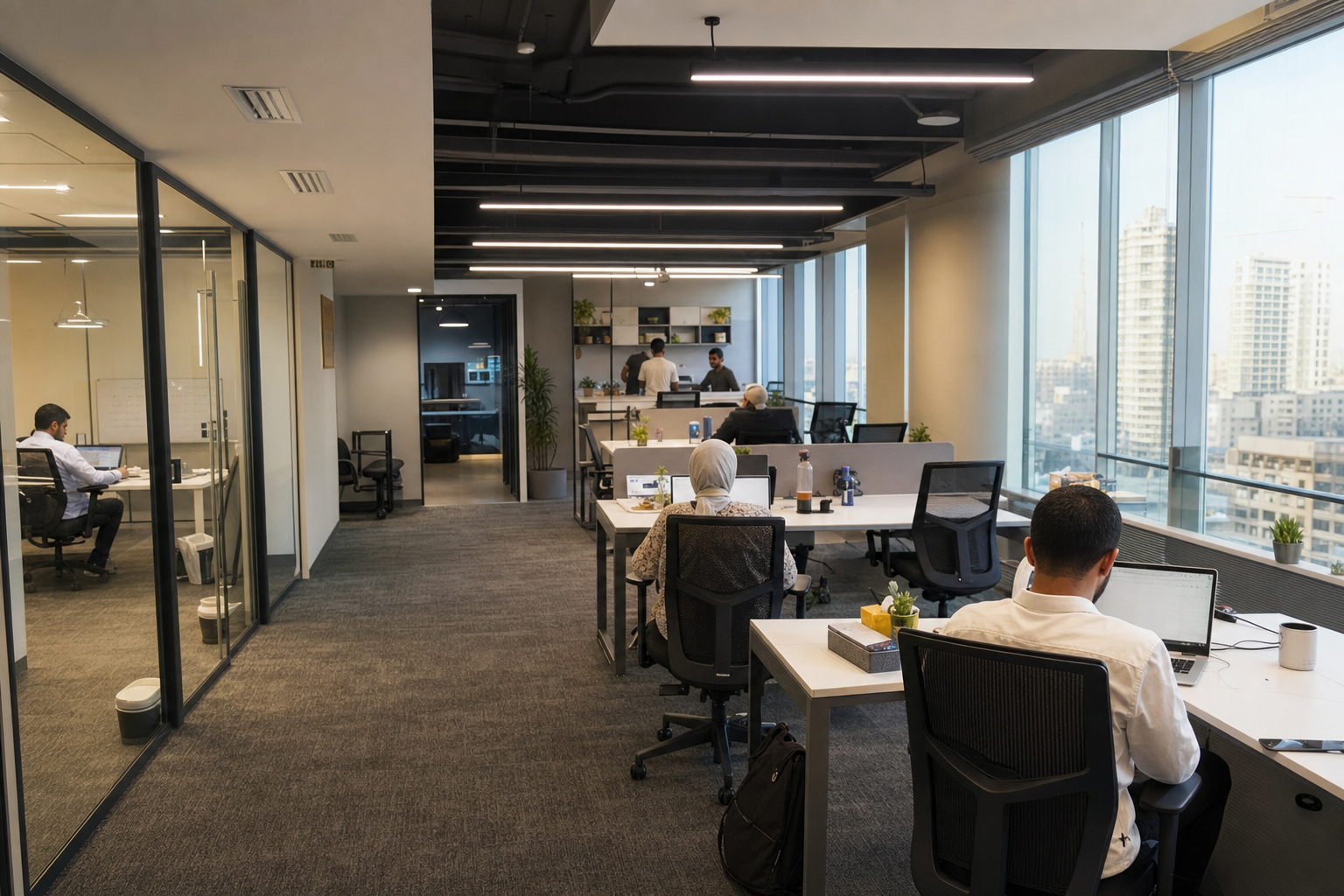
coworking space in Mansoura vs serviced offices in Mansoura
Every distributed system asks you to manage new failure modes. A workspace does the same through noise, unreliable internet, limited privacy, unclear pricing, and the cost of moving when your needs change. The practical choice is the setup that keeps your work moving without adding daily operational friction.
Key Takeaways
- Every distributed system asks you to manage new failure modes.
- A workspace does the same through noise, unreliable internet, limited privacy, unclear pricing, and the cost of moving when your needs change.
- The practical choice is the setup that keeps your work moving without adding daily operational friction.
For individual users seeking flexible access, coworking can be a suitable option, while a serviced office can suit teams that need privacy and a stable room. Compare access hours, connectivity, meeting rooms, power backup, reception services, and contract flexibility before you decide. Infrastructure travels with the user; your workspace should not force a full reset each time your work pattern changes.
What is the difference between coworking and a serviced office in Mansoura?
Coworking is a shared workplace built around flexible access. You might reserve a hot desk for a day, use a dedicated desk for a month, or work from a communal lounge with Wi-Fi, electricity, printing, and shared meeting rooms. It suits freelancers, remote employees, consultants, and early-stage founders who need a professional setting without a long commercial lease.
A serviced office is a private, furnished room managed by a workspace operator. The monthly fee may include furniture, utilities, internet, reception support, cleaning, security, and conference-room access. This arrangement gives a small team more control over sound, screens, documents, and client conversations, while a shared workspace usually offers a lower entry commitment.
For a local comparison, review Novita Workspace in Mansoura alongside other listings. Compare access, facilities, privacy, and contract terms rather than the advertised price alone.
Key insight: Choose coworking for adaptable individual access and community. Choose a serviced office for privacy, team coordination, and a stable physical base.
Which workspace model fits your work pattern?

The main benefit of coworking is financial flexibility. Day passes let you test noise levels, desk comfort, upload performance, air conditioning, and outlet availability before choosing a longer plan. They also reduce the cost of changing your routine when your schedule shifts.
A serviced office provides controlled access to a private room. A team can coordinate schedules, leave equipment in place, receive visitors, and discuss sensitive information without relying on a shared table. The trade-off is a higher recurring commitment and less room to reduce capacity if the team becomes smaller.
Both models may include operational services, but they aren’t always included in the headline price. Check internet, meeting-room credits, mail handling, printing, cleaning, access control, backup power, and outage support before comparing plans.
Solo workers often need flexible access and a quiet place for calls or focused work. Teams may gain more from a private room. A mixed routine can also work: use a shared desk for individual tasks and reserve a meeting room for client discussions or planning sessions.
A local option such as Index Co Working Space Mansoura Branch can be assessed with the same checklist: desk type, access hours, meeting facilities, connectivity, privacy, and booking terms.
How should you choose between the two options?
Start with your operating pattern, not the furniture in the photos. If you work alone and need occasional access, begin with a day pass or monthly desk. If a team needs privacy, shared storage, regular meetings, and one consistent room, assess a serviced office.
Set a monthly ceiling before visiting a location. Compare current prices and confirm taxes, access hours, meeting-room fees, printing, deposits, and cancellation terms in writing.
Match the workspace to your work pattern
Freelancers and remote employees should test the environment during their actual working hours. Visit when calls, concentrated writing, or coding will take place. Listen for nearby conversations, check for a quiet room, and test Wi-Fi stability, upload performance, desk depth, outlet placement, air conditioning, elevator access, and natural light.
Small teams should inspect the private office itself. Confirm usable workstations, door access, visitor policy, meeting-room availability, lockable storage, reception handling, cleaning schedules, and procedures for power or connectivity interruptions. Ask whether the office can add desks without a new deposit and contract.
Verify services, contract terms, and access
Build a checklist of included services and request the terms in writing. Verify conference-room credits, mail handling, printing allowances, kitchen access, security controls, guest entry, phone booths, and after-hours availability. Ask how much notice is required to pause, cancel, or change your plan.
Use a trial before a long commitment
A trial day provides evidence that online listings cannot. Test a video call, upload a working file, print a document, locate the nearest restroom, and check mobile signal inside the workspace. Speak with the onsite team about outage communication and support ownership. Review the current profile and offer terms before relying on promotional information.
A workspace such as Teamyea can also be compared with other local choices by reviewing Teamyea workspace details, including access conditions, facilities, and available booking formats.
References
-
coworking research reference.
Frequently Asked Questions
What is the difference between a coworking space and a serviced office?
A coworking space provides shared access to desks, lounges, meeting rooms, internet, and workplace amenities. A serviced office is a furnished, private room operated as part of a managed workplace. The main distinction is control: coworking prioritizes flexible access, while a serviced office prioritizes privacy, continuity, and dedicated team space.
Which option is cheaper in Mansoura?
For occasional individual use, coworking may be the lower-cost option because you can pay by the day or choose a shared monthly plan. Prices vary by provider and plan. Confirm access hours, taxes, deposits, meeting-room charges, printing, and cancellation terms before making a decision.
Is coworking or a serviced office better for freelancers?
Coworking may suit freelancers who need flexible access and lower fixed commitments. If your work involves confidential documents, frequent client calls, or extended concentration, a private office or bookable meeting room may be worth the additional cost.
Which option is best for a small team?
A serviced office can be a practical fit for a team that works together regularly. Before signing, measure the usable floor area, check visitor handling and conference-room access, and review internet support, cleaning, security, and the notice period for changing capacity.
Can I get a private office in a coworking space in Mansoura?
Yes, some coworking operators provide private offices alongside hot desks and dedicated desks. Availability, furnishing, access control, and contract length differ by location, so ask for current details before booking.
How can I assess quality before committing?
Use a trial visit as an operational test. Join a video call, upload a file, inspect desk stability, locate power outlets, and ask how outages are reported. Review the written membership terms for billing dates, pause rules, guest access, storage, and support response. Check current booking availability directly with the provider, but do not let speed replace inspection.
Mohammad El Shaari
CTO at Hotdesk
Mohammad El Shaari is the CTO of Hotdesk, where he works with the engineering team on a SaaS platform for workspace bookings. He has experience in enterprise software, AI, cloud infrastructure, and cybersecurity.
Before Hotdesk, he served as CTO of Vee Tech, where he led technical delivery for enterprise clients and contributed to innovation work at Capital International Schools.
At Hotdesk, Mohammad focuses on systems for availability, user distribution, and transactions. He writes about SaaS platforms, backend architecture, mobile engineering, and technical decisions behind building and operating products.
Leave a Reply