
offices
Choosing an office is an operational decision, not only a real-estate decision. Compare the total cost, connectivity, access rules, privacy, contract terms, and room capacity before you commit. A lower monthly rate can exclude services your team relies on every day.
Key Takeaways
- Choosing an office is an operational decision, not only a real-estate decision.
- Compare the total cost, connectivity, access rules, privacy, contract terms, and room capacity before you commit.
- A lower monthly rate can exclude services your team relies on every day.
What are offices?
Offices are workspaces designed for individual work, team collaboration, client meetings, or private conversations. Available formats include private offices, serviced suites, coworking areas, meeting rooms, shared desks, and conventional leased premises. A suitable Dubai office space should match your privacy, location, capacity, and contract requirements.
A serviced workspace typically bundles some combination of furniture, reception, internet, utilities, meeting rooms, cleaning, and managed access. These inclusions reduce setup work, but they vary by listing. For teams seeking a professional setting, The Executive Centre Dubai is one option to assess against the same criteria.
Start with the work rather than the room. A freelancer may need a desk for a day, while a distributed team may need private rooms, secure entry, video conferencing, and flexible booking.
What are the benefits of offices?
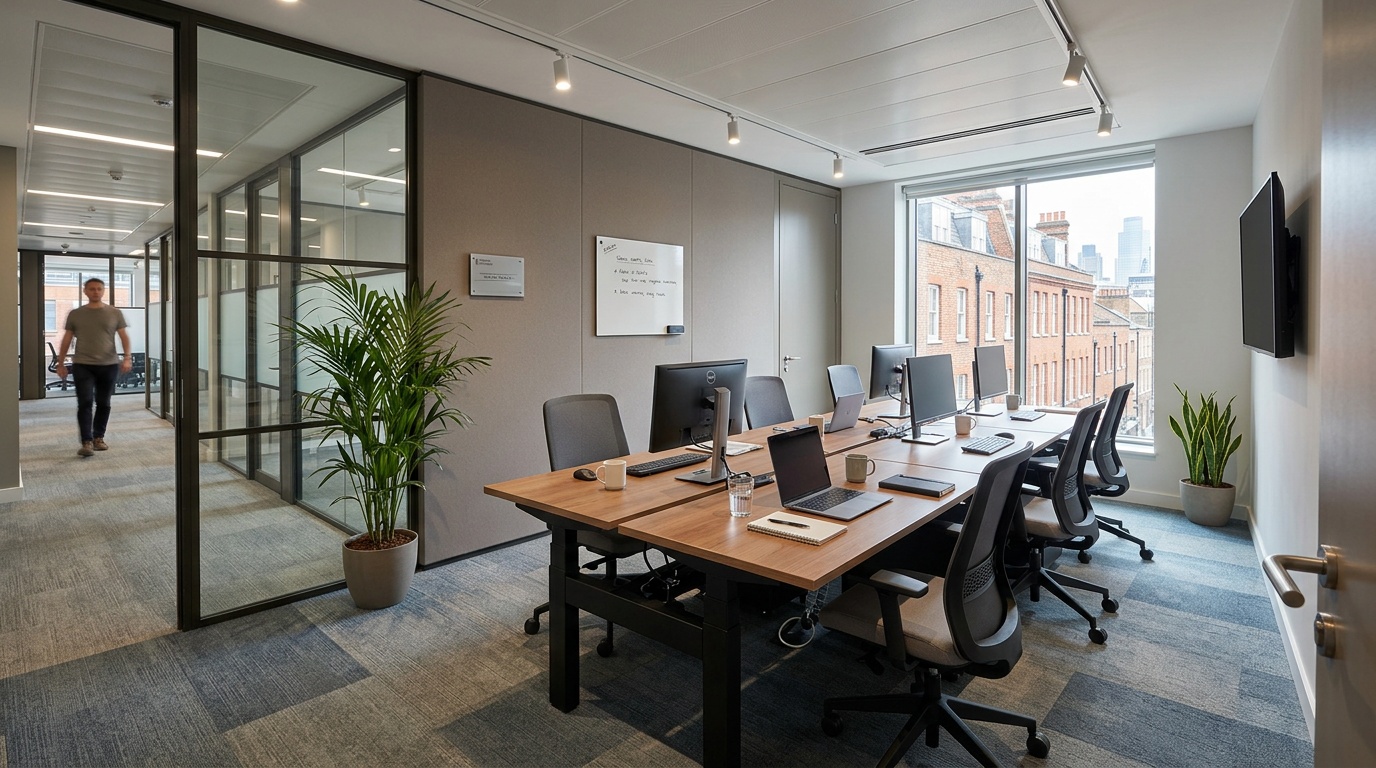
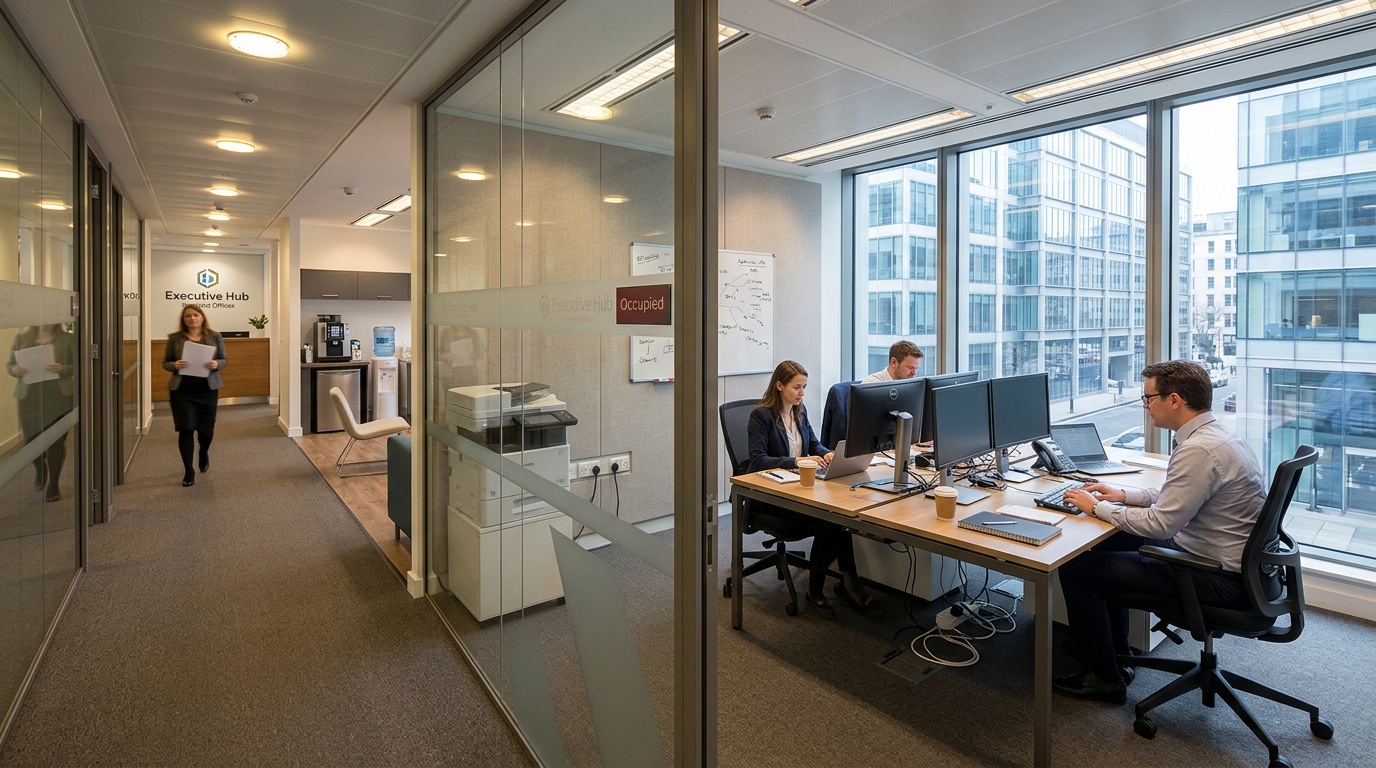
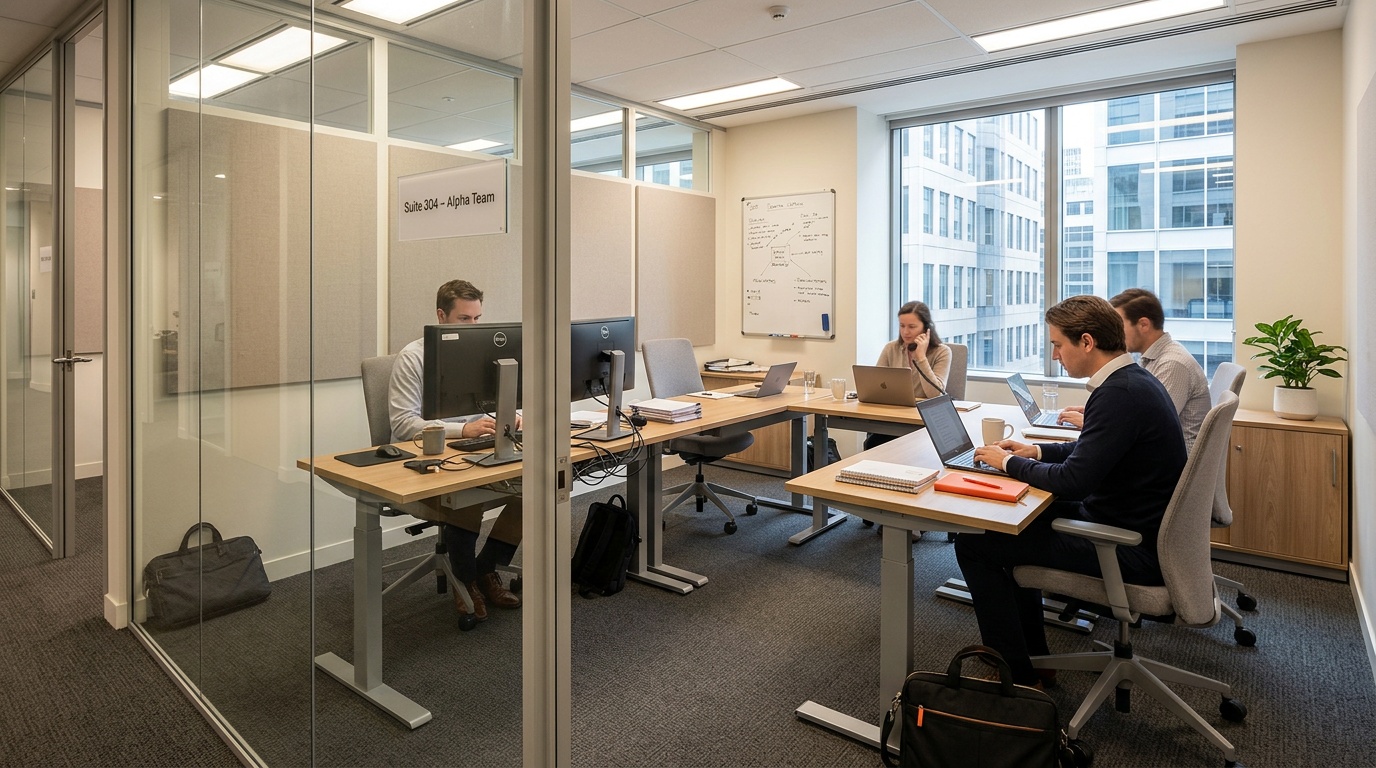

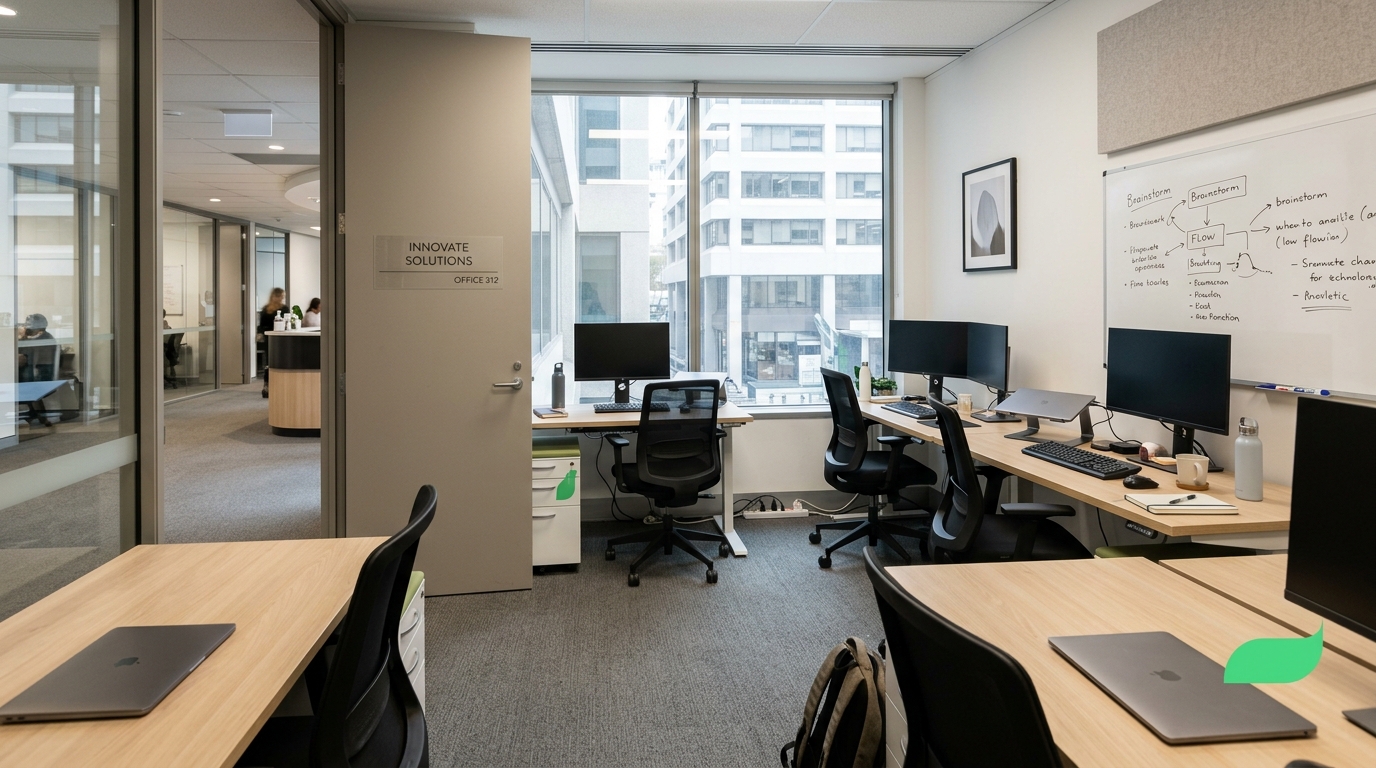
An office can give a team a ready-to-use base with desks, meeting rooms, internet, reception, access control, and space for confidential conversations. That reduces the work required to source furniture, arrange utilities, and coordinate several workplace vendors.
Flexible terms can fit project teams, market entry, satellite offices, and temporary relocation. Before comparing spaces near you, request the complete price in writing. Confirm whether it includes furniture, internet, electricity, cleaning, reception, mail handling, meeting-room credits, deposits, and taxes.
How do you choose an office?
Choose an office by converting your team’s work into measurable requirements. Set the headcount, private-room needs, visitor frequency, meeting capacity, storage, equipment, access hours, and expected growth before comparing design or location. This prevents a good-looking space from creating daily constraints.
- Calculate the full occupancy cost. Request a written schedule covering base rent, service charges, utilities, internet, cleaning, reception, maintenance, parking, access cards, deposits, taxes, fit-out work, and meeting-room fees.
- Inspect the working conditions. Record usable area, seat count, private rooms, meeting capacity, noise levels, furniture condition, connectivity, parking, and building access.
- Compare operational trade-offs. A cheaper space may require more setup, maintenance coordination, or vendor management.
- Check flexibility. Confirm booking rules, notice periods, renewal terms, expansion options, and what happens if your team needs fewer seats.
Ask which option leaves fewer operational tasks for the people doing the work. If you are comparing an office in Dubai with another location, assess commute patterns, client access, and working hours alongside the advertised price. In Barcelona, Crec Eixample Gran Via is another option to compare for location and contract flexibility.
Review building access alongside ventilation, lighting, furniture, and other workplace-health factors. A workspace should support the team’s routine without requiring constant reconfiguration.
References
- https://www.osha.gov/etools/computer-workstations
- https://www.hse.gov.uk/workplace-health/
Frequently Asked Questions
How do I find an office for rent in Dubai?
Define your location, team size, privacy level, access hours, meeting capacity, and lease duration. Then compare usable area, included services, and total monthly cost.
What should I check before signing?
Verify the authorized contracting party, permitted business activity, usable floor area, renewal terms, notice period, deposit conditions, maintenance responsibility, and building regulations.
Mohammad El Shaari
CTO at Hotdesk
Mohammad El Shaari is the CTO of Hotdesk, where he leads the engineering team building and scaling a global SaaS platform for on-demand workspace bookings across 80+ countries. A Computer Science graduate from The British University in Egypt, he brings over a decade of hands-on experience in enterprise software, AI, cloud infrastructure, and cybersecurity.
Before Hotdesk, he served as CTO of Vee Tech, where he led technical delivery for 12+ enterprise clients generating $30M+ in annual revenue, and helped build Egypt’s first innovation lab at Capital International Schools.
At Hotdesk, Mohammad focuses on building scalable systems that handle real-time availability, global user distribution, and high-throughput transactions. He specializes in scalable system design, cloud-native infrastructure, and building high-performance SaaS platforms that support global user bases.
He writes about scaling SaaS platforms, backend architecture, mobile engineering, and real-world technical decisions behind building and operating global products.
Leave a Reply