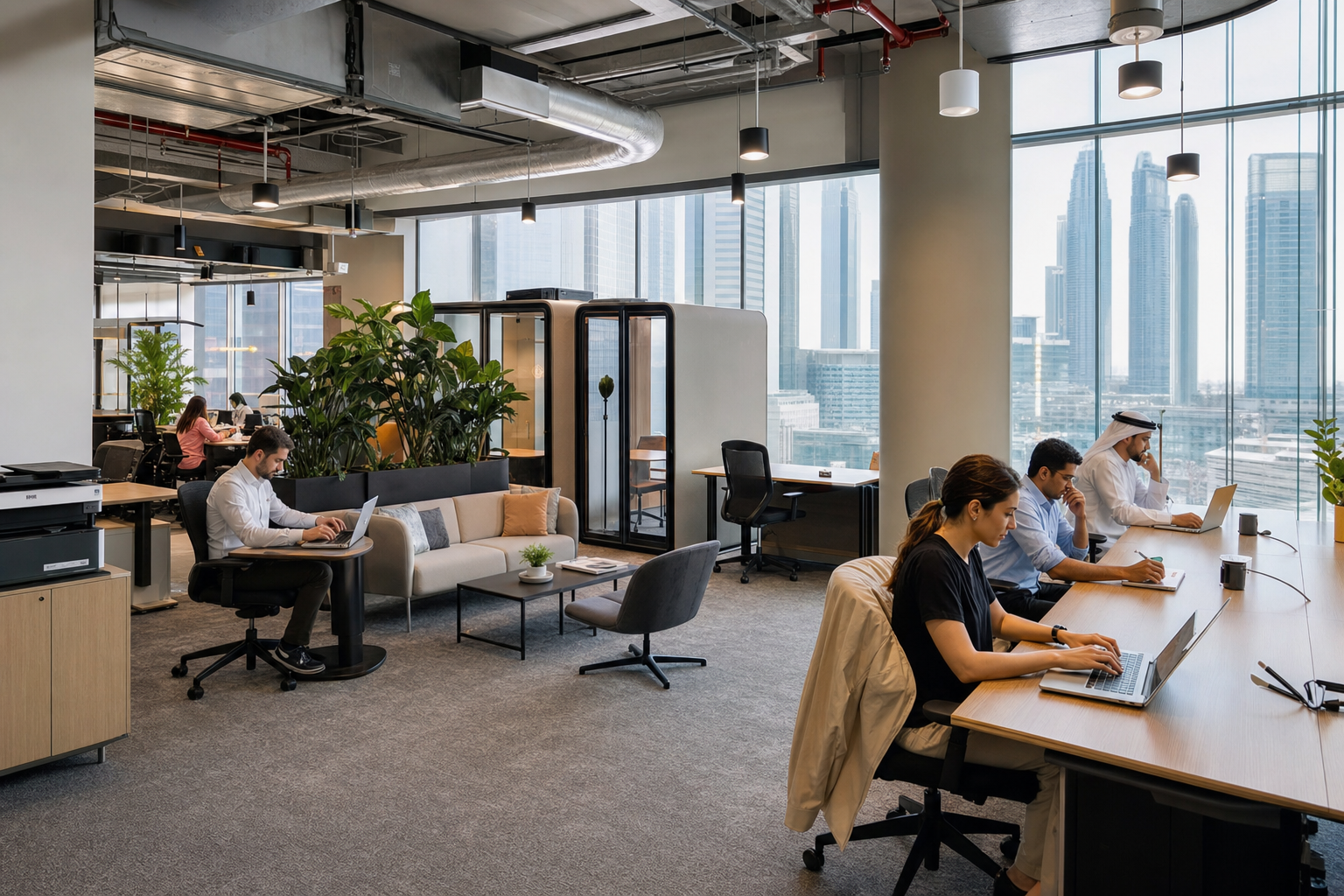
What do Dubai business setup consultants recommend for flexible office space?
Every distributed system asks you to manage new failure modes. When establishing a business in a dynamic market like Dubai, understanding the physical infrastructure requirements is paramount. It’s not just about finding a desk; it’s about ensuring your operational setup is compliant, cost-effective, and scalable. This is where the guidance of experienced business setup consultants becomes invaluable, particularly for securing appropriate office space. What do Dubai business setup consultants recommend for flexible office space? They prioritize compliance, cost management, and strategic agility over traditional, rigid real estate commitments.
Key Takeaways
- Consultants recommend flexible space because it eliminates the need to rework your operational setup when regulations shift.
- Compliance with Dubai’s business laws becomes easier to maintain with short-term, adaptable lease terms.
- Cost management improves when you avoid long-term commitments that lock in overhead and limit your ability to adjust.
- Strategic agility means your office can scale without the friction of renegotiating traditional real estate contracts.
The foundational advice from these experts centers on meeting regulatory necessities while optimizing financial outlay. They understand that for many businesses, especially startups and expanding enterprises, flexibility is not a luxury but a prerequisite for survival and growth. This perspective shapes their recommendations, steering clients toward solutions that provide necessary infrastructure without entangling them in long-term liabilities.
What Dubai Business Setup Consultants Actually Recommend
When a business seeks advice on establishing operations in Dubai, consultants provide a clear roadmap, starting with the absolute essentials. Their recommendations are grounded in operational realities and regulatory frameworks. For any company looking to set up, the primary focus from a consultant’s viewpoint is ensuring the business has a legally recognized presence that satisfies government requirements.
This often begins with understanding the nuances of Ejari registration, which is the official registration of a tenancy contract with the Real Estate Regulatory Agency (RERA). A valid Ejari is mandatory for trade license renewal and other government services. Consultants ensure that whatever office solution is chosen, it can provide the necessary documentation for this registration. Similarly, trade license compliance is non-negotiable; the address associated with the trade license must be a verifiable physical location, not just a P.O. Box.
The Non-Negotiables: Ejari and Trade License Compliance
The bedrock of any Dubai business setup involves adhering to specific governmental mandates regarding physical office space. For companies operating under the Department of Economic Development (DED) in mainland Dubai, securing a physical office is a prerequisite, and this space must be registered via Ejari. This registration is a critical step that consultants meticulously guide clients through, ensuring it aligns with trade license requirements. Without this, essential services and license renewals can be significantly delayed.
Consultants emphasize that the address listed on your trade license must correspond to a legitimate physical workspace. This is not merely a formality; it is a verification mechanism for authorities. Flexible office solutions, such as serviced offices or co-working spaces that offer dedicated desks or private offices, can fulfill this requirement. For example, a business might opt for a dedicated office within a managed facility, which provides the necessary tenancy contract for Ejari registration and a verifiable address for their trade license. This ensures operational legitimacy from day one.
Key Insight
Ejari registration and a valid trade license address are fundamental for business operations in Dubai. Consultants prioritize solutions that provide verifiable physical space for these compliance needs.
Why Cost-Control Drives the Shift to Flexible Office Space
Beyond compliance, a primary driver for consultants recommending flexible office space is cost-effectiveness, especially for early-stage businesses or those entering a new market. Traditional office leases in Dubai often come with substantial upfront costs: long-term commitments, large security deposits, and the expense of furnishing and maintaining the space. These financial burdens can strain a company’s capital, particularly when market entry is still being tested.
Flexible office solutions, on the other hand, allow businesses to pay for the space they use, when they use it. This pay-as-you-go model minimizes initial capital expenditure. Instead of a large security deposit for a multi-year lease, clients typically pay a monthly fee or even a daily rate. This agility allows businesses to allocate funds more strategically towards core operations, marketing, and product development, rather than being locked into fixed real estate overheads. For example, a startup might begin with a few hot desks or a small private office, scaling up their space as their team and revenue grow, as facilitated by providers like Am Office Space.
Financial Agility
Flexible office arrangements offer a predictable, operational expense model, contrasting sharply with the significant capital expenditure and long-term liabilities of traditional leases. This approach is highly favored by consultants for managing startup budgets and ensuring financial flexibility.
- Compliance First: Ensure any chosen space provides documentation for Ejari registration and a valid trade license address.
- Operational Efficiency: Select spaces that support your current team size and workflow without requiring immediate long-term commitments.
- Cost Management: Prioritize solutions with transparent pricing and minimal upfront investment to preserve working capital.
- Scalability: Look for providers that allow you to easily adjust your space requirements as your business evolves.
Mainland vs. Free Zone Physical Space Requirements
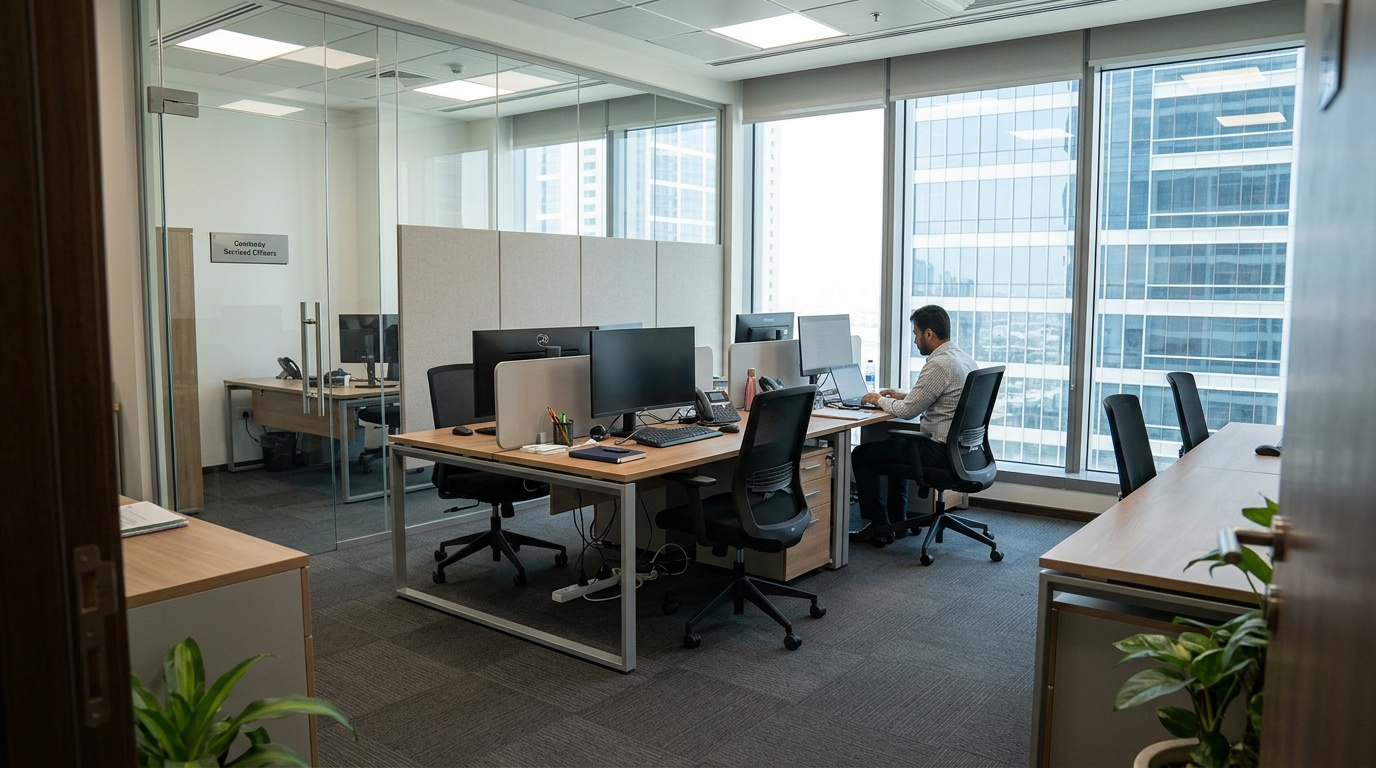
Navigating Dubai’s business environment requires understanding the distinct legal and operational frameworks governing mainland and free zone jurisdictions. These differences significantly impact the type of physical office space a business needs and is permitted to occupy. Consultants meticulously analyze a client’s business activity and strategic goals to determine the optimal jurisdiction, which in turn dictates workspace requirements.
For businesses aiming for broad market access within the UAE, the mainland jurisdiction, overseen by the Department of Economic Development (DED), offers the most direct path. But, this jurisdiction imposes specific rules concerning physical office presence. Mainland companies generally cannot operate solely on virtual offices or flexi-desks for their primary business address; a dedicated physical office space is typically mandatory for trade license issuance and renewal. This requirement ensures a tangible operational base within the emirate.
DED Mainland Rules: The Mandatory Physical Office
Establishing a business on the Dubai mainland under the DED typically necessitates a physical office space that meets specific regulatory criteria. This isn’t just about having a mailing address; it’s about establishing a legitimate operational hub. The DED requires a verifiable physical office location for the issuance and renewal of trade licenses. This space must be registered through Ejari, providing official tenancy documentation to the authorities.
The size and type of office required can vary based on the business activity and the number of visas sponsored. While some DED-approved business centers offer dedicated desks or small private offices that satisfy these mandates, consultants often advise clients that a more substantial physical presence might be needed for certain activities. This requirement ensures that businesses have a concrete base for their operations, employee management, and client meetings within Dubai, contributing to the local economy and regulatory oversight.
Free Zone Allowances: Flexi-Desks and Hot Desks
In contrast to the mainland, Dubai’s free zones offer greater flexibility regarding office space requirements, catering particularly to international businesses or those focused on specific sectors. Many free zones allow companies to operate with much less physical infrastructure. This often includes the option to use flexi-desks or hot desks within shared co-working environments as their official business address.
These arrangements are typically sufficient for obtaining a free zone trade license and visa allocations. Consultants often recommend free zones for startups or companies that prioritize lean operations and global connectivity, as they bypass the stringent physical office mandates of the mainland. Providers offering managed workspaces, like Am Office Space, are well-equipped to support businesses in free zones by providing compliant office solutions that align with these flexible requirements. This allows businesses to establish a presence without the significant overhead of traditional office leases.
| Feature | DED Mainland Office Requirements | Free Zone Office Requirements |
|---|---|---|
| Primary Requirement | Mandatory physical office for trade license. Requires Ejari registration. | Flexible; often allows flexi-desks, hot desks, or shared offices. |
| Ejari Registration | Typically required for the physical office location. | May not be required for basic flexi-desk/hot desk arrangements, depending on the free zone. |
| Address for Trade License | Must be a verifiable physical office address. | Can be a registered address within the free zone, often a flexi-desk or managed office. |
| Cost Structure | Generally higher upfront costs for leases, security deposits, and setup. | Lower entry costs; pay-as-you-go models common for shared spaces. |
| Scalability | Less flexible; requires lease renegotiation or relocation for significant changes. | Highly scalable; easy to adjust desk space or office size as needed. |
| Market Access | Direct access to the UAE market. | Often restricted to international trade or specific sectors; requires local partner for full UAE market access. |
The Financial Mechanics of On-Demand Space vs. Traditional Leases
When assessing business setup options in Dubai, the financial implications of workspace choices are as critical as regulatory compliance. Consultants often guide clients through a detailed cost-benefit analysis, contrasting the substantial upfront capital expenditure and long-term liabilities of traditional real estate with the operational expenditure model of on-demand or flexible office solutions. This financial engineering is key to ensuring a business’s runway is extended and resources are allocated efficiently, particularly in the early stages of operation.
The core difference lies in how capital is deployed. Traditional leases demand significant upfront investment, including large security deposits, advance rental payments, and potential fit-out costs, effectively locking capital into physical assets. Flexible spaces, conversely, adopt a pay-as-you-go or subscription model, transforming fixed capital expenditure into predictable operational expenses. This approach aligns better with the agility required for businesses testing new markets or experiencing rapid growth cycles.
Calculating Overhead: Security Deposits and Utility Connections
Traditional office leases in Dubai typically require a substantial security deposit, often equivalent to three to six months’ rent, alongside advance payments for the initial rental period. Beyond rent, establishing utilities like electricity and water through DEWA (Dubai Electricity and Water Authority) necessitates its own deposit and connection fees, adding to the initial financial outlay. These fixed costs represent a significant barrier to entry and can tie up working capital that could otherwise be invested in core business activities, product development, or marketing efforts.
Flexible workspace solutions largely eliminate these upfront financial burdens. Instead of large security deposits, providers usually require a much smaller reservation fee or a monthly subscription. Utility costs are typically bundled into the overall service fee, meaning there are no separate DEWA deposits or complex connection processes to manage. This streamlined financial structure allows businesses to maintain greater liquidity and financial flexibility from day one, a critical factor for startups and scale-ups.
Pay-as-you-go Models for Early-Stage Operations
For businesses in their nascent stages, particularly those focused on rapid iteration or market validation, the pay-as-you-go model offered by flexible office providers is exceptionally advantageous. This model allows companies to scale their workspace needs precisely with their operational requirements. For example, a startup might begin by booking a few hot desks for its core team daily and reserving a meeting room for client interactions as needed. This avoids the commitment to a fixed-size office that might be underutilized or quickly outgrown.
This approach directly addresses the question: What do Dubai business setup consultants recommend for flexible office space? They recommend solutions that offer financial predictability and scalability. Providers like Am Office Space exemplify this, offering access to workspace on a daily, weekly, or monthly basis. This flexibility means businesses only pay for the space and amenities they actively use, turning a potentially large, fixed overhead into a variable operational cost that can be adjusted with business performance.
Pros
- Minimized Upfront Costs: Significantly lower initial capital outlay compared to traditional leases.
- Predictable Expenses: Fixed monthly or daily rates simplify budgeting and financial forecasting.
- Scalability: Ability to adjust workspace size and type based on current team needs and project demands.
- Reduced Administrative Burden: Utilities, maintenance, and office management are typically handled by the provider.
- Liquidity Preservation: Working capital remains available for core business operations and growth initiatives.
Cons
- Potential for Higher Per-Unit Cost: Daily or short-term rates might be more expensive than long-term lease commitments if space is consistently occupied.
- Limited Customization: Less control over office design and branding compared to a dedicated traditional leasehold.
- Occupancy Fluctuations: Availability of specific desk types or private offices can vary based on demand.
- Dependency on Provider Policies: Business operations are subject to the terms and conditions set by the flexible workspace provider.
Choosing the Right Workspace Configuration for Your Team
Selecting the appropriate physical workspace is a critical decision point for any business establishing itself in Dubai. Consultants guiding new ventures emphasize that the choice of office configuration should align precisely with the company’s current operational phase and projected growth trajectory. This means moving beyond generic office space needs and tailoring the solution to specific team sizes, workflows, and immediate business objectives. The goal is to secure infrastructure that supports current throughput without imposing long-term liabilities or hindering future expansion.
For many businesses, particularly startups or those entering the market for the first time, the initial phase is about validation and lean operations. This is where the flexibility of on-demand spaces shines. Instead of committing to a large, fixed office, companies can opt for configurations that match their immediate headcount and project requirements. This strategic approach minimizes financial risk and allows capital to be deployed towards core business activities, ensuring resources are focused on growth rather than static overheads.
Pre-License and Initial Registration Phase
During the pre-license and initial registration phase in Dubai, businesses often operate with a lean core team. The primary need is a legitimate, compliant address for trade license applications and a functional space for essential administrative tasks and client meetings. Consultants frequently recommend flexible solutions that satisfy these requirements without demanding significant capital investment. This could involve securing a dedicated desk within a co-working facility or a small private office for a limited term.
For example, a company might need a space to conduct initial meetings with legal advisors and government entities. A private office, booked on a monthly basis, offers the necessary privacy and professional setting. Alternatively, if the team is very small and primarily works remotely, a flexi-desk arrangement can provide a registered address and occasional access to workspace when needed. This stage is about establishing a compliant presence and creating a foundation for operations, making agility and cost control paramount. The primary question remains: What do Dubai business setup consultants recommend for flexible office space? For this phase, the recommendation is typically a solution that offers verifiable physical space for compliance, with minimal commitment.
Steps for Initial Workspace Configuration
- Assess Immediate Needs: Determine the exact number of staff requiring physical workspace and the frequency of use.
- Verify Compliance Requirements: Confirm the specific address and Ejari documentation needed for your trade license application.
- Explore Flexible Options: Investigate co-working spaces offering private offices, dedicated desks, or hot desks on short-term contracts.
- Budget Allocation: Prioritize operational expenditure (OpEx) over capital expenditure (CapEx) for workspace solutions.
- Secure a Registered Address: Ensure the chosen space provides a valid address for all official business registration purposes.
This pragmatic approach ensures that the business establishes a valid operational base without overcommitting resources that are better used for market entry and initial customer acquisition. It’s about building infrastructure that travels with the user’s immediate needs.
Operating and Scaling Distributed Teams
As a business moves from initial registration to active operation and begins to scale, its workspace requirements evolve. Distributed teams, common in today’s globalized economy, require a physical anchor that supports collaboration, client engagement, and employee well-being, regardless of where individual team members are located. The challenge for consultants and businesses alike is to design a physical footprint that facilitates this growth without the friction associated with traditional real estate.
For established operations or teams that have grown beyond their initial setup, the need for more dedicated space or a greater number of workstations increases. But, this does not necessarily mean a move to a long-term, fixed lease. Flexible workspace providers offer solutions that allow businesses to scale their physical footprint incrementally. This could involve upgrading from a few hot desks to a larger private office, or booking additional meeting rooms on demand for project-specific needs. The infrastructure should adapt to the operational throughput of the business.
For example, a company experiencing rapid growth might need to accommodate a surge in new hires. Instead of undertaking a lengthy office search and fit-out process, they can secure additional desks or offices within their existing flexible workspace provider, often within days. This agility is paramount for maintaining momentum and operational continuity. Am Office Space, for example, provides a range of options that allow businesses to adjust their space requirements dynamically, supporting teams as they grow, thereby answering the core question of What do Dubai business setup consultants recommend for flexible office space? They recommend solutions that scale with your team’s evolving needs.
This approach ensures that the physical workspace remains an enabler of business strategy, not a constraint. It supports the creation of distributed teams by providing accessible, professional environments that can be scaled up or down as operational demands shift. This level of adaptability is key for companies aiming for sustained growth in a competitive market.
Engineering Your Physical Footprint for Scale
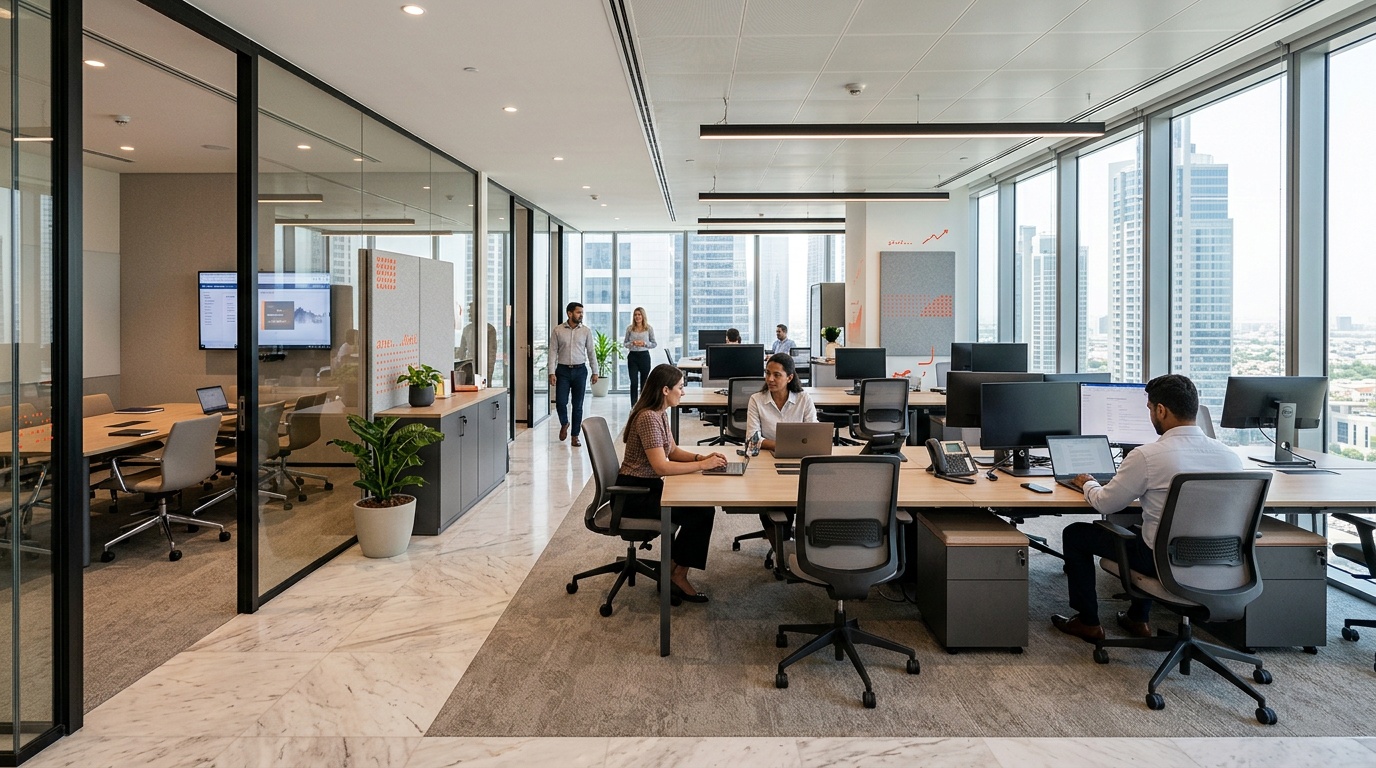
From an infrastructure perspective, a company’s physical office space is not merely an expense; it’s an operational asset that must be engineered for reliability and scalability. The CTO’s perspective emphasizes systems that are resilient and adaptable, minimizing points of failure and the need for disruptive re-configuration. When applied to workspace strategy, this means prioritizing solutions that offer continuity, allowing businesses to operate and expand without being anchored to rigid, outdated real estate models.
The core principle is that infrastructure should travel with the user and the business’s evolving needs. This contrasts with traditional office leases, which often require significant relocation or re-negotiation when a company outgrows its space or requires a different configuration. Modern businesses need workspace solutions that are as dynamic as their operational tempo, providing access to professional environments that support productivity and collaboration wherever the team is operating from.
Infrastructure That Travels With the User
The concept of “infrastructure that travels” means that the necessary tools and environments for productive work are not tied to a single, fixed location. For a distributed workforce, this translates to having access to professional workspaces, meeting rooms, and reliable connectivity across various locations. This is where flexible office solutions excel. Instead of building a physical presence that requires constant maintenance and upgrades, businesses can tap into a network of pre-established, professional environments.
This model allows individuals and teams to choose a workspace that suits their immediate needs, whether it’s a quiet zone for focused work or a collaborative hub for team projects. The system is designed for user mobility and choice, ensuring that productivity is not dependent on being in a specific building. This principle is fundamental to how businesses should approach their physical footprint in an era where workforces are increasingly distributed and mobile, enabling continuity across different operational contexts.
Avoiding Physical Re-Configuration During Expansion
One of the most significant operational burdens for growing companies is the disruption caused by physical re-configuration or relocation. Moving offices, fitting out new spaces, and managing the logistics of transporting equipment all consume valuable time and resources, often leading to a dip in productivity. From a CTO’s viewpoint, this represents a failure in engineering for scale. Reliable systems are those that can absorb growth without requiring such drastic interventions.
Flexible office solutions inherently mitigate this challenge. When a business needs to expand its team or adjust its workspace requirements, it can often do so by simply booking additional desks or offices within the same provider network. This avoids the significant overhead of lease renegotiations, office moves, or extensive renovations. The infrastructure is designed to scale on demand, ensuring that a company’s physical workspace can adapt fluidly as it grows. This is the essence of engineering for scale: building systems that support continuous operation and expansion, minimizing the friction associated with growth and change. This approach ensures that the physical workspace remains an asset that facilitates, rather than hinders, business progress.
Key Takeaway
Engineering your physical footprint for scale means adopting workspace solutions that offer reliability and adaptability. Prioritize infrastructure that travels with your team’s needs, minimizing the disruption and cost associated with physical re-configuration and relocation as your business expands.
Frequently Asked Questions
How much does it cost to set up an office in Dubai?
Setting up an office in Dubai ranges from roughly 300 to 3,000 USD per month, depending on whether you choose a flexible workspace or a traditional lease. Traditional offices demand large security deposits and multi-year commitments, while flexible solutions operate on a monthly pay-as-you-go model that preserves working capital and allows predictable operational budgeting.
What is a Flexi desk in Dubai?
A Flexi desk in Dubai is a shared workspace within a coworking or serviced office facility that provides a desk on a flexible, pay-as-you-go basis. Dubai business setup consultants recommend Flexi desks for startups and market-entry companies because they deliver a verifiable physical address for Ejari registration and trade license compliance without locking you into a rigid long-term lease.
What businesses are in high demand in Dubai?
Businesses in technology, professional consulting, e-commerce, and digital services are in high demand across Dubai’s growing market. The regulatory infrastructure supports companies entering these sectors with flexible office options that scale alongside team growth, which is why consultants prioritize workspace solutions that adapt to headcount changes rather than forcing premature long-term real estate commitments.
Why do Dubai business setup consultants recommend flexible office space over traditional leases?
Dubai business setup consultants recommend flexible office space because it eliminates large upfront capital expenditure while satisfying all Ejari and trade license compliance requirements. Instead of tying up funds in security deposits and furnishing costs, businesses pay a predictable monthly fee and can redirect capital toward core operations, product development, and revenue-generating activities.
What is Ejari registration and why is it required for a Dubai business?
Ejari registration is the mandatory registration of a tenancy contract with Dubai’s Real Estate Regulatory Agency, required for trade license renewal and access to essential government services. Without a valid Ejari linked to a verifiable physical workspace, companies face operational disruptions and delayed renewals, making this registration a foundational step that consultants address before any other setup decision.
Can a coworking space serve as my legal trade license address in Dubai?
Yes, a coworking space can serve as your legal trade license address in Dubai as long as the provider issues a tenancy contract that supports Ejari registration. Managed facilities offering dedicated desks or private offices meet this requirement, giving businesses a compliant, verifiable address without the overhead and inflexibility of a conventional commercial lease.
How do mainland and free zone office space requirements differ in Dubai?
Mainland companies registered under the Department of Economic Development must secure a physical office with Ejari registration, while free zone jurisdictions set their own office requirements based on business activity and license type. Consultants evaluate a company’s operational model and growth plans to determine which jurisdiction provides the right compliance framework alongside the flexibility to scale physical space as needed.
Leave a Reply