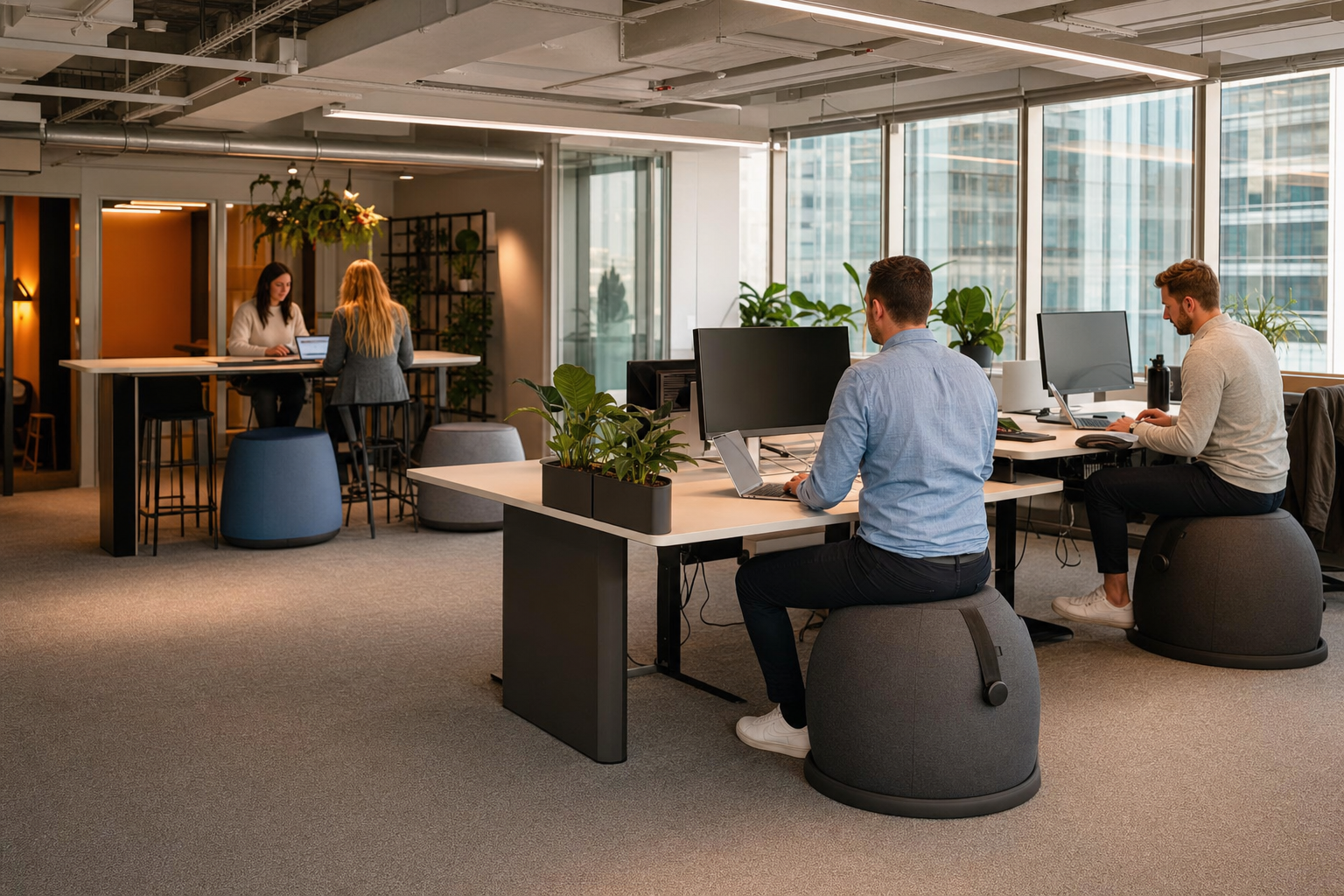
active sitting balance balls and ergonomic stools
The way we work is constantly evolving, and so is the way we sit. For decades, the standard office chair has been the default, often leading to discomfort, reduced energy, and long-term health concerns. But a shift is underway. People are seeking more dynamic ways to engage with their workspaces, recognizing that movement isn’t just a break from work. It’s a component of productive, healthy work. This evolution brings forward a set of tools designed to redefine our sedentary habits: active sitting balance balls and ergonomic stools. These aren’t just furniture; they are catalysts for a more engaged and healthier workday, offering a path toward better posture, increased focus, and a more connected physical experience, no matter where you choose to work.
Key Takeaways
- Active sitting tools like balance balls and ergonomic stools keep your body engaged throughout the workday, reducing the health risks of prolonged sitting.
- Choosing dynamic seating over a standard office chair can improve your posture and focus, making your work more productive and comfortable.
- The move toward active sitting reflects a growing understanding that movement is an essential part of work, not just something you do during breaks.
- Balance balls and ergonomic stools change your workspace into a more physically connected environment, helping you maintain energy and concentration wherever you work.
Understanding active sitting is the first step toward changing your workday. It’s about moving beyond the static posture of traditional chairs and embracing a more engaged way of being at your desk. This approach acknowledges that our bodies are designed for movement, not prolonged stillness. By incorporating tools like balance balls and ergonomic stools, we encourage subtle, ongoing adjustments that keep our muscles engaged and our minds alert. This guide explores how this shift can fundamentally alter your work experience, leading to tangible benefits for both physical well-being and cognitive performance.
Key Takeaway
Active sitting encourages micro-movements that combat the negative effects of prolonged static posture, leading to improved core strength, better focus, and increased energy throughout the workday.
How Active Sitting Changes the Way You Work
The distinction between active and passive sitting is fundamental to understanding the benefits of dynamic seating. Passive sitting, the kind most of us associate with traditional office chairs, involves a static posture where the body is largely supported by the chair. This can lead to muscle fatigue, poor circulation, and a general sense of lethargy. Active sitting, conversely, requires constant, subtle adjustments from your body. This means your muscles, particularly those in your core and back, are continuously engaged to maintain balance and stability. This engagement is not strenuous; rather, it mimics the natural, dynamic movements we experience when standing or walking, promoting better spinal alignment and reducing the strain typically placed on the lower back during prolonged seated periods.
This constant, low-level physical engagement translates directly into improved core strength and posture. When you sit on a balance ball or a wobble stool, your body instinctively works to keep you upright and stable. This process activates the deep abdominal and back muscles, often referred to as the ‘core’. Over time, this consistent activation builds strength and endurance in these key muscle groups, which are essential for supporting the spine and maintaining good posture. Studies, such as one published in the Journal of Physical Therapy Science, have indicated that using balance ball chairs can lead to significant improvements in trunk muscle activation, a key indicator of core strength and stability. This makes active sitting not just a seating choice, but a subtle, integrated fitness regimen.
Beyond physical benefits, active sitting plays a significant role in sustaining blood flow and steady focus. When you sit passively, circulation can become restricted, particularly in the legs, leading to a feeling of sluggishness and reduced cognitive function. The micro-movements inherent in active sitting help to keep blood circulating more freely throughout the body, including to the brain. This improved blood flow delivers more oxygen and nutrients, which can sharpen focus, improve concentration, and boost overall mental alertness. Research suggests that active sitting can lead to improved concentration, with users reporting up to a 15% improvement in their ability to focus, according to sources like Wobblez. This sustained energy and improved cognitive function are invaluable for complex tasks and long work sessions, making active sitting a powerful tool for productivity.
The Science Behind Active Sitting
Visual representation showing:
- Passive Sitting: Static posture, minimal muscle engagement, reduced blood flow, potential for slouching.
- Active Sitting: Dynamic posture, constant micro-adjustments, core muscle activation, improved circulation, better spinal alignment.
- Benefits: Increased calorie burn (up to 30% more than standard chairs), improved posture, reduced back pain (over 80% of office workers experience it), improved focus.
Comparing Balance Balls, Ergonomic Stools, and Wobble Discs
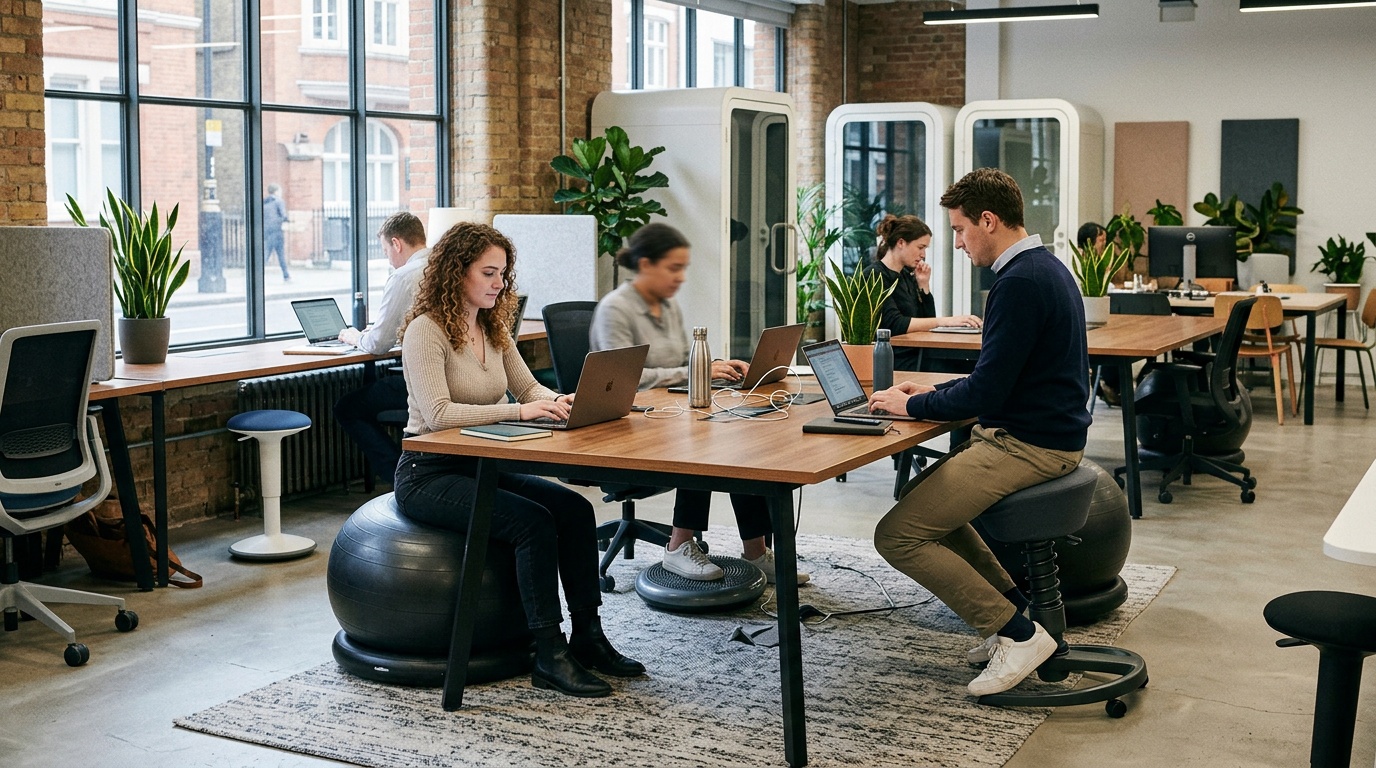
When exploring active sitting options, balance balls, ergonomic stools, and wobble discs each offer a distinct approach to dynamic seating. Balance balls, essentially large exercise balls, provide a full range of motion, encouraging constant adjustment and significant core engagement. Their primary advantage is the unlimited movement they permit, which can feel very natural for some users. Still, they typically lack back support and can be less stable, especially for users not accustomed to active sitting. Ergonomic stools, often referred to as wobble stools, offer a more controlled form of active sitting. They usually feature a fixed base with a slightly rounded or articulating seat that allows for tilting and rocking, promoting core engagement while providing a more stable platform than a full ball. Wobble discs, on the other hand, are typically flat discs placed on top of an existing chair or seat. They provide a less intense form of active sitting, primarily allowing for subtle side-to-side or front-to-back tilting, offering a gentle introduction to dynamic movement without requiring significant core strength or balance.
Height adjustability and desk alignment are important considerations for any seating choice, especially when integrating with standard desk heights or adjustable standing desks. Traditional balance balls come in fixed sizes, meaning users must select a ball that corresponds to their height to achieve proper desk alignment. If the ball is too high or too low, it can lead to discomfort and poor posture. Ergonomic stools, particularly wobble stools, often come with adjustable height mechanisms, similar to standard office chairs. This allows users to fine-tune the seat height to perfectly match their desk, ensuring their arms are at a comfortable angle for typing and their feet are flat on the floor. This adjustability is a significant advantage for users who work at desks of varying heights or who frequently switch between sitting and standing. Wobble discs typically offer a fixed height increase but can be stacked or combined with other risers, though this can sometimes compromise stability.
Material durability and weight capacity are essential for ensuring the longevity and safety of any active seating solution. Balance balls are typically made from durable, anti-burst PVC or similar materials designed to withstand significant pressure. Still, they are susceptible to punctures from sharp objects and can degrade over time with exposure to heat or sunlight. Most balance balls have a weight capacity of around 250-300 pounds. Ergonomic stools and wobble discs often feature a sturdy base made from metal or reinforced plastic, with seats upholstered in fabric, leather, or vinyl. Their weight capacities are generally quite high, often exceeding 300 pounds, and their construction tends to be more resilient against wear and tear than a simple ball. Wobble discs, made from dense foam or durable plastic, also typically have high weight limits and are quite resilient, though the surface they sit on can affect their stability.
Features Comparison: Balance Balls vs. Ergonomic Stools vs. Wobble Discs
| Feature | Balance Ball | Ergonomic Stool (Wobble Stool) | Wobble Disc |
|---|---|---|---|
| Core Engagement | High (constant stabilization) | Moderate to High (controlled tilting) | Low to Moderate (gentle rocking) |
| Posture Support | Self-supported, requires active effort | Promotes upright posture, some may offer slight back support options | Relies on user’s existing chair for main support |
| Height Adjustability | Fixed (based on ball size) | Typically Adjustable | Fixed height increase |
| Desk Alignment | Requires careful ball size selection | Easily adjustable to match desk height | Can be less precise, may require desk adjustment |
| Portability | Moderate (can be deflated for travel) | Moderate (often swivel base) | High (compact and lightweight) |
| Durability | Good, but susceptible to punctures/degradation | High (sturdy base and seat construction) | High (dense foam or plastic) |
| Weight Capacity | ~250-300 lbs | ~300+ lbs | ~300+ lbs |
| Ideal User | Those seeking maximum core workout, comfortable with less structure | Users wanting balanced active sitting with stability and adjustability | Beginners to active sitting, or those seeking minor movement cues |
Designing Active Workspaces for Movement and Continuity
As the nature of work becomes more fluid, so too must our physical environments. The concept of a fixed workstation is giving way to adaptable spaces that support diverse working styles and the reality of people moving between locations. Incorporating active sitting tools like balance balls and ergonomic stools is not merely about individual comfort; it’s about designing workspaces that foster continuity and adaptability for everyone. For hot desks and shared office environments, this means selecting furniture that is not only ergonomic but also easily managed and conducive to a variety of users and tasks. The goal is to create an environment where productivity and well-being are supported, regardless of where someone chooses to sit or how long they stay.
Selecting active seating for hot desks and shared offices requires a thoughtful approach that balances user needs with operational efficiency. In these flexible settings, durability and ease of maintenance are paramount. Ergonomic stools, with their often more compact design and sturdier build compared to full balance balls, can be a practical choice. They offer a degree of core engagement without demanding the same level of space or constant repositioning as a large exercise ball. When choosing for shared spaces, consider models with adjustable heights that can accommodate a wide range of users, ensuring a comfortable fit for different body types. The aim is to provide options that are intuitive to use and contribute positively to the overall workspace atmosphere, making it easy for individuals to find a comfortable and productive spot.
For nomadic and remote workers, the portability of active seating solutions becomes a significant factor in maintaining work continuity. While a full balance ball might be cumbersome to transport, compact wobble stools or even specialized portable balance discs offer viable alternatives. These options allow individuals to bring a dynamic seating element with them, whether they are moving between a home office, a co-working space, or a temporary workspace while traveling. The ability to maintain a consistent, ergonomic setup, even on the go, directly supports the Hotdesk philosophy of continuity. Ensuring that your work environment travels with you, reducing the friction associated with constant relocation and supporting sustained focus and physical comfort.
Workspace Integration Checklist for Active Seating
- Assess Desk Heights: Ensure chosen stools or balls are compatible with existing desk heights or adjustable standing desks.
- Consider User Range: Prioritize adjustable-height options to accommodate diverse user statures in shared spaces.
- Evaluate Portability: For mobile workers, look for lightweight, foldable, or compact designs that are easy to transport.
- Durability & Maintenance: Select materials that are easy to clean and can withstand frequent use in busy environments.
- Space Requirements: Determine how much floor space each active seating option requires and if it fits within the layout.
- Safety Features: Check for non-slip bases on stools and anti-burst ratings on balance balls for user security.
- Aesthetics: Choose designs that complement the overall office decor, promoting a modern and inviting atmosphere.
- User Training: Plan for brief introductions or guides on how to use active seating correctly and safely.
The materials used in modern ergonomic furniture are increasingly reflecting a global concern for sustainability, and active seating is no exception. Many manufacturers are now offering balance balls and ergonomic stools made from recycled or eco-friendly materials. Look for products constructed with durable, non-toxic plastics, natural rubber, or recycled fabrics. This not only reduces environmental impact but also aligns with the values of many modern professionals and organizations. Opting for sustainable options means investing in furniture that supports both personal well-being and the health of the planet, contributing to a more responsible and conscious approach to workspace design. This consideration is particularly important for businesses aiming to create environmentally aware and forward-thinking work environments.
A Practical Guide to Transitioning to Active Sitting
Making the switch to active sitting is a positive step toward a healthier and more dynamic workday, but it requires a thoughtful approach to ensure comfort and maximize benefits. The initial phase involves selecting the right equipment that fits your body and workspace, followed by a gradual integration into your daily routine. Understanding how to size your balance ball or ergonomic stool correctly is the foundational step. For balance balls, the general guideline is to choose a size where your knees are at a 90-degree angle or slightly lower when your feet are flat on the floor and the ball is inflated. Many manufacturers provide sizing charts based on user height. Ergonomic stools, especially wobble stools, often feature adjustable height mechanisms, allowing for precise calibration to match your desk height, ensuring your forearms are parallel to the floor while typing. Correct sizing prevents strain and ensures that the active seating supports good posture from the outset.
Building tolerance for active sitting is key to a successful transition. Your body, accustomed to passive sitting, needs time to adapt to the increased muscle engagement. It’s not recommended to sit on a balance ball or wobble stool for an entire workday immediately. Instead, begin by incorporating it for short periods, perhaps 30-60 minutes at a time, interspersed with breaks or periods on a traditional chair. Gradually increase the duration as you feel more comfortable and your core muscles gain strength. Many users find that after a few weeks, they can comfortably sit on their active seating for longer stretches. Listening to your body and avoiding overexertion are critical to prevent fatigue or discomfort. This gradual approach ensures that active sitting becomes a sustainable part of your work habits.
Your Transition Plan to Active Sitting
- Select Your Equipment: Based on your needs and workspace, choose a balance ball, ergonomic stool, or wobble disc.
- Inflate/Adjust Correctly: For balls, inflate to the recommended firmness for your height. For stools, adjust the height so your elbows are at desk level and feet are flat.
- Start Small: Begin with 30-60 minute sessions of active sitting each day.
- Alternate Positions: Switch between your active seating and a traditional chair or standing desk throughout the day.
- Listen to Your Body: Pay attention to any discomfort or fatigue. If you feel strain, reduce the duration or take a longer break.
- Gradually Increase Time: As your core strength improves and you feel more comfortable, slowly extend your active sitting periods.
- Maintain Good Posture: Sit tall, engage your core subtly, and ensure your feet are grounded.
- Stay Hydrated: Remember to take breaks for water and movement, which complements the benefits of active sitting.
Safety considerations and proper workspace setup are essential for making the most of your active sitting experience. Ensure that your balance ball or stool is placed on a stable, non-slip surface. If using a balance ball, make sure it is fully inflated and has an anti-burst rating, especially if you have pets or children who might interact with it. Position your equipment at the correct height relative to your desk to promote neutral wrist and arm posture, preventing strain. Clear the area around your seating to avoid tripping hazards. For those transitioning, particularly if they have pre-existing back conditions, consulting with a physical therapist or ergonomic specialist can provide personalized guidance. The goal is to create a safe, supportive, and productive work zone that encourages movement and improves your overall well-being.
Frequently Asked Questions About Active Sitting Transition
- How long should I aim to sit on an active seat each day?
- Begin with 30-60 minute intervals and gradually increase as your body adapts. Many users find they can comfortably sit for several hours daily after a few weeks, alternating with other seating options.
- What if I feel tired or sore when using an active seat?
- This is normal as your muscles engage differently. Reduce the duration of your active sitting sessions and ensure you are not slouching. If pain persists, consult an ergonomic specialist or healthcare provider.
- Can active sitting help with lower back pain?
- Yes, active sitting can help alleviate lower back pain by strengthening core muscles that support the spine and promoting better posture. Still, it’s not a substitute for medical advice if you have chronic pain.
- What is the difference between a balance ball and a wobble stool for active sitting?
- Balance balls offer a full range of motion but require significant balance. Wobble stools provide a more controlled tilt and often a stable base, offering core engagement with less demand on balance, making them a good option for many users.
Integrating Dynamic Seating with Standing Desks
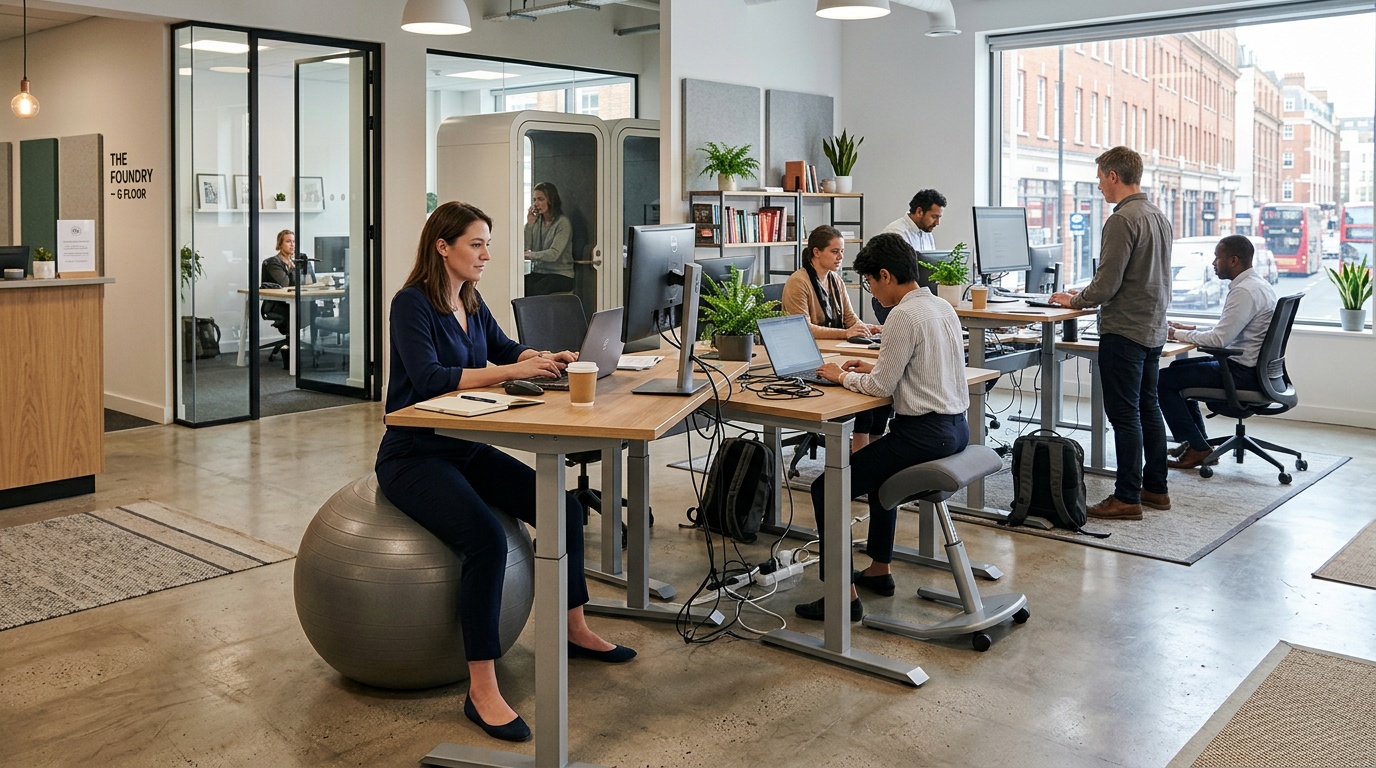
Pairing stools with adjustable desk heights
Active sitting balance balls and ergonomic stools complement adjustable standing desks by introducing movement and flexibility into the workspace. When paired with a height-adjustable desk, these seating options allow users to alternate naturally between sitting and standing, fostering more dynamic postures throughout the day. Ergonomic stools with height-adjustment features enable precise alignment with the desk surface, ensuring the elbows remain at a comfortable 90-degree angle and the wrists stay neutral during typing or writing tasks. This alignment reduces strain on the shoulders and forearms, which is a common complaint among desk workers.
Balance balls, while typically fixed in size, can be selected to match the user’s seated height relative to the desk. For those using standing desks with variable heights, it’s advisable to pair the ball with a desk that can be locked at a consistent sitting height when in use, preventing awkward positioning. The inherent instability of balance balls encourages continuous micro-movements, which activate core muscles and promote better posture even during seated phases. This activation can counteract the static nature of prolonged sitting and contribute to reduced lower back discomfort, a concern affecting over 80% of office workers according to the American Chiropractic Association.
Creating a balanced physical workspace
Constructing a workspace that integrates active sitting balance balls and ergonomic stools with standing desks requires thoughtful consideration of ergonomics and user behavior. The goal is to create a fluid environment where users can transition effortlessly between postures, maintaining comfort and productivity throughout the day. A balanced setup involves placing the standing desk at adjustable heights that accommodate both standing and seated positions, ensuring the screen and keyboard remain within ergonomic reach in every posture. This prevents strain on the neck and wrists, which often results from poor desk height or monitor placement.
Incorporating active seating options encourages continuous engagement of stabilizing muscles even during seated periods. This reduces the risk of muscular fatigue and promotes sustained blood flow, which is linked to improved concentration and mental alertness. Such setups align with findings from studies showing that active sitting can improve trunk muscle activation by about 25%, contributing to better spinal support and posture. Additionally, the quiet movement encouraged by active seating fosters an environment where users remain physically and mentally alert without distraction.
Workspace design should also take into account flooring and space requirements. Non-slip mats or surfaces improve stability for balance balls and wobble stools, reducing the risk of slips or falls. Adequate clearance around the desk area supports safe movement and easy transitions between sitting and standing positions. For organizations, selecting durable materials for these seating solutions ensures they withstand frequent use, especially in shared workspaces or hot-desking environments. By combining adjustable desks with active sitting balance balls and ergonomic stools, users gain a versatile setup that supports movement, reduces discomfort, and maintains productivity.
Key Insight
Integrating active sitting balance balls and ergonomic stools with adjustable standing desks creates a dynamic workstation that supports continuous movement, improves posture, and sustains focus by facilitating smooth transitions between sitting and standing.
References
Frequently Asked Questions
What is active sitting and how does it differ from traditional sitting?
Active sitting is a dynamic way of sitting that requires constant micro-movements to keep your body engaged, unlike traditional passive sitting where your body is largely supported by the chair. This ongoing engagement activates your core and back muscles, promoting better posture and circulation. Traditional chairs often lead to muscle fatigue and reduced energy, while active sitting tools like balance balls and ergonomic stools encourage natural movement throughout the day.
How do balance balls and ergonomic stools improve core strength?
Balance balls and ergonomic stools improve core strength by requiring your body to make subtle adjustments to maintain stability, which continuously activates your deep abdominal and back muscles. Over time, this consistent engagement builds endurance in the muscles that support your spine. Research shows that using balance ball chairs can significantly increase trunk muscle activation, making active sitting a gentle, integrated way to strengthen your core while working.
Can active sitting help with focus and concentration during work?
Active sitting can help with focus and concentration by improving blood flow to the brain through the micro-movements it encourages. Better circulation delivers more oxygen and nutrients, which can sharpen mental alertness and sustain attention. Some users report up to a 15% improvement in their ability to concentrate when using active sitting tools like ergonomic stools, making them a practical choice for long work sessions.
What are the main differences between a balance ball and an ergonomic stool?
Balance balls offer a full range of motion and significant core engagement but lack back support and can be less stable for beginners. Ergonomic stools, often called wobble stools, provide a more controlled tilt and rock with a fixed base, making them a more stable option while still promoting core activation. Wobble discs offer a gentler introduction to active sitting by sitting on top of an existing chair, allowing subtle tilting without requiring much balance.
Are balance balls or ergonomic stools better for people with back pain?
Ergonomic stools are generally better for people with back pain because they offer a more stable platform with controlled movement, reducing the risk of losing balance. Balance balls can still be helpful but require more core strength and coordination, so they may not suit everyone with existing back issues. Both options encourage better spinal alignment and reduce the strain of prolonged sitting, but starting with a stool or disc is often safer.
How does active sitting affect blood flow and energy levels?
Active sitting improves blood flow by keeping your legs and lower body in motion through subtle adjustments, which prevents the restricted circulation common in static chairs. This better circulation delivers more oxygen throughout your body, helping to maintain steady energy levels and reduce feelings of sluggishness. The micro-movements also keep your muscles engaged, which can help you feel more alert and less fatigued during long workdays.
Should I use a wobble disc on my existing chair or get a separate stool?
A wobble disc is a good starting point if you want to try active sitting without replacing your current chair, as it provides gentle tilting and a low-intensity introduction to dynamic movement. A separate ergonomic stool offers a more active experience with greater range of motion and core engagement, but it requires more balance and may need height adjustment. Your choice depends on how much movement you want and whether you prefer a gradual transition or a full shift to active sitting.
Leave a Reply