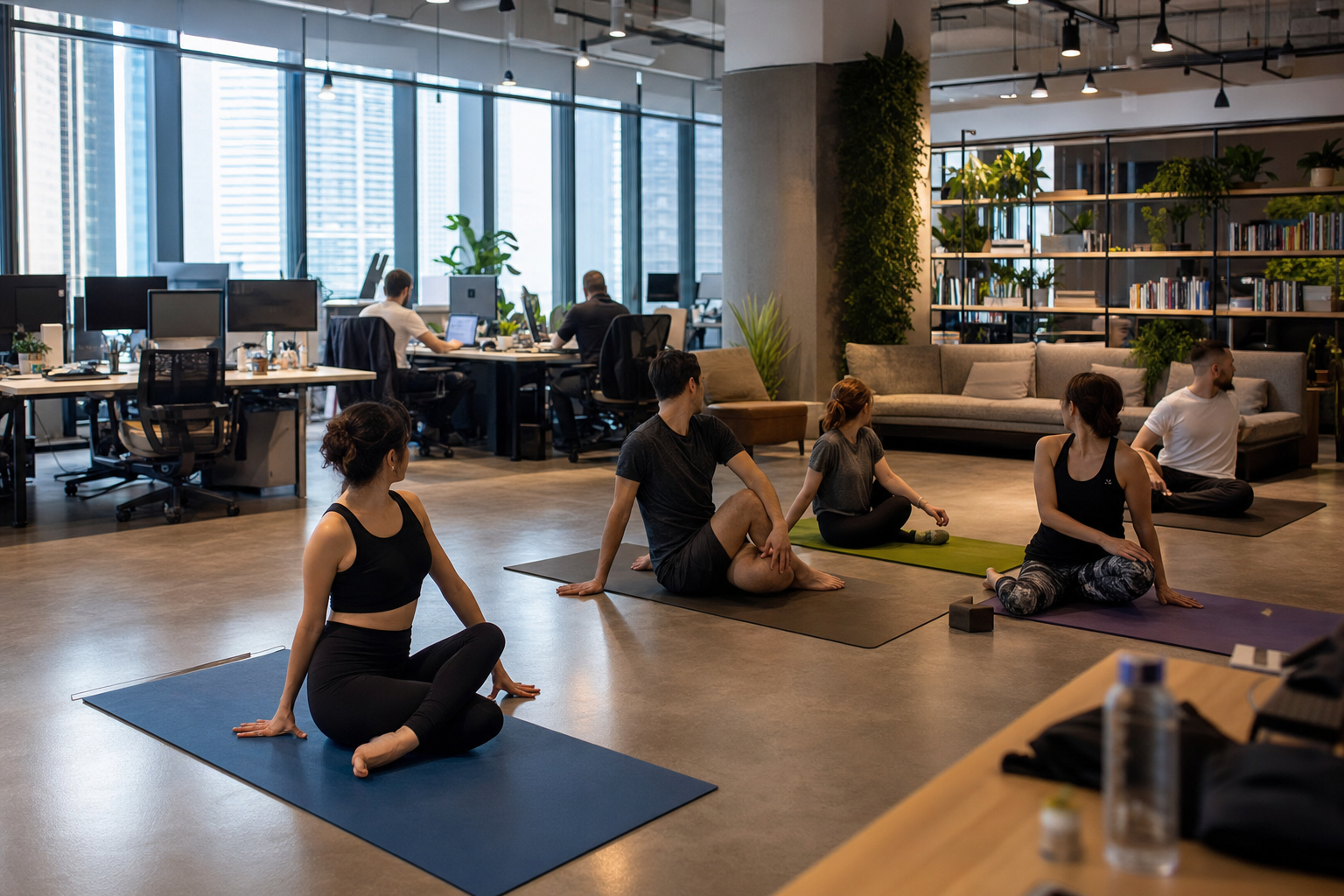
yoga for remote workers simple daily poses
The shift to remote and hybrid work has reshaped professional lives, offering flexibility. Yet, this freedom often comes with a hidden cost: prolonged periods of stillness. For many, the home office or a series of hot desks means hours spent in a chair, a contrast to the natural movement of a traditional office environment. This sedentary pattern can lead to physical discomfort and a dip in mental clarity, impacting performance. Integrating yoga for remote workers simple daily poses can provide the continuity and well-being our bodies and minds need, no matter the location from which you work.
Key Takeaways
- Prolonged sitting at a home office or hot desk creates physical strain that simple daily yoga poses can counteract before discomfort limits your focus.
- Yoga built into your remote routine restores the natural movement missing from a static workstation, supporting both body and mind throughout the workday.
- Short, intentional stretches between tasks improve mental clarity and help you sustain productivity without relying on your chair as a cage.
- Consistency with a few foundational poses turns any location into a space where your body feels cared for, no matter how many desks you cycle through.
As an entrepreneur who has navigated diverse work settings, I understand the friction that arises when our physical habits do not align with our work demands. It is not just about avoiding back pain; it is about maintaining the mental agility and focus required to thrive.
Why Remote Work Demands a Daily Movement Habit
The Physical Cost of Staying Seated
Many adults now spend a significant portion of their day sitting, a pattern that presents a challenge for remote workers. This prolonged inactivity places strain on the body. Research shows that extended periods of sitting increase the risk of health issues, including back pain, cardiovascular problems, and metabolic imbalances. A significant number of remote workers report new or worsened musculoskeletal pain since transitioning to working from home, underscoring the direct link between sedentary habits and physical discomfort. Without intentional breaks for movement, our bodies adapt to stillness, leading to stiffness, reduced circulation, and chronic aches that detract from daily well-being and productivity.
Prolonged sitting, common in remote work, directly contributes to back pain, cardiovascular strain, and metabolic issues. A significant number of remote workers experience increased musculoskeletal pain, making daily movement essential for physical health.
How Targeted Movement Sustains Focus
Beyond physical discomfort, a sedentary workday can diminish cognitive performance. When we remain in one position for long stretches, blood flow to the brain can become less efficient, making it harder to concentrate. This is where targeted movement, such as yoga for remote workers simple daily poses, becomes invaluable. Even a 10-minute break dedicated to mindful movement can improve cognitive function and mood. Studies suggest such breaks can boost cognitive performance by up to 20%, helping to combat the mental fatigue that sets in during long work sessions. By actively engaging the body, we increase oxygen supply to the brain, sharpen memory, and foster a more alert state, which is fundamental for productivity.
Breathing Techniques to Anchor Your Attention
Integral to any effective movement practice, especially yoga, are the breathing techniques that help anchor attention and calm the nervous system. Remote work, with its blurred lines between personal and professional life, can often lead to feelings of stress or being overwhelmed. Simple breathwork exercises, like diaphragmatic breathing or alternate nostril breathing, can be practiced discreetly at your desk to manage these feelings. Focusing on the breath draws your awareness away from distractions and back to the present moment, reducing anxiety and improving concentration. These techniques do not require physical exertion but offer a powerful way to reset your mental state, making them an essential component of an integrated approach to maintaining focus and well-being throughout the workday.
Simple Daily Yoga Poses for Your Desk
Seated Neck and Shoulder Releases
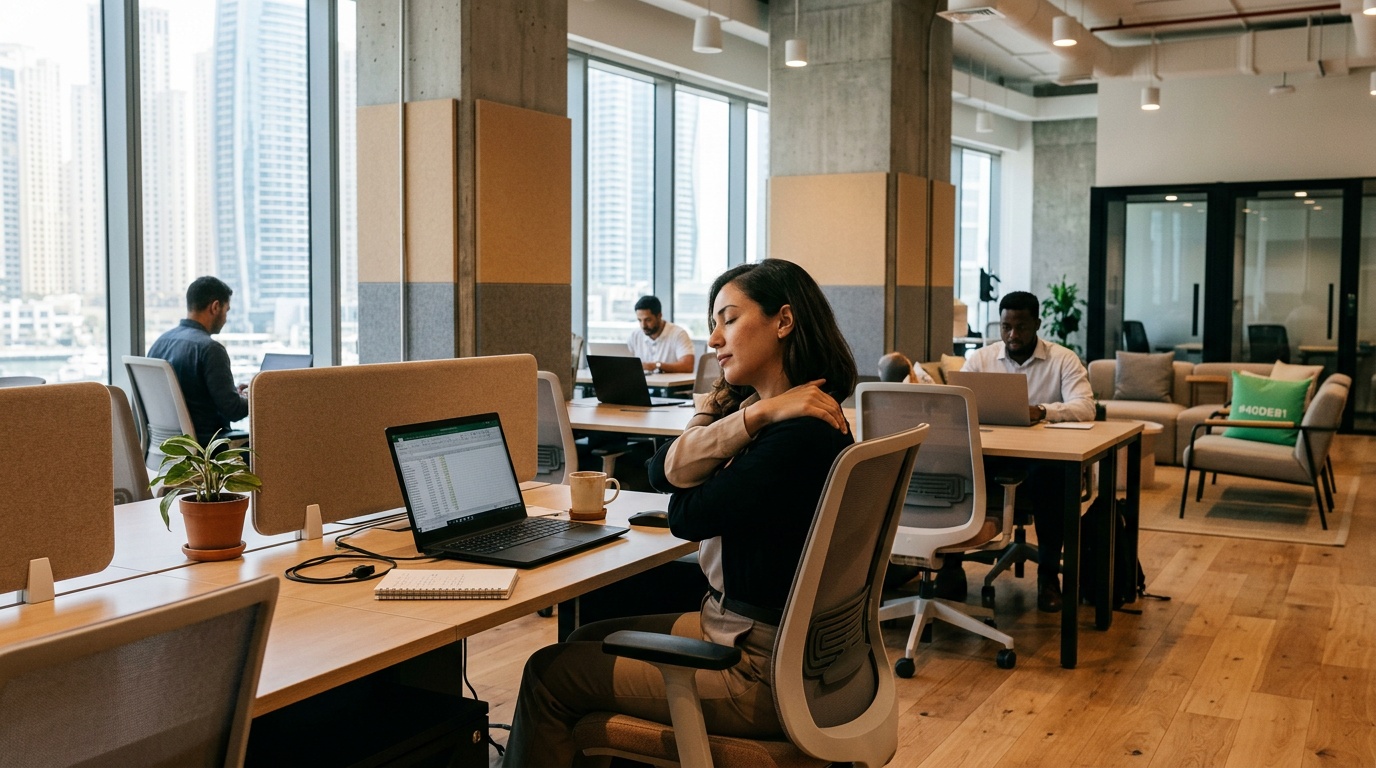
When working at a desk, your neck and shoulders often bear the brunt of prolonged sitting and screen time. To alleviate this tension, several simple seated poses can provide relief. Begin by gently dropping your right ear towards your right shoulder, feeling a stretch along the left side of your neck. Hold for a few breaths, then repeat on the other side. Another effective movement is shoulder rolls: inhale as you draw your shoulders up towards your ears, exhale as you roll them back and down. This action helps release accumulated tension. You can also perform seated Cat-Cow by placing hands on knees, inhaling to arch the back and lift the chest, and exhaling to round the spine and drop the chin, mobilizing the entire spine.
Desk-Friendly Movement
Simple seated stretches for the neck, shoulders, and spine can counteract the stiffness and pain caused by prolonged desk work. Focus on gentle movements and controlled breathing to release tension and improve posture.
Standing Poses for Standing Desks or Tight Quarters
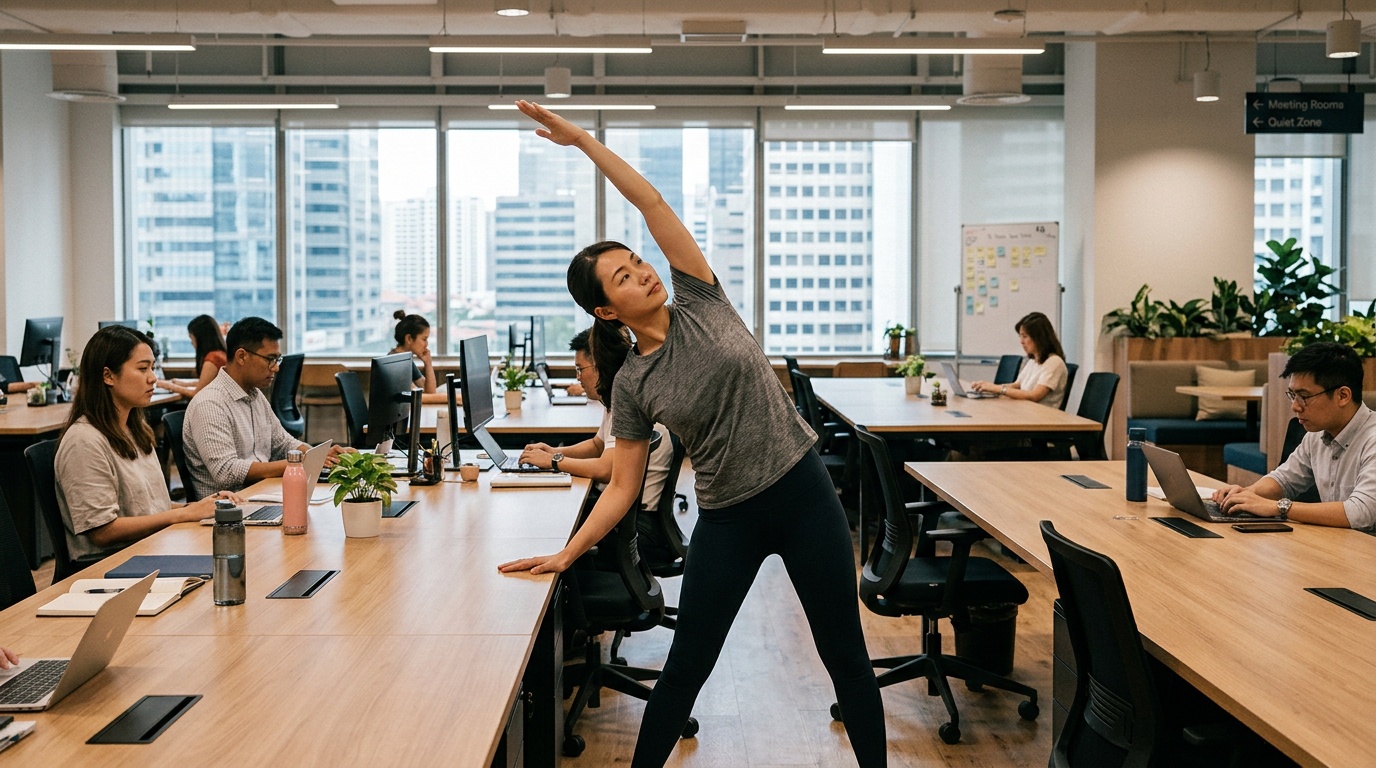
Even without a dedicated yoga mat, you can incorporate effective standing poses into your remote workday, especially if you have a standing desk or just a bit of space. A simple standing forward fold can be done by hinging at the hips, letting your torso hang towards the floor, and allowing your head and neck to relax. This pose decompresses the spine and stretches the hamstrings. Mountain Pose is fundamental for grounding and posture; stand tall with feet hip-width apart, engage your legs, and lengthen through the spine. From Mountain Pose, you can move into a gentle standing side bend, reaching one arm overhead and leaning to the opposite side to open the torso. These poses require minimal space and can be performed between tasks or during short breaks.
Wrist and Forearm Stretches for Keyboard Workers
Constant typing and mouse use can lead to strain in the wrists and forearms, conditions often referred to as repetitive strain injuries. Incorporating specific stretches can prevent discomfort and maintain dexterity. A basic wrist flexor stretch involves extending one arm forward, palm up, and using the other hand to gently pull the fingers down towards the floor. Hold for 15-30 seconds, then repeat with the palm facing down to stretch the extensor muscles. Another effective stretch is a wrist extension, where you make a loose fist and then gently press the knuckles back. You can also perform gentle wrist circles in both directions. These simple movements, when done regularly, can reduce the risk of pain and fatigue associated with extensive computer work.
Finding moments for movement is essential for maintaining physical comfort and mental sharpness as a remote worker. By integrating yoga for remote workers simple daily poses and breathing techniques, you can create a more sustainable and healthier work routine, no matter your location. This continuity in self-care is what enables consistent performance. For those seeking the perfect quiet corner to stretch or focus, spaces like the Simple Social Hub Community Coworking offer accessible environments designed for productivity and well-being, allowing you to maintain your habits while on the move.
Three 5-Minute Micro-Flows for Your Workday
The reality of remote work is that structure often needs to be self-imposed. Without the natural cues of an office. Colleagues walking by, scheduled meetings, or even the commute itself. Entire workdays can blur into one long stretch at the desk. This is precisely why integrating short, deliberate movement sequences is so effective. These micro-flows, designed to be completed in about five minutes, act as anchors throughout your day, preventing the physical and mental stagnation that prolonged sitting can cause. They are not about mastering complex poses or achieving deep stretches; they are about creating moments of intentional physical engagement that reset your body and mind, fostering continuity and well-being.
These structured sequences address the common challenge remote workers face: knowing when and how to move. Instead of random stretches, these flows offer a clear pathway to re-energize, refocus, and release accumulated tension. They are built around the idea that consistency, even in brief bursts, yields significant benefits for both physical health and cognitive function. By incorporating these yoga for remote workers simple daily poses into your morning, midday, and end-of-day routine, you can proactively manage the effects of a sedentary lifestyle and maintain your productivity and sense of calm. This approach ensures that movement becomes a natural, integrated part of your work life, rather than an afterthought.
Morning: Waking Up the Spine
Starting your day with gentle movement is like unlocking your body’s potential after a night of stillness. This morning micro-flow focuses on mobilizing the spine and awakening the body’s core, preparing you for the day ahead without demanding significant energy. Begin seated at your desk. Take a moment to inhale deeply, lengthening your spine, and exhale, finding your center.
Transition into seated Cat-Cow. Place your hands on your knees, and as you inhale, gently arch your back, lifting your chest and gazing slightly upward. As you exhale, round your spine, drawing your chin towards your chest and letting your shoulders slump forward. Repeat this motion 5-8 times, feeling the movement ripple through your entire vertebral column. This simple sequence increases spinal flexibility and improves posture, counteracting the tendency to slouch first thing in the morning. It is a quiet way to signal to your body that it is time to engage.
Midday: Building Energy and Resetting Posture
The midday slump is a common hurdle for remote workers, often characterized by decreased focus and a feeling of mental fog. This five-minute sequence is designed to combat that by boosting circulation and resetting your posture, re-energizing your system. Start by standing up, perhaps at your standing desk or in a clear space. Perform a gentle standing forward fold, hinging at the hips and allowing your torso to hang loosely, releasing tension in the hamstrings and lower back. Let your head and neck relax completely.
From the forward fold, slowly roll up to standing, bringing your awareness to your alignment. Engage your core and lengthen your spine. Then, move into a standing side bend, reaching one arm overhead and gently leaning to the opposite side, opening your rib cage and torso. Repeat on the other side. Conclude by performing a few deep, invigorating breaths, perhaps with arms reaching overhead on the inhale and lowering on the exhale. This flow increases blood flow, combats fatigue, and helps correct postural imbalances that develop from hours of sitting, making it an excellent way to refresh your focus.
End of Day: Releasing Tension Before Logging Off
As the workday concludes, it is essential to release the physical and mental tension that has accumulated. This final micro-flow is about unwinding, preparing your body for rest and preventing the workday’s stresses from carrying over into your personal time. Begin seated in your chair. Focus on deep, calming breaths, allowing your shoulders to drop away from your ears with each exhale.
Perform gentle neck rolls, slowly dropping your ear towards your shoulder, then rolling your chin towards your chest, and then to the other shoulder. Move slowly and mindfully, avoiding any strain. Follow this with seated spinal twists: place one hand on the opposite knee and the other hand behind you or on the chair, and gently rotate your torso. Breathe into the twist, releasing tension in the back and abdomen. This sequence helps to undo the day’s rigidity, promoting relaxation and signaling a clear transition from work to personal life.
| Flow | Focus | Key Poses/Movements | Primary Benefit | Time |
|---|---|---|---|---|
| Morning: Waking Up the Spine | Spinal Mobility & Core Engagement | Seated Cat-Cow | Increases flexibility, corrects morning stiffness, improves posture. | ~5 minutes |
| Midday: Energy & Posture Reset | Circulation & Alignment | Standing Forward Fold, Standing Side Bend, Deep Breathing | Combats fatigue, boosts focus, corrects desk posture. | ~5 minutes |
| End of Day: Tension Release | Relaxation & Transition | Gentle Neck Rolls, Seated Spinal Twists, Calming Breath | Releases accumulated stress, promotes relaxation, aids transition to personal time. | ~5 minutes |
Integrating these simple, time-bound sequences is a practical way to ensure your body receives the movement it needs throughout a remote workday. For remote professionals who often find themselves working from various locations, maintaining a consistent routine is key. Finding a dedicated, comfortable space can make all the difference. Consider environments like the Simple Social Hub Community Coworking, which offers a conducive atmosphere for focused work and personal well-being, allowing you to practice these micro-flows with ease and privacy, fostering continuity in your self-care habits wherever your work takes you.
Practicing Yoga in Coworking Spaces and Shared Offices
The modern professional often navigates a dynamic work environment, moving between home offices, client sites, and coworking spaces. This nomadic reality means that maintaining a consistent well-being routine, like desk yoga, requires adaptability and a mindful approach to shared spaces. The idea is not to find a secluded studio, but to integrate movement discreetly and effectively, ensuring your practice supports rather than disrupts your workday or the atmosphere around you. Continuity of habit is paramount, and this means finding ways to move your body that feel natural and considerate in any setting.
When working from a hot desk or a shared table, the goal is to perform movements that offer physical benefits without drawing undue attention or requiring extensive space. This approach aligns with the understanding that movement should be accessible, not an exception. It is about fostering a personal sense of continuity and self-care, even when your physical surroundings change frequently. By focusing on simple stretches and mindful breathing, you can achieve significant relief and maintain your physical and mental equilibrium, regardless of where your work takes you.
Pros
- Discreet Movements: Focus on seated stretches for the neck, shoulders, wrists, and spine that can be done with minimal disruption.
- Space Efficiency: Poses require little to no extra space, making them suitable for tight desk setups or shared tables.
- Mental Reset: Simple breathing exercises and gentle stretches help quickly reduce stress and improve focus without needing a dedicated quiet area.
- Continuity: Enables you to maintain your movement habit across different locations, reinforcing consistency in your routine.
- Reduced Self-Consciousness: Practicing readily executable, subtle movements helps remote workers feel more comfortable and less conspicuous.
Cons
- Limited Range of Motion: Stretches may be less intense or comprehensive compared to those performed with ample room or on a mat.
- Potential for Distraction: Working in a busy coworking environment can make deep concentration difficult for some breathing or stretching exercises.
- Ergonomic Variations: Desk and chair setups vary widely, which can sometimes make consistent posture alignment challenging.
- Social Awareness: While discreet, there is still a need to be mindful of colleagues and workspace etiquette, which can add a layer of consideration.
For remote professionals who find themselves working from diverse locations, securing a conducive environment can significantly impact their ability to maintain personal routines. Spaces like the Simple Social Hub Community Coworking are designed with this flexibility in mind, offering a professional setting where you can comfortably integrate simple movements and maintain your focus without feeling out of place.
Building a Sustainable Desk Yoga Routine
The transition to remote work offers flexibility, but it also places the onus of habit formation squarely on the individual. Establishing a sustainable desk yoga routine is not about achieving perfection or dedicating hours to practice; it is about integrating movement consistently into your workday in a way that feels manageable and rewarding. The core principle is continuity over intensity. This means setting realistic goals for frequency and duration, recognizing that small, regular efforts yield greater long-term benefits than sporadic, ambitious sessions. By focusing on building a habit that fits your lifestyle and work schedule, you can ensure that movement becomes a natural and supportive part of your professional life.
Creating lasting habits requires understanding your personal energy cycles and environmental influences. For remote workers, particularly those who move between different workspaces, this means developing a flexible approach. The key is to make the practice accessible and rewarding, overcoming common barriers like time constraints or lack of dedicated space. By implementing a simple, repeatable structure and celebrating small wins, you can cultivate a routine that supports your physical health, mental clarity, and overall sense of well-being, reinforcing the idea that movement should travel with you, not be left behind. This commitment to consistent, simple daily poses is what truly makes yoga for remote workers simple daily poses a practical strategy.
Your Desk Yoga Habit Checklist
- Assess Your Schedule: Identify 2-3 specific times each day (e.g., before starting, after lunch, before logging off) where you can realistically dedicate 5-10 minutes.
- Start Small: Begin with just 2-3 poses consistently for a week. Gradually add more as you feel comfortable.
- Set Gentle Reminders: Use calendar alerts or phone notifications to prompt your movement breaks, especially when working from new locations.
- Focus on Feelings, Not Form: Prioritize how the movement makes you feel. Less stiff, more focused, calmer. Rather than striving for perfect posture.
- Adapt to Your Environment: Keep a mental list of discreet stretches that work well in any setting, whether at home or in a shared workspace.
- Track Your Progress (Optional): A simple note in a journal or a habit-tracking app can provide motivation and show you how far you have come.
- Be Kind to Yourself: If you miss a day, do not break the chain. Just return to your routine the next day. Consistency over perfection is the goal.
- Connect Movement to Location: Associate certain stretches or flows with specific places or times to reinforce the habit, like doing a quick shoulder roll when settling into a new hot desk.
Building a sustainable routine means understanding that continuity is key, especially for those who embrace the flexibility of remote or hybrid work. By integrating simple practices into your day, you create a consistent anchor for your well-being, no matter where your work takes you. This commitment to personal care is what allows for sustained performance and a sense of belonging, even when moving between different environments. For professionals seeking an accessible and professional space to maintain these habits, consider locations such as the Simple Social Hub Community Coworking, which supports your need for continuity and focus.
References
Frequently Asked Questions
What are the most effective yoga poses for remote workers to do at their desk?
The most effective yoga poses for remote workers include seated neck and shoulder releases, standing forward folds, and wrist stretches. These simple daily poses target the areas most affected by prolonged sitting and typing. They require no special equipment and can be done in a small space, making them easy to integrate into any workday.
How does yoga help remote workers maintain focus during the workday?
Yoga helps remote workers maintain focus by increasing blood flow to the brain through targeted movement. Even a 10-minute break with simple poses can improve cognitive function and mood. This counters the mental fatigue that builds up during long periods of sitting, helping you stay sharp and productive.
What breathing techniques can remote workers use to calm their nerves at their desk?
Remote workers can use diaphragmatic breathing or alternate nostril breathing to calm their nerves without leaving their desk. These techniques anchor attention and reduce anxiety by activating the parasympathetic nervous system. They are discreet and effective for resetting your mental state between tasks.
How often should remote workers take yoga breaks to prevent discomfort?
Remote workers should take yoga breaks every 60 to 90 minutes to prevent discomfort from prolonged sitting. Short sessions of 5 to 10 minutes with simple poses can release tension and improve circulation. Consistency matters more than duration for maintaining physical well-being throughout the day.
What are simple wrist stretches for remote workers who type all day?
Simple wrist stretches for remote workers include the wrist flexor stretch and wrist extension stretch. Extend one arm forward, palm up, and gently pull fingers down to stretch the flexors. Repeat with palm down for extensors to prevent repetitive strain from constant typing and mouse use.
Can yoga for remote workers be done without a yoga mat?
Yoga for remote workers can be done without a yoga mat using just a chair or standing space. Poses like seated neck releases, standing forward folds, and mountain pose require no equipment. This makes it easy to integrate movement into any home office setup, regardless of your available floor space.
Leave a Reply