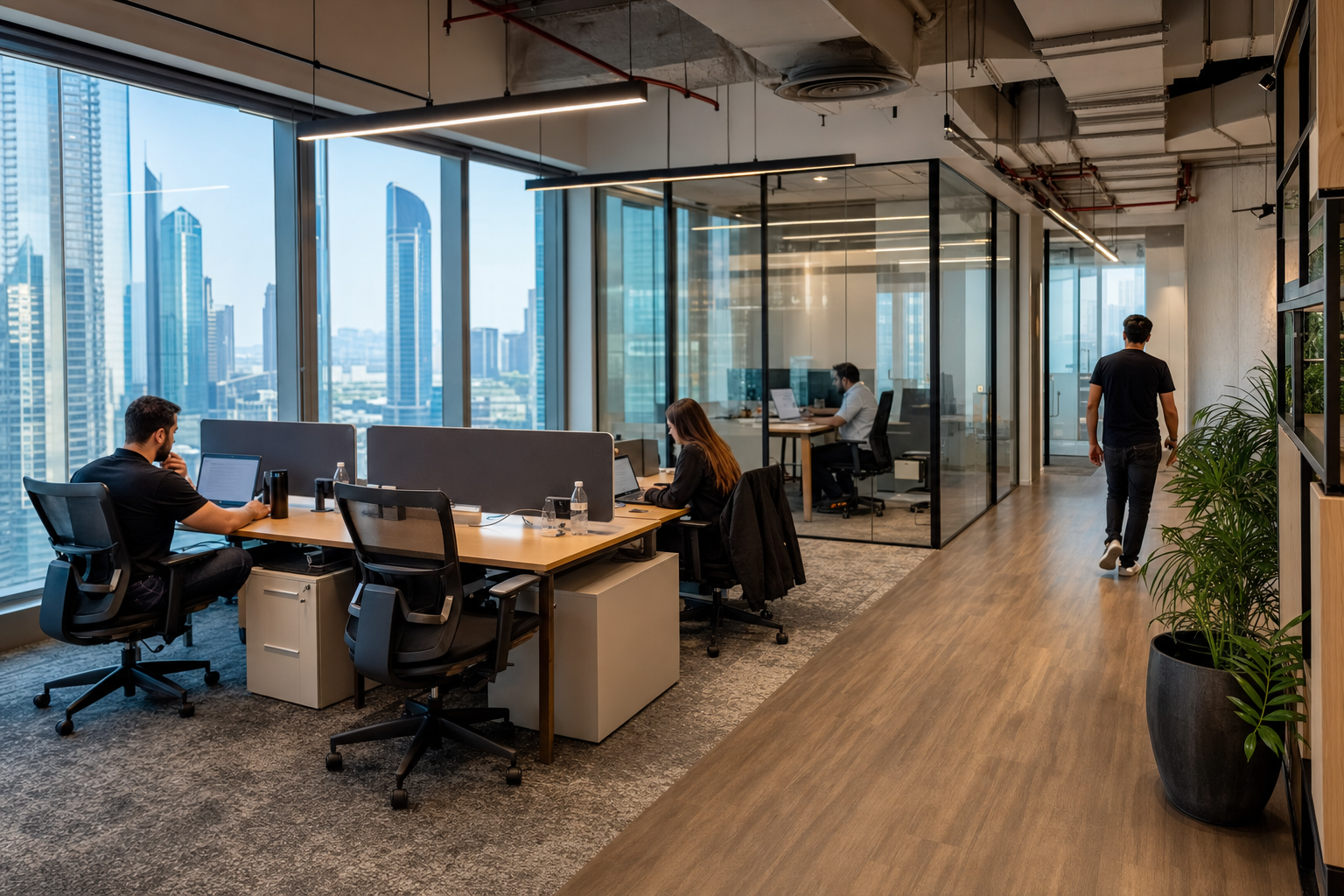
office rent abu dhabi
Understanding Your Office Space Options in Abu Dhabi: Beyond the Traditional Lease
Ever notice how every distributed system introduces new failure modes? When you establish a corporate presence, the physical workspace follows the same rule. Selecting the wrong operating model creates friction, unexpected overhead, and rigid commitments that reduce business agility. In the UAE capital, securing an office rent abu dhabi contract works best when it starts with how your team uses space each day, not with empty square footage. Infrastructure travels with your team, so your workspace should match real usage patterns instead of forcing constant reconfiguration.
The Spectrum of Workspace Solutions: Coworking, Private Offices, and Serviced Suites
Modern enterprises group workspaces by operational readiness. Coworking spaces provide shared infrastructure and can reduce upfront capital expense to near zero. Private offices inside managed hubs add dedicated desks behind secure doors while keeping access to shared amenities. Serviced suites deliver furnished environments with reception support, IT assistance, and meeting rooms. For teams that expand across borders, standardized managed environments keep operations consistent. The same utilities, connectivity expectations, and meeting-room standards can follow the team without the burden of negotiating and managing local facility contracts.
Deconstructing “Office Rent”: What’s Typically Included (and What’s Not)
A standard lease agreement can hide the full operating cost. Even when the base rate covers the usable area, businesses still need to budget for service charges, district cooling fees, utility connections, and maintenance. Managed workspace agreements simplify the math by bundling utilities, high-speed internet, cleaning, and security into one monthly fee. This structure reduces billing variance and supports accurate forecasting for finance teams.
| Feature / Cost Component | Traditional Commercial Lease | Managed Private Office | On-Demand Coworking Space |
|---|---|---|---|
| Setup Capital Expenditure | High (Fit-out, IT, Furniture) | Zero (Move-in ready) | Zero (Plug-and-play) |
| Contract Commitment | 3 to 5 Years | 1 to 12 Months | Hourly, Daily, or Monthly Flex |
| Utility Management | Tenant responsibility | Included in monthly fee | Included in desk rate |
Why Traditional Leases Don’t Always Fit the Modern Business Model
Conventional commercial agreements require long commitments, often paired with multi-year bank guarantees and large upfront fit-out budgets. For fast-growing enterprises or regional satellite teams, that rigidity adds risk. When headcount changes, resizing under a traditional lease can trigger penalties and fit-out delays. Flexible managed spaces reduce this exposure by aligning footprint costs with actual staffing needs.
Navigating Abu Dhabi’s Prime Business Districts for Office Rentals
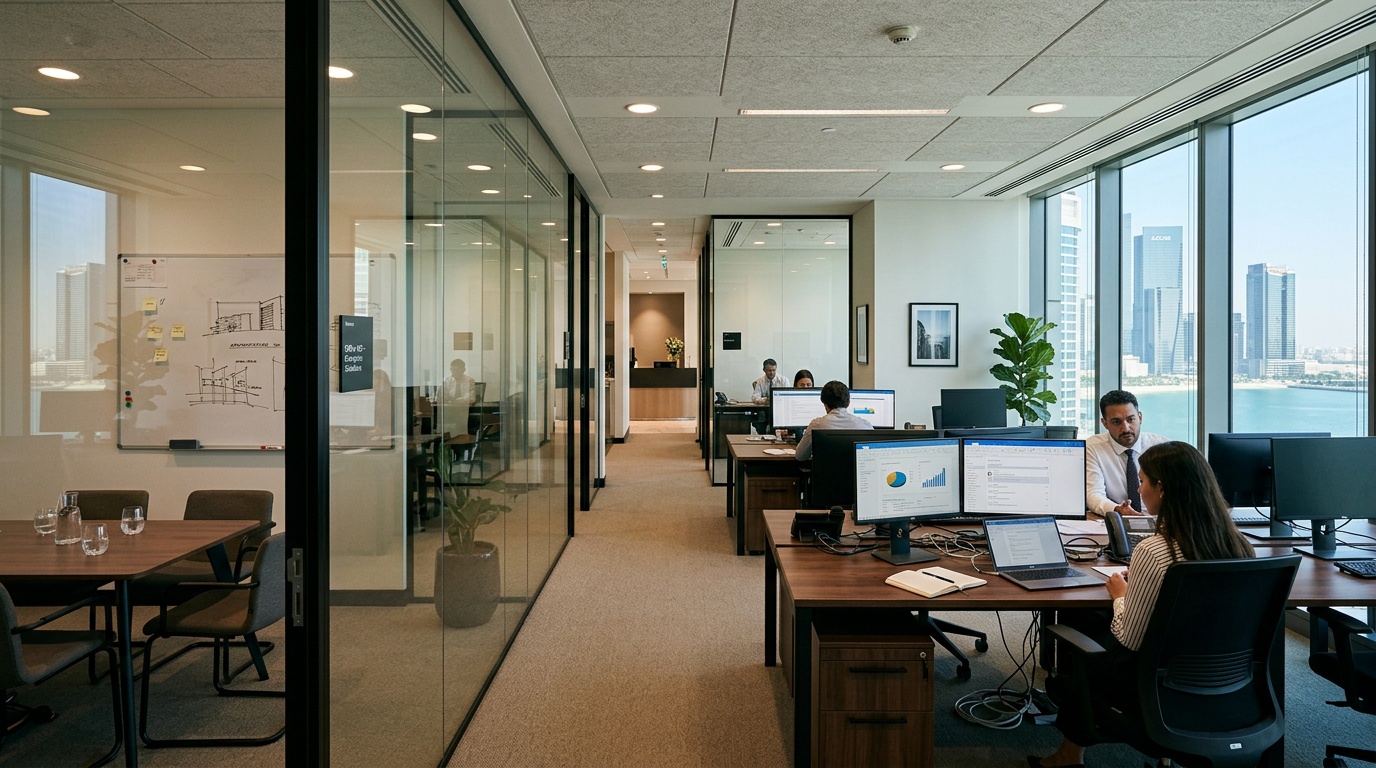
Location choices affect licensing, compliance pathways, and hiring outcomes. Abu Dhabi is organized into distinct commercial zones, each aligned with specific industries and regulatory structures. Choosing where to establish your office rent abu dhabi presence should start with licensing constraints, since some jurisdictions require a physical office inside defined boundaries to keep a trade license active.
Al Reem Island: The Modern Hub for Growing Enterprises
Al Reem Island is a mixed-use commercial zone with modern towers and high-spec fit-outs. It is a strong match for technology firms, consultancies, and growth-stage teams that want premium space outside the most congested parts of the city. Transport links, parking availability, and proximity to residential areas can also help retention by reducing commute friction.
Al Maryah Island: Abu Dhabi’s Financial and Business Core
As the capital’s designated financial free zone, Al Maryah Island hosts Abu Dhabi Global Market. It attracts international financial institutions, multinational corporations, and leading legal firms. Buildings in this district often support higher power density, redundant fiber connectivity, and tighter security controls, which typically drives higher rental rates.
Corniche & Tourist Club Area: Established Commercial Centers
The Corniche and the adjacent Tourist Club Area remain central business areas with established office towers. These neighborhoods often host government entities, energy companies, and local trading firms. Parking can be competitive, but the central location supports client access and reduces travel time across the city.
Khalifa City: Emerging Opportunities and Accessibility
Closer to the international airport and the highway to Dubai, Khalifa City has become a practical base for logistics, aviation, and education organizations. The district often offers more competitive pricing and larger office-warehouse configurations. For teams that move between emirates frequently, the road access can be a meaningful operational advantage.
The Real Cost of Office Space in Abu Dhabi: Unpacking Pricing and Hidden Fees
Budget predictability depends on understanding each line item in the occupancy cost. When evaluating an office rent abu dhabi agreement, the advertised rate per square foot rarely matches the final monthly outlay. A reliable estimate requires a review of the lease structure, service charges, and utility obligations so that cost overruns do not appear after signing.
Monthly vs. Yearly Rentals: Finding the Right Commitment
Yearly leases remain common in UAE commercial real estate and are often paid using post-dated checks. That structure can tie up capital that might be better allocated to hiring, product development, or market entry. Monthly agreements, more common in managed offices and coworking, support tighter cash-flow control and allow spend adjustments when conditions change.
Per-Person vs. Per-Square-Foot: Understanding Pricing Structures
Traditional commercial space is usually priced per square foot (or square meter), which pushes space-optimization risk onto the tenant. Managed workspaces often price per desk or per person. This model can simplify planning: adding a new team member typically maps to a fixed increment in monthly spend and a clear list of included services.
Beyond the Base Rent: Service Charges, Utilities, and VAT
Traditional leases can include a service charge that covers common-area maintenance, elevators, and building security, which can add material cost on top of base rent. District cooling, municipal fees, and 5% value-added tax may also apply. Managed spaces reduce administrative load by bundling many of these items into one invoice, which lowers the chance of missed line items during budgeting.
The Hidden Costs of Traditional Leases: Broker Fees and Long-Term Commitments
Traditional commercial space can carry substantial upfront costs beyond the deposit: broker commissions, registration fees, fit-out deposits, and utility connection charges. These costs stack quickly and can extend the time to occupancy. Flexible workspaces reduce transactional overhead, which keeps more capital available for growth instead of setup administration.
Rethinking Office Rental in Abu Dhabi: Flexibility, Transparency, and Global Reliability
Physical offices that demand complex setup cycles slow expansion. Most growth teams need spaces that can be activated quickly, without extended administrative lead times. Shifting your office rent abu dhabi strategy to an on-demand model helps your team stay productive from day one, with infrastructure that is validated against clear quality standards.
The Case for On-Demand: Hourly, Daily, and Monthly Workspace Solutions
On-demand workspaces let companies scale footprint based on actual utilization. A team can host a project group for a month, book a boardroom for a board meeting, or give remote staff access to hot desks near home. This model reduces underused real estate and ties spend to active usage rather than long-term assumptions.
Eliminating Long-Term Lock-Ins and Membership Fees
Some serviced offices rely on complex memberships, notice periods, and setup fees. Removing those barriers supports faster entry and cleaner exits when priorities change. With verified pay-as-you-go workspaces, teams can deploy into a new market with fewer legal delays and less long-term liability.
How Verified Workspaces Build Trust and Ensure Quality
Technical reliability beats marketing claims. When teams use a verified workspace, they should be able to expect consistent internet performance, stable power, ergonomic furniture, and functional meeting-room AV. Hotdesk lists verified locations across markets, including spaces such as Am Office Space, to help organizations reduce the risk of productivity loss caused by infrastructure gaps.
Real-World Scenarios: A Startup’s Smart Workspace Decision
A fast-growing technology startup enters the UAE and avoids a three-year lease that would require heavy fit-out spend and utility coordination. Instead, the company chooses a managed private suite and scales from five desks to twenty-five in six months. Capital stays focused on hiring and product work, and the workspace scales with the team rather than forcing a relocation mid-growth.
Future-Proofing Your Workspace Investment in Abu Dhabi
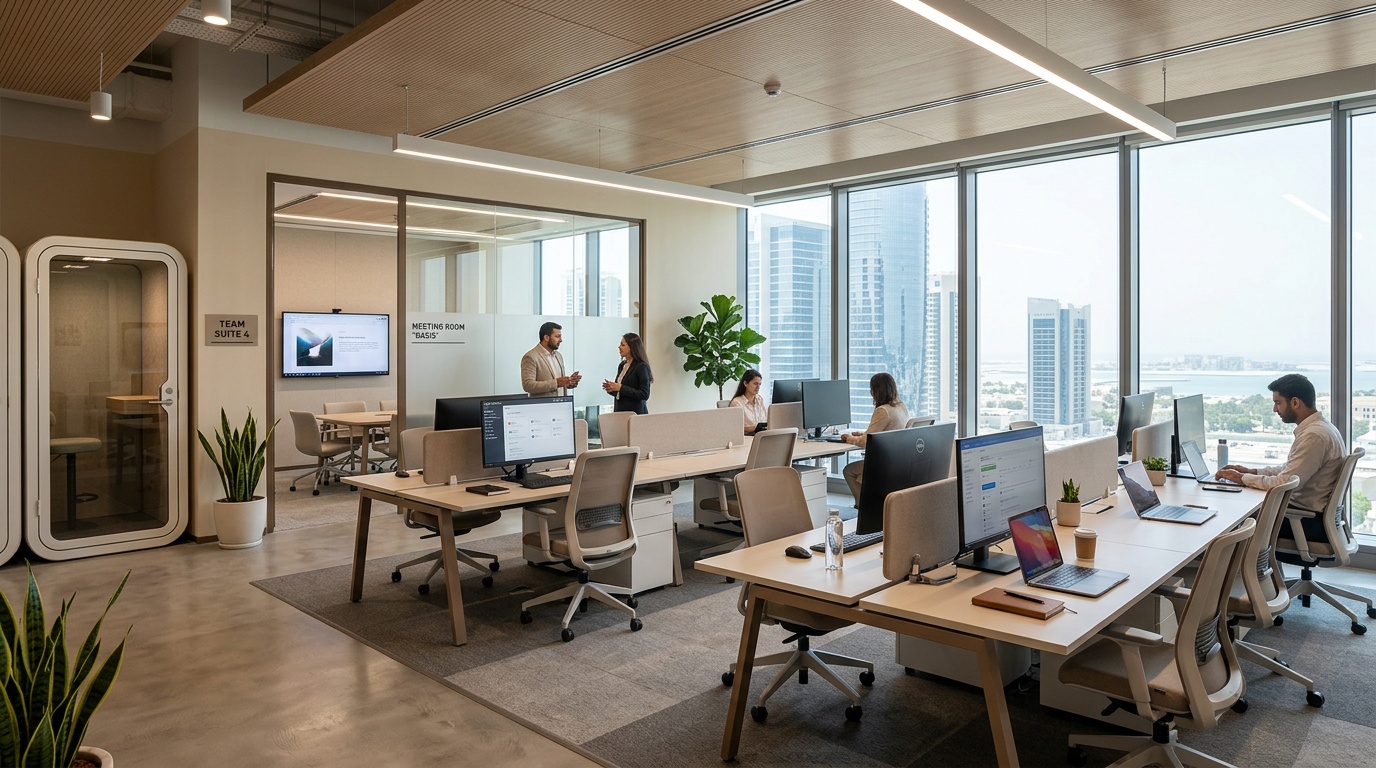
Building a resilient footprint in the UAE capital means planning beyond immediate space needs. The commercial market shifts with regulation, diversification priorities, and workforce expectations. When planning your office rent abu dhabi strategy, optimize for agility. Capital tied up in long-term fixed commitments reduces your ability to pivot when opportunities appear.
Decentralized operations are no longer a temporary phase. Strong operators treat offices as a network of resources rather than a single static headquarters. That mindset supports teams that work near clients, partners, and residential areas without constant administrative churn.
Decentralization and the Hub-and-Spoke Model
A hub-and-spoke model places core administration in one primary location and uses flexible satellites for regional teams. It can reduce commute load and help retention when teams can work closer to where they live. With on-demand space, a company can set up a project office near a major development, then scale down cleanly when the project closes.
A consulting firm delivering a government project on Al Maryah Island can rent a dedicated suite for the project term and transition back to shared space when delivery ends. This turns real estate into a variable operating cost tied more closely to revenue timing.
Strategic Workspace Planning Tip
Before signing a long-term lease, measure actual desk utilization over 90 days. Many teams discover that a meaningful share of assigned desks sits unused on most workdays due to travel, client meetings, or flexible schedules. That data makes it easier to decide between fixed space, hybrid space, or on-demand space.
Technological Readiness and Infrastructure Standards
A workspace is only as reliable as its underlying technology. When evaluating options, prioritize fiber connectivity, backup power, secure networking, and video conferencing readiness. Downtime is an operating risk, not an inconvenience, because it disrupts delivery and damages client confidence.
Managed workspace providers typically maintain these standards as part of the service. Teams using verified locations can reduce setup time and avoid the delays that come with traditional fit-outs, especially when projects start on tight timelines.
Environmental Sustainability and Green Building Standards
Sustainability requirements increasingly influence procurement decisions in Abu Dhabi. Many newer towers, especially in districts such as Al Maryah Island and Al Reem Island, follow green-building frameworks focused on energy-efficient cooling, water optimization, and waste reduction.
Shared and managed workspaces can support these goals by consolidating resources and improving utilization. When more people use the same infrastructure efficiently, the per-person energy footprint can drop while the organization maintains professional standards.
Final Verdict: Selecting Your Abu Dhabi Workspace Strategy
The right approach to securing an office rent abu dhabi presence depends on your company stage, licensing constraints, and growth rate. Traditional leases can fit large organizations with stable headcount and the budget required for custom fit-outs. They also offer full control over branding, access, and internal layout.
Small and mid-sized businesses, satellite teams, and fast-scaling startups often benefit more from flexible managed and on-demand options. Lower upfront costs, faster occupancy, and fewer long-term liabilities keep the business nimble. Treating workspace as a service can align physical footprint decisions with hiring pace and delivery timelines.
Frequently Asked Questions
What kinds of office space options are there for businesses looking for office rent in Abu Dhabi?
Abu Dhabi offers coworking spaces for shared infrastructure, private offices within managed hubs for dedicated desks, and serviced suites with furnished environments and support. These options group workspaces by operational readiness, helping teams match space to their real usage patterns.
What's actually included when I pay for office rent in Abu Dhabi, especially comparing traditional and managed options?
A traditional office lease often only covers the usable area, leaving businesses to budget separately for service charges, utilities, and maintenance. Managed workspace agreements simplify this by bundling utilities, high-speed internet, cleaning, and security into one monthly fee. This structure reduces billing variance and supports accurate forecasting.
Why don't traditional office leases always work for modern or fast-growing businesses in Abu Dhabi?
Traditional leases demand long commitments, often with multi-year bank guarantees and large upfront fit-out costs. This rigidity adds risk for fast-growing enterprises or satellite teams. When headcount changes, resizing under a traditional lease can trigger penalties and delays, making it difficult to align footprint costs with actual staffing needs.
How does choosing a specific business district affect my office rent in Abu Dhabi?
Location choices in Abu Dhabi affect licensing, compliance pathways, and hiring outcomes. Different commercial zones are aligned with specific industries and regulatory structures. Some jurisdictions require a physical office within defined boundaries to keep a trade license active, so your choice should start with these constraints.
Beyond the advertised rate, what should I consider about the real cost of office space in Abu Dhabi?
The advertised rate per square foot for office rent in Abu Dhabi rarely matches the final monthly outlay. Budget predictability depends on understanding all occupancy costs, including service charges and utility obligations. A reliable estimate requires reviewing the full lease structure to avoid cost overruns after signing.
What are the typical payment structures for office rent in Abu Dhabi, and how do they impact cash flow?
Yearly leases, often paid with post-dated checks, are common in UAE commercial real estate and can tie up capital. Monthly agreements, more typical in managed offices, support tighter cash-flow control. This allows for spend adjustments when conditions change, freeing up capital for hiring or product development.
Leave a Reply