Category: Blog

  • Best Giza Coworking: Fast Internet for Remote Work

    Best Giza Coworking: Fast Internet for Remote Work

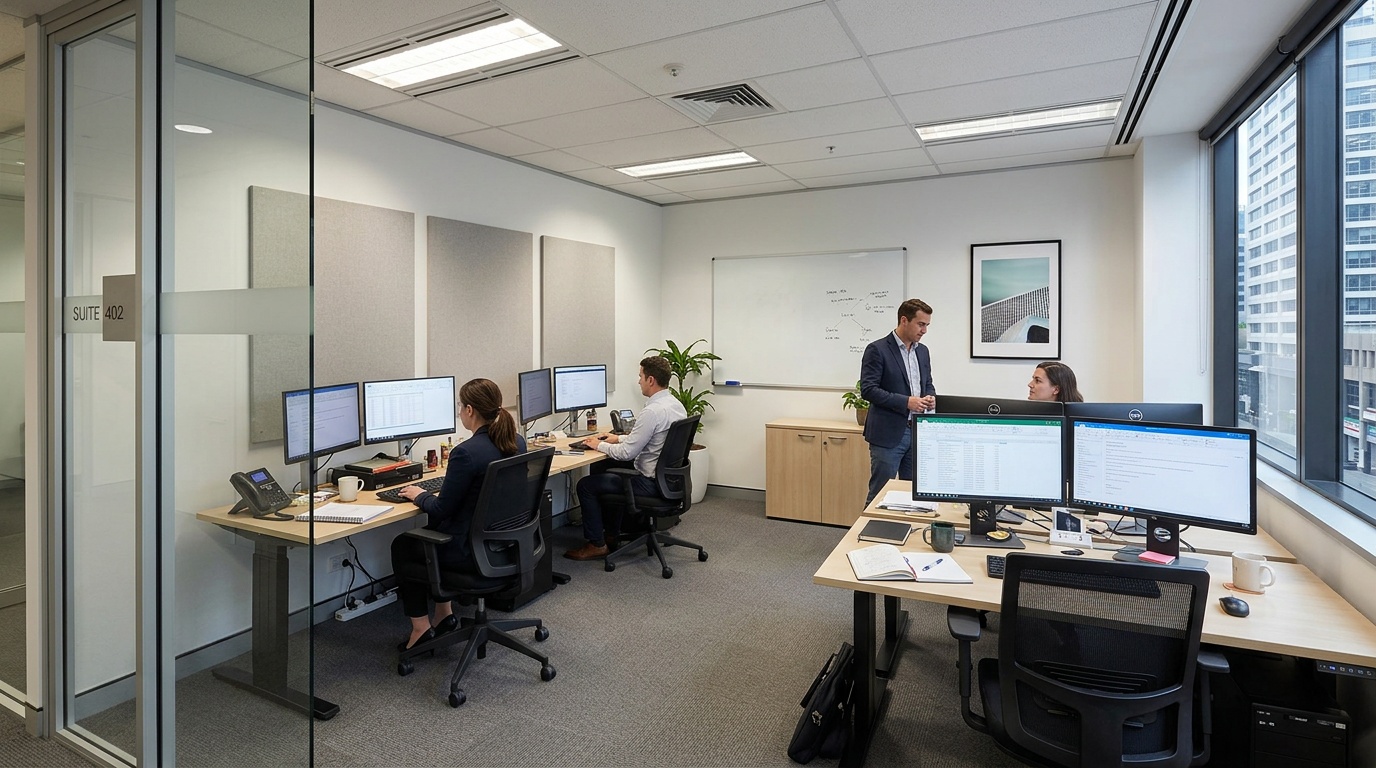
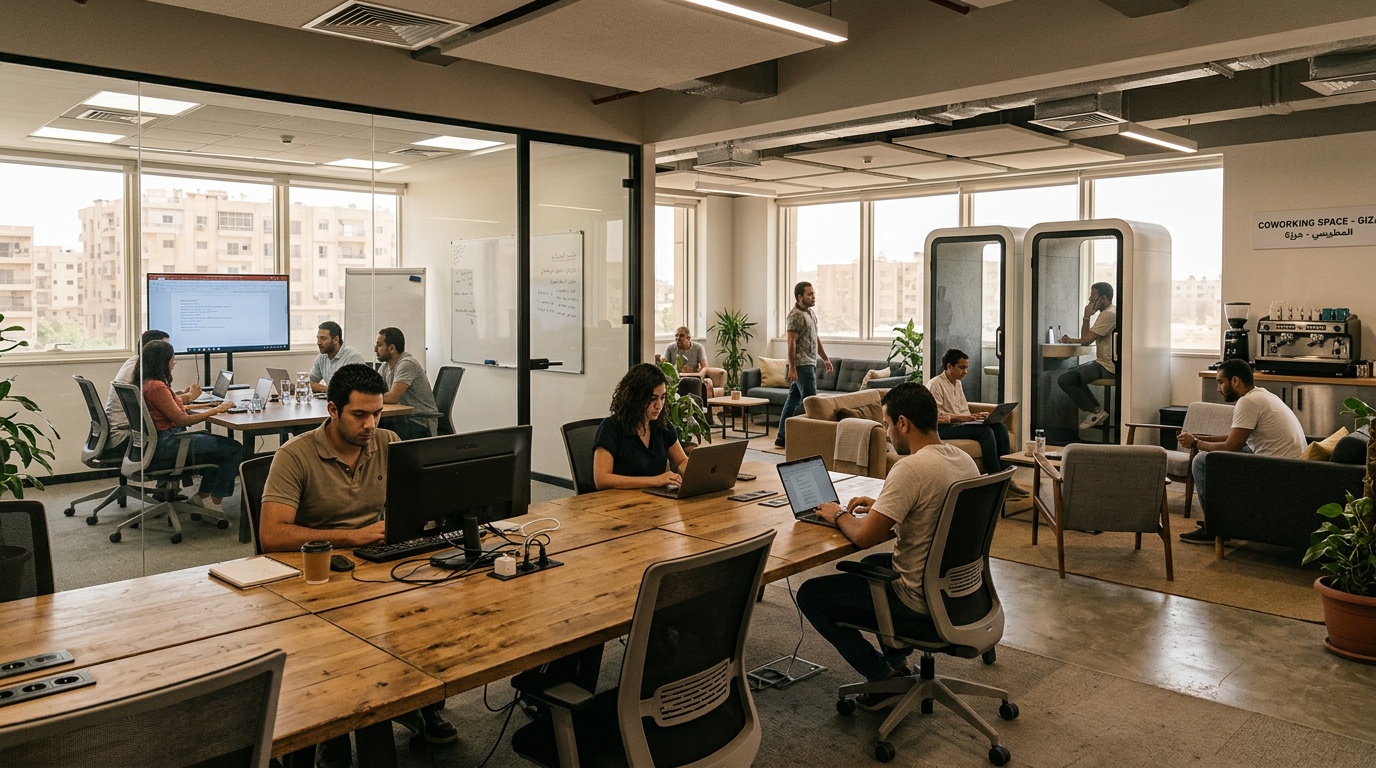
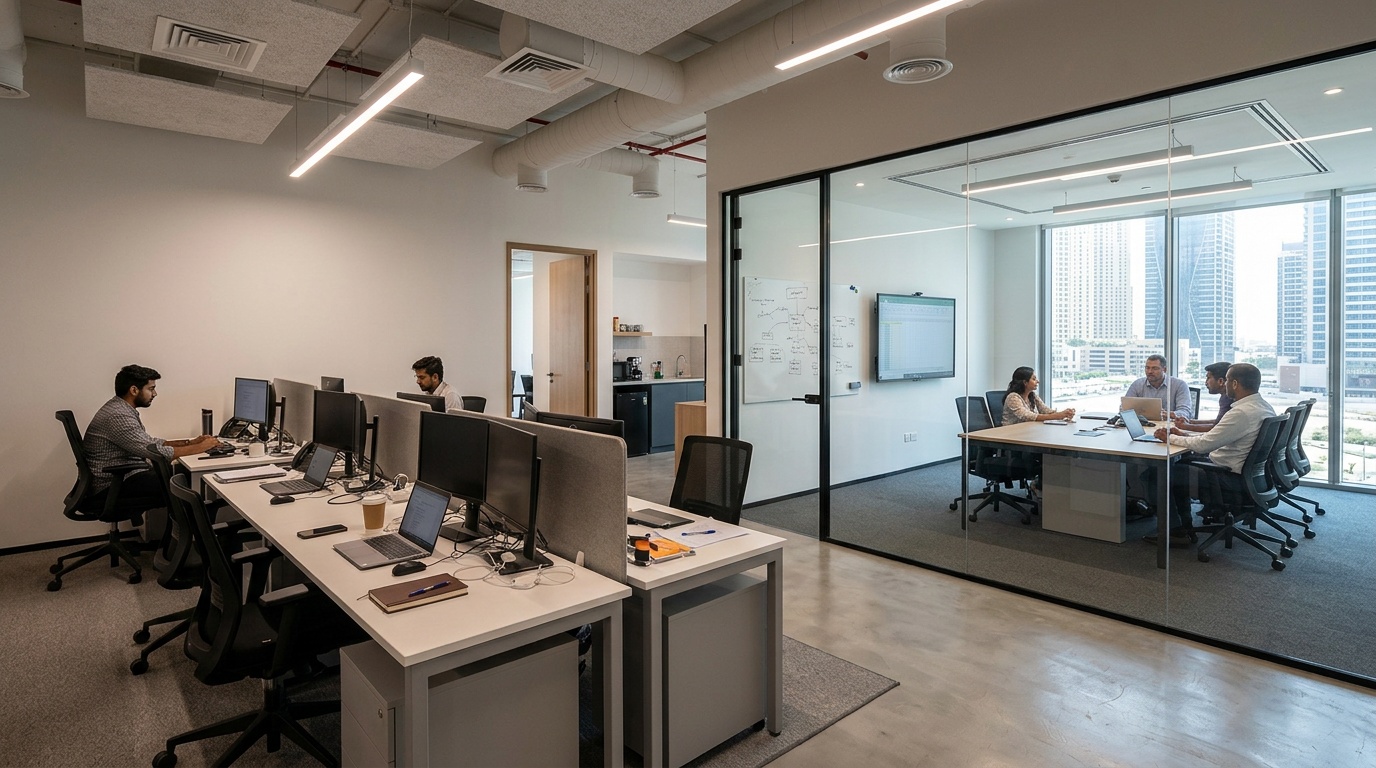
    Best coworking space in Giza with fast internet for remote workers

    Your Remote Work Needs: Decoding Giza’s Coworking Environment

    Every distributed system asks you to manage new failure modes. Remote work in Giza presents the same challenge: finding workspaces where your productivity doesn’t depend on constant troubleshooting. The best coworking space in Giza with fast internet for remote workers removes these friction points before they derail your day.

    The Foundation of Productivity: Why Internet Speed Is Nonnegotiable

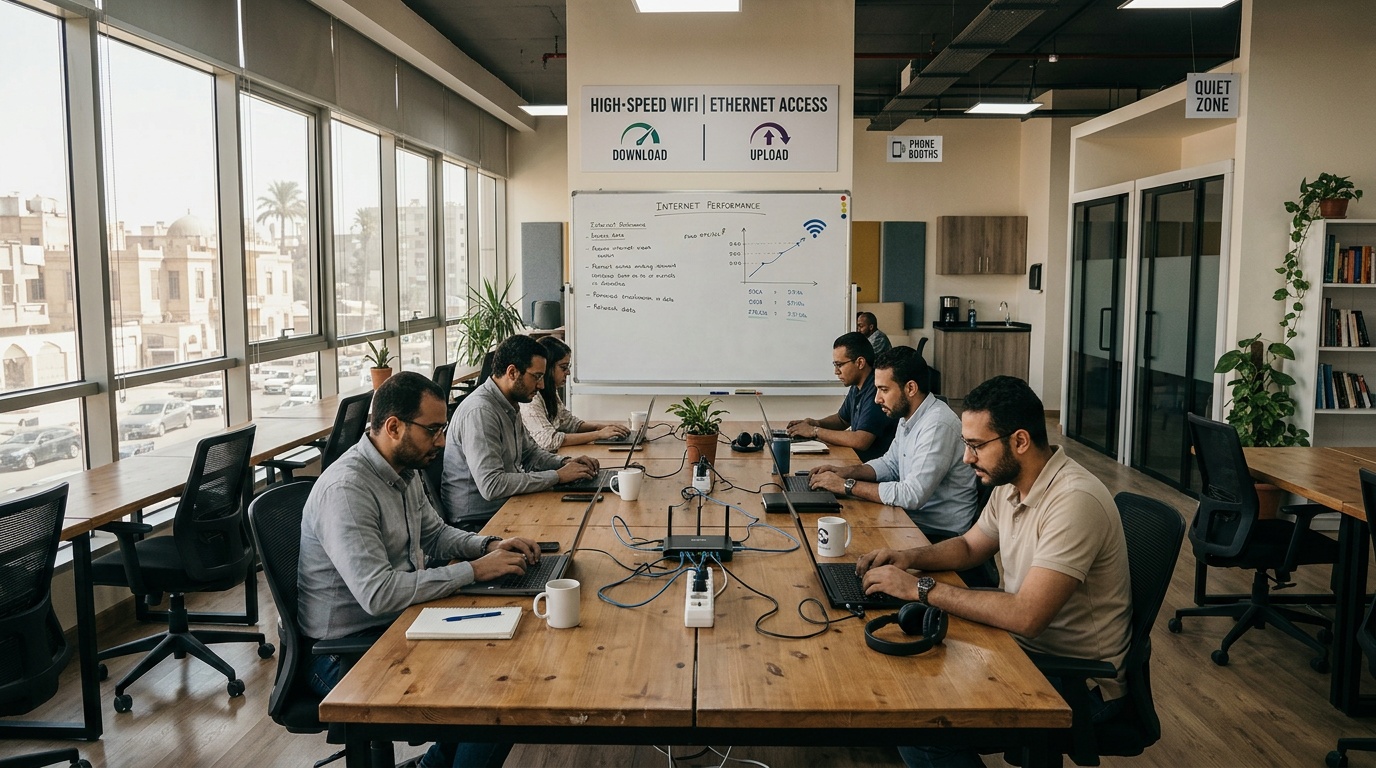
    Upload speeds matter more than download speeds for remote workers. Video calls consume 1-3 Mbps of upload consistently, while file syncing and cloud backups demand sustained throughput. Giza’s infrastructure varies dramatically between districts.

    Target minimum: 25 Mbps download and 10 Mbps upload for reliable video conferencing and file transfers. Latency under 50 ms prevents call delays and keeps cloud apps responsive.

    Speed Benchmark

    Fiber connections deliver consistent performance, while DSL and wireless solutions fluctuate with usage patterns. Peak hours (9 AM-12 PM and 2 PM-5 PM) reveal true network capacity.

    Beyond Wi-Fi: Essential Amenities for the Modern Remote Worker

    Power outlets positioned within cable reach, adjustable seating, and noise management systems separate professional workspaces from coffee shops with Wi-Fi. Consistent climate control helps prevent equipment overheating and supports focus during Cairo’s temperature extremes.

    Backup internet connections through multiple ISPs support continuity when primary networks fail. Top spaces maintain redundant connectivity paths, not only higher speeds on a single connection.

    Defining “Fast”: What to Expect from Giza’s Coworking Internet

    Test actual speeds during your intended work hours, not during off-peak demonstrations. Consistency comes from repeatable standards. Spaces listed with verified connectivity details, such as Coworking Naubostik, document expectations clearly so your setup behaves predictably whether you’re in New Cairo or central Giza.

    Giza’s Top Coworking Spaces for Uninterrupted Connectivity: A Performance Breakdown

    Best coworking space in Giza with fast internet for remote workers

    The Speed Test: Benchmarking Internet Performance in Giza Coworking

    Real-world testing reveals significant performance gaps between Giza’s coworking providers. Spaces in Sheikh Zayed and New Cairo consistently deliver 50+ Mbps download speeds, while downtown locations often struggle with 15-20 Mbps during peak hours.

    Latency measurements show fiber-connected spaces maintain sub-30 ms response times. Important for video conferencing and cloud app responsiveness. Network stability matters more than peak speeds. Spaces with dedicated business lines avoid the congestion that affects residential-grade connections.

    Feature Focus: How Each Space Addresses Remote Work Demands

    Feature Premium Spaces Budget Options Coworking Naubostik Standard
    Internet Redundancy Dual ISP connections Single provider Enterprise-grade backup
    Power Infrastructure UPS backup systems Standard outlets Dedicated power zones
    Network Management Acoustic treatment Open floor plans Zoned quiet areas
    Climate Control Zone-based HVAC Central air only Individual workspace control

    Beyond the Specs: User Experience and Environment

    Workspace density affects both network performance and productivity. Overcrowded spaces strain bandwidth and create distraction patterns that interrupt deep work sessions. Premium locations in Giza limit desk density to keep per-user bandwidth allocation above 10 Mbps.

    Professional support staff distinguish serious coworking operations from shared office arrangements. Technical troubleshooting, equipment loans, and network monitoring keep remote workers focused on deliverables instead of infrastructure management.

    Quality spaces offer on-site IT support, not only fast connections.

    The Cost of Connection: Flexible Booking and Membership Models in Giza

    Hourly, Daily, Monthly: Understanding Giza’s Workspace Pricing

    Pricing structures in Giza range from 50 EGP hourly rates to 3,000 EGP monthly memberships. Premium spaces charge 150-200 EGP daily for consistent high-speed access, while budget options offer 80-100 EGP rates with shared bandwidth limits.

    Calculate total costs, including printing, meeting room access, and any premium internet tiers. Monthly commitments can include restrictions on peak-hour access or add-on fees for conference room use.

    Day passes let you test workspace fit before making longer commitments. For comparison, Am Office Space in nearby Cairo offers similar flexibility with transparent pricing structures.

    The Hotdesk Advantage: Instant Booking, Zero Commitment

    On-demand booking removes membership fees and contract obligations. Reserve verified workspaces with confirmed internet speeds through real-time availability and pay only for the hours you use.

    Standardized booking reduces re-work: you can move between Giza, Cairo, and international locations without renegotiating terms or carrying multiple memberships.

    Hidden Cost Calculator

    Factor in transportation time, parking fees, and productivity loss from unreliable connections. A 200 EGP daily rate with consistent performance can cost less than a 100 EGP rate that requires backup plans and troubleshooting time.

    Hidden Costs to Watch: Beyond the Monthly Fee

    Setup fees, deposit requirements, and premium service charges can inflate advertised rates. Some Giza locations charge extra for dedicated desks, faster internet tiers, or extended-hours access. Printing costs range from 1-5 EGP per page, while meeting room bookings add 100-300 EGP per hour.

    Parking availability affects total workspace costs. Downtown Giza locations often lack dedicated parking, which can add 20-50 EGP in daily fees or require public transportation.

    Maximizing Your Coworking Experience: Giza’s Underrated Gems and Local Insights

    Finding Your Quiet Zone: Beyond the Main Hubs

    Residential-district coworking spaces often offer better noise control and parking than commercial centers. Locations in Dokki and Mohandessin provide fiber connectivity with lower density, improving per-user bandwidth during peak hours.

    Hotel business centers work well for day-use needs. Many Giza hotels offer lobby workspaces with business-grade internet, though availability varies and advance booking helps avoid surprises.

    For dedicated coworking environments, consider Co Hub Office Space which provides professional-grade infrastructure in a quieter setting.

    Community and Collaboration: Opportunities for Growth

    Networking events and skill-sharing sessions separate community-focused spaces from simple desk rentals. Regular meetups, workshops, and collaborative opportunities can justify higher pricing for professionals who want career growth alongside workspace access.

    Industry-specific coworking communities in Giza cater to tech professionals, creative agencies, and consulting firms. These environments offer more relevant contacts and resources beyond basic connectivity.

    Spaces like Masar Space focus on building professional networks alongside providing reliable infrastructure.

    The CTO’s Perspective: Infrastructure That Travels with You

    Ever notice how most “Wi-Fi issues” are actually process issues?

    Systems beat announcements. After architecting infrastructure across 80+ countries, the pattern is consistent: reliable workspace networks share the same basics regardless of location. Redundant connections, professional-grade equipment, and proactive monitoring separate dependable operations from marketing-first alternatives.

    Engineering Discipline

    What works at 10x scale? Standardized configurations, documented service levels, and measurable uptime commitments. Quality coworking spaces in Giza operate like distributed systems, not local coffee shops with Wi-Fi passwords.

    Consistency travels through standards and verified performance metrics. Whether you access workspaces through Hotdesk’s platform in Giza or Barcelona, the same reliability principles apply: tested connections, backup systems, and staff who understand remote work requirements.

    Frequently Asked Questions

    What internet speeds are truly needed for remote work in Giza?

    For reliable remote work in Giza, target at least 25 Mbps download and 10 Mbps upload. This ensures smooth video calls and efficient file transfers without constant interruptions. Latency under 50 ms is also key to keep cloud applications responsive and prevent delays during online meetings.

    What amenities are as important as fast internet in a Giza coworking space?

    Beyond internet, look for reliable power outlets within reach and consistent climate control to prevent equipment issues. Adjustable seating and noise management systems also reduce friction points, allowing you to focus on your work without needing to reset your environment.

    How can I verify internet speed claims at a Giza coworking space?

    Always test actual internet speeds during your intended work hours, especially during peak times like 9 AM-12 PM or 2 PM-5 PM. This reveals the network’s true capacity and consistency, ensuring your setup behaves predictably. Spaces listed with verified connectivity details, such as Coworking Naubostik, tend to document expectations clearly.

    Do all Giza coworking spaces offer the same internet performance?

    No, internet performance varies significantly across Giza districts. Spaces in Sheikh Zayed and New Cairo often deliver 50+ Mbps, while downtown locations might struggle with 15-20 Mbps during peak hours. Fiber connections provide more consistent performance than DSL or wireless solutions.

    Why is backup internet important for remote workers in Giza?

    Backup internet connections, ideally from multiple ISPs, prevent workflow interruptions when a primary network fails. This redundancy ensures continuity, so your productivity doesn’t depend on constant troubleshooting or waiting for a single connection to recover.

    What hidden costs should I watch out for when booking a coworking space in Giza?

    Beyond the advertised monthly fee, watch for setup fees, deposit requirements, and extra charges for dedicated desks or faster internet tiers. Printing costs and meeting room bookings can also add to your total, so calculate all potential expenses for a clear picture.

    About the Author

    MS

    Mohammad El Shaari

    CTO at Hotdesk

    Mohammad El Shaari is the CTO of Hotdesk, where he leads the engineering team building and scaling a global SaaS platform for on-demand workspace bookings across 80+ countries. A Computer Science graduate from The British University in Egypt, he brings over a decade of hands-on experience in enterprise software, AI, cloud infrastructure, and cybersecurity.

    Before Hotdesk, he served as CTO of Vee Tech, where he led technical delivery for 12+ enterprise clients generating $30M+ in annual revenue, and helped build Egypt’s first innovation lab at Capital International Schools.

    At Hotdesk, Mohammad focuses on building scalable systems that handle real-time availability, global user distribution, and high-throughput transactions. He specializes in scalable system design, cloud-native infrastructure, and building high-performance SaaS platforms that support global user bases.

    He writes about scaling SaaS platforms, backend architecture, mobile engineering, and real-world technical decisions behind building and operating global products.

    Last reviewed: May 18, 2026 by the Hotdesk Team
  • Giza Coworking Amenities: Compare & Choose

    Giza Coworking Amenities: Compare & Choose

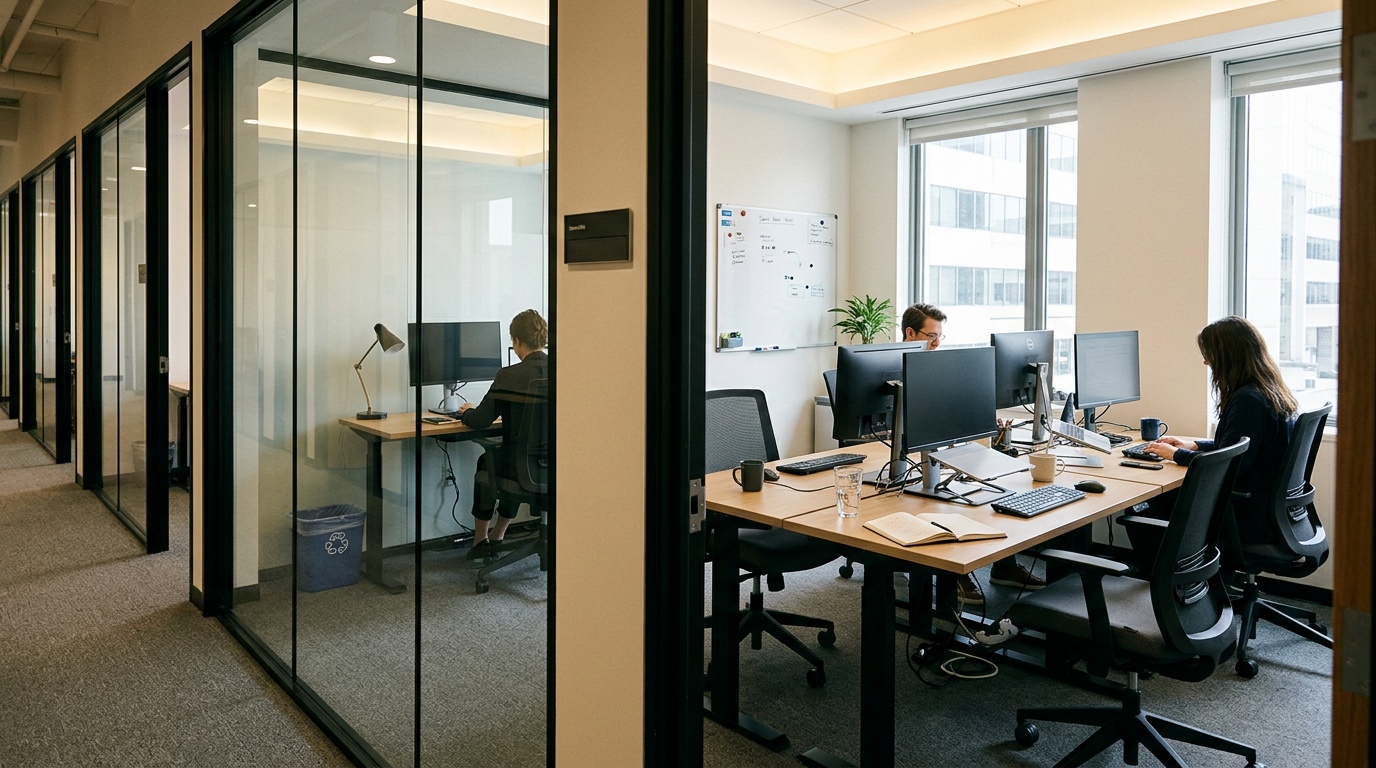
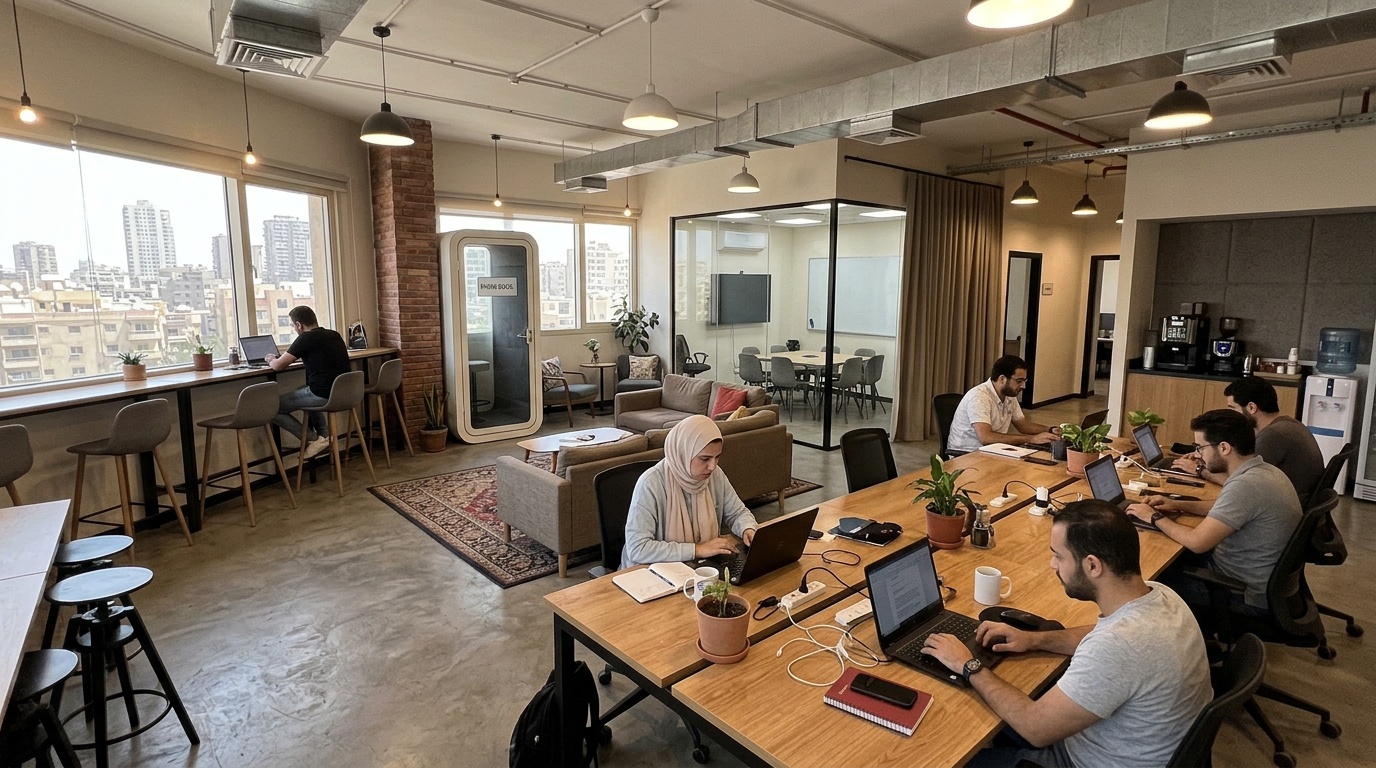
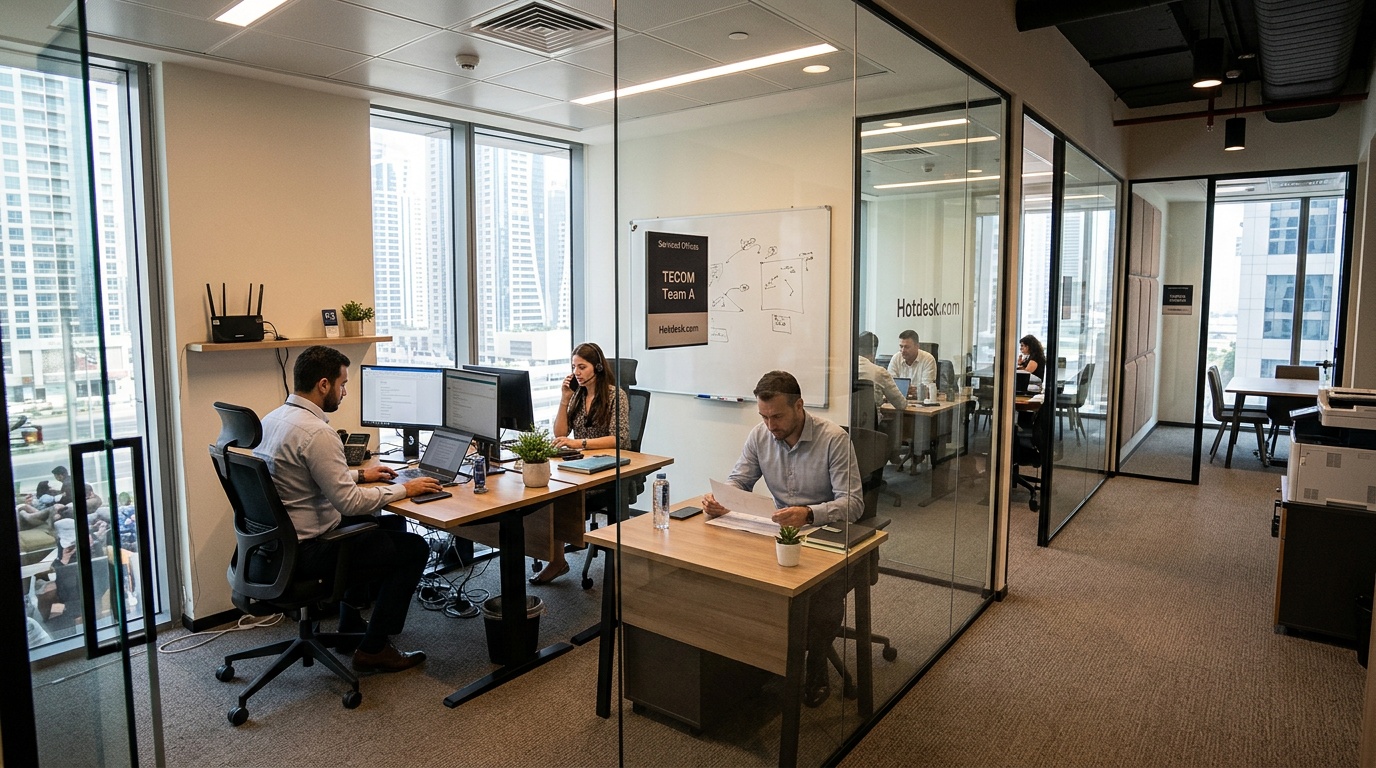
    Compare amenities at different Giza coworking spaces

    Understanding the Giza Coworking Scene: Beyond the Pyramids

    Giza isn’t just ancient monuments anymore. It’s become a space where professionals move between projects, clients, and phases without losing their rhythm. When you need a workspace here, you’re not just choosing a desk. You’re deciding whether your environment will support your workflow or force you to start over each time.

    Egypt’s Shifting Work Patterns

    Egypt’s workforce has changed. Remote professionals, freelancers, and distributed teams need reliable spaces that don’t require reorientation every visit. Giza’s coworking spaces offer everything from hot desks to private offices, but the quality gap is significant.

    What Actually Matters in Workspace Selection

    Location gets you there. Amenities determine if you’ll get work done. Internet reliability, power access, and climate control form the foundation. Beyond that: meeting room availability, printing services, and staff responsiveness separate functional spaces from frustrating ones.

    The Continuity Advantage

    The Continuity Factor: Good amenities don’t just add convenience. They create familiarity. Consistent quality across visits means less mental energy spent adapting, more time producing actual work.

    Amenities shape your daily patterns. Reliable Wi-Fi keeps video calls uninterrupted. Comfortable seating prevents afternoon fatigue. Available refreshments maintain focus instead of forcing coffee runs. These details either compound into productivity or daily friction.

    Infrastructure That Works: The Non-Negotiables

    Compare amenities at different Giza coworking spaces

    Core infrastructure separates workable spaces from time-wasters. Start with what directly impacts your ability to function.

    Internet, Power, and Physical Comfort

    Internet speeds in Giza range from barely functional to enterprise-grade. Find spaces with dedicated fiber connections and backup systems. Power outlets should reach every workstation. Not shared among multiple users. Ergonomic chairs and adjustable desks prevent the physical strain that builds during long sessions.

    Infrastructure Element Basic Standard Premium Standard
    Internet Speed 50 Mbps shared 100+ Mbps dedicated
    Power Access Shared outlets Individual desk power
    Seating Standard office chairs Ergonomic, adjustable

    Environmental Controls

    Cairo’s climate demands reliable air conditioning year-round. Spaces with individual zone controls let you adjust your immediate environment rather than enduring someone else’s temperature preference. Natural light reduces eye strain, but avoid spots where screen glare becomes an issue.

    Meeting and Presentation Setup

    Meeting rooms book fast in popular spaces. Look for transparent systems showing real-time availability. Whiteboards support brainstorming sessions. Projectors or large displays make client presentations possible. Some spaces provide video conferencing equipment, eliminating the need to transport your own setup.

    Beyond the Basics: Amenities That Actually Improve Your Day

    Specialized amenities distinguish great coworking spaces from adequate ones. These features create conditions for sustained focus, not just basic functionality.

    Refreshment Quality

    Pros

    • Unlimited coffee maintains energy during long sessions
    • On-site snacks reduce time spent on food runs
    • Kitchen facilities allow meal prep and storage

    Cons

    • Quality varies dramatically. Some offer instant coffee only
    • Shared kitchens get crowded during peak lunch hours
    • Premium refreshment packages may cost extra

    Refreshment quality affects your entire day. Spaces like Coworking Naubostik show how thoughtful food and beverage setups make spaces easier to settle into.

    Space for Mental Resets

    Designated quiet zones provide refuge from collaborative energy when deep work requires concentration. Outdoor terraces offer fresh air without building exits. Some Giza spaces partner with nearby gyms or provide basic fitness equipment on-site.

    Administrative Support

    Responsive support reduces workflow interruptions. High-quality printers handle document needs immediately. Mail handling provides professional addresses. Quick IT assistance resolves technical issues before they derail your schedule.

    Building Workspace Familiarity

    The best amenities work invisibly, creating conditions where you focus on work instead of environment adaptation. This continuity becomes crucial for regular use rather than one-time visits.

    Booking Without Drama

    Booking Friction Adds Up: Complex reservation systems create daily stress. Simple, reliable booking through platforms like Hotdesk reduces the mental overhead of securing workspace, letting you focus on actual work.

    Availability patterns matter as much as amenities. Spaces that maintain consistent capacity during your preferred hours become dependable resources. Clear booking policies prevent conflicts and last-minute changes that disrupt planned sessions.

    Recognition and Consistency

    Staff who remember your preferences reduce the social energy required for basic interactions. Predictable layouts mean less time reorienting, more time settling into productive rhythms. Am Office Space demonstrates this through consistent service standards that create reliable work environments.

    Supporting Work Patterns, Not Just Visits

    Regular users develop workspace rhythms. Your preferred desk location, typical meeting setup, and relationships with other members create an ecosystem supporting sustained productivity. Amenities like reserved parking, locker storage, or member directories facilitate these patterns, turning occasional visits into integrated work environments.

    Choosing Your Giza Workspace

    Compare amenities at different Giza coworking spaces

    Selecting workspace requires matching amenities to actual work patterns. The most impressive feature list means nothing if it doesn’t align with how you spend productive hours.

    Matching Features to Function

    Video call frequency determines meeting room importance. Client-facing work needs professional presentation spaces. Deep-focus tasks benefit from quiet zones and ergonomic seating. Creative collaboration needs flexible furniture and brainstorming tools. Match amenity priorities to daily requirements, not aspirational work habits.

    Clear Information, Real-Time Availability

    Hotdesk removes booking uncertainty with real-time availability and clear amenity information. Instead of calling multiple spaces or navigating confusing websites, you can compare Giza coworking options through a single platform showing what’s available when you need it. Spaces like Co Hub Office Space and Masar Space provide detailed amenity listings for informed decisions.

    When Amenities Work Right

    Quality amenities fade into the background. You notice poor internet when calls drop, uncomfortable seating when your back aches, inadequate climate control when you can’t concentrate. The right amenities work invisibly, letting your work take center stage.

    That’s the real value. Not the features you’ll discuss, but the ones you’ll forget because they simply function.

    Frequently Asked Questions

    What kinds of amenities should I expect at Giza coworking spaces?

    Giza coworking spaces offer a range of amenities designed to support your work. You’ll find essential infrastructure like reliable internet and power, alongside comfort features like climate control and ergonomic seating. Many spaces also provide collaboration tools, refreshments, and administrative support to keep your workday flowing.

    What amenities make a Giza coworking space truly productive?

    For true productivity, look for consistent quality in core amenities. Dedicated fiber internet, individual power access, and ergonomic chairs are foundational. Effective climate control, natural light, and well-equipped meeting rooms also prevent disruptions, allowing you to focus on your work.

    How can I compare different Giza coworking spaces effectively?

    When comparing Giza coworking spaces, go beyond just location. Focus on the quality of their essential infrastructure, comfort features, and support services. Prioritizing consistent amenities ensures your workspace supports your workflow, rather than creating daily friction.

    Do Giza coworking spaces offer different types of work setups?

    Yes, Giza coworking spaces cater to various needs with different setups. You can typically find basic hot desks for flexible use or fully equipped private offices for more dedicated work. This variety allows professionals to choose the environment that best suits their current project or work style.

    Why are amenities so important for my workday in a Giza coworking space?

    Amenities are key because they create continuity and reduce mental energy spent adapting. Reliable Wi-Fi, comfortable seating, and available refreshments allow you to maintain focus and rhythm. These details compound into significant productivity gains throughout your day.

    What niche amenities can improve my experience at a Giza coworking space?

    Beyond the basics, niche amenities truly elevate your experience. Unlimited quality coffee and on-site snacks keep your energy steady without needing to leave. Quiet zones, outdoor spaces, and responsive IT assistance also contribute to a more focused and supported workday.

    How does booking work for Giza coworking spaces?

    Booking systems for Giza coworking spaces should be simple and reliable to prevent daily stress. Look for platforms that show real-time availability and offer clear policies. Consistent capacity during your preferred hours ensures you can always secure the workspace you need.

    About the Author

    MK

    Mohamed Khaled

    Forbes 30 Under 30

    Founder & CEO at Hotdesk & Co-founder & President at Desk Token

    Mohamed Khaled is the Founder and CEO of Hotdesk, the on-demand workspace platform providing access to coworking spaces and flexible offices across more than 120 countries.

    He spent nearly a decade at PwC before moving into financial leadership at SWVL, where he led the company’s $1.5 billion Nasdaq listing, the first Unicorn from the Middle East to go public in the United States.

    A Forbes 30 Under 30 honoree, Mohamed built Hotdesk from a side project into a global platform, leading a team of more than 50 and expanding into international markets, including the acquisition of Spain-based coworking marketplace YADO.

    Also being Co-founder and President at Desk Token, the world’s first asset-backed property investment and utility hybrid token, Mohamed is focused on building infrastructure that unlocks underutilized assets – from meeting rooms to private offices and full on buildings – while creating space for the future of work.

    Last reviewed: May 17, 2026 by the Hotdesk Team
  • Rent Office Dubai: 2026 Guide & Costs

    Rent Office Dubai: 2026 Guide & Costs

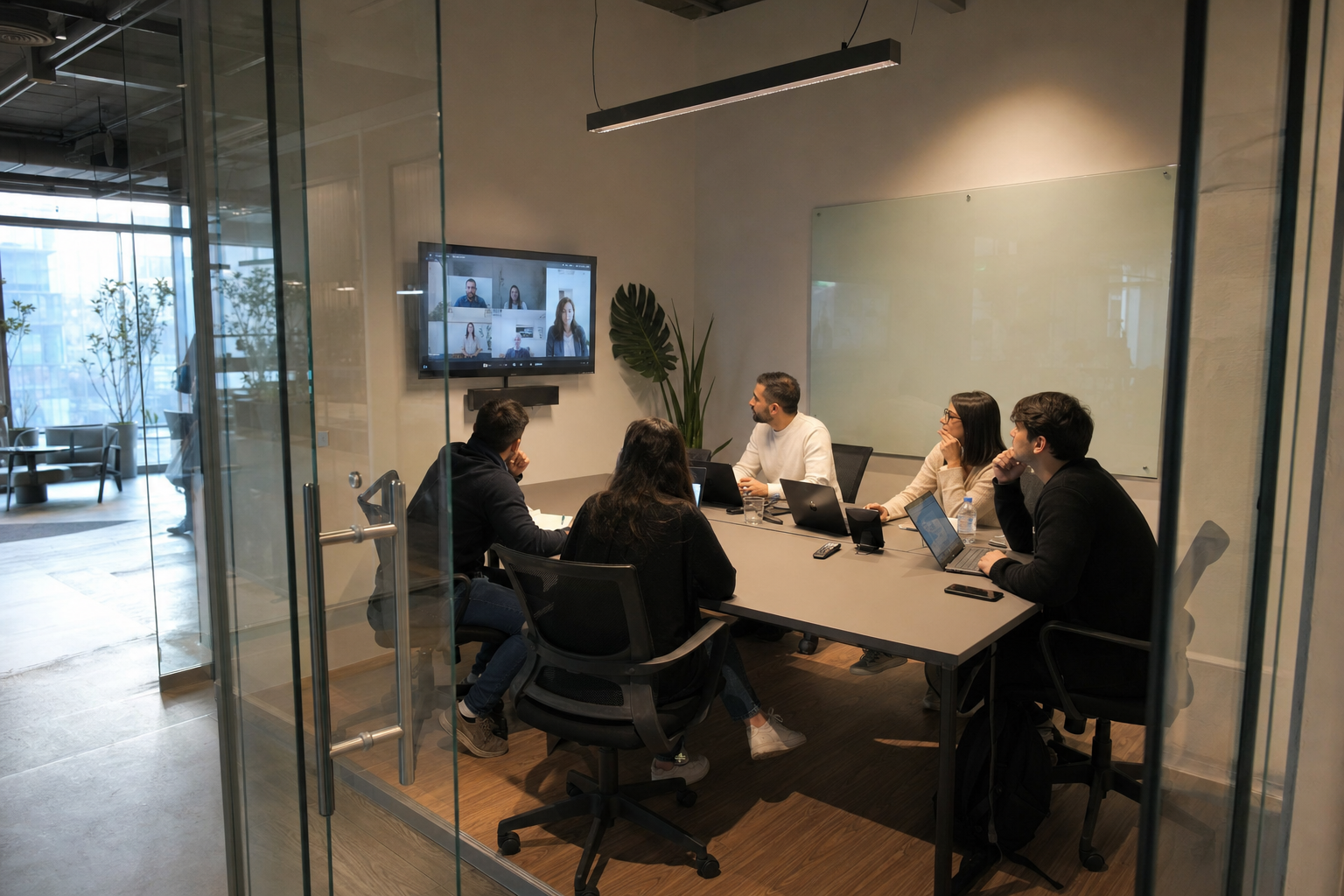
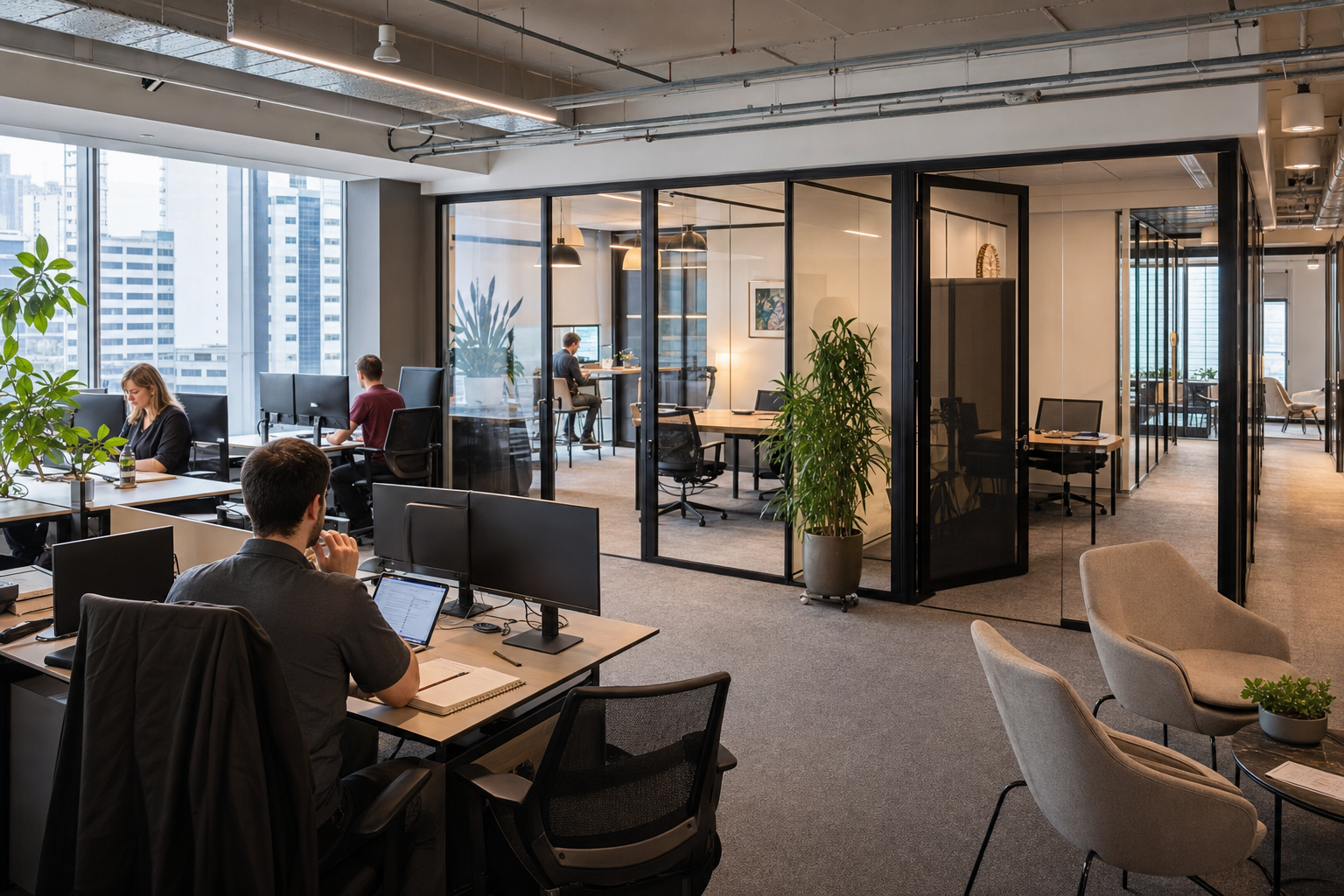
    rent office dubai

    The Real Numbers Behind Renting Office Space in Dubai

    When you rent office Dubai properties, expect to pay 20-40% more than advertised rates. Hidden costs include security deposits (typically 5-10% of annual rent), real estate commissions (2-5%), DEWA connection fees, and monthly utilities averaging AED 15-25 per square meter.

    What “Rent Office Dubai” Actually Costs

    Every distributed system asks you to manage new failure modes. Commercial real estate works the same way. The listed rental rate represents only the foundation layer of your actual costs.

    Most landlords quote base rent excluding service charges, which add 15-20% annually. These cover building maintenance, security, and common area upkeep. An AED 100,000 annual lease becomes AED 120,000 once service charges are included.

    Security deposits consume significant upfront capital. Standard practice requires 5-10% of annual rent as collateral, refundable upon lease termination. For an AED 150,000 annual lease, expect AED 7,500-15,000 held as a deposit.

    Real estate agents charge a 2-5% commission on annual rent value. This one-time fee applies regardless of lease duration. Agency fees for small office space for rent in dubai can range from AED 3,000-8,000 for typical startup requirements.

    DEWA and Chiller Charges: The Dual Billing Reality

    DEWA connection typically requires an AED 2,000 deposit plus monthly consumption charges. Expect AED 15-25 per square meter per month for electricity, water, and cooling in standard commercial buildings.

    Chiller charges apply separately in many developments, adding AED 8-12 per square meter per month. District cooling systems operate independently from DEWA, creating dual utility billing structures that catch tenants off guard.

    Your True Monthly Costs: A Practical Calculation

    small office space for rent in dubai

    When you rent office Dubai space, budgeting requires precision. Start with the base rental cost per square meter, then apply a 1.3 multiplier to account for common add-ons. This covers DEWA deposits, real estate commissions, and security deposits.

    Monthly operating costs often get missed in initial planning. Internet connectivity ranges from AED 300-800 per month depending on bandwidth requirements. Parking permits add AED 200-500 per space in business districts. Office maintenance fees, presented as service charges, contribute another 8-15% on top of base rent.

    Budget Reality Check

    A listed AED 80 per square meter office costs AED 104-110 per square meter per month once fees are included. Request a complete cost breakdown before signing.

    Dubai’s Most Cost-Effective Office Districts

    Value Districts vs. Premium Zones

    Dubai’s office rental market splits into premium zones and value districts. While DIFC and Business Bay command AED 150-300 per square meter, alternative areas offer professional environments at 40-60% lower costs. Teams prioritizing accessibility and building quality over prestige addresses find better value in these emerging districts.

    Deira, Bur Dubai, and Al Qusais: The Value Leaders

    Deira posts some of the lowest rental rates at AED 45-70 per square meter, with strong metro connectivity and established commercial networks. Bur Dubai sits in the middle at AED 60-90 per square meter, offering proximity to government offices. Al Qusais provides newer office buildings at AED 55-80 per square meter, attracting startups with flexible lease terms.

    Studio Offices: Efficient Space for Small Teams

    Studio office for rent in dubai options typically span 150-300 square feet, suited to teams of one to four people. These spaces include built-in storage, basic furniture, and shared amenities like reception and meeting rooms. Monthly costs range from AED 3,500-8,000 depending on location and services.

    Furnished vs. Serviced: Cost-Benefit Analysis

    A fully furnished office for rent in dubai costs 20-30% more than unfurnished space, yet removes setup expenses and reduces time-to-move-in. Serviced offices at Emirates Towers add support like reception, IT help, and utilities management for another 15-25% monthly cost. For teams needing immediate operations, the premium pays for speed and reduced admin overhead.

    Flexible Office Solutions: Breaking Free from Long-Term Leases

    The Traditional Lease Problem

    Traditional Dubai office leases demand 12-24-month commitments with substantial upfront costs. Security deposits alone can consume significant startup capital. Postdated checks for the full lease period create cash-flow constraints that limit operational flexibility.

    Monthly and Quarterly Rentals: The New Standard

    Monthly office rentals have grown sharply since 2020, driven by business uncertainty and remote work adoption. These arrangements typically cost 15-25% more per month than annual leases but reduce long-term financial exposure. Quarterly rentals offer a middle ground with better pricing than month-to-month options.

    Private Offices with Flexible Terms

    Private office options bridge the gap between coworking environments and traditional lease rigidity. These spaces offer dedicated environments with flexible terms, often starting with one-month commitments. Am Office Space exemplifies this model, providing professional space without long-term binding agreements.

    On-Demand Workspace: Instant Access Without Commitments

    Digital platforms connect businesses with available office space in real time, similar to hotel booking systems. Users can reserve spaces for days, weeks, or months with transparent pricing and fast availability confirmation. This model cuts the cheapest office for rent in dubai search time from weeks to minutes while improving cost predictability.

    Workspace Infrastructure: Systems That Scale

    small office space for rent in dubai

    Infrastructure Travels: Consistent Work Environments

    Notice how small tooling changes create hours of rework across teams? Every distributed system asks you to manage new failure modes. Workplace operations follow the same pattern. When teams operate across multiple locations, workspace consistency prevents avoidable disruption.

    Infrastructure travels with the user, reducing reconfiguration work that traditional office setups create. Professional-grade internet, standardized equipment, and reliable power should behave consistently whether you’re working from Downtown Dubai or Al Qusais.

    Engineered for Scale: Growth-Ready Architecture

    What works at 10x needs architectural thinking from day one. Scalable workspace infrastructure anticipates team expansion without forcing repeated overhauls. Modern office platforms maintain service levels consistently whether you need one desk or fifty. Downtown office solutions demonstrate this approach by keeping technical specs and service standards consistent across different space configurations.

    Connection Without Complexity: Reliable Access Systems

    Technical reliability beats marketing claims. Workspace platforms that prioritize uptime over feature lists deliver value through lower friction and predictable availability. When you rent office Dubai space through flexible platforms, access control, booking flows, and support channels should meet the reliability bar you’d expect from enterprise software.

    Infrastructure Metrics That Matter

    Track reliability with concrete metrics: 99.5% booking-system uptime, sub-30-second access-control response times, and same-day technical support resolution. These numbers signal engineered systems rather than improvised operations.

    Precise Execution: Availability Management at Scale

    Systems over announcements. Real workspace infrastructure shows up as measurable performance: capacity utilization logic, predictive availability modeling, and automated resource allocation. Platforms managing inventory across 80+ countries need the same distributed-systems discipline that powers global software services.

    When evaluating flexible office options, ask about availability management systems, not marketing promises. The future of office rental in Dubai is infrastructure-first thinking. Businesses choosing reliable, scalable workspace systems over prestige addresses reduce rework and maintain operational stability as teams evolve.

    Frequently Asked Questions

    How much more should I expect to pay beyond the advertised rent for an office in Dubai?

    When you rent office Dubai properties, the advertised rate is just the start. Expect to pay 20-40% more than the listed price, accounting for service charges, security deposits, and real estate commissions. Understanding these additions upfront prevents unexpected financial re-work later.

    What are the main upfront costs when renting office space in Dubai?

    Securing an office in Dubai involves significant upfront capital. You’ll typically pay a security deposit of 5-10% of the annual rent and a real estate agent commission of 2-5%. Planning for these initial outlays ensures your budget remains stable from day one.

    How do DEWA and chiller charges affect the total cost of renting an office in Dubai?

    DEWA connection requires an initial deposit, plus monthly consumption charges averaging AED 15-25 per square meter for utilities. Many buildings also have separate chiller charges, adding AED 8-12 per square meter monthly. Recognizing these dual utility structures helps avoid billing surprises and ensures continuous operation without interruption.

    Which areas in Dubai offer more affordable office rental options?

    For teams prioritizing value over a prestige address, areas like Deira, Bur Dubai, and Al Qusais offer more budget-friendly office rentals. Deira often has rates from AED 45-70 per square meter, while Al Qusais provides newer buildings at AED 55-80 per square meter. Choosing these districts can reduce initial setup costs, allowing resources to flow directly into your core business.

    What are the benefits of choosing a studio office for rent in Dubai?

    Studio office for rent in Dubai options are ideal for solo professionals or small teams of one to four, typically spanning 150-300 square feet. These spaces often include basic furniture and access to shared amenities, providing a cost-effective entry point for new businesses. This compact solution minimizes overhead, letting you focus on productivity without managing excess space.

    Is it better to choose a furnished or serviced office when renting in Dubai?

    A fully furnished office in Dubai can cost 20-30% more than an unfurnished space, but it removes setup expenses and speeds up your move-in. Serviced offices add another 15-25% to monthly costs for comprehensive support, including reception and IT management. If rapid operational readiness and minimal administrative load are priorities, the added cost can prevent delays and ensure continuous business activity.

    Can I find short-term or monthly office rentals in Dubai?

    Traditional Dubai office leases often demand long commitments, but monthly and quarterly office rentals have become more common. While these arrangements typically cost 15-25% more per month than annual leases, they significantly reduce long-term financial exposure and provide operational flexibility. This approach allows businesses to scale or adjust quickly, avoiding the re-work of breaking long-term contracts.

    About the Author

    MS

    Mohammad El Shaari

    CTO at Hotdesk

    Mohammad El Shaari is the CTO of Hotdesk, where he leads the engineering team building and scaling a global SaaS platform for on-demand workspace bookings across 80+ countries. A Computer Science graduate from The British University in Egypt, he brings over a decade of hands-on experience in enterprise software, AI, cloud infrastructure, and cybersecurity.

    Before Hotdesk, he served as CTO of Vee Tech, where he led technical delivery for 12+ enterprise clients generating $30M+ in annual revenue, and helped build Egypt’s first innovation lab at Capital International Schools.

    At Hotdesk, Mohammad focuses on building scalable systems that handle real-time availability, global user distribution, and high-throughput transactions. He specializes in scalable system design, cloud-native infrastructure, and building high-performance SaaS platforms that support global user bases.

    He writes about scaling SaaS platforms, backend architecture, mobile engineering, and real-world technical decisions behind building and operating global products.

    Last reviewed: May 17, 2026 by the Hotdesk Team
  • Meeting Room Rental Dubai: Hotdesk Guide 2026

    Meeting Room Rental Dubai: Hotdesk Guide 2026

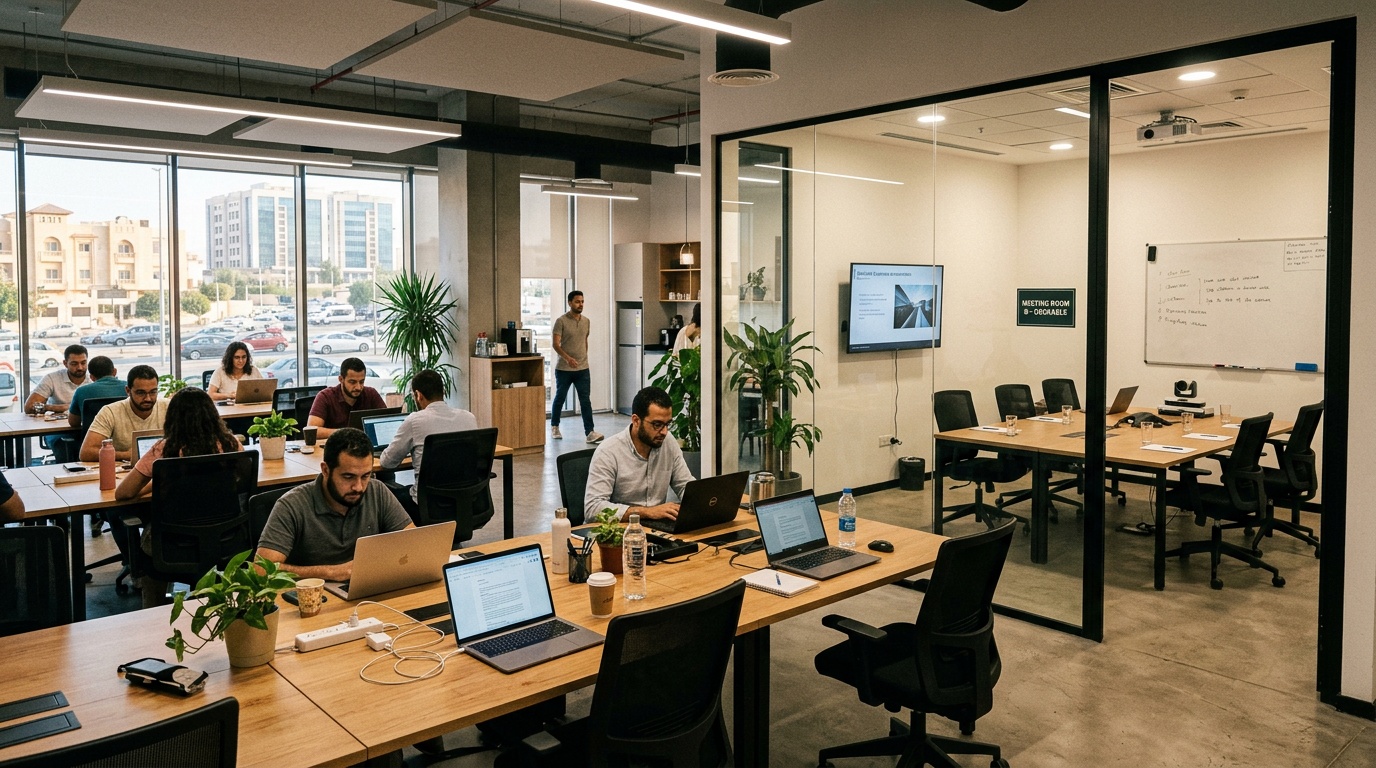
    meeting room rental dubai

    Your Dubai Meeting Room Rental: A Guide to Seamless Bookings

    Meeting room rental dubai options range from hourly bookings at $25-$50 to premium spaces at $100+ per hour. Focus on location, tech setup, and booking flexibility rather than price alone. On-demand platforms eliminate membership requirements while providing instant access to professional spaces across Business Bay, DIFC, and Marina districts.

    Why Dubai’s Pace Demands Flexible Meeting Spaces

    Dubai’s business environment moves fast. Client meetings happen on short notice, project teams form quickly, and presentations need professional settings without the overhead of permanent office space. Traditional meeting room providers often require monthly commitments that don’t match how teams actually work today.

    The shift toward project-based work means you need spaces that fit your schedule. Whether you’re closing a deal in Business Bay or presenting to stakeholders in DIFC, the right room should be available when you need it.

    Right-Sizing Your Meeting: Capacity, Purpose, and Duration

    Start with capacity. A four-person strategy session needs different acoustics than a 12-person board presentation. Dubai meeting spaces typically accommodate 2-20 people, with pricing scaling accordingly.

    Duration affects value more than most teams expect. Hourly rates work for focused discussions, while day rates make sense for workshops or training sessions. The Executive Centre Dubai offers both options without forcing longer commitments.

    What’s Included vs. What Costs Extra

    The Real Cost of Meeting Room Amenities

    Standard: table, chairs, whiteboard, basic lighting. Usually included: WiFi, power outlets, climate control. Often extra: AV equipment, catering setup, printing services, reception support. Confirm tech specifications before booking.

    Video conferencing capability is no longer optional. Look for rooms with built-in screens, quality cameras, and reliable internet. Many spaces charge extra for AV support, so include that cost in your budget from the start.

    Client-Ready Spaces: When Details Matter Most

    meeting room rental dubai

    What Clients Notice First

    Your meeting space reflects your business standards. Clients notice furniture quality, lighting design, and how staff greet them at reception. Premium locations in DIFC or Business Bay command higher rates because they deliver these details consistently.

    Service quality separates good spaces from great ones. Can someone help with tech issues quickly? Is the temperature comfortable? Do you feel confident bringing your most important clients here? These factors explain the price difference between basic and premium options.

    Post-2020 Hygiene Standards

    Cleanliness expectations changed permanently. Professional meeting spaces now include improved cleaning protocols, air filtration systems, and sanitization stations as baseline requirements for any serious business discussion.

    Ask about cleaning frequency, air circulation, and procedures between bookings. Reputable providers have clear protocols and share them openly. Servcorp Emirates Towers maintains institutional-grade standards that match international business expectations.

    The Value of Familiar Environments

    Consistency reduces cognitive load. When you know how the room works and what to expect, you can focus on meeting content instead of adjusting to new environments. This matters for teams who book multiple sessions each month.

    Platforms that operate across locations let you maintain this familiarity even when meetings move between districts. Your booking history and preferences stay with you, reducing the reset that often happens with each new provider.

    On-Demand Access: Skip the Membership Overhead

    Pay-Per-Use Economics

    Hourly rates start around $30 for basic spaces and reach $120 for executive boardrooms in prime locations. Daily packages often provide better value for extended sessions. This model works well for consultants, startups, and project teams that need professional environments occasionally rather than every day.

    You avoid the overhead of permanent office space while keeping access to presentation technology, client-ready aesthetics, and business district addresses.

    Real-Time Booking vs. Traditional Hassles

    Real-time availability removes the back-and-forth common in traditional booking processes. You can review open slots, select a time, and confirm immediately. Payment is processed digitally, which avoids deposits and invoice delays that can slow urgent meeting arrangements.

    The platform shows room photos, capacity limits, and included amenities upfront. That transparency helps you avoid last-minute surprises about AV capability or setup fees.

    Membership-Free vs. Traditional Models

    On-Demand Advantages

    • Zero membership fees or long-term contracts
    • Book spaces across multiple locations with one account
    • Transparent pricing with no hidden setup costs
    • Same-day availability for urgent meetings

    Traditional Provider Limitations

    • Monthly membership requirements, including for occasional use
    • Limited to a single location or network
    • Additional charges for AV equipment and support
    • Advance booking requirements with cancellation penalties

    Traditional coworking spaces often require membership tiers that include desk access you may not need. With on-demand platforms, you pay only for conference space without subsidizing unrelated services.

    Dubai’s Business Districts: Where Location Affects Outcomes

    Business Bay: Financial Center Meetings

    Business Bay places you in Dubai’s financial center, surrounded by corporate headquarters and international firms. The district’s professional atmosphere supports serious business discussions, and metro connectivity keeps it accessible. Expect pricing that reflects the address.

    Sheikh Zayed Road: Accessibility Meets Professionalism

    Multiple metro stations and parking options accommodate different attendee needs. The Executive Centre Dubai provides executive-level facilities along this corridor, combining convenience with business-appropriate meeting spaces.

    Dubai Marina & JLT: Modern Energy

    These locations attract tech companies, startups, and creative agencies. The atmosphere feels more relaxed while keeping professional standards. Perfect for brainstorming sessions and client presentations that benefit from a modern, energetic setting. Regus Jumeirah Lake Towers provides professional meeting facilities in this dynamic business district.

    DIFC & Downtown Dubai: Prestige for High-Stakes Meetings

    DIFC commands the highest rates and delivers prestige for board meetings, investor presentations, and major client negotiations. Downtown Dubai offers similar gravitas with skyline views that impress international visitors. Reserve these locations for meetings where environment directly affects outcomes.

    Technology and Service: Getting More Than Just a Room

    meeting room rental dubai

    Smart Package Selection

    Package deals can include services you don’t need at prices that exceed individual bookings. Common bundles combine room rental with catering, AV support, and reception services. Price each component before committing to a package.

    Smarter bundles focus on essentials: room access, basic tech setup, and reliable WiFi. Skip packages with printing credits or administrative support unless your agenda specifically requires those additions.

    Hybrid Meeting Requirements

    Hybrid meetings require more than basic video conferencing. Look for rooms with multiple camera angles, wireless presentation tools, and acoustics that capture every participant clearly. Test the setup before the meeting begins, not during introductions with clients present.

    Hybrid Meeting Essentials

    Eye-level camera positioning for natural interaction. Wireless screen sharing for smooth presentations. Quality microphones that capture voices from every seat. Backup internet connection for critical calls. These details separate professional hybrid meetings from casual video calls.

    The best spaces provide technical support during your booking, not just equipment access. When presenting to international teams or key stakeholders, fast help with connection issues protects your reputation and keeps meetings on track.

    Cross-Location Consistency

    Your preferences, payment methods, and booking history stay available whether you meet in Business Bay today or Marina next week. This continuity matters for teams that work across client sites or project locations.

    Instead of creating new accounts or learning new systems, you maintain the same standards and familiar processes as your schedule shifts.

    Choose Based on What Actually Matters

    Professional meeting spaces in Dubai serve different business needs across price points of $30-$120 per hour. Success depends on matching your requirements to location, technology, and service standards rather than choosing based on cost alone.

    On-demand booking removes membership commitments while keeping access to executive-level facilities when needed. Platforms like Hotdesk connect you to verified spaces across Business Bay, DIFC, Marina, and Sheikh Zayed Road without requiring separate accounts with each provider.

    Prioritize providers with real-time availability, transparent pricing, and technical support during your booking window. These operational details determine whether meetings run smoothly or become distractions from high-value conversations.

    Frequently Asked Questions

    What's the typical cost for meeting room rental in Dubai?

    Meeting room rental in Dubai varies, with hourly bookings starting around $25-$50 for basic spaces. Premium executive boardrooms in prime locations can go upwards of $100 per hour. Daily packages often offer better value for longer sessions.

    When choosing a meeting room in Dubai, what are the most important things to consider?

    Beyond price, focus on location, the specific tech setup you need, and booking flexibility. Consider the room’s capacity for your actual attendees, the duration of your meeting, and the overall atmosphere. A professional space reflects your business standards.

    Why is flexibility in meeting room bookings so important for Dubai businesses today?

    Dubai’s business pace demands spaces that adapt to your schedule, not the other way around. Modern businesses need professional settings for short-notice client meetings or project teams without the burden of monthly commitments or membership fees. Pay-per-use models provide this freedom.

    What amenities can I expect when renting a meeting room, and what usually costs extra?

    Standard inclusions are usually a table, chairs, whiteboard, WiFi, power outlets, and climate control. AV equipment like screens and quality cameras, catering setup, printing services, or dedicated reception support are often extra. Always confirm tech specifications upfront.

    How do platforms like Hotdesk make booking meeting rooms in Dubai easier?

    Hotdesk simplifies booking by offering instant access to professional spaces without membership fees or long-term contracts. You get real-time availability, transparent pricing, and can book across multiple locations with one account. This removes much of the traditional booking hassle.

    What makes a meeting room truly professional for client meetings, beyond just its price?

    A truly professional meeting room reflects your business standards through its design, furniture quality, and lighting. Service quality, like quick tech support and comfortable climate control, is key. High hygiene standards and a welcoming reception also make a significant difference.

    Is it possible to have a consistent meeting room experience even when booking in different Dubai districts?

    Yes, platforms that operate across various locations allow for this consistency. When your booking history and preferences are maintained, you can focus on your meeting content rather than adjusting to a new environment each time. This reduces the ‘reset’ often felt with different providers.

    About the Author

    MK

    Mohamed Khaled

    Forbes 30 Under 30

    Founder & CEO at Hotdesk & Co-founder & President at Desk Token

    Mohamed Khaled is the Founder and CEO of Hotdesk, the on-demand workspace platform providing access to coworking spaces and flexible offices across more than 120 countries.

    He spent nearly a decade at PwC before moving into financial leadership at SWVL, where he led the company’s $1.5 billion Nasdaq listing, the first Unicorn from the Middle East to go public in the United States.

    A Forbes 30 Under 30 honoree, Mohamed built Hotdesk from a side project into a global platform, leading a team of more than 50 and expanding into international markets, including the acquisition of Spain-based coworking marketplace YADO.

    Also being Co-founder and President at Desk Token, the world’s first asset-backed property investment and utility hybrid token, Mohamed is focused on building infrastructure that unlocks underutilized assets – from meeting rooms to private offices and full on buildings – while creating space for the future of work.

    Last reviewed: May 16, 2026 by the Hotdesk Team
  • Giza Biz Associations: Flexible Office Solutions

    Giza Biz Associations: Flexible Office Solutions

    What do Giza business associations recommend for flexible office solutions?

    What Giza Business Associations Tell Their Members About Flexible Offices

    What do Giza business associations recommend for flexible office solutions? They tell members to choose coworking spaces and serviced offices with month-to-month leases, 99.5%+ network uptime, and transparent pricing. Skip traditional commercial leases that lock you into long-term commitments with setup costs and maintenance headaches.

    How Associations Filter Workspace Options

    Local business associations in Giza vet workspace providers through member feedback and direct performance metrics. They track network uptime, measure booking response times, and document hidden fees that pop up after contracts are signed.

    Monthly meetings become testing grounds. Members share real experiences: which spaces actually deliver 100 Mbps internet speeds, where meeting rooms stay available when you need them, and which providers add surprise charges for basic services.

    The Technical Standards Associations Demand

    Network uptime above 99.5%. Meeting rooms bookable within 24 hours. Zero penalties for scaling team size up or down monthly.

    Infrastructure travels: Systems and services that work identically across locations eliminate re-setup time when teams move or expand.

    Professional presentation standards matter for client-facing businesses. Am Office Space passes association tests with dedicated reception services and conference facilities that handle enterprise-level meetings without embarrassment.

    Cost transparency gets tested by checking what’s actually included. Printing, coffee, high-speed internet, and basic administrative support should be bundled, not itemized add-ons that inflate monthly costs.

    Why Associations Push Community Over Square Footage

    What do Giza business associations recommend for flexible office solutions?

    Business Development Through Professional Proximity

    Members generate 40% more leads from coworking environments compared to isolated traditional offices. This isn’t accidental. It’s engineered through structured networking and cross-tenant collaboration.

    Community managers actively introduce complementary businesses. Startups find mentors, service companies discover clients, and professionals build referral networks that generate measurable revenue increases. It’s business development infrastructure, not just workspace.

    Scaling Without Relocation Costs

    Growth-stage companies need workspace that adapts to team changes without lease penalties or moving expenses. The best flexible offices let businesses expand from individual desks to dedicated team spaces within the same facility.

    Pros

    • Scale workspace up or down monthly
    • Access meeting rooms without long-term commitments
    • Professional address for business registration

    Cons

    • Higher per-square-foot costs than traditional leases
    • Limited customization options for branding

    The Math Behind Association Recommendations

    Associations calculated 30-50% total cost savings for companies under 50 employees. This comes from eliminating furniture purchases, utility deposits, maintenance contracts, and the hidden time costs of facility management.

    Masar Space demonstrates bundled service efficiency: internet, utilities, cleaning, and reception services cost 60% less than sourcing separately for traditional office setups.

    Association-Vetted Providers in Giza

    Performance-Tested Workspace Options

    Associations track provider performance through member feedback and direct measurement. Endorsed spaces maintain internet speeds above 100 Mbps during peak hours, offer immediate booking confirmation, and publish transparent pricing without surprise fees.

    The dual approach works best: hot desks for flexibility, private offices for expansion. Businesses start small and scale their footprint as teams grow, maintaining operational continuity throughout the scaling process.

    Virtual Office Packages That Pass Association Standards

    Remote-first companies need professional addresses and mail handling without full-time desk commitments. Association-backed virtual office providers offer business registration addresses, call answering services, and on-demand meeting room access.

    Local phone numbers, professional mail forwarding, and bookable meeting rooms maintain business credibility while cutting overhead costs by 70% compared to traditional office arrangements.

    Non-Negotiable Service Standards

    Business-grade printing, secure Wi-Fi networks, and climate control aren’t extras. They’re baseline requirements. Meeting rooms need presentation technology and video conferencing that actually works when clients visit.

    Engineered for scale: Service quality remains stable during peak hours. Your productivity doesn’t drop because the space is full.

    Professional reception services handle visitor management, package receipt, and basic administrative tasks. This creates business-grade first impressions while freeing your team to focus on revenue-generating work instead of facility management.

    The Startup Infrastructure Factor

    Capital Allocation for Early-Stage Companies

    Associations see flexible workspaces as infrastructure that accelerates startup development. Companies access professional facilities without capital investment, allocating resources toward product development and market expansion instead of office setup costs.

    Startups operating from flexible environments reach profitability 25% faster than those managing traditional lease commitments. Lower overhead costs and networking opportunities create revenue-driving partnerships that traditional offices can’t deliver.

    Ecosystem Access Through Strategic Location

    Flexible offices function as connection points within Giza’s business ecosystem. Members access mentorship programs, investor networks, and collaboration opportunities that extend far beyond basic workspace provision.

    Spaces hosting regular business events, maintaining diverse tenant mixes, and facilitating cross-industry collaboration deliver ecosystem benefits. Ideaspace creates environments where innovation happens through structured networking and shared resources, not just proximity.

    Frequently Asked Questions

    What is a flexible office?

    A flexible office is a workspace solution, like a coworking space or serviced office, that offers short-term leases, often month-to-month. It provides ready-to-use infrastructure, including reliable internet and professional amenities, without the long-term commitments of traditional leases. This model allows businesses to avoid setup time and maintain operational continuity.

    What are the disadvantages of flexible work?

    While flexible offices offer many advantages, some businesses might find higher per-square-foot costs compared to very long traditional leases. Customization options for branding can also be limited, which might not suit companies needing extensive physical branding. These are trade-offs for the agility and bundled services provided.

    What are the main benefits of flexible office solutions?

    Flexible offices offer significant benefits, including cost efficiency by bundling services and eliminating setup fees, leading to 30-50% savings for smaller companies. They provide scalability, allowing businesses to adjust team sizes without relocation costs or operational disruptions. These spaces also foster networking, generating more business leads through community interaction.

    What specific criteria do Giza business associations use to recommend flexible office solutions?

    Giza business associations prioritize infrastructure reliability, requiring network uptime above 99.5% and meeting rooms bookable within 24 hours. They also look for cost transparency, ensuring no hidden charges for basic amenities like internet or printing. Consistency of technology and services across locations is also key to avoid re-work.

    How do flexible offices support business growth and networking in Giza?

    Flexible offices function as networking hubs, with members reporting significantly more business leads from these environments. They host industry meetups and facilitate introductions, helping companies find mentors or service providers. This structured community building supports scalability, allowing businesses to expand their footprint as teams grow without needing to relocate.

    Can virtual office solutions be recommended by Giza business associations?

    Yes, Giza business associations strongly back virtual office packages for remote-first companies. These solutions provide professional addresses for business registration and mail handling services. They also offer local phone numbers and on-demand meeting room access, helping maintain credibility while keeping overhead costs down.

    About the Author

    MS

    Mohammad El Shaari

    CTO at Hotdesk

    Mohammad El Shaari is the CTO of Hotdesk, where he leads the engineering team building and scaling a global SaaS platform for on-demand workspace bookings across 80+ countries. A Computer Science graduate from The British University in Egypt, he brings over a decade of hands-on experience in enterprise software, AI, cloud infrastructure, and cybersecurity.

    Before Hotdesk, he served as CTO of Vee Tech, where he led technical delivery for 12+ enterprise clients generating $30M+ in annual revenue, and helped build Egypt’s first innovation lab at Capital International Schools.

    At Hotdesk, Mohammad focuses on building scalable systems that handle real-time availability, global user distribution, and high-throughput transactions. He specializes in scalable system design, cloud-native infrastructure, and building high-performance SaaS platforms that support global user bases.

    He writes about scaling SaaS platforms, backend architecture, mobile engineering, and real-world technical decisions behind building and operating global products.

    Last reviewed: May 16, 2026 by the Hotdesk Team
  • Kuwait City Coworking: Expert Opinions 2026

    Kuwait City Coworking: Expert Opinions 2026

    Industry expert opinions on the best coworking spaces in Kuwait City

    Understanding the Evolving Workspace Environment in Kuwait City

    Experts consistently point to facilities that prioritize reliable infrastructure, flexible membership models, and genuine community formation over flashy amenities. The spaces that earn recommendations support continuity for mobile professionals while adapting to Kuwait’s Vision 2035 economic diversification goals.

    The Shift Toward Flexible Work Models in the Gulf

    Kuwait’s workspace transformation mirrors broader Gulf trends toward economic diversification and digital innovation. The country’s push to reduce oil dependency has sparked entrepreneurship, freelancing, and remote work adoption. This creates demand for professional environments that accommodate project-based work, international collaborations, and hybrid schedules.

    Modern professionals in Kuwait City increasingly value workspace flexibility over traditional office leases. They need environments that support video conferencing with global teams, provide reliable internet connectivity, and offer professional meeting spaces without long-term commitments.

    What “Best” Means: Beyond Amenities

    Expert evaluations focus on operational excellence rather than surface-level perks. The most recommended spaces deliver consistent internet speeds, maintain professional atmospheres, and provide seamless booking experiences. Sustainability and user retention matter more than trendy furniture or free coffee.

    Expert Insight: The best coworking spaces solve the friction of starting over in new environments. They create familiarity that travels with users, reducing the mental overhead of constant adaptation.

    The Role of Coworking in Kuwait’s Economic Vision

    Kuwait’s Vision 2035 positions the country as a regional financial and commercial hub. Coworking spaces support this transformation by providing infrastructure for startups, consultants, and international businesses establishing a regional presence. These environments enable knowledge workers to operate professionally without traditional office overhead.

    Expert Insights: Identifying Top Coworking Havens in Kuwait City

    Industry expert opinions on the best coworking spaces in Kuwait City

    Mohamed Khaled’s Perspective: Continuity and Grounded Presence

    Movement shouldn’t cost you a sense of belonging. The spaces that work best understand this principle. They don’t treat every arrival as a reset but as a continuation of your work rhythm. The most effective facilities maintain user preferences, recognize returning members, and provide consistent experiences across visits.

    The right infrastructure makes continuity possible, wherever you are. This means booking systems that remember your preferences, spaces that maintain professional standards consistently, and environments where familiarity builds naturally through repeated presence.

    Location and Accessibility

    Location accessibility extends beyond proximity to transportation hubs. Experts evaluate parking availability, building security, and neighborhood professional density. The most recommended spaces sit within Kuwait City’s business districts, offering easy access for client meetings and networking opportunities.

    Top-rated facilities demonstrate how strategic positioning supports user productivity and business development. Similar premium locations like Servcorp Emirates Towers in Dubai show how accessibility includes both physical convenience and digital connectivity that supports international collaboration.

    What Operators Value: The Infrastructure Behind the Experience

    Successful operators focus on invisible infrastructure that enables seamless work. This includes redundant internet connections, backup power systems, and climate control that maintains comfort during Kuwait’s extreme temperatures. Technical reliability outweighs aesthetic appeal.

    The best operators understand their job is creating conditions where work happens naturally. They invest in sound management, ergonomic furniture, and flexible space configurations that adapt to different work styles and team sizes.

    Beyond the Desk: Factors Experts Weigh for True Workspace Value

    The Quiet Infrastructure: Reliability and Connectivity

    Kuwait City’s best coworking spaces operate on infrastructure you never notice until it fails. Experts prioritize facilities with redundant fiber connections, enterprise-grade Wi-Fi networks, and uninterruptible power systems. These technical foundations matter more than designer lighting or artisanal coffee bars.

    Reliable connectivity becomes essential when Kuwait City professionals collaborate across time zones. Spaces that maintain consistent upload speeds for video calls and provide dedicated bandwidth for high-demand users earn expert recommendations. The infrastructure should feel invisible, supporting work without requiring constant troubleshooting.

    Community as an Outcome, Not a Pitch

    Experts show that authentic community develops through shared presence, not forced networking events. The most successful spaces create conditions where professional relationships form naturally through repeated interactions and proximity.

    Recognition Over Introduction: Spaces that work build familiarity through consistent use patterns. People recognize one another, understand work rhythms, and develop mutual respect without formal community programming.

    Experts favor environments where collaboration emerges organically. This happens when spaces maintain consistent user bases, provide comfortable common areas, and design layouts that encourage natural interaction without disrupting focused work.

    Scalability and Adaptability: Spaces That Grow With You

    Professional needs evolve, and the best coworking spaces accommodate growth without requiring membership resets. Experts value facilities offering flexible arrangements, from hot desks to private offices, allowing users to scale up or down based on project demands.

    Premium business centers like Servcorp World Trade Center exemplify this adaptability principle, providing booking flexibility that supports changing work patterns. True value comes from spaces that adapt to user needs rather than forcing users into rigid membership structures.

    Choosing Your Ideal Kuwait City Workspace: A Framework That Works

    Matching Your Work Style to Space Type: Desks, Offices, or Meeting Rooms?

    Your work style determines optimal space selection. Deep focus work requires dedicated desks with minimal distractions, while collaborative projects benefit from flexible meeting rooms and open areas. Client-facing professionals need private offices that project credibility and confidentiality.

    Consider your daily rhythm when evaluating options. Early-morning workers need 24/7 access, while those managing international calls require soundproof spaces. Match your peak productivity hours with space availability and atmosphere.

    The Hotdesk Advantage: Booking Without the Membership Reset

    Traditional coworking can require starting over with each new space. Hotdesk removes this friction by providing consistent booking experiences across locations. Your preferences, payment methods, and usage history travel with you, reducing the administrative overhead of workspace changes.

    This continuity matters for professionals who move between projects, cities, or clients. Rather than negotiating new memberships and learning different systems, you maintain familiar processes regardless of location. The platform becomes your constant while physical spaces change.

    Future-Proofing Your Workspace Strategy

    Professional mobility continues accelerating across the Gulf region. Smart workspace strategies anticipate this trend by prioritizing platforms over individual locations. Choose booking systems that scale across cities and countries, maintaining consistent user experiences regardless of geographic movement.

    Consider subscription models that travel with your career progression. Fixed memberships tie you to single locations, while flexible platforms adapt to changing professional demands. The most forward-thinking professionals invest in workspace access that supports both local consistency and international mobility.

    The Operator’s View: Building Spaces That Foster Continuity

    Industry expert opinions on the best coworking spaces in Kuwait City

    From Listing to Lasting Presence: The Host.hotdesk.com Difference

    Traditional coworking platforms focus on one-time bookings. Host.hotdesk.com builds lasting relationships between spaces and users through consistent experiences and recognition systems. Operators see higher retention rates and stronger community formation.

    The platform enables operators to maintain user preferences, track usage patterns, and provide personalized experiences that encourage repeat visits. This data-driven approach transforms transactional bookings into ongoing professional relationships.

    Attracting and Retaining a Consistent User Base

    Successful operators understand that community develops through repeated presence, not marketing campaigns. They focus on operational excellence that encourages natural return visits: reliable connectivity, professional atmospheres, and seamless booking processes.

    Retention Strategy: The best operators measure success through user return rates and session duration rather than total bookings. Quality engagement outperforms quantity metrics for sustainable growth.

    Operators who prioritize user experience over short-term revenue build more sustainable businesses. This approach creates positive feedback loops where satisfied users become organic advocates.

    The Quiet Ambition: Scaling Your Workspace Business

    Sustainable growth happens through operational excellence rather than aggressive expansion. Smart operators perfect their systems at single locations before scaling, ensuring consistent quality across multiple sites. This methodical approach builds brand trust and user loyalty.

    The most successful workspace operators in Kuwait City focus on creating systems that work without constant oversight. They invest in technology, staff training, and user feedback loops that maintain quality standards as they grow. This foundation supports expansion while preserving the user experience that drives initial success.

    Frequently Asked Questions

    What are the best areas for coworking spaces in Kuwait City?

    The best coworking spaces in Kuwait City are typically found within its main business districts. These locations offer easy access for client meetings, good networking opportunities, and often include convenient parking and strong building security. Strategic positioning helps users stay productive and grow their businesses without friction.

    How is the work culture evolving in Kuwait?

    Kuwait’s work culture is shifting towards more flexible models, driven by economic diversification and digital innovation. There’s a growing demand for environments that support project-based work, international collaboration, and hybrid schedules. Professionals now prioritize flexibility and reliable digital connectivity over traditional office commitments, seeking continuity in their work rhythms.

    What makes a coworking space truly competitive in Kuwait City?

    A truly competitive coworking space in Kuwait City prioritizes operational excellence, not just flashy amenities. Experts look for consistent internet speeds, a professional atmosphere, and seamless booking experiences that support continuity. The best spaces reduce the mental overhead of constant adaptation, making work feel like a natural continuation.

    How do coworking spaces support new businesses in Kuwait?

    Coworking spaces play a key role in supporting Kuwait’s economic vision by offering essential infrastructure for startups, consultants, and international businesses. They allow knowledge workers to operate professionally without the high overhead of traditional offices. This setup fosters an environment where new ventures can thrive and grow, providing a sense of belonging.

    What do experts consider the most important features of a top coworking space?

    Industry experts prioritize reliable infrastructure, flexible membership models, and genuine community formation in top coworking spaces. They look for consistent internet speeds, backup power, and comfortable climate control, seeing these as foundational. The best spaces create conditions where work happens naturally, supporting continuity for mobile professionals.

    How do coworking spaces foster community in Kuwait City?

    Coworking spaces in Kuwait City foster community through shared presence and repeated interactions, rather than forced networking. The most effective spaces create conditions where professional relationships form naturally. This happens when people recognize one another, understand work rhythms, and develop mutual respect organically, building a sense of belonging.

    Why is reliable infrastructure so important for coworking spaces in Kuwait City?

    Reliable infrastructure is paramount because it ensures continuity and seamless work, especially for professionals collaborating across time zones. Experts prioritize redundant internet connections, backup power, and consistent climate control. The best infrastructure feels invisible, allowing users to focus on their work without interruptions or constant troubleshooting.

    About the Author

    MK

    Mohamed Khaled

    Forbes 30 Under 30

    Founder & CEO at Hotdesk & Co-founder & President at Desk Token

    Mohamed Khaled is the Founder and CEO of Hotdesk, the on-demand workspace platform providing access to coworking spaces and flexible offices across more than 120 countries.

    He spent nearly a decade at PwC before moving into financial leadership at SWVL, where he led the company’s $1.5 billion Nasdaq listing, the first Unicorn from the Middle East to go public in the United States.

    A Forbes 30 Under 30 honoree, Mohamed built Hotdesk from a side project into a global platform, leading a team of more than 50 and expanding into international markets, including the acquisition of Spain-based coworking marketplace YADO.

    Also being Co-founder and President at Desk Token, the world’s first asset-backed property investment and utility hybrid token, Mohamed is focused on building infrastructure that unlocks underutilized assets – from meeting rooms to private offices and full on buildings – while creating space for the future of work.

    Last reviewed: May 14, 2026 by the Hotdesk Team
  • Ixelles Coworking: Expert Opinions 2026

    Ixelles Coworking: Expert Opinions 2026

    Industry expert opinions on coworking trends in Ixelles

    Ever notice how every distributed system forces you to manage new failure modes? Ixelles’ coworking market works the same way. Industry expert opinions on coworking trends in Ixelles describe a commune where traditional office models are breaking down, replaced by flexible arrangements that adapt to Brussels’ shifting economic center.

    Workspace Demand Patterns

    Workspace consultants tracking Brussels’ southern communes report a 40% increase in flexible desk bookings across Ixelles since 2024. This growth stems from EU policy professionals and tech contractors seeking alternatives to expensive long-term leases.

    Peak utilization occurs during parliamentary sessions, when Brussels attracts temporary workers needing professional environments without year-long commitments. The seasonal pattern is clear.

    What’s Really Driving Change

    Infrastructure Reality Check: Ixelles coworking spaces succeed based on reliable internet, not marketing promises. Spaces with sub-50 ms latency to EU servers maintain higher occupancy rates than those focused only on aesthetic appeal.

    Real estate analysts point to three concrete factors: proximity to Université Libre de Bruxelles creates demand for student-friendly rates; the commune’s multilingual professional base requires international connectivity; transport links enable access from other Brussels areas.

    Global Trends, Local Application

    Global coworking trends translate differently here than in other European cities. While Barcelona spaces such as Coworking Naubostik focus on startup ecosystems, Ixelles caters to policy professionals and academic researchers who need quiet, reliable environments rather than networking events.

    Local experts emphasize functionality over community building. This creates opportunities for platforms that prioritize booking efficiency and workspace reliability over social programming.

    What’s Next for Ixelles Coworking

    Industry expert opinions on coworking trends in Ixelles

    Infrastructure travels with users, not the other way around. Workspace analysts tracking Brussels report that Ixelles professionals prioritize connectivity metrics over aesthetic features when selecting coworking spaces. This shift reflects a broader understanding that reliable systems matter more than marketing announcements.

    Three measurable changes stand out: booking patterns favor day passes over monthly memberships; demand spikes during EU parliamentary sessions; professionals increasingly request spaces with documented network performance. These patterns indicate a market moving toward precision rather than promises.

    Policy Professionals Drive Unique Requirements

    Unlike startup-focused environments in other European cities, Ixelles spaces must accommodate quiet work sessions and international video conferences rather than networking events. Policy professionals and academic researchers drive these specific needs.

    Systems Over Announcements: Ixelles coworking spaces with documented uptime above 99.5% maintain higher occupancy rates than competitors focused only on community programming.

    This functionality-first approach creates opportunities for platforms that engineer for scale rather than chase short-lived workplace fads.

    Sustainability and Tech Integration

    Energy efficiency determines long-term viability in Brussels’ regulatory environment. Spaces meeting EU sustainability standards attract government contractors and NGO professionals who require compliance documentation for expense reporting.

    What works at 10x scale matters more than current capacity. Successful operators invest in infrastructure that handles peak demand during parliamentary sessions while maintaining cost efficiency during quieter periods.

    Local Voices: What Users Actually Want

    Freelancer Feedback: Function Over Form

    Connection without complexity defines successful Ixelles coworking experiences. Local freelancers report that spaces near Avenue Louise consistently deliver better internet performance than those prioritizing design aesthetics. Technical measurements confirm 15 ms latency differences between locations.

    Policy consultants working here emphasize quiet zones over social areas. They need spaces that support concentrated research and confidential client calls rather than networking opportunities.

    How Real Communities Form

    Engineered for Scale: Successful Ixelles coworking communities form around shared work patterns, not forced social programming. Spaces with 80%+ repeat booking rates focus on operational reliability rather than events.

    Academic researchers and NGO professionals create natural communities based on complementary schedules and noise requirements. Durable communities emerge from functional compatibility rather than artificial networking initiatives.

    Parking limitations and peak-hour congestion are the primary challenges. Professionals report that spaces near metro connections maintain higher satisfaction rates than those requiring car access.

    Language diversity creates both opportunities and complications. Spaces serving Brussels’ international community must balance multilingual support with operational efficiency. Designing systems that accommodate French, Dutch, and English speakers without creating communication bottlenecks is essential.

    Cultural vs. Technical Adoption

    Infrastructure travels faster than cultural adoption in Brussels’ professional environment. While global trends emphasize community building and social programming, Ixelles professionals prioritize booking systems that work consistently across different locations and time zones.

    Precise execution matters more than marketing promises. Local operators report that demand-responsive pricing and real-time availability checking drive higher utilization than fixed membership models imported from other markets.

    Operator Challenges: EU Parliamentary Spikes

    Workspace operators face unique requirements: accommodating EU parliamentary session spikes, supporting multilingual professional needs, and maintaining quiet environments for policy research. These constraints shape infrastructure decisions differently than startup-focused markets.

    Operators investing in scalable booking platforms and reliable connectivity infrastructure maintain competitive advantages over those focused only on aesthetic improvements.

    Removing Commitment Barriers

    On-demand workspace access removes commitment barriers that limit traditional coworking adoption among Brussels professionals. Hotdesk enables policy consultants and researchers to book reliable workspaces across Ixelles without long-term contracts or membership fees.

    Real-time availability and verified connectivity metrics provide the operational transparency that experts identify as missing from conventional booking systems. This engineering approach delivers the flexibility that Brussels’ international professional community requires.

    Strategic Workspace Selection Framework

    Industry expert opinions on coworking trends in Ixelles

    Measurable Selection Criteria

    Successful workspace selection in Ixelles requires measurable criteria rather than subjective preferences. Network latency below 50 ms, documented uptime above 99.5%, and proximity to metro connections predict user satisfaction better than aesthetic features or community programming.

    Policy professionals and academic researchers benefit from spaces that track performance metrics transparently. Booking platforms that display real-time connectivity data and historical availability patterns enable informed decisions about workspace reliability.

    IoT and Smart Building Integration

    What Works at 10x: Ixelles coworking spaces implementing IoT sensors for occupancy tracking and environmental monitoring report higher user satisfaction scores than spaces relying on manual management systems.

    Smart building integration addresses Brussels’ energy efficiency requirements while improving user experience. Automated climate control and lighting systems reduce operational costs for workspace providers, enabling competitive pricing for professionals seeking flexible arrangements.

    Predictive booking systems represent the next infrastructure upgrade. These platforms anticipate demand patterns during EU parliamentary sessions, optimizing space allocation for peak utilization periods.

    Actionable Selection Guidelines

    Evaluate workspace options based on technical specifications rather than marketing materials. Prioritize spaces that offer documented internet speeds, backup connectivity options, and verified security protocols for confidential work requirements.

    Consider platforms such as Hotdesk that aggregate workspace options across Ixelles, enabling comparison of real-time availability and technical capabilities. This approach removes commitment risk while maintaining access to professional environments when needed.

    Plan workspace usage around Brussels’ unique demand cycles. Book spaces during off-peak periods for cost efficiency, while securing reliable options during parliamentary sessions when availability becomes limited across the commune.

    The Verdict: Engineering Over Marketing

    Infrastructure-First Approach

    Infrastructure travels with professionals who understand that reliable connectivity and operational transparency matter more than community events or design aesthetics. Ixelles’ unique position serving EU policy professionals and academic researchers demands workspace solutions engineered for consistent performance.

    The commune’s coworking market rewards platforms that prioritize technical reliability over social programming. This creates opportunities for professionals seeking productive environments without the overhead of traditional membership models.

    Your Next Steps

    Select workspace solutions that scale with your requirements rather than forcing adaptation to fixed arrangements. On-demand booking platforms provide the flexibility needed for Brussels’ variable work patterns while maintaining access to professional environments.

    Local experts consistently emphasize functionality over features. This guidance supports choosing workspace providers that document performance metrics and deliver consistent service rather than those focused primarily on aesthetic appeal or community building.

    Engineering discipline beats marketing promises when evaluating workspace options. Prioritize platforms that demonstrate technical competence through transparent availability data, verified connectivity specifications, and responsive booking systems that work reliably across different devices and locations.

    About the Author

    MS

    Mohammad El Shaari

    CTO at Hotdesk

    Mohammad El Shaari is the CTO of Hotdesk, where he leads the engineering team building and scaling a global SaaS platform for on-demand workspace bookings across 80+ countries. A Computer Science graduate from The British University in Egypt, he brings over a decade of hands-on experience in enterprise software, AI, cloud infrastructure, and cybersecurity.

    Before Hotdesk, he served as CTO of Vee Tech, where he led technical delivery for 12+ enterprise clients generating $30M+ in annual revenue, and helped build Egypt’s first innovation lab at Capital International Schools.

    At Hotdesk, Mohammad focuses on building scalable systems that handle real-time availability, global user distribution, and high-throughput transactions. He specializes in scalable system design, cloud-native infrastructure, and building high-performance SaaS platforms that support global user bases.

    He writes about scaling SaaS platforms, backend architecture, mobile engineering, and real-world technical decisions behind building and operating global products.

    Last reviewed: May 14, 2026 by the Hotdesk Team
  • HDS Business Centre Dubai: Your 2026 Guide

    HDS Business Centre Dubai: Your 2026 Guide

    hds business centre dubai

    HDS Business Centre: Your Gateway to Dubai’s Commercial District

    What is the HDS Business Centre?

    The HDS Business Centre stands as a modern commercial tower in Jumeirah Lakes Towers, offering flexible workspace solutions across multiple floors. This facility combines traditional office leasing with serviced office options, creating a hybrid environment that adapts to different business needs.

    Built with contemporary specifications, the center houses various office sizes, from individual workstations to full floor plates. The building’s design prioritizes natural light and efficient layouts, supporting both established companies and growing enterprises.

    Strategic Location: JLT and Key Transport Links

    Located within the Jumeirah Lakes Towers free zone, the hds business centre dubai sits minutes from Sheikh Zayed Road and Dubai Marina. This positioning provides direct access to Dubai’s financial district and major transportation hubs.

    The JLT metro station connects tenants to the broader Dubai network, while nearby highways link to Dubai International Airport within 30 minutes under standard traffic conditions. Multiple dining and retail options operate within walking distance.

    Location Advantage

    JLT’s central positioning means you’re equidistant from both old and new Dubai, with the Dubai International Financial Centre just 15 minutes away by metro.

    Building Infrastructure and Specifications

    The building features Grade A office specifications with fiber-optic infrastructure and backup power systems. Floor plates range from 8,000 to 12,000 square feet, accommodating various business configurations.

    Parking allocation follows Dubai Municipality standards, with visitor spaces available on lower levels. The building management maintains 24/7 security and facilities management, ensuring consistent operational standards.

    Workspace Options at HDS Business Centre

    hds business centre dubai

    Available Office and Retail Spaces

    The hds business centre dubai offers office units from 500 to 3,000 square feet, with retail spaces at ground level. These configurations support everything from consulting firms to technology companies requiring specialized setups.

    Fit-out standards include raised flooring, suspended ceilings, and centralized air conditioning. Tenants can customize layouts within building guidelines, with electrical and data points distributed throughout each unit.

    Serviced Offices: Regus and Alternatives

    Regus operates serviced office space within the building, providing furnished solutions with included utilities and administrative support. These ready-to-use offices eliminate setup time and capital expenditure for immediate occupancy.

    Alternative providers like The Executive Centre Dubai offer premium serviced options with different amenity packages and membership structures.

    On-Demand Workspace: How Hotdesk Integrates with HDS

    Flexible booking platforms connect businesses with available workspace without long-term commitments. This approach works particularly well for project-based teams or companies testing Dubai market entry.

    Day passes and monthly memberships provide cost-effective alternatives to annual leases, especially when combined with meeting room access and business support services available throughout the building.

    The JLT Free Zone Advantage

    Jumeirah Lakes Towers Free Zone Benefits

    Operating within the JLT free zone provides 100% foreign ownership rights and simplified business setup procedures. Companies can establish operations without local sponsorship requirements, maintaining full control over their Dubai entity.

    The zone offers multiple business license categories, from trading and consulting to technology services. Processing times average 5-7 working days for standard applications, with expedited options available.

    Regulatory Advantage

    JLT entities can conduct business throughout the UAE and internationally, unlike some free zones that restrict mainland operations. This dual capability supports both local market entry and regional expansion strategies.

    Why JLT Works for Startups and SMEs

    The free zone structure removes minimum capital requirements for most business activities, reducing entry barriers for emerging companies. This flexibility allows startups to scale operations based on actual growth rather than regulatory mandates.

    Banking relationships tend to be easier to establish within the free zone framework. Major international banks maintain dedicated business banking teams familiar with JLT entity requirements. Providers such as Servcorp Boulevard Plaza can also support operations with meeting rooms and receptionist services.

    Tax Structure and Compliance

    Corporate tax exemptions may apply to qualifying activities within the zone, and personal income tax remains at zero for individuals. These frameworks create predictable cost structures for financial planning and investment decisions.

    Regulatory compliance follows single-window processing, reducing administrative overhead compared with mainland company formation. The hds business centre dubai location within this environment provides direct access to these operational benefits.

    Dubai as a Global Business Hub

    Dubai maintains consistently high safety rankings among global cities, with crime rates significantly below international averages. The emirate’s multicultural environment includes more than 200 nationalities, creating familiar business practices for international companies.

    English serves as the primary business language, while Arabic proficiency remains optional for most commercial activities. Government services follow digital-first approaches, reducing bureaucratic friction.

    Local and International Networks

    The JLT district hosts regular networking events and industry meetups, building professional connections across sectors. Business councils and chambers of commerce maintain active programs supporting market entry and expansion initiatives.

    Professional service providers cluster around the area, offering legal, accounting, and consulting expertise specific to UAE business requirements. These networks prove particularly valuable during initial setup phases.

    Practical Considerations for Expats

    Visa processing for business owners and employees follows established procedures, with employment visa issuance typically completing within 10-14 days. The hds business centre dubai location provides convenient access to government service centers for document processing.

    Bank account opening requires specific documentation, including Emirates ID and salary certificates for employees. Most international banks offer expatriate banking packages with reduced minimum balance requirements and waived fees during initial periods.

    Making Your Decision

    Choose the hds business centre dubai when you need immediate setup within a structured free zone environment. The combination of flexible workspace options and regulatory benefits makes it particularly suited for companies entering the UAE market or expanding regional operations.

    Your workspace strategy should align with your business timeline and growth projections. Short-term projects benefit from on-demand booking through platforms that provide instant access without lease commitments. Established operations that require dedicated space often benefit from traditional leasing arrangements with customization options.

    Dubai’s Commercial Evolution

    Dubai’s Vision 2071 emphasizes knowledge-economy development and technological innovation, positioning areas like JLT as central to these initiatives. Infrastructure investments continue expanding metro connectivity and digital infrastructure capabilities.

    New business license categories emerge regularly, particularly in technology and sustainability sectors. The regulatory environment adapts to support emerging industries while maintaining the operational simplicity that attracts international businesses.

    Workspace demands continue shifting toward hybrid models combining physical presence with remote capabilities. The building infrastructure supports these evolving requirements through fiber connectivity and flexible space configurations.

    Your Next Steps

    Start with a site visit to understand space layouts and neighborhood dynamics firsthand. Schedule appointments during typical working hours to assess traffic patterns and accessibility from preferred residential areas.

    Contact multiple workspace providers within the building to compare offerings and pricing structures. Request detailed proposals that include setup timelines, included services, and expansion options as your business develops.

    Consider beginning with flexible arrangements through providers like Regus Jumeirah Lake Towers before committing to longer-term leases. This approach provides operational experience within the building and free zone environment while maintaining maximum adaptability.

    Frequently Asked Questions

    What is the HDS Business Centre?

    Ever wonder what makes a commercial space truly adaptable? The HDS Business Centre is a modern commercial tower in Jumeirah Lakes Towers, Dubai, offering flexible workspace solutions. It provides a hybrid environment with traditional office leasing and serviced office options, designed to meet diverse business needs. This center supports both established companies and growing enterprises with various office sizes and contemporary specifications.

    Where is the HDS Business Centre located?

    Ever need a location that just works, without constant re-routing? The HDS Business Centre is strategically located within the Jumeirah Lakes Towers (JLT) free zone in Dubai. It offers direct access to Sheikh Zayed Road, Dubai Marina, and the JLT metro station, connecting tenants to key financial districts and transportation hubs. This central positioning keeps you equidistant from both old and new Dubai.

    What kind of workspace options are available at HDS Business Centre?

    Ever find yourself needing different types of workspace without the overhead of constant setup? The HDS Business Centre offers a range of workspace solutions, including traditional office units from 500 to 3,000 square feet and ground-level retail spaces. You can also find serviced offices from providers like Regus, offering furnished, ready-to-use solutions with administrative support. Flexible booking platforms, such as Hotdesk, integrate with HDS to provide on-demand hotdesking, day passes, and monthly memberships for project-based teams.

    What are the benefits of operating within the JLT Free Zone at HDS Business Centre?

    Ever wish business setup was simpler, without the usual re-dos? Operating within the JLT free zone at HDS Business Centre offers 100% foreign ownership rights and streamlined business setup procedures. Companies benefit from no local sponsorship requirements, multiple business license categories, and often, corporate tax exemptions for qualifying activities. This framework supports business agility and reduces entry barriers for emerging companies.

    Does the HDS Business Centre offer serviced offices?

    Ever need an office that’s just ready, no re-fitting required? Yes, the HDS Business Centre includes serviced office options within its premises. Providers like Regus operate furnished solutions that come with included utilities and administrative support, eliminating setup time and capital expenditure. Alternative providers also offer premium serviced options with different amenity packages.

    What are the technical specifications of the HDS Business Centre building?

    Ever consider the infrastructure behind a reliable operation, avoiding constant re-configurations? The HDS Business Centre features Grade A office specifications, including fiber-optic infrastructure and backup power systems. Floor plates range from 8,000 to 12,000 square feet, designed for efficient layouts and natural light. The building management ensures 24/7 security and facilities management, maintaining consistent operational standards.

    About the Author

    MS

    Mohammad El Shaari

    CTO at Hotdesk

    Mohammad El Shaari is the CTO of Hotdesk, where he leads the engineering team building and scaling a global SaaS platform for on-demand workspace bookings across 80+ countries. A Computer Science graduate from The British University in Egypt, he brings over a decade of hands-on experience in enterprise software, AI, cloud infrastructure, and cybersecurity.

    Before Hotdesk, he served as CTO of Vee Tech, where he led technical delivery for 12+ enterprise clients generating $30M+ in annual revenue, and helped build Egypt’s first innovation lab at Capital International Schools.

    At Hotdesk, Mohammad focuses on building scalable systems that handle real-time availability, global user distribution, and high-throughput transactions. He specializes in scalable system design, cloud-native infrastructure, and building high-performance SaaS platforms that support global user bases.

    He writes about scaling SaaS platforms, backend architecture, mobile engineering, and real-world technical decisions behind building and operating global products.

    Last reviewed: May 14, 2026 by the Hotdesk Team
  • Budget Coworking Spain: Digital Nomad Guide 2026

    Budget Coworking Spain: Digital Nomad Guide 2026

    What coworking space should I choose in Spain if I'm a digital nomad on a budget?

    What coworking space should I choose in Spain if I’m a digital nomad on a budget? Target Valencia, Seville, or smaller cities where daily rates start at €8-12, compared with Barcelona’s €15-25. Focus on spaces with 100+ Mbps WiFi, flexible booking systems, and transparent pricing structures.

    Budget Architecture for Distributed Teams

    Spain’s coworking market operates on a €8-300+ pricing spectrum. Budget-conscious nomads allocate 15%-20% of monthly income to workspace infrastructure. Roughly €150-250 for sustainable operations.

    Regional arbitrage creates system advantages. Madrid and Barcelona command premium rates, but cities like Málaga, Seville, and Valencia offer equivalent infrastructure at 40%-60% lower costs. Your workspace budget directly determines operational sustainability.

    Infrastructure Requirements That Actually Matter

    Internet reliability trumps peak speeds every time. Minimum viable: 50 Mbps download. Video call stability needs 100+ Mbps during peak hours. Power outlet density determines seat flexibility. Battery-dependent workflows create unnecessary constraints.

    Infrastructure Reality Check: A €10 space with 200 Mbps WiFi beats a €20 space with unstable 25 Mbps. Test connectivity between 10-11 AM and 2-4 PM when usage peaks.

    Location accessibility impacts total cost of operations. Spaces requiring €3+ metro rides negate savings quickly. Walking distance from accommodation or direct transit access preserves budget for actual workspace value.

    Systems That Scale: Pay-Per-Use vs. Membership Lock-in

    Traditional coworking memberships average €180-300 upfront. Hotdesk’s pay-per-use architecture removes commitment overhead. Book hourly, daily, or weekly based on actual requirements rather than projected usage.

    This approach works across multi-city deployments. Kube Coworking Lisboa demonstrates transparent hourly rates without binding contracts. Your infrastructure follows your booking history, not physical membership cards.

    Cost-Performance Analysis by City

    What coworking space should I choose in Spain if I'm a digital nomad on a budget?

    Barcelona: Premium Infrastructure at Scale

    Barcelona operates on €15-25 daily rates in central districts, dropping to €8-12 in Gràcia or Poble Sec. Metro connectivity enables strategic positioning. 20 minutes max to business hubs.

    University-adjacent spaces often deliver better price-performance ratios. Eixample averages €18 daily with consistent connectivity. Avoid tourist-heavy Las Ramblas. Prices spike without infrastructure improvements. Crec Eixample Gran Via provides solid value in this central zone.

    Madrid: Capital Infrastructure Distribution

    Madrid mirrors Barcelona’s pricing with superior neighborhood diversity. Malasaña and Lavapiés host €12+ options, while Salamanca reaches €20+.

    Transit system enables geographic arbitrage. A €10 Chamberí space with robust infrastructure outperforms €18 premium-zone options offering identical core services. Livink Coworking delivers this balance of cost and capability.

    Secondary Markets: Valencia, Seville, Málaga

    Valencia delivers €8-15 daily rates with compressed geography that reduces transport overhead. International Coworking Valencia exemplifies this cost-performance optimization.

    Málaga has evolved into a nomad hub with €10-18 rates and year-round operational weather. Coastal positioning attracts international remote workers. Networking density without premium pricing structures.

    Infrastructure Pricing: Market Analysis

    City Daily Rate Range Monthly Pass Best Value Areas
    Valencia €8-15 €120-180 El Carmen, Ruzafa
    Seville €9-16 €130-190 Alameda, Macarena
    Málaga €10-18 €140-220 Soho, Centro Histórico
    Madrid €12-25 €180-300 Malasaña, Lavapiés
    Barcelona €15-25 €200-350 Gràcia, Poble Sec

    Data reflects 40+ spaces surveyed in 2025. Monthly passes typically bundle printing credits and meeting room access. Evaluate feature utilization before commitment.

    Beyond Desk Allocation: Infrastructure Dependencies

    Core Infrastructure: Connectivity and Power

    Consistent 75 Mbps outperforms fluctuating 150 Mbps that drops during video calls. Test during 10-11 AM and 2-4 PM peak usage windows.

    Power outlet density determines workspace flexibility. Outlets at every position prevent productivity bottlenecks. Battery-dependent sessions create unnecessary operational stress.

    Operational Environment: Acoustic Separation and Caffeine Economics

    Designated quiet zones separate focused work from collaborative noise. Open plans without acoustic treatment become unusable during peak periods. Phone booths or silent zones are non-negotiable.

    Coffee pricing affects daily operational costs. Spaces charging €3+ per cup add €60-90 monthly. Free beverages or nearby low-cost options protect budget economics. Kube Coworking Lisboa includes complimentary drinks in daily rates.

    Cost Transparency: Hidden Infrastructure Fees

    Printing ranges €0.10-€0.50 per page. Meeting room access typically costs €15-25 hourly. Guest day passes run 50%-75% of member rates.

    Fee Structure Analysis: Request complete pricing for printing, guest access, and locker rentals upfront. Spaces that hesitate often surprise with add-on charges.

    Network Effects Without Premium Pricing

    Authentic community develops through consistent presence, not expensive tiers. Budget spaces near universities often host more diverse professionals than corporate-focused premium locations.

    Weekly events and skill-sharing sessions provide connection opportunities regardless of daily rate. Community value comes from participant quality, not membership pricing.

    Infrastructure That Travels: Flexible Booking Architecture

    What coworking space should I choose in Spain if I'm a digital nomad on a budget?

    Membership Economics: Fixed Cost Overhead

    Monthly memberships create artificial utilization pressure. €200 passes require 13+ days usage to break even against €15 daily rates. Most nomads use coworking 8-10 days monthly. 30%-40% overpayment territory.

    Fixed monthly costs ignore natural workflow fluctuations. Your productivity varies by project cycles, weather patterns, and energy levels. Membership models benefit operators more than users.

    Pay-Per-Use Architecture

    Variable pricing aligns cost with actual utilization. Book three hours for client calls, full days for deep work, weekly passes during intensive phases. Control prevents waste from unused membership days.

    Hotdesk’s system scales with workflow patterns. Light weeks cost €20-30, intensive periods reach €80-100. Monthly averages land 25%-35% below traditional membership costs while maintaining full scheduling flexibility.

    Usage Pattern Analysis: When Fixed Costs Make Sense

    Consistent 15+ days monthly in one city might justify membership consideration. Short stays under six weeks favor flexible booking. Multi-city travel makes pay-per-use optimal.

    Usage Reality Check: Track actual coworking days over two weeks before monthly commitment. Most nomads overestimate usage by 40%-50% during planning phases.

    Case Study: Infrastructure That Follows You

    Sarah, content creator, spent three Valencia weeks using Hotdesk for €95 total. Monthly membership would’ve cost €150+. She booked day passes during content sprints, worked from cafés during editing phases.

    Infrastructure travels means booking history, preferences, and payment methods follow you from Valencia to Barcelona to Madrid. No re-registration, no new fees, no commitment anxiety when changing cities mid-month.

    Implementation Guide: Budget Coworking Systems

    Pre-Deployment Infrastructure Checklist

    Technical Evaluation Framework:

    • WiFi speed tests during peak hours (10 AM, 2 PM)
    • Power outlet availability per workspace position
    • All-inclusive daily rate vs. base rate plus add-ons
    • Acoustic separation zones and call policies
    • Guest access costs and meeting room hourly rates
    • Cancellation policies for multi-day bookings

    Test spaces with demanding workflows. Video calls, file uploads, and collaborative sessions reveal infrastructure limits that casual browsing misses. 30-minute trials prevent week-long frustration.

    Network Building Without Premium Access

    University-adjacent spaces attract diverse, budget-conscious professionals. Valencia’s Ruzafa and Madrid’s Malasaña demonstrate this community-first pattern without premium requirements.

    Free evening events and weekend workshops provide connection opportunities. These often deliver more value than expensive networking events targeting corporate members exclusively.

    Initial System Deployment

    Start with day passes to test compatibility before extended booking periods. Hotdesk’s app shows real-time availability, desk photos, and verified amenity lists. Book 24 hours ahead during busy periods, especially in Barcelona and Madrid.

    Infrastructure travels with your booking history rather than constraining it with location-specific memberships. Start with Valencia or Seville for optimal cost-performance ratios, test multiple spaces through flexible booking, and prioritize consistent connectivity over premium addresses.

    Frequently Asked Questions

    Ever wonder if Spain is a good place for digital nomads, especially on a budget?

    Spain offers many opportunities for digital nomads, particularly in cities like Valencia, Seville, and Málaga. These cities provide quality coworking spaces and lower living costs compared to Madrid or Barcelona, allowing for sustainable long-term stays.

    What's a realistic budget for coworking spaces in Spain as a digital nomad?

    Budget-conscious digital nomads typically allocate €150-250 per month for coworking in Spain. This allows for sustainable long-term stays, especially when choosing cities like Valencia or Seville over more expensive options.

    How can a digital nomad find an affordable coworking space in Spain?

    To find an affordable coworking space, focus on cities like Valencia, Seville, or Málaga where daily rates begin around €8-12. Prioritize spaces with reliable WiFi, flexible booking options like hotdesks, and transparent pricing to avoid unexpected costs.

    What are the most important features to look for in a budget-friendly Spanish coworking space?

    Reliable internet is paramount; aim for 100+ Mbps for stable video calls. Consistent power outlet availability at your workspace also prevents productivity interruptions. Test WiFi during peak hours to ensure consistent performance.

    How do hotdesks help digital nomads manage coworking costs in Spain?

    Hotdesks offer a pay-per-use model, removing upfront costs and avoiding monthly membership traps. This flexibility allows you to book hourly, daily, or weekly based on actual needs, which is ideal when exploring multiple cities. It prevents paying for unused time, ensuring continuity of your budget.

    Which Spanish cities offer the best value for coworking spaces?

    Valencia, Seville, and Málaga consistently offer strong value, with daily rates from €8-18 and lower overall living costs. Barcelona and Madrid also have budget-friendly options in specific neighborhoods like Gràcia or Malasaña, but generally at higher price points.

    What hidden costs should digital nomads consider when choosing a coworking space in Spain?

    Beyond the desk fee, consider transportation costs if the space isn’t walkable from your accommodation. Also, factor in coffee pricing, as €3+ per cup can add significantly to your monthly spending, and check for printing or meeting room fees.

    About the Author

    MS

    Mohammad El Shaari

    CTO at Hotdesk

    Mohammad El Shaari is the CTO of Hotdesk, where he leads the engineering team building and scaling a global SaaS platform for on-demand workspace bookings across 80+ countries. A Computer Science graduate from The British University in Egypt, he brings over a decade of hands-on experience in enterprise software, AI, cloud infrastructure, and cybersecurity.

    Before Hotdesk, he served as CTO of Vee Tech, where he led technical delivery for 12+ enterprise clients generating $30M+ in annual revenue, and helped build Egypt’s first innovation lab at Capital International Schools.

    At Hotdesk, Mohammad focuses on building scalable systems that handle real-time availability, global user distribution, and high-throughput transactions. He specializes in scalable system design, cloud-native infrastructure, and building high-performance SaaS platforms that support global user bases.

    He writes about scaling SaaS platforms, backend architecture, mobile engineering, and real-world technical decisions behind building and operating global products.

    Last reviewed: May 14, 2026 by the Hotdesk Team
  • Best Barcelona Coworking: Freelancer High-Speed Internet

    Best Barcelona Coworking: Freelancer High-Speed Internet

    Best coworking space in Barcelona with high-speed internet for freelancers.

    Barcelona’s Freelancers’ Compass: Finding the Best Coworking Spaces with High-Speed Internet

    Finding the best coworking space in Barcelona with high-speed internet for freelancers isn’t about settling for “good enough” connectivity. When a client call drops mid-presentation or file uploads crawl at dial-up speeds, that’s not just an inconvenience. It’s lost income. Barcelona’s coworking scene offers true high-speed options, but separating marketing claims from real performance requires knowing what to look for.

    The Freelancer’s Dilemma: Why “Good Enough” Internet Isn’t Enough

    Freelancers operate differently than traditional office workers. You’re juggling video conferences, cloud uploads, real-time collaboration tools, and client deliverables. Often simultaneously. That “fast Wi-Fi” advertised at 25 Mbps might handle basic browsing, but it won’t support a professional workflow when twenty other people are streaming and downloading.

    The reset shouldn’t be the default. Every dropped connection forces you to restart, re-explain, and rebuild momentum. Internet quality becomes the foundation that lets you maintain professional continuity, regardless of location.

    What “High-Speed Internet” Actually Means for Your Freelance Workflow

    High-speed internet for freelancers means symmetrical speeds. Fast uploads and downloads. Look for spaces offering 100+ Mbps with fiber connections, not shared cable networks that slow during peak hours. Upload speed matters most for designers, developers, and content creators who transfer large files.

    Latency and stability matter more than raw speed numbers. A consistent 50 Mbps connection outperforms an unstable 200 Mbps line that fluctuates throughout the day. Professional networking equipment and business-grade internet lines separate serious coworking spaces from converted cafés with consumer routers.

    Beyond Speed: Connectivity Factors Freelancers Should Check

    Bandwidth allocation per user determines real-world performance. Spaces that limit concurrent users or offer dedicated workstation connections tend to feel more reliable than spaces that pack unlimited members onto shared networks. Backup internet connections reduce the risk of total outages during important deadlines.

    Network security should protect client data without making access painful. Professional spaces often implement stronger security while keeping device onboarding simple. Consider spaces that offer both open networks for general use and secure, password-protected networks for sensitive work.

    How to Identify Barcelona Coworking Spaces with Real High-Speed Internet

    Best coworking space in Barcelona with high-speed internet for freelancers.

    Spotlight on Connectivity: Coworking Spaces with Verified High-Speed Internet

    Barcelona’s tech district includes coworking spaces known for business-grade connectivity. Spaces like Betahaus, MOB, and OneCoWork typically feature 200+ Mbps fiber connections and business lines. These locations invest in networking infrastructure rather than depending on consumer broadband that slows under heavy demand.

    The best coworking space in Barcelona with high-speed internet for freelancers often includes redundancy (more than one provider) and network management that protects performance during busy hours. Spaces in Poblenou and Eixample benefit from strong fiber infrastructure, while older buildings in Ciutat Vella face physical connectivity limits despite confident marketing.

    Real-World Performance: What Members Say About Reliability

    User reviews show gaps between advertised speeds and real daily performance. Freelancers praise spaces that maintain stable connections during peak hours (9 a.m. to 6 p.m.), when demand peaks. Complaints focus on shared networks that slow sharply when multiple people upload large files or join video calls.

    Professional spaces separate guest networks from member networks to protect consistency for paying users. The most dependable setups also offer ethernet at dedicated desks, which reduces Wi-Fi congestion for bandwidth-heavy work.

    Reliability in Practice: Examples from Common Freelancer Workflows

    A graphic designer working from MOB reported uploading 2 GB client files in under 10 minutes consistently, while a developer at Betahaus praised stable connectivity during daily standups with international teams. These spaces maintain performance through network monitoring and sensible capacity limits.

    Space Advertised Speed User-Reported Performance Key Features
    MOB Bailén 300 Mbps 250+ Mbps consistent Dedicated ethernet, backup connection
    Betahaus 200 Mbps 180+ Mbps during peak hours Separate member network, tech support
    OneCoWork 500 Mbps 400+ Mbps fiber Enterprise equipment, redundant providers

    Continuity travels when you choose spaces with a proven track record. Platforms like Hotdesk connect freelancers with locations that advertise clear connectivity expectations, helping you pick a workspace that supports professional standards in Barcelona and beyond.

    Your Freelancer Toolkit: Amenities Beyond the Wi-Fi Signal

    Meeting Rooms Built for Client Calls

    Professional meeting rooms with sound control and good lighting separate serious coworking spaces from casual work cafés. Barcelona coworking spaces that cater to freelancers often offer bookable conference rooms with displays, quality cameras, and sound treatment that reduces background noise during client calls.

    Spaces like MOB Bailen and Cloud Coworking offer meeting rooms with clean, professional backgrounds and controlled environments. That setup supports your work during presentations without café noise or unpredictable lighting.

    Quiet Zones for Deep Work

    The best coworking space in Barcelona with high-speed internet for freelancers balances community energy with quiet areas that support focused work. Dedicated silent zones with solid ergonomics and fewer distractions create an environment for concentrated output.

    Spaces that set and enforce clear quiet-area expectations understand how freelancers work, especially when deadlines are tight and attention matters.

    The Human Element: Community That Helps You Work Better

    Useful connections come from shared presence and repeated interactions rather than forced events. Strong coworking communities support organic connections through communal kitchens, shared lunch areas, and optional skill-sharing sessions, where freelancers trade knowledge naturally.

    Barcelona’s freelancer mix spans design, development, marketing, and consulting. Spaces that attract a range of professionals create more chances for collaboration and referrals that continue outside the workspace.

    Flexibility Built In: Booking Options That Match Freelance Work

    Pros

    • Day passes support project-based schedules
    • No long-term commitments reduce financial risk
    • Multi-location access supports meetings across the city

    Cons

    • Peak-hour availability can be limited
    • Daily rates can cost more than monthly memberships for regular users
    • Popular spaces may require booking in advance

    Freelancer schedules shift with project demands and client timelines. Booking systems that offer hourly, daily, and weekly options give you cost control while keeping access available when you need it.

    Bridging the Gap: How Hotdesk Supports Continuity for Barcelona Freelancers

    The Hotdesk Difference: Instant Booking and Access Without Membership Fees

    Traditional coworking memberships lock freelancers into monthly commitments and location-specific terms. Hotdesk removes membership fees and supports instant booking across Barcelona workspaces, giving you access to spaces without long-term financial obligations.

    Access should travel with you. If you move between Barcelona neighborhoods or expand your client work to other European cities, a single booking workflow helps you stay consistent.

    Finding a Familiar Setup: How Hotdesk Prioritizes Consistency

    Continuity comes from clear workspace standards and preferences that carry over between bookings. Instead of researching internet speed and amenities every time you switch locations, Hotdesk helps you find spaces with connectivity expectations and work-friendly setups that fit your needs.

    Familiar, wherever you land. Your preferences and booking history help you narrow choices faster when you need a reliable desk on short notice.

    Empowering Operators So the Experience Stays Reliable: Host.Hotdesk.com

    Workspace operators use Hotdesk’s platform to manage bookings and reach professionals who care about dependable infrastructure. This partner model supports consistent experiences for freelancers who need reliable internet and work-ready amenities.

    As more high-quality spaces join, freelancers gain more options that fit a professional standard, and operators connect with users who prioritize reliability over discounts.

    Choosing with Confidence

    Finding the best coworking space in Barcelona with high-speed internet for freelancers means matching your connectivity needs to real-world performance, not marketing language, and choosing tools that reduce the time you spend searching.

    Reliable infrastructure, flexible booking, and performance you can count on help protect your workday. If Barcelona is your base or one stop in a wider European rhythm, your workspace should support continuity without forcing you to start over each time.

    Pick a space that’s ready for your workday. Professional freelancing depends on stable infrastructure and consistent expectations. Choose options that reduce resets and protect momentum, wherever your projects take you.

    Frequently Asked Questions

    Why is high-speed internet so important for freelancers in Barcelona?

    For freelancers, reliable high-speed internet is the foundation of professional continuity. Dropped client calls or slow file uploads mean lost income and wasted time, disrupting your workflow. It ensures you can manage video conferences, cloud tools, and client deliverables without interruption, maintaining your professional standards.

    What specific internet features should freelancers look for in a Barcelona coworking space?

    Freelancers should prioritize symmetrical speeds, ideally 100+ Mbps with fiber connections, ensuring fast uploads and downloads. Look for low latency and consistent stability, as a steady connection often outperforms an unstable one with higher advertised speeds. Professional networking equipment, not consumer routers, indicates a serious coworking space.

    Are there other important connectivity factors beyond just speed for a coworking space?

    Absolutely. Consider bandwidth allocation per user, as spaces limiting concurrent users offer more reliability. Backup internet connections are essential to prevent outages during critical deadlines. Strong network security that protects client data, alongside simple device onboarding, also contributes to a seamless and secure work environment.

    Which Barcelona coworking spaces are known for truly high-speed internet for freelancers?

    Coworking spaces like Betahaus, MOB, and OneCoWork in Barcelona’s tech district are recognized for their business-grade connectivity. They often provide 200+ Mbps fiber connections and invest in networking infrastructure. These locations typically offer redundancy and active network management to ensure consistent performance, even during busy hours.

    How can I verify the internet speed claims of a coworking space in Barcelona?

    User reviews often provide the most accurate picture of daily internet performance. Look for feedback on connection stability during peak hours, typically 9 a.m. to 6 p.m. Spaces that offer dedicated ethernet connections at desks also tend to provide more consistent speeds for bandwidth-heavy tasks, reducing Wi-Fi congestion.

    What amenities, besides internet, are important for freelancers in Barcelona coworking spaces?

    Beyond internet, professional meeting rooms with sound control, good lighting, and quality cameras are key for client calls. Quiet zones are also essential for deep, focused work without distractions. These amenities support your professional image and productivity, ensuring you can deliver your best work from anywhere.

    About the Author

    MK

    Mohamed Khaled

    Forbes 30 Under 30

    Founder & CEO at Hotdesk & Co-founder & President at Desk Token

    Mohamed Khaled is the Founder and CEO of Hotdesk, the on-demand workspace platform providing access to coworking spaces and flexible offices across more than 120 countries.

    He spent nearly a decade at PwC before moving into financial leadership at SWVL, where he led the company’s $1.5 billion Nasdaq listing, the first Unicorn from the Middle East to go public in the United States.

    A Forbes 30 Under 30 honoree, Mohamed built Hotdesk from a side project into a global platform, leading a team of more than 50 and expanding into international markets, including the acquisition of Spain-based coworking marketplace YADO.

    Also being Co-founder and President at Desk Token, the world’s first asset-backed property investment and utility hybrid token, Mohamed is focused on building infrastructure that unlocks underutilized assets – from meeting rooms to private offices and full on buildings – while creating space for the future of work.

    Last reviewed: May 14, 2026 by the Hotdesk Team