
coworking spaces and the circular economy
Coworking Spaces and the Circular Economy: How Shared Workspaces Reduce Waste
Coworking Spaces: The Unseen Engines of the Circular Economy
The circular economy creates closed loops where materials stay in use longer, waste becomes input, and efficiency drives value. In workspace design, this means shared infrastructure, extended equipment lifecycles, and systems that adapt rather than replace.
Coworking spaces and the circular economy align naturally. A single office serves dozens of users across different schedules. Equipment gets maximum use. Furniture lasts longer because maintenance costs spread across multiple tenants. The model doesn’t reduce waste by accident. It makes waste reduction profitable.
Beyond Shared Desks: How Coworking Actively Reduces Waste and Resource Strain
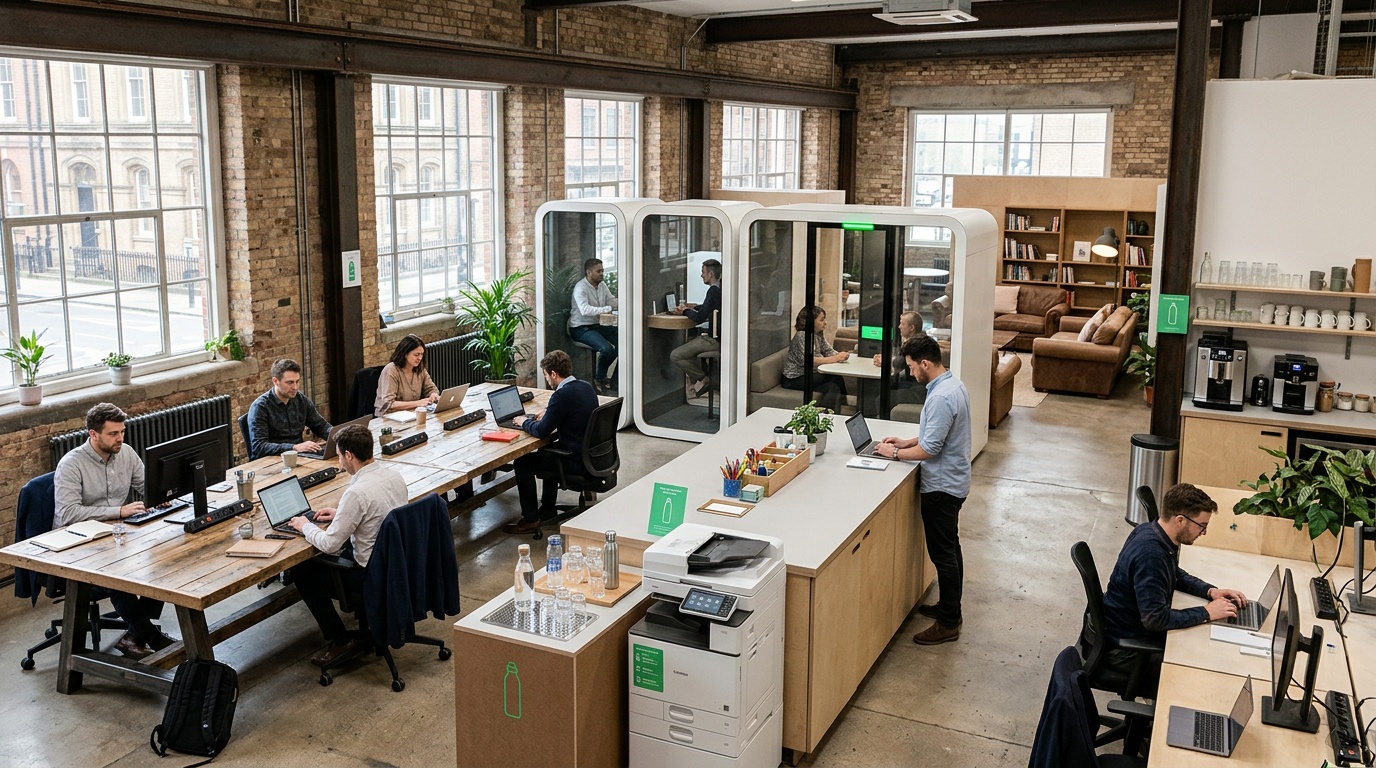
Individual offices stock supplies for peak usage that rarely occurs. Coworking spaces stock for actual usage patterns. Energy systems optimize for real occupancy, not estimated capacity. This approach cuts per-person resource consumption by 30-40% compared to traditional office models.
Shared printers reduce the need for individual device purchases. Conference rooms serve multiple companies without duplication. High-speed internet infrastructure supports dozens of businesses through one connection. This isn’t cost splitting. It’s resource optimization at scale.
Comspace demonstrates this principle through smart booking systems that match space allocation to actual needs, reducing energy waste and operational overhead.
The Economic Pulse: Cost Savings and Brand Value in Circular Coworking
For the User: Smarter Spending, Bigger Impact
The financial benefits of coworking spaces and the circular economy extend far beyond splitting rent. Users access premium equipment, high-speed internet, and professional amenities without the capital investment of individual ownership. A freelancer pays for desk access rather than purchasing a printer, scanner, and conference room setup.
This model reduces individual overhead by 60-70% compared to traditional office leases. More importantly, it eliminates the waste of underused resources. Instead of owning equipment that sits idle most days, users rely on shared infrastructure that operates at higher capacity rates.
For the Operator: Efficiency, Attraction, and Revenue
Operators benefit from reduced operating costs through optimized resource use. Shared printers serve 50+ users instead of individual desktop models. Energy consumption drops when spaces support flexible occupancy rather than fixed tenant loads. Waste management becomes more efficient through consolidated collection and recycling programs.
Revenue Impact: Operators implementing circular practices often report 15-25% higher occupancy rates as environmentally conscious professionals seek sustainable workspace options.
The brand differentiation matters. Comspace shows how circular principles attract users who value environmental responsibility alongside professional functionality. This positioning supports premium pricing while building stronger user loyalty.
Hotdesk’s Role in Supporting Circular Operators
We help operators improve resource efficiency through real-time demand matching. Instead of maintaining static capacity, spaces adjust offerings based on actual booking patterns. This reduces energy waste from unused areas while improving cleaning schedules and supply management.
Hotdesk analytics help operators identify peak usage periods, allowing for better resource planning. Comspace uses these insights to schedule maintenance during low-demand windows and adjust amenity availability to match user patterns.
Bridging Borders: Hotdesk as the Global Connector for Circular Work
The “Continuity Travels” Advantage
Traditional business travel creates resource waste through temporary setups and single-use accommodations. Hotdesk’s global network reduces this inefficiency by providing consistent workspace access across cities. Users keep their productivity patterns without needing new equipment or setup processes at each location.
This continuity lowers the environmental cost of business mobility. Instead of companies shipping equipment or users purchasing temporary solutions, existing coworking infrastructure supports seamless transitions. The circular model travels with the user.
Global Inventory, Local Impact: Expanding Reach Responsibly
Our expansion strategy prioritizes optimizing existing space over new construction. We connect underused spaces with mobile professionals, increasing occupancy rates without adding to the built environment. This approach supports local economies while limiting construction-related environmental impact.
Each new market entry focuses on making better use of current resources rather than creating parallel infrastructure. Users access local amenities and services, supporting community businesses while meeting professional needs.
Beyond Greenwashing: How Hotdesk Facilitates Genuine Circularity
Real circular economy work requires measurable resource optimization, not marketing claims. Hotdesk provides operators with utilization data that shows efficiency gains. Spaces can track energy consumption per user, waste reduction metrics, and resource-sharing statistics.
This transparency lets users make informed choices about environmental impact. They can select spaces based on verified sustainability practices rather than superficial green marketing. The platform becomes a tool for environmental responsibility.
Building the Future: Actionable Steps for a More Circular Workspace

For Individuals: Making Circular Choices When You Book
Select coworking spaces that demonstrate measurable sustainability practices. Look for spaces with energy-efficient lighting, recycling programs, and shared equipment policies. Book during peak hours to maximize space use rather than choosing empty periods that require additional energy for minimal occupancy.
Bring reusable water bottles and coffee cups to reduce single-use waste. Choose spaces within walking distance or accessible by public transit when possible. These decisions compound across your work routine, creating meaningful environmental impact through coworking spaces and the circular economy principles.
Smart Booking: Reserve space for the time you’ll use. Canceling unused bookings lets operators optimize energy consumption and accommodate other users efficiently.
For Operators: Integrating Circularity Into Your Offering
Install smart lighting systems that adjust based on occupancy levels. Provide filtered water stations to reduce bottled-water waste. Create equipment-sharing protocols that maximize use of printers, scanners, and presentation tools across all users.
Track and display resource-usage metrics for transparency. Users appreciate knowing their environmental impact, and operators benefit from data-driven efficiency improvements. Digital-first policies reduce paper consumption while maintaining professional service standards.
The Next Frontier: Technology’s Role in Scalable Circularity
Smart building systems enable real-time resource optimization across global networks. IoT sensors automatically adjust heating, cooling, and lighting based on actual occupancy patterns. This technology moves coworking spaces and the circular economy from manual practices to automated efficiency systems.
Predictive analytics help operators anticipate demand patterns, reducing waste from over-preparation while ensuring adequate resources during peak periods. Integrating these technologies through platforms like Hotdesk creates seamless user experiences while maximizing environmental benefits at scale.
Frequently Asked Questions
How do coworking spaces actually apply circular economy principles?
Coworking spaces apply circular economy principles by maximizing resource use. They share infrastructure like printers and conference rooms, extending equipment lifecycles and reducing individual consumption. This model ensures materials stay in use longer, turning waste into input.
What are the financial benefits for individuals using circular coworking spaces?
For individuals, circular coworking means smarter spending and a bigger impact. Users access premium equipment and amenities without the capital investment of ownership, reducing individual overhead by 60-70%. This also eliminates the waste of underused resources.
How do coworking operators benefit from adopting circular practices?
Operators benefit from reduced operating costs through optimized resource use and more efficient waste management. Implementing circular practices can also lead to 15-25% higher occupancy rates, attracting environmentally conscious professionals. This creates strong brand differentiation and loyalty.
How does Hotdesk help coworking spaces become more circular?
Hotdesk helps operators improve resource efficiency through real-time demand matching. Our platform adjusts space offerings based on actual booking patterns, reducing energy waste from unused areas. We provide utilization data, allowing spaces to track efficiency gains and make informed choices.
Can circular coworking principles extend to business travel?
Yes, the continuity of circular coworking travels with you. Hotdesk’s global network reduces resource waste from temporary setups by providing consistent workspace access across cities. This means users maintain productivity without needing new equipment or setup processes at each location, lowering the environmental cost of business mobility.
Beyond sharing desks, how do coworking spaces actively reduce waste?
Coworking spaces actively reduce waste by optimizing individual consumption, from office supplies to energy. They stock supplies for actual usage patterns, not peak estimates, and energy systems optimize for real occupancy. This results in 30-40% lower per-person resource consumption compared to traditional offices.
How does Hotdesk's expansion strategy support the circular economy?
Hotdesk’s expansion prioritizes optimizing existing space over new construction. We connect underused spaces with mobile professionals, increasing occupancy rates without adding to the built environment. This approach supports local economies and limits construction-related environmental impact.
Leave a Reply