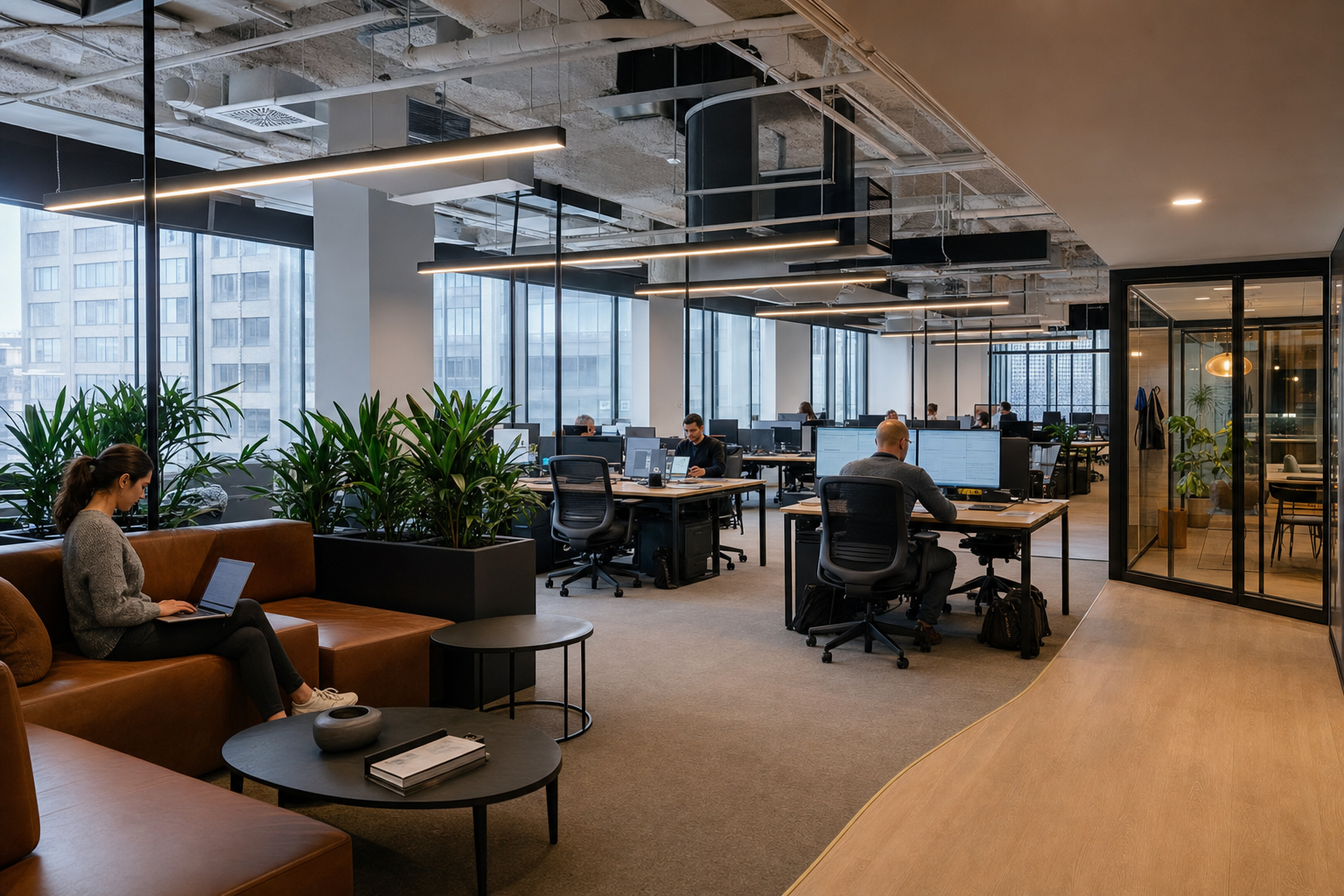
Flexible office space vs traditional lease
Decoding the Workspace Dilemma: Flexible Space vs. Traditional Lease
Every distributed system asks you to manage new failure modes. The same principle applies when choosing between flexible office space vs traditional lease options. Your workspace decision impacts everything from cash flow to team productivity, yet most businesses focus only on monthly rent figures.
Defining the Terms: What’s Truly Different?
Traditional leases lock you into 3-10 year commitments with fixed square footage. You handle fit-out costs, utilities, maintenance, and dilapidations. Flexible office spaces operate on month-to-month or short-term agreements with all-inclusive pricing.
The technical difference runs deeper than contract length. Traditional leases require you to build infrastructure from scratch. Flexible spaces provide pre-engineered systems that already scale across locations.
The Core Distinction: Commitment and Control
Traditional leases give you complete control over space design but demand significant upfront capital. Flexible spaces trade some customization for immediate operational capability. Think build vs. buy in software architecture.
| Factor | Traditional Lease | Flexible Space |
|---|---|---|
| Contract Length | 3-10 years | Month-to-month |
| Setup Time | 3-6 months | Same day |
| Upfront Costs | $50-$200 per sq ft | First month + deposit |
| Scaling Speed | Months to years | Days to weeks |
Your team gets consistent WiFi speeds, meeting room booking systems, and support across locations. Traditional leases require rebuilding these systems from zero.
Spaces like Comspace demonstrate this principle. Teams access the same operational standards whether they’re in Ho Chi Minh City or expanding to other markets.
The choice isn’t just about space. It’s about systems that work at 10x scale without requiring you to engineer the underlying platform.
Unpacking the True Cost: Beyond Rent and Security Deposits
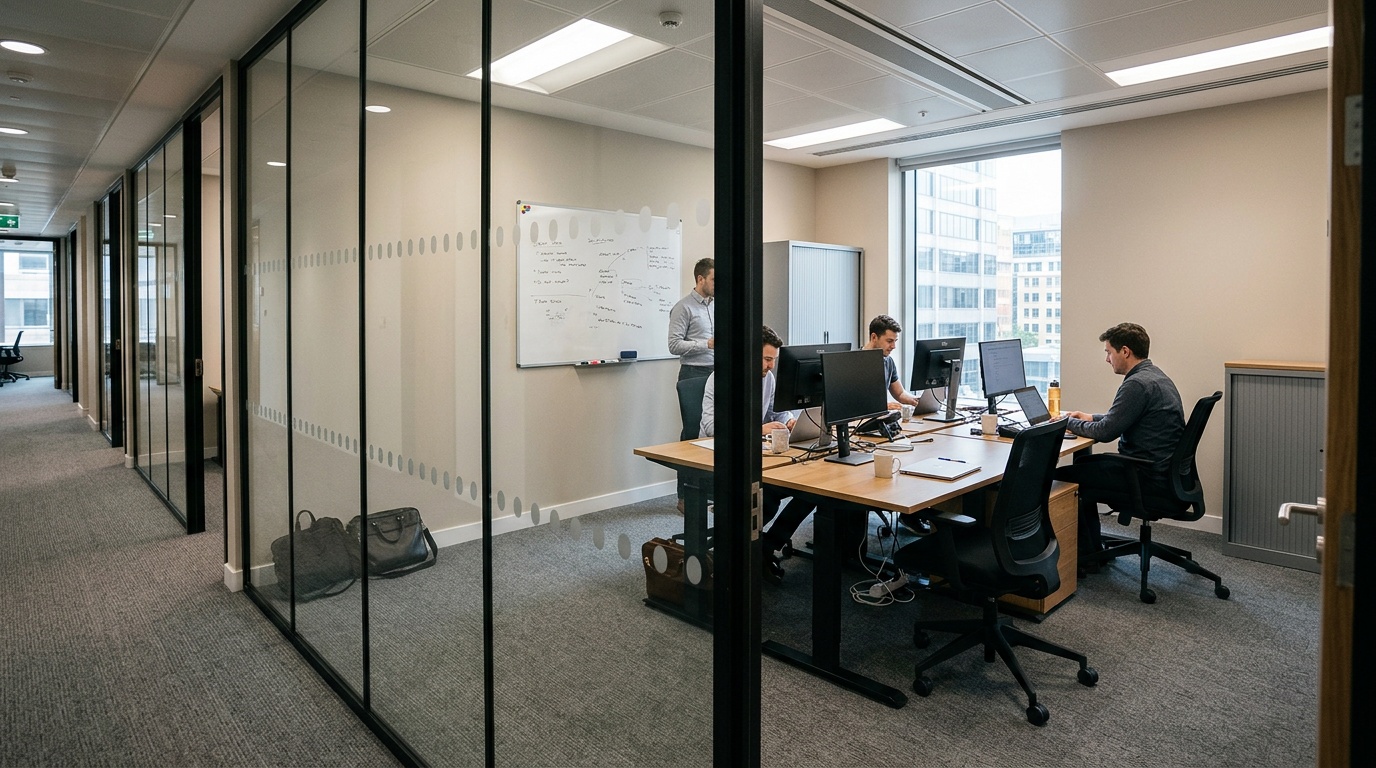
The Hidden Expenses of Traditional Leases: Fit-Out, Dilapidations, and More
Traditional leases carry costs that often surface after signing. Fit-out expenses average $50-$200 per square foot before your team can start working. Dilapidations clauses require you to restore the space to its original condition at lease end, often costing 20-30% of total rent paid.
Business rates, utilities, insurance, and maintenance fall entirely on your budget. A 5,000 sq ft office in a major city can generate $3,000-$8,000 monthly in these ancillary costs alone.
Many businesses underestimate total occupancy costs by 40-60%. That’s not just a planning error. It’s a systemic problem with how traditional lease economics work.
All-Inclusive Pricing in Flexible Spaces: What’s Covered?
Flexible workspace pricing models operate on different principles. WiFi, utilities, cleaning, security, meeting rooms, and support staff are bundled into predictable monthly rates.
This approach reduces budget surprises and administrative overhead. Your finance team handles one invoice instead of managing multiple vendor relationships. Comspace follows this model with transparent pricing that covers operational infrastructure.
Calculating Total Cost of Ownership: A Fairer Comparison
Traditional lease total cost includes rent plus fit-out depreciation, utilities, maintenance, insurance, and exit costs. A $30/sq ft lease can become $45-$65/sq ft when accounting for all expenses over the lease term.
Flexible spaces quote all-inclusive rates that reflect true occupancy costs. What appears more expensive per square foot can deliver better value when calculated properly.
The key metric? Cost per productive employee, not cost per square foot.
The Financial Agility of Flexible Space
Cash flow predictability matters more than headline rent rates. Traditional leases demand significant capital upfront with no guarantee of business success in that location. Flexible spaces preserve capital for core business operations.
Engineering Insight: Systems over announcements applies to workspace economics. Engineered cost structures that scale with your business outperform fixed overhead models in dynamic markets.
This financial flexibility becomes an operational advantage when expanding to new markets or adjusting team size based on project demands.
Adapting at Speed: Scalability and Agility in Modern Business
The Rigidity Trap: Why Traditional Leases Hinder Growth
Traditional leases create artificial constraints on business evolution. When your team grows from 15 to 45 people, you can’t simply add desks. You need new lease negotiations, additional fit-out costs, and months of planning.
This delay kills momentum during growth phases.
The reverse problem hits just as hard. Market downturns or project completions can leave you paying for empty space without a clean exit. Traditional lease structures assume linear growth patterns that don’t match modern business reality.
Flexible Space: Growing and Shrinking with Your Business
Need 20 more dedicated desks next month? Done. A project ends and team size drops by 30%? Adjust your footprint accordingly.
This isn’t just convenience. It’s operational efficiency. Your workspace costs track actual headcount rather than projected headcount from three years ago. Capital stays focused on business growth instead of real estate speculation.
Enterprise Agility: Project-Based Needs Met Instantly
Large enterprises increasingly operate through project teams that form and dissolve based on market opportunities. Traditional office allocation can’t match this pace.
Teams can establish a presence in new markets within days, test demand, and scale accordingly. This speed advantage compounds when competing for time-sensitive opportunities or responding to client requests for local presence.
Infrastructure Insight: What works at 10x requires systems that scale without manual intervention. Flexible workspace infrastructure scales automatically with your operational needs.
Beyond the Four Walls: Culture, Collaboration, and Connectivity
Impact on Company Culture: Traditional vs. Evolving Workplaces
Traditional offices can create territorial thinking. Teams claim specific areas, departments build silos, and innovation suffers from predictable interactions.
Flexible spaces encourage cross-pollination between different companies and industries sharing the same environment. This exposure can accelerate learning and partnership opportunities.
Your sales team might discover new approaches by observing how other businesses handle client relationships in shared spaces.
The Global Access Advantage: Connecting Your Distributed Teams
Modern teams don’t work from single locations. Your developers might be in Berlin, sales in Singapore, and operations in Denver. Traditional leases provide access to one building.
Flexible space networks provide access to professional workspace wherever your team operates.
This global connectivity becomes a competitive advantage. Team members maintain professional standards and reliable infrastructure regardless of location. No more video calls from coffee shops or home offices with poor acoustics.
Consistent Standards Across Locations
When your workspace solution provides consistent standards across locations, your traveling team members face less friction. The same booking systems, reliable WiFi performance, and familiar operational procedures matter more than individual office aesthetics.
Your team focuses on work instead of figuring out how to connect to different systems in each location.
Making the Strategic Choice: When Each Model Shines
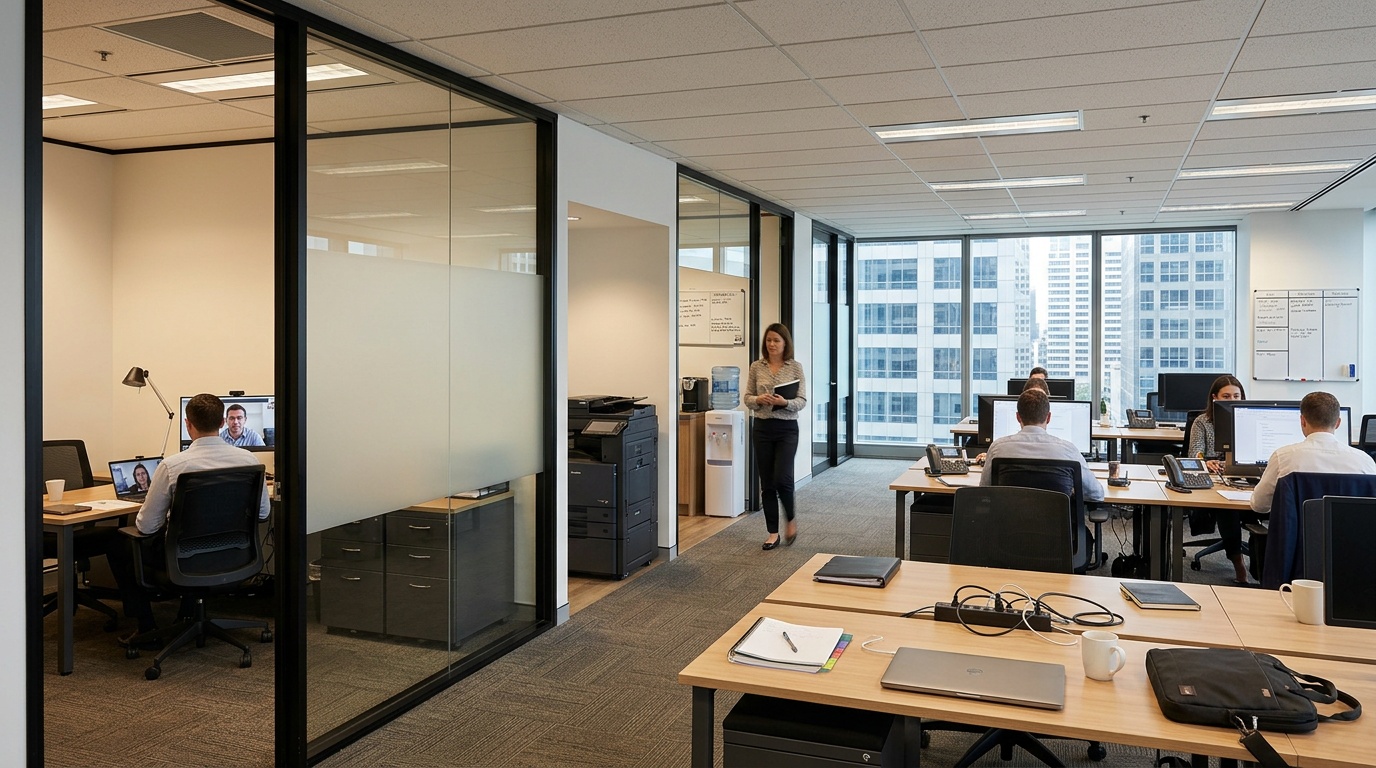
When a Traditional Lease Might Still Make Sense
Traditional leases work for businesses with predictable, long-term space requirements and sufficient capital for upfront investment. Manufacturing companies, established law firms, or medical practices with specialized equipment needs might benefit from full customization control.
If your business operates in a single location for decades with minimal headcount variation, traditional lease economics can work in your favor.
The Clear Advantages for Today’s Businesses
Most modern businesses benefit from flexible workspace models. Technology companies, consulting firms, startups, and project-based organizations need workspace that adapts to changing requirements.
The speed advantage alone can justify the decision. Launch a new market presence in days instead of months. Scale teams up or down based on actual demand.
Preserve capital for core business operations instead of real estate speculation.
Flexible Space Pros
- Immediate deployment capability
- Predictable all-inclusive pricing
- Global network access
- Capital preservation for core business
Flexible Space Cons
- Limited customization options
- Shared environment considerations
- Higher per-square-foot rates
Hotdesk: Your Partner in Workspace Agility
Hotdesk connects businesses with flexible workspace solutions that scale with operational needs. Our platform provides access to professional environments across 80+ countries with consistent infrastructure standards.
Whether you need immediate workspace deployment or global team connectivity, engineered solutions outperform traditional real estate approaches for modern business requirements.
Frequently Asked Questions
What is the primary difference in contract length between flexible office space and a traditional lease?
Traditional leases lock you into 3-10 year commitments with fixed square footage. Flexible office spaces operate on month-to-month or short-term agreements. This distinction affects how quickly you can adapt your workspace without re-work.
How do the upfront costs for flexible office space compare to a traditional lease?
Traditional leases demand significant upfront capital for fit-out expenses, often $50-$200 per square foot. Flexible spaces typically only require the first month’s payment and a deposit, preserving capital for core business operations. This reflects a more engineered cost structure.
What hidden costs should businesses consider with a traditional office lease?
Beyond rent, traditional leases involve fit-out costs, dilapidations clauses, business rates, utilities, insurance, and maintenance. These ancillary costs can add 40-60% to total occupancy expenses, often surprising businesses. An engineered financial system avoids these unexpected charges.
How does flexible office space provide better scalability for a growing or shrinking business?
Traditional leases create rigidity, making it difficult to add or remove desks quickly. Flexible spaces allow businesses to adjust their footprint within days or weeks, aligning workspace costs with actual headcount. This operational efficiency is built into the system, avoiding re-work when scaling.
What kind of operational infrastructure is typically included in flexible office spaces?
Flexible spaces provide pre-engineered systems, including consistent WiFi, meeting room booking systems, cleaning, and security. This means your team gets the same operational standards across locations without needing to rebuild infrastructure from scratch. It ensures continuity and avoids re-work.
Can flexible office spaces support the needs of large enterprises with project-based teams?
Yes, flexible spaces are designed for enterprise agility, allowing immediate workspace deployment for project teams. This enables businesses to establish a presence in new markets within days, testing demand and scaling as needed. It’s about having systems that work at scale without re-engineering.
How does the total cost of ownership differ when comparing flexible office space to a traditional lease?
Traditional lease total cost includes rent, fit-out depreciation, utilities, maintenance, and exit costs, making a $30/sq ft lease potentially $45-$65/sq ft. Flexible spaces offer all-inclusive rates that reflect the true occupancy costs, providing a more transparent and engineered financial model. The key is cost per productive employee.
Leave a Reply