Category: Blog

  • Rent a Meeting Room in Dubai: 2026 Guide

    Rent a Meeting Room in Dubai: 2026 Guide

    rent meeting room in dubai

    When Dubai Demands Presence: Finding Your Ideal Meeting Room

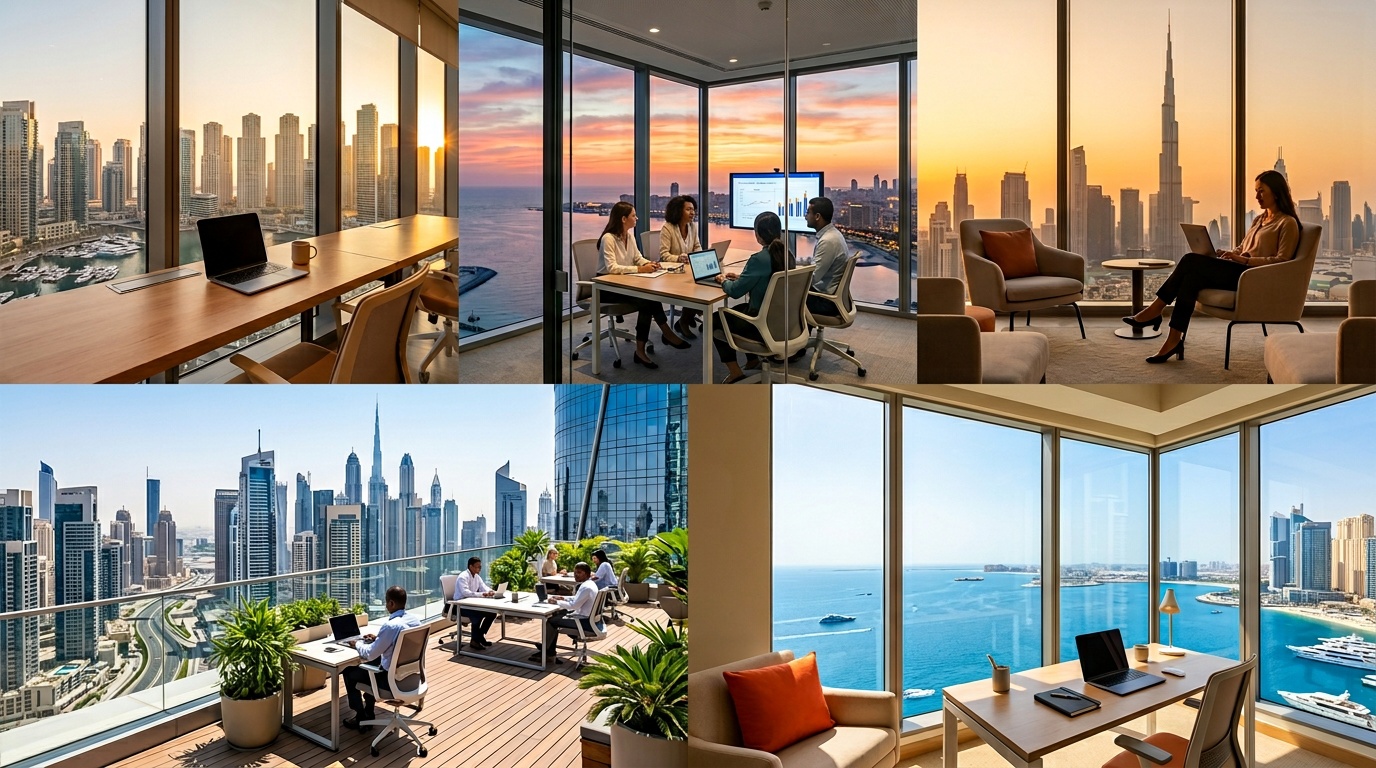
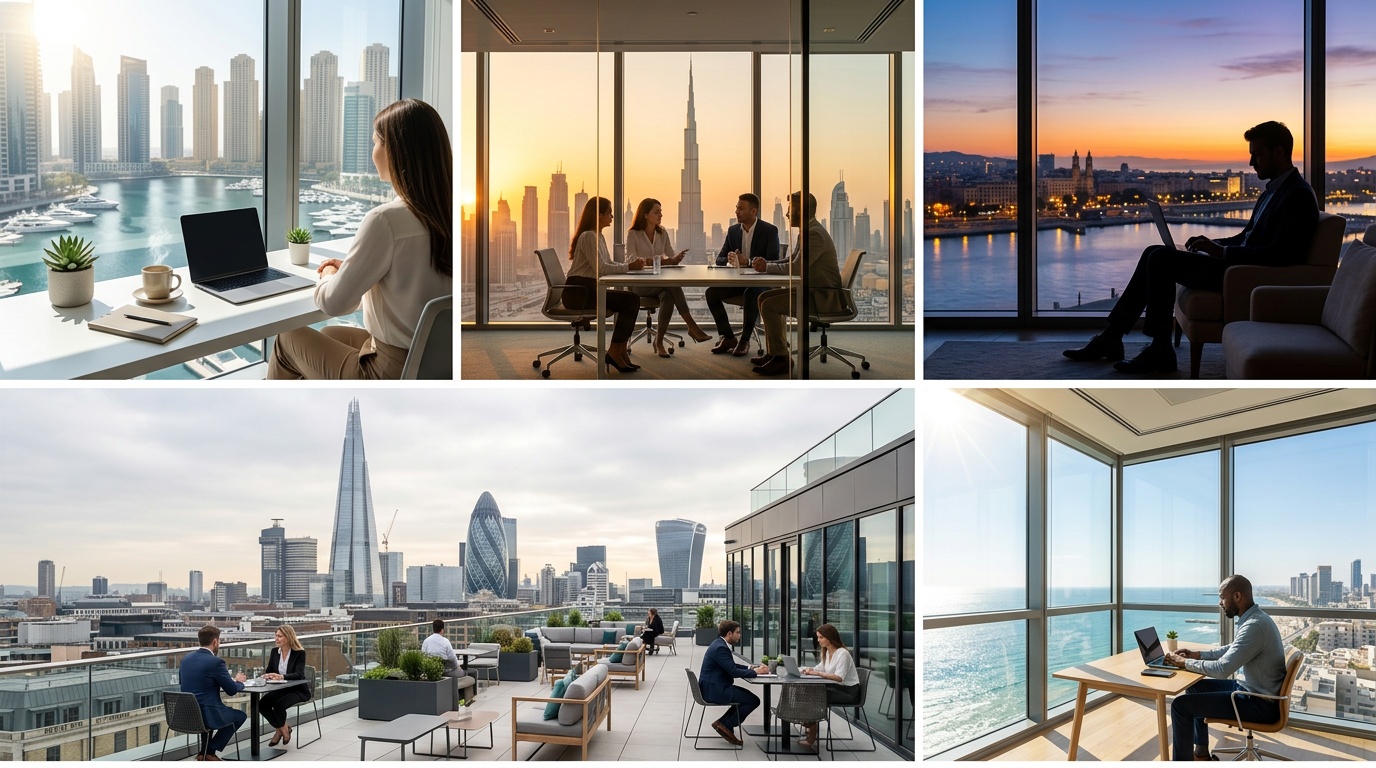
    To rent meeting room in dubai, book through platforms like Hotdesk for instant access to professional spaces across the city. Expect hourly rates from AED 50-300 depending on location and capacity. You can book the same day or weeks ahead with flexible cancellation policies.

    Key Takeaways

    • Secure professional meeting rooms in Dubai instantly by booking through platforms such as Hotdesk.
    • Expect hourly rates between AED 50 and 300, with pricing based on the room’s location and capacity.
    • Book your space for the same day or weeks in advance, benefiting from flexible cancellation options.

    The Dubai Business Environment: A Need for Professional Spaces

    Dubai operates on presence. The emirate hosts more than 200,000 businesses, from Fortune 500 headquarters to fast-scaling startups. Client meetings happen face-to-face. Deals close in conference rooms. Your workspace reflects your credibility.

    Traditional office leases can’t match this reality. You need space when deals demand it, not when contracts allow it.

    Why Renting Makes Sense

    Home offices lack the gravitas for serious negotiations. Coffee shops create distractions and privacy concerns. Hotel lobbies feel temporary. Professional meeting rooms give you the environment your business conversations deserve.

    The math works too. You pay for space only when you use it. No utilities, no maintenance, no empty rooms draining your budget during quiet months.

    Hotdesk’s Approach: Continuity, Not Just Access

    Most platforms treat room booking like hotel reservations. You search, you book, you start over next time. Hotdesk recognizes that business relationships require consistency. When you book through our platform, your preferences travel with you.

    The Reset Shouldn’t Be the Default: Spaces like Regus Marina Gate support repeat bookings and consistent setups, including your technical requirements and typical booking patterns.

    Your next meeting shouldn’t require rebuilding your sense of place. That’s the difference between booking a room and having infrastructure that supports how you operate.

    Dubai’s Meeting Room Options: Types, Amenities, and What to Expect

    meeting rooms rental

    From Huddles to Boardrooms: Matching Room Type to Meeting Purpose

    Small huddle rooms accommodate 2-4 people for quick decisions and focused discussions. These spaces work best for one-on-one client meetings or small team check-ins. Mid-size conference rooms seat 6-12 participants and suit department meetings and presentations that require screen sharing.

    Executive boardrooms handle 12-20 attendees with premium furnishings and advanced AV systems. These spaces project authority during high-stakes negotiations and board meetings. Training rooms offer flexible seating arrangements for workshops and seminars, often featuring movable furniture and multiple presentation displays.

    Essential Amenities for Productive Sessions

    High-speed WiFi and power outlets at every seat form the foundation of any functional meeting space. Video conferencing equipment with 4K cameras and noise-canceling microphones connects remote participants. Whiteboard walls or digital displays support real-time collaboration.

    Room Type Capacity Key Features Best For
    Huddle Room 2-4 people Basic AV, informal seating Quick decisions, 1:1 meetings
    Conference Room 6-12 people Presentation screen, video conferencing Team meetings, client presentations
    Executive Boardroom 12-20 people Premium furniture, advanced AV, catering prep Board meetings, major negotiations

    The Infrastructure That Goes Unnoticed

    Professional reception services handle guest check-ins and refreshment coordination. Climate control maintains comfortable temperatures throughout extended sessions. Dedicated parking and building security add convenience and peace of mind for attendees.

    Spaces like Regus Marina Gate include administrative support, printing facilities, and breakout areas for informal discussions. These details reduce friction and let you focus on the meeting content rather than logistics.

    Acoustics, Lighting, and Ambiance: The Unspoken Factors

    Sound isolation prevents external noise from disrupting conversations while keeping sensitive discussions inside the room. Natural lighting reduces eye strain during long sessions. Adjustable blinds help control glare on presentation screens.

    Temperature consistency matters more than most people realize. Rooms that swing between too hot and too cold distract participants and reduce engagement. Quality meeting spaces maintain steady climate control that adapts to occupancy levels.

    The Real Cost of Collaboration: Dubai Meeting Room Pricing Models

    Hourly, Daily, Monthly: Understanding Dubai’s Flexible Rental Structures

    Hourly rates start at AED 50 for basic huddle rooms and reach AED 300 for premium boardrooms in prime locations. Half-day packages typically offer 10-15% savings over hourly rates, while full-day bookings can reduce costs by 20-25%.

    Monthly memberships work for regular users, providing allocated hours at discounted rates. Most providers require at least 20-30 hours of monthly usage to make membership pricing worthwhile. Pay-as-you-go remains the most flexible option for occasional meetings.

    What’s Not in the Sticker Price

    Setup fees for AV equipment can add AED 50-150 per session. Catering minimums often require AED 200 or more regardless of actual needs. Cancellation penalties can range from 50-100% of the booking cost within 24 hours.

    Transparent Pricing Benefits

    • No surprise charges at checkout
    • Clear cancellation policies
    • Included amenities listed upfront

    Hidden Cost Risks

    • Equipment fees added during booking
    • Mandatory catering minimums
    • Peak-hour surcharges

    How Hotdesk Simplifies Pricing: No Surprises, Just Clarity

    When you book through Hotdesk, pricing includes core amenities without add-on fees. WiFi, basic AV setup, and climate control come standard. No membership requirements or minimum-hour commitments.

    The platform shows total costs upfront, including applicable taxes or service charges. Flexible cancellation policies protect your budget when plans change. Payment processing happens securely with instant confirmation.

    Pricing Transparency: What you see is what you pay. No hidden equipment fees, no mandatory minimums, no surprise surcharges at checkout.

    Booking in Seconds, Not Days: The Hotdesk Advantage in Dubai

    The Friction of Traditional Booking

    Traditional booking requires phone calls, email exchanges, and manual availability checks. Many property managers work only during business hours. Confirmation can take 24-48 hours, assuming the preferred time slot remains open.

    Deposits and manual paperwork slow the process further. Multiple back-and-forth messages just to secure a two-hour booking. The administrative overhead can outweigh the meeting time.

    How Instant Access Changes Everything

    Real-time inventory shows available spaces immediately. Book with confirmed pricing and calendar integration. No waiting for callbacks or manual confirmations.

    The platform handles payment processing, access instructions, and setup details. You receive what you need to enter the room and start working right away.

    A Global Network, Grounded in Dubai

    Hotdesk connects locations across Dubai’s business districts. From DIFC to Dubai Marina, consistent standards help you book with confidence across different operators.

    Your booking history and preferences sync across locations. You get the same experience whether you’re downtown or in the free zones.

    For Operators: Helping Your Space Work Harder

    Property owners list spaces once and reach demand across a wider network. Automated booking management reduces administrative work while improving occupancy.

    Continuity Travels: Your preferences, payment methods, and booking patterns stay consistent across Dubai’s network of professional meeting spaces.

    Frequently Asked Questions

    How can I easily rent a meeting room in Dubai?

    You can easily rent a meeting room in Dubai by booking through platforms like Hotdesk. These platforms offer instant access to professional spaces across the city. You have the flexibility to book the same day or weeks ahead, with clear cancellation policies.

    Why should businesses choose to rent meeting rooms instead of using traditional offices or coffee shops?

    Renting a professional meeting room in Dubai provides the right environment for serious business conversations, unlike home offices or noisy coffee shops. It offers flexibility, allowing you to pay for space only when you use it, avoiding the costs of long-term leases, utilities, and maintenance. This approach aligns with Dubai’s fast-paced business environment, where presence matters.

    What kinds of meeting rooms can I find for rent in Dubai?

    Dubai offers a variety of meeting rooms to suit different needs. You can find small huddle rooms for 2-4 people, mid-size conference rooms for 6-12, and executive boardrooms for 12-20 attendees. There are also training rooms with flexible seating for workshops and seminars.

    What essential amenities are usually included when I rent a meeting room in Dubai?

    When you rent a meeting room in Dubai, expect high-speed WiFi and power outlets at every seat. Many spaces also provide video conferencing equipment, whiteboard walls or digital displays, and professional reception services. Dedicated parking and building security are often included for convenience and peace of mind.

    How is the pricing structured for renting meeting rooms in Dubai?

    Pricing for meeting rooms in Dubai is flexible, with options for hourly, half-day, and full-day rates. Hourly rates can start from AED 50, reaching AED 300 for premium spaces. Monthly memberships are available for regular users, offering discounted rates for allocated hours.

    What makes a meeting room truly effective beyond just its features?

    Beyond features, an effective meeting room considers acoustics, lighting, and ambiance. Sound isolation ensures privacy and focus, while natural lighting reduces eye strain. Consistent climate control maintains comfort, allowing participants to stay engaged and productive.

    How does Hotdesk support businesses that frequently rent meeting rooms in Dubai?

    Hotdesk goes beyond simple room booking by focusing on continuity for businesses that frequently rent meeting rooms in Dubai. Your preferences, technical requirements, and typical booking patterns can travel with you across repeat bookings. This means your next meeting can start without rebuilding your sense of place, providing infrastructure that supports how you operate.


    About the Author

    MK

    Mohamed Khaled

    Mohamed Khaled

    Forbes 30 Under 30

    Founder & CEO at Hotdesk

    Mohamed Khaled is the Founder and CEO of Hotdesk, the UAE-based platform revolutionizing flexible workspaces as the “Airbnb of offices” with global instant access for freelancers, SMEs, and enterprises. A Forbes 30 Under 30 honoree, he blends PwC audit expertise (Cairo, Abu Dhabi, Doha) with Swvl’s $1.5B SPAC finance leadership to deliver pragmatic, data-driven insights on hybrid work trends, SaaS scaling, and MENA tech innovation.

    Through Hotdesk, bootstrapped from evenings into a 50+ team powering thousands of bookings and acquisitions like Spain’s YADO, Mohamed shares actionable strategies for founders and operators to monetize assets, penetrate markets, and chase decacorn ambitions.

    Last reviewed: March 26, 2026 by the Hotdesk Team
  • Coworking Spaces and the Circular Economy Guide

    Coworking Spaces and the Circular Economy Guide

    coworking spaces and the circular economy

    Coworking Spaces and the Circular Economy: How Shared Workspaces Reduce Waste

    Coworking Spaces: The Unseen Engines of the Circular Economy

    The circular economy creates closed loops where materials stay in use longer, waste becomes input, and efficiency drives value. In workspace design, this means shared infrastructure, extended equipment lifecycles, and systems that adapt rather than replace.

    Coworking spaces and the circular economy align naturally. A single office serves dozens of users across different schedules. Equipment gets maximum use. Furniture lasts longer because maintenance costs spread across multiple tenants. The model doesn’t reduce waste by accident. It makes waste reduction profitable.

    The Reset vs. Continuity Model: Traditional offices reset with each tenant change. Coworking spaces maintain continuity. At Comspace, the same desk serves a designer in the morning, a developer in the afternoon, and a consultant in the evening. The infrastructure stays consistent. The impact multiplies.

    Beyond Shared Desks: How Coworking Actively Reduces Waste and Resource Strain

    coworking spaces and the circular economy

    Individual offices stock supplies for peak usage that rarely occurs. Coworking spaces stock for actual usage patterns. Energy systems optimize for real occupancy, not estimated capacity. This approach cuts per-person resource consumption by 30-40% compared to traditional office models.

    Shared printers reduce the need for individual device purchases. Conference rooms serve multiple companies without duplication. High-speed internet infrastructure supports dozens of businesses through one connection. This isn’t cost splitting. It’s resource optimization at scale.

    Comspace demonstrates this principle through smart booking systems that match space allocation to actual needs, reducing energy waste and operational overhead.

    The Economic Pulse: Cost Savings and Brand Value in Circular Coworking

    For the User: Smarter Spending, Bigger Impact

    The financial benefits of coworking spaces and the circular economy extend far beyond splitting rent. Users access premium equipment, high-speed internet, and professional amenities without the capital investment of individual ownership. A freelancer pays for desk access rather than purchasing a printer, scanner, and conference room setup.

    This model reduces individual overhead by 60-70% compared to traditional office leases. More importantly, it eliminates the waste of underused resources. Instead of owning equipment that sits idle most days, users rely on shared infrastructure that operates at higher capacity rates.

    For the Operator: Efficiency, Attraction, and Revenue

    Operators benefit from reduced operating costs through optimized resource use. Shared printers serve 50+ users instead of individual desktop models. Energy consumption drops when spaces support flexible occupancy rather than fixed tenant loads. Waste management becomes more efficient through consolidated collection and recycling programs.

    Revenue Impact: Operators implementing circular practices often report 15-25% higher occupancy rates as environmentally conscious professionals seek sustainable workspace options.

    The brand differentiation matters. Comspace shows how circular principles attract users who value environmental responsibility alongside professional functionality. This positioning supports premium pricing while building stronger user loyalty.

    Hotdesk’s Role in Supporting Circular Operators

    We help operators improve resource efficiency through real-time demand matching. Instead of maintaining static capacity, spaces adjust offerings based on actual booking patterns. This reduces energy waste from unused areas while improving cleaning schedules and supply management.

    Hotdesk analytics help operators identify peak usage periods, allowing for better resource planning. Comspace uses these insights to schedule maintenance during low-demand windows and adjust amenity availability to match user patterns.

    Bridging Borders: Hotdesk as the Global Connector for Circular Work

    The “Continuity Travels” Advantage

    Traditional business travel creates resource waste through temporary setups and single-use accommodations. Hotdesk’s global network reduces this inefficiency by providing consistent workspace access across cities. Users keep their productivity patterns without needing new equipment or setup processes at each location.

    This continuity lowers the environmental cost of business mobility. Instead of companies shipping equipment or users purchasing temporary solutions, existing coworking infrastructure supports seamless transitions. The circular model travels with the user.

    Global Inventory, Local Impact: Expanding Reach Responsibly

    Our expansion strategy prioritizes optimizing existing space over new construction. We connect underused spaces with mobile professionals, increasing occupancy rates without adding to the built environment. This approach supports local economies while limiting construction-related environmental impact.

    Each new market entry focuses on making better use of current resources rather than creating parallel infrastructure. Users access local amenities and services, supporting community businesses while meeting professional needs.

    Beyond Greenwashing: How Hotdesk Facilitates Genuine Circularity

    Real circular economy work requires measurable resource optimization, not marketing claims. Hotdesk provides operators with utilization data that shows efficiency gains. Spaces can track energy consumption per user, waste reduction metrics, and resource-sharing statistics.

    This transparency lets users make informed choices about environmental impact. They can select spaces based on verified sustainability practices rather than superficial green marketing. The platform becomes a tool for environmental responsibility.

    Building the Future: Actionable Steps for a More Circular Workspace

    coworking spaces and the circular economy

    For Individuals: Making Circular Choices When You Book

    Select coworking spaces that demonstrate measurable sustainability practices. Look for spaces with energy-efficient lighting, recycling programs, and shared equipment policies. Book during peak hours to maximize space use rather than choosing empty periods that require additional energy for minimal occupancy.

    Bring reusable water bottles and coffee cups to reduce single-use waste. Choose spaces within walking distance or accessible by public transit when possible. These decisions compound across your work routine, creating meaningful environmental impact through coworking spaces and the circular economy principles.

    Smart Booking: Reserve space for the time you’ll use. Canceling unused bookings lets operators optimize energy consumption and accommodate other users efficiently.

    For Operators: Integrating Circularity Into Your Offering

    Install smart lighting systems that adjust based on occupancy levels. Provide filtered water stations to reduce bottled-water waste. Create equipment-sharing protocols that maximize use of printers, scanners, and presentation tools across all users.

    Track and display resource-usage metrics for transparency. Users appreciate knowing their environmental impact, and operators benefit from data-driven efficiency improvements. Digital-first policies reduce paper consumption while maintaining professional service standards.

    The Next Frontier: Technology’s Role in Scalable Circularity

    Smart building systems enable real-time resource optimization across global networks. IoT sensors automatically adjust heating, cooling, and lighting based on actual occupancy patterns. This technology moves coworking spaces and the circular economy from manual practices to automated efficiency systems.

    Predictive analytics help operators anticipate demand patterns, reducing waste from over-preparation while ensuring adequate resources during peak periods. Integrating these technologies through platforms like Hotdesk creates seamless user experiences while maximizing environmental benefits at scale.

    Frequently Asked Questions

    How do coworking spaces actually apply circular economy principles?

    Coworking spaces apply circular economy principles by maximizing resource use. They share infrastructure like printers and conference rooms, extending equipment lifecycles and reducing individual consumption. This model ensures materials stay in use longer, turning waste into input.

    What are the financial benefits for individuals using circular coworking spaces?

    For individuals, circular coworking means smarter spending and a bigger impact. Users access premium equipment and amenities without the capital investment of ownership, reducing individual overhead by 60-70%. This also eliminates the waste of underused resources.

    How do coworking operators benefit from adopting circular practices?

    Operators benefit from reduced operating costs through optimized resource use and more efficient waste management. Implementing circular practices can also lead to 15-25% higher occupancy rates, attracting environmentally conscious professionals. This creates strong brand differentiation and loyalty.

    How does Hotdesk help coworking spaces become more circular?

    Hotdesk helps operators improve resource efficiency through real-time demand matching. Our platform adjusts space offerings based on actual booking patterns, reducing energy waste from unused areas. We provide utilization data, allowing spaces to track efficiency gains and make informed choices.

    Can circular coworking principles extend to business travel?

    Yes, the continuity of circular coworking travels with you. Hotdesk’s global network reduces resource waste from temporary setups by providing consistent workspace access across cities. This means users maintain productivity without needing new equipment or setup processes at each location, lowering the environmental cost of business mobility.

    Beyond sharing desks, how do coworking spaces actively reduce waste?

    Coworking spaces actively reduce waste by optimizing individual consumption, from office supplies to energy. They stock supplies for actual usage patterns, not peak estimates, and energy systems optimize for real occupancy. This results in 30-40% lower per-person resource consumption compared to traditional offices.

    How does Hotdesk's expansion strategy support the circular economy?

    Hotdesk’s expansion prioritizes optimizing existing space over new construction. We connect underused spaces with mobile professionals, increasing occupancy rates without adding to the built environment. This approach supports local economies and limits construction-related environmental impact.

    About the Author

    MS

    Mohammad El Shaari

    Mohammad El Shaari

    CTO at Hotdesk

    Mohammad El Shaari is the CTO of Hotdesk, where he leads the engineering team building the platform that powers on-demand workspace bookings across 80+ countries. A Computer Science graduate from The British University in Egypt, he brings over a decade of hands-on experience in enterprise software, AI, cloud infrastructure, and cybersecurity. Before Hotdesk, he served as CTO of Vee Tech, where he led technical delivery for 12+ enterprise clients generating $30M+ in annual revenue, and helped build Egypt’s first innovation lab at Capital International Schools.

    At Hotdesk, Mohammad oversees the full technical stack, from mobile and backend architecture to API integrations and DevOps pipelines. He writes about scalable system design, mobile engineering, cloud-native infrastructure, and the real-world technical decisions behind building a global SaaS platform from the ground up.

    Last reviewed: March 26, 2026 by the Hotdesk Team
  • What is Hot Desking? The Complete Guide

    What is Hot Desking? The Complete Guide

    What is Hot desking?

    What is Hot Desking? Unpacking the Modern Workspace Revolution

    Hot desking is a workspace organization system where desks are shared by different people at different times. No assigned seats, no wasted square footage. Every desk earns its place. The model traces back to naval “hot racking,” where sailors shared bunks on rotating shifts, and it translated directly into corporate real estate strategy: stop paying for empty chairs.

    Key Takeaways

    • Hot desking is a workspace system where desks are shared by different people at different times, meaning no assigned seats.
    • This model ensures that every desk is utilized, preventing wasted office space.
    • The concept comes from naval “hot racking,” applying to corporate strategy to stop paying for empty chairs.

    Hot Desking vs. Traditional Seating

    Traditional offices treat a desk like a personal asset. The chair sits empty on Wednesdays, empty during travel, empty when the employee works from home. But the lease keeps running. Hot desking treats space as a service. For founders watching unit economics, that shift matters. You’re not cutting amenities; you’re aligning cost with actual usage.

    Explore reliable hot desking options at Regus London 63 St Mary Axe to see how premium workspaces adapt to this modern approach.

    The Strategic Advantages: Why Hot Desking Is Essential Hybrid Infrastructure

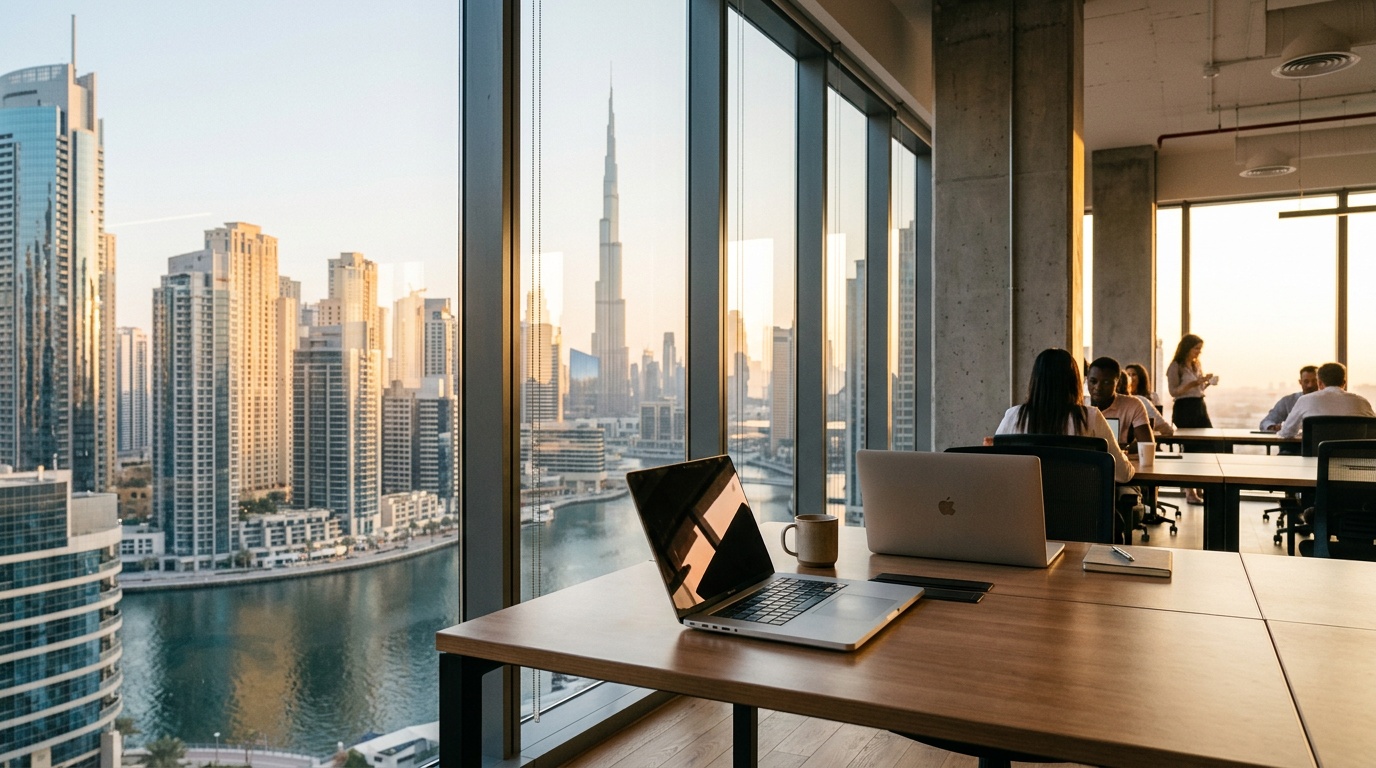
    A modern open-plan coworking space with shared desks demonstrating hot desking in practice

    Think of hot desking as yield management for real estate. Airlines don’t let seats fly empty; smart operators don’t let desks sit idle. By reducing the physical footprint required per employee, organizations free up capital that would otherwise be locked into square footage. Teams can scale up for a busy quarter and pull back without penalty. No long-term lease holding you hostage to headcount projections you made eighteen months ago.

    There’s a second-order benefit that often gets missed: cross-team collision. When people aren’t anchored to the same corner of the office every day, they end up sitting next to colleagues they’d otherwise never meet. I’ve seen this dynamic play out inside fast-scaling teams. The informal conversations that happen at a shared desk often move faster than a scheduled Zoom.

    Strategic Flexibility Analysis

    Pros

    • Reduced Real Estate Costs
    • Increased Cross-Team Collaboration
    • Scalability on Demand

    Cons

    • Lack of Personal Storage
    • Requires Change Management
    • Potential for Disorganization

    The honest criticism of hot desking isn’t wrong. It’s just incomplete. Yes, without structure, you get hygiene issues, desk hoarding, and a workforce that feels unmoored. These aren’t reasons to abandon the model. They’re a change management checklist.

    The teams that struggle with hot desking skip the infrastructure. They announce the policy, remove the nameplates, and expect culture to figure itself out. It won’t. You need booking software that shows real-time availability, physical storage solutions so people aren’t lugging laptops and notebooks daily, and clear sanitization protocols. Get those three right, and most of the friction disappears.

    Challenge Strategic Solution
    Lack of Personal Space Implement digital lockers for daily storage needs.
    Hygiene Concerns Enforce strict sanitization protocols and supply stations.
    Desk Availability Anxiety Use real-time booking apps to guarantee access.

    The Hotdesk Difference: Instant Booking, Global Access, No Membership Fees

    When I was traveling for audits across Cairo, Abu Dhabi, and Doha, finding a professional workspace on short notice was a genuine problem. Either you knew someone with an office, or you ended up in a hotel lobby. That friction. Multiplied across thousands of remote workers and distributed teams. Is exactly what Hotdesk was built to remove.

    Today, the platform gives freelancers and enterprise teams instant, membership-free access to 2,500+ workspaces across the UAE, Egypt, Spain, India, and beyond. Need a private office in Barcelona? Our YADO acquisition put that inventory on the same platform as a hot desk in Dubai. Book by the hour, the day, or the month. Whatever the project demands. Plug-and-play productivity, without the overhead of a permanent lease.

    Global Footprint

    From Dubai to Barcelona, Hotdesk consolidates inventory so hybrid professionals book once and work anywhere. No membership, no long-term commitment.

    Discover coworking opportunities at Kube Coworking Lisboa for flexible access across Europe.

    Implementing Hot Desking: A Founder’s Playbook for Getting It Right

    Founder reviewing workspace utilization data to implement a hot desking strategy

    Start with data, not assumptions. Audit your current occupancy. Most offices run at 60-70% capacity on a good day. That number tells you how aggressive you can be with your desk-to-employee ratio. A 70% occupancy rate typically supports a 0.7:1 ratio, but you want buffer. Start at 0.8:1, measure for a quarter, then adjust.

    Three non-negotiables for rollout: booking software that integrates with your access controls, a written policy on storage and cleanliness, and a feedback loop. Utilization rates tell you if the model is working operationally; employee feedback tells you if it’s working culturally. You need both signals.

    If you operate a workspace, this is also where the revenue opportunity sits. Unused desks are overhead. List them on Host.hotdesk.com and turn that idle square footage into a consistent revenue stream. The same way a hotel monetizes every room rather than leaving them dark.

    Operator’s Edge

    Monetize unused space with Host.hotdesk.com to turn overhead into revenue streams.

    Hot Desking Is Infrastructure, Not a Trend

    Work is becoming an activity, not a location. That shift isn’t coming. It’s already here, and the organizations still designing around permanent desks are building for a workforce model that no longer reflects how people actually operate. Hot desking isn’t a cost-cutting measure dressed up as innovation. It’s the structural response to a genuinely different relationship between people and place.

    From where I sit. Having built Hotdesk from evening sessions alongside a full-time role to a platform operating across multiple continents. The teams winning in this environment are the ones who stopped treating flexibility as a perk and started treating it as infrastructure. That’s the mindset shift. Everything else follows.

    Boost your hybrid strategy with workspace flexibility at Astrolabs in Dubai.

    Frequently Asked Questions

    What is the purpose of hot desking?

    Hot desking’s core purpose is to optimize real estate efficiency and reduce overhead for organizations. It transforms space from an underutilized asset into a service, aligning capital expenditure with actual workforce usage. This strategic approach allows businesses to scale teams with agility, supporting a dynamic, hybrid work future.

    What are the disadvantages of hot desking?

    While hot desking offers significant advantages, challenges include a lack of personal storage and the potential for disorganization if not managed well. There can also be hygiene concerns and anxiety around desk availability. Overcoming these requires clear policies, reliable booking software, and amenities that foster community.

    What is an example of hot desking?

    An example of hot desking is when employees arrive at an office and choose any available desk for the day, rather than having a permanently assigned seat. Our platform, Hotdesk, provides a real-world application, allowing users to book desks on demand in locations from Dubai to Barcelona. This ensures space is always utilized efficiently, adapting to a mobile workforce.

    Is hot desking still a thing?

    Absolutely, hot desking is not just “still a thing,” it is the operating system for the future of work. As businesses embrace hybrid models and a nomadic workforce, this approach provides the essential infrastructure for productivity. It allows enterprises to book, scale, and thrive without silos, making work an activity rather than a fixed location.

    How does hot desking benefit organizations financially?

    From a financial perspective, hot desking serves as a yield optimization tool for organizations. It significantly reduces real estate costs by decreasing the physical footprint required per employee, aligning capital expenditure with actual workforce usage. This model also allows operators to monetize unused space, transforming overhead into revenue streams.

    What technology is important for successful hot desking?

    Successful hot desking relies heavily on technology to ensure seamless execution. Reliable booking software is essential for employees to find and reserve desks efficiently, preventing chaos and desk availability anxiety. Additionally, digital lockers can address personal storage needs, and integration with existing access controls streamlines operations.

    How does hot desking support hybrid work?

    Hot desking is foundational for the hybrid work future, providing dynamic, infrastructure-level flexibility. It offers employees the autonomy to choose environments that suit their daily tasks, whether for focused work or collaboration. This model supports a global, borderless professional ecosystem, making work an activity rather than a fixed location.

    About the Author

    MK

    Mohamed Khaled

    Mohamed Khaled

    Forbes 30 Under 30

    Founder & CEO at Hotdesk

    Mohamed Khaled is the Founder and CEO of Hotdesk, the UAE-based platform revolutionizing flexible workspaces as the “Airbnb of offices” with global instant access for freelancers, SMEs, and enterprises. A Forbes 30 Under 30 honoree, he blends PwC audit expertise (Cairo, Abu Dhabi, Doha) with Swvl’s $1.5B SPAC finance leadership to deliver pragmatic, data-driven insights on hybrid work trends, SaaS scaling, and MENA tech innovation.

    Through Hotdesk, bootstrapped from evenings into a 50+ team powering thousands of bookings and acquisitions like Spain’s YADO, Mohamed shares actionable strategies for founders and operators to monetize assets, penetrate markets, and chase decacorn ambitions.

    Last reviewed: March 26, 2026 by the Hotdesk Team